
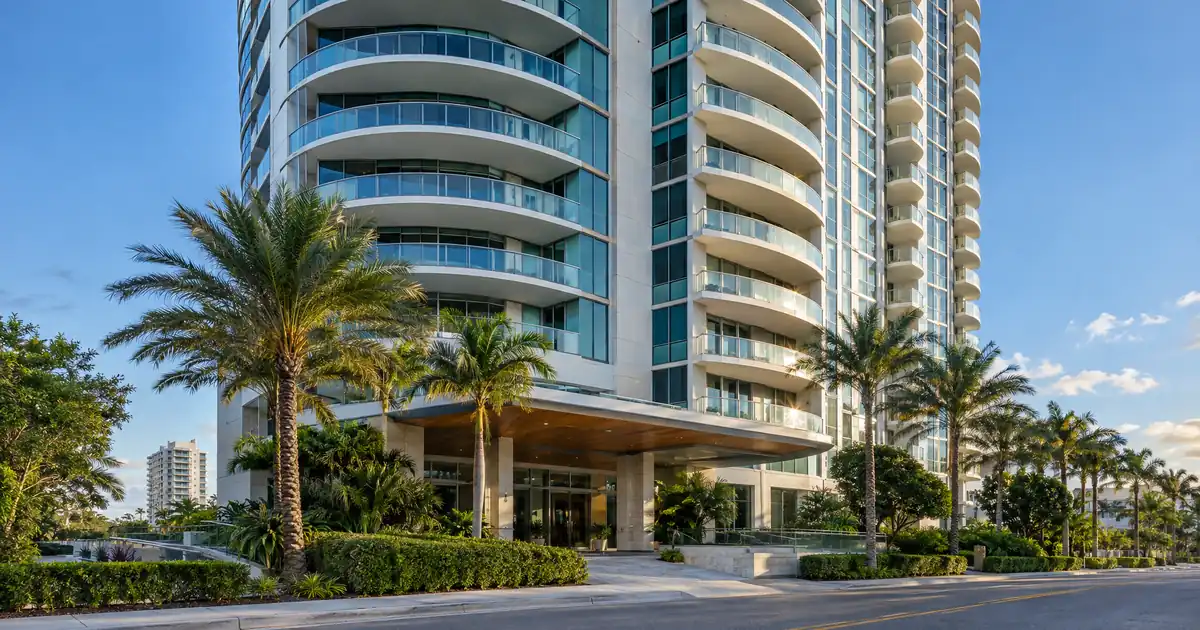
How A DSCR Lender Sets Condotel Leverage For Asset-based Borrowers — The Quick Read: A condotel gets its own leverage ceiling before a DSCR lender looks at credit or coverage — most programs in Lendmire’s wholesale network cap condotels at 75% loan-to-value on purchase and 65% on refinance, up to $1,500,000, with $250,000 in cash-in-hand documented at close. Coverage still matters, but property classification sets the ceiling first. Everything else — credit, reserves, income treatment — gets layered on top of that ceiling, not the other way around.
Condotels sit at the tight end of the leverage spectrum for a reason: they operate like hotels, not homes. That single fact drives every underwriting decision that follows, from the appraisal method to the reserve count to how much cash an asset-based borrower needs sitting in the bank before closing.
DSCR Calculator
Run the numbers in your market
Rate source: Freddie Mac 30-yr average via FRED® — Federal Reserve Bank of St. Louis · effective Sep 17, 2026
Prefilled with local estimates — enter your own rent or nightly figures, taxes, insurance, and HOA for a more accurate picture.
Program parameters update from Lendmire’s centralized guideline source. Taxes and insurance are editable estimates.
As of Sep 17, 2026 · General Freddie Mac market benchmark, not a Lendmire loan offer. Rent, nightly rate, occupancy, taxes, and insurance are editable estimates. Short-term rental figures are estimates only and vary significantly by season, property type, management approach, and local short-term-rental rules — confirm local regulations before relying on them. Qualifying income for short-term rentals varies by program — some use appraisal market rent, others use documented STR history or projections — and is confirmed in underwriting. Not a Loan Estimate, approval, or commitment to lend. Program availability and eligibility are subject to lender guidelines, credit approval, property review, and underwriting.
Key Terms Defined
Condotel — a condominium unit inside a building operated with hotel-style services: a front desk, a rental program run by management, and often mandatory or heavily encouraged participation in that rental pool.
Non-warrantable condo — a standard residential condo that fails one or more agency project rules (litigation, high investor concentration, deed restrictions) but where the owner still controls occupancy independently.
Asset-based qualification — a lending approach where the borrower’s liquid assets, not traditional employment income or traditional personal-income documentation, support the loan file alongside the property’s own DSCR review.
Cash-in-hand — liquid funds a borrower must show and document at closing on top of the down payment, used on condotel files to offset the collateral’s added risk.
Coverage ratio (DSCR) — monthly rental income divided by the property’s monthly debt obligation (principal, interest, taxes, insurance, and HOA dues where applicable); 1.00 means rent and payment are roughly equal.
Why Condotels Get Their Own Leverage Tier
Condotels don’t fail underwriting because of the borrower. They fail because the collateral itself doesn’t fit the standard residential mold. Fannie Mae’s own selling guide spells out the disqualifying criteria plainly: a project can’t be operated or managed as a hotel, motel, or similar commercial entity, and that includes buildings where the HOA is licensed as a hotel, motel, resort, or hospitality entity. That rule is why condotels never reach agency financing in the first place — it isn’t a credit decision, it’s a project classification decision made before anyone looks at the borrower’s file.
That agency exclusion is exactly why DSCR and asset-based portfolio programs exist as the financing path for this property type. Across Lendmire’s wholesale network, condotels typically top out at 75% LTV on a purchase and 65% on a rate-and-term or cash-out refinance, capped at $1,500,000, and most programs require $250,000 in documented cash-in-hand at closing — separate from the down payment itself. That refinance-versus-purchase gap (75% down to 65%) isn’t arbitrary. Refinance files carry more collateral uncertainty because the lender is relying on trailing operating history rather than a fresh purchase appraisal, so the ceiling comes down to compensate.
A non-warrantable condo, by contrast, can reach 75% LTV and $1,500,000 in loan size under many of the same network guidelines — similar numbers, but a meaningfully different risk profile. The reason: in a non-warrantable condo, the owner still controls when and to whom the unit rents. In a condotel with mandatory rental-pool participation, management controls the income stream. That loss of owner control is what separates a “tight but financeable” file from one that’s fundamentally harder to structure. Terms vary by lender guidelines, property type, leverage, credit profile, and full file review.
Property Classification Comes First — Before Credit, Before Coverage
The biggest factor affecting a condotel’s leverage ceiling is how the property gets classified. This classification happens before the lender even checks the borrower’s credit or runs the DSCR math. Every file gets sorted into one of four buckets: warrantable condo, non-warrantable condo, condotel, or standard 1-4 unit rental. That bucket sets the leverage limits for everything else in the file.
| Property Type | Typical Max LTV (Purchase) | Typical Max LTV (Refi) | Typical Loan Cap |
|---|---|---|---|
| Warrantable condo | Follows standard rental ladder | Follows standard rental ladder | Follows standard loan ladder |
| Non-warrantable condo | Up to 75% | Up to 75% | Up to $1,500,000 |
| Condotel | Up to 75% | Up to 65% | Up to $1,500,000 |
These are ceilings, not guarantees — actual leverage on any file depends on credit, reserves, HOA findings, and coverage, subject to underwriting.
How Asset-Based Qualification Changes the File
Asset-based qualification doesn’t raise the condotel ceiling above what property classification already allows. Instead, it changes how the lender documents the borrower’s side of the file. Rather than using traditional personal-income documents or W-2s, the lender looks at liquid assets and the property’s own rent picture. This approach fits condotel income volatility better than strict income documentation. That’s because condotel cash flow swings seasonally in ways that don’t line up well with personal-income underwriting models.
That said, asset-based borrowers on a condotel still sit inside the same 75%/65% ceiling as any other borrower on that collateral type. What changes is the documentation path, not the leverage math. A borrower with strong liquid reserves and clean credit doesn’t get a higher LTV on a condotel just because assets replace income docs — the property classification cap still governs. Where asset strength matters most is credit-tier placement and reserve comfort, not pushing past the collateral’s built-in ceiling.
Coverage still plays a role even on asset-heavy files. A property clearing 1.00x or better in coverage earns the strongest available leverage inside that ceiling. Files landing in the 0.75x to 0.99x range remain a real path through select programs in the network up to $2,000,000 in loan size, though LTV and terms adjust downward to compensate, subject to underwriting. No-ratio qualification is also available through a handful of lenders in the network, up to $2,000,000, but it comes with its own credit and seasoning envelope and it’s never paired with the condotel category’s cash-in-hand requirement in the same way — every no-ratio scenario still runs through full underwriting review.
Appraisal: Why Nightly Rate Times 30 Doesn’t Work
The appraisal problem on a condotel isn’t the property’s value — it’s proving what the unit rents for. The standard tools lenders use to document market rent were built for monthly residential leases, not nightly hotel-style stays, and that mismatch shapes every income decision that follows.
Fannie Mae’s own appraiser guidance addresses this directly. The Form 1007 rent schedule calls for the “Indicated Monthly Market Rent.” It would be incorrect for an appraiser to take short-term-rental comparables and simply multiply the nightly rate by 30 to create a monthly figure. That method ignores furniture and fixtures costs, other guest services, vacancy, and operating expenses that are baked into nightly pricing.
Because of that limitation, condotel and short-term-rental income across Lendmire’s network typically gets documented one of two ways depending on transaction type. On a purchase, the file leans on the appraisal’s dedicated short-term-rent analysis rather than the standard monthly rent schedule. On a refinance, twelve months of documented operating history carries the weight. Either way, income is generally counted at roughly 80% of gross — a built-in haircut that accounts for the volatility nightly rental income carries relative to a signed monthly lease. This treatment applies to experienced investors with at least twelve months of income-property ownership in the prior thirty-six months, and it isn’t available on the no-ratio path.
Above $2,000,000 in loan size, most programs require two separate appraisals instead of one. This second layer of value confirmation matters more on condotels than standard rentals. That’s because the comparable pool is often thin for hotel-style condo units in any given building.
What the HOA File Has to Show
A condotel’s HOA questionnaire often carries more weight than the appraisal. This is where a deal that looked fine on paper can still fall apart. Since a condotel can never clear agency project review, the lender builds its own collateral file instead. This includes a condo questionnaire, HOA financial statements, master insurance declarations, and litigation disclosure. Practitioner coverage of condotel underwriting in resort markets describes a deep review of the association’s budget, reserves, and insurance coverage, with low reserves and inadequate insurance flagged as major red flags.
A few findings in that packet can move the leverage number even after property classification has already set the ceiling:
- Weak HOA reserves signal a building that may need a special assessment, which raises the lender’s risk on the collateral itself.
- Active litigation involving structural defects or material financial exposure is typically treated as a harder stop than a minor nuisance claim.
- Mandatory rental-pool control by management, rather than owner-directed rental decisions, can break the DSCR model entirely, since the borrower doesn’t control the income stream the loan is qualifying against.
- Developer-controlled HOAs on new construction are a categorical block for many lenders until the building has received its certificate of occupancy and HOA control has transferred to owners.
None of these findings show up in a credit report or bank statement. They come out of the HOA packet, which is why that document pull often takes longer to assemble on a condotel file than on a standard rental purchase.
Condotel files in our network fall into two groups. The first group has strong HOA financials and lets owners direct their own rental participation. These files clear the 75%/65% ceiling without much trouble. The second group has thin reserves or unclear control over the rental pool. These files often get declined at the HOA-review stage. Sometimes they get pushed to a lower leverage point instead. This happens even when the borrower’s credit and assets were never a problem.
DSCR vs. conventional financing
Two common ways to finance an investment property in this market. They qualify you differently — here’s how investors weigh them.
Why investors choose it
- Qualifies on the property’s rental income — no personal tax returns, W-2s, or pay stubs needed to document income.
- No personal debt-to-income ceiling to clear, so existing mortgages and obligations don’t cap your borrowing the same way.
- Can be closed in an LLC, keeping the property inside a business entity.
- Built for scaling — not held to the limit on number of financed properties that conventional financing applies.
- Underwriting centers on the deal: generally qualifies when the rent covers the payment, a 1.00x coverage ratio being a common baseline (confirmed in underwriting).
- Designed specifically for investment property, including long-term and, where the program allows, short-term rentals.
Where it’s strong
- Often the lowest ongoing financing cost for a buyer who fully qualifies on personal income — a fit for a first property or a cost-first purchase.
Trade-offs for investors
- Requires full personal income documentation and must fit within a debt-to-income limit — salary, existing debts, and other mortgages all count.
- Typically held in your personal name rather than a business entity.
- Caps how many financed properties you can carry, which can become a ceiling as a portfolio grows.
- Evaluates you as a borrower as much as the property, which usually means more paperwork.
How investors usually choose: a first or single property often optimizes for the lowest financing cost; portfolio builders often optimize for leverage, vesting in an LLC, and scaling past conventional caps. The right answer depends on your goals, the property, and current guidelines — both paths run through select lenders in Lendmire’s wholesale network, with eligibility and terms confirmed in underwriting.
Credit, Reserves, and the Cash-in-Hand Requirement
Condotel files typically run a 660 credit floor at the entry tier, moving to a 700 floor above the $3,000,000 mark on the broader portfolio ladder, alongside a clean 0x30x24 payment history and 48 months of seasoning on any major credit event. Reserve requirements on the subject property run around six months of PITIA for most files — or ITIA if the loan is structured interest-only — with 12 months typically required for first-time real estate investors.
Condotels have one requirement that other properties don’t: $250,000 in cash-in-hand documentation on files up to the $1,500,000 cap. This isn’t part of the down payment, and it doesn’t count toward reserves. It’s a separate liquidity checkpoint that reflects the added risk lenders assign to hotel-style collateral. Lenders document it the same way they verify any other asset: through bank statements or investment account statements showing the funds are seasoned and available.
Cash-out on a condotel follows the same ceilings as any other cash-out scenario in the network: proceeds run without a stated cap at or below 60% LTV, and cap at $1,500,000 above that line on standard rental collateral, with a 70% ceiling scoped specifically to short-term-rental collateral rather than the 75% figure that applies to a standard long-term rental refinance. Above $3,000,000, cash-out isn’t available at all on the broader ladder, and condotels sit well under that threshold anyway given their $1,500,000 program cap. Exact terms depend on the lender’s guidelines, property type, leverage, and a full review of the borrower’s file.
Investors comparing whether a condotel deal pencils against a standard rental should start with Lendmire’s complete DSCR loans guide, which lays out how coverage, credit, and leverage interact across property types before getting into condotel-specific overlays.
DSCR loans are business-purpose loans made to investors buying non-owner-occupied property, so they’re reviewed differently than a standard owner-occupied mortgage — the file is built around the property’s income and the borrower’s asset position rather than traditional personal-income documentation.
FAQ Checkpoint: Sub-1.00 Coverage on a Condotel
Sub-1.00 coverage doesn’t automatically disqualify a condotel file. Select programs in the network will review coverage between 0.75x and 0.99x up to $2,000,000 in loan size, with LTV and terms adjusted downward to compensate, subject to underwriting. That said, the condotel-specific $1,500,000 cap and $250,000 cash-in-hand requirement still apply, so a sub-1.00 condotel file needs to clear both the coverage adjustment and the collateral-type overlay at the same time.
Frequently Asked Questions
Does an asset-based borrower get a higher LTV on a condotel than an income-documented borrower? No. Property classification sets the 75% purchase / 65% refinance ceiling regardless of how the borrower documents qualification. Asset-based underwriting changes the documentation path — liquid reserves standing in for traditional income documentation — not the leverage cap itself.
Why does condotel refinance leverage cap lower than purchase?
Refinance files rely on trailing operating history rather than a fresh purchase appraisal and short-term-rent analysis, which adds collateral uncertainty. Most programs compensate by setting a lower leverage ceiling on refinance transactions than on purchases.
Can short-term rental income be used to qualify a condotel loan?
Yes, generally at around 80% of gross rent, documented through twelve months of operating history on a refinance or the appraisal’s dedicated short-term-rent analysis on a purchase. This income treatment is typically limited to investors with at least twelve months of income-property ownership in the prior thirty-six months and isn’t available on the no-ratio path.
What kills a condotel deal even when the borrower’s credit and assets look strong?
HOA findings, most often. Weak association reserves, unresolved major litigation, or a rental pool controlled entirely by management rather than the owner can stop a file regardless of how clean the borrower’s credit and liquidity look.
Are short-term rentals allowed in every condotel building?
Municipal and HOA rules on short-term rental operation vary by city, county, HOA, and property type, and they change. Lenders require documentation of permission for the specific property rather than assuming it based on the building type or location.
Are you buying or refinancing a condotel? Do you want to see how the numbers work? Lendmire can help. We’ll help you compare DSCR loan options based on the property’s income, the HOA’s standing, your credit profile, and available leverage against your investor goals. Reach out through Lendmire’s quote request page or by phone to walk through a specific file.
Investors who want the broader program framework can review how DSCR loans work.
For current guidelines and terms, see Lendmire’s super jumbo DSCR loan programs page.
Self-employed borrowers can compare both super jumbo programs on Lendmire’s self-employed mortgages page.
About Lendmire
Lendmire (NMLS# 2371349), a non-QM mortgage broker serving investors in 40 markets including Washington, D.C., helps structure DSCR scenarios commonly evaluated around a property’s rental income rather than personal income paperwork, subject to lender guidelines. A Scotsman Guide Top Mortgage Workplace in 2025 and 2026, Lendmire places loans through wholesale investor lenders and is not a direct lender.
Lendmire’s Top Mortgage Workplace recognition is documented by Scotsman Guide 2025 Top Mortgage Workplace and Scotsman Guide 2026 Top Mortgage Workplace.
Get Started
Ready to find the right loan for you?
In about 30 seconds you can review financing options available for your home or investment property. No commitment required.
Informational only. Not a Loan Estimate, approval, or commitment to lend. Program availability and eligibility are subject to lender guidelines, credit approval, property review, and underwriting.
References
1. Fannie Mae Selling Guide B4-2.1-03 Ineligible Projects
2. Fannie Mae Appraiser Update June 2024
3. Coastal Beach Homes SC — Myrtle Beach Condotel Financing Guide
Brandon Miller
Founder & CEO, Mortgage Loan Originator, Lendmire LLC
- Mortgage Loan Originator · NMLS# 1129696 · Verify on NMLS Consumer Access
- North Carolina Real Estate Broker · License# 343312 · Verify on NCREC
- North Carolina Insurance Producer · License# 19053198 · Property, Casualty, Life, Health · Verify on NAIC SBS
- Lendmire LLC · Firm NMLS# 2371349 · Verify firm licensure
Disclosures. The information presented in this article is general market commentary, not financial, legal, or tax advice. Lendmire is a mortgage brokerage (NMLS# 2371349) — not a direct lender or depository institution — and loan placement is subject to lender underwriting. Nothing in this content represents a commitment to lend. Loan terms, pricing, and program availability vary based on borrower qualifications, property characteristics, and state of subject property, and are subject to change at any time. Lendmire complies with Equal Housing Opportunity requirements. Consumer access: nmlsconsumeraccess.org.


