
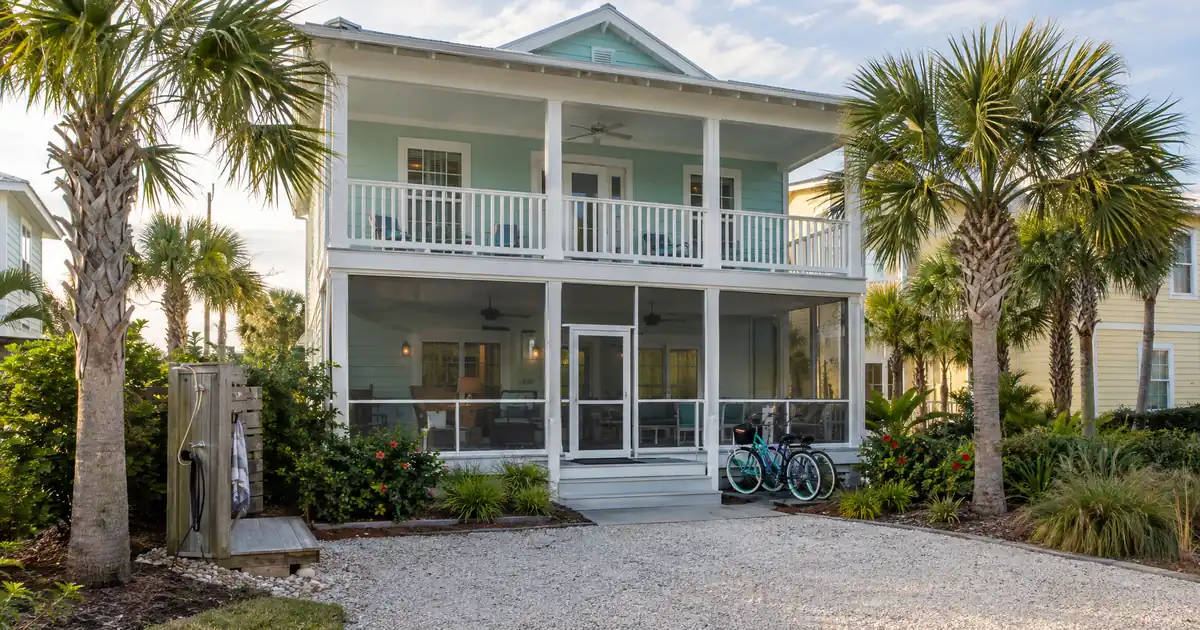
How A Post-liquidity DSCR Loan Reads A Vacation Rental’s First Year — The Quick Read: A vacation rental with no operating history gets financed on a projection, not a ledger. On a purchase, the lender leans on the appraiser’s short-term-rent analysis and typically counts around 80% of the projected gross. On a refinance, most programs want twelve months of real booking history before that same income counts at all. A post-liquidity buyer — someone financing a purchase with fresh capital from a sale, an exit, or a windfall — still runs through this exact same income test. The cash doesn’t change how the property’s rent gets read.
That’s the core mechanic. Everything below is the detail that decides whether a specific file clears.
Short-Term Rental Calculator
Run the STR numbers in your market
Rate source: Freddie Mac 30-yr average via FRED® — Federal Reserve Bank of St. Louis · effective Sep 17, 2026
Prefilled with local estimates — enter your nightly rate, occupancy, taxes, and insurance for a more accurate picture.
Short-term rental income is documented with a 12-month history or a market data report. Program parameters update from Lendmire’s centralized guideline source.
As of Sep 17, 2026 · General Freddie Mac market benchmark, not a Lendmire loan offer. Nightly rate, occupancy, taxes, and insurance are editable estimates. Qualifying income for short-term rentals varies by program — some use appraisal market rent, others use documented STR history or projections — and is confirmed in underwriting. Not a Loan Estimate, approval, or commitment to lend. Program availability and eligibility are subject to lender guidelines, credit approval, property review, and underwriting.
Why Does A First-Year Vacation Rental Get Underwritten Differently?
Because there’s no trailing income to point to. A property that’s been renting on Airbnb or Vrbo for two years has bank statements, platform payout history, and a real occupancy pattern. A property closing this month has none of that — just a projection built off comparable listings nearby.
Standard rental appraisal tools weren’t built for this. The form appraisers use to document market rent on a single-family investment property, Form 1007, was designed for monthly leases. Fannie Mae’s own guidance confirms the form’s scope — it exists to estimate monthly market rent, not nightly booking revenue. An appraiser can’t take a nightly rate, multiply by 30, and call that the Form 1007 number. The math doesn’t translate that cleanly, and appraisal-industry guidance is explicit that trying to force it creates a bad estimate.
So the non-QM world built a workaround: third-party short-term rental data platforms. The best-known one pulls listing and revenue data from millions of active properties across major booking sites, and its market-level revenue estimates have tracked actual reported revenue closely when checked against public filings from AirDNA’s own market data. That’s the tool that fills the gap Form 1007 leaves open on a brand-new short-term rental.
What Actually Happens To A Purchase-Money File?
On a purchase, the lender usually accepts the appraiser’s short-term-rent analysis as the income basis. There’s simply nothing else to underwrite against yet. Across the wholesale network Lendmire works with, that income typically gets counted at around 80% of the projected gross — not the full number the projection tool shows.
That discount matters. Investors walk in with a strong platform-generated revenue estimate all the time, expecting it to be the coverage number outright. It almost never is. Underwriting treats a projection as softer evidence than a signed lease or a completed booking history — a lease has already happened, a projection is still a forecast, however well-built. The 80% haircut is the industry’s way of pricing that uncertainty into the file rather than ignoring it.
Coverage still needs to clear a workable level to get full leverage. Most programs in the network want 1.00 coverage or better to unlock full leverage on this property type. That ratio is calculated using the discounted rent figure, not the raw projection. Files with coverage below that floor aren’t automatically dead. A handful of lenders in the network will still work with sub-1.00 coverage on select programs, but leverage and terms adjust downward to compensate, subject to underwriting.
Credit and experience matter here too. Short-term rental income generally only counts for borrowers who’ve owned income property for at least twelve months within the prior three years — this isn’t a first-time-investor path. Reserve requirements run around six months of the property’s full payment on most files, stretching to twelve months for a first-time investor buying their first rental altogether.
What Changes On A Refinance?
Everything, basically. A refinance on a first-year vacation rental generally needs twelve months of documented operating history before that short-term income counts toward qualifying — the appraiser’s projection that worked at purchase doesn’t carry over automatically.
This is the single biggest fork in the road for this property type. A borrower who bought using the projection method a year ago, expecting to refinance on the same logic, is often surprised that the rules shift entirely. The lender wants operating statements, platform payout history, and comparable long-term lease data behind the number now — not a forecast. If the property hasn’t been operating a full twelve months, most programs fall back to reading the property on long-term rent comparables instead, which can produce a meaningfully lower income figure and a weaker coverage ratio.
This is also where seasoning comes into the conversation. Seasoning is the minimum ownership period a lender wants before it lets a refinance lean on the property’s actual performance. It’s a separate idea from the twelve-month booking-history requirement, but the two often overlap.
Does A Post-Liquidity Buyer Get Different Treatment?
No — where your down payment comes from doesn’t change how the lender reads the property’s income. Say you’re financing a purchase with money from a business sale, a stock sale, or an inheritance. You’ll still go through the same purchase-money underwriting. That means the appraiser does a short-term-rent analysis, applies a discounted gross, runs a coverage test, checks reserves, and reviews your experience.
A liquidity event helps most on the leverage side, not the income side. More cash down means a lower loan amount relative to the property’s value. This can offset a softer coverage ratio or open up a larger loan tier. Lendmire’s complete DSCR loans guide explains how the property’s rental income — not your personal income documents — drives qualification across DSCR programs generally. That basic rule doesn’t change for a well-capitalized buyer. Even if you have strong reserves and a large down payment after a liquidity event, the property’s projected income still needs to clear the coverage test. Deep pockets buy you flexibility on leverage — they don’t exempt you from the rent test.
Where post-liquidity buyers do have an edge: loan size. This ladder handles files from $150,000 up through $10,000,000 on the portfolio program, though short-term-rental collateral specifically caps out at $2,000,000 regardless of the borrower’s liquidity. An investor sitting on seven figures from an exit isn’t limited by loan-size headroom on a typical vacation-rental purchase — the STR cap gets hit before the program ceiling does.
What Leverage And Coverage Actually Look Like
The size of the loan drives the leverage available, and short-term rental collateral has its own ceiling separate from the standard program. On most files in the $150,000 to $1,000,000 range, purchase leverage runs up to 80% with credit around 660 or better. Move past $1,000,000 and leverage steps down — 75% is typical through $2,000,000 on rate-term and purchase transactions, with credit expectations climbing toward 700 as loan size grows.
Cash-out on a vacation rental is more restrictive than a straight purchase. Cash-out on standard rental collateral can run to 75% at the smaller end, but on short-term-rental collateral that ceiling typically sits closer to 70% at the same tier — the property type carries its own discount on top of the loan-size ladder. Above $3,000,000, cash-out generally isn’t available at all in this program, and short-term rental files don’t reach that tier to begin with given the $2,000,000 STR cap.
Coverage below 1.00 isn’t automatically disqualifying, but it’s a narrower door. A few lenders in the network will underwrite sub-1.00 coverage on select programs up to $2,000,000, with leverage and terms adjusted to compensate — that’s a real path for a vacation rental whose projected income runs light against its payment, but it comes at reduced leverage rather than the full ladder above. No-ratio qualification, where the lender doesn’t apply a coverage test at all, exists on other property types up to $2,000,000 with a seven-year clean housing history — but it’s not available on the short-term-rental path itself.
Loans above $2,000,000 typically need two appraisals. Many files can use interest-only structuring, up to 120 months, on a 30- or 40-year term. This is often available at 75% maximum leverage, where coverage clears roughly 0.75 or better.
The Two Gates That Sit Beside The Income Test
A strong projection doesn’t finish the file. Two separate approval gates run alongside the income analysis, and either one can kill a deal with great numbers on paper.
DSCR vs. conventional financing
Two common ways to finance an investment property in this market. They qualify you differently — here’s how investors weigh them.
Why investors choose it
- Qualifies on the property’s rental income — no personal tax returns, W-2s, or pay stubs needed to document income.
- No personal debt-to-income ceiling to clear, so existing mortgages and obligations don’t cap your borrowing the same way.
- Can be closed in an LLC, keeping the property inside a business entity.
- Built for scaling — not held to the limit on number of financed properties that conventional financing applies.
- Underwriting centers on the deal: generally qualifies when the rent covers the payment, a 1.00x coverage ratio being a common baseline (confirmed in underwriting).
- Designed specifically for investment property, including long-term and, where the program allows, short-term rentals.
Where it’s strong
- Often the lowest ongoing financing cost for a buyer who fully qualifies on personal income — a fit for a first property or a cost-first purchase.
Trade-offs for investors
- Requires full personal income documentation and must fit within a debt-to-income limit — salary, existing debts, and other mortgages all count.
- Typically held in your personal name rather than a business entity.
- Caps how many financed properties you can carry, which can become a ceiling as a portfolio grows.
- Evaluates you as a borrower as much as the property, which usually means more paperwork.
How investors usually choose: a first or single property often optimizes for the lowest financing cost; portfolio builders often optimize for leverage, vesting in an LLC, and scaling past conventional caps. The right answer depends on your goals, the property, and current guidelines — both paths run through select lenders in Lendmire’s wholesale network, with eligibility and terms confirmed in underwriting.
Legal use. Municipal or HOA permission to operate a short-term rental has to be documented for that specific property — it’s never assumed just because the city or state generally allows it. Short-term rental rules can vary by city, county, HOA, and property type, and they change. An investor should confirm local rules before relying on projected rental income at all, because a property with excellent projected revenue still fails underwriting if the jurisdiction doesn’t permit the use.
Insurance. The policy in place needs to match how the property actually operates — landlord, commercial, or a specific short-term-rental endorsement, depending on the property and insurer. A standard homeowner’s policy on a property being rented nightly is a mismatch underwriting will catch.
One pattern shows up constantly across files with strong AirDNA numbers: the income side looks great, and the deal still stalls on a permit question or an insurance gap that nobody checked until late in the file. Running down legal-use documentation early, before the projection even gets pulled, saves a lot of wasted underwriting time.
Key Terms Defined
DSCR (debt service coverage ratio): the property’s monthly rental income divided by its full monthly payment — a ratio at or above 1.00 means the rent covers the payment.
Form 1007: the standard appraisal form used to estimate monthly market rent on a single-family investment property; not built for nightly booking income.
Seasoning: the minimum period a lender wants a borrower to have owned or operated a property before letting a refinance rely on its actual performance rather than a projection.
Business-purpose loan: a loan made for an investment or rental property rather than a primary residence, underwritten on the property’s income instead of the borrower’s traditional personal-income documentation.
No-ratio qualification: a loan structure where the lender doesn’t apply a minimum coverage test at all, relying instead on credit history, reserves, and equity.
Frequently Asked Questions
Does a bigger down payment offset a weak vacation-rental projection? It helps the leverage side of the file, not the income test itself. A lower loan amount relative to value can move a borderline coverage ratio into a workable leverage tier, but the projected rent still has to clear whatever coverage floor the specific program requires.
Can a post-liquidity buyer skip the twelve-month operating history on a refinance? Generally no. Most programs in the network still want documented operating history before short-term rental income counts on a refinance, regardless of how the borrower’s capital was sourced. The projection method that works at purchase doesn’t typically carry forward to a later cash-out.
What if the property has been vacant since purchase? An appraiser still produces a market-rent estimate from comparables even with no bookings on record, and the lender leans more heavily on that estimate in the absence of any actual income stream — similar to how a brand-new purchase gets read.
Does AirDNA’s Market Score or listing count factor into the decision? Individual lenders across the wholesale network apply their own screening criteria to the projection tool’s output, and requirements vary by program. The projection itself is one input; underwriting still discounts it and weighs legal-use and insurance factors separately.
Is a condo or condotel treated the same as a single-family vacation rental? Not exactly — condotels typically cap around 65% leverage on a refinance and 75% on a purchase, with a loan-size ceiling of $1,500,000 and required cash-in-hand at closing, reflecting the extra risk lenders assign to hotel-style condo operations.
Are you thinking about buying or refinancing a first-year vacation rental? Lendmire can help. We compare how different programs in our wholesale network would view the property’s projected income, the available leverage, and the reserve requirements. This helps you plan before you make an offer. Keep in mind that every figure here varies by lender and program. Guidelines, property type, leverage, and credit profile all play a role.
Investors focused on short-term rentals can review DSCR loans for Airbnb and short-term rentals.
For current guidelines and terms, see Lendmire’s super jumbo DSCR loan programs page.
Self-employed borrowers can compare both super jumbo programs on Lendmire’s self-employed mortgages page.
About Lendmire
Lendmire — NMLS# 2371349 — is a DSCR and non-QM mortgage brokerage with investor loan programs in 40 markets, including Washington, D.C. DSCR eligibility is commonly reviewed by the lender around property-level rent rather than personal income documentation, subject to lender guidelines, and the brokerage helps arrange financing for LLC-owned portfolios beyond conventional financed-property limits. Recognized by Scotsman Guide as a Top Mortgage Workplace in 2025 and 2026.
Lendmire’s Top Mortgage Workplace recognition is documented by Scotsman Guide 2025 Top Mortgage Workplace and Scotsman Guide 2026 Top Mortgage Workplace.
Get Started
Ready to find the right loan for you?
In about 30 seconds you can review financing options available for your home or investment property. No commitment required.
Informational only. Not a Loan Estimate, approval, or commitment to lend. Program availability and eligibility are subject to lender guidelines, credit approval, property review, and underwriting.
References
1. Fannie Mae Appraiser Update June 2024
2. AirDNA — New York market data page
Brandon Miller
Founder & CEO, Mortgage Loan Originator, Lendmire LLC
- Mortgage Loan Originator · NMLS# 1129696 · Verify on NMLS Consumer Access
- North Carolina Real Estate Broker · License# 343312 · Verify on NCREC
- North Carolina Insurance Producer · License# 19053198 · Property, Casualty, Life, Health · Verify on NAIC SBS
- Lendmire LLC · Firm NMLS# 2371349 · Verify firm licensure
Disclosure information. Lendmire is a state-licensed mortgage brokerage under NMLS# 2371349. Lendmire is not a depository institution, direct lender, or financial advisor — all loans referenced are placed through wholesale lender partners and are subject to each lender's underwriting standards. This article is provided for general informational purposes and is not a commitment to lend, nor does it constitute financial, legal, or tax advice. Loan programs, terms, rates, and qualification standards change without notice and depend on borrower profile, property type, and the state in which the subject property is located. Equal Housing Opportunity provider. NMLS Consumer Access: nmlsconsumeraccess.org.


