
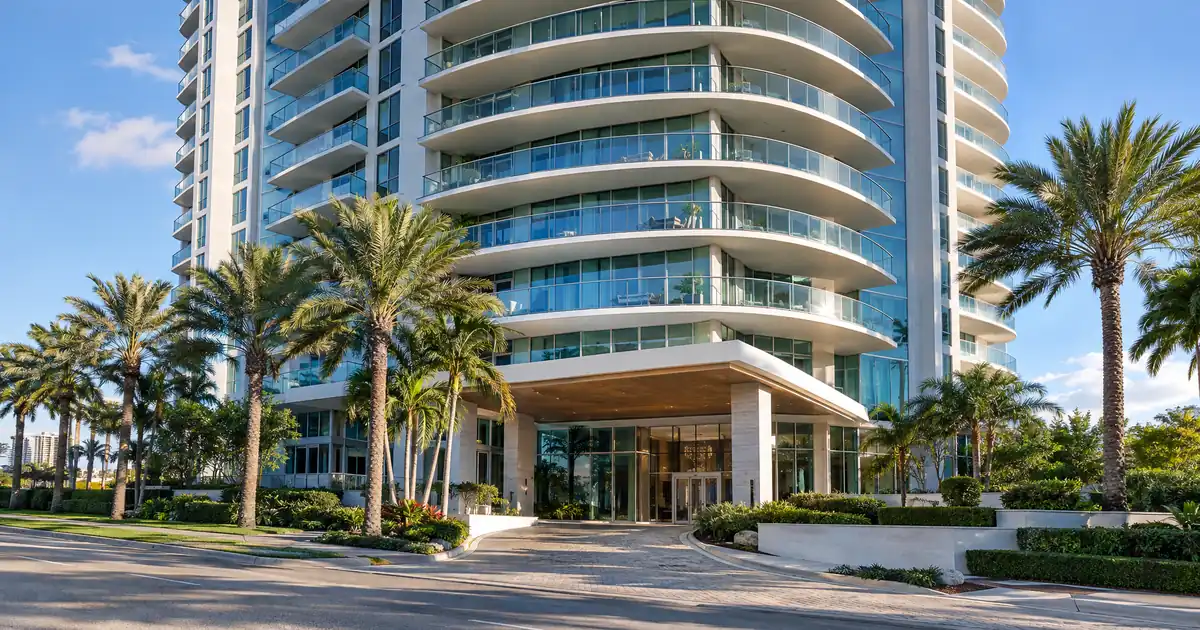
Finance a Luxury Condo on a Jumbo DSCR — The Quick Read: A luxury condo purchase almost always lands above conventional loan limits, which pushes the file into jumbo territory before anyone even looks at the building. DSCR loans — rental loans that qualify on the property’s income instead of your traditional personal-income documentation — can carry that jumbo balance up to $10 million on a portfolio investor program, with leverage stepping down as the loan gets bigger. The real work isn’t the loan size. It’s clearing the condo project itself, since luxury towers trip more red flags than a plain single-family rental ever will.
Key Takeaways
DSCR Calculator
Run the numbers in your market
Rate source: Freddie Mac 30-yr average via FRED® — Federal Reserve Bank of St. Louis · effective Sep 17, 2026
Prefilled with local estimates — enter your own rent or nightly figures, taxes, insurance, and HOA for a more accurate picture.
Program parameters update from Lendmire’s centralized guideline source. Taxes and insurance are editable estimates.
As of Sep 17, 2026 · General Freddie Mac market benchmark, not a Lendmire loan offer. Rent, nightly rate, occupancy, taxes, and insurance are editable estimates. Short-term rental figures are estimates only and vary significantly by season, property type, management approach, and local short-term-rental rules — confirm local regulations before relying on them. Qualifying income for short-term rentals varies by program — some use appraisal market rent, others use documented STR history or projections — and is confirmed in underwriting. Not a Loan Estimate, approval, or commitment to lend. Program availability and eligibility are subject to lender guidelines, credit approval, property review, and underwriting.
- DSCR stands for debt-service coverage ratio — rent divided by the full monthly obligation (principal, interest, taxes, insurance, and HOA dues). A ratio of 1.00 means rent exactly covers the payment.
- Leverage steps down as loan size climbs: 80% at the low end, down to 60% on review above $4 million.
- Non-warrantable condos — buildings that fail agency project rules for reasons that have nothing to do with the unit itself — are reviewable through select DSCR programs, but capped lower than a clean, warrantable building.
- Condotels are treated as their own category, not a subtype of non-warrantable condo, with tighter leverage and a cash-in-hand requirement.
- HOA dues get folded directly into the coverage math, and on an amenity-heavy luxury tower, that line item can be the difference between a file that clears and one that doesn’t.
Why a Luxury Condo Almost Always Means Jumbo DSCR Financing
Once a purchase price clears the conforming loan limit for the county, the loan is jumbo by definition — no exceptions, no workarounds. That threshold moves every year and varies by county, so it’s less useful as a number than as a concept: above it, agency underwriting simply stops applying, and the loan is priced and reviewed on its own terms.
Luxury condos hit that line early, and not just because of price. High-rise buildings with concierge staff, pools, gyms, and elevator banks carry higher HOA dues than a garden-variety condo complex, and those dues get counted as debt in the coverage math. A $2.5 million condo with strong rent can still show a tighter debt-service coverage ratio than a $600,000 house with a fraction of the HOA bill. Size and building type compound each other — that’s the whole story of financing luxury condos, and it’s why a one-size approach almost never works.
Through Lendmire’s complete DSCR loans guide, investors can see the full mechanics of how rental-income review framework works before applying that logic to a condo file specifically.
The Coverage Ratio Math Behind a Luxury Condo File
The debt-service coverage ratio is gross monthly rent divided by the full monthly obligation — principal, interest, taxes, insurance, and any HOA dues, sometimes shortened to PITIA plus HOA. A ratio of 1.00 means the rent exactly covers that obligation. Above 1.00 means cushion. Below 1.00 means the rent falls short, and the file needs a different structure to work.
On most DSCR programs across the network Lendmire places files with, a ratio of 1.00 or higher earns full leverage for the loan tier. Coverage between roughly 0.75 and 0.99 is a real path through select lenders in the network, but it comes with reduced leverage and adjusted terms, subject to underwriting — never full leverage at a reduced ratio. No-ratio qualification, where the lender doesn’t size the loan to rent at all, exists through select wholesale programs up to $2 million, generally requiring a seven-year clean housing history and no late payments in the past 24 months, and always subject to underwriting.
Here’s the part that trips up luxury condo buyers specifically: HOA dues on a full-service building can run high enough to pull the ratio below 1.00 even when the rent itself looks strong on paper. A unit renting well above market can still show borderline coverage once dues, taxes, and insurance are stacked into the obligation side. That’s not a flaw in the math — it’s exactly what the ratio is designed to catch.
The Size Ladder: How Leverage Steps Down as the Loan Gets Bigger
Leverage on a jumbo DSCR loan doesn’t stay flat as the balance climbs — it steps down in tiers, and the credit floor rises alongside it. This is the single most useful table for a luxury condo buyer sizing a deal, because the loan amount alone often determines what down payment percentage the deal requires before the condo’s warrantability status even enters the conversation.
| Loan Amount | Purchase LTV | Cash-Out LTV | Credit Floor |
|---|---|---|---|
| $150K–$1M | 80% | 75% | 660+ |
| $1M–$1.5M | 75% | 70% | 700+ |
| $1.5M–$2M | 75% | 60% | 720+ |
| $2M–$3M | 75% | 60% | 720+ |
| $3M–$4M | 65% | No cash-out | 700+ |
| $4M–$6M | 60%, on review | No cash-out | 700+ |
| $6M–$10M | 60%, on review | No cash-out | 700+ |
These figures reflect typical ceilings across select wholesale-network programs Lendmire arranges through. They’re subject to underwriting on every file — never a guarantee. Every tier above $4 million goes through case-by-case review before submission, for purchase or rate-and-term only. Cash-out disappears entirely above $3 million on this program. No file above $1.5 million clears cash-out with credit at 680 or below.
Notice the pattern: down payment percentage rises steadily as the loan gets bigger, and cash-out access shrinks faster than purchase leverage does. An investor buying a $4.5 million penthouse for personal rental use is working with meaningfully less leverage than the same investor buying a $900,000 unit two floors down in the same building — the building’s warrantability status hasn’t even entered the picture yet.
Warrantable vs. Non-Warrantable — Why It Matters More on Luxury Towers
A non-warrantable condo is a building that fails agency project-eligibility rules for reasons that have nothing to do with any individual unit’s rentability — high investor concentration, HOA litigation, thin reserves, or too much commercial space in the building. Because DSCR loans aren’t sold to Fannie Mae or Freddie Mac, they’re not bound by that review — but most lenders still look at the same risk factors, just with a different lens and a different ceiling.
Agency rules exist for a specific reason: they protect loans an agency intends to purchase. As Fannie Mae’s own selling guide puts it, project eligibility review exists because “project eligibility and financial strength are key drivers of credit performance on individual unit mortgages” (Fannie Mae Selling Guide). Fannie Mae’s Condo Project Manager tool certifies buildings against that standard, and a project flagged “Unavailable” in that system is automatically ineligible for agency purchase (Fannie Mae Condo Project Manager). Luxury high-rises trip these flags more often than modest buildings, precisely because they’re large, heavily amenitized, and carry more investor-owned units.
None of that agency rejection stops a DSCR file — it just changes the ceiling. On the program Lendmire arranges through, non-warrantable condos remain eligible up to 75% leverage and a $1.5 million loan amount, subject to underwriting. That’s a real, workable path — it’s just a lower ceiling than a warrantable building gets at the same price point, and investors evaluating a luxury tower should confirm the building’s project status early, before falling in love with a specific unit. Terms vary by lender guidelines, property type, leverage, credit profile, and full file review.
Condotels Are a Different, Harder Category
Condotels aren’t a subtype of non-warrantable condo. They’re their own animal, with tighter terms across the board. A condotel is a unit inside a building operated like a hotel. It has a shared front desk, a rental-management program, daily housekeeping available, and often a mandatory or heavily incentivized rental pool.
On the program Lendmire places files through, condotels are eligible for 75% purchase leverage and 65% on a refinance. The loan amount is capped at $1.5 million. These loans also require $250,000 in cash-in-hand as a reserve-and-liquidity condition. This is a structural signal: lenders treat this category as meaningfully riskier than a standard condo, even a non-warrantable one. Investors often assume a condotel financing conversation will mirror a regular luxury condo conversation. They’re usually surprised by how much narrower the options are.
The Insurance Stack: Master Policy vs. Your Own HO-6 Coverage
Every condo loan file must reconcile two separate insurance policies. How they split depends entirely on what the HOA’s master policy actually covers. The association’s master policy protects the building’s structure and common areas — lobbies, elevators, pools, gyms. A separate HO-6 policy covers the owner’s own condo insurance. This policy offers “property and liability coverage specifically designed for condo unit owners” (State Farm).
The dividing line moves depending on the master policy’s form. A “bare walls” policy covers only the structure — drywall, framing, wiring — leaving fixtures, countertops, and appliances to the owner’s HO-6. A “single entity” policy adds built-in fixtures. An “all-in” policy covers the entire interior including finishes (Policygenius). On a luxury unit with high-end finishes, that distinction matters a lot — a bare-walls master policy on a unit with imported stone counters and custom cabinetry means the owner’s HO-6 dwelling coverage has to fill a much bigger gap, and the lender will size that requirement to whichever form the building carries.
Here’s one misconception worth clearing up directly: the HOA’s master policy does not automatically cover an owner’s unit interior, belongings, or a special assessment after a major loss. That’s exactly what the individual HO-6 policy exists to fill. Investors sometimes assume the association’s coverage handles everything. In practice, the lender reconciles both policies before clearing the file to close.
Short-Term Rental Income on a Luxury Condo
Luxury condos in resort and coastal markets are frequently bought for short-term rental income rather than a long-term lease, and DSCR lenders handle that income differently than they handle standard rent. On the program Lendmire arranges through, short-term-rental files require a coverage ratio of 1.00 or higher, cap at a $2 million loan amount, and qualify on either twelve months of documented operating history on a refinance or the appraisal’s short-term-rent analysis on a purchase — counted at 80% of gross projected income. This path is generally reserved for investors with at least twelve months of experience owning income property in the last three years, and it isn’t available on the no-ratio path.
Municipal permission to operate a short-term rental has to be documented for the specific property in question — short-term rental rules can vary by city, county, HOA, and property type, so investors should confirm local rules before relying on projected rental income from that source. This is a real constraint on luxury condos specifically, since many high-end buildings have HOA rules restricting or banning short-term rentals entirely, independent of what the city allows.
Yield compression is the quieter problem here. Rents at the luxury end are high in absolute terms but thin as a percentage of purchase price — a five-figure monthly rent against a multimillion-dollar condo is a small yield, and that’s exactly the scenario where a standard 1.00-coverage DSCR loan gets tight even with strong rent. Investors chasing a coastal or ski-town luxury condo often find the coverage math is the binding constraint, not the down payment. Lendmire’s guide on getting a luxury condo cleared on a jumbo walks through that clearance process in more detail.
Reserves, Appraisals, and the Credit Gate Above $3 Million
Scrutiny rises with loan size, separate from anything the condo project itself does. Reserves on most files run six months of the full monthly obligation held on the subject property — twelve months for first-time investors — and no extra reserves are required for other financed properties in a portfolio, up to twenty financed properties total. Above $2 million, two separate appraisals are typically required rather than one, adding a layer of valuation confirmation that smaller loans skip.
Credit requirements also step up at the top end. A 660 floor applies broadly, but files above $3 million typically need 700 or better. Borrowers also need a clean 24-month payment history and 48 months of seasoning after any major credit event. Eligibility is limited to citizens and permanent residents. Interest-only structuring is available for up to 120 months on 30- and 40-year terms. It’s capped at 75% leverage and a coverage ratio of 0.75 or better. Qualification is based on the interest-only payment rather than the fully amortizing one. This structuring tool can meaningfully help coverage math on a tight luxury file.
Appraisers use a standard comparable-rent form for one-unit rental properties. This form sets the market rent used for qualification (Blueprint). The appraisal industry warns against a common shortcut for short-term rentals. Don’t just multiply the nightly rate by 30 days. This overstates income because it ignores vacancy, personal property, and operating expenses (McKissock). A well-prepared luxury condo file gets ahead of this problem. It has a realistic income analysis ready before the appraisal happens, not after.
Who This Financing Fits — and Who It Doesn’t
This structure fits an investor who buys or holds a luxury condo purely for rental income. This investor wants qualification based on the property’s cash flow, not traditional personal-income documents. They’re also comfortable with entity vesting. LLC or trust ownership is generally welcomed, subject to program eligibility, without needing layered entity structures. This structure also fits an investor whose portfolio has grown large. A standard mortgage’s financed-property limits would block their deal. This program supports up to twenty financed properties instead.
DSCR vs. conventional financing
Two common ways to finance an investment property in this market. They qualify you differently — here’s how investors weigh them.
Why investors choose it
- Qualifies on the property’s rental income — no personal tax returns, W-2s, or pay stubs needed to document income.
- No personal debt-to-income ceiling to clear, so existing mortgages and obligations don’t cap your borrowing the same way.
- Can be closed in an LLC, keeping the property inside a business entity.
- Built for scaling — not held to the limit on number of financed properties that conventional financing applies.
- Underwriting centers on the deal: generally qualifies when the rent covers the payment, a 1.00x coverage ratio being a common baseline (confirmed in underwriting).
- Designed specifically for investment property, including long-term and, where the program allows, short-term rentals.
Where it’s strong
- Often the lowest ongoing financing cost for a buyer who fully qualifies on personal income — a fit for a first property or a cost-first purchase.
Trade-offs for investors
- Requires full personal income documentation and must fit within a debt-to-income limit — salary, existing debts, and other mortgages all count.
- Typically held in your personal name rather than a business entity.
- Caps how many financed properties you can carry, which can become a ceiling as a portfolio grows.
- Evaluates you as a borrower as much as the property, which usually means more paperwork.
How investors usually choose: a first or single property often optimizes for the lowest financing cost; portfolio builders often optimize for leverage, vesting in an LLC, and scaling past conventional caps. The right answer depends on your goals, the property, and current guidelines — both paths run through select lenders in Lendmire’s wholesale network, with eligibility and terms confirmed in underwriting.
It fits less well for an investor counting on cash-out proceeds above a $3 million balance — that door is closed entirely on this program — or an investor whose only realistic rent scenario is a short-term rental in a building where the HOA restricts nightly rentals. It also fits poorly for a first-time real estate investor targeting a condotel, where the twelve-month experience requirement on short-term income and the higher reserve bar both apply.
Across the files Lendmire has helped structure through its wholesale network, the recurring pattern on luxury condos isn’t the loan size — it’s the building. A $3 million unit in a small, financially clean, low-litigation building often clears faster and at better leverage than a $1.2 million unit in a sprawling amenity-heavy tower with active HOA disputes. Price gets the attention; the condo project’s paperwork decides the outcome.
What Can Go Wrong
The most common failure point on a luxury condo DSCR file isn’t the borrower — it’s the building. New-construction luxury condo projects that haven’t reached agency presale thresholds face no restriction on DSCR programs; that presale rule protects agency securitization pipelines, not property risk, so it simply doesn’t apply here. But active HOA litigation, insolvent reserve funds, or an HOA that hasn’t yet transferred control from the developer to owners can stall or kill a file regardless of the loan program, because those conditions affect the unit’s eventual resale value — and lenders think about resale liquidity even on a loan they intend to keep on their own books.
A second common miss: assuming a certificate of occupancy and completed HOA turnover aren’t necessary because the loan isn’t going to an agency. They’re still required — the property has to be rent-ready to qualify. A third: treating a condotel financing conversation like a regular non-warrantable condo conversation, then discovering the cash-in-hand requirement and lower leverage ceiling late in the process, after an offer is already in.
For readers financing a luxury short-term rental specifically rather than a long-term lease condo, Lendmire’s guide on financing a luxury short-term rental with a jumbo loan covers that income path in more depth.
Tax treatment can depend on how the funds are used and how the property is held; investors should keep clear records and speak with a qualified tax professional before relying on any deduction. This article is for general information only and isn’t legal or tax advice — investors should consult a qualified attorney or CPA about their own situation before making a financing decision.
Frequently Asked Questions
Does a non-warrantable condo status automatically disqualify a luxury unit from financing?
No. Non-warrantable status disqualifies a building from agency purchase, not from DSCR financing generally. Select lenders in Lendmire’s network finance non-warrantable condos up to 75% leverage and a $1.5 million loan amount, subject to underwriting, evaluating the building’s HOA financials, litigation status, and investor concentration directly rather than through an agency checklist.
Is a condotel treated the same as a non-warrantable condo?
No, and treating them as interchangeable is a common and costly assumption. Condotels carry their own overlay: leverage caps at 75% purchase and 65% refinance, a $1.5 million loan ceiling, and a $250,000 cash-in-hand requirement — meaningfully tighter than a standard non-warrantable condo file.
Do HOA dues really affect my coverage ratio that much on a luxury building?
Yes, and it’s often the deciding factor. HOA dues get added directly into the monthly obligation side of the coverage ratio, alongside taxes and insurance. A full-service luxury tower with concierge and amenity staffing can carry dues high enough to pull an otherwise strong rent below a workable ratio.
Can I use short-term rental income to qualify a luxury condo?
Yes, through a specific short-term-rental path that caps at a $2 million loan amount and requires a coverage ratio of 1.00 or higher. Income is measured either from twelve months of documented operating history on a refinance or an appraisal-based short-term-rent analysis on a purchase, counted at 80% of gross, and the building’s HOA rules on nightly rentals still have to be confirmed separately.
Can I hold a luxury condo in an LLC and still get DSCR financing?
Generally, yes — entity vesting including LLC ownership is welcomed on this program, without layered entity structures, subject to program eligibility and lender guidelines. The building’s warrantability review runs as a separate underwriting question from how the title is vested.
If you are buying or refinancing a luxury condo and want to see how the leverage ladder, coverage ratio, and reserve requirements apply to your specific property, Lendmire can help you compare DSCR loan options based on the property’s income, the building’s status, your credit profile, and your investor goals. Exact terms depend on the lender’s guidelines, property type, leverage, and a full review of the borrower’s file.
For current guidelines and terms, see Lendmire’s super jumbo DSCR loan programs page.
Self-employed borrowers can compare both super jumbo programs on Lendmire’s self-employed mortgages page.
About Lendmire
A non-QM mortgage broker (NMLS# 2371349), Lendmire arranges DSCR financing for real estate investors in 40 markets — 39 states plus Washington, D.C. Because deals are underwritten primarily on property cash flow rather than personal income documentation, the structure suits self-employed buyers and entity-owned portfolios. Lendmire places loans through wholesale investor lenders; it is not a direct lender. Scotsman Guide named Lendmire a Top Mortgage Workplace in both 2025 and 2026.
Get Started
Ready to find the right loan for you?
In about 30 seconds you can review financing options available for your home or investment property. No commitment required.
Informational only. Not a Loan Estimate, approval, or commitment to lend. Program availability and eligibility are subject to lender guidelines, credit approval, property review, and underwriting.
References
1. Fannie Mae Selling Guide – General Information on Project Standards
2. Fannie Mae – Condo Project Manager (CPM)
3. State Farm – Condo Insurance Basics
4. Policygenius – HO-6 Condo Insurance Guide
5. Blueprint – What Is Form 1007?
6. McKissock Learning – Form 1007 and STR Appraisals
Brandon Miller
Founder & CEO, Mortgage Loan Originator, Lendmire LLC
- Mortgage Loan Originator · NMLS# 1129696 · Verify on NMLS Consumer Access
- North Carolina Real Estate Broker · License# 343312 · Verify on NCREC
- North Carolina Insurance Producer · License# 19053198 · Property, Casualty, Life, Health · Verify on NAIC SBS
- Lendmire LLC · Firm NMLS# 2371349 · Verify firm licensure
Disclosure information. Lendmire is a state-licensed mortgage brokerage under NMLS# 2371349. Lendmire is not a depository institution, direct lender, or financial advisor — all loans referenced are placed through wholesale lender partners and are subject to each lender's underwriting standards. This article is provided for general informational purposes and is not a commitment to lend, nor does it constitute financial, legal, or tax advice. Loan programs, terms, rates, and qualification standards change without notice and depend on borrower profile, property type, and the state in which the subject property is located. Equal Housing Opportunity provider. NMLS Consumer Access: nmlsconsumeraccess.org.


