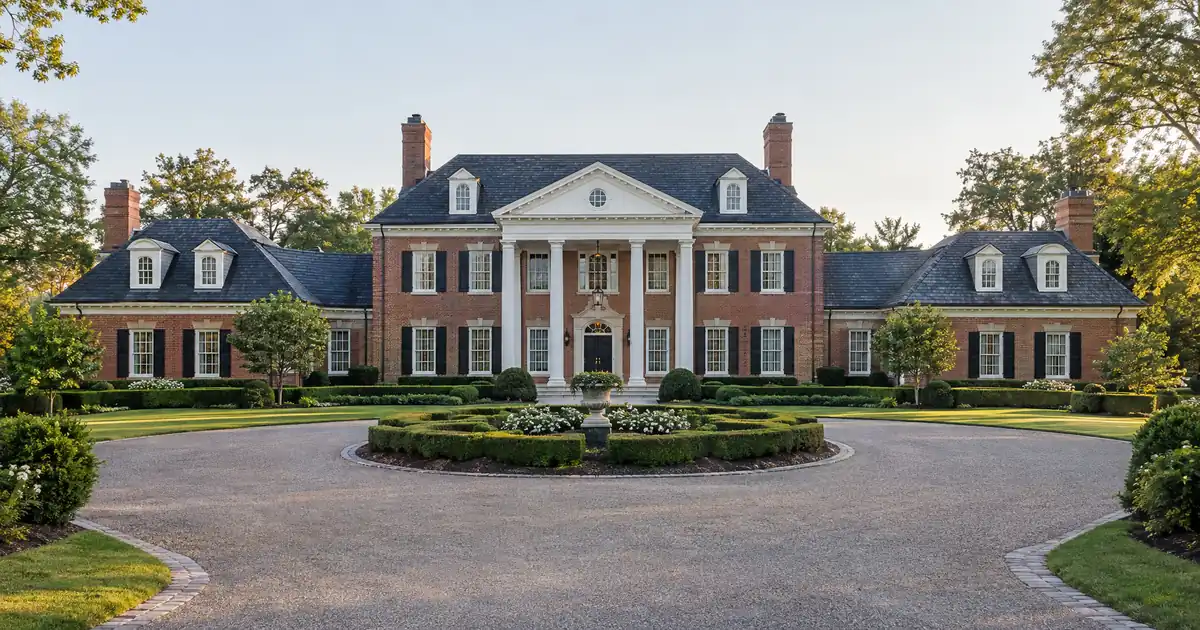
A former home can generally qualify for DSCR financing without a fixed waiting period tied to its past use as a primary residence — provided owner-occupancy has genuinely stopped, the old mortgage’s occupancy covenant is satisfied, and the file can document rental income the lender can rely on. What actually controls timing isn’t a “former home” rule at all. It’s three separate mechanics that happen to collide on this one transaction.
Former Home Qualify As A DSCR Rental Property — The Quick Read
There’s no federal calendar that says “wait six months because this house used to be your primary residence.” The real gates are these: has your old loan’s occupancy clause been satisfied? Does the file meet the new DSCR lender’s own title-seasoning policy? And is there enough rental documentation — a lease, an appraisal rent schedule, or both — to support a coverage number? Clear these three gates, and a converted home moves into the same underwriting lane as any other rental.
DSCR Calculator
Run the numbers in your market
Rate source: Freddie Mac 30-yr average via FRED® — Federal Reserve Bank of St. Louis · effective Sep 17, 2026
Prefilled with local estimates — enter your own rent or nightly figures, taxes, insurance, and HOA for a more accurate picture.
Program parameters update from Lendmire’s centralized guideline source. Taxes and insurance are editable estimates.
As of Sep 17, 2026 · General Freddie Mac market benchmark, not a Lendmire loan offer. Rent, nightly rate, occupancy, taxes, and insurance are editable estimates. Short-term rental figures are estimates only and vary significantly by season, property type, management approach, and local short-term-rental rules — confirm local regulations before relying on them. Qualifying income for short-term rentals varies by program — some use appraisal market rent, others use documented STR history or projections — and is confirmed in underwriting. Not a Loan Estimate, approval, or commitment to lend. Program availability and eligibility are subject to lender guidelines, credit approval, property review, and underwriting.
Here’s what that means in practice, and where it breaks down.
Why People Think There’s a Mandatory Wait
Most borrowers assume there’s a rule buried somewhere that says a former primary residence needs to season for a set period before it can become a DSCR rental. There isn’t — at least not at the federal level.
DSCR loans are business-purpose investor loans. Because they’re business-purpose products, lenders review them differently from a standard owner-occupied mortgage — and that’s where the confusion starts. Borrowers mix up “different review” with “delayed eligibility.” But those are not the same thing. The classification depends on actual occupancy, not on how long the loan file has been open.
The Three Things That Really Gate Timing
Three separate clocks decide when a converted home is ready for DSCR financing, and none of them are a “former home” penalty.
1. The old mortgage’s occupancy clause. Most conventional, FHA, and VA loans include language requiring the borrower to occupy the home for a period before renting it out. This is a private contract term, not a federal rule — check the note.
2. The lender’s title-seasoning policy. Seasoning is a lender-level underwriting decision, not a regulatory one. It typically comes in two flavors: how long the borrower has held title, and how long rental income has actually been in place.
3. The appraisal’s ability to support rent. A freshly vacated home usually has no lease yet, so the appraiser’s rent opinion becomes the income documentation the lender leans on.
Satisfy those three and there’s no separate “conversion penalty” standing in the way.
The 14-Day Rule, Explained Plainly
If an owner plans to use the property more than 14 days in the coming year, it doesn’t count as non-owner-occupied under the federal test — even if it’s rented out the rest of the time. A beach house the owner visits for a month every summer stays classified as owner-occupied, regardless of how the loan paperwork labels it. Brief post-closing access for handoff or a quick repair visit isn’t the same as ongoing use — it’s the pattern of use across the coming year that matters, not a single visit.
For a single-family former home where the owner has genuinely moved out, the simpler non-owner-occupied rule applies once that threshold is met. Doss Law, PC explains how unit count changes the analysis in multi-unit acquire-versus-improve scenarios. But for a single-family conversion, the occupancy fact pattern is what decides it.
What Happens When There’s No Lease Yet
A vacant former home with no in-place tenant leans almost entirely on the appraiser’s rent opinion, which is exactly why pre-appraisal coverage estimates should be treated as rough, not locked.
The industry tool here is Form 1007, the single-family rent schedule. The appraiser pulls comparable rentals in the area and produces a market-rent opinion that stands in for a lease. As Class Valuation explains, whether the lender ultimately uses the actual lease or the appraiser’s number depends on the loan program and the file specifics — and on a vacant property, the appraiser’s opinion often carries more weight by default.
Underwriting practice generally defaults to the lower of the two numbers when both exist. That matters for anyone tempted to sign a high, non-arm’s-length lease with a family member right after moving out — it usually doesn’t move the rent used for lender review figure the way the borrower hopes.
Short-Term Rental Conversions Work Differently
If the plan is nightly rentals instead of a long-term lease, the standard rent-schedule tool simply doesn’t apply. Form 1007 was built for long-term lease comparables, and Class Valuation is direct about this: using it for short-term income conflicts with how the form is defined, and non-agency lending doesn’t change the obligations placed on the appraiser. The regulatory hook that actually governs this comes from CFPB Regulation Z, which treats credit extended on a non-owner-occupied rental property as business-purpose credit, full stop. This threshold, described directly in CFPB Regulation Z, is the actual bright line most people are looking for when they ask about a waiting period.
Across the wholesale network Lendmire places files through, short-term rental income on a converted home gets a separate analysis rather than the standard 1007. Most programs want twelve months of operating history on a refinance, or the appraisal’s short-term-rent analysis on a purchase. Lenders generally count this income at a discount to gross income — commonly around 80% — and typically reserve it for investors who’ve already owned income property recently. This is a meaningfully different documentation path than a plain long-term-lease conversion. It’s worth knowing this before assuming the short-term-rental route is the faster one. Short-term rental rules can vary by city, county, HOA, and property type, so investors should confirm local rules before relying on projected rental income.
What A Clean Conversion File Actually Looks Like
Across the wholesale network, the conversion files that move fastest through underwriting share a pattern. The old loan’s occupancy period is already satisfied. Insurance has been switched to a landlord policy before the file is submitted. And there’s either a signed lease or a completed appraisal rent schedule — not a promise of one still pending. Files that show up without these things in place aren’t rejected outright. But underwriters treat them more conservatively, simply because there’s less to anchor the rent number to.
What Underwriters Are Actually Checking
Occupancy is determined by actual facts, not by what the loan application calls the property. A signed lease, an occupancy affidavit, insurance switched to landlord coverage, and mail/address changes are the kinds of documentation that support a genuine conversion story. Labels don’t do that work — facts do.
On the income side, most programs across the network want to see one of two things on a converted single-family home: a signed lease at market or below, or a completed appraisal rent schedule if the property is vacant. Where both exist, the lower of the two typically controls.
DSCR Loan Sizing And Leverage On A Converted Rental
Across select wholesale programs Lendmire arranges through, loan amounts run from $150,000 up to $10,000,000 on the higher-balance investor ladder, with the standard DSCR program topping out at $3,000,000; short-term rental and no-ratio files are capped at $2,000,000.
Leverage steps down as the loan gets bigger. On coverage of 1.00 or better, purchase and rate-and-term leverage typically run 80% up to $1,000,000, then 75% through $3,000,000, stepping to 65% between $3,000,000 and $4,000,000, and down to 60% on review between $4,000,000 and $10,000,000 — every figure above $4,000,000 gets reviewed case by case before submission, purchase or rate-and-term only, subject to underwriting. Cash-out on standard rentals typically runs to 75% at lower balances, 70% through $1,500,000, and 60% through $3,000,000, with no cash-out available above that on this ladder; on short-term-rental collateral, cash-out tops out around 70% under the same scoping.
Credit floors typically sit around 660, moving to 700 above $3,000,000 on most files. Reserve requirements generally run 6 months of PITIA on the subject property (interest-only carry if the loan is structured that way), stepping to 12 months for first-time investors. Coverage below 1.00 — down through roughly 0.75 — is a real path through select lenders in the network up to $2,000,000, with LTV and terms adjusting accordingly, subject to underwriting. No-ratio qualification exists through a handful of programs to $2,000,000 for borrowers with a clean, lengthy housing-payment history, subject to underwriting — it’s never a bare “available,” and no minimum ratio is published for it.
None of these numbers change just because the property used to be a primary residence. Once the conversion is documented, the property becomes a rental like any other. It’s qualified mainly on whether the rental income covers the payment, not on the borrower’s usual personal-income paperwork — subject to lender guidelines. Lendmire’s complete DSCR loans guide walks through this qualification model in more depth, covering how coverage, leverage, and documentation work together.
DSCR vs. conventional financing
Two common ways to finance an investment property in this market. They qualify you differently — here’s how investors weigh them.
Why investors choose it
- Qualifies on the property’s rental income — no personal tax returns, W-2s, or pay stubs needed to document income.
- No personal debt-to-income ceiling to clear, so existing mortgages and obligations don’t cap your borrowing the same way.
- Can be closed in an LLC, keeping the property inside a business entity.
- Built for scaling — not held to the limit on number of financed properties that conventional financing applies.
- Underwriting centers on the deal: generally qualifies when the rent covers the payment, a 1.00x coverage ratio being a common baseline (confirmed in underwriting).
- Designed specifically for investment property, including long-term and, where the program allows, short-term rentals.
Where it’s strong
- Often the lowest ongoing financing cost for a buyer who fully qualifies on personal income — a fit for a first property or a cost-first purchase.
Trade-offs for investors
- Requires full personal income documentation and must fit within a debt-to-income limit — salary, existing debts, and other mortgages all count.
- Typically held in your personal name rather than a business entity.
- Caps how many financed properties you can carry, which can become a ceiling as a portfolio grows.
- Evaluates you as a borrower as much as the property, which usually means more paperwork.
How investors usually choose: a first or single property often optimizes for the lowest financing cost; portfolio builders often optimize for leverage, vesting in an LLC, and scaling past conventional caps. The right answer depends on your goals, the property, and current guidelines — both paths run through select lenders in Lendmire’s wholesale network, with eligibility and terms confirmed in underwriting.
Tax treatment can depend on how the funds are used and how the property is held; investors should keep clear records and speak with a qualified tax professional before relying on any deduction.
Key Terms Defined
Business-purpose credit — a loan classification for property that generates income rather than serves as a personal residence; DSCR loans fall into this category.
Title seasoning — a lender’s own policy on how long a borrower must have held title before certain refinance or cash-out options open up.
Rent seasoning — a related but distinct clock measuring how long rental income has actually been documented, separate from how long the borrower has owned the property.
Form 1007 — the standard appraisal addendum used to support a market-rent opinion for a single-family rental, used when no lease exists yet.
Non-owner-occupied — a property where the owner’s personal use falls at or under the federal 14-day threshold for the coming year, which is what allows business-purpose classification to apply.
Frequently Asked Questions
Can I still visit my former home occasionally after converting it to a DSCR rental?
Brief access for repairs or a handoff generally doesn’t break the classification, but ongoing personal use beyond roughly 14 days in the coming year does — the federal test looks at cumulative use across the year, not a single visit.
Does my current mortgage’s occupancy clause affect when I can get a DSCR loan?
Yes, and it’s checked separately from anything at the federal level. Most conventional, FHA, and VA loans include a private occupancy covenant requiring a period of owner-occupancy before the home can be converted and refinanced — that clause has to be satisfied or resolved first.
Will a high-rent lease I sign right after moving out raise my DSCR coverage number?
Not automatically. Underwriting practice generally defaults to the lower of the signed lease and the appraiser’s market-rent opinion, so a non-arm’s-length or above-market lease signed the day after move-out often doesn’t move the coverage figure the way borrowers expect.
Is there a difference in how quickly a long-term rental conversion versus a short-term rental conversion gets documented? Yes. A long-term conversion typically relies on a signed lease or the standard appraisal rent schedule. A short-term rental conversion uses a separate income analysis entirely, since the standard rent-schedule form isn’t built for nightly-rental income, and most programs want a documented operating history or the appraisal’s short-term-rent analysis instead.
What if my former home is still vacant with no lease at all when I apply?
The appraiser’s rent opinion becomes the primary income documentation in that scenario, which means the coverage ratio quoted before the appraisal is completed should be treated as an estimate rather than a locked number.
Are you buying or refinancing a rental property? Do you want to see how the numbers work on a converted home? Lendmire can help you compare DSCR loan options based on the property’s rental income, credit profile, leverage, and investor goals.
Investors who want the broader program framework can review how DSCR loans work.
For current guidelines and terms, see Lendmire’s super jumbo DSCR loan programs page.
Self-employed borrowers can compare both super jumbo programs on Lendmire’s self-employed mortgages page.
About Lendmire
Lendmire — NMLS# 2371349 — is a mortgage brokerage specializing in DSCR investor loans, helping arrange financing across 40 markets, including Washington, D.C., through wholesale and investor-lending channels. The model centers on property-level rental income reviewed by the lender rather than W-2 documentation, subject to lender guidelines, suiting entity-owned and multi-property investors. Lendmire holds Scotsman Guide Top Mortgage Workplace recognition for 2025 and 2026.
Lendmire’s Top Mortgage Workplace recognition is documented by Scotsman Guide 2025 Top Mortgage Workplace and Scotsman Guide 2026 Top Mortgage Workplace.
Get Started
Ready to find the right loan for you?
In about 30 seconds you can review financing options available for your home or investment property. No commitment required.
Informational only. Not a Loan Estimate, approval, or commitment to lend. Program availability and eligibility are subject to lender guidelines, credit approval, property review, and underwriting.
References
1. Doss Law, PC — Business Purpose Exemption Simplified
2. Class Valuation — Understanding the 1007 Appraisal and Short-Term Rentals
3. CFPB Regulation Z, Comment for §1026.3 (Interp-3)
Brandon Miller
Founder & CEO, Mortgage Loan Originator, Lendmire LLC
- Mortgage Loan Originator · NMLS# 1129696 · Verify on NMLS Consumer Access
- North Carolina Real Estate Broker · License# 343312 · Verify on NCREC
- North Carolina Insurance Producer · License# 19053198 · Property, Casualty, Life, Health · Verify on NAIC SBS
- Lendmire LLC · Firm NMLS# 2371349 · Verify firm licensure
Disclosure information. Lendmire is a state-licensed mortgage brokerage under NMLS# 2371349. Lendmire is not a depository institution, direct lender, or financial advisor — all loans referenced are placed through wholesale lender partners and are subject to each lender's underwriting standards. This article is provided for general informational purposes and is not a commitment to lend, nor does it constitute financial, legal, or tax advice. Loan programs, terms, rates, and qualification standards change without notice and depend on borrower profile, property type, and the state in which the subject property is located. Equal Housing Opportunity provider. NMLS Consumer Access: nmlsconsumeraccess.org.