
How A Short-term Rental DSCR Lender Sets Rent On A Purchase With No History — The Quick Read: A DSCR lender pulls two numbers for a no-history short-term rental purchase — a market projection from a platform like AirDNA and, where a lender chooses to order it, a narrative short-term-rent analysis from the appraiser instead of a standard long-term rent schedule. Underwriters then take the more conservative figure, apply a haircut to it, and divide it by 12 to reach a monthly qualifying income used in the DSCR calculation. No bookings history is required to close — the projection stands in for it.
A new-build cabin, a just-closed beach condo, a fourplex the seller never listed on Airbnb — all of these hit a DSCR underwriter’s desk with zero operating history. That’s not a dealbreaker. It’s actually the exact scenario short-term-rental DSCR programs are built to solve. The mechanics behind how that rent used for lender review gets set, though, trip up a lot of investors who assume the lender just multiplies a nightly rate by 30 days.
Short-Term Rental Calculator
Run the STR numbers in your market
Rate source: Freddie Mac 30-yr average via FRED® — Federal Reserve Bank of St. Louis · effective Sep 17, 2026
Prefilled with local estimates — enter your nightly rate, occupancy, taxes, and insurance for a more accurate picture.
Short-term rental income is documented with a 12-month history or a market data report. Program parameters update from Lendmire’s centralized guideline source.
As of Sep 17, 2026 · General Freddie Mac market benchmark, not a Lendmire loan offer. Nightly rate, occupancy, taxes, and insurance are editable estimates. Qualifying income for short-term rentals varies by program — some use appraisal market rent, others use documented STR history or projections — and is confirmed in underwriting. Not a Loan Estimate, approval, or commitment to lend. Program availability and eligibility are subject to lender guidelines, credit approval, property review, and underwriting.
It doesn’t work that way, and understanding why changes how an investor shops for a property in the first place.
Why Can’t Appraisers Just Use the Standard Rent Form?
The standard single-family rent schedule appraisers use for long-term rentals — Form 1007 — was never built to handle nightly income, and Fannie Mae’s own guidance says so directly. Fannie Mae’s Selling Guide is silent on whether short-term rental income should even count as rental income for underwriting purposes, largely because a nightly stay behaves nothing like a signed monthly lease.
Form 1007 compares the subject property to three similar rentals based on their monthly rent. That model breaks down completely for a property that earns money nightly, seasonally, and with furniture and amenities baked into the price. According to Fannie Mae’s appraiser guidance, short-term rentals differ from standard leases in several structural ways. They’re priced like hotel stays, not monthly tenancies. They also typically bundle in personal property — furniture, fixtures, equipment — that a long-term lease comparison was never designed to capture.
That’s the real reason a purchase with no rental history can’t just get a quick appraisal-based number: the form doesn’t fit the asset. Appraisers who work short-term rental files regularly deliver something different instead. They provide a narrative-style income analysis alongside, or in place of, the standard rent schedule. This is a different document entirely, built specifically to estimate nightly income rather than force it through a monthly-lease template.
Key Terms Defined
DSCR (Debt Service Coverage Ratio): the number produced by dividing a property’s qualifying monthly rental income by its full monthly housing payment — principal, interest, taxes, insurance, and any HOA dues. A ratio of 1.00 means the rent covers the payment exactly; higher numbers mean more cushion.
Rent schedule (Form 1007): the standard appraisal form used to document market rent for a single-family investment property based on comparable long-term leases. It was not designed for nightly rental income.
Market projection (AirDNA-style report): a data-driven income estimate for a specific address, built by comparing the subject property to similar active short-term listings nearby and projecting average daily rate, occupancy, and monthly revenue.
Income haircut: the percentage discount applied to a projected gross rental figure before it counts toward the DSCR calculation, meant to account for vacancy, turnover, and the extra volatility built into a projection versus a documented lease.
No-history purchase: a property being financed with no trailing operating record on any short-term rental platform, meaning the lender has no actual deposits or booking statements to underwrite against.
Where Does the Projected Rent Actually Come From?
Most short-term rental DSCR files lean on a market-data platform. Why? Because it’s purpose-built for nightly income in a way the standard appraisal form isn’t. AirDNA is the most commonly referenced tool in the space. Its Rentalizer product scans comparable active listings within a set radius of the subject address. It then weights their historical performance into a projection.
According to AirDNA’s own documentation, the tool searches for comparable properties within a 10-mile radius. It filters by proximity and by similarity in bedroom count, bathroom count, and guest capacity. It then takes a weighted average of those comparable properties’ actual performance. This produces the revenue, occupancy, and average daily rate estimate for the subject address, adjusted for seasonality and local demand trends. The platform’s scale matters too — AirDNA’s data footprint draws on more than 15 million Airbnb, Vrbo, and Booking.com listings tracked daily.
That’s a meaningfully different process than an appraiser eyeballing three long-term leases down the street. It’s comp-driven, address-specific, and built around nightly performance data rather than monthly rent rolls.
Across the DSCR wholesale space, the practical menu on a purchase with no history usually comes down to one of these paths, depending on the lender and program:
- A market-data projection from a platform like AirDNA, scaled to the subject property’s location, bedroom count, and configuration.
- A conservative long-term market rent pulled from a standard rent schedule, used as a fallback when a lender wants a more traditional comparable.
- On refinances only — not purchases — twelve months of documented platform deposits or bank statements showing actual STR income.
For a purchase specifically, there’s no history to document, so the file leans on the projection or the appraisal-based estimate. That’s the whole point of the program: it was built for exactly this gap.
How Does the Haircut Work?
A projected gross figure never counts at full value in the DSCR calculation. Most programs in Lendmire’s wholesale network apply a discount. Why? Because a projection is less certain than a signed lease or a documented deposit history. Across Lendmire’s lender network, short-term rental income on a purchase typically counts at roughly 80% of the gross projected or appraised figure. Lenders then divide that into a monthly number and run it against the property’s full housing payment.
That discount exists for a reason grounded in how projections actually perform. Independent testing of platform-driven revenue tools found that projections tend to run 15% to 30% off actual performance, with misses skewing toward the optimistic side more often than the pessimistic side. A lender taking the full gross projection at face value would be underwriting against a number that regularly overstates what the property actually earns in its first year. The haircut is the lender’s way of pricing in that uncertainty before the loan is ever approved.
Long-term rental income doesn’t get the same treatment. A signed lease with a documented tenant is a much more reliable predictor of next month’s deposit than a market projection is, so the discount logic that governs STR files generally doesn’t apply the same way to a standard long-term rental with an executed lease in hand.
What Does This Mean for the DSCR Number?
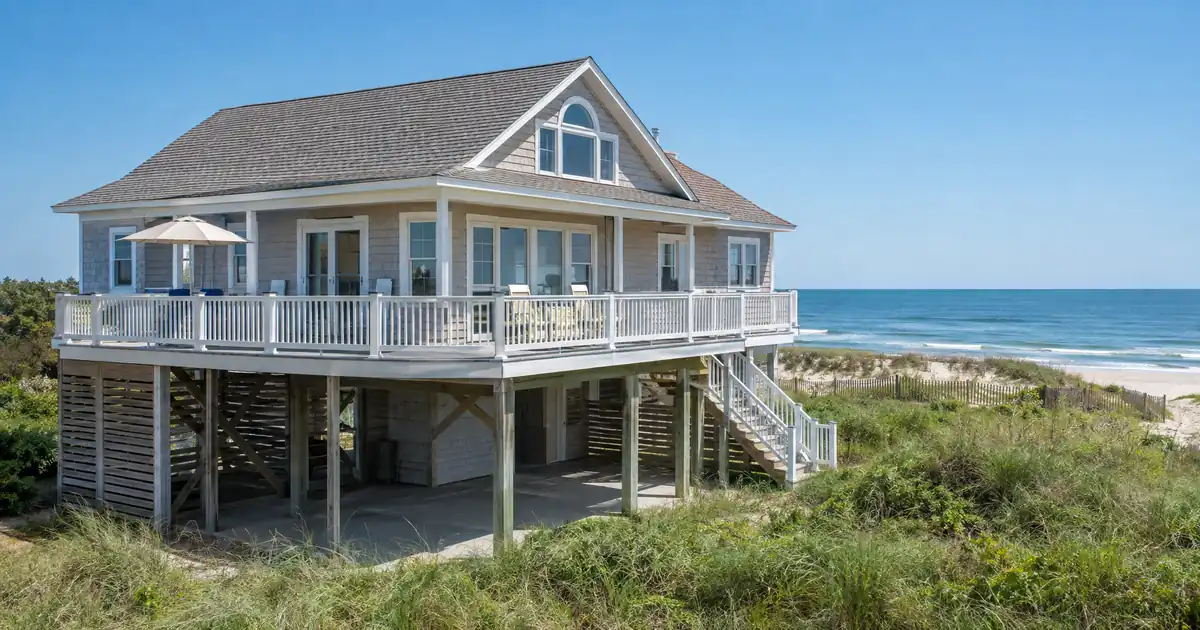
Let’s run the numbers on a hypothetical beachfront property an investor is putting under contract, with no rental history of its own. Say the AirDNA-style projection for that address comes back with an estimated gross monthly figure. Say the appraiser’s narrative analysis lands somewhat lower, using a more conservative comparable set. In most underwriting shops, lenders use the lower of those two figures as the starting point. Lenders generally don’t cherry-pick the higher number when two conflicting estimates exist.
From there, the haircut applies. An 80%-of-gross treatment shrinks that qualifying figure before it’s compared against the property’s full monthly payment obligation — principal, interest, taxes, insurance, and HOA if applicable. The resulting DSCR ratio is what the lender actually underwrites against, not the raw projection the investor saw when they first ran the numbers on a rental calculator.
This is where deals fall apart or come together. A property that looks strong on a raw AirDNA screenshot can land in borderline territory — say, in the high-0.90s to low-1.00s — once the conservative comparable and the haircut both get applied. That’s exactly why treating a pre-underwriting revenue tool as a screening estimate rather than a guaranteed coverage figure matters. It’s a starting point for shopping, not the number the file will actually close on.
Coverage at or above 1.00 typically earns full leverage on the size tier the property falls into. Short-term rental purchases in Lendmire’s network can reach loan amounts up to $2,000,000 at that coverage level, with leverage stepping down as loan size increases — generally 80% on smaller purchase balances, tightening toward 75% and then lower as the deal works up the size ladder. Files landing in the 0.75 to 0.99 coverage range aren’t automatically dead — a handful of lenders in Lendmire’s network will still work select-program paths at reduced leverage on files up to $2,000,000, with LTV and terms adjusting accordingly, subject to underwriting. That’s a real option for a strong property with a soft first-year projection, not a guarantee for every file that lands short of 1.00.
For a deeper walkthrough of how coverage ratios drive loan sizing generally, Lendmire’s complete DSCR loans guide breaks down the qualification math across property types.
Purchase vs. Refinance: Why the Rules Flip
A purchase with no history and a refinance on that same property twelve months later get underwritten in completely different ways, and the difference comes down to what data actually exists. On a purchase, there’s nothing to document — no deposits, no booking calendar, no trailing income statement — so the lender has to lean on a projection. On a refinance, the property now has an actual operating record, and most programs shift to documenting twelve months of real platform income rather than relying on a forward-looking estimate.
DSCR vs. conventional financing
Two common ways to finance an investment property in this market. They qualify you differently — here’s how investors weigh them.
Why investors choose it
- Qualifies on the property’s rental income — no personal tax returns, W-2s, or pay stubs needed to document income.
- No personal debt-to-income ceiling to clear, so existing mortgages and obligations don’t cap your borrowing the same way.
- Can be closed in an LLC, keeping the property inside a business entity.
- Built for scaling — not held to the limit on number of financed properties that conventional financing applies.
- Underwriting centers on the deal: generally qualifies when the rent covers the payment, a 1.00x coverage ratio being a common baseline (confirmed in underwriting).
- Designed specifically for investment property, including long-term and, where the program allows, short-term rentals.
Where it’s strong
- Often the lowest ongoing financing cost for a buyer who fully qualifies on personal income — a fit for a first property or a cost-first purchase.
Trade-offs for investors
- Requires full personal income documentation and must fit within a debt-to-income limit — salary, existing debts, and other mortgages all count.
- Typically held in your personal name rather than a business entity.
- Caps how many financed properties you can carry, which can become a ceiling as a portfolio grows.
- Evaluates you as a borrower as much as the property, which usually means more paperwork.
How investors usually choose: a first or single property often optimizes for the lowest financing cost; portfolio builders often optimize for leverage, vesting in an LLC, and scaling past conventional caps. The right answer depends on your goals, the property, and current guidelines — both paths run through select lenders in Lendmire’s wholesale network, with eligibility and terms confirmed in underwriting.
That shift matters for investors thinking ahead. A property that qualifies conservatively at purchase, using a discounted projection, may qualify more favorably at refinance once real performance replaces the estimate — assuming the property actually outperforms what the projection assumed. It can also go the other way if the first year underperforms. Either way, the file at refinance is graded on what actually happened, not what a comp radius suggested it might do.
An active Airbnb listing from the seller doesn’t necessarily transfer that advantage to the buyer, either. A seller’s booking history reflects the seller’s pricing, management style, and guest reviews — all of which reset when the property changes hands. Lenders may still discount that seller-side history for exactly that reason, treating it as helpful context rather than a guaranteed continuation of income.
Investors looking at short-term rental deals should check local operating rules first. Don’t rely on any projected income figure until you do. Short-term rental rules can vary by city, county, HOA, and property type. You also need to document permission for the specific property — you can’t just assume a market allows it in general.
DSCR loans are business-purpose loans for investment properties. Lenders review them differently than a normal owner-occupied mortgage. That’s because they look at the property’s income, not the borrower’s personal income documents. Are you weighing a DSCR loan against a conventional loan for the same property? Lendmire’s DSCR versus conventional breakdown covers that comparison directly.
Common Mistakes Investors Make Here
Treating the AirDNA screenshot as the final number is probably the single most common misstep. It’s a screening tool, not the underwriting figure — the haircut and the lower-of comparison with the appraisal both happen after that first number gets pulled.
Assuming any appraiser can multiply a nightly rate by 30 and call it a monthly rent is another one. That approach ignores vacancy, cleaning costs, platform fees, and the furniture and equipment bundled into a nightly stay — which is exactly why appraisal-industry guidance treats it as an invalid shortcut rather than a simplification.
Assuming the seller’s existing Airbnb reviews and booking calendar transfer cleanly to a new owner is a third. Reputation, pricing strategy, and management quality reset at closing, and lenders know it.
Frequently Asked Questions
Does a short-term rental purchase need any rental history to qualify for a DSCR loan?
No. Short-term rental DSCR programs are specifically built for properties with no operating history, using a market projection or an appraiser’s short-term rent analysis instead of documented income. That’s the entire purpose of the projection-based underwriting path.
Can an investor use the raw AirDNA number as the qualifying income?
Not directly. Most lenders in Lendmire’s network apply a discount — typically around 80% of the projected or appraised gross — before that figure feeds into the DSCR calculation, and the lower of any competing appraisal and market-data estimate usually governs.
What happens if the DSCR comes in below 1.00 on the projection?
Full leverage generally requires coverage at or above 1.00, but select programs in Lendmire’s network still consider files in the 0.75-to-0.99 range at reduced leverage, up to $2,000,000, with LTV and terms adjusting, subject to underwriting.
Does the seller’s existing Airbnb income history help the buyer qualify?
It can help, but lenders often discount it since post-closing performance depends on the new owner’s management, pricing, and reviews rather than the seller’s track record.
Is the underwriting different once the property has a year of operating history?
Yes. Refinance files typically shift to documenting twelve months of actual platform income rather than relying on a forward-looking projection, which can improve or reduce the qualifying figure depending on real performance.
Investors focused on short-term rentals can review DSCR loans for Airbnb and short-term rentals.
For current guidelines and terms, see Lendmire’s super jumbo DSCR loan programs page.
Self-employed borrowers can compare both super jumbo programs on Lendmire’s self-employed mortgages page.
About Lendmire
As a non-QM mortgage broker (NMLS# 2371349), Lendmire facilitates DSCR investor loans across 40 markets, including Washington, D.C. DSCR eligibility is generally reviewed around property-level rental income instead of personal income documentation, subject to lender guidelines, serving LLC-structured portfolios and self-employed borrowers who don’t fit conventional boxes. A two-time Scotsman Guide Top Mortgage Workplace (2025, 2026).
Lendmire’s Top Mortgage Workplace recognition is documented by Scotsman Guide 2025 Top Mortgage Workplace and Scotsman Guide 2026 Top Mortgage Workplace.
Get Started
Ready to find the right loan for you?
In about 30 seconds you can review financing options available for your home or investment property. No commitment required.
Informational only. Not a Loan Estimate, approval, or commitment to lend. Program availability and eligibility are subject to lender guidelines, credit approval, property review, and underwriting.
References
1. Fannie Mae Appraiser Update, June 2024
2. AirDNA Help Center — Rentalizer Revenue Calculator
4. VaultSTR — AirDNA Rentalizer Accuracy Review
This article is part of Lendmire’s super jumbo DSCR loan program — full qualification details, guidelines, and scenarios live on the program page.
Related reading: Can A Short-term Rental Purchase Qualify On Projected Rent? · How A DSCR Lender Sets Rent On A Luxury Short-term Rental With No History? · Qualifying An Airbnb With Projected Rental Income
Brandon Miller
Founder & CEO, Mortgage Loan Originator, Lendmire LLC
- Mortgage Loan Originator · NMLS# 1129696 · Verify on NMLS Consumer Access
- North Carolina Real Estate Broker · License# 343312 · Verify on NCREC
- North Carolina Insurance Producer · License# 19053198 · Property, Casualty, Life, Health · Verify on NAIC SBS
- Lendmire LLC · Firm NMLS# 2371349 · Verify firm licensure
Legal disclosures. Lendmire (NMLS# 2371349) is a state-licensed mortgage brokerage that arranges financing through wholesale lender relationships. Lendmire is not a direct lender, depository institution, or registered financial advisor. The discussion above is general informational content about real estate financing — it is not financial, legal, or tax advice, and readers should consult licensed professionals for guidance on their individual circumstances. Loan inquiries are subject to lender underwriting; this article does not represent a commitment to lend. Loan terms, rates, and qualification standards vary by borrower, property, and state, and are subject to change at any time. Equal Housing Opportunity. NMLS Consumer Access: nmlsconsumeraccess.org.