
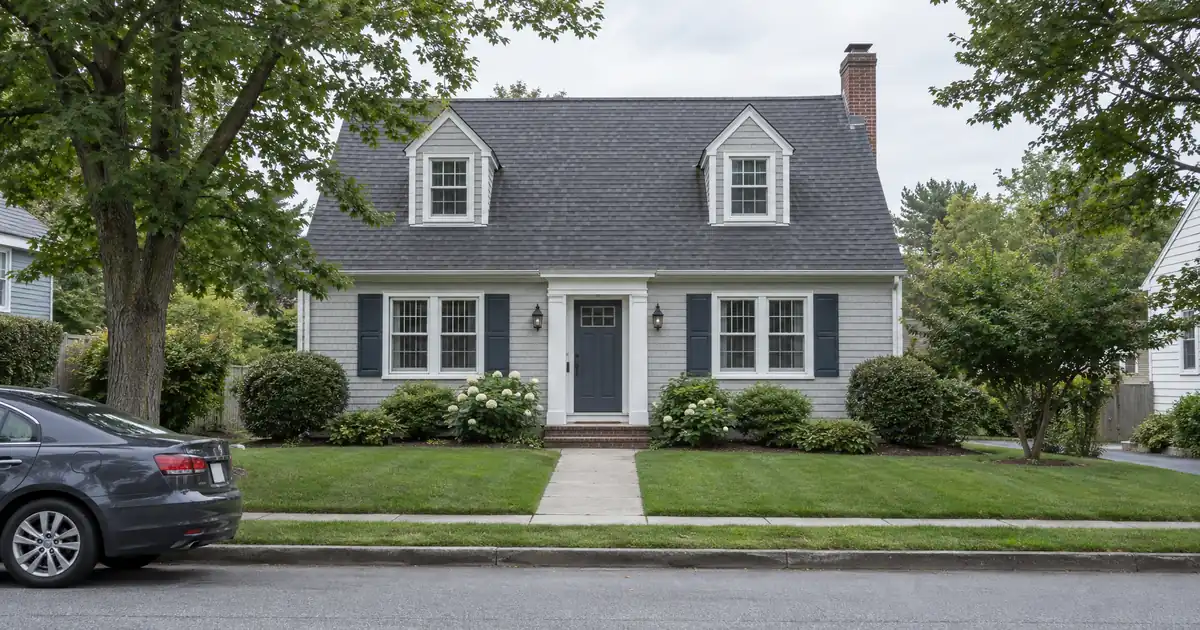
The Quick Read: A DSCR loan lets you buy or refinance a Cookeville rental based mainly on what the property earns, not on your paycheck. The lender divides the property’s rent used for lender review by its full monthly housing cost. Most files here land at 75%–80% LTV on a purchase, subject to lender guidelines. Cookeville is a good test case because a university, a growing region, and soft sale prices all pull on the same math.
Key Takeaways
- DSCR (debt service coverage ratio) compares rent used for lender review to the monthly cost of owning the property. The lender sets rent used for lender review, not you and not a listing site.
- Across our wholesale network, purchase leverage typically runs 75%–80% LTV. A cash-out refinance tops out around 75%.
- Clearing 1.00 does not mean the property makes money. Repairs, vacancy, and management sit outside the ratio.
- A campus market like Cookeville rewards you for modeling against leased rents. Asking rents mislead.
- Short-term rental income has its own documentation path and its own local rules.
What Does a DSCR Loan Actually Measure?
A DSCR loan measures one thing: whether the property’s rent covers the property’s monthly obligation. That obligation is PITIA, meaning principal, interest, taxes, insurance, and any association dues. Divide rent used for program review by PITIA and you get the number.
DSCR Calculator
Run the numbers in Tennessee
Rate source: Freddie Mac 30-yr average via FRED® — Federal Reserve Bank of St. Louis · effective Sep 24, 2026
Prefilled with starting assumptions — enter your own rent or nightly figures, taxes, insurance, and HOA for a more accurate picture.
Program parameters update from Lendmire’s centralized guideline source. Taxes and insurance are editable estimates.
As of Sep 24, 2026 · General Freddie Mac market benchmark, not a Lendmire loan offer. Rent, nightly rate, occupancy, taxes, and insurance are editable estimates. Short-term rental figures are estimates only and vary significantly by season, property type, management approach, and local short-term-rental rules — confirm local regulations before relying on them. Qualifying income for short-term rentals varies by program — some use appraisal market rent, others use documented STR history or projections — and is confirmed in underwriting. Not a Loan Estimate, approval, or commitment to lend. Program availability and eligibility are subject to lender guidelines, credit approval, property review, and underwriting.
At 1.00, rent equals the obligation. Above 1.00, rent exceeds it. Below 1.00, you cover the gap.
The residential version is not the commercial version. Commercial lenders divide net operating income by debt service. Residential DSCR programs typically use gross rent over PITIA. Same name, different math.
DSCR loans are designed for non-owner-occupied investment properties. Because they are business-purpose investor loans, they are reviewed differently from a standard owner-occupied mortgage. That is why the loan is reviewed primarily on property-level rental income covering the payment, subject to lender guidelines. Credit, reserves, and the property still get reviewed. If you want the full framework, the complete DSCR loans guide walks through it.
How Does Underwriting Treat the Rent, Step by Step?
Underwriting runs in a fixed order, and the rent figure is the step investors misunderstand most. Here is the sequence on a typical Cookeville file.
1. Eligibility check. The property must be a rentable investment property, and the transaction has to fit the program. DSCR products are built for stabilized, rent-ready properties. A heavy rehab usually goes to short-term bridge financing first, then refinances into a DSCR loan.
2. Entity and documents. Many investors close in an LLC, subject to lender program eligibility. Entity paperwork trips up more files than people expect.
3. Rent evidence. The appraiser completes a rent schedule: Form 1007 for single-family, Form 1025 for two-to-four units. The appraiser adjusts comparable rents. Your lease gets compared against that opinion.
4. The denominator. Lenders build PITIA from real tax and insurance figures, not guesses. These two lines swing the ratio more than headline rent growth.
5. The full review. Title, insurance, liquidity, credit, and entity checks all run. A strong preliminary ratio does not skip them.
Here is the catch on step three. Your signed lease is not automatically the rent used for eligibility review. Many programs use the lower of the lease or the appraiser’s market figure. Some weigh concessions and occupancy too. Model to the lower number and you will rarely get surprised.
Which Structures and Variations Exist?
Most programs share one spine: a 30-year fixed structure. Around it, select lenders in the network offer extended terms (40-year), interest-only periods, and adjustable structures for investors who want them. Interest-only removes principal from PITIA, so the denominator shrinks and coverage rises. It also means you are not paying the balance down.
| Factor | Typical range across the network |
|---|---|
| Purchase LTV | 75%–80%; select programs to 85% at about 700+ |
| Cash-out refinance | Up to about 75% LTV |
| Credit score | 620 floor in parts; most want about 660; 700+ for top tiers |
| Loan size | Up to $3,000,000 on standard programs |
| Reserves | Commonly about 6 months of PITIA |
Those are ranges from select lenders in our wholesale network, not promises. Every file is underwritten individually, and programs change.
Credit works in tiers. A 620 score opens parts of the network. Around 660 opens most programs. At 700 and above, the strongest leverage tiers come into play.
Reserves are cash you hold after closing. They commonly run about 6 months of PITIA. Conservative rate-term refinances at modest leverage under $1,500,000 can see reserves waived. Loans above that size typically step up to about 9 months. Above $2,500,000, the network generally holds to 30-year fixed structures.
Below 1.00 is a real path too. Programs below 1.00 coverage are available through select lenders in the network, with leverage and terms adjusted. No-ratio structures are available only through select lenders, generally for borrowers who already own a primary residence. Treat both as exceptions you price, not defaults you count on.
Where Does the General Rule Break?
The general rule breaks in six named places. Cookeville shows most of them.
Student and by-the-room rentals. Rent schedules assume one lease for the whole unit. A campus-adjacent house rented by the bedroom does not fit that mold cleanly. How a program treats bedroom-by-bedroom leases depends on the lender. Ask before you write an offer, not after.
Short-term rentals. These qualify on a different path: trailing income and platform history, not a long-term rent schedule. Within our network, STR purchase leverage tops out at 75%. STR refinances run around 70%, and STR cash-out is 70%. Expect a 640+ score and about 12 months of hosting history. Coverage floors are 1.00 on purchases and 1.00 on refinances.
Short-term rental rules can vary by city, county, HOA, and property type, so investors should confirm local rules before relying on projected rental income. In Cookeville, start with the City of Cookeville short-term rental page and the Putnam County Regional Planning Commission. If the use is not legal, the income is not usable.
Vacant or unleased properties. With no lease, the appraiser’s market-rent opinion carries everything. That raises the stakes on the appraisal.
Rural and acreage properties. Putnam County has land close to town, and rural options are narrower. One flat point: manufactured homes (single- and double-wide), log homes, and barndominiums are not offered in these DSCR programs. Confirm the construction type before you fall in love with a listing.
Commercial-to-residential conversions. A hotel or motel converted to apartments raises new questions about rent evidence and property classification. Local approvals matter, and conversions can carry their own approval steps. Treat those as program-specific and ask before assuming a conversion fits.
Heavy rehab. Covered above. Stabilized first, DSCR second.
What Does This Look Like in Cookeville?
Cookeville pairs a university anchor with a fast-growing region. Tennessee Tech enrolled 10,701 students in fall 2025, with 2,028 first-time freshmen and 80.1% freshman retention. Separately, the Tennessee Municipal League’s magazine reports that Putnam County ranked 11th among Tennessee counties in population growth, and that the four-county Cookeville region is one of the fastest-growing micropolitan areas in the country.
That is demand, not a guarantee. Read “one of the fastest-growing,” not “the fastest.”
Three areas draw the attention of investors: Tech Hill, Downtown Cookeville, and the TTU corridor. I could not find independent rent data for any of them as separate submarkets, so treat them as general areas, not rated zones. In practice, the tenant story is different in each. Near campus you rent to people on academic calendars. Downtown leans on walkable, smaller units. Farther from campus you get workforce demand with steadier lease terms.
Now the honest part. Rent sources disagree, and that is itself the finding. Zumper shows a median rent of $1,299, while other listing sites show different numbers built from different building sets. None of them is your appraiser’s rent schedule.
A modeled scenario (no dollar amounts)
Run the numbers on a campus-adjacent duplex bought at 75% LTV. These are modeled assumptions, not market data. Every figure here varies by lender and program — guidelines, property type, leverage, and credit profile all apply.
- Your leases suggest coverage of roughly 1.15x.
- The appraiser’s rent opinion comes in a bit lower, so the qualifying ratio lands near 1.05x.
- Taxes and insurance come in slightly higher than you assumed. Coverage slips toward 1.00x.
Nothing broke. But the cushion you thought you had was mostly a leasing assumption. Sub-1.00 options exist through select lenders in the network, with leverage and terms adjusted. It is far better to know where you stand before you write the offer.
A second wrinkle: Cookeville sale prices have been softening. One aggregator, Will It Flow, shows a metro median that has slipped over the past year. When prices drift, an appraisal below your contract price becomes a real risk. Lenders typically size the loan off the lower of price or appraised value. If value comes in low, you bring more cash or renegotiate.
Does More Down Payment Fix a Weak Ratio?
A larger down payment lowers the monthly obligation, and that lifts the ratio. It helps. It does not erase anything else.
Leverage caps still apply. Credit floors still apply. Reserve rules and property eligibility still apply. The strongest files clear both tests: enough equity and enough rental coverage. A property with 30% down that fails property eligibility is still a no. Final terms depend on lender guidelines, property type, leverage, and the borrower’s complete credit picture.
DSCR vs. conventional financing
Two common ways to finance an investment property in this market. They qualify you differently — here’s how investors weigh them.
Why investors choose it
- Qualifies on the property’s rental income — no personal tax returns, W-2s, or pay stubs needed to document income.
- No personal debt-to-income ceiling to clear, so existing mortgages and obligations don’t cap your borrowing the same way.
- Can be closed in an LLC, keeping the property inside a business entity.
- Built for scaling — not held to the limit on number of financed properties that conventional financing applies.
- Underwriting centers on the deal: generally qualifies when the rent covers the payment, a 1.00x coverage ratio being a common baseline (confirmed in underwriting).
- Designed specifically for investment property, including long-term and, where the program allows, short-term rentals.
Where it’s strong
- Often the lowest ongoing financing cost for a buyer who fully qualifies on personal income — a fit for a first property or a cost-first purchase.
Trade-offs for investors
- Requires full personal income documentation and must fit within a debt-to-income limit — salary, existing debts, and other mortgages all count.
- Typically held in your personal name rather than a business entity.
- Caps how many financed properties you can carry, which can become a ceiling as a portfolio grows.
- Evaluates you as a borrower as much as the property, which usually means more paperwork.
How investors usually choose: a first or single property often optimizes for the lowest financing cost; portfolio builders often optimize for leverage, vesting in an LLC, and scaling past conventional caps. The right answer depends on your goals, the property, and current guidelines — both paths run through select lenders in Lendmire’s wholesale network, with eligibility and terms confirmed in underwriting.
Here is my honest read on Cookeville. The stronger play for a first purchase is usually a modest-leverage deal with a comfortable ratio, not the highest LTV the program allows. A soft price market plus a thin cushion is where files get uncomfortable. Investors chasing maximum leverage could argue the other way, and on a clean, well-leased property it may be defensible. It is a genuine tradeoff.
What Does the Refinance Path Look Like?
If you already own a Cookeville rental, cash-out refinancing tops out around 75% LTV across most of the network. About 6 months of seasoning is the common expectation. Seasoning is the waiting period between buying and refinancing. If you are weighing this as a newer investor, the write-up on a first-rental cash-out refinance covers the tradeoffs. These specifics are subject to lender guidelines and a full review of property, leverage, and credit.
Cash-out proceeds also count against your reserves and your ratio. Pulling equity raises the balance, which raises the obligation.
Key Terms Defined
DSCR (debt service coverage ratio): A ratio that divides a property’s rent used for the lender’s review by its monthly housing cost.
PITIA: Principal, interest, taxes, insurance, and any association dues, added together as one monthly obligation.
rent used for financing review: The rent figure the lender uses, which may be the lease, the appraiser’s opinion, or the lower of the two.
LTV (loan-to-value): The loan balance as a percentage of the property’s value.
Reserves: Cash or liquid assets you hold after closing to cover the payment if rent stops.
Seasoning: The waiting period a lender wants between two events, usually buying a property and refinancing it.
Non-QM: Loans that do not follow standard owner-occupied mortgage rules and are reviewed on their own program terms.
What Should You Actually Do Before You Make an Offer?
Work the sequence in this order.
1. Confirm the property type is eligible. Manufactured, log, and barndominium construction is not offered. 2. Get a rent read from comparable leased properties, not asking rents. 3. Price real taxes and insurance into PITIA before you trust any ratio. 4. Check your credit tier against the leverage you want. 5. Line up reserves, and decide whether the entity is set up. 6. If you plan STR income, confirm local rules first.
One practitioner note. On files in university markets, coverage often looks fine on a lease and tight on the appraiser’s number. The files that go smoothly are the ones where the investor already ran both.
A last point on the ratio itself. Clearing 1.00 is not the same as positive cash flow. Repairs, vacancy, management, utilities, and capital expenses sit outside the calculation. Tax treatment can depend on how the funds are used and how the property is held; investors should keep clear records and speak with a qualified tax professional before relying on any deduction.
For comparing structures on stronger-yielding properties, Lendmire’s page on DSCR loans for high cash-flow rental properties covers this in more depth.
Frequently Asked Questions
Does my lease set the rent a DSCR lender uses?
Not by itself. The lender decides rent used for program review, and it may use the lease, the appraiser’s market rent, or the lower of the two. Concessions, occupancy, and condition can also matter. Model to the lower figure.
Can a Cookeville property below 1.00 coverage still be financed?
Programs below 1.00 are available through select lenders in the network, with leverage and terms adjusted. You should expect a lower LTV and different terms than a property that clears 1.00. Eligibility depends on the lender, your credit, the reserves you hold, and the property itself.
How much do I need down on a Cookeville rental?
On most files, 20%–25% down, which is 75%–80% LTV. Select high-leverage programs reach 85% LTV (15% down) with roughly a 700+ score. Short-term rental purchases top out at 75% LTV. All of it is subject to lender guidelines.
Can I use Airbnb income to qualify?
Sometimes, depending on the program and the property. Expect a 640+ score, about 12 months of hosting history, and a 1.00 floor on select programs. STR files run on trailing income and platform data, not a rent schedule. Confirm local rules before you count that income.
Are barns, log homes, or manufactured homes on acreage eligible?
No. Manufactured homes (single- and double-wide), log homes, and barndominiums are not offered in these DSCR programs. A conventional site-built home on acreage is a different question, and it depends on the program.
Next Step
If you are buying or refinancing a rental property and want to see how the numbers work, Lendmire, a mortgage broker arranging DSCR investor loans across 41 markets including Washington, D.C., can help you compare DSCR loan options based on the property income, credit profile, leverage, and investor goals. Qualification is subject to lender guidelines, and this is not a commitment to lend.
About Lendmire
Lendmire is a non-QM mortgage brokerage (NMLS# 2371349) arranging DSCR investor loans in 41 markets, including Washington, D.C., through wholesale and investor-lending channels. DSCR loans are evaluated by the lender on rental income rather than personal income, subject to lender guidelines — a fit for LLC-owned portfolios, self-employed investors, and operators scaling beyond conventional loan caps. Recognized as a Scotsman Guide Top Mortgage Workplace in 2025 and 2026.
Scotsman Guide’s Top Mortgage Workplace lists for 2025 and 2026 document Lendmire’s recognition.
Get Started
Ready to find the right loan for you?
In about 30 seconds you can review financing options available for your investment property. No commitment required.
Informational only. Not a Loan Estimate, approval, or commitment to lend. Program availability and eligibility are subject to lender guidelines, credit approval, property review, and underwriting.
References
1. City of Cookeville short-term rental page
2. Putnam County Regional Planning Commission
3. Tennessee Tech news release
5. Zumper, Cookeville rent research
6. Will It Flow, Cookeville metro housing market
This article is part of Lendmire’s DSCR loan program — full qualification details, guidelines, and scenarios live on the program page.
Related reading: DSCR Cash Out Refinance Cookeville Tennessee · Cash Out Refinance Investment Property Cookeville Tennessee · DSCR Loans in Murfreesboro, Tennessee: Investor Financing for Midtown, Northwest Murfreesboro, and the Gateway District — Rapid Growth Market & Real Estate Investors
Guides: DSCR Loans in Tennessee
Brandon Miller
Founder & CEO, Mortgage Loan Originator, Lendmire LLC
- Mortgage Loan Originator · NMLS# 1129696 · Verify on NMLS Consumer Access
- North Carolina Real Estate Broker · License# 343312 · Verify on NCREC
- North Carolina Insurance Producer · License# 19053198 · Property, Casualty, Life, Health · Verify on NAIC SBS
- Lendmire LLC · Firm NMLS# 2371349 · Verify firm licensure
Required disclosures. Lendmire (NMLS# 2371349) operates as a licensed mortgage broker, not a direct lender or depository. The discussion in this article is general in nature and should not be relied upon as financial, legal, or tax advice — every investment scenario is unique and should be reviewed by a qualified professional. Any loan inquiry is subject to lender underwriting, and this article is not a commitment to lend or a guarantee of approval. Mortgage rates, loan terms, and program guidelines vary by borrower, property, and state, and may change without notice. Equal Housing Opportunity. Verify licensure at NMLS Consumer Access.