
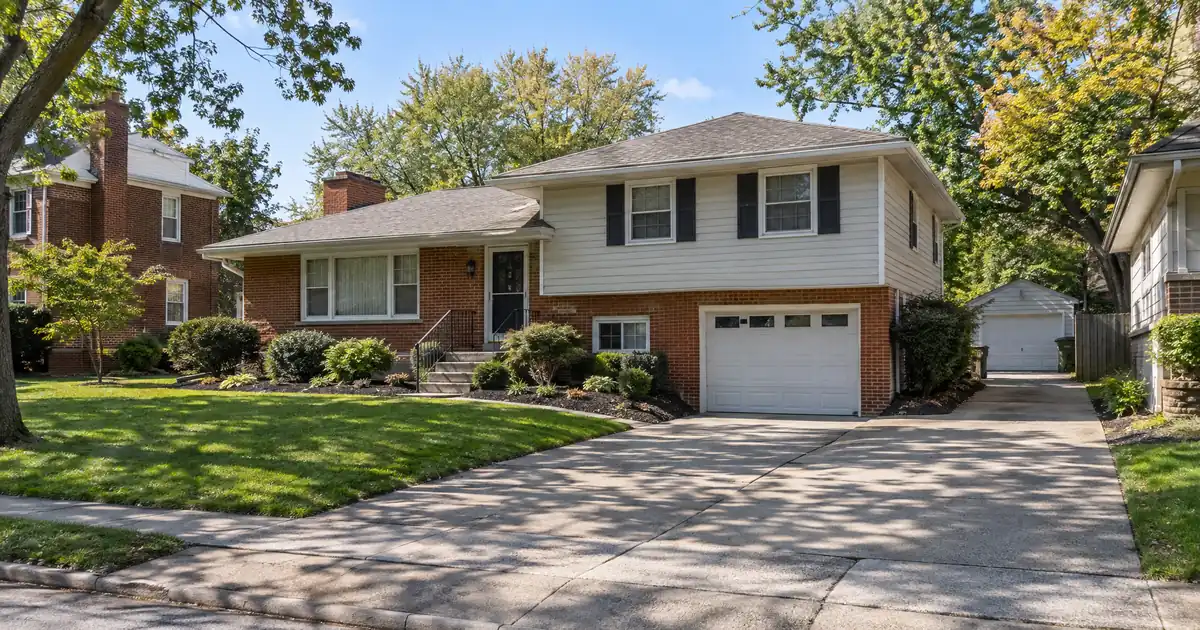
Toledo owners planning a cash-out refinance face a stretch where the appraisal, not the rent, decides how much equity comes out. Zillow puts the typical Toledo home value at $113,873, up 2.5 percent over the past year. Other portals show a very different picture, from a $156K average up 14.3 percent to listing medians falling. Rents are rising modestly, new apartment supply is limited, and the university that anchors the Old West End is holding roughly flat. In that setting, the investors who pull equity cleanly are the ones who understand the mechanism before they order the appraisal.
TL;DR: A Toledo, Ohio cash-out refinance on a rental is underwritten primarily on the property’s rental income measured against its full monthly obligation, with the new loan capped at 75 percent of appraised value after roughly six months of ownership, subject to lender guidelines, credit review, reserves and property review.
DSCR Cash-Out Calculator
Run the cash-out numbers in Toledo, OH
Rate source: Freddie Mac 30-yr average via FRED® — Federal Reserve Bank of St. Louis · effective Sep 24, 2026
Prefilled with starting assumptions — enter your property’s value, balance, taxes, and insurance for a more accurate picture.
Program parameters update from Lendmire’s centralized guideline source. Taxes and insurance are editable estimates.
As of Sep 24, 2026 · General Freddie Mac market benchmark, not a Lendmire loan offer. Property value, balance, taxes, and insurance are editable estimates. Maximum loan-to-value varies by lender, program, property type, and seasoning. Not a Loan Estimate, approval, or commitment to lend. Program availability and eligibility are subject to lender guidelines, credit approval, property review, and underwriting.
- Typical Toledo value runs $113,873 per Zillow, but price sources disagree on direction.
- Citywide rent averages $989 per RentCafe, and duplex doors often sit below that.
- On low-basis duplexes, appraised value usually binds before coverage does.
- Old West End and Downtown differ sharply in price basis and rent depth.
- About six months of reserves and a 620 credit floor apply, subject to guidelines.
Toledo Market Snapshot
A quick read on the Toledo investor landscape — figures come from the cited sources below. Confirm current property-level numbers before underwriting.
| Metric | Detail |
|---|---|
| Home prices | $76,700 median (Homes.com Downtown Toledo) |
| Typical rents | $901 (HomeSnacks) |
| University enrollment | 14,029 total (University of Toledo) |
| Vacancy | Rental 8% (2018) (City of Toledo) |
How the Equity Actually Comes Out
A DSCR cash-out refinance replaces your existing loan with a new one sized off appraised value, and you keep the difference after the payoff. Three tests gate the result: seasoning, leverage and coverage. Each one is simple on its own.
Seasoning comes first. Most programs want about six months of ownership measured from title recording before the property is eligible for cash-out. Buy a distressed duplex, rehab it and wait. The clock starts at recording, not at the end of construction.
Leverage is next. The cash-out ceiling is 75 percent of appraised value. It is a hard cap, and it is lower than the 80 percent ceiling that applies on purchases. Take a modeled duplex appraising at $120,000. The new loan can’t exceed three-quarters of that figure. Your existing payoff comes out of that number first. Whatever remains is your proceeds, before closing costs and before any reserve requirement is met. These specifics are subject to lender guidelines and a full review of property, leverage, and credit.
Coverage is last. The property’s rent used for lender review is divided by its full monthly obligation, meaning principal, interest, taxes, insurance and any HOA dues. The standard benchmark is 1.00x. Some lenders review lower ratios or no-ratio structures, but those typically come with lower leverage, different pricing or more cash in the deal. Lendmire’s DSCR guide covers the mechanics in more detail.
Reserves sit alongside all three, at about six months of PITIA, and credit tiers run from a 620 floor up through 660, 680 and 700. Every figure here is a program guideline, not a promise. Equity available depends on rent used for lender review, PITIA, reserves and the 75 percent ceiling, and it is never a guaranteed cash number.
The Price Data Disagree (and That’s the Problem)
Toledo’s price data do not agree with each other, and the disagreement matters more here than in most markets. The appraisal sets the loan ceiling, so a soft or contested value flows straight into proceeds.
Here is what the sources show. Zillow’s typical value is $113,873. An ACS-derived median from HomeSnacks lands at $129,626, and the gap is largely methodological, since one series is an index and the other is a survey median. Redfin’s housing market page shows an average near $156K, up 14.3 percent year over year. Movoto shows a June listing median of $129K, down 8 percent from the prior May. At the county level, local manager Danberry Property Management puts the Lucas County median sale price near $185,000, up from $155,000 three years ago. That is a county number, so keep it apart from city figures.
This Lendmire Research reading treats Zillow’s $113,873 as the citywide anchor and everything else as a range around it. The stronger thesis is the cautious one. Toledo is a cash-flow market, and an appreciation-driven refinance thesis is weaker than one built on rent coverage and conservative leverage. A model that assumes the appraiser finds a big value jump after a rent bump is the wrong model.
Toledo’s population trend reinforces that. Census Bureau QuickFacts shows 265,651 residents, and the city’s own Comprehensive Housing Strategy documents an 11 percent population loss over roughly two decades, with the decline slowing since. Toledo is not a growth story.
Worked Scenario: A Modeled Old West End Duplex
The math below uses modeled assumptions, not sourced comps. Say you own a duplex in the Old West End that appraises at $120,000. That sits within the range local property manager Evernest cites, which puts duplexes near the University of Toledo and in the Old West End at $80,000 to $140,000, with many selling under $120,000. Assume the two units rent for $1,600 combined. Listing remarks on Homes.com show duplex rent totals in the $1,445 to $1,850 range, so that sits mid-band.
Run the coverage test at the 75 percent ceiling, with taxes and insurance built into the obligation. The ratio lands comfortably above 1.5x on those inputs. That is a strong number, and the lender is unlikely to lean on it as the constraint.
The constraint is the appraisal. If the value comes in 15 percent lower than modeled, the maximum loan drops by that same 15 percent, and the cash to you drops by more than that because the payoff doesn’t shrink. Low basis makes the coverage math forgiving and the value math unforgiving.
One more wrinkle: small balances. On a low-priced duplex the loan may be small, and some lenders in the network handle small-balance files while others don’t. Standard programs run up to $3,000,000, and smaller balances route through select lenders. Raise the balance question early, before the appraisal is ordered.
If the property sits in an LLC, the file is subject to lender program eligibility, and that structure question is worth settling early too.
The Submarkets Where the Numbers Change
Toledo does not price uniformly. The research supports submarket-level color but not a clean neighborhood price table, so treat the following as directional.
Old West End. The historic district near downtown and the university is the best-supported duplex story in the data. Danberry puts renovated two-bedroom units at $900 to $1,050. Zumper shows the neighborhood’s average at $872, which is closer to unrenovated stock. That spread is the refinance thesis in miniature. A rehabbed unit rents at a premium, and the appraisal has to capture it. Confirm that with real rent rolls, not listing asks.
Downtown. Homes.com puts the Downtown Toledo median sale price at $76,700, down 4 percent over twelve months. Listing remarks show a duplex at $775 and $800 by door, and another at $750 per unit. RentCafe lists Downtown at $1,180 a month, a studio and one-bedroom read that isn’t the same product. High gross yield on a sub-$80K basis looks attractive. Falling prices and thin comps make it the hardest place in the city to get an appraisal that supports the number you modeled.
Point Place and other lower-rent workforce areas. RentCafe lists Point Place at $837 a month, well below the $989 citywide average. Zumper shows Franklin Park at $866 and Ottawa at $885. Lower absolute rent means lower dollars available to cover the obligation, so the leverage stays capped but the coverage cushion narrows on higher-basis purchases.
The Jeep corridor. The City of Toledo Community Profile identifies the Stellantis assembly complex as the city’s largest manufacturing employer and cites about $1.0 billion of investment there. The tenant base is blue-collar, and the cyclical exposure is real. I found no sourced price or rent figures for the neighborhoods around the plant, so that one stays qualitative.
West and South Toledo. Both are widely described as investor-friendly, but the research found no sourced price or rent data for either. Treat them as diligence work, not as thesis pillars.
Honestly, the Old West End duplex probably works better than a Downtown unit at half the price. Rents are more defensible, the tenant pool is deeper and the appraiser has more to work with.
Vacancy runs balanced. Danberry cites overall residential vacancy near 5.4 percent in the first quarter, against a 6.6 percent national rental vacancy, and expects 5 to 6 percent across the metro. Danberry also notes there’s no Sun Belt-style building boom in Toledo, with new apartments limited to a handful of projects. Reichle Klein Group describes the apartment market as transitioning toward more balanced conditions. A 5 to 6 percent vacancy assumption is a reasonable model input. Lenders often apply their own haircuts, and Danberry itself flags that some central neighborhoods could see flatter rent growth.
What Rents Can and Can’t Carry
Toledo rents are low in absolute terms, and the ratio work depends on that being understood. RentCafe’s citywide average is $989, up 2.13 percent, with two-bedrooms at $1,038 and three-bedrooms at $1,338. Zumper’s average is $962 and its three-bedroom figure is $1,245. Local manager estimates for a three-bedroom house or duplex run $1,050 to $1,225. Apartment List calls Toledo the most affordable of the 100 largest U.S. cities at a median rent of $916, though its methodology differs from the others.
Rent growth figures across these sources range from modest to solid, and none are worth quoting as a single number. The practical rule follows: underwrite each door at what it rents for today, and don’t bake in a bump. Coverage in Toledo comes from low basis and disciplined expenses, not rent escalation.
Renters are 47 percent of households. That’s a meaningful tenant base, not a dominant one.
Demand Anchors (and Their Limits)
Employment anchors are real but uneven. Healthcare is among the strongest sectors per the city profile, led by ProMedica and Mercy Health, the two largest providers in northwest Ohio. ProMedica has three hospitals in Toledo, including Toledo Hospital and a children’s hospital, and Mercy Health also operates three. Manufacturing is about one-fifth of the economic base, covering auto assembly and parts along with glass and solar production. The Toledo Region Growth Partnership lists Owens Corning, Owens-Illinois, Dana, Libbey and Marathon Petroleum among regional employers. Precise current headcounts weren’t retrievable, so no employer counts appear here.
The University of Toledo reports fall headcount of 14,029, including 10,566 undergraduates and 3,463 graduate students. That is 1.8 percent below the prior fall. WTOL reports enrollment was 20,548 roughly a decade earlier. The university does report its first increase in new students straight from high school in years. Still, treat campus-adjacent demand as steady, not expanding. Don’t underwrite student-only rents.
Where Investors Get It Wrong in Toledo
The common error is treating a rent bump as an appraisal bump. Raise rents by 10 percent on a duplex and the appraiser may still look at recent sold comps of similar stock, and those comps are what set value. Rent-driven value only shows up when the sale record catches up.
The second error is skipping seasoning math. The six-month clock runs from title recording. Investors who close on a rehab and immediately ask about cash-out are asking the wrong question. Plan for the wait.
Third is ignoring small-balance friction. A low-priced duplex may trigger loan-size questions before coverage even gets reviewed.
Here’s the catch on data quality, too. Redfin’s neighborhood rent table shows Old West End at $700 and Downtown at $595, with month-to-month swings that make it unusable as a comp. Skip it for underwriting. Use actual leases.
DSCR vs. conventional financing
Two common ways to finance an investment property in Toledo, OH. They qualify you differently — here’s how investors weigh them.
Why investors choose it
- Qualifies on the property’s rental income — no personal tax returns, W-2s, or pay stubs needed to document income.
- No personal debt-to-income ceiling to clear, so existing mortgages and obligations don’t cap your borrowing the same way.
- Can be closed in an LLC, keeping the property inside a business entity.
- Built for scaling — not held to the limit on number of financed properties that conventional financing applies.
- Underwriting centers on the deal: generally qualifies when the rent covers the payment, a 1.00x coverage ratio being a common baseline (confirmed in underwriting).
- Designed specifically for investment property, including long-term and, where the program allows, short-term rentals.
Where it’s strong
- Often the lowest ongoing financing cost for a buyer who fully qualifies on personal income — a fit for a first property or a cost-first purchase.
Trade-offs for investors
- Requires full personal income documentation and must fit within a debt-to-income limit — salary, existing debts, and other mortgages all count.
- Typically held in your personal name rather than a business entity.
- Caps how many financed properties you can carry, which can become a ceiling as a portfolio grows.
- Evaluates you as a borrower as much as the property, which usually means more paperwork.
How investors usually choose: a first or single property often optimizes for the lowest financing cost; portfolio builders often optimize for leverage, vesting in an LLC, and scaling past conventional caps. The right answer depends on your goals, the property, and current guidelines — both paths run through select lenders in Lendmire’s wholesale network, with eligibility and terms confirmed in underwriting.
Lendmire’s deal desk sees a consistent pattern on files from markets like this one. The cleaner files tend to arrive with a stabilized rent roll, executed leases and a clear recording date for the current title. The common friction point is value: appraisals in thin-comp neighborhoods come in below owner expectations, and the file needs to be sized with that in mind before it goes anywhere near a lender. Files sized to the conservative appraisal tend to hold together better than files sized to the owner’s hoped-for number.
Recycling the Proceeds
Cash-out proceeds are capital for the next deal, and Toledo’s basis makes that recycling efficient. A rehabbed duplex in the Old West End that funds a second acquisition can raise portfolio scale without new tax-return documentation, since DSCR review centers on property income. Lendmire’s DSCR cash-out refinance page walks through structure, and Lendmire’s investor-property refinance options also cover rate-and-term alternatives when cash out isn’t the goal. For a comparison against traditional financing, it helps to weigh the tradeoffs between conventional and DSCR loans.
The next-deal logic matters because Toledo doesn’t reward waiting on appreciation. The stronger play is repeated: buy at low basis, stabilize the rent roll, season, extract equity at a conservative leverage level and redeploy. Whether the second property pencils depends on the same variables as the first. Verify current local rental rules, taxes and insurance with qualified local professionals as part of that process.
Investors who want to see how a specific property would sit against these parameters can request a scenario quote or call 828-256-2183.
Frequently Asked Questions
How do you qualify for a DSCR loan in Toledo, Ohio?
Qualification centers on the property’s rent measured against its full monthly obligation, not on the borrower’s traditional personal-income documentation. The standard benchmark is 1.00x. Credit tiers run from a 620 floor upward, and reserves of about six months of PITIA typically apply. All of it is subject to lender guidelines, credit approval and property review.
What are the requirements for an investment property loan in Toledo, Ohio?
On a cash-out refinance, expect about six months of seasoning from title recording, a 75 percent LTV ceiling and coverage at or above the program benchmark. Manufactured homes, log homes and barndominiums fall outside these DSCR programs. Loan sizes reach up to $3,000,000 on standard programs, with smaller balances routed to select lenders.
Why does the appraisal matter more than the rent on a cheap Toledo duplex?
At low prices, rents usually clear the coverage test with room to spare, so the 75 percent ceiling on appraised value sets the proceeds. Thin comps and conflicting price data across sources make value the variable to stress-test. Sizing the file to a conservative appraisal protects the outcome.
Is Old West End or Downtown the better refinance candidate?
The Old West End offers deeper rent support, with renovated two-bedrooms around $900 to $1,050. Downtown’s $76,700 median sale price is falling 4 percent, which makes appraisals harder to defend. Downtown’s higher gross yield is real, but a shrinking comp base can undercut the loan ceiling.
For current guidelines and terms, see Lendmire’s DSCR loan programs page.
About Lendmire
As a DSCR and non-QM mortgage broker, Lendmire (NMLS# 2371349) connects investors with wholesale lending channels across 41 markets, including Washington, D.C. Lenders weigh the property’s rental income, not the borrower’s traditional personal-income documentation, most heavily, which suits self-employed operators and portfolios beyond four financed properties. The brokerage is a 2026 Scotsman Guide Top Mortgage Workplace and a top-ranked workplace in 2025. For state-specific programs, see Lendmire’s Ohio DSCR loan programs.
The most useful next step for any Toledo owner considering a cash-out refinance is to pull recent sold comps for the specific property and its immediate blocks. Real sale prices, not portal averages, will show how much of the 75 percent ceiling the appraiser is likely to give you.
Get Started
Ready to find the right loan for you?
In about 30 seconds you can review financing options available for your investment property. No commitment required.
Informational only. Not a Loan Estimate, approval, or commitment to lend. Program availability and eligibility are subject to lender guidelines, credit approval, property review, and underwriting.
References
1. Zillow
2. RentCafe
4. HomeSnacks
6. Comprehensive Housing Strategy
7. Redfin — Toledo Housing Market
8. Movoto
9. Danberry Property Management
11. Evernest
12. Homes.com
13. Zumper
14. City of Toledo Community Profile
16. Apartment List
17. Toledo Region Growth Partnership
18. WTOL
19. a 2026 Scotsman Guide Top Mortgage Workplace
20. Scotsman Guide — Top Workplaces 2025
This article is part of Lendmire’s investment property cash-out refinance program — full qualification details, guidelines, and scenarios live on the program page.
Related reading: DSCR Cash Out Refinance Toledo Ohio · DSCR Loans in Toledo, Ohio: Investor Financing for Ottawa Hills, Maumee, Perrysburg & Real Estate Investors · Cash Out Refinance Investment Property Cleveland Ohio
Guides: Investment Property Cash-Out Refinance in Toledo, OH · Investment Property Cash-Out Refinance in Ohio
Brandon Miller
Founder & CEO, Mortgage Loan Originator, Lendmire LLC
- Mortgage Loan Originator · NMLS# 1129696 · Verify on NMLS Consumer Access
- North Carolina Real Estate Broker · License# 343312 · Verify on NCREC
- North Carolina Insurance Producer · License# 19053198 · Property, Casualty, Life, Health · Verify on NAIC SBS
- Lendmire LLC · Firm NMLS# 2371349 · Verify firm licensure
Compliance and disclosures. Lendmire (NMLS# 2371349) is a licensed mortgage broker and is not a direct lender, depository institution, financial advisor, or tax professional. Content in this article is general market analysis and educational information — not financial, legal, or tax advice for any specific situation. Lendmire does not guarantee loan approval; every transaction is subject to underwriting by the funding lender. Mortgage pricing and loan program guidelines are subject to change at any time without notice and vary by borrower characteristics, property type, and state regulations. Lendmire complies with Equal Housing Opportunity. Licensure verification: NMLS Consumer Access.