
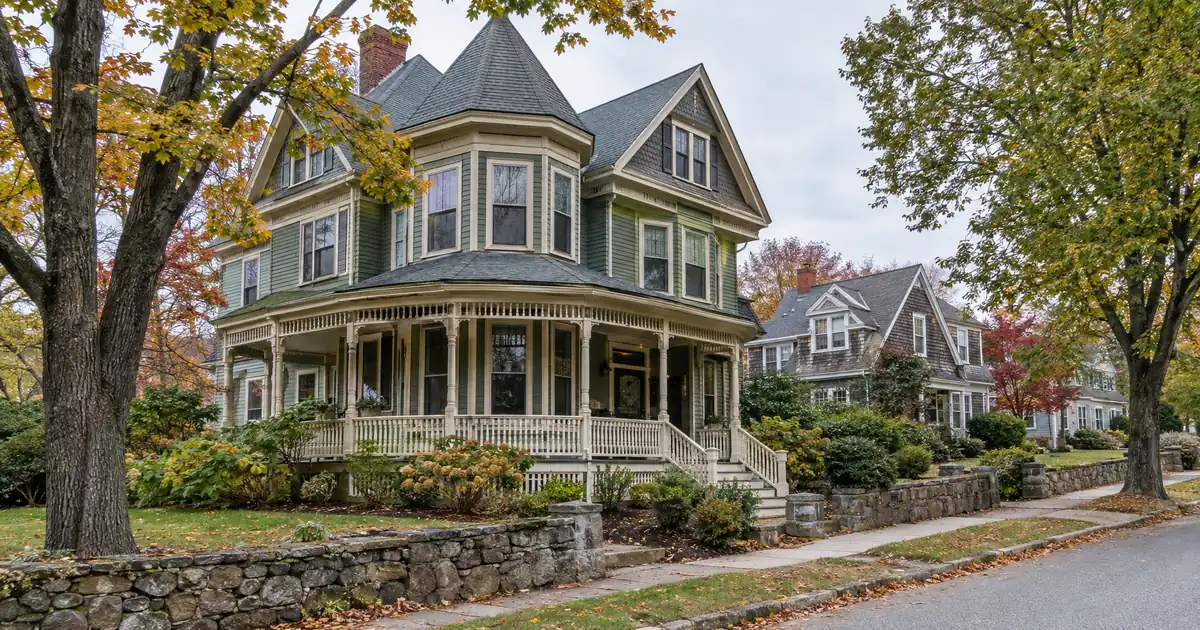
An out-of-state investor scrolling Waltham listings sees a $1 million median ask on multifamily, a Fortune 500 defense headquarters, and two universities inside 12.7 square miles. What the listings don’t show is that citywide price momentum has stalled, so the refinance case here depends on rent coverage rather than appreciation. This article is for investors who already own a Waltham property and want to turn equity into capital for the next acquisition through a DSCR cash-out refinance.
At a Glance: A Waltham cash-out refinance fits owners of two-to-four-unit rental buildings whose stacked rents carry the property, because the loan is underwritten primarily on rental income measured against its full monthly obligation, not personal income. Zumper puts the city’s median rent at $3,050.
DSCR Cash-Out Calculator
Run the cash-out numbers in Waltham, MA
Rate source: Freddie Mac 30-yr average via FRED® — Federal Reserve Bank of St. Louis · effective Sep 24, 2026
Prefilled with starting assumptions — enter your property’s value, balance, taxes, and insurance for a more accurate picture.
Program parameters update from Lendmire’s centralized guideline source. Taxes and insurance are editable estimates.
As of Sep 24, 2026 · General Freddie Mac market benchmark, not a Lendmire loan offer. Property value, balance, taxes, and insurance are editable estimates. Maximum loan-to-value varies by lender, program, property type, and seasoning. Not a Loan Estimate, approval, or commitment to lend. Program availability and eligibility are subject to lender guidelines, credit approval, property review, and underwriting.
- Leverage tops out at 75 percent LTV on a cash-out, with about six months of seasoning from title recording.
- Single-family rentals at the Redfin median sale price of $792K struggle to clear 1.00x on full PITIA.
- Multi-unit buildings with below-market rents are the cleanest equity-extraction candidates.
- Multifamily inventory runs near five listings at a time, so appraisal comps are thin.
Waltham Market Snapshot
A quick read on the Waltham investor landscape — figures come from the cited sources below. Confirm current property-level numbers before underwriting.
| Metric | Detail |
|---|---|
| Home prices | $792K median (Redfin Housing Market) |
| Typical rents | $122K/yr gross (Homes.com 02453 Multi-Family) |
| University enrollment | 4,696 students (fall 2025) (Wikipedia) |
| Population | 65,840 population (Census Reporter (ACS 2024)) |
Rent Coverage Carries This Market, Not Appreciation
Waltham is appreciation-flat on a citywide basis, and a cash-out thesis built on market lift will disappoint. Redfin reports a median sale price of $792K, down 8.4 percent year over year, while Zillow’s home value index shows $757,100, up 1.5 percent. The two series disagree on direction, which is typical when monthly transaction counts are small. Waltham sells only a few dozen homes a month, so any single median is directional.
The divergence matters for refinance math. Equity built through passive appreciation isn’t there to pull. Equity built through forced appreciation, meaning rent-ups, unit turnover at below-market leases, and conversions, is. A MetroWest Home Team market report found that riverfront and transit-adjacent parcels have outperformed interior blocks over a long window. That makes the Moody Street corridor and the Highlands near the commuter rail the appreciation-led bets. Piety Corner and Bank Square are better underwritten as cash-flow holds, where coverage drives the decision and any ARV lift is a bonus.
Not a market for passive equity.
Where the Coverage Math Clears (and Where It Doesn’t)
Multi-unit buildings clear the coverage test in Waltham, and single-family rentals mostly don’t. The numbers below are modeled assumptions, not market quotes. Each uses 75 percent LTV and a full-PITIA calculation that includes taxes and insurance at Massachusetts averages.
| Property type | Modeled rent assumption | Modeled coverage |
|---|---|---|
| 3-bed SFR near median price | About $3,740/mo | Roughly 0.75x |
| Six-unit building at ~$1M | About $122K/yr gross | Roughly 1.5x |
The single-family rent input comes from Zumper’s three-bedroom median. Run it against a purchase price near the Redfin median and the coverage lands well under 1.00x. A standard DSCR program uses 1.00x as its baseline, so this file would need a sub-1.00 program, a lower LTV, or compensating factors. Lenders review those case by case, and qualification stays subject to lender guidelines, credit approval, and property review.
The multi-unit case looks very different. A six-unit brick building in the 02453 ZIP, with five one-bedrooms and a studio, was marketed on Homes.com with roughly $122K in annual rent and the note that current rents sit below market. Modeled at a price near the $1 million multifamily median, that rent roll covers full PITIA at about 1.5x. As leases turn, coverage widens, and that is the pattern a refinance rewards.
A fully occupied four-unit-plus-single-family assemblage near Moody Street, listed with fourteen bedrooms in the Waltham Highlands Redfin feed, shows the same logic. Income stacks across five doors instead of resting on one tenant. The pull is simple: owners of this product type have the best shot at a coverage number that supports a full 75 percent LTV.
Submarket by Submarket
Rent trackers publish neighborhood-level one-bedroom averages, which are directional rather than appraised. Point2Homes and similar aggregators show a tight band across the middle of the city and a premium at the top.
Moody Street and downtown. Downtown one-bedrooms average near $2,938, and tenant demand leans toward young professionals who value walkability and the commuter rail. Mixed-use buildings and small multifamily above retail are common refinance candidates. This is the corridor where the Waltham-specific appreciation pattern is strongest.
North Waltham, Piety Corner, and Bank Square. One-bedroom averages run about $3,198 in North Waltham, $3,038 in Piety Corner, and $3,003 in Bank Square. The housing here is two-to-three-unit workforce stock and single-family blocks. Entry prices run lower relative to rent than Moody Street, so duplex and triplex coverage tends to be healthier. Here is where a refinance lets an owner redeploy equity without waiting on appreciation.
Bentley area, Ellison Park, and South Side. These are the most affordable neighborhoods in the city. Don’t underwrite them as a mass student-housing play. Bentley University enrolled about 5,333 students in fall 2024, but roughly 80 percent live on campus according to the Princeton Review. Durable off-campus demand comes from graduate students, staff, and nearby employees renting mid-size households. Underwrite for steady occupancy, not turnover.
Highlands and Lakeview. Highlands rents rose 51.7 percent year over year to $3,565 in one tracker, and a single-month spike like that warrants a local rent comp before anyone underwrites it. Lakeview sits at the premium end, with one-bedrooms near $4,382. Better for higher-end single-family than workforce multifamily. Cedarwood and Pigeon Hill are owner-occupant-heavy enclaves, so multi-unit comps are scarce there.
Demand Anchors That Hold Occupancy
Waltham rents don’t depend on one employer. Data USA shows residents concentrated in educational services (6,576 people), professional, scientific, and technical services (5,492), and health care (5,078). RTX, Biogen, and a cluster of biotech names headquartered here add professional-wage tenant demand. Brandeis University enrolls 4,696 students, and the Mount Auburn Hospital outpatient campus on Waverley Oaks Road adds a health-care employment anchor on the Piety Corner side of the city. Per Point2Homes, renters occupy 52 percent of housing, or 13,606 units, with two-bedrooms the largest share at 43 percent.
The employer names work as demand anchors, not headcount data. What the data does support is a renter base spanning three job categories competing for the same small-building stock. That mix tends to keep rent cooling gradual instead of abrupt. Zumper shows median rent slipping 2.1 percent year over year to $3,050 after a mid-year peak, a modest cooldown from a high base.
The Seasoning and Thin-Comp Problem
The binding constraint on a Waltham cash-out is usually the appraisal, not the borrower. With roughly five multifamily listings on the market at one time and a median ask near $1 million per Redfin, comp sets are shallow and lumpy. Appraisers may reach into neighboring submarkets or lean on older sales. That can pull the ARV up or down depending on timing. Owners planning a refinance should pull their own sold comps first and decide whether the value case holds if the appraiser goes outside the city.
Program mechanics are straightforward. The cash-out ceiling is 75 percent LTV, with about six months of ownership measured from title recording. Credit tiers start at a 620 floor, reserves run about six months of PITIA (higher above $1,500,000), and standard programs reach up to $3,000,000. The 1.00x baseline is common because rent covers the obligation at that level. Some lenders review lower-ratio scenarios, but those usually carry lower leverage, different pricing, or more cash in. Proceeds depend on rent used for lender review, PITIA, reserves, and the 75 percent cap, so no cash figure is guaranteed. DSCR cash-out refi mechanics walks through the calculation, and the DSCR fundamentals covers the ratio itself.
On files from compact, high-cost suburbs like this one, the common friction point is a rent roll that doesn’t match leases. Below-market tenants on month-to-month terms and informal rent increases can leave the rent used for lender review lower than what the owner believes the building earns. The cleaner files from a documentation standpoint show signed leases that match the rent schedule, an up-to-date insurance declaration, and reserves held in seasoned accounts. Files without those tend to lose weeks of back-and-forth, which comes down to preparation, not market conditions.
Where Does the Cash Go Next?
The strongest use of Waltham equity is a second small-multifamily acquisition, not a renovation of the first. A refinance converts forced appreciation into purchase capital, and Lendmire’s refi programs are built around that handoff. Picture an owner holding a triplex in North Waltham whose below-market leases have turned over. Re-underwritten at current rents, the building supports 75 percent LTV, and the extracted capital becomes the down payment on a duplex in Bank Square. That is a repeatable structure.
The alternative is staying conventional. The comparison between DSCR and conventional financing shows the trade-off: conventional paths lean on personal income and loan-count caps, while DSCR leans on the property. For a LLC-owned portfolio, that works subject to lender program eligibility. Investors can see how Massachusetts DSCR investor loans are structured across the state, or call Lendmire at 828-256-2183.
Frequently Asked Questions
How do you qualify for a DSCR cash-out refinance in Waltham, Massachusetts?
Qualification rests on four items: about six months of seasoning, a credit score of at least 620, reserves near six months of PITIA, and coverage of at least 1.00x, all subject to lender guidelines. Leverage caps at 75 percent LTV. Waltham multi-unit buildings with signed leases tend to produce the cleanest coverage story.
DSCR vs. conventional financing
There are two common ways to finance an investment property in Waltham, MA, and they qualify you differently — here’s how investors weigh them.
Why investors choose it
- Qualifies on the property’s rental income — no personal tax returns, W-2s, or pay stubs needed to document income.
- No personal debt-to-income ceiling to clear, so existing mortgages and obligations don’t cap your borrowing the same way.
- Can be closed in an LLC, keeping the property inside a business entity.
- Built for scaling — not held to the limit on number of financed properties that conventional financing applies.
- Underwriting centers on the deal: generally qualifies when the rent covers the payment, a 1.00x coverage ratio being a common baseline (confirmed in underwriting).
- Designed specifically for investment property, including long-term and, where the program allows, short-term rentals.
Where it’s strong
- Often the lowest ongoing financing cost for a buyer who fully qualifies on personal income — a fit for a first property or a cost-first purchase.
Trade-offs for investors
- Requires full personal income documentation and must fit within a debt-to-income limit — salary, existing debts, and other mortgages all count.
- Typically held in your personal name rather than a business entity.
- Caps how many financed properties you can carry, which can become a ceiling as a portfolio grows.
- Evaluates you as a borrower as much as the property, which usually means more paperwork.
How investors usually choose: a first or single property often optimizes for the lowest financing cost; portfolio builders often optimize for leverage, vesting in an LLC, and scaling past conventional caps. The right answer depends on your goals, the property, and current guidelines — both paths run through select lenders in Lendmire’s wholesale network, with eligibility and terms confirmed in underwriting.
What are the requirements for an investment property loan in Waltham, MA?
Expect a property appraisal, proof of reserves, a lease or market-rent schedule, and entity documents if the property sits in an LLC (subject to program terms). Eligible property types include single-family, condo, and two-to-four-unit buildings. Manufactured homes and log homes fall outside these programs.
Does Waltham’s flat price trend hurt cash-out refinancing?
It limits the value-based route but not the rent-based one. The Redfin and Zillow series disagree on direction, so an appraiser’s number can swing either way. Buildings with leases below market rents offer the most reliable path, because re-underwritten rent can lift value without market help.
Are Bentley and Brandeis the main tenant source for small multifamily?
Not the only one. Bentley houses about 80 percent of students on campus, so off-campus demand skews toward graduate students, staff, and neighboring employees. Biotech, defense, and health-care workers share the same housing stock, which broadens demand beyond campus calendars.
The Local Read
A local appraiser would say the same thing about Waltham that the data does. The buildings that refinance well are the old brick multifamily blocks near Moody Street and the commuter rail, not the interior single-family lots. Rents on those buildings usually lag the market, and a clean rent roll is worth more than a month-by-month price chart. Verify current local rental rules, taxes, and insurance with qualified Massachusetts professionals before underwriting.
For current guidelines and terms, see Lendmire’s DSCR loan programs page.
About Lendmire
Lendmire is a non-QM mortgage brokerage (NMLS# 2371349) arranging DSCR investor loans in 41 markets, including Washington, D.C., through wholesale and investor-lending channels. DSCR loans are evaluated by the lender on rental income rather than personal income, subject to lender guidelines. That makes them a fit for LLC-owned portfolios, self-employed investors, and operators scaling beyond conventional loan caps. Recognized as a top-ranked workplace in 2026 and a top-ranked workplace in 2025 by Scotsman Guide, with the 2026 Top Workplace recognition announcement on record.
Get Started
Ready to find the right loan for you?
In about 30 seconds you can review financing options available for your investment property. No commitment required.
Informational only. Not a Loan Estimate, approval, or commitment to lend. Program availability and eligibility are subject to lender guidelines, credit approval, property review, and underwriting.
References
1. Zumper Rent Research, Waltham
2. Redfin Housing Market, Waltham
3. Homes.com — Waltham MA Multi Family Homes for Sale
4. Wikipedia
6. Zillow Home Values, Waltham
7. MetroWest Home Team market report
8. Waltham Highlands Redfin feed
9. Point2Homes Rental Data, Waltham
10. Princeton Review
13. Redfin
14. Scotsman Guide — Top Workplaces 2026
15. Scotsman Guide — Top Workplaces 2025
16. the 2026 Top Workplace recognition announcement
This article is part of Lendmire’s investment property cash-out refinance program — full qualification details, guidelines, and scenarios live on the program page.
Related reading: Luxury Rental DSCR Loans In New Jersey · Jersey Shore Vacation Rental Loans: DSCR Financing In Ocean City, Cape May And Long Beach Island · DSCR Cash-out Refinance In New Jersey: Pulling Equity From A Rental
Guides: Investment Property Cash-Out Refinance in Waltham, MA · Investment Property Cash-Out Refinance in Massachusetts
Brandon Miller
Founder & CEO, Mortgage Loan Originator, Lendmire LLC
- Mortgage Loan Originator · NMLS# 1129696 · Verify on NMLS Consumer Access
- North Carolina Real Estate Broker · License# 343312 · Verify on NCREC
- North Carolina Insurance Producer · License# 19053198 · Property, Casualty, Life, Health · Verify on NAIC SBS
- Lendmire LLC · Firm NMLS# 2371349 · Verify firm licensure
Disclosures. The information presented in this article is general market commentary, not financial, legal, or tax advice. Lendmire is a mortgage brokerage (NMLS# 2371349) — not a direct lender or depository institution — and loan placement is subject to lender underwriting. Nothing in this content represents a commitment to lend. Loan terms, pricing, and program availability vary based on borrower qualifications, property characteristics, and state of subject property, and are subject to change at any time. Lendmire complies with Equal Housing Opportunity requirements. Consumer access: nmlsconsumeraccess.org.