
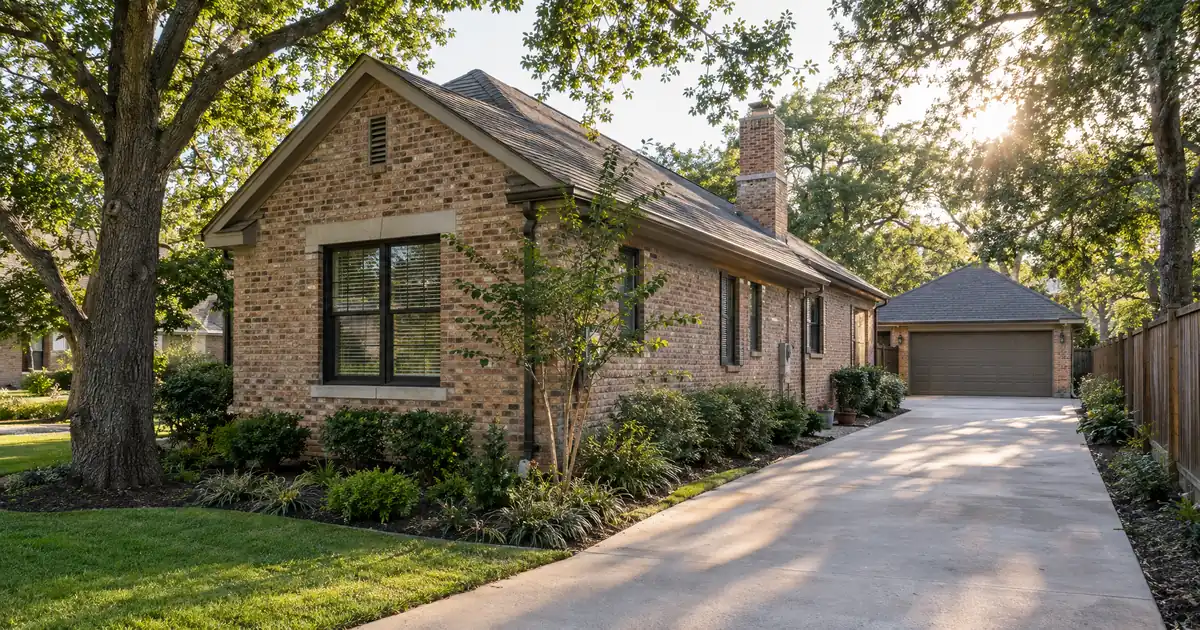
Own a rental in Fort Worth and wondering whether the equity is reachable? Most brokers skip the first question: in this market, the property type decides the answer before the appraisal does. A single house and a duplex can sit in the same zip code, carry similar basis, and produce very different coverage numbers once a lender runs full obligations against rent.
The Quick Read: A DSCR cash-out refinance on a Fort Worth investment property is underwritten primarily on the rental income measured against the property’s full monthly obligation, with proceeds limited by a 75 percent loan-to-value ceiling and a seasoning period measured from title recording, all subject to lender guidelines and property review.
DSCR Cash-Out Calculator
Run the cash-out numbers in Fort Worth, TX
Rate source: Freddie Mac 30-yr average via FRED® — Federal Reserve Bank of St. Louis · effective Sep 24, 2026
Prefilled with starting assumptions — enter your property’s value, balance, taxes, and insurance for a more accurate picture.
Program parameters update from Lendmire’s centralized guideline source. Taxes and insurance are editable estimates.
As of Sep 24, 2026 · General Freddie Mac market benchmark, not a Lendmire loan offer. Property value, balance, taxes, and insurance are editable estimates. Maximum loan-to-value varies by lender, program, property type, and seasoning. Not a Loan Estimate, approval, or commitment to lend. Program availability and eligibility are subject to lender guidelines, credit approval, property review, and underwriting.
- Citywide median sale price sits at $338K, down 0.65 percent year over year, per Redfin.
- Duplexes and fourplexes stack several rents against one loan. A house carries one.
- East and Northeast Fort Worth medians of $271K and $262K offer the lowest basis.
- North Fort Worth apartment vacancy of 7.1 percent beats the 9.6 percent metro figure, per Cushman & Wakefield.
- Seasoning runs about six months from title recording. Reserves typically run about six months of PITIA.
Fort Worth Market Snapshot
A quick read on the Fort Worth investor landscape — figures come from the cited sources below. Confirm current property-level numbers before underwriting.
| Metric | Detail |
|---|---|
| University enrollment | 12,980 total (TCU enrollment release) |
| Employment | ~19,000 jobs (Texas Comptroller, NAS JRB Fort Worth) |
| Vacancy | 9.6% metro stabilized (Cushman & Wakefield MarketBeat) |
Equity Is Thinner Than the Headlines Suggest
Fort Worth’s population story is strong, but its price story is flat. The city reached 1,028,117 residents and added 19,512 in a single year, the second-largest numeric gain of any U.S. city, according to Fort Worth Inc’s read of Census estimates. Yet citywide prices are roughly level: Redfin shows a $338K median sale price and $176 per square foot, while Zillow puts average home value at $298,353, down 2.0 percent. The two measure differently, but both point the same direction.
The implication for an equity-extraction play is direct. Cash-out proceeds here come from basis, loan paydown, and value-add work, not from a rising tide. An owner who bought a few years ago at a reasonable price has room. An owner who bought recently at a stretched price may find the 75 percent ceiling leaves very little. Downtown is the exception, with a $396K median up 8.5 percent per Redfin, but that is condo and townhome stock.
Appreciation-driven equity is a thin bet in Fort Worth right now. Income-driven equity is the better one.
Coverage Math: Duplex Versus House
Stacked rents beat single rents on the same loan. Zumper puts the median Fort Worth house rent at $2,199 and apartments at $1,415. A house collects one rent. A duplex collects two, against one mortgage, one insurance policy, and one tax bill.
The calculation itself is simple: monthly rent divided by the full monthly obligation of principal, interest, taxes, insurance, and any HOA dues. Most standard programs build around a 1.00x baseline because rent covers the payment at that level. Lenders may review lower scenarios, but those typically require lower leverage, stronger compensating factors, or different pricing.
Run the numbers on three modeled cases. These are assumptions, not sourced market figures, and all include taxes and insurance at typical Texas levels:
- House at the citywide median. A $338,000 house at 75 percent LTV, renting at the $2,199 house median, lands just under 1.0x, around 0.9x. Coverage is tight at the median price.
- House in East Fort Worth. A modeled $271,000 house, using that same citywide rent as a stand-in because no neighborhood rent is sourced, pencils in the mid-1.1x range. The lower basis does the work.
- Duplex. A modeled $360,000 duplex with two units at $1,800 each lands around 1.4x. The rent figure comes from a single Redfin duplex listing near the Historic Southside and Medical District. It is anecdotal, not a market statistic. The price is the model’s assumption, not the listing’s.
The gap between the median house and the duplex is roughly half a turn of coverage. That is the whole thesis.
For a sub-1.00 file like the first case, the paths a lender might review include a sub-1.00 program at reduced leverage, interest-only structuring, or a lower cash-out request. Each is subject to lender guidelines, credit review, and property evaluation. The guide “What Is a DSCR Loan” is worth reading before choosing one.
One operational note: the same listing page shows Southeast Fort Worth duplexes with separate gas and electric meters and individual central A/C. Separately metered units make income documentation cleaner.
Where Basis Runs Lowest: East and Northeast Fort Worth
East Fort Worth’s median sale price is $271K and Northeast Fort Worth’s is $262K. South Fort Worth, at $314K, sits in the middle. These are Redfin’s broad regions, not tight neighborhood boundaries.
The East side includes Polytechnic Heights and Stop Six, where duplex and detached-second-unit properties show up. Texas Wesleyan University sits nearby with 2,792 students, up 10 percent. A local property manager, Westrom Group, prices C-class pockets at $150K–$250K and notes paper cap rates of 8–12 percent with heavier maintenance and turnover. That is an opinion, not a dataset, but it matches the usual tradeoff: cheaper basis buys stronger coverage and a rougher operating profile.
Detached “house plus quarters” lots deserve a separate flag. Underwriters may treat the second unit differently from a true duplex, so confirm treatment with the lender before counting that rent.
The Medical District and Near Southside: Demand You Can Underwrite
Hospital shift workers, residents, and support staff are a durable tenant pool. The Fort Worth Report says every major system is expanding in the Medical District, including Baylor Scott & White, Cook Children’s, JPS, and Texas Health Resources. All Saints alone has 538 beds. JPS Health Network operates a Level I trauma center and more than 25 community locations.
Rent momentum is modest but positive. Transwestern’s apartment data shows annual gains of 1.3 percent in Love Field/Medical District, 1.4 percent in Intown Fort Worth/University, and 1.9 percent in West Fort Worth/Parker County. Those are apartment figures, not duplex figures, and small gains. Underwrite flat, and treat any growth as upside.
From the west, TCU enrolled 12,980 students with a record incoming class. Campus housing strain pushes demand into nearby rentals.
Westrom puts B-class Near Southside product at $280K–$350K with rents of $1,900–$2,300. The catch: higher price per door means thinner coverage at the same LTV. This suits appreciation-minded owners better than leverage-minded ones.
North Fort Worth: Toss-Up Between Tight Vacancy and Soft Rents
The vacancy case for North Fort Worth is the best in the city. Cushman & Wakefield shows 7.1 percent apartment vacancy there against 9.6 percent for the DFW metro, and notes vacancy is increasingly submarket-specific. IPA’s forecast expects supply pullbacks in both North and South Fort Worth. It flags accelerating supply only in the Haltom City-Meacham corridor on the Northside, where rent growth could be capped.
The employment base backs this up. The Dallas Fed reports Fort Worth job growth of 3.4 percent against 2.3 percent for Texas, unemployment of 4.0 percent, and 23.9 percent of jobs in trade, transportation, and utilities, tied to AllianceTexas, rail, and DFW Airport. Logistics tenants are workforce-housing tenants. Lockheed Martin at Air Force Plant 4 adds roughly 19,000 jobs, the city’s largest single employer. Wistron’s planned $761 million AllianceTexas facilities add 800-plus jobs, but they are new, so treat them as upside.
Against that, Westrom citing RentCafe shows North Fort Worth apartment rents down 0.41 percent year over year, and the median is $325K. So is it a buy-and-hold or a cash-out candidate? Honestly, it’s a toss-up: the vacancy and job data favor it, while flat rents limit how much the appraisal schedule can help.
What the Appraiser’s Rent Schedule Does to Your Number
Underwriters haircut to market rent, not to what a tenant happens to pay. Vacancy data varies by source: M&D Property Management reports DFW metro vacancy at 12.2 percent, a roughly 20-year high, while Westrom puts Fort Worth at 8.9 percent and 3-bedroom single-family rent at $2,190. Neither is an official statistic. Zillow shows average rent of $2,085, down $35 year over year.
Rents here are flat to soft. A lease above market will not carry the file.
On files from markets structurally like this one, Lendmire’s deal desk tends to see the friction at the appraisal rent schedule rather than the loan itself. Files where rents are documented with current leases and the schedule matches them move through lender review more cleanly. Cash-out requests sized to the appraised value, not the owner’s hoped-for value, tend to need fewer revisions.
Recycling the Proceeds
Proceeds are capital for the next acquisition, not a guaranteed figure. Equity available depends on rent used for lender review, PITIA, reserves, and the 75 percent ceiling. Seasoning is about six months from title recording, so a recent purchase may need to wait. A 1.00x minimum is common, with credit tiers at 620, 660, 680, and 700 that can influence available terms. All of this is subject to lender guidelines. The equity-extraction mechanics and investor refinance options cover the structure. The program-to-program comparison explains why income-based qualification suits owners with multiple properties.
Lendmire, a DSCR-focused mortgage broker, arranges these loans through wholesale lending channels, including LLC-held properties, subject to lender program eligibility. More on DSCR loan options for Texas investors is available, and investors can request a quote or call 828-256-2183.
Investors should verify current local rental rules, taxes, and insurance with qualified local professionals.
Frequently Asked Questions
How much equity can I pull from a Fort Worth rental?
It depends on the appraised value, rent used for lender review, PITIA, reserves, and a 75 percent LTV ceiling, so no cash figure is guaranteed. With citywide prices flat, owners who bought recently often find little room. Owners with low basis or paid-down balances have the most.
Do duplexes and fourplexes refinance differently than houses?
Small residential DSCR programs generally cover one to four units, and five or more usually moves into commercial or agency debt. Multiple rents stacked against one loan typically improve coverage. Detached second units may be treated differently by underwriters.
DSCR vs. conventional financing
Two common ways to finance an investment property in Fort Worth, TX. They qualify you differently — here’s how investors weigh them.
Why investors choose it
- Qualifies on the property’s rental income — no personal tax returns, W-2s, or pay stubs needed to document income.
- No personal debt-to-income ceiling to clear, so existing mortgages and obligations don’t cap your borrowing the same way.
- Can be closed in an LLC, keeping the property inside a business entity.
- Built for scaling — not held to the limit on number of financed properties that conventional financing applies.
- Underwriting centers on the deal: generally qualifies when the rent covers the payment, a 1.00x coverage ratio being a common baseline (confirmed in underwriting).
- Designed specifically for investment property, including long-term and, where the program allows, short-term rentals.
Where it’s strong
- Often the lowest ongoing financing cost for a buyer who fully qualifies on personal income — a fit for a first property or a cost-first purchase.
Trade-offs for investors
- Requires full personal income documentation and must fit within a debt-to-income limit — salary, existing debts, and other mortgages all count.
- Typically held in your personal name rather than a business entity.
- Caps how many financed properties you can carry, which can become a ceiling as a portfolio grows.
- Evaluates you as a borrower as much as the property, which usually means more paperwork.
How investors usually choose: a first or single property often optimizes for the lowest financing cost; portfolio builders often optimize for leverage, vesting in an LLC, and scaling past conventional caps. The right answer depends on your goals, the property, and current guidelines — both paths run through select lenders in Lendmire’s wholesale network, with eligibility and terms confirmed in underwriting.
How long do I have to own the property before a cash-out?
Seasoning is typically about six months, measured from title recording. In a flat-price market the appraisal is usually the bigger constraint, not the clock.
Does Fort Worth’s vacancy hurt my coverage number?
It can, through the appraiser’s market-rent schedule. Fort Worth vacancy is reported near 8.9 percent by Westrom, with the DFW metro near 12.2 percent. North Fort Worth apartment vacancy of 7.1 percent runs tighter.
What credit score do I need?
A 620 floor with tiers at 660, 680, and 700 is typical. Higher tiers may improve leverage or pricing, subject to lender guidelines.
Fort Worth is adding residents faster than it is adding price, which means the equity most owners can reach is the equity their rents can carry. So which of your properties is actually carrying its weight: the house at the median, or the one with two doors?
For current guidelines and terms, see Lendmire’s DSCR loan programs page.
About Lendmire
Lendmire, NMLS# 2371349, is a mortgage brokerage focused on investor financing, arranging DSCR loans in 40 states plus Washington, D.C. — 41 markets total. Qualification is based on the property’s income rather than personal income documentation, subject to lender guidelines, making it a fit for LLC-held rentals and scaling portfolios. Lendmire was recognized by Scotsman Guide as a 2026 Top Workplace.
Get Started
Ready to find the right loan for you?
In about 30 seconds you can review financing options available for your investment property. No commitment required.
Informational only. Not a Loan Estimate, approval, or commitment to lend. Program availability and eligibility are subject to lender guidelines, credit approval, property review, and underwriting.
References
1. Redfin, Fort Worth housing market
2. Cushman & Wakefield, DFW multifamily MarketBeat
3. TCU
4. Texas Comptroller, NAS JRB Fort Worth
5. Fort Worth Inc, Census growth report
6. Zillow
7. Redfin
8. Zumper, Fort Worth rent research
10. $271K
11. $262K
12. $314K
14. Westrom Group
15. Fort Worth Report, hospital expansion
17. Transwestern’s apartment data
18. IPA’s forecast
19. Dallas Fed, Fort Worth economic indicators
20. $761 million AllianceTexas facilities
22. Zillow
23. recognized by Scotsman Guide as a 2026 Top Workplace
This article is part of Lendmire’s investment property cash-out refinance program — full qualification details, guidelines, and scenarios live on the program page.
Related reading: Investment Property Loans in Fort Worth, TX: The DSCR Financing Guide to Near Southside · DSCR Cash Out Refinance in Corsicana, Texas: How the Rent Math Clears at 75% LTV · DSCR Cash Out Refinance in Mcallen, Texas: Sizing Equity on Flat Rents
Guides: Investment Property Cash-Out Refinance in Fort Worth, TX · Investment Property Cash-Out Refinance in Texas
Brandon Miller
Founder & CEO, Mortgage Loan Originator, Lendmire LLC
- Mortgage Loan Originator · NMLS# 1129696 · Verify on NMLS Consumer Access
- North Carolina Real Estate Broker · License# 343312 · Verify on NCREC
- North Carolina Insurance Producer · License# 19053198 · Property, Casualty, Life, Health · Verify on NAIC SBS
- Lendmire LLC · Firm NMLS# 2371349 · Verify firm licensure
Disclosure information. Lendmire is a state-licensed mortgage brokerage under NMLS# 2371349. Lendmire is not a depository institution, direct lender, or financial advisor — all loans referenced are placed through wholesale lender partners and are subject to each lender's underwriting standards. This article is provided for general informational purposes and is not a commitment to lend, nor does it constitute financial, legal, or tax advice. Loan programs, terms, rates, and qualification standards change without notice and depend on borrower profile, property type, and the state in which the subject property is located. Equal Housing Opportunity provider. NMLS Consumer Access: nmlsconsumeraccess.org.