
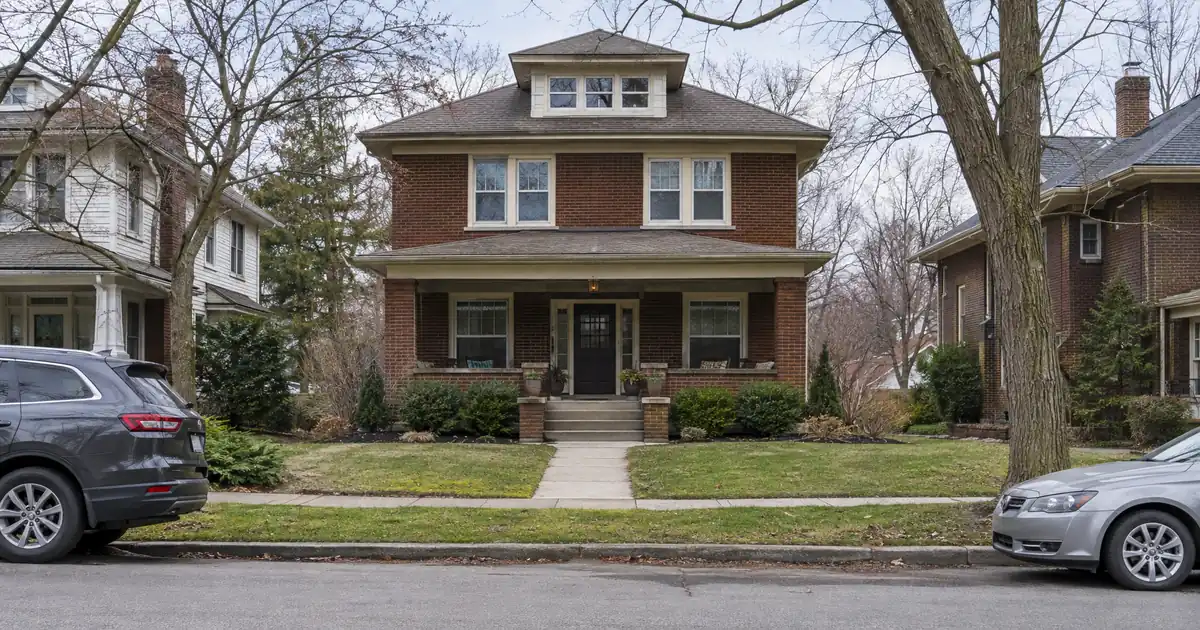
Powell’s rents are high and its coverage ratios are still weak. That’s the part most investors miss. A Zumper average rent of $2,600 sounds like a cash-flow market until it’s set against a Redfin median sale price near $576,000. Cash-out refinancing here is less about how much equity can be pulled and more about how little leverage the rent will tolerate. Lendmire, a DSCR-focused mortgage broker, sees that distinction decide most files in premium suburbs like this one.
At a Glance: A DSCR cash-out refinance in Powell, Ohio is underwritten primarily on the property’s rental income measured against its full monthly obligation, so a file here typically works only when leverage sits well below the 75 percent ceiling and the rent comps are documented tightly.
DSCR Cash-Out Calculator
Run the cash-out numbers in Powell, OH
Rate source: Freddie Mac 30-yr average via FRED® — Federal Reserve Bank of St. Louis · effective Sep 24, 2026
Prefilled with starting assumptions — enter your property’s value, balance, taxes, and insurance for a more accurate picture.
Program parameters update from Lendmire’s centralized guideline source. Taxes and insurance are editable estimates.
As of Sep 24, 2026 · General Freddie Mac market benchmark, not a Lendmire loan offer. Property value, balance, taxes, and insurance are editable estimates. Maximum loan-to-value varies by lender, program, property type, and seasoning. Not a Loan Estimate, approval, or commitment to lend. Program availability and eligibility are subject to lender guidelines, credit approval, property review, and underwriting.
- Rent-to-value runs roughly 0.45 percent a month citywide, so coverage tightens fast as leverage rises.
- Median sale price is $576,000, down 5.2 percent year over year, per Redfin.
- Only about 11 percent of households rent, so appraisers work from a small comp set.
- No multifamily listings sit inside Powell; duplex stacking points to Delaware city.
- Cash-out typically requires about 6 months of ownership, measured from title recording.
Powell Market Snapshot
A quick read on the Powell investor landscape — figures come from the cited sources below. Confirm current property-level numbers before underwriting.
| Metric | Detail |
|---|---|
| Home prices | $576K median (Redfin Powell Housing Market) |
| Typical rents | $3,499 house (Trulia Powell rent) |
Where the Cash-Out Math Breaks
The 75 percent LTV ceiling is a limit, not a target, and in Powell it’s rarely the number that binds. Coverage binds first. At 75 percent leverage, a typical Powell single-family rental lands well under 1.00 on rent against full carrying costs, and it only approaches break-even when leverage drops toward half of value.
Here’s a modeled scenario. These are assumptions, not market data. Take a house valued at $576,000, the Redfin median, and run rent at $2,600 (the Zumper average) and again at $2,800, which is where Homes.com puts median single-family rent. The modeling uses standard 30-year amortization with Ohio-average taxes and insurance included in the full obligation.
- At 75 percent LTV, coverage lands around 0.7.
- At 60 percent LTV, it rounds to the low-to-mid 0.8s.
- At roughly 50 percent LTV, it reaches about 0.9, still just under the 1.00 benchmark.
A 1.00 coverage baseline is common because rent covers the full obligation at that level. Some lenders review lower-ratio files, but those usually come with lower leverage, stronger credit, deeper reserves, or different pricing. If a Powell property models under 1.00, the structures worth asking about are a sub-1.00 program, an interest-only period, or a smaller loan amount. Each is subject to lender guidelines, credit review and property review. None is a given.
(Rent sources here disagree by a wide margin. Zillow averages $2,326 across all property types, while Trulia shows houses near $3,499. Underwrite to a range, not a single figure.)
So who is this for? An investor who bought a Powell house years ago, holds meaningful equity and wants to redeploy part of it. The equity may be real, but the usable proceeds depend on the coverage test, not just the LTV cap.
Appreciation Won’t Rescue the Appraisal
Powell is a school-and-income suburb, not a yield market, and recent price signals are soft. Redfin shows the median sale price down 5.2 percent year over year, with homes averaging 106 days on market against 90 a year earlier. January is a thin month (just 12 sales), so that read deserves caution. Prop-Metrics shows a flatter picture: a year-over-year change of about negative 0.4 percent, median days on market of 31, and 26 percent of listings carrying price reductions.
Other windows run higher. Resideline tracked 214 closings over twelve months at a median of $642,500, with the middle half of sales between $490,000 and $830,000. That is a different time window and methodology from Redfin’s figure, which is why the median appears anywhere from the mid-$500s to the low-$600s depending on the source.
The takeaway is practical. A cash-out refinance can’t count on appreciation to lift the appraised value. Size proceeds to today’s value with a cushion, not to what the property might appraise at in a better stretch. And the spread matters: with sales dispersed across a $340,000 band, the comps an appraiser picks can move the value more than the market’s direction does.
This one’s a genuine toss-up for investors who bought recently. If the home was purchased near the top of the recent range, six months of seasoning may not produce enough value to justify a refinance. Waiting could be the better call.
Thin Comps, Thin Renter Pool
Rental comps are scarce in Powell, and that’s a structural fact. RentCafe reports 552 renter-occupied households, 11 percent, against 4,512 owner-occupied. Prop-Metrics, citing HUD data, shows investor loans at just 1.0 percent of local originations. Powell is an owner-occupier town that happens to have some rentals.
For a DSCR appraisal, that means the rent schedule may lean on a handful of listings. Expect scrutiny, and don’t be surprised by a lower-than-hoped figure. Investors with long-term leases in place, documented and current, have an easier time defending the rent number.
Demand itself is not the concern. Powell is a commuter suburb about 14 miles north of Columbus per Wikipedia, and Census Bureau QuickFacts lists the population at 14,451 with 78.1 percent of adults holding a bachelor’s degree or higher. Median household income is $195,495 per Ohio-Demographics, and population grew 10.0 percent from 2019 to 2024. Tenants here are typically professionals with strong earnings, and the OhioBiz directory names Fifth Third Bank, Nationwide Insurance, Kroger and OhioHealth among local employers. Regional anchors include OhioHealth and Nationwide Children’s Hospital. Homes.com also notes Ohio State’s Outpatient Care Powell, a $183 million facility slated to open, the first named healthcare investment inside the city. No staffing numbers accompany it, so treat it as qualitative support for tenant demand.
Where to Look Inside Powell (and Just Outside It)
The strongest cash-out candidates in Powell are townhomes, condos and 3-to-4 bedroom single-family rentals, with the caveat that no source supports neighborhood-level rent or price figures. Everything below comes from city-wide data and realtor-page character descriptions.
Historic Downtown and Village Green. A walkable main street with restaurants, boutiques and weekend outdoor refreshment areas, plus the late-June Powell Festival at Village Green Park. Housing runs from downtown homes and condos to established subdivisions. Smaller attached units here are the likeliest to pencil on rent-to-value, since the city’s attached-unit values run well below its detached ones. City-data.com estimates $412,456 for attached units versus $592,146 for detached. Walkability is a long-term demand story, not a vacancy guarantee.
Golf Village and Wedgewood. Established subdivisions with mature trees and golf-club amenities. Detached homes dominate, which means higher values and the thinnest coverage. These work for low-leverage cash-outs on well-held properties, not for stretching toward 75 percent. Note that Homes.com lists The Residences at Golf Village as a new apartment community. RentCafe shows Powell apartment rents down 1.89 percent over the past year, from $1,842 to $1,807. New apartments compete with condo and townhome rentals, so softer rent growth in those segments is plausible. Single-family rentals sit in a different segment, so the effect there is likely smaller.
The Liberty Township zoo corridor. The Columbus Zoo and Aquarium and Zoombezi Bay sit in the township’s southwestern corner. Homes.com shows homes there averaging 33 days on market. The zoo is a local employer and draw, but with no verified headcount, it supports identity more than underwriting.
Why not multifamily? Point2 shows no multi-family listings for sale in Powell. The nearest duplex comps are in Delaware city, where one illustrative listing has two 3-bedroom units with one renting at $1,500. Rent per door is lower there, but so is price per door. An investor who wants true multi-unit coverage should look outside Powell. That’s an honest flip point: if the equity in a Powell house is the source but the next deal is a Delaware city duplex, the cash-out may do more good than holding at a low yield. Delaware County has 234,832 residents per Columbus Region, with manufacturing, warehousing, finance and professional services as key industries.
What the File Looks Like
DSCR files in markets like this one typically look the same. The property is high-value with moderate rents. Coverage is thin at full leverage. The borrower is often an LLC or a seasoned owner with equity but no appetite for another conventional underwrite. The cleanest file from a documentation standpoint has complete leases, entity docs, title and property details ready for lender review. Where it gets stuck is the rent figure: a thin comp set can leave the appraiser’s number below the lease, and that single line moves coverage more than almost anything else on the file.
Parameters worth keeping in mind, all subject to lender guidelines and varying by borrower and scenario:
- Seasoning: About 6 months of ownership, measured from title recording.
- Leverage: A 75 percent LTV ceiling on cash-out, with Powell coverage typically pushing real leverage lower.
- Credit: Tiers run from a 620 floor up through 660, 680 and 700.
- Reserves: About 6 months of full carrying costs, and about 9 months above $1,500,000.
LLC-held properties are generally workable, subject to lender program eligibility. For the mechanics, the DSCR fundamentals cover how coverage is calculated, and pulling equity with a DSCR cash-out walks through proceeds and structure. The investor refinance breakdown compares refinance types. Ohio-specific program context lives on the Ohio DSCR financing page.
DSCR or Conventional? The Income Profile Decides
Powell’s income profile creates an unusual twist. Many owners here are high earners with strong traditional employment income. For a single rental held personally by that borrower, conventional cash-out underwriting is based on personal income rather than property coverage, and it may carry a lower cost and fewer coverage hurdles. Where DSCR and conventional diverge is usually at the third or fourth financed property, in entity-held structures, or for self-employed investors whose traditional personal-income documentation doesn’t show the income cleanly.
If coverage sits in the 0.7 to 0.9 band and the borrower has clean traditional employment income, conventional may simply be the better lane. If the portfolio is growing, held in an LLC or documented through self-employment, DSCR becomes the more practical path, with lower leverage as the price of admission.
Does the Cash Have Somewhere Better to Go?
The thesis for a Powell cash-out depends on the destination of the proceeds. Pulling equity to buy a Delaware city duplex or a stronger-yield property where coverage clears 1.00 makes the case straightforward. Pulling equity to fund a second Powell house at the same thin rent-to-value just repeats the problem. And if the Powell property is the only rental, a smaller cash-out at conservative leverage may be the right size.
Run both sides before committing: the coverage on the property being refinanced, and the coverage on the one being bought. When both pencil, the refinance has a purpose. When only one does, re-examine the plan. To work through that math, investors can talk through the numbers with Lendmire or call 828-256-2183.
Frequently Asked Questions
Can a Powell rental clear 1.00 coverage on a cash-out?
Usually only at low leverage. Modeled with full taxes and insurance, Powell single-family rentals land around 0.7 at 75 percent LTV and approach 0.9 near half leverage. Sub-1.00 programs, interest-only structures or a smaller loan amount may be options a lender would review, subject to guidelines and credit approval.
DSCR vs. conventional financing
There are two common ways to finance an investment property in Powell, OH, and they qualify you differently — here’s how investors weigh them.
Why investors choose it
- Qualifies on the property’s rental income — no personal tax returns, W-2s, or pay stubs needed to document income.
- No personal debt-to-income ceiling to clear, so existing mortgages and obligations don’t cap your borrowing the same way.
- Can be closed in an LLC, keeping the property inside a business entity.
- Built for scaling — not held to the limit on number of financed properties that conventional financing applies.
- Underwriting centers on the deal: generally qualifies when the rent covers the payment, a 1.00x coverage ratio being a common baseline (confirmed in underwriting).
- Designed specifically for investment property, including long-term and, where the program allows, short-term rentals.
Where it’s strong
- Often the lowest ongoing financing cost for a buyer who fully qualifies on personal income — a fit for a first property or a cost-first purchase.
Trade-offs for investors
- Requires full personal income documentation and must fit within a debt-to-income limit — salary, existing debts, and other mortgages all count.
- Typically held in your personal name rather than a business entity.
- Caps how many financed properties you can carry, which can become a ceiling as a portfolio grows.
- Evaluates you as a borrower as much as the property, which usually means more paperwork.
How investors usually choose: a first or single property often optimizes for the lowest financing cost; portfolio builders often optimize for leverage, vesting in an LLC, and scaling past conventional caps. The right answer depends on your goals, the property, and current guidelines — both paths run through select lenders in Lendmire’s wholesale network, with eligibility and terms confirmed in underwriting.
Why does Powell’s small renter pool matter for an appraisal?
With roughly 11 percent of households renting, the appraiser’s rent schedule may draw on only a few comps. A current, documented lease helps defend the figure. A rent number below the lease can change the coverage result materially.
Is the Columbus Zoo a rent driver here?
It’s a local draw and employer, but no verified headcount exists, and it sits in the Liberty Township corner rather than throughout Powell. Treat it as supporting context for demand, not the basis for rent assumptions.
Should a Powell owner look at multi-unit stock instead?
It may be worth considering. No multi-family listings appear inside Powell, so duplex and fourplex stacking points to nearby Delaware city. Rent per door is lower there, but so is price per door, which can improve coverage.
How long before a recent Powell purchase is eligible?
Typically about 6 months of ownership from title recording, though exact seasoning rules vary by lender program. A recent purchase near the top of the price range may not appraise high enough to produce usable proceeds even after that point.
The Blind Spot: Price Dispersion
The biggest risk for DSCR-financed investors in Powell is not a rent shortfall or a soft quarter. It’s the appraisal itself. With sales spread across a band as wide as the $490,000 to $830,000 middle half, a handful of comps can swing the value, and the rent schedule can swing coverage on top of it. Investors who underwrite to a single price and a single rent figure are the ones most likely to be surprised. A frank way to plan is to treat both numbers as ranges, and to size the cash-out to the low end of each.
For current guidelines and terms, see Lendmire’s DSCR loan programs page.
About Lendmire
Lendmire, NMLS# 2371349, is a mortgage brokerage focused on investor financing, arranging DSCR loans in 40 states plus Washington, D.C. — 41 markets total. Qualification is based on the property’s income rather than personal income documentation, subject to lender guidelines, making it a fit for LLC-held rentals and scaling portfolios. The brokerage is recognized as a 2026 Scotsman Guide Top Mortgage Workplace and a 2025 Scotsman Guide Top Workplace.
Get Started
Ready to find the right loan for you?
In about 30 seconds you can review financing options available for your investment property. No commitment required.
Informational only. Not a Loan Estimate, approval, or commitment to lend. Program availability and eligibility are subject to lender guidelines, credit approval, property review, and underwriting.
References
1. Zumper: Powell Rent Research
2. Redfin: Powell Housing Market
4. Homes.com
5. Zillow
8. Wikipedia
9. Census Reporter: Powell, OH
11. OhioHealth
12. Nationwide Children’s Hospital
13. City-data.com
15. Columbus Region: Delaware County
16. a 2026 Scotsman Guide Top Mortgage Workplace
17. a 2025 Scotsman Guide Top Workplace
This article is part of Lendmire’s investment property cash-out refinance program — full qualification details, guidelines, and scenarios live on the program page.
Related reading: Cash Out Refinance Investment Property in Powell, Ohio: Equity Extraction on Thin Rent-to-Value · DSCR Cash Out Refinance in Mentor, Ohio: Pulling Equity From a Thin Rental Base · Cash Out Refinance Investment Property in Mentor, Ohio: Equity Math for a Thin Rental Base
Guides: Investment Property Cash-Out Refinance in Ohio
Brandon Miller
Founder & CEO, Mortgage Loan Originator, Lendmire LLC
- Mortgage Loan Originator · NMLS# 1129696 · Verify on NMLS Consumer Access
- North Carolina Real Estate Broker · License# 343312 · Verify on NCREC
- North Carolina Insurance Producer · License# 19053198 · Property, Casualty, Life, Health · Verify on NAIC SBS
- Lendmire LLC · Firm NMLS# 2371349 · Verify firm licensure
Disclosures. The information presented in this article is general market commentary, not financial, legal, or tax advice. Lendmire is a mortgage brokerage (NMLS# 2371349) — not a direct lender or depository institution — and loan placement is subject to lender underwriting. Nothing in this content represents a commitment to lend. Loan terms, pricing, and program availability vary based on borrower qualifications, property characteristics, and state of subject property, and are subject to change at any time. Lendmire complies with Equal Housing Opportunity requirements. Consumer access: nmlsconsumeraccess.org.