
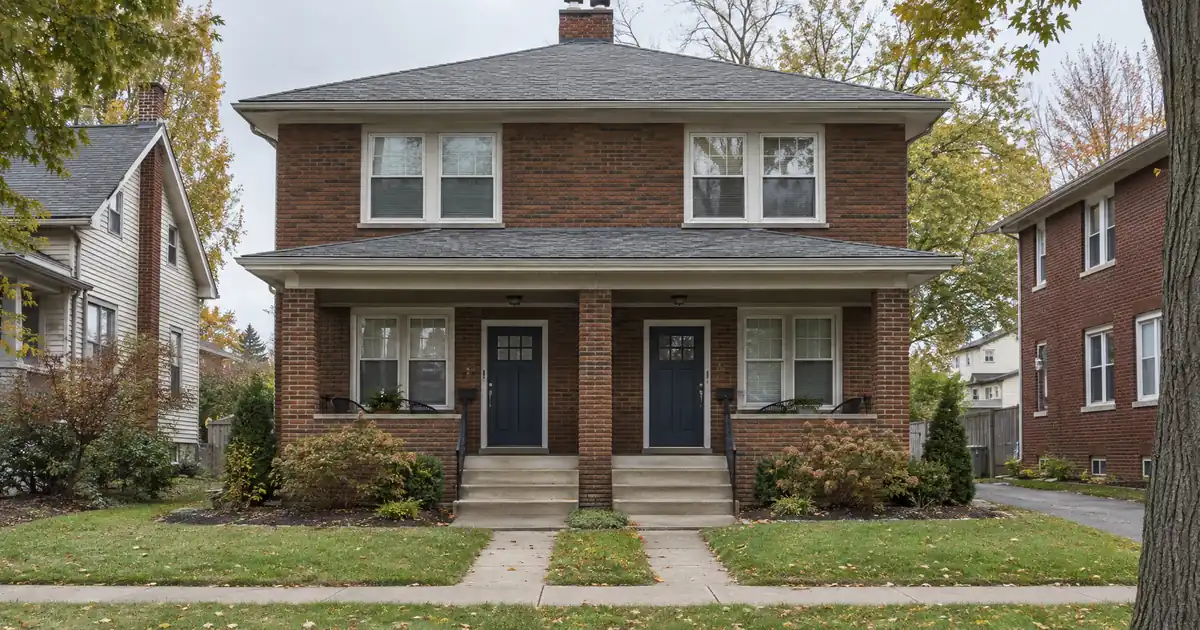
Picture an investor holding a duplex bought near Ohio Wesleyan, renovated, and leased on both sides. The purchase loan is still in place, the seasoning clock is running, and the next deal is already on the radar. The question isn’t whether equity exists. It’s how much the property’s rent can support once a new loan sits on top of it, and what the file has to show to get there.
DSCR Cash-Out Calculator
Run the cash-out numbers in Delaware, OH
Rate source: Freddie Mac 30-yr average via FRED® — Federal Reserve Bank of St. Louis · effective Oct 1, 2026
Prefilled with starting assumptions — enter your property’s value, balance, taxes, and insurance for a more accurate picture.
Program parameters update from Lendmire’s centralized guideline source. Taxes and insurance are editable estimates.
As of Oct 1, 2026 · General Freddie Mac market benchmark, not a Lendmire loan offer. Property value, balance, taxes, and insurance are editable estimates. Maximum loan-to-value varies by lender, program, property type, and seasoning. Not a Loan Estimate, approval, or commitment to lend. Program availability and eligibility are subject to lender guidelines, credit approval, property review, and underwriting.
The Quick Read:
A DSCR cash-out refinance in Delaware, Ohio is underwritten primarily on the property’s rental income measured against its full monthly obligation. With a median sale price near $405K per Redfin, single-family rentals tend to run thin, so multi-unit properties carry most of the equity-extraction load, subject to lender guidelines.
- Modeled, an older duplex near campus lands around 1.0x including taxes and insurance. A median single-family home lands near 0.7x.
- Cash-out tops out at 75% LTV, with about 6 months of seasoning from title recording.
- Appreciation is flat to low single digits, so equity comes from basis or renovation.
- County apartment vacancy sits at 13.1%, so stress the rent assumption.
- Reserves run about 6 months of PITIA, and the credit floor is 620.
- Final terms depend on lender guidelines, property type, leverage, and the borrower’s complete credit picture.
Delaware Market Snapshot
A quick read on the Delaware investor landscape — figures come from the cited sources below. Confirm current property-level numbers before underwriting.
| Metric | Detail |
|---|---|
| Home prices | $563,672 avg sale price (Delaware Gazette) |
| Typical rents | $1,589 vs $1,371 columbus region (Delaware Gazette, “County) |
| Recent appreciation | +4.7% (Delaware Gazette, “County) |
| University enrollment | ~580 new students (Ohio Wesleyan University) |
| Vacancy | 13.1% (Delaware Gazette, “County) |
Start With the Blocks Around Ohio Wesleyan
The strongest refinance candidates in Delaware are older two- to four-unit buildings in the historic core and the OWU-adjacent blocks. Stacked rent against a moderate basis is the only route here that regularly gets coverage to 1.0x or better at 75% leverage. These specifics are subject to lender guidelines and a full review of property, leverage, and credit.
Ohio Wesleyan University enrolls 1,652 undergraduates, and 85% of students live in college-owned or affiliated housing. That caps student-rental depth. The tenant base near campus is more faculty, staff, hospital workers and young professionals than undergrads. That’s a steadier base for a lease file, and a cleaner one to document.
The city’s Fast Facts page lists Kroger at 2,496 employees, Ohio Wesleyan at 1,571, Delaware County government at 1,114, OhioHealth at 1,022 and Delaware City Schools at 996. The same page puts the city’s population at 48,628 with a median age of 34.5. No single employer carries the rental base. For a lender reviewing tenant durability, that spread is a plus.
No reliable block-level price or rent source exists for this market, so treat any neighborhood number you see online with suspicion. Pull MLS comps by street and ZIP before choosing a target. The northern edge near the fairgrounds and the downtown core both have older stock that could pencil well. The research can’t confirm that. Newer-build communities on the city’s edges carry higher price points and thin coverage. Skip them for this strategy.
Lendmire (NMLS# 2371349) is a DSCR-focused mortgage broker arranging investor loans across 40 states plus Washington, D.C. The brokerage works with investors on Ohio DSCR financing through wholesale lending channels, and the lender reviews and approves each file.
What Does the Cash-Out Math Look Like on a Small Building?
Coverage is monthly rent divided by the full monthly obligation: principal, interest, taxes and insurance. How DSCR coverage is calculated matters because Ohio tax and insurance loads can move the ratio more than investors expect. The figures below are modeled assumptions, not sourced comps. Each includes taxes and insurance at Ohio averages and standard 30-year terms at 75% LTV. Terms vary by lender guidelines, property type, leverage, credit profile, and full file review.
Run the numbers on the median single-family home first. At the roughly $405K Redfin median, rent matching the $1,876 three-bedroom average from RentCafe models around 0.7x. That’s well under the 1.00x benchmark most standard programs are built around. A file like that sits below the baseline. Lenders may review a sub-1.00 program, interest-only structuring or lower leverage, but each of those depends on compensating factors, pricing and credit approval. Not a clean path.
Now a modeled duplex. Assume a $320K basis and two older three-bedroom units renting around $1,050 and $1,100. That models near 1.0x including taxes and insurance. Anecdotal listings near campus show older units asking in that range and renovated sides asking closer to $1,500. Those are asking rents from agent-written marketing, not comps. If a renovated duplex genuinely leased at $1,500 per side, the same basis would model above 1.3x. Verify the rent with a signed lease and a rent-roll history, not a listing.
One catch on the RentCafe averages. That $1,550 citywide average, up 4.93% from a year earlier, covers only apartment buildings with 50 or more units. Per RentCafe’s rental stock breakdown, 72% of Delaware’s rentals sit in complexes under 50 units, 19% are single-family and only 8% are in large buildings. Two-bedroom floorplans make up about 61% of rentals. So the benchmark rent describes the minority product. Underwrite small buildings off their own leases.
Appreciation Won’t Carry This Refinance
The cash-out case here rests on basis and renovation. Don’t build it on market lift.
Redfin shows Delaware prices up 1.2% year over year, while Zillow puts the average value at $417,715, up 0.2%. Zillow’s figure uses a different methodology, which is why the two don’t match. Either way, the market is stable and market-rate, not surging. The county housing report, summarized by the Delaware Gazette, says the earlier run-up in prices has slowed, with inflation-adjusted prices against income flat across recent years.
For a refinance, that has a direct file consequence. An investor who bought at market and waited six months shouldn’t expect an appraisal much above cost. The appraiser works from recent sales, and the 75% LTV ceiling applies to that value, not to the purchase price. Equity shows up in three situations. Exact terms depend on the lender’s guidelines, property type, leverage, and a full review of the borrower’s file.
- The purchase came at a discount to what comps support.
- Renovation added value the comps recognize.
- The investor has held long enough that earlier price growth is baked in.
Here’s the thing: Delaware’s median sits roughly 47% above the Ohio median of $274,855 per Redfin’s state data. The market is expensive for Ohio. That helps equity on older holdings and hurts coverage on new purchases.
The Apartment Vacancy Number (and What It Doesn’t Measure)
Delaware County’s institutional apartment vacancy was elevated for six quarters, according to the same Gazette summary. The county’s housing report puts mid-year vacancy well above the Columbus metro’s level, with a large wave of new units delivered over the prior 12 months. Rent growth has moderated as that supply lands.
The scope matters. The county’s earlier methodology note shows the survey samples 143 apartment complexes and excludes duplexes and single-family homes. So 13.1% measures competing apartment supply. It doesn’t measure small-landlord occupancy. Use it as a warning to stress the rent assumption, and get property-manager data for the actual product.
The same report notes that single-family ownership is slowly becoming less affordable for residents. RentCafe reports that 35% of households rent. That supports long-term demand. The pressure lands on rent growth, not on whether tenants exist. A stressed coverage case, with rent trimmed and vacancy added, is the sensible way to test a refinance before it goes to a lender.
Seasoning, Reserves and the File Itself
Most cash-out friction comes from paperwork, not math. The program parameters are fairly plain, and all of this is subject to lender guidelines and credit approval:
- Seasoning: about 6 months of ownership, measured from title recording. The settlement statement from the purchase is the evidence. Files that assume seasoning away get kicked back.
- Leverage: 75% LTV is the cash-out ceiling. The 80% purchase figure doesn’t apply.
- Credit: tiers vary by scenario, with pricing and leverage improving at higher scores.
- Reserves: about 6 months of PITIA, documented with statements. Cash-out proceeds generally don’t count toward the requirement unless the lender says so.
- Loan size: up to $3,000,000 on standard programs, with smaller balances routed through select lenders in the network.
If the property sits in an LLC, closing in the entity is possible, depending on program guidelines. Entity documents, operating agreement and any personal guarantee paperwork should be in the file before submission.
On small-building files in suburban Midwest markets like this one, the common friction point is lease evidence. Renovated units often show a lease signed a month or two earlier, and the lender wants a rent schedule that matches an appraiser’s market-rent opinion. The cleaner files tend to carry executed leases, proof of deposit and an appraisal rent schedule that agrees with them. When the appraisal rent and the lease rent diverge, the lender typically reviews the file on the lower figure. Run both before submitting.
For the mechanics in more detail, see DSCR cash-out refi mechanics and the broader refi programs page. For how this differs from a bank loan, the side-by-side comparison covers it. Investors who want a second set of eyes can ask Lendmire to review the file or call 828-256-2183.
Where Do the Proceeds Go?
Proceeds are only worth pulling if the next deal covers itself. Given what the numbers show, the next purchase should usually be another small building bought at a discount, not a median-priced single-family home that models near 0.7x. Pulling equity from a 1.0x duplex to buy a 0.7x house drags the whole portfolio’s coverage down.
Equity available depends on rent used for lender review, PITIA, reserves and the 75% LTV ceiling. It isn’t a guaranteed figure. Size the refinance to the property’s coverage, not to the maximum the LTV allows. Every figure here varies by lender and program — guidelines, property type, leverage, and credit profile all apply.
One more point. The employment base is steady. Per Data USA, health care and social assistance employs 4,149 residents, educational services 3,041 and manufacturing 2,426. Some of those residents commute to Columbus, about 30 miles south. That’s tenant demand coming from several directions, which is the right backdrop for holding a refinanced building.
The Real Choice
Delaware investors holding a seasoned small building face two options, each with a cost.
DSCR vs. conventional financing
There are two common ways to finance an investment property in Delaware, OH, and they qualify you differently — here’s how investors weigh them.
Why investors choose it
- Qualifies on the property’s rental income — no personal tax returns, W-2s, or pay stubs needed to document income.
- No personal debt-to-income ceiling to clear, so existing mortgages and obligations don’t cap your borrowing the same way.
- Can be closed in an LLC, keeping the property inside a business entity.
- Built for scaling — not held to the limit on number of financed properties that conventional financing applies.
- Underwriting centers on the deal: generally qualifies when the rent covers the payment, a 1.00x coverage ratio being a common baseline (confirmed in underwriting).
- Designed specifically for investment property, including long-term and, where the program allows, short-term rentals.
Where it’s strong
- Often the lowest ongoing financing cost for a buyer who fully qualifies on personal income — a fit for a first property or a cost-first purchase.
Trade-offs for investors
- Requires full personal income documentation and must fit within a debt-to-income limit — salary, existing debts, and other mortgages all count.
- Typically held in your personal name rather than a business entity.
- Caps how many financed properties you can carry, which can become a ceiling as a portfolio grows.
- Evaluates you as a borrower as much as the property, which usually means more paperwork.
How investors usually choose: a first or single property often optimizes for the lowest financing cost; portfolio builders often optimize for leverage, vesting in an LLC, and scaling past conventional caps. The right answer depends on your goals, the property, and current guidelines — both paths run through select lenders in Lendmire’s wholesale network, with eligibility and terms confirmed in underwriting.
Refinance at lower leverage, and coverage stays above 1.00x with room for a vacant unit. But less equity comes out, and the next purchase takes longer to fund.
Refinance at the full 75% LTV, and more capital comes out for the next deal. But coverage thins, and a unit sitting empty against a county with 13.1% apartment vacancy can pull the number under 1.00x. Final terms depend on lender guidelines, property type, leverage, and the borrower’s complete credit picture.
Neither is wrong. The county’s growth supports both.
Frequently Asked Questions
How do you qualify for a DSCR cash-out refinance in Delaware, Ohio?
Qualification centers on the property’s rent against its full PITIA, with a 1.00 minimum DSCR on standard programs. The property also needs to be seasoned about 6 months from title recording, and credit has to clear the 620 floor. Reserves of about 6 months of PITIA are typical. Everything remains subject to lender guidelines, credit approval and property review.
What are the requirements for an investment property cash-out refinance in Delaware, Ohio?
Expect a 75% LTV ceiling, an appraisal with a rent schedule, executed leases and reserves documentation. LLC-held properties may be eligible per lender program requirements, with entity documents in the file. Loans run up to $3,000,000 on standard programs. Local rental rules, taxes and insurance should be confirmed with qualified local professionals.
Can Lendmire help structure DSCR financing for small multifamily investment properties in Delaware?
Yes. Lendmire arranges DSCR investor loans, including Ohio. Qualification is generally reviewed around the property’s rental income rather than personal income documents, subject to lender guidelines.
Does the county’s 13.1% apartment vacancy apply to my duplex?
Not directly. The county survey covers 143 apartment complexes and excludes duplexes and single-family homes. It signals competing supply from new deliveries, so a conservative rent and vacancy assumption makes sense. Local property-manager data is the better check on small-building occupancy.
Is a median-priced single-family rental a good cash-out candidate in Delaware?
Usually not. Modeled with taxes and insurance at 75% LTV, rent in line with the RentCafe three-bedroom average lands around 0.7x. Below 1.00x, a lender may review sub-1.00 programs, interest-only structures or lower leverage, but those depend on compensating factors and credit approval. Duplexes and triplexes bought below median are the stronger fit.
For current guidelines and terms, see Lendmire’s DSCR loan programs page.
About Lendmire
Lendmire (NMLS# 2371349) is a DSCR-focused mortgage broker that helps arrange investor financing across 41 markets, including Washington, D.C., through wholesale and investor-lending channels. DSCR eligibility is generally reviewed by the lender on the property’s rental income rather than personal income documentation, subject to lender guidelines, which works for self-employed investors, LLC operators and portfolios above four financed properties. Scotsman Guide named Lendmire a Top Mortgage Workplace in both 2025 and 2026. See the full Lendmire news archive for more.
Get Started
Ready to find the right loan for you?
In about 30 seconds you can review financing options available for your investment property. No commitment required.
Informational only. Not a Loan Estimate, approval, or commitment to lend. Program availability and eligibility are subject to lender guidelines, credit approval, property review, and underwriting.
References
1. Redfin
5. RentCafe
6. RentCafe’s rental stock breakdown
7. Zillow
9. economicdevelopment.co.delaware.oh.us — 2025 Housing Report
10. economicdevelopment.co.delaware.oh.us — 2024 Housing Report
11. Data USA
12. 2025
13. 2026
This article is part of Lendmire’s investment property cash-out refinance program — full qualification details, guidelines, and scenarios live on the program page.
Related reading: Cash Out Refinance Investment Property in Delaware, Ohio: Equity From Small Rentals · Blanket DSCR Loans In Delaware: How Multi-property Investors Qualify · Cash Out Refinance Investment Property Delaware
Brandon Miller
Founder & CEO, Mortgage Loan Originator, Lendmire LLC
- Mortgage Loan Originator · NMLS# 1129696 · Verify on NMLS Consumer Access
- North Carolina Real Estate Broker · License# 343312 · Verify on NCREC
- North Carolina Insurance Producer · License# 19053198 · Property, Casualty, Life, Health · Verify on NAIC SBS
- Lendmire LLC · Firm NMLS# 2371349 · Verify firm licensure
Required disclosures. Lendmire (NMLS# 2371349) operates as a licensed mortgage broker, not a direct lender or depository. The discussion in this article is general in nature and should not be relied upon as financial, legal, or tax advice — every investment scenario is unique and should be reviewed by a qualified professional. Any loan inquiry is subject to lender underwriting, and this article is not a commitment to lend or a guarantee of approval. Mortgage rates, loan terms, and program guidelines vary by borrower, property, and state, and may change without notice. Equal Housing Opportunity. Verify licensure at NMLS Consumer Access.