
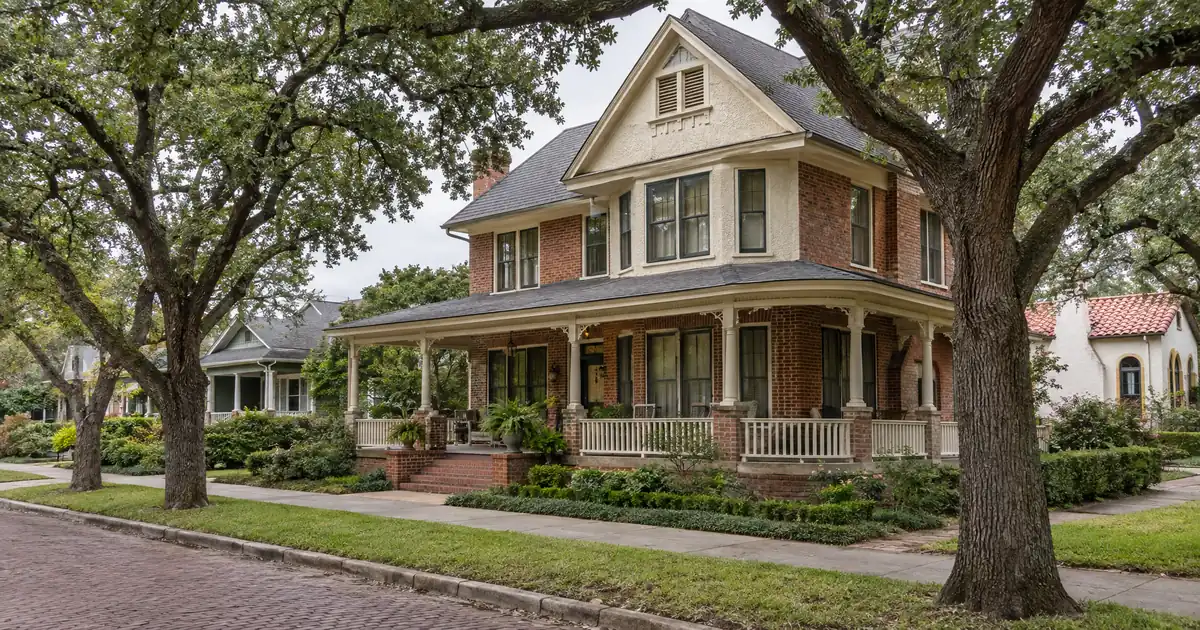
Two investors own paid-down rentals in College Station. One holds a four-bedroom house on the Southside, within a mile of campus, leased by the bedroom. The other holds a single-family home in Castlegate rented to one household at the citywide average. On a cash-out refinance, the Southside house is the one where the coverage math tends to clear. The Castlegate house often struggles to reach 1.00 once taxes and insurance are counted.
The Quick Read: A cash-out refinance on a College Station, Texas investment property is underwritten primarily on the property’s rental income measured against its full monthly obligation. The local twist is that Texas A&M’s announced cap on new undergraduate enrollment supports near-campus rents, while flat citywide values limit how much equity most recent buyers can pull.
DSCR Cash-Out Calculator
Run the cash-out numbers in College Station, TX
Rate source: Freddie Mac 30-yr average via FRED® — Federal Reserve Bank of St. Louis · effective Sep 24, 2026
Prefilled with starting assumptions — enter your property’s value, balance, taxes, and insurance for a more accurate picture.
Program parameters update from Lendmire’s centralized guideline source. Taxes and insurance are editable estimates.
As of Sep 24, 2026 · General Freddie Mac market benchmark, not a Lendmire loan offer. Property value, balance, taxes, and insurance are editable estimates. Maximum loan-to-value varies by lender, program, property type, and seasoning. Not a Loan Estimate, approval, or commitment to lend. Program availability and eligibility are subject to lender guidelines, credit approval, property review, and underwriting.
- Cash-out LTV tops out at 75 percent, with about six months of ownership seasoning typical.
- Texas A&M is holding new undergraduates at 15,000 per Higher Ed Dive.
- By-the-bedroom leases near campus carry coverage; citywide-average rents on median-priced houses often fall short.
- Redfin puts the median sale price at $344,827, down 6.6 percent year over year.
College Station Market Snapshot
A quick read on the College Station investor landscape — figures come from the cited sources below. Confirm current property-level numbers before underwriting.
| Metric | Detail |
|---|---|
| Home prices | $346,700 median property value (Data USA (Census ACS-derived)) |
| University enrollment | 81,000+ total enrollment (WTAW (local radio news)) |
| Population | 125,192 population (U.S. Census Bureau) |
| Employment | 150 jobs (KBTX) |
| Vacancy | 5.4%/6.5% (HUD Housing Market Profile) |
How the Equity Pull Works Here, Step by Step
A DSCR cash-out refinance replaces your current loan with a new one sized off the property’s appraised value, then hands you the difference as cash. Three gates control the size of that difference, and each one behaves differently in a university town. Lendmire, a DSCR-focused mortgage broker, arranges these files through investor-lending channels. The lender makes the decisions on eligibility and approval.
Seasoning. Most programs want about six months of ownership, measured from title recording, before a cash-out is on the table. Recent buyers should count from the recording date, not the contract date.
The LTV ceiling. Cash-out tops out at 75 percent of value, and that cap is lower than the purchase-side ceiling. Whatever the appraisal says, the new loan sits at or below three-quarters of it. Two things then shrink the cash: the payoff of your existing balance, and the coverage test below.
The coverage test. Debt service coverage is monthly rent divided by the full monthly obligation: principal, interest, taxes, insurance, and any HOA dues. Most standard programs use 1.00 as the baseline, because rent covers the payment at that level. Some lenders will review lower ratios, but usually with lower leverage, stronger reserves, or different pricing. Reserves of about six months of payment are typical on these files. Credit floors generally start near 620, with better tiers at 660, 680, and 700. Loan sizes run up to $3,000,000 on standard programs, subject to lender guidelines. For the mechanics behind all of this, Lendmire’s primer on DSCR loans covers the basics, and the state hub lays out DSCR loan options for Texas investors.
The catch in College Station is that these gates interact with an unusually split rent structure.
Run the Numbers: Two Houses, Two Outcomes
Both scenarios below use modeled assumptions, not sourced deal data. Each ratio is rent over full payment including taxes and insurance, and the bands are rounded down.
Say you own a four-bedroom, four-bath house near campus. A Redfin investment listing showed a comparable Southside property fully leased at $3,750 per month, stepping up to $3,850 at the next renewal. Assume a modeled appraisal of $450,000 and a 75 percent LTV refinance. Coverage lands around 1.2x including taxes and insurance. That is a workable file, and the lender’s appraisal and rent schedule still decide how it reads.
Now run the numbers on a house valued near the citywide median. Zillow’s Observed Rent Index shows average rent of $1,696, up 3.8 percent year over year, while Zillow Rental Manager reports $1,950. Against a value near the $344,827 Redfin median at the same 75 percent LTV, coverage falls in the 0.7x to 0.8x range. That is well below 1.00.
A sub-1.00 file isn’t dead, but it is a different conversation. The paths a lender might review include a sub-1.00 program, an interest-only structure, or a lower LTV that trims the payment. Each carries its own pricing and reserve expectations, and eligibility depends on lender guidelines, credit, and property review.
This is the split that drives everything else in the market: rent per bed versus rent per house.
Why the Per-Bed Rent Changes the Ratio
HUD’s regional housing analysis found college student apartments lease by the bedroom, at an average of $685 per bed, while the average whole-unit apartment rent in the College Station submarket was $945. Four beds at that level clear multiples of the whole-unit average. That gap is why a four-bedroom near TAMU can out-earn a similarly priced whole-unit rental elsewhere. The same HUD report puts College Station apartment vacancy at 6.5 percent, above Bryan’s 5.4 percent.
One caution. A local brokerage, Team Southern District, cites rules of thumb for student markets: roughly 8 percent vacancy, operating expense ratios of 35 to 45 percent, and management fees of 8 to 10 percent. Gross rent flatters a by-the-bed house. Stress-test the number at those assumptions before you assume the refinance clears.
Where the Equity Sits: Submarkets That Pencil
Southside and the near-campus ring. This is the strongest cash-out submarket in town. Historic homes and newer student product sit within biking distance of campus, and per-bedroom leasing stacks income. Northgate runs hotter, with by-the-bed rents starting near $755 in the high-rise product, but the tenant base is churnier and the stock is more apartment than house. Wolf Pen Creek adds a mixed student and young-professional base near Century Square.
Southwood Valley and bus-route stock. A fully leased fourplex here, with two-bedroom, one-and-a-half-bath units on the A&M bus route, illustrates the middle path, per Homes.com listings. You give up walkability and keep near-full occupancy at a lower basis. The stronger play might be bus-route small multifamily over Northgate-adjacent houses if you want stable coverage, though the near-campus houses have the higher ceiling.
South Knoll, Castlegate, and Pebble Creek. These are the workforce and long-term single-family submarkets, built around faculty, hospital staff, and professionals on standard leases. Tenant stability is the draw. Coverage is the weakness. With a single lease at citywide-type rents, expect the refinance to lean on lower leverage or interest-only structuring.
Central College Station. Practical, less premium, and close to grocery and campus. Pricing is softer than Northgate, but rents follow.
Size also matters. Per NeighborhoodScout, large apartment complexes make up 31.46 percent of the housing stock and duplexes or small apartment buildings another 17.61 percent. Small multifamily is a normal product here, which helps comps.
Is There Appreciation Left to Pull Out?
Not much from the citywide picture, and that shapes the strategy. Redfin’s $344,827 median is down 6.6 percent year over year, while Zillow shows an average value of $349,845, up 0.2 percent. The gap suggests the mix of homes selling is driving the sale-price dip, not a market unwinding. For a cash-out, this means equity comes mostly from your purchase basis, from paydown, and from renovations, not from a market lift.
Recent buyers at the top of the range may find the 75 percent ceiling leaves little to extract. Owners with older basis in near-campus stock are the ones sitting on real proceeds. A local brokerage update also found the broader Bryan-College Station median at $237,400, up 1.5 percent, with active listings up 17.3 percent and 4.4 months of inventory. College Station has cooled while Bryan tightened. That helps buyers, but it also means appraisers have more comparable sales to lean on, which supports valuation support on a cash-out.
Multifamily: Where In-Place Leases Do the Work
One listing in the 77845 area shows six duplexes, 12 units, producing nearly $12,000 per month on two-bedroom, one-bath layouts. Treat that as a listing claim, not a verified rent roll. The structure matters more than the number. A lender can underwrite off in-place leases rather than a market rent estimate, which reduces schedule risk compared with a single-family refinance.
Honestly, this is where equity recycling works best in College Station. A paid-down small multifamily near campus refinanced to 75 percent LTV can fund a down payment on the next property. That is the loop behind the equity recycle pathway. If you own through an LLC, it is generally workable subject to lender program eligibility.
A pattern the deal desk sees in markets like this one: the cleaner files tend to carry signed leases with per-bed rent schedules, a rent roll that matches the appraiser’s income figures, and reserves documented before the file goes to the lender. The common friction point is a house rented by the room without written leases, which leaves the lender with only an estimated market rent.
Beyond Kyle Field: The Second Demand Anchor
The student base is large. WTAW reported more than 74,000 students at the College Station campus this fall, and Higher Ed Dive reports 30 percent enrollment growth over ten years before the undergraduate cap. But the more interesting story for long-hold refinances is non-student tenant demand.
FUJIFILM Diosynth’s $300 million expansion adds 150 jobs and brings total employment to about 1,000. The Baylor Scott & White Medical Center is a 142-bed hospital on a 98-acre campus. On RELLIS, filings reported by KBTX describe a proposed $10 billion semiconductor investment, and a $226 million state-funded research facility is under construction. The $10 billion figure is a proposal, not a sure thing. Still, salaried employers give workforce single-family rentals a tenant base beyond the academic calendar.
Frequently Asked Questions
How much equity can I pull from a College Station rental?
Up to 75 percent of appraised value, minus your existing payoff, and only if rent covers the new obligation. Near-campus by-the-bed properties tend to have the coverage to use the full ceiling. Citywide-average single-family rentals often cannot without lower leverage.
DSCR vs. conventional financing
Two common ways to finance an investment property in College Station, TX. They qualify you differently — here’s how investors weigh them.
Why investors choose it
- Qualifies on the property’s rental income — no personal tax returns, W-2s, or pay stubs needed to document income.
- No personal debt-to-income ceiling to clear, so existing mortgages and obligations don’t cap your borrowing the same way.
- Can be closed in an LLC, keeping the property inside a business entity.
- Built for scaling — not held to the limit on number of financed properties that conventional financing applies.
- Underwriting centers on the deal: generally qualifies when the rent covers the payment, a 1.00x coverage ratio being a common baseline (confirmed in underwriting).
- Designed specifically for investment property, including long-term and, where the program allows, short-term rentals.
Where it’s strong
- Often the lowest ongoing financing cost for a buyer who fully qualifies on personal income — a fit for a first property or a cost-first purchase.
Trade-offs for investors
- Requires full personal income documentation and must fit within a debt-to-income limit — salary, existing debts, and other mortgages all count.
- Typically held in your personal name rather than a business entity.
- Caps how many financed properties you can carry, which can become a ceiling as a portfolio grows.
- Evaluates you as a borrower as much as the property, which usually means more paperwork.
How investors usually choose: a first or single property often optimizes for the lowest financing cost; portfolio builders often optimize for leverage, vesting in an LLC, and scaling past conventional caps. The right answer depends on your goals, the property, and current guidelines — both paths run through select lenders in Lendmire’s wholesale network, with eligibility and terms confirmed in underwriting.
Does Texas A&M’s enrollment cap help or hurt my refinance?
It helps the rent side. The university is holding new undergraduates at 15,000, which limits inflow while off-campus demand remains high. It does not guarantee appraisal gains, and it says nothing about the rest of the market.
Can I refinance a house I rent by the bedroom?
Often yes, if the leases are documented. The lender reviews the property’s rent through a lease or rent schedule, so individual signed per-bed leases matter more than a verbal arrangement. Approval remains subject to lender guidelines and property review.
Is Bryan a better cash-out market than College Station?
For cash flow, the local data leans that way, since Bryan’s inventory is tighter and its apartment vacancy is lower. College Station has the stronger campus-driven rent per house. The answer depends on whether your priority is coverage or near-campus upside.
How long must I own before a cash-out?
About six months, measured from title recording, on typical programs. Owners who bought recently should check the recording date first.
The Question to Ask Before You Call
Look at your own College Station rental and ask which house it is. Is it the near-campus property where per-bed rent carries the coverage, or the workforce home where a single lease may leave the number short of 1.00? If you want to test either file, you can talk through the file or call 828-256-2183. You can also review refinance programs and compare conventional and DSCR financing for investor loans. With the university capping new undergraduates and RELLIS still an open question, what does your next acquisition need to earn if it has to work without the campus tailwind?
For current guidelines and terms, see Lendmire’s DSCR loan programs page.
About Lendmire
Lendmire, NMLS# 2371349, is a mortgage brokerage focused on DSCR investor loans. It helps arrange financing in 41 markets, Washington, D.C. included, through wholesale and investor-lending channels. The approach centers on property-level rental income reviewed by the lender rather than W-2 documentation, subject to lender guidelines, which suits entity-owned and multi-property investors. Lendmire holds recognition as a 2026 Scotsman Guide Top Mortgage Workplace and a top-ranked workplace in 2025.
Get Started
Ready to find the right loan for you?
In about 30 seconds you can review financing options available for your investment property. No commitment required.
Informational only. Not a Loan Estimate, approval, or commitment to lend. Program availability and eligibility are subject to lender guidelines, credit approval, property review, and underwriting.
References
1. Higher Ed Dive: Texas A&M enrollment cap
2. Redfin: College Station housing data
3. Data USA (Census ACS-derived)
4. WTAW: Fall enrollment at Texas A&M
6. KBTX
7. HUD Housing Market Profile, College Station-Bryan
8. Zillow: College Station home values
11. NeighborhoodScout — College Station Real Estate
13. Homes.com — College Station TX Multi Family Homes for Sale
15. Baylor Scott & White Medical Center – College Station
16. Texas A&M RELLIS
17. KBTX: RELLIS investment filings
18. a 2026 Scotsman Guide Top Mortgage Workplace
19. Scotsman Guide — Top Workplaces 2025
This article is part of Lendmire’s investment property cash-out refinance program — full qualification details, guidelines, and scenarios live on the program page.
Related reading: Cash Out Refinance Investment Property in Bryan TX · Cash Out Refinance Investment Property in Kerrville, Texas: Hospital Payrolls and a Thin Comp Market · DSCR Cash Out Refinance in Corsicana, Texas: How the Rent Math Clears at 75% LTV
Guides: Investment Property Cash-Out Refinance in College Station, TX · Investment Property Cash-Out Refinance in Texas
Brandon Miller
Founder & CEO, Mortgage Loan Originator, Lendmire LLC
- Mortgage Loan Originator · NMLS# 1129696 · Verify on NMLS Consumer Access
- North Carolina Real Estate Broker · License# 343312 · Verify on NCREC
- North Carolina Insurance Producer · License# 19053198 · Property, Casualty, Life, Health · Verify on NAIC SBS
- Lendmire LLC · Firm NMLS# 2371349 · Verify firm licensure
Compliance and disclosures. Lendmire (NMLS# 2371349) is a licensed mortgage broker and is not a direct lender, depository institution, financial advisor, or tax professional. Content in this article is general market analysis and educational information — not financial, legal, or tax advice for any specific situation. Lendmire does not guarantee loan approval; every transaction is subject to underwriting by the funding lender. Mortgage pricing and loan program guidelines are subject to change at any time without notice and vary by borrower characteristics, property type, and state regulations. Lendmire complies with Equal Housing Opportunity. Licensure verification: NMLS Consumer Access.