
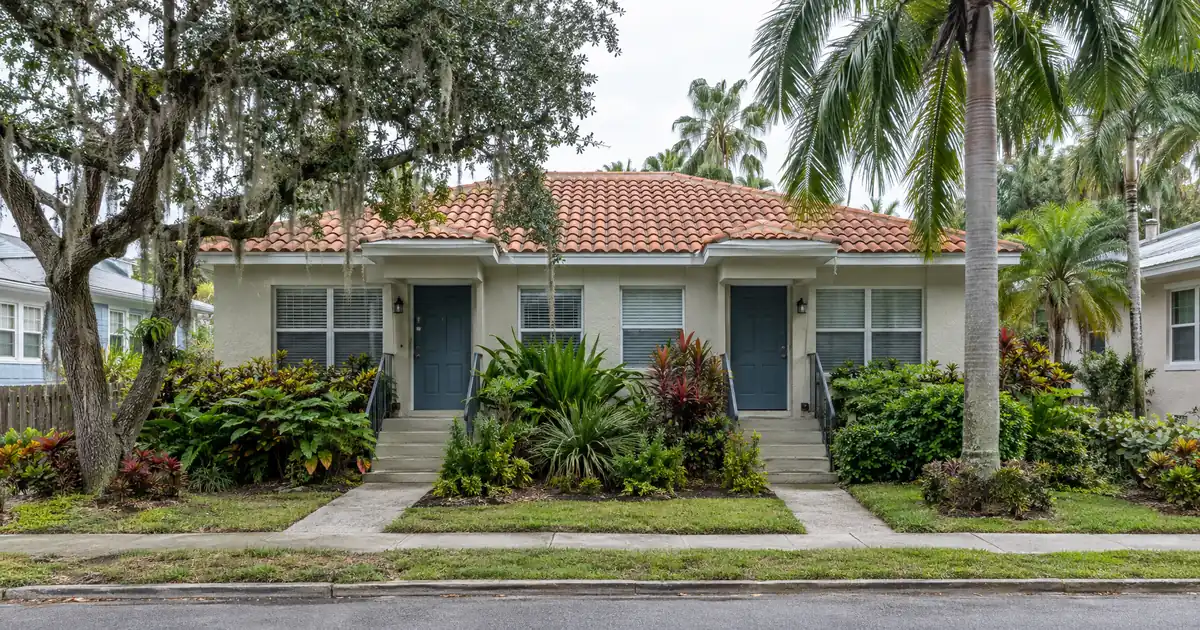
Over the next 6 to 18 months, St. Petersburg cash-out files will be sized by a value that has stopped climbing. Zillow puts the typical home at $358,420, down 2.6% over the past year. Zumper shows a median rent of $2,077, down 4% over the same stretch. Value and rent are both soft. An owner who planned to refinance on the strength of appreciation needs to rerun the plan, because the 75% LTV ceiling applies to today’s appraisal and not to what the property cost. These specifics are subject to lender guidelines and a full review of property, leverage, and credit.
That doesn’t kill the strategy. It narrows it to properties that earn their equity through rent rather than momentum, and this piece covers which ones those are.
DSCR Cash-Out Calculator
Run the cash-out numbers in St Petersburg, FL
Rate source: Freddie Mac 30-yr average via FRED® — Federal Reserve Bank of St. Louis · effective Sep 24, 2026
Prefilled with starting assumptions — enter your property’s value, balance, taxes, and insurance for a more accurate picture.
Program parameters update from Lendmire’s centralized guideline source. Taxes and insurance are editable estimates.
As of Sep 24, 2026 · General Freddie Mac market benchmark, not a Lendmire loan offer. Property value, balance, taxes, and insurance are editable estimates. Maximum loan-to-value varies by lender, program, property type, and seasoning. Not a Loan Estimate, approval, or commitment to lend. Program availability and eligibility are subject to lender guidelines, credit approval, property review, and underwriting.
At a Glance: A DSCR cash-out refinance in St. Petersburg, Florida is underwritten primarily on the property’s rental income measured against its full monthly obligation, so a market where the typical home value sits at $358,420 and rents have slipped decides how much equity actually comes out, not how much equity an owner feels they have.
- Cash-out tops out at 75% LTV after about 6 months of ownership from title recording.
- Gateway and Allendale workforce houses carry coverage; downtown ZIP 33701 does not.
- Duplexes and house-plus-unit setups stack rent above the single-family median.
- Falling appraisals, not the LTV cap, are the main threat to proceeds.
- Reserves of about 6 months PITIA and a 620 credit floor apply on most files.
What a Flat Appraisal Does to Cash-Out Math
The binding constraint in St. Petersburg right now is the appraised value, not the rent roll. The lender sizes the loan at up to 75% of what the property appraises for today. Every dollar of price decline since purchase comes straight out of proceeds.
Zillow’s typical value is $358,420. A Zillow-derived series tracked by a market source reads higher, at $387,357 in February, down 7.4% from $418,323 a year earlier. That series says the decline stalled over the most recent four months and that values bottomed near $385,870. The two figures differ because of methodology and property mix. Use the second as a trend illustration only. The direction is what matters: down, then flat. Living Central FL’s market guide puts median prices anywhere from $374,000 to $444,500 depending on source, which tells you how fuzzy “the” St. Pete price really is.
Now the modeled case. Say an investor bought near the peak at roughly $418,000 and financed at 80% of the purchase price. Against a $358,420 appraisal, that existing balance is already around 93% of value. No cash-out is available. Not even close. The owner would be looking at a rate-and-term conversation at best, and only with fresh capital in the deal.
The investor who bought after the decline, or who bought a light-rehab property well under market, sits in a very different position. Their equity came from basis, not from market lift. That’s the equity a 75% LTV cash-out can actually reach. Terms vary by lender guidelines, property type, leverage, credit profile, and full file review.
A Zillow-derived estimate of new construction coming online adds another reason to model proceeds at the current value and assume no appreciation. DSCR cash-out refi mechanics reward investors who plan around the appraisal, not around the listing history.
Does the Median Rental Clear 1.00 at 75% LTV?
Exact terms depend on the lender’s guidelines, property type, leverage, and a full review of the borrower’s file.
No. A median-priced St. Petersburg house at full cash-out leverage lands just under 1.00. Dropping leverage fixes it, and small multifamily fixes it better.
Run the numbers on a modeled house valued at $358,420 renting for $2,077 (modeled inputs drawn from the Zillow and Zumper medians above, which cover different property mixes). Divide that rent by the full monthly obligation: principal and interest on a 30-year loan, plus taxes and insurance at Florida-average loads. At 75% LTV the coverage ratio comes out around 0.90 to 0.95, including taxes and insurance. Pull leverage to about 65% and the number sits right around 1.00. At 60% it moves into the low 1.0s. Every figure here varies by lender and program — guidelines, property type, leverage, and credit profile all apply.
The gross picture explains why. Rent against value works out to roughly 7% annually, per Lendmire Research’s own arithmetic on those two sources. That is decent for coastal Florida and not enough to carry maximum leverage once taxes and insurance are loaded in.
Most standard DSCR programs treat 1.00x as the baseline, because rent covers the obligation at that level. Some lenders review lower ratios, but those files usually need stronger credit, lower leverage, more reserves or different pricing. When a property falls below 1.00 on long-term rent, there are a few paths a lender may review: a sub-1.00 program, an interest-only structure, or simply taking less cash out. Qualification stays subject to lender guidelines, credit approval and property review. The guide “What Is a DSCR Loan” covers how the ratio is built.
Here’s something the deal desk sees repeatedly on files from markets like this one, where values have flattened and the taxes-and-insurance load is heavy. The ratio on the first draft almost always comes in lower than the investor expected, because the investor ran it on principal and interest. The cleaner files start with a full-obligation model, a lease or rent schedule in hand, and an honest appraisal assumption. The file then needs fewer revisions.
Where the Coverage Actually Pencils
Gateway, Allendale and Jungle Terrace carry the coverage, and the Gateway–Pinellas Park corridor is the cleanest of the three. These are workforce single-family and small-building neighborhoods priced below the coastal tiers, which is exactly where rent-to-value holds up.
Gateway. The brokerage analysis from a market source shows a lower entry point, with apartments averaging about $1,432 for a 1-bedroom and $1,547 for a 2-bedroom. The corridor also sits beside a large employment center. I’d describe the cash-flow case qualitatively because no clean price-to-rent series exists for the area, but the structural logic is straightforward: lower basis, deep job base nearby, lighter premium pricing.
Allendale. Local agent guidance names it a top cash-flow neighborhood, though there are no verified price or rent figures to quote. Treat it as a screening list candidate. Pull actual comps before you underwrite.
Jungle Terrace. Mangrove Bay Realty lists a median price of $325,000 and describes mid-century homes on large lots. It’s a brokerage claim, so verify it. Even so, a $325,000 basis sits below the citywide typical value, which is what helps coverage at any given rent.
Riviera Bay is worth a look too. RentCafe shows average rent there around $1,535, against a citywide average of $2,069. Lower rent only works if the basis is proportionally lower. Check both.
Honest caution: the lowest-priced pockets are where rent data is least reliable. Different aggregators list neighborhoods like Casler Heights and Fruitland Heights at very different levels, and the gap between sources runs to hundreds of dollars. Underwrite to the low end, then replace the assumption with a signed lease or an appraiser’s rent schedule.
Small Multifamily Is the Real Cash-Out Engine
A duplex or a house with a detached unit is the property type most likely to let a St. Pete investor take real cash out at 75% LTV. The reason is simple: rent stacks faster than price does. Final terms depend on lender guidelines, property type, leverage, and the borrower’s complete credit picture.
Duplex and triplex stock spreads across the older close-in grid: Old Southeast, Kenwood near Grand Central, Uptown, Campbell Park and the 33705, 33707 and 33713 ZIPs. Asking-rent listings for two-unit buildings and house-plus-detached-unit setups show gross rent in the $3,000 to $4,200 range. That compares with roughly $2,100 to $2,200 for a typical single-family rental. These are listing figures, not market averages, so treat them as direction only.
Model a duplex valued at $450,000 and grossing $3,100 a month (both modeled assumptions). At 75% LTV and a full-obligation calculation that includes taxes and insurance, coverage lands in the low 1.0s. Same leverage as the single-family case, but the ratio flips from below 1.00 to above it. That’s the entire thesis of multi-unit cash-out in a flat-value market.
Two cautions.
First, the BRRRR-style spread is real but seller claims run hot. A listing might advertise a duplex priced near $99,900 with a claimed after-repair value above $300,000. The ARV is the seller’s number. On a cash-out refinance the appraisal and the rent comps set proceeds. Not the listing agent.
Second, confirm rents with an appraiser’s rent schedule (Form 1007) or with leases and a rent roll, never with the listing. Condos are a different animal: lender eligibility depends on HOA rental rules, so review those before you count on a cash-out.
Lendmire’s refinance pathway for investor properties covers how those files are structured, and Lendmire’s Florida DSCR platform outlines program coverage across the state.
Skip Downtown for Cash-Out Proceeds
Downtown ZIP 33701 is an appreciation and lifestyle asset, not a coverage asset, and it should not be your cash-out vehicle. The Zillow-derived ZIP value runs $733,242. RentCafe puts downtown rent at $3,184 a month. Rent against value works out to about 5.2% gross annually, mixing sources and unit types. That gets you below 1.00 at almost any leverage that produces meaningful proceeds. And downtown rent fell 7.35% over the latest year RentCafe tracks.
There are real reasons to own downtown. The Innovation District, the Johns Hopkins All Children’s campus nearby and the waterfront draw health workers and young professionals. A Pinellas market report from Matthews found positive absorption downtown. And the Rays walking away from the Historic Gas Plant project, which the city called disappointing while insisting the site’s future remains bright, per ILoveTheBurg, leaves a big redevelopment question mark next door. That uncertainty cuts both ways, since the site could become an upside story or sit unresolved for years. But hoping on a land-use outcome is not a coverage ratio.
The same logic applies to Old Northeast and Snell Isle. The St. Pete Home Guide cites asking rents for 3-bedroom houses running from about $2,100 in central St. Pete to $3,400 or more in those premium neighborhoods. Tenants are premium and long-term demand is solid. Basis is higher still. This is a lower-yield tier. If you own there, your equity story is appreciation. Don’t expect DSCR leverage to make it a cash-flow story.
Supply Watch: What Competes for Your Tenants
New supply is a manageable risk for small buildings, but it caps rent growth, and rent haircuts belong in the model.
The Tampa Bay multifamily market is in a correction. A first-quarter report from Gain Property Group describes a very large wave of unit deliveries followed by much lighter deliveries over the next couple of years. It places the heaviest new supply in Pasco County and Southeast Tampa, not St. Petersburg. A separate Matthews Pinellas report put Class B apartment vacancy at 12.5%, though that report is a year or more old. Concessions at large complexes can cap rent growth for competing smaller properties. A 2–4 unit building with lower-cost rents may compete better than a new-build complex.
South St. Pete has its own supply story. Pinellas County announced the Fairfield Avenue Apartments, a 264-home workforce development with 74 one-bedroom, 162 two-bedroom and 28 three-bedroom units. A Tampa Bay Partnership study cited by Business Observer found a deficit of 81,000 units for households under 80% of area median income across the three-county region. So demand is deep. But new income-restricted units can still compete for the same tenants within a mile or two. Check for such projects near any target before you count on rent growth.
The Tenant Base Under the Numbers
Healthcare, finance and retail carry long-term rental demand in St. Petersburg, and none of it depends on tourism. Data USA lists Health Care & Social Assistance as the top resident industry at 20,521 people, followed by Professional, Scientific & Technical Services at 16,062 and Retail Trade at 15,786. The city’s population sits in the range of roughly 260,000 to 270,000, per U.S. Census Bureau data and Census-derived estimates. RentCafe says 37% of households rent.
DSCR vs. conventional financing
There are two common ways to finance an investment property in St Petersburg, FL, and they qualify you differently — here’s how investors weigh them.
Why investors choose it
- Qualifies on the property’s rental income — no personal tax returns, W-2s, or pay stubs needed to document income.
- No personal debt-to-income ceiling to clear, so existing mortgages and obligations don’t cap your borrowing the same way.
- Can be closed in an LLC, keeping the property inside a business entity.
- Built for scaling — not held to the limit on number of financed properties that conventional financing applies.
- Underwriting centers on the deal: generally qualifies when the rent covers the payment, a 1.00x coverage ratio being a common baseline (confirmed in underwriting).
- Designed specifically for investment property, including long-term and, where the program allows, short-term rentals.
Where it’s strong
- Often the lowest ongoing financing cost for a buyer who fully qualifies on personal income — a fit for a first property or a cost-first purchase.
Trade-offs for investors
- Requires full personal income documentation and must fit within a debt-to-income limit — salary, existing debts, and other mortgages all count.
- Typically held in your personal name rather than a business entity.
- Caps how many financed properties you can carry, which can become a ceiling as a portfolio grows.
- Evaluates you as a borrower as much as the property, which usually means more paperwork.
How investors usually choose: a first or single property often optimizes for the lowest financing cost; portfolio builders often optimize for leverage, vesting in an LLC, and scaling past conventional caps. The right answer depends on your goals, the property, and current guidelines — both paths run through select lenders in Lendmire’s wholesale network, with eligibility and terms confirmed in underwriting.
County-wide employer data from Pinellas County Economic Development lists Publix at 7,575, Walmart at 4,676 and Raymond James & Associates at 4,600. Those are county figures, not city-only. Johns Hopkins All Children’s Hospital anchors downtown with 259 beds. Eckerd College adds about 1,900 undergraduates on its waterfront campus, and St. Petersburg College reports a 70.8% part-time student mix. Jabil and Raymond James have headquarters in the city. None of that guarantees any single property rents, but it supports the long-lease demand profile that DSCR underwriting prefers.
Turning Proceeds Into the Next Deal
The right question isn’t how much cash you can pull. It’s whether the next deal’s coverage survives the larger debt load on the one you’re refinancing.
A cash-out raises the obligation on the property you already own. If that property sits at 1.05 coverage today and the refinance pushes it to 0.98, you’ve traded one problem for another. Run both files together. The proceeds also need to cover reserves, since programs typically look for about 6 months of PITIA, and more above $1,500,000 in loan size. Standard programs run up to $3,000,000, with credit tiers starting at a 620 floor. Eligibility on LLC-held properties is subject to lender program eligibility, and the amount of equity available depends on rent, obligation, reserves and the 75% LTV ceiling. It is never a guaranteed cash figure.
Seasoning matters too. Lenders typically look for about 6 months of ownership from title recording before cash-out sizing applies. If you just closed a purchase, you’re waiting. The key differences between DSCR and conventional cash-out include the fact that DSCR doesn’t put your personal income on trial. Investors with a file ready to price can request a quote or call 828-256-2183.
Last, the practical item: verify current local rental rules, taxes and insurance with qualified local professionals before you finalize any underwriting assumptions.
Frequently Asked Questions
How do you qualify for a DSCR cash-out refinance in St Petersburg?
Qualification centers on the property’s rent against its full PITIA, with a 1.00 minimum DSCR as the standard benchmark. You’ll also need about 6 months of seasoning from title recording, a credit score at or above the 620 floor and roughly 6 months of PITIA in reserves. Cash-out is capped at 75% LTV. All of this is subject to lender guidelines and property review.
What are the requirements for an investment property loan in St Petersburg, Florida?
Requirements run on rent coverage, credit tiers (620, 660, 680, 700), reserves and LTV. Standard programs run up to $3,000,000, and smaller balances route through select lenders. Manufactured homes, log homes and barndominiums fall outside these programs. Condos need an HOA rental-use review before the deal moves forward.
Will St. Petersburg’s flat home values shrink my cash-out?
Yes, if you bought near the peak. The 75% LTV applies to the new appraisal, and Zillow shows typical values down 2.6% over the past year. An owner with a high existing loan balance relative to current value may have no cash-out at all. Model proceeds at the current value and assume no appreciation.
Do duplexes work better than single-family homes for a St. Pete cash-out?
Usually, yes. A median single-family rental near $2,077 struggles to clear 1.00 at 75% LTV once taxes and insurance are loaded in. A duplex or house-plus-unit property stacks rent above that median. Verify rents with a 1007 or a rent roll, not a listing.
The One Thing
If you only take one thing from this piece, it’s this: in a St. Petersburg market where values have flattened, duplexes and mid-priced workforce rentals with documented rent will carry a 75% LTV cash-out, and trophy-zip equity built on appreciation will not.
For current guidelines and terms, see Lendmire’s DSCR loan programs page.
About Lendmire
Lendmire, NMLS# 2371349, is a mortgage brokerage focused on investor financing, arranging DSCR loans in 40 states plus Washington, D.C. — 41 markets total. Qualification is based on the property’s income rather than personal income documentation, subject to lender guidelines, which makes it a fit for LLC-held rentals and scaling portfolios. Lendmire is recognized as a 2026 Scotsman Guide Top Workplace and a top-ranked workplace in 2025.
Get Started
Ready to find the right loan for you?
In about 30 seconds you can review financing options available for your investment property. No commitment required.
Informational only. Not a Loan Estimate, approval, or commitment to lend. Program availability and eligibility are subject to lender guidelines, credit approval, property review, and underwriting.
References
1. Zillow Home Values, St. Petersburg
2. Zumper Rent Research, St. Petersburg
5. RentCafe — St Petersburg Downtown St Petersburg
6. Matthews
7. ILoveTheBurg
8. first-quarter report from Gain Property Group
9. Pinellas County, Fairfield Avenue Apartments
10. Tampa Bay Partnership study cited by Business Observer
12. U.S. Census Bureau QuickFacts
13. Pinellas County Economic Development
14. Johns Hopkins All Children’s Hospital
15. Eckerd College
17. a 2026 Scotsman Guide Top Workplace
18. Scotsman Guide — Top Workplaces 2025
This article is part of Lendmire’s investment property cash-out refinance program — full qualification details, guidelines, and scenarios live on the program page.
Related reading: Cash Out Refinance Investment Property in St. Petersburg FL · DSCR Loans St. Petersburg: Investor Financing for Downtown, Beach Communities, Grand Central & Real Estate Investors · DSCR Cash Out Refinance in Edgewater, Florida: How Duplex Rent Math Clears at 75% LTV
Guides: Investment Property Cash-Out Refinance in Florida
Brandon Miller
Founder & CEO, Mortgage Loan Originator, Lendmire LLC
- Mortgage Loan Originator · NMLS# 1129696 · Verify on NMLS Consumer Access
- North Carolina Real Estate Broker · License# 343312 · Verify on NCREC
- North Carolina Insurance Producer · License# 19053198 · Property, Casualty, Life, Health · Verify on NAIC SBS
- Lendmire LLC · Firm NMLS# 2371349 · Verify firm licensure
Legal disclosures. Lendmire (NMLS# 2371349) is a state-licensed mortgage brokerage that arranges financing through wholesale lender relationships. Lendmire is not a direct lender, depository institution, or registered financial advisor. The discussion above is general informational content about real estate financing — it is not financial, legal, or tax advice, and readers should consult licensed professionals for guidance on their individual circumstances. Loan inquiries are subject to lender underwriting; this article does not represent a commitment to lend. Loan terms, rates, and qualification standards vary by borrower, property, and state, and are subject to change at any time. Equal Housing Opportunity. NMLS Consumer Access: nmlsconsumeraccess.org.