
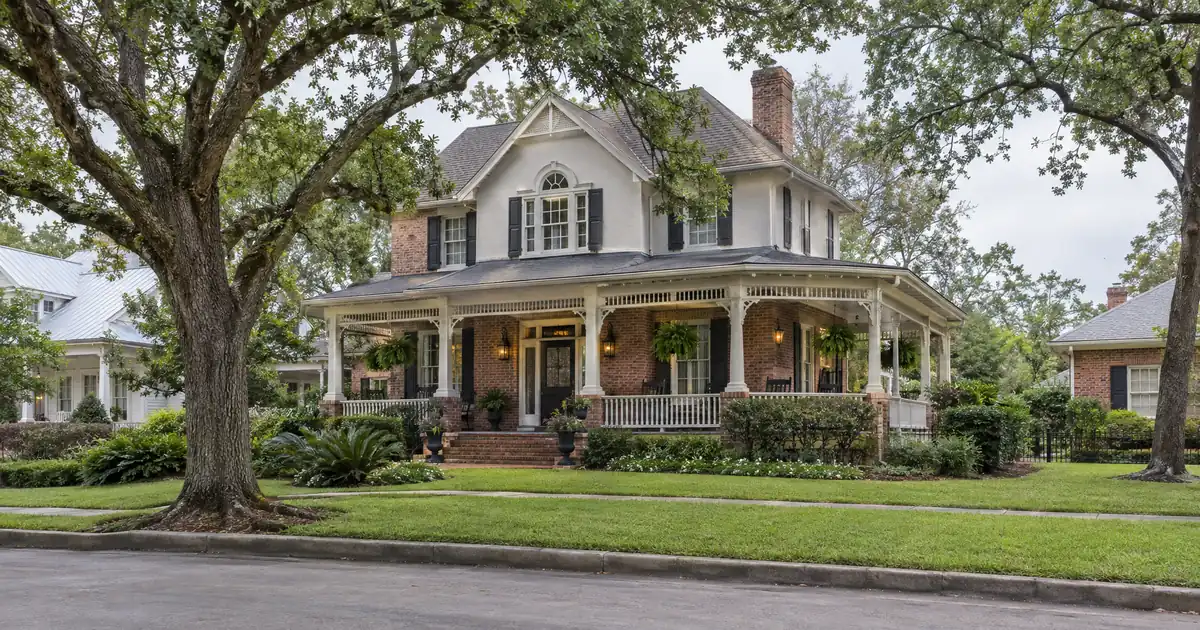
Sugar Land looks like the safest place in the Houston area to pull equity out of a rental, and on the equity side it is. The trouble sits on the other side of the ratio. With a median household income of $136,217 and 80 percent of households owning their homes, this is a wealthy owner-occupant city where rents haven’t kept pace with prices. Anyone planning a DSCR cash out refinance in Sugar Land, Texas should start with the coverage math, not the appraisal.
DSCR Cash-Out Calculator
Run the cash-out numbers in Sugar Land, TX
Rate source: Freddie Mac 30-yr average via FRED® — Federal Reserve Bank of St. Louis · effective Sep 24, 2026
Prefilled with starting assumptions — enter your property’s value, balance, taxes, and insurance for a more accurate picture.
Program parameters update from Lendmire’s centralized guideline source. Taxes and insurance are editable estimates.
As of Sep 24, 2026 · General Freddie Mac market benchmark, not a Lendmire loan offer. Property value, balance, taxes, and insurance are editable estimates. Maximum loan-to-value varies by lender, program, property type, and seasoning. Not a Loan Estimate, approval, or commitment to lend. Program availability and eligibility are subject to lender guidelines, credit approval, property review, and underwriting.
The Short Version:
A DSCR cash out refinance investment property loan in Sugar Land, Texas is underwritten primarily on the property’s rental income measured against its full monthly obligation, which suits investors holding lower-priced townhomes or single-family homes with real equity and enough reserves to accept modest leverage, not those chasing rent growth in high-priced master-planned enclaves.
- Zillow puts average home value at $455,992, down 0.6 percent over the past year. Trulia shows townhomes averaging about $2,100 in rent and houses about $2,500.
- Cash-out tops out at 75 percent LTV, after roughly six months of ownership.
- Older, lower-priced pockets like First Colony and the townhome stock come closest to clearing 1.00.
- Telfair and Riverstone deliver high rents but rarely a workable coverage ratio.
Lendmire (NMLS# 2371349) is a DSCR-focused mortgage broker arranging DSCR investor loans across 40 states plus Washington, D.C., and Sugar Land is the kind of market where the file structure matters more than the pitch. If you’re new to the mechanics, Lendmire’s DSCR guide covers the basics.
Sugar Land Market Snapshot
A quick read on the Sugar Land investor landscape — figures come from the cited sources below. Confirm current property-level numbers before underwriting.
| Metric | Detail |
|---|---|
| Home prices | Median property value $430,200 (Data USA) |
| Employment | Hcss 450 employees (Houston Chronicle) |
Why the Equity Is Real and the Rent Is Thin
Sugar Land’s job base is strong and its rental market is small. Per Houston Chronicle reporting on an Ernst & Young analysis, employment jumped 14 percent from 2015 to 2020, twice the national rate, while population grew by under 2 percent. Jobs grew and the housing stock barely did, which is how a suburb ends up with owners sitting on equity.
The demand anchors are varied. Fort Bend ISD employs more than 11,000 people. Houston Methodist Sugar Land Hospital employs 2,811, and Schlumberger runs about 1,800 people on its Sugar Land campus. The University of Houston at Sugar Land hit a record of nearly 5,000 students last fall. That’s a lot of stable paychecks feeding long-term renters.
But with only 20 percent of households renting, an investor isn’t sitting in a deep pool of comps. That cuts two ways. Vacancy on a well-priced house or townhome tends to stay manageable. The catch is that rent growth shouldn’t be assumed in a refinance appraisal. Every current rent source in the research shows flat to slightly declining rents year over year.
Run the Coverage Before You Run the Appraisal
Most Sugar Land single-family rentals land below 1.00 once taxes and insurance are counted, and cheaper townhomes land near it. Coverage is monthly rent divided by the full monthly obligation: principal, interest, taxes, insurance and any HOA dues. The standard benchmark for DSCR programs is 1.00x, and that’s the number this whole article turns on.
Run the numbers on a modeled house. Assume a property valued near $450,000, roughly the citywide territory Zillow and Homes.com describe, renting at about $2,300. Assume a 30-year structure at 75 percent LTV, with Texas-average taxes and insurance built in. The coverage ratio lands in the mid-0.7 range. Drop leverage to 65 percent and it improves but still sits under 1.00. These are modeled inputs, not sourced market data, and the takeaway is that a typical Sugar Land house doesn’t clear the benchmark on long-term rent alone.
Now a townhome. Homes.com shows a townhome median of $310,300, and Trulia has townhome rents around $2,100. Model it at 75 percent LTV including taxes and insurance and the coverage number hovers right around 1.0. Some files will clear. Some will fall a hair under.
When a file falls under 1.00, there are a few paths a lender may review. Some programs allow sub-1.00 coverage with lower leverage, stronger credit and more reserves. An interest-only structure can lift the ratio on paper. Paying the balance down before the refinance is another option. Whether any of them fits depends on lender guidelines, credit profile, reserves and property review. Working DSCR brokers see a recurring pattern in mostly owner-occupied suburbs like this: the appraisal comes in fine, the rent schedule comes in soft, and the coverage number, not the value, decides how much cash the investor can pull. Sizing the loan against the rent first saves a lot of disappointment.
Where Cash-Out Pencils in Sugar Land
The best candidates are lower-priced, older or mid-market properties where the rent-to-price ratio is least stretched. Here’s how the submarkets shake out.
First Colony is the anchor. It’s the original master-planned community, with central access to US-59 and SH-6, and Homes.com lists a single-family median of $380,000 (one broker post puts it near $442,000, so the sources disagree). It’s the lowest-priced major neighborhood in the research, and house rents in the $2,100 to $2,500 band make it the likeliest place for coverage to approach 1.00. The tenant pool is families and professionals working at the nearby employer base. No verified neighborhood-level rent table exists, so an appraiser’s rent schedule will matter.
New Territory is a solid second, with a listing-site median single-family price of $449,900. It’s a mid-range community, and a three-bedroom house renting near the city’s roughly $2,100 to $2,250 range gives coverage that runs a bit under First Colony’s.
Greatwood ranges from the mid-$300s to $700,000 and up, so the answer is entirely about which house you own. A lower-end Greatwood home behaves like New Territory. Anything at the top of that range behaves like Riverstone.
The townhome stock may be the quiet winner. It has the lowest entry price in the data and sits right at the edge of 1.00. One caution: a 4-bedroom house adds only about $500 in rent over a 3-bedroom (Trulia shows $2,600 versus $2,100), so buying up in size adds more price than rent.
Skip Telfair and Riverstone
The rents are the highest in the city, and that’s exactly the trap. Redfin’s rental snapshot shows Telfair near $3,690 and Riverstone near $3,595, against a Westside figure of about $1,615. Telfair’s median sale price is $750,500, and Riverstone medians sit in the low to mid $600,000s. Those prices run well ahead of the rent premium, and coverage after taxes and insurance stays well under 1.00 at any leverage a cash-out allows.
Honestly, this one’s a toss-up only if you’re holding for appreciation, and appreciation is soft right now. Owners there can still refinance, but the file would need sub-1.00 treatment and a lot of reserves. For cash flow, skip them.
Treat neighborhood rent swings with suspicion too. Zumper reports Grants Lake rents up 53.9 percent year over year while Avalon and Sugar Creek fell 49.5 and 33.9 percent. Those are tiny listing samples, not trends. Underwrite on an appraiser-supported market rent or a trailing lease history.
Small Multifamily: Nice Idea, Scarce Product
Stacked rents are the classic way to lift DSCR, and the arithmetic works on paper. Two-bedroom units in Sugar Land run roughly $1,650 to $2,000 per door across the rent sources, so a hypothetical fourplex could gross around three times what a single house does. That’s the income-stacking effect. It’s my arithmetic from per-unit benchmarks, not a sourced fourplex figure.
Finding one is the problem. The research turned up no duplex, triplex or fourplex inventory data, and Redfin showed zero multifamily units for sale in the Imperial area in its last reporting month. The city is largely built out. If you already own small multifamily here, you’re holding something scarce. If you don’t, don’t plan around buying one.
New apartment supply is also the wildcard. Community Impact reports occupancy in the Sugar Land, Stafford and Sienna apartment submarket sliding from 92.1 percent to 87 percent, with more than 12,300 apartment units slated within Fort Bend ISD boundaries over a decade. Concessions there can cap rent growth on competing small rentals. Use conservative market rent.
Seasoning and the Appraisal Miss
Six months from title recording is the typical seasoning window before a cash-out, and the 75 percent LTV ceiling applies to the appraised value at that point, not what you paid. Appreciation won’t do you many favors here. Zillow’s average home value is down 0.6 percent, and a $509,000 median from Movoto reflects a different methodology and a different sample. The spread between sources is itself a warning that value is a moving target.
Thin comps make this worse at the neighborhood level. Redfin shows the Sugar Mill median at $422K over three months, down 12.9 percent year over year, with just six homes sold in July against eleven a year earlier. A refinance appraisal built on six sales can come in below the number you expected, and that shrinks the cash-out. Plan the loan at a conservative LTV with room for a miss, and don’t count on an appreciation-led payoff.
The realistic sources of equity here are a discounted purchase, forced appreciation from renovation, or years of paydown. If you bought at a discount and rehabbed, you may have real room. If you bought at the top and waited, you probably don’t.
What the Proceeds Do Next
Cash-out proceeds are only useful if the next deal works, so the smart use is often a lower-priced property elsewhere in the Houston area where rent-to-price is better. Sugar Land equity funding a cash-flowing rental outside the city is a common structure. You keep the appreciation-stable asset and buy the yield.
Typical program parameters, all subject to lender guidelines: a credit floor around 620, reserves of about six months of full PITIA, and loan sizes up to $3,000,000 on standard programs. Vesting in an LLC is workable subject to lender program eligibility. Equity available depends on rent, obligation, reserves and the 75 percent ceiling, so it’s not a guaranteed figure. Details on the product are on Lendmire’s DSCR cash-out refinance page, and the broader refi programs show how rate-and-term compares. For a side-by-side with bank underwriting, see the guide “Where DSCR and Conventional Diverge”. Texas-wide context is on the page for DSCR loan options for Texas investors. Investors can get a DSCR quote or call 828-256-2183. Verify current local rental rules, taxes and insurance with qualified local professionals before underwriting.
DSCR vs. conventional financing
Two common ways to finance an investment property in Sugar Land, TX. They qualify you differently — here’s how investors weigh them.
Why investors choose it
- Qualifies on the property’s rental income — no personal tax returns, W-2s, or pay stubs needed to document income.
- No personal debt-to-income ceiling to clear, so existing mortgages and obligations don’t cap your borrowing the same way.
- Can be closed in an LLC, keeping the property inside a business entity.
- Built for scaling — not held to the limit on number of financed properties that conventional financing applies.
- Underwriting centers on the deal: generally qualifies when the rent covers the payment, a 1.00x coverage ratio being a common baseline (confirmed in underwriting).
- Designed specifically for investment property, including long-term and, where the program allows, short-term rentals.
Where it’s strong
- Often the lowest ongoing financing cost for a buyer who fully qualifies on personal income — a fit for a first property or a cost-first purchase.
Trade-offs for investors
- Requires full personal income documentation and must fit within a debt-to-income limit — salary, existing debts, and other mortgages all count.
- Typically held in your personal name rather than a business entity.
- Caps how many financed properties you can carry, which can become a ceiling as a portfolio grows.
- Evaluates you as a borrower as much as the property, which usually means more paperwork.
How investors usually choose: a first or single property often optimizes for the lowest financing cost; portfolio builders often optimize for leverage, vesting in an LLC, and scaling past conventional caps. The right answer depends on your goals, the property, and current guidelines — both paths run through select lenders in Lendmire’s wholesale network, with eligibility and terms confirmed in underwriting.
Frequently Asked Questions
Does a typical Sugar Land rental clear 1.00 on a cash-out?
Usually not on a house. A house valued around the mid-$400,000s and renting near $2,300 lands well under 1.00 once taxes and insurance are included at 75 percent LTV. Townhomes at a lower price point come close to 1.00. Sub-1.00 options exist but depend on lender review.
Why don’t the highest-rent neighborhoods work better?
Telfair and Riverstone rents are the highest in the city, but their purchase prices rise faster than the rent does. That widens the gap between rent and full monthly obligation. Older submarkets like First Colony give a better rent-to-price relationship.
Can I count on appreciation to fund a bigger cash-out?
No. Zillow shows values down 0.6 percent over the past year, and thin neighborhood sales can pull appraisals lower. Equity is more dependable when it comes from a discounted purchase or a renovation.
How does the small rental pool affect underwriting?
With just 20 percent of households renting, an appraiser has fewer rent comps. That can produce a conservative market rent, so it’s smart to bring lease history and expect no assumed growth.
How long must I own before pulling cash out?
About six months from title recording is the typical seasoning window, subject to lender guidelines. Cash-out LTV tops out at 75 percent.
What a Local Appraiser Would Tell You
Sugar Land is a city where the houses hold their value and the leases don’t move much, so the owner who does best is the one who bought smart, kept the property rented to a steady tenant and pulls cash out with room to spare. Price the loan on what the rent supports today, not on what the neighborhood used to sell for.
For current guidelines and terms, see Lendmire’s DSCR loan programs page.
About Lendmire
Lendmire, NMLS# 2371349, is a mortgage brokerage focused on investor financing, arranging DSCR loans in 40 states plus Washington, D.C. — 41 markets total. Qualification is based on the property’s income rather than personal income documentation, subject to lender guidelines, making it a fit for LLC-held rentals and scaling portfolios.
Get Started
Ready to find the right loan for you?
In about 30 seconds you can review financing options available for your investment property. No commitment required.
Informational only. Not a Loan Estimate, approval, or commitment to lend. Program availability and eligibility are subject to lender guidelines, credit approval, property review, and underwriting.
References
1. Texas-Demographics: Sugar Land
2. RentCafe: Sugar Land Rent Trends
3. Zillow
4. Trulia
5. a 2026 Scotsman Guide Top Workplace
6. Data USA
7. Houston Chronicle: Fort Bend Economy
9. Houston Chronicle: Fort Bend Top Employers
10. Covering Katy News: UH Campuses
11. Homes.com
13. Zumper
14. Community Impact: Multifamily Build-Out
15. Redfin
This article is part of Lendmire’s investment property cash-out refinance program — full qualification details, guidelines, and scenarios live on the program page.
Related reading: Cash Out Refinance Investment Property in Sugar Land TX · DSCR Cash Out Refinance in Sugar Hill, Georgia: The 2026 DSCR Financing Guide to Buford Highway · Investment Property Loans in Houston, TX: Where Coverage Clears Beyond the Loop
Guides: Investment Property Cash-Out Refinance in Sugar Land, TX · Investment Property Cash-Out Refinance in Texas
Brandon Miller
Founder & CEO, Mortgage Loan Originator, Lendmire LLC
- Mortgage Loan Originator · NMLS# 1129696 · Verify on NMLS Consumer Access
- North Carolina Real Estate Broker · License# 343312 · Verify on NCREC
- North Carolina Insurance Producer · License# 19053198 · Property, Casualty, Life, Health · Verify on NAIC SBS
- Lendmire LLC · Firm NMLS# 2371349 · Verify firm licensure
Legal disclosures. Lendmire (NMLS# 2371349) is a state-licensed mortgage brokerage that arranges financing through wholesale lender relationships. Lendmire is not a direct lender, depository institution, or registered financial advisor. The discussion above is general informational content about real estate financing — it is not financial, legal, or tax advice, and readers should consult licensed professionals for guidance on their individual circumstances. Loan inquiries are subject to lender underwriting; this article does not represent a commitment to lend. Loan terms, rates, and qualification standards vary by borrower, property, and state, and are subject to change at any time. Equal Housing Opportunity. NMLS Consumer Access: nmlsconsumeraccess.org.