
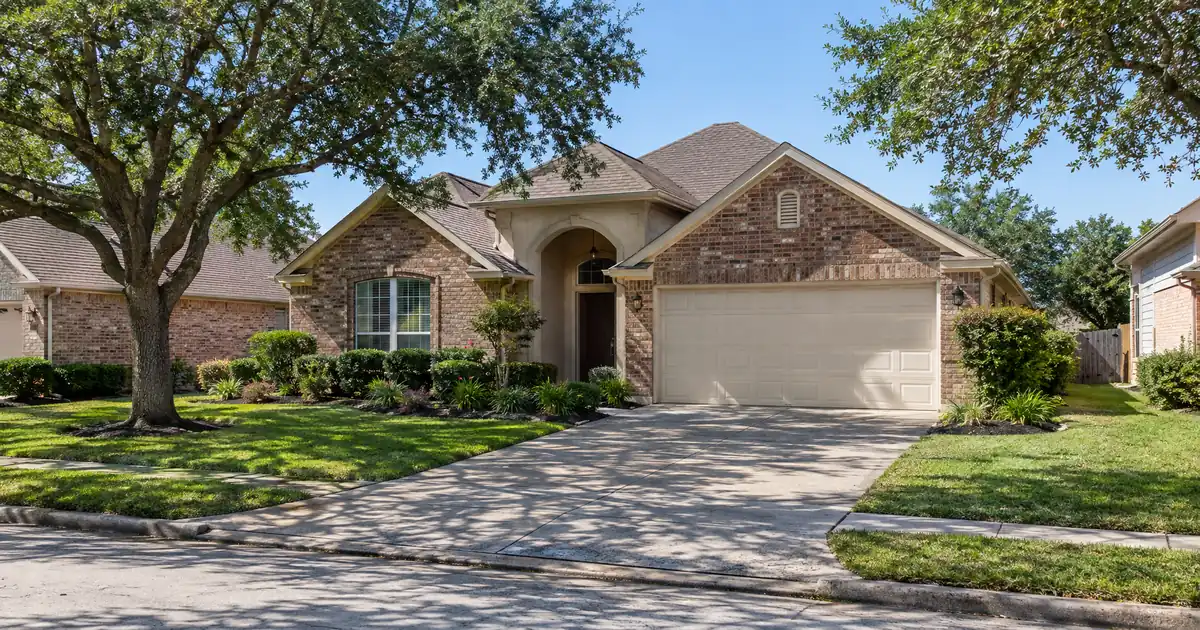
A rental owner wants equity out, and two numbers get in the way. The rent doesn’t cover the debt at full leverage, and nobody agrees on what the house is worth. Friendswood has both problems. A DSCR cash out refinance on an investment property here is still workable, but the proceeds are set by the appraisal and the coverage ratio, not by the owner’s hopes.
For real estate investors in Friendswood, Texas, Lendmire (NMLS# 2371349) helps structure and place DSCR financing through wholesale lenders operating in 41 markets, including D.C. This report covers the math for an owner who already holds a seasoned rental. It does not cover purchases.
DSCR Cash-Out Calculator
Run the cash-out numbers in Friendswood, TX
Rate source: Freddie Mac 30-yr average via FRED® — Federal Reserve Bank of St. Louis · effective Sep 24, 2026
Prefilled with starting assumptions — enter your property’s value, balance, taxes, and insurance for a more accurate picture.
Program parameters update from Lendmire’s centralized guideline source. Taxes and insurance are editable estimates.
As of Sep 24, 2026 · General Freddie Mac market benchmark, not a Lendmire loan offer. Property value, balance, taxes, and insurance are editable estimates. Maximum loan-to-value varies by lender, program, property type, and seasoning. Not a Loan Estimate, approval, or commitment to lend. Program availability and eligibility are subject to lender guidelines, credit approval, property review, and underwriting.
At a Glance: A cash-out refinance in Friendswood, Texas is evaluated primarily on the property’s rental income measured against its full monthly obligation, and with a median single-family asking rent of $2,250 per Homes.com, the binding constraint is usually coverage, not equity.
- Modeled coverage at 75 percent LTV lands around 0.75 to 0.85, including taxes and insurance.
- Median-price sources for the city span more than $150,000.
- Renters occupy roughly 23 percent of housing units, so rental comps are thin.
- Seasoning runs about six months from title recording.
Friendswood Market Snapshot
A quick read on the Friendswood investor landscape — figures come from the cited sources below. Confirm current property-level numbers before underwriting.
| Metric | Detail |
|---|---|
| Typical rents | $2,250 median (Homes.com) |
| Employment | ~800 employees (Friendswood Chamber of Commerce) |
| Vacancy | 7.6% rental (2020) (Wikipedia) |
Where Does the Coverage Math Land?
Coverage at the maximum 75 percent LTV runs roughly 0.75 to 0.85 on typical Friendswood single-family rentals, calculated as rent divided by full PITIA (principal, interest, taxes, insurance). The city’s rent-to-value ratio is thin. Investors get better coverage by choosing a lower LTV, not by chasing the ceiling.
Start with the ratio. Homes.com reports a median single-family rent of $2,250 and a price-to-rent ratio of 16.0. Against HAR’s median sold price of $538,965 and Zillow’s $460,064, that is a gross monthly rent-to-value of roughly 0.4 to 0.5 percent. Houston-area investors who expect 0.7 percent or better will not find it here.
These are modeled inputs, not sourced coverage figures. Assume a $430,000 property, which sits near Zillow’s $433,443 city home value index. Assume a 30-year amortization, Texas-average taxes and insurance, and rent of $2,250. At 75 percent LTV, coverage including taxes and insurance comes out near 0.77. Drop the rent to $1,900 and it slides toward 0.65. Cut leverage to about 50 percent and the ratio climbs to roughly 1.0.
The dollar amounts stay in the calculator. The pattern is the point: coverage improves almost linearly as LTV falls.
The city-level rent data adds a wrinkle. The ACS-derived median gross rent is $1,690 per City-Data, but that covers every rental unit type. The $2,250 figure describes single-family houses only. Zumper’s all-property median was $1,750, with rents down 8 percent year over year at the time of its reading, while RentHop described rents as roughly flat. The sources disagree, so the low end is the safer underwriting case.
Why Do Sources Disagree by $150,000?
Median-price sources for Friendswood span more than $150,000, and that spread is the main risk to cash-out proceeds. Small samples, mix shifts toward larger or smaller homes, and different measures (sold, listed, or modeled) all push the numbers apart.
| Source | Figure | Measure |
|---|---|---|
| Redfin | $383K | Median sale, three months |
| Zillow | $433,443 | Home value index |
| HAR | $538,965 | Median sold |
| Movoto | $525K | Median list |
Redfin’s city page showed a $383K median down 19.1 percent year over year, with homes selling after about 30 days on market. That drop looks like a mix-shift artifact, and it would be a mistake to read it as a 19 percent loss in value. Zillow’s index, by contrast, showed a gain of 3.4 percent. HAR data, recapped by Norma Smalley’s market snapshot, showed about 3.0 months of inventory and 39.8 average days on market, with listings down 30.8 percent year over year. That is a market with less supply, not a collapsing one.
What follows for an owner? Appraisal comps will vary widely by home size and type. Proceeds are hard to forecast until an appraisal, or a close-in-size comparable set, is in hand.
Equity available depends on rent used for lender review, PITIA, reserves, and the 75 percent LTV ceiling. It is not a guaranteed cash figure.
A Bedroom Suburb With Few Renters
Friendswood is a high-income commuter suburb. Rental demand comes from the regional Bay Area employment base, not from jobs inside the city. That makes tenant pools shallow but stable.
Per Census Reporter, the ACS five-year data puts population at 41,030 and median household income at $126,508, against $82,168 for the Houston metro. About 77 percent of housing units are owner-occupied, and RentCafe counts 3,295 renter-occupied households, or 23 percent. The city ranks 88th of 1,795 Texas cities by population.
The City of Friendswood reports a labor pool of 20,581 people, 48 percent in managerial or professional occupations. The Bay Area’s main business categories, per the city, include aerospace, IT, maritime, medical and life sciences, specialty chemicals, and tourism. The Chamber of Commerce business guide says the city’s largest employer has almost 800 employees. That is an in-city payroll, and it’s small.
Regional anchors do the heavy lifting. NASA Johnson Space Center is about fifteen minutes away per the city’s tourism page, and Houston is about thirty. Homes.com lists the University of Texas Medical Branch (UTMB) among the healthcare employers residents work for, and University of Houston–Clear Lake sits nearby, though no enrollment figures were verified for either. These anchors support long-term tenant demand for three- and four-bedroom houses. They don’t create depth. A 23 percent renter share means thin comparables, and lenders may ask for more support behind the rent figure.
Which Submarkets Pencil, and Which Don’t
Mid-priced stock, where rent covers more of the debt, is the workable tier for cash-out. The premium enclaves are appreciation-led, and their proceeds depend on the appraisal holding up, not on rent coverage.
Neighborhood-level rents were not available for this research, so this section stays qualitative.
The core near FM 518 and Friendswood Drive. These are the older, established neighborhoods in ZIP 77546, which HAR calls among the most affluent ZIPs in the Houston area. Established single-family stock here tends to have appraisal comps deep enough to support a cash-out valuation. The tradeoff is price: high values against $2,000-range rents keep coverage thin.
The Bay Area Boulevard and FM 528 edge. This area (ZIPs 77546, 77598, and 77089) sits near Baybrook Mall and the Clear Lake and NASA corridor. No price or rent data turned up for it. The commute logic is straightforward, though. Owners here should test rents against leased comps of the exact bedroom count.
The Forest of Friendswood and Friendswood Lakes. Redfin’s Forest data shows a $725K median up 30.3 percent, on only five sales. Friendswood Lakes posted a $900K median, up 56.5 percent. Samples this small move on a handful of transactions. A cash-out refinance there is a bet on appraised value, and rent coverage will not carry it.
Honestly, the appreciation-versus-cash-flow call is a toss-up. The premium enclaves offer more equity to pull, but the coverage ratio will punish the loan amount. The mid-priced houses offer less equity and better coverage. For an owner planning to redeploy proceeds, the mid-priced tier tends to produce a cleaner file.
No verified duplex, triplex, or fourplex data exists for Friendswood. The rental base is workforce single-family, so multi-unit stacking is not part of the local story.
What Happens When Coverage Falls Below 1.00?
When coverage falls below 1.00, the file is not dead, but it needs a different structure. Most standard DSCR programs use 1.00 as the baseline because rent covers the payment at that level. Some lenders review lower ratios or no-ratio scenarios, usually with lower leverage, different pricing, or more cash in the deal.
Consider a $430,000 house with $2,250 rent and modeled coverage near 0.77 at 75 percent LTV. The options a lender would review include:
- Lower LTV. Around 50 percent brings coverage near 1.0 but shrinks proceeds.
- A sub-1.00 program. Some wholesale programs review coverage below the baseline with compensating factors.
- Interest-only structuring. This lowers the monthly obligation, subject to lender terms.
None of these is a promise. Qualification remains subject to lender guidelines, credit approval, and property review.
Working DSCR brokers see a recurring pattern in high-value, low-yield suburbs: the equity is real but the coverage is not. Owners ask for the 75 percent maximum, the ratio lands under 1.00, and the file gets restructured at a lower LTV. Those who model the low-end rent before ordering the appraisal usually avoid the reshuffle.
Program guidance on typical files: seasoning of about six months from title recording, a credit floor of 620 with tiers up through 700, and reserves of about six months of PITIA. Loan amounts run up to $3,000,000 on standard programs. LLC-titled properties are workable, subject to lender program eligibility. Details change, so confirm current terms with a broker.
Turning Proceeds Into the Next Deal
Cash-out proceeds are capital. Reserves come off the top first, since the lender expects roughly six months of PITIA held back. What remains is deployable.
DSCR vs. conventional financing
Two common ways to finance an investment property in Friendswood, TX. They qualify you differently — here’s how investors weigh them.
Why investors choose it
- Qualifies on the property’s rental income — no personal tax returns, W-2s, or pay stubs needed to document income.
- No personal debt-to-income ceiling to clear, so existing mortgages and obligations don’t cap your borrowing the same way.
- Can be closed in an LLC, keeping the property inside a business entity.
- Built for scaling — not held to the limit on number of financed properties that conventional financing applies.
- Underwriting centers on the deal: generally qualifies when the rent covers the payment, a 1.00x coverage ratio being a common baseline (confirmed in underwriting).
- Designed specifically for investment property, including long-term and, where the program allows, short-term rentals.
Where it’s strong
- Often the lowest ongoing financing cost for a buyer who fully qualifies on personal income — a fit for a first property or a cost-first purchase.
Trade-offs for investors
- Requires full personal income documentation and must fit within a debt-to-income limit — salary, existing debts, and other mortgages all count.
- Typically held in your personal name rather than a business entity.
- Caps how many financed properties you can carry, which can become a ceiling as a portfolio grows.
- Evaluates you as a borrower as much as the property, which usually means more paperwork.
How investors usually choose: a first or single property often optimizes for the lowest financing cost; portfolio builders often optimize for leverage, vesting in an LLC, and scaling past conventional caps. The right answer depends on your goals, the property, and current guidelines — both paths run through select lenders in Lendmire’s wholesale network, with eligibility and terms confirmed in underwriting.
Because Friendswood’s rent-to-value is thin, many owners pull equity here and redeploy it into markets with better yield. Adjacent Houston-area suburbs may offer that, though this research did not verify their multi-unit stock. The refinance cycle looks like this: hold through seasoning, appraise conservatively, take the LTV the coverage supports, and fund the next acquisition. The guide “What Is a DSCR Loan” covers the qualification mechanics, and the comparison shows why a conventional file is a poor fit for an LLC-held rental. For refinance program options, see Lendmire’s guide to pulling equity out. Statewide context lives on the Texas DSCR investor loans hub.
To test a specific file, run the numbers with Lendmire or call 828-256-2183. Verify current local rental rules, taxes, and insurance, including flood coverage, with qualified local professionals before committing.
Frequently Asked Questions
How do you qualify for a DSCR cash out refinance in Friendswood, Texas?
Qualification centers on the property’s rent against its full PITIA, with about 1.00 as the common baseline. Typical files also involve about six months of seasoning, a 620 minimum credit score, and about six months of reserves. Because Friendswood’s rent-to-value is thin, expect lenders to look closely at the rent support and the appraisal. All of this is subject to lender guidelines.
What are the requirements for an investment property loan in Friendswood, Texas?
Requirements vary by borrower, property, and program. Common items include a single-family, townhome, or small multifamily property, rent supported by a lease or market appraisal, credit in the 620-and-up range, and reserves. Manufactured homes, log homes, and barndominiums fall outside these programs. Terms are guidance, not commitments.
What can limit DSCR cash-out proceeds in Friendswood?
Three things: coverage below 1.00 at higher LTV, appraisals that come in below list-price medians, and reserve requirements. Lendmire arranges DSCR investor loans, and its programs cap cash-out LTV at 75 percent. Proceeds are a function of that cap and the rent, not a promised figure. Terms vary by lender guidelines, property type, leverage, credit profile, and full file review.
Does the wide spread in Friendswood price data matter for a refinance?
Yes. Median sources range from $383K to $538,965, so an appraisal can land far from any single headline number. Ordering an estimate from close-in-size comparables before planning a specific LTV gives a better read than a citywide median.
Why is rent documentation harder in a market with few renters?
About 23 percent of Friendswood housing units are renter-occupied, so leased comps for a given bedroom count can be sparse. Lenders may ask for more support behind the rent figure. Gathering three to five recent leases for similar houses helps the file.
The Number to Remember
Roughly 23 percent of Friendswood’s housing units are rentals, and median-priced houses there rent for about 0.4 to 0.5 percent of value per month. That ratio, not the equity, decides how much cash a refinance can pull.
About Lendmire
Lendmire is a non-QM mortgage brokerage (NMLS# 2371349) arranging DSCR investor loans in 41 markets, including Washington, D.C., through wholesale and investor-lending channels. DSCR loans are evaluated by the lender on rental income rather than personal income, subject to lender guidelines. That suits LLC-owned portfolios, self-employed investors, and operators scaling beyond conventional loan caps. Recognized as a Scotsman Guide Top Mortgage Workplace, including a 2025 Scotsman Guide Top Workplace and a 2026 Scotsman Guide Top Workplace.
Get Started
Ready to find the right loan for you?
In about 30 seconds you can review financing options available for your investment property. No commitment required.
Informational only. Not a Loan Estimate, approval, or commitment to lend. Program availability and eligibility are subject to lender guidelines, credit approval, property review, and underwriting.
References
2. Friendswood Chamber of Commerce Business Guide
3. Wikipedia
4. Zillow, Friendswood home values
6. Redfin, Friendswood housing market
7. Norma Smalley’s market snapshot
8. texas-demographics.com — Friendswood Demographics
9. City of Friendswood, Employment & Financials
11. UTMB
12. University of Houston–Clear Lake
13. HAR.com, Friendswood price trends
14. Forest data
16. a 2025 Scotsman Guide Top Workplace
17. a 2026 Scotsman Guide Top Workplace
This article is part of Lendmire’s investment property cash-out refinance program — full qualification details, guidelines, and scenarios live on the program page.
Related reading: Cash Out Refinance Investment Property in Friendswood TX · DSCR Cash Out Refinance Pearland Texas · Cash Out Refinance Investment Property Baytown Texas
Guides: Investment Property Cash-Out Refinance in Texas
Brandon Miller
Founder & CEO, Mortgage Loan Originator, Lendmire LLC
- Mortgage Loan Originator · NMLS# 1129696 · Verify on NMLS Consumer Access
- North Carolina Real Estate Broker · License# 343312 · Verify on NCREC
- North Carolina Insurance Producer · License# 19053198 · Property, Casualty, Life, Health · Verify on NAIC SBS
- Lendmire LLC · Firm NMLS# 2371349 · Verify firm licensure
Legal disclosures. Lendmire (NMLS# 2371349) is a state-licensed mortgage brokerage that arranges financing through wholesale lender relationships. Lendmire is not a direct lender, depository institution, or registered financial advisor. The discussion above is general informational content about real estate financing — it is not financial, legal, or tax advice, and readers should consult licensed professionals for guidance on their individual circumstances. Loan inquiries are subject to lender underwriting; this article does not represent a commitment to lend. Loan terms, rates, and qualification standards vary by borrower, property, and state, and are subject to change at any time. Equal Housing Opportunity. NMLS Consumer Access: nmlsconsumeraccess.org.