
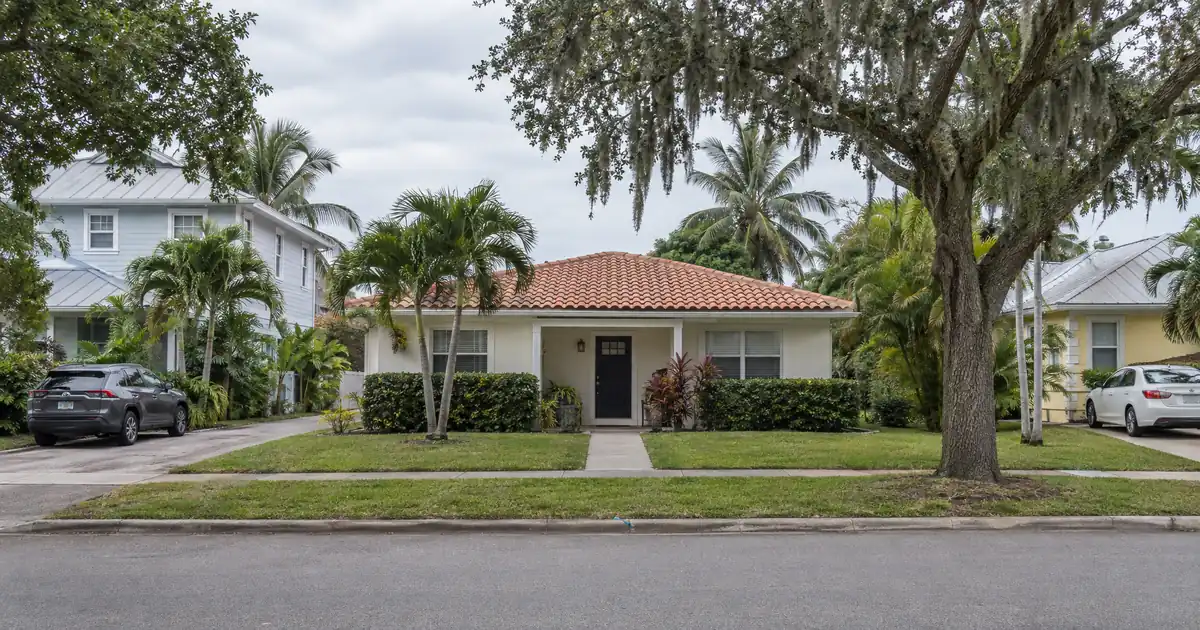
Two Stuart investors own paid-for-and-appreciating rentals, and both want cash out. One holds a small building in Port Salerno. The other holds a single-family rental in Golden Gate. The coverage math favors the Port Salerno owner, and the gap is wide. NeighborhoodScout puts Port Salerno’s median price at $274,626 against an average rent of $1,988. Its Golden Gate page shows $426,710 and $2,119. The same 75% LTV ceiling produces very different rent coverage on those two inputs, and that difference decides who can actually pull equity. Terms vary by lender guidelines, property type, leverage, credit profile, and full file review.
At a Glance: A DSCR cash-out refinance in Stuart, Florida is underwritten primarily on the property’s rental income measured against its full monthly obligation, so the file works when market rent supports the new, larger balance at the 75% LTV ceiling after roughly six months of ownership. Exact terms depend on the lender’s guidelines, property type, leverage, and a full review of the borrower’s file.
DSCR Cash-Out Calculator
Run the cash-out numbers in Stuart, FL
Rate source: Freddie Mac 30-yr average via FRED® — Federal Reserve Bank of St. Louis · effective Sep 24, 2026
Prefilled with starting assumptions — enter your property’s value, balance, taxes, and insurance for a more accurate picture.
Program parameters update from Lendmire’s centralized guideline source. Taxes and insurance are editable estimates.
As of Sep 24, 2026 · General Freddie Mac market benchmark, not a Lendmire loan offer. Property value, balance, taxes, and insurance are editable estimates. Maximum loan-to-value varies by lender, program, property type, and seasoning. Not a Loan Estimate, approval, or commitment to lend. Program availability and eligibility are subject to lender guidelines, credit approval, property review, and underwriting.
- Port Salerno’s rent-to-price ratio runs about 0.72% monthly, roughly 45% better than Golden Gate’s.
- Redfin shows a $307K citywide median, while Homes.com shows $445,000, so appraisal risk is real.
- Duplexes near Cleveland Clinic Martin North stack two rents against one mortgage.
- Modeled coverage on Golden Gate single-family sits below 0.80x, including taxes and insurance.
Stuart Market Snapshot
A quick read on the Stuart investor landscape — figures come from the cited sources below. Confirm current property-level numbers before underwriting.
| Metric | Detail |
|---|---|
| Home prices | $307K median (Redfin, Stuart housing market) |
| Typical rents | $2,119 avg (NeighborhoodScout, Golden Gate) |
Why Port Salerno Wins the Cash-Out Math
Port Salerno is the strongest equity-extraction submarket in Stuart on rent coverage alone. Modeled at the 75% LTV cap with full taxes and insurance included, the NeighborhoodScout inputs land around 1.1x. That clears the standard 1.00x benchmark with some cushion. Every figure here varies by lender and program — guidelines, property type, leverage, and credit profile all apply.
NeighborhoodScout describes the housing stock as primarily small apartment buildings and single-family homes, with many residences built between 1970 and 1999. Apartments.com lists Port Salerno, Willoughby, and Martin County Golf and Country Club as Stuart’s most affordable neighborhoods. Affordable entry prices with mid-$1,900 rents are exactly what a cash-out file needs, because the loan constant hits a smaller balance.
This is a fishing-village pocket near Sandsprit Park and the St. Lucie Inlet. Tenants skew toward workforce renters, including marine-trade workers (that last link is an inference, not a sourced headcount). A sourced vacancy figure for the neighborhood doesn’t exist in the research, so the demand case stays qualitative.
Older stock has a catch. An owner who bought at a low basis and held through Stuart’s recent price run has real equity on paper. But the appraisal has to support it, and thin small-multifamily comps can hold the number down. More on that below.
Golden Gate: Great Stock, Wrong Product Type for Coverage
Golden Gate works when the asset is a duplex or triplex and fails when it’s a single-family house. Modeled on an average rent of $2,119 against a $426,710 price at 75% LTV, including taxes and insurance, single-family coverage comes in below 0.80x. That is sub-1.00 territory, and no amount of optimism fixes it. Final terms depend on lender guidelines, property type, leverage, and the borrower’s complete credit picture.
Sub-1.00 files aren’t necessarily dead. A lender may review a sub-1.00 program, an interest-only structure, or a lower cash-out LTV, each with its own pricing and reserve demands. Qualification stays subject to lender guidelines, credit approval, and property review. But the reduced proceeds often defeat the point of refinancing.
The duplex changes everything. A Redfin listing in Golden Gate shows two 3-bed, 1-bath units renting at $2,000 and $1,885, about $3,885 combined, near Cleveland Clinic. That is one listing, so treat it as illustration rather than a market average. Run the numbers on a modeled duplex priced at the Golden Gate median with those two rents, and coverage including taxes and insurance rises to roughly 1.4x. Same neighborhood, same leverage cap, and the ratio jumps more than 0.6x simply because the building holds two rents against one mortgage.
The Treasure Coast Home Sales investment page shows CBS duplexes in this pocket, and Homes.com lists Stuart multifamily between $299,900 and $790,000. The brief’s price stack suggests the lower part of that band is where cash-out candidates live.
The tenant base is straightforward: medical and service workers along the US-1 corridor and near the downtown hospital. Cleveland Clinic Martin Health operates Martin North in downtown Stuart and Martin South on SW Warfield Blvd. No headcount was found, so that anchor is qualitative.
Rent-to-Value Is the Whole Game
Stuart’s rent-to-value split is wide enough to choose your submarket before you choose your lender. Port Salerno sits near 0.72% per month on NeighborhoodScout’s figures, Golden Gate near 0.50%. Both ratios are the author’s own arithmetic on third-party estimates, and average rent isn’t necessarily comparable to median price by property type. Directional, not precise.
The citywide rent picture adds texture. RentCafe reports an average Stuart rent of $2,016, down 1.78% year over year, and $2,521 for a three-bedroom, based on larger buildings. Apartments.com shows $2,047 for a two-bedroom and $2,572 or more for a three-bedroom, with rent up 0.8% over the past year. Prop-Metrics, citing RentCast, puts three-bedrooms at $3,020 and two-bedrooms at $2,350, reflecting mostly houses. The gap between roughly $2,500 and $3,000 for a three-bedroom is the apartment-versus-house split, and it matters for which rent the appraiser picks.
Three-bedroom units carry about a $525 monthly premium over two-bedrooms on the Apartments.com figures. A duplex with 3-bed sides therefore stacks income better than a 2-bed layout. (Marketed-apartment averages, not duplex-specific data, so don’t overread it.)
Price Is Outrunning Rent (And That Shapes the Refi)
Stuart’s appreciation story is real, but it drives the cash-out more than rent growth does. Redfin shows prices up 8.3% year over year, at a $307K median over the trailing three months, with a competitiveness score of 20 out of 100. Homes.com shows a median of $445,000, up 6%. Those two medians come from different methodologies and different property mixes, so the honest framing is a range rather than a point.
Rent, meanwhile, is flat-to-soft: +0.8% on Apartments.com, −1.78% on RentCafe’s large-building sample. So equity builds through price while coverage does not build through rent. Underwrite on today’s rent, never projected increases.
Here’s the practical read. An owner who bought before the price run and holds an older Port Salerno building sees the best of both: low basis, decent rent, appraised value that has moved. An owner who bought a Golden Gate house recently sees the worst: high basis, modest rent, and price growth that may already be in the purchase price.
Seasoning matters too. Cash-out programs typically look for about six months of ownership measured from title recording, though guidelines vary by lender and borrower. A recent buyer who added value has to wait out that clock before the refinance appraisal can capture it.
Appraisal and Liquidity: The Thin-Comp Problem
Small multifamily in Stuart sells slowly, and that makes the appraisal the file’s weakest point. Homes.com shows multifamily homes spending an average of 183 days listed before selling, and it carries conflicting medians of $445,000 and $491,408 in its own data. That isn’t a vacancy figure, only a liquidity signal.
Thin comps mean appraisers tend toward conservative values. Conservative values shrink cash-out proceeds because the 75% ceiling applies to appraised value, not hoped-for value. Equity available also depends on rent used for lender review, full PITIA, and reserves, so it is never a guaranteed cash figure.
DSCR vs. conventional financing
Two common ways to finance an investment property in Stuart, FL. They qualify you differently — here’s how investors weigh them.
Why investors choose it
- Qualifies on the property’s rental income — no personal tax returns, W-2s, or pay stubs needed to document income.
- No personal debt-to-income ceiling to clear, so existing mortgages and obligations don’t cap your borrowing the same way.
- Can be closed in an LLC, keeping the property inside a business entity.
- Built for scaling — not held to the limit on number of financed properties that conventional financing applies.
- Underwriting centers on the deal: generally qualifies when the rent covers the payment, a 1.00x coverage ratio being a common baseline (confirmed in underwriting).
- Designed specifically for investment property, including long-term and, where the program allows, short-term rentals.
Where it’s strong
- Often the lowest ongoing financing cost for a buyer who fully qualifies on personal income — a fit for a first property or a cost-first purchase.
Trade-offs for investors
- Requires full personal income documentation and must fit within a debt-to-income limit — salary, existing debts, and other mortgages all count.
- Typically held in your personal name rather than a business entity.
- Caps how many financed properties you can carry, which can become a ceiling as a portfolio grows.
- Evaluates you as a borrower as much as the property, which usually means more paperwork.
How investors usually choose: a first or single property often optimizes for the lowest financing cost; portfolio builders often optimize for leverage, vesting in an LLC, and scaling past conventional caps. The right answer depends on your goals, the property, and current guidelines — both paths run through select lenders in Lendmire’s wholesale network, with eligibility and terms confirmed in underwriting.
The stronger play might be buying the appraisal a cleaner story: documented market-rent comps, a written lease history, and unit-level utility metering. The Redfin listing data indicates the duplexes here often have separately metered units, so the owner carries no tenant utilities. That tidies the operating picture.
A related wrinkle: Homes.com listings include duplexes with below-market, month-to-month rents. Under-market rent in older stock can be a value-add angle, but a DSCR appraisal typically uses market rent. Confirm which figure the lender will actually use, and allow time for lease-up before refinancing.
What the Deal Desk Sees in Markets Like This
In small coastal markets with conflicting price data, the common friction point is the gap between what the owner thinks the building is worth and what the appraiser finds. Cleaner files from a documentation standpoint tend to arrive with market-rent support, a current lease schedule, and insurance already quoted. Files with mixed lease structures, such as one annual lease and one month-to-month, usually take longer to explain even when the coverage number clears 1.00.
Where the Cash Goes Next
The best use of extracted equity in Stuart is another small multifamily building, because the multi-unit product is where coverage ratios are strongest. The Business Development Board of Martin County reports that 72% of local products and services are sold outside the county, and that top business challenges included workforce availability and affordable housing. That supports long-term workforce rental demand. The county’s key industries run through healthcare, aerospace and manufacturing, marine, and tourism, and a testimony summary notes Daher plans about $30 million of facility investment to assemble aircraft in Stuart.
Population context helps. Census Bureau QuickFacts shows 18,520 residents, and RentCafe shows 41% of households are renter-occupied. Stuart is small, so the tenant pool is finite. One or two buildings can move the local rent comps, which is why concentration risk deserves a hard look before recycling proceeds into the same submarket.
Honestly, it’s a toss-up between staying in Port Salerno and stepping up to Palm City. A broker page notes a fourplex with four 2-bed, 1-bath apartments on a quiet cul-de-sac in Palm City, which proves small multifamily exists west of town. But no reliable price or rent figure was found, so the case stays unproven. Jensen Beach, Hutchinson Island, North River Shores, and Sewall’s Point are a different story: condo, vacation, and high-end waterfront markets with low rent-to-value. Skip them for coverage-driven recycling.
Program Guardrails for a Stuart Cash-Out
Typical guidelines for this product frame the search. The cash-out LTV ceiling is 75%, and a purchase LTV does not apply. The standard minimum DSCR is 1.00x, meaning rent used for lender review against PITIA, though some lenders review lower ratios with stronger compensating factors, less leverage, or different pricing. Credit tiers generally start at a 620 floor, with better terms at 660, 680, and 700. Reserves typically run about six months of PITIA. Standard programs reach up to $3,000,000, and smaller balances route through select lenders in the network.
Manufactured homes, log homes, and barndominiums fall outside these programs. LLC-titled properties are generally workable, subject to lender program eligibility. Review details remain subject to lender overlays, and program terms can change.
For the mechanics, the DSCR fundamentals page explains the ratio, and the guide “Where DSCR and Conventional Diverge” page compares it with conventional underwriting. The cash-out refinance details and refi programs pages cover the structure. Statewide context lives on the page for DSCR loans in Florida. To run a specific property, talk to Lendmire or call 828-256-2183. Verify current local rental rules, taxes, and insurance with qualified local professionals before committing.
Frequently Asked Questions
How do you qualify for a DSCR loan in Stuart, Florida?
The property’s market rent has to cover its full monthly obligation, including principal, interest, taxes, and insurance, typically at a 1.00x benchmark or better. Credit is reviewed too, with a 620 floor and better tiers at higher scores. Reserves around six months of PITIA are common. Final eligibility depends on lender guidelines, credit profile, and property review.
What are the requirements for a cash-out refinance on an investment property in Stuart, Florida?
Expect about six months of ownership from title recording, a maximum 75% LTV, coverage of at least 1.00x on rent used for lender review, and reserves near six months of PITIA. The appraisal sets the value. Proceeds depend on rent, payment, reserves, and the LTV ceiling, so they are never a guaranteed amount. These specifics are subject to lender guidelines and a full review of property, leverage, and credit.
Does Port Salerno or Golden Gate give a better cash-out refinance?
Port Salerno, on single-family or small-building stock, because its rent-to-price ratio runs about 0.72% against roughly 0.50% in Golden Gate. Golden Gate duplexes can close the gap by stacking two rents, but a single-family house there models below 1.00x. The figures are third-party estimates, so model your own building.
Can I use a DSCR cash-out refinance on a Stuart duplex with one month-to-month tenant?
Often yes, though lenders may weigh lease documentation and market rent differently. Mixed lease structures add review steps, and the appraisal generally uses market rent rather than actual rent. A written lease schedule and rent comps tend to smooth the file.
What can slow down a Stuart DSCR cash-out refinance?
Thin small-multifamily comps and a conflicting price picture are the usual culprits, along with unseasoned title and mixed lease documentation. Lendmire arranges DSCR investor loans with programs that qualify the file mainly on property rental income, subject to lender and program guidelines. Having market-rent support and insurance in hand before submission reduces friction.
For current guidelines and terms, see Lendmire’s DSCR loan programs page.
Get Started
Ready to find the right loan for you?
In about 30 seconds you can review financing options available for your investment property. No commitment required.
Informational only. Not a Loan Estimate, approval, or commitment to lend. Program availability and eligibility are subject to lender guidelines, credit approval, property review, and underwriting.
About Lendmire
Lendmire is a non-QM mortgage brokerage (NMLS# 2371349) arranging DSCR investor loans in 41 markets, including Washington, D.C. DSCR eligibility is generally reviewed around property-level rental income rather than personal income, subject to lender and program guidelines, which suits self-employed investors and LLC-owned portfolios. The brokerage is a 2026 Scotsman Guide Top Workplace, after being recognized by Scotsman Guide in 2025.
If you only take one thing from this piece, it’s this: in Stuart, the building type and the submarket, not the headline price run, decide whether your equity can actually be pulled out.
References
3. Freddie Mac 30-yr average via FRED® — Federal Reserve Bank of St. Louis
4. Redfin, Stuart housing market
6. Redfin listing in Golden Gate
7. Homes.com
8. RentCafe
9. Prop-Metrics
10. Business Development Board of Martin County
This article is part of Lendmire’s investment property cash-out refinance program — full qualification details, guidelines, and scenarios live on the program page.
Related reading: Cash Out Refinance Investment Property in Stuart, Florida: How the Rent Math Clears at 75% LTV · DSCR Cash Out Refinance in Naples, Florida: What It Takes to Refinance a Naples Rental · Cash Out Refinance Investment Property in Orlando, Florida: Will the Rent Still Cover the New Loan?
Guides: Investment Property Cash-Out Refinance in Florida
Brandon Miller
Founder & CEO, Mortgage Loan Originator, Lendmire LLC
- Mortgage Loan Originator · NMLS# 1129696 · Verify on NMLS Consumer Access
- North Carolina Real Estate Broker · License# 343312 · Verify on NCREC
- North Carolina Insurance Producer · License# 19053198 · Property, Casualty, Life, Health · Verify on NAIC SBS
- Lendmire LLC · Firm NMLS# 2371349 · Verify firm licensure
Legal disclosures. Lendmire (NMLS# 2371349) is a state-licensed mortgage brokerage that arranges financing through wholesale lender relationships. Lendmire is not a direct lender, depository institution, or registered financial advisor. The discussion above is general informational content about real estate financing — it is not financial, legal, or tax advice, and readers should consult licensed professionals for guidance on their individual circumstances. Loan inquiries are subject to lender underwriting; this article does not represent a commitment to lend. Loan terms, rates, and qualification standards vary by borrower, property, and state, and are subject to change at any time. Equal Housing Opportunity. NMLS Consumer Access: nmlsconsumeraccess.org.