
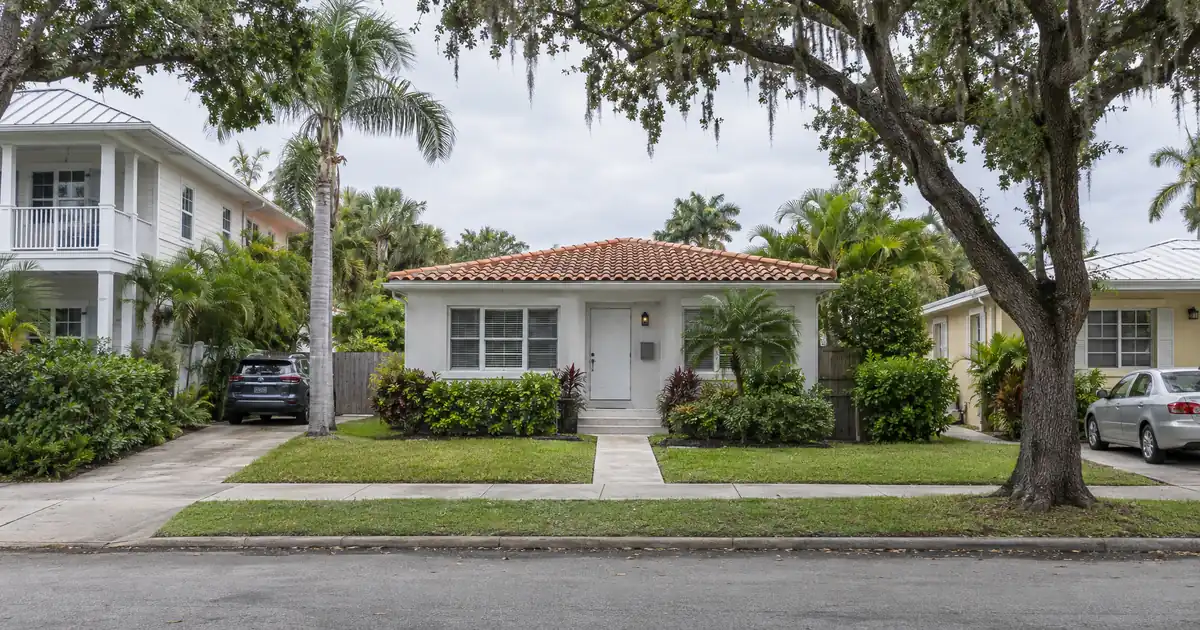
Surfside logged 357 closed sales over a six-month window with a median of $1,450,000, per Resideline’s 33154 market data. The middle half of those sales ran from $612,500 to $3,400,000. That spread is the whole story for anyone pulling equity out of a Surfside rental. Two owners in the same one-square-mile town can hold properties that behave like different asset classes at the appraisal table. A cash out refinance investment property file in Surfside gets decided by which side of that spread the collateral sits on, and by what the building’s paperwork says if it’s a condo.
DSCR Cash-Out Calculator
Run the cash-out numbers in Surfside, FL
Rate source: Freddie Mac 30-yr average via FRED® — Federal Reserve Bank of St. Louis · effective Sep 24, 2026
Prefilled with starting assumptions — enter your property’s value, balance, taxes, and insurance for a more accurate picture.
Program parameters update from Lendmire’s centralized guideline source. Taxes and insurance are editable estimates.
As of Sep 24, 2026 · General Freddie Mac market benchmark, not a Lendmire loan offer. Property value, balance, taxes, and insurance are editable estimates. Maximum loan-to-value varies by lender, program, property type, and seasoning. Not a Loan Estimate, approval, or commitment to lend. Program availability and eligibility are subject to lender guidelines, credit approval, property review, and underwriting.
The Short Version:
A cash-out refinance on a Surfside, Florida investment property is underwritten primarily on the property’s rental income measured against its full monthly obligation, so the file must show rent used for lender review, about six months of ownership from title recording, leverage at or below 75 percent and clean building-level documents if the asset is a condo, subject to lender guidelines.
- Recent Byron Avenue house comps rent near 0.4 to 0.5 percent of price monthly, which lands well under 1.00 coverage.
- Small multifamily along Harding Avenue offers the better rent-to-value stacking in town.
- Condo units need reserve and inspection documents in hand before equity gets treated as extractable.
- Reserve requirements step up to about nine months of PITIA on balances above $1,500,000.
- The 75 percent cash-out LTV ceiling is firm. There is no 80 percent cash-out here. These specifics are subject to lender guidelines and a full review of property, leverage, and credit.
This article assumes the purchase is done. The question is what the property will support now, how much of the appreciation converts to usable capital, and where Surfside files stall. For the purchase side, the DSCR fundamentals page covers the basics. This piece stays on extraction.
Surfside Market Snapshot
A quick read on the Surfside investor landscape — figures come from the cited sources below. Confirm current property-level numbers before underwriting.
| Metric | Detail |
|---|---|
| Home prices | $1,020,000 median (July 2026) (Movoto) |
| Typical rents | Median gross rent $2,091 (City-Data.com) |
| Recent appreciation | +5.3% yoy (Zillow) |
| Population | Nearly 6,000 residents (Town of Surfside) |
Where the Equity Actually Sits
Equity in Surfside sits unevenly. Zillow’s home value estimate for the town is $1,339,801, up 5.3 percent over the past year per Zillow’s Surfside page. That is an index estimate and a different measure than the Resideline median of sold homes. Treat them as two readings of the same market, not competing facts. Appreciation is real. It is not evenly spread across the town.
The town itself is small. The Town of Surfside describes a community of nearly 6,000 residents on roughly one square mile between Bal Harbour and Miami Beach. There is no corporate employer base, no hospital and no university inside the limits. Rental demand leans on service, retail and professional jobs spread across the surrounding beach communities. City-Data puts median household income at $106,396 and median gross rent at $2,091, per City-Data’s Surfside profile. Those two numbers set the ceiling on what a typical local tenant can pay, and they matter when a lender reviews market rent on an appraisal.
Here is the tension. Appreciation in a supply-constrained coastal town builds equity faster than rent grows into it. An owner can sit on a lot of paper equity and still find the property’s rent covers only a modest slice of the debt at 75 percent leverage. That gap between equity and coverage is where most Surfside cash-out conversations get honest. Lenders size these loans on the ratio, not on the equity alone. High value with thin rent means a lower loan amount, a different program or both.
Byron Avenue Houses: Clean Files, Thin Coverage
Byron Avenue single-family houses are the cleanest collateral in town and the weakest on coverage. Recent comps show three- and four-bedroom houses trading in the $1.5 million to $2 million-plus range against rents in roughly the $6,000 to $9,000 monthly band. One three-bed sold at $1,457,500 with a comparable-rental rent estimate near $6,356. A nearby home carried a $1,660,400 value estimate against an $8,016 rent estimate. Both work out to roughly 0.4 to 0.5 percent of price per month.
That ratio has to be run against the full obligation. On modeled assumptions (30-year fixed amortization, Florida-average taxes and insurance, 75 percent LTV), rent at 0.4 to 0.5 percent of price puts coverage in the range of 0.6 to 0.7 including taxes and insurance. Call it well below the 1.00x benchmark. That is a modeled read, not a quote, and it’s rounded down on purpose.
What does the file do with a sub-1.00 property? Paths a lender would review include:
- A sub-1.00 program, which typically means lower leverage, stronger credit and heavier reserves.
- An interest-only structure, which changes the debt-service side of the ratio.
- A smaller cash-out amount than the 75 percent ceiling would allow.
None of these is a promise. Eligibility depends on lender guidelines, credit approval, property review and the reserves documented. Skip any plan that assumes the maximum LTV works on a Byron Avenue house. It usually doesn’t.
The upside is documentation. Byron Avenue houses in this pocket are HOA-free, which removes the association financial-health question a lender has to chase on a condo. Rent verification is a lease plus an appraisal rent schedule. Title is a standard vesting review. Fewer moving parts means fewer places for a file to pend. It is a cleaner file with a weaker number, which is a real tradeoff, and some owners will take it.
A stronger play here might be a smaller cash-out request that clears the ratio comfortably, rather than pushing to the cap and hoping. Investors chasing maximum proceeds could argue the other way. On thin-coverage collateral, the smaller loan usually closes the file cleanly.
Harding Avenue Small Multifamily (The Better Coverage Case)
Harding Avenue and the interior streets hold Surfside’s older, smaller multifamily and mixed-use stock. That is where rent-to-value stacks best. City-Data lists mean values of $477,455 for two-unit structures and $405,633 for three-to-four-unit structures, against $780,656 for detached houses and $480,183 for attached townhouses. A two-unit or three-to-four-unit building at those values, with rents near the $2,091 town median per unit, would model comfortably above 1.2 including taxes and insurance at 75 percent LTV.
Now the caveat, and it’s a big one. Those mean values are survey-based averages. They are not what a Harding corridor building trades for today, given a town median sold price of $1,450,000 across all product. Actual small-multifamily collateral will likely value higher than those means, and coverage will land lower. Run the appraisal first and use the survey values only as a directional signal that multi-unit product carries more rent per dollar of value than the houses do. A Harding-corridor two-bedroom listed near $2,399 a month, against a town median of $2,091, suggests appraisers will find rent support. Whether it supports full leverage is a file-by-file question.
Tenant demand on this side draws from service and professional workers who need to live near the corridor. Bal Harbour Shops sits just across the town line in a village of about 6,800 residents and anchors retail, restaurant and hospitality employment. The most common resident employment sectors in Surfside are professional and technical services, educational services and real estate and rental services. That is a year-round lease profile. It supports long-term rent documentation better than a seasonal profile does.
Picture an investor who bought a small Harding-corridor building well over a year ago and now wants capital for a second deal. Seasoning is met. The appraisal returns a value with a rent schedule. The ratio clears 1.00x at 75 percent LTV on one scenario and doesn’t on another, depending on vacancy in one unit. That vacancy detail moves the file. Lease evidence for each unit, current rent roll and proof of occupancy history belong in the package before submission, not after the appraiser flags a gap. For structure options across refinance types, the investment property refinance options page lays out the field.
Condo Towers on Collins: Where Cash-Out Files Stall
Collins Avenue oceanfront condos are appreciation plays, not coverage plays. Asking rents run from the mid-four figures monthly to well into five figures depending on the unit. Acquisition costs run far higher per unit. The ratio doesn’t scale with the price, so DSCR math is weak at full leverage. That alone limits cash-out potential. The bigger friction is the building.
Working DSCR brokers see a recurring pattern in older coastal condo markets: the borrower’s property is fine and the building’s paperwork is the problem. Reserve studies come in late, milestone inspection status is unclear, or a special assessment is pending. The appraiser discounts the value or the lender declines the building, and the cash-out amount shrinks or disappears. Pull the condo questionnaire and the association’s financial documents before anyone quotes an equity number.
Surfside carries this more visibly than any other Florida town. The collapse of Champlain Towers South changed how lenders read older Florida towers. Per CondoScan, the post-collapse rules have produced a two-tier condo market: buildings with funded reserves command premium pricing and easier financing, while non-compliant buildings face rising costs and declining values. On timing, Kim Rodstein’s Surfside buyer guidance notes that coastal buildings within three miles of the shoreline built on or after 1998 begin Miami-Dade recertification at 25 years, versus a 30-year schedule for other buildings. Because much of the Collins stock is decades old, a lender will want documentation on where a specific building stands. Condo certification and HOA questionnaire completeness are gating items. Verify current local rules, taxes and insurance with qualified local professionals.
One more caution on comps. Pricing and available terms vary by lender, borrower profile, property type, and full underwriting review. Marketing figures of roughly $3,993 per square foot are asking prices, not closed sales. An owner who points to those numbers to support a higher value on an older tower unit is handing the appraiser a comp that hasn’t traded. Use recent closed sales in the same building or a similar one.
This is a genuine toss-up for condo owners. A well-run, fully funded building may support a strong cash-out. A building with pending recertification can pull the whole file sideways. Ask for the building documents first and decide second.
What’s the Catch on Seasoning and Leverage?
Seasoning is the first checkpoint and the easiest to get wrong. The program typically expects about six months of ownership, measured from title recording, and that date comes from the settlement statement. Files that count from contract date or closing-table signing get kicked back. Confirm the recorded date before ordering the appraisal.
The leverage ceiling is 75 percent LTV on cash-out. It is a cap, not a target. Equity available depends on rent used for lender review, the full monthly obligation, reserves and that ceiling together. It is never a guaranteed figure. Other guideline anchors include:
- A credit floor of 620, with tiers at 660, 680 and 700 that generally improve options.
- Reserves of about six months of PITIA, moving to about nine months on balances above $1,500,000. In Surfside, where values run high, the nine-month tier comes up often.
- Loan sizes up to $3,000,000 on standard programs, with smaller balances routed through select lenders in the network.
All of these are guideline ranges, subject to program review, borrower profile and property type.
Reserves documentation is the quiet gap on high-value files. The reserve requirement is measured in months of PITIA, and on a larger Surfside balance that is a large liquid number to document. Bank statements, brokerage statements and their seasoning history need to match. Reserves that appear in an account three days before submission draw questions. Terms vary by lender guidelines, property type, leverage, credit profile, and full file review.
DSCR vs. conventional financing
Two common ways to finance an investment property in Surfside, FL. They qualify you differently — here’s how investors weigh them.
Why investors choose it
- Qualifies on the property’s rental income — no personal tax returns, W-2s, or pay stubs needed to document income.
- No personal debt-to-income ceiling to clear, so existing mortgages and obligations don’t cap your borrowing the same way.
- Can be closed in an LLC, keeping the property inside a business entity.
- Built for scaling — not held to the limit on number of financed properties that conventional financing applies.
- Underwriting centers on the deal: generally qualifies when the rent covers the payment, a 1.00x coverage ratio being a common baseline (confirmed in underwriting).
- Designed specifically for investment property, including long-term and, where the program allows, short-term rentals.
Where it’s strong
- Often the lowest ongoing financing cost for a buyer who fully qualifies on personal income — a fit for a first property or a cost-first purchase.
Trade-offs for investors
- Requires full personal income documentation and must fit within a debt-to-income limit — salary, existing debts, and other mortgages all count.
- Typically held in your personal name rather than a business entity.
- Caps how many financed properties you can carry, which can become a ceiling as a portfolio grows.
- Evaluates you as a borrower as much as the property, which usually means more paperwork.
How investors usually choose: a first or single property often optimizes for the lowest financing cost; portfolio builders often optimize for leverage, vesting in an LLC, and scaling past conventional caps. The right answer depends on your goals, the property, and current guidelines — both paths run through select lenders in Lendmire’s wholesale network, with eligibility and terms confirmed in underwriting.
Here is a worked scenario with modeled inputs, percentages and ratios only. Say an investor owns an HOA-free Byron Avenue house with a $1,457,500 appraised value, comparable to the recent sale above. Seasoning is met. The rent schedule comes in near the rent estimate discussed earlier. At 75 percent LTV, modeled coverage including taxes and insurance lands around 0.6 to 0.7. That is below the 1.00x baseline. The investor’s options are a sub-1.00 program at lower leverage, an interest-only structure or a smaller cash-out. Each is reviewed by the lender subject to its guidelines. If the appraisal comes in light, an appraisal reconsideration request with recent in-town sales and condition adjustments is a routine step, not an emergency move.
For LLC-held properties, vesting and entity documents (operating agreement, EIN letter, good-standing certificate) need to be current and match the title. LLC borrowing is available subject to lender program eligibility. Entity paperwork mismatches are a common preventable delay in cash-out files.
Turning Proceeds Into the Next Deal
Cash-out proceeds are capital, and the question is where it earns more than the new debt costs. In a town where Byron Avenue coverage runs thin, redeploying proceeds into higher-coverage collateral elsewhere in South Florida can lift the portfolio’s overall ratio even as the Surfside asset stays put. That’s the logic behind extracting from a low-coverage, high-value asset and buying into cash flow. Investors who keep Surfside for appreciation and fund cash-flow purchases from the extraction are using each asset for what it does.
The tradeoff is real. Pulling equity at 75 percent LTV means carrying more debt against a property whose rent doesn’t cover it comfortably. If Surfside values soften, that leverage cuts the wrong way. An owner who’s uneasy about that should size the cash-out below the ceiling. For a full walkthrough of extraction structure, see the equity-extraction mechanics. Investors comparing this route against a bank loan can read Lendmire’s DSCR-versus-conventional breakdown. Florida-wide program context sits on the page for DSCR loan options for Florida investors.
To test a specific property against the ratio and the 75 percent cap, request a scenario review or call 828-256-2183.
Frequently Asked Questions
How do you qualify for a DSCR cash-out refinance in Surfside, Florida?
The property has to show rent that covers its full monthly obligation (principal, interest, taxes, insurance and any HOA dues) at or above the 1.00 benchmark on most standard programs. It also needs about six months of ownership from title recording and leverage at or below 75 percent. Credit starts at a 620 floor, and reserves are about six months of PITIA. Exact eligibility depends on lender guidelines and property review.
What are the requirements for an investment property loan in Surfside, Florida if the property is a condo?
Beyond the standard ratio, credit and reserve tests, a condo file needs the association’s questionnaire, financial statements and evidence of reserve funding and inspection status. Older Collins Avenue towers draw the most scrutiny. Incomplete building documents are a common reason a Surfside condo file gets discounted or declined, so gather them before the appraisal is ordered.
Why do Byron Avenue houses show weaker coverage than Harding Avenue multifamily?
Byron houses trade at $1.5 million and up with rents near 0.4 to 0.5 percent of price monthly. Multi-unit stock carries lower mean values per unit, so rent covers more of the debt. On modeled assumptions including taxes and insurance, Byron houses land well under 1.00 at full leverage while Harding-corridor multifamily can clear it, though actual appraised values will run higher than survey means.
How does rental income affect DSCR refinance eligibility in Surfside?
Can an owner still get cash out if the rent doesn’t reach 1.00 coverage?
Sometimes, through options a lender would review: a sub-1.00 program, interest-only structuring or a lower cash-out amount. Those usually come with lower leverage, stronger credit or heavier reserves. Nothing is assured, and outcomes depend on credit approval, property review and lender guidelines.
What an Appraiser Would Tell You About This Town
In Surfside, the address decides the loan more than the borrower does: a Byron Avenue house or Harding corridor building with clean paperwork gets a simple file, and an older Collins tower unit with unresolved reserve questions gets the hard one.
For current guidelines and terms, see Lendmire’s DSCR loan programs page.
About Lendmire
Lendmire, NMLS# 2371349, is a non-QM mortgage broker serving real estate investors in 41 markets, including Washington, D.C., through DSCR investor loan programs. Qualification is generally reviewed around the subject property’s rental income rather than the borrower’s W-2 history, which suits LLC-titled portfolios and self-employed investors. All scenarios stay subject to the lender’s review and program guidelines. The firm is recognized as a 2026 Scotsman Guide Top Workplace and a top-ranked workplace in 2025.
Get Started
Ready to find the right loan for you?
In about 30 seconds you can review financing options available for your investment property. No commitment required.
Informational only. Not a Loan Estimate, approval, or commitment to lend. Program availability and eligibility are subject to lender guidelines, credit approval, property review, and underwriting.
References
1. Resideline: Surfside 33154 Housing Market
2. Movoto
3. City-Data: Surfside, Florida
4. Zillow: Surfside, FL Home Values
7. CondoScan: Surfside regulations overview
8. Kim Rodstein: Florida condo reserve laws and Surfside buyers
9. a 2026 Scotsman Guide Top Workplace
10. Scotsman Guide — Top Workplaces 2025
This article is part of Lendmire’s investment property cash-out refinance program — full qualification details, guidelines, and scenarios live on the program page.
Related reading: DSCR Cash Out Refinance in Surfside, Florida: The 2026 DSCR Financing Guide to Collins Avenue · Cash Out Refinance Investment Property in St. Augustine · Cash Out Refinance on Investment Property in Coral Gables
Guides: Investment Property Cash-Out Refinance in Florida
Brandon Miller
Founder & CEO, Mortgage Loan Originator, Lendmire LLC
- Mortgage Loan Originator · NMLS# 1129696 · Verify on NMLS Consumer Access
- North Carolina Real Estate Broker · License# 343312 · Verify on NCREC
- North Carolina Insurance Producer · License# 19053198 · Property, Casualty, Life, Health · Verify on NAIC SBS
- Lendmire LLC · Firm NMLS# 2371349 · Verify firm licensure
Disclosure information. Lendmire is a state-licensed mortgage brokerage under NMLS# 2371349. Lendmire is not a depository institution, direct lender, or financial advisor — all loans referenced are placed through wholesale lender partners and are subject to each lender's underwriting standards. This article is provided for general informational purposes and is not a commitment to lend, nor does it constitute financial, legal, or tax advice. Loan programs, terms, rates, and qualification standards change without notice and depend on borrower profile, property type, and the state in which the subject property is located. Equal Housing Opportunity provider. NMLS Consumer Access: nmlsconsumeraccess.org.