
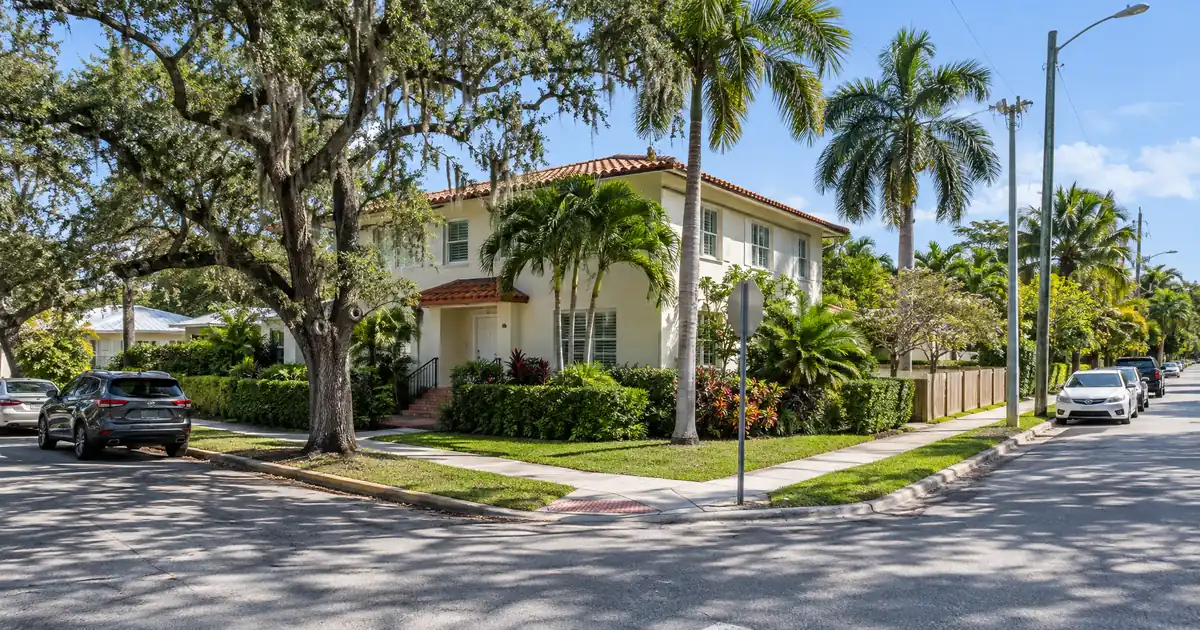
Resideline’s 33154 market data shows a broad volume of closed sales and a headline median price that reads like a deep, liquid market. It isn’t one. Surfside is roughly one square mile, and that median covers everything from older Harding Avenue stock to new Collins Avenue product. For an investor who already owns here, the question isn’t whether equity exists. It’s whether the rent supports pulling it out at the program’s loan-to-value ceiling. Lendmire, a DSCR-focused mortgage broker, sees that question decide most Surfside refinance files.
The Short Version: A DSCR cash-out refinance on a Surfside, Florida investment property is underwritten primarily on the property’s rental income measured against its full monthly obligation. Proceeds are capped by the loan-to-value ceiling, while eligibility also depends on seasoning from title recording and documentation of reserves. On condos, the lender also reviews building-level reserve and inspection records.
DSCR Cash-Out Calculator
Run the cash-out numbers in Surfside, FL
Rate source: Freddie Mac 30-yr average via FRED® — Federal Reserve Bank of St. Louis · effective Sep 24, 2026
Prefilled with starting assumptions — enter your property’s value, balance, taxes, and insurance for a more accurate picture.
Program parameters update from Lendmire’s centralized guideline source. Taxes and insurance are editable estimates.
As of Sep 24, 2026 · General Freddie Mac market benchmark, not a Lendmire loan offer. Property value, balance, taxes, and insurance are editable estimates. Maximum loan-to-value varies by lender, program, property type, and seasoning. Not a Loan Estimate, approval, or commitment to lend. Program availability and eligibility are subject to lender guidelines, credit approval, property review, and underwriting.
- Byron Avenue house comps sit near 0.4 to 0.5 percent monthly rent-to-price, which is tight for coverage.
- Small multi-unit stock off Harding Avenue offers the closest path to the 1.00 coverage benchmark.
- Cash-out leverage tops out at 75 percent, after about six months of ownership from title recording.
- Collins Avenue condo files turn on the building’s reserve and inspection status, not just the unit.
Surfside Market Snapshot
A quick read on the Surfside investor landscape — figures come from the cited sources below. Confirm current property-level numbers before underwriting.
| Metric | Detail |
|---|---|
| Home prices | $1,020,000 median (July 2026) (Movoto) |
| Typical rents | Median gross rent $2,091 (City-Data.com) |
| Recent appreciation | +5.3% yoy (Zillow) |
| Population | Nearly 6,000 residents (Town of Surfside) |
Why the Median Misleads in a One-Square-Mile Town
The citywide median is a poor guide to what a specific property will appraise for. Resideline shows the middle half of recent sales running from $612,500 to $3,400,000. That spread is the whole story. A Harding Avenue multi-unit and a new oceanfront tower share a zip code and almost nothing else.
Other platforms land in the same neighborhood with different methods. Zillow puts the average home value lower, at $1,339,801, up 5.3 percent over the past year. This article uses the $1,450,000 closed-sale median as its single reference point. The Zillow figure is an estimate-driven average, so it will run below a median of actual closings in a market with luxury outliers.
For an equity-extraction file, appreciation helps the 75 percent ceiling produce a larger number. It does nothing for the coverage ratio. That’s the tension in this town. Values have climbed, but rents haven’t climbed with them. Cash-out proceeds are limited by LTV, while whether the loan can be approved at all is limited by rent against full PITIA. They are two separate tests, and Surfside files tend to pass the first and struggle with the second.
The new-construction pricing is the clearest warning. CondoBlackBook lists the Delmore pre-construction project at an average of $3,993 per square foot. Treat those asking prices as marketing, not comps. An appraiser working an older Collins Avenue unit will lean on closed sales of similar older units, and a lender reviewing coverage won’t care what the flagship tower is asking.
Byron Avenue Houses: Clean File, Thin Coverage
Byron Avenue single-family homes are the cleanest files in Surfside and the weakest on coverage. With no association in the picture, the lender reviews no reserve study, no questionnaire and no special assessment history. Appraisal and rent verification stay simple. The catch is the math.
Rental listings for three- and four-bedroom houses on Byron run from the high-$6,000s to roughly $8,950 a month, per Apartments.com’s Surfside listings and related listing data. Against a recent Byron Avenue sale at $1,457,500 with a rent estimate near $6,356, and a comparable home carrying a $1,660,400 Zestimate and an $8,016 rent estimate, the monthly rent-to-price ratio lands at roughly 0.4 to 0.5 percent. Zillow’s home value page shows the appreciation behind those prices.
Run the numbers on that first comp as a modeled scenario, with the rent and price as stated inputs. At 75 percent LTV and full PITIA, meaning principal, interest, taxes and insurance, coverage lands in the 0.6s to low 0.7s. Dropping leverage helps but doesn’t close the gap on these prices. This is a sub-1.00 file on long-term rent alone.
A lender could review a few structures for a file like this:
- A sub-1.00 program, where one is available.
- An interest-only structure.
- Materially lower leverage, with the cash-out shrinking to match.
Each comes with different pricing and more cash left in the property, and none is a promise. Eligibility depends on lender guidelines, credit profile, reserves and property review.
Honestly, this one is a toss-up for the investor who wants to pull equity from a Byron house. The equity is there and the file is simple, but the coverage may force a smaller cash-out than the owner expects. If the goal is capital for the next deal, a lower-leverage pull on a clean file may still beat a larger pull on a messy condo. Run both before choosing.
Harding Avenue and the Interior Streets: Where the Number Gets Closer
Small multifamily and mixed-use stock around Harding Avenue offers the best rent-to-value stacking inside town limits. The corridor runs on the walkable Downtown Surfside district, which the Town of Surfside’s visitor page describes as about two dozen boutiques and specialty shops plus a weekly farmers market. The older, smaller buildings behind that frontage are the realistic DSCR targets.
The City-Data profile of Surfside reports mean values by structure type. Two-unit structures average $477,455, three-to-four-unit structures $405,633 and detached houses $780,656. Median gross rent is $2,091. Those means are survey-based and lag current asking prices, so don’t underwrite off them. What they show is the shape of the market. Multi-unit buildings carry far lower values per unit than houses or oceanfront towers, while rents per unit stay strong.
Here’s the working test, using the town’s $2,091 median gross rent as a modeled per-unit input. Four units at that level gross about $8,364 a month. For that to clear 1.00 at 75 percent LTV including taxes and insurance, the building needs a monthly rent-to-price ratio near 0.65 percent or better. Byron houses sit at 0.4 to 0.5. That’s a real gap, and it’s why multi-unit is the better extraction candidate here. It still has to be checked against live pricing, because a fourplex priced like the houses around it won’t clear.
Harding-corridor listings point the same direction. A four-bedroom unit listed near $7,800 a month and a smaller two-bedroom near Surfside Boulevard listed around $2,399 show a wide range of rents even within a few blocks. Rent-roll clarity matters for that reason. On mixed-use or multi-unit files, the lender wants a lease for each unit, in-place rents that match, and no vacant units propping up a “market rent” assumption. Files with one vacant unit and a pro forma number get pushed back. Files with signed leases and a clean rent roll don’t.
The tenant base here is local employment. Residents’ largest sectors are professional, scientific and technical services at 425 people, educational services at 341 and real estate, rental and leasing at 300, per the City-Data profile. Add the retail and hospitality jobs at Bal Harbour Shops just across the town line and you get year-round renters, not a seasonal rental pool. There are no universities or major hospitals in Surfside itself. Demand here rests on the Bal Harbour and Miami Beach job base, not on a single anchor employer.
Collins Avenue Condos: The Reserves Decide the Cash-Out
On an older Collins Avenue tower unit, the building’s financial and inspection record can matter as much as the unit’s rent. The post-collapse regulatory environment here is the strongest local factor on any condo cash-out.
CondoScan describes a two-tier Miami condo market, where compliant buildings with funded reserves command premium prices and easier financing while non-compliant buildings face rising costs and softer values. Coastal buildings of three stories or more built on or after 1998 and within three miles of the coastline begin recertification at 25 years and repeat every 10 years, versus 30 years for other buildings, per Kim Rodstein’s overview of the reserve laws. The Town of Surfside’s recertification page lays out the local process.
Here’s what that does to a file. The investor sees a unit with equity. The appraiser and the lender see a building. If the association has underfunded reserves, a pending milestone inspection or a recent special assessment, the appraiser may discount value or the lender may decline the building outright. Equity that exists on paper isn’t extractable until the building clears.
Working DSCR brokers see a recurring pattern in older coastal condo markets: the unit’s own numbers are fine, and the file stalls on the association. The HOA questionnaire comes back incomplete, the reserve study is stale or missing, or the condo certification can’t be completed because a building-level question is still open. Pulling the questionnaire and reserve documents before the file goes in, not after the appraisal, keeps the file out of that trap.
The practical steps run in this order:
1. Request the association’s current questionnaire and most recent reserve study before listing the property for a refinance.
2. Confirm the building’s inspection and recertification status in writing, and note any open items.
3. Ask whether any special assessment is pending or recently levied, since it hits both the appraisal and the monthly obligation.
4. Pull the lease and rent evidence for the unit, matching what the property is actually collecting.
Oceanfront condos are mostly appreciation holdings. Collins Avenue rental listings run from $4,650 for a two-bedroom to $20,000 for a top-tier unit, but acquisition costs at $3,000-plus per square foot leave DSCR coverage thin. A unit with strong equity and weak coverage may still work with lower leverage. It won’t work with an unfinished reserve file.
Seasoning, LTV and What the Proceeds Are For
Cash-out on a DSCR investment property comes down to a short list of parameters, all subject to lender guidelines and not guaranteed for any borrower or property. On most files, the 75 percent LTV ceiling is a hard cap on cash-out. Ownership of about six months, measured from title recording, is typically required before cash-out is available. The standard coverage benchmark is 1.00x, meaning rent used for lender review covers PITIA. Some lenders review below that with stronger compensating factors or lower leverage. Credit tiers run from a 620 floor upward, and reserves of about six months PITIA are typical, stepping to about nine months on balances above $1,500,000. Standard programs go up to $3,000,000. Review details remain subject to lender overlays.
Seasoning is the quiet killer on recent purchases. Files that assume it away get kicked back. The settlement statement documents the recording date, so an investor who recently closed on a Surfside property may not be cash-out eligible yet, whatever the appraisal says. Exact timing varies by file and lender.
The reserves line deserves attention here. Many Surfside balances sit near the $1,500,000 threshold, because Byron comps run $1.46 million to $1.66 million in value. Whether a given balance crosses it depends on LTV and structure, so it’s worth running before assuming the lower reserve requirement. Reserves documentation means liquid statements, not equity in another property. Exact terms depend on the lender’s guidelines, property type, leverage, and a full review of the borrower’s file.
On the proceeds, equity pulled from a Surfside holding is capital for the next deal. That could be a down payment on a multifamily somewhere with better rent-to-price math, or the fix on a Harding Avenue building. Surfside’s high prices and thin rent-to-price ratios make this a market where extracting equity and redeploying it elsewhere can beat holding. The equity-extraction mechanics cover how proceeds are structured, and the investment property refinance options compare the paths. For the fundamentals, the basics of DSCR loans are worth reviewing first. On entity-titled holdings, LLC borrowers are generally acceptable, subject to lender program eligibility, with the operating agreement and good standing documents ready.
DSCR vs. conventional financing
There are two common ways to finance an investment property in Surfside, FL, and they qualify you differently — here’s how investors weigh them.
Why investors choose it
- Qualifies on the property’s rental income — no personal tax returns, W-2s, or pay stubs needed to document income.
- No personal debt-to-income ceiling to clear, so existing mortgages and obligations don’t cap your borrowing the same way.
- Can be closed in an LLC, keeping the property inside a business entity.
- Built for scaling — not held to the limit on number of financed properties that conventional financing applies.
- Underwriting centers on the deal: generally qualifies when the rent covers the payment, a 1.00x coverage ratio being a common baseline (confirmed in underwriting).
- Designed specifically for investment property, including long-term and, where the program allows, short-term rentals.
Where it’s strong
- Often the lowest ongoing financing cost for a buyer who fully qualifies on personal income — a fit for a first property or a cost-first purchase.
Trade-offs for investors
- Requires full personal income documentation and must fit within a debt-to-income limit — salary, existing debts, and other mortgages all count.
- Typically held in your personal name rather than a business entity.
- Caps how many financed properties you can carry, which can become a ceiling as a portfolio grows.
- Evaluates you as a borrower as much as the property, which usually means more paperwork.
How investors usually choose: a first or single property often optimizes for the lowest financing cost; portfolio builders often optimize for leverage, vesting in an LLC, and scaling past conventional caps. The right answer depends on your goals, the property, and current guidelines — both paths run through select lenders in Lendmire’s wholesale network, with eligibility and terms confirmed in underwriting.
Anyone comparing this to a bank refinance can read Lendmire’s DSCR-versus-conventional breakdown. Lendmire arranges these loans through its wholesale network, and Florida-specific program detail lives on the page for DSCR loan options for Florida investors. Before underwriting any file here, verify current local rental rules, taxes and insurance with qualified local professionals.
Where the Answer Flips
The right move depends on property type, and it can reverse. Here are the situations where it changes.
For a Byron Avenue house, the equity is real and the file is clean, but coverage sits well under 1.00 at 75 percent LTV. A smaller cash-out or a sub-1.00 structure may be the only route. The investor who wants maximum proceeds should expect disappointment.
For a Harding Avenue small multifamily, coverage is closest to the benchmark, but only on a clean rent roll. A vacant unit flips this from the best Surfside file to a weak one.
For an older Collins Avenue condo, strong equity and weak documentation flip the answer to “not yet.” An investor who gets the reserve study and certification in order may find the same unit fully reviewable later.
For a recent buyer, seasoning decides. Wait the six months or lose the file.
Some investors will argue the better play is to hold the Surfside property for appreciation and skip the cash-out altogether, especially given the 5.3 percent annual gain in values. That’s a fair view if the owner has no better use for the capital. If there is one, extracting at a coverage the lender can approve beats waiting.
Frequently Asked Questions
How do you qualify for a DSCR cash-out refinance in Surfside, Florida?
The property has to show enough rent to cover its full monthly obligation, typically measured against a 1.00 benchmark, subject to lender guidelines. Ownership usually needs about six months of seasoning from title recording, and cash-out LTV tops out at 75 percent. Credit minimums start at a 620 floor, and reserves of about six months PITIA are common. On a condo, the building’s reserve and certification documents are part of the review.
What are the requirements for an investment property refinance in Surfside, Florida?
Expect a lease or rent evidence for each unit, entity documents if the property sits in an LLC, a reserves statement and an appraisal. Standard programs run up to $3,000,000, with reserve requirements stepping up above $1,500,000. Condo files add a questionnaire and a certification. Requirements vary by lender, borrower and property.
Why do Surfside condo cash-out files stall more often than house files?
The association’s records are a second underwriting file. An incomplete questionnaire, a stale reserve study or an open inspection item can lower the appraised value or get the building declined. House files on streets like Byron Avenue skip that layer entirely, which makes them simpler even when coverage is thinner.
Can a Surfside property with coverage under 1.00 still get a cash-out refinance?
Possibly, depending on the program. A lender may review sub-1.00 programs, interest-only structures or lower leverage, usually with stronger compensating factors and different pricing. Nothing here is guaranteed. Investors can request a scenario review or call 828-256-2183 to see how a specific property might be structured.
What a Local Broker Would Tell You
Surfside rewards owners who know which of their assets is which. The Byron Avenue houses have the cleanest files and the thinnest coverage. The Harding Avenue multi-units have the best chance of clearing the benchmark if the rent roll is clean. The older oceanfront condos have the most equity and the most paperwork, and the building’s reserve file will decide the loan before the unit’s rent does.
For current guidelines and terms, see Lendmire’s DSCR loan programs page.
About Lendmire
Lendmire, NMLS# 2371349, is a non-QM mortgage broker serving real estate investors in 41 markets, including Washington, D.C., through DSCR investor loan programs. Qualification is generally reviewed around the subject property’s rental income rather than the borrower’s W-2 history, a practical fit for LLC-titled portfolios and self-employed investors. All scenarios remain subject to eligibility review and program guidelines. Lendmire has been recognized as a 2026 Scotsman Guide Top Workplace and a top-ranked workplace in 2025.
Get Started
Ready to find the right loan for you?
In about 30 seconds you can review financing options available for your investment property. No commitment required.
Informational only. Not a Loan Estimate, approval, or commitment to lend. Program availability and eligibility are subject to lender guidelines, credit approval, property review, and underwriting.
References
1. Resideline — Surfside 33154 Housing Market
2. Movoto
3. City-Data — Surfside, Florida
4. Zillow — Surfside, FL Home Values
7. Apartments.com’s Surfside listings
8. Town of Surfside — Visit Surfside
10. CondoScan — Surfside regulations overview
11. Kim Rodstein — Condo reserve laws and Surfside buyers
12. Town of Surfside — 40-Year Recertification Program
13. a 2026 Scotsman Guide Top Workplace
14. Scotsman Guide — Top Workplaces 2025
This article is part of Lendmire’s investment property cash-out refinance program — full qualification details, guidelines, and scenarios live on the program page.
Related reading: Cash Out Refinance Investment Property in Surfside, Florida: The 2026 DSCR Financing Guide to Harding Avenue · DSCR Cash Out Refinance in Surfside Beach, South Carolina: 2026 Guide to the Highway 17 Corridor · Cash Out Refinance Investment Property in Surfside Beach, South Carolina: The 2026 DSCR Guide to Ocean Blvd
Guides: Investment Property Cash-Out Refinance in Florida
Brandon Miller
Founder & CEO, Mortgage Loan Originator, Lendmire LLC
- Mortgage Loan Originator · NMLS# 1129696 · Verify on NMLS Consumer Access
- North Carolina Real Estate Broker · License# 343312 · Verify on NCREC
- North Carolina Insurance Producer · License# 19053198 · Property, Casualty, Life, Health · Verify on NAIC SBS
- Lendmire LLC · Firm NMLS# 2371349 · Verify firm licensure
Legal disclosures. Lendmire (NMLS# 2371349) is a state-licensed mortgage brokerage that arranges financing through wholesale lender relationships. Lendmire is not a direct lender, depository institution, or registered financial advisor. The discussion above is general informational content about real estate financing — it is not financial, legal, or tax advice, and readers should consult licensed professionals for guidance on their individual circumstances. Loan inquiries are subject to lender underwriting; this article does not represent a commitment to lend. Loan terms, rates, and qualification standards vary by borrower, property, and state, and are subject to change at any time. Equal Housing Opportunity. NMLS Consumer Access: nmlsconsumeraccess.org.