
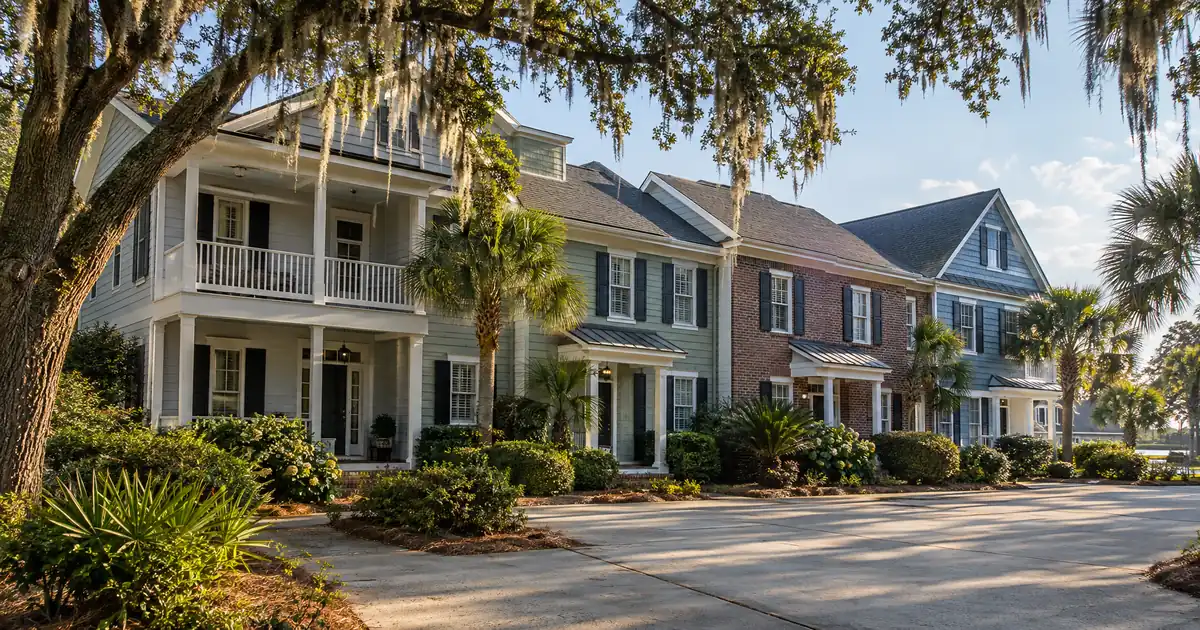
The friction on a cash out refinance investment property file is rarely the paperwork. It’s the appraisal. An owner remembers the purchase price, assumes the equity is sitting there, and then the appraiser returns a value built from what comparable homes recently sold for. In a soft market that gap decides everything. Surfside Beach is that kind of market right now. It’s a town of roughly 4,457 people, per HomeTownLocator, where prices run flat to falling depending on the source and rents hold steady. The 75 percent loan-to-value ceiling on cash-out deals leaves little room for optimism. Lendmire, a DSCR-focused mortgage broker, looks at these files as an equity question first and a coverage question second. This piece covers both, plus what could change over the next 6 to 24 months.
TL;DR: A cash out refinance on a Surfside Beach, South Carolina rental is underwritten primarily on the property’s rental income measured against its full monthly obligation, so appraised value and coverage together, not the original purchase price, set how much equity a lender may recognize under the 75 percent LTV ceiling in a flat-to-softening market.
DSCR Cash-Out Calculator
Run the cash-out numbers in Surfside Beach, SC
Rate source: Freddie Mac 30-yr average via FRED® — Federal Reserve Bank of St. Louis · effective Sep 24, 2026
Prefilled with starting assumptions — enter your property’s value, balance, taxes, and insurance for a more accurate picture.
Program parameters update from Lendmire’s centralized guideline source. Taxes and insurance are editable estimates.
As of Sep 24, 2026 · General Freddie Mac market benchmark, not a Lendmire loan offer. Property value, balance, taxes, and insurance are editable estimates. Maximum loan-to-value varies by lender, program, property type, and seasoning. Not a Loan Estimate, approval, or commitment to lend. Program availability and eligibility are subject to lender guidelines, credit approval, property review, and underwriting.
- Zillow puts the typical home value at $360,900, up only 0.8 percent year over year. Homes.com shows single-family rent at $1,950 and townhouse rent at $1,775.
- Modeled coverage at 75 percent LTV lands near or just under 1.00 on median single-family rent.
- Cash-out typically calls for about six months of seasoning and about six months of reserves.
- Coastal Horry County holds occupancy better than outlying areas, though free-rent concessions are common on newer product.
Surfside Beach Market Snapshot
A quick read on the Surfside Beach investor landscape — figures come from the cited sources below. Confirm current property-level numbers before underwriting.
| Metric | Detail |
|---|---|
| Home prices | $398,449 (12-mo median; Homes.com City Guide) |
| University enrollment | 12,006 enrolled (Coastal Carolina University news) |
What Will the Appraiser Actually See?
Surfside Beach values are flat to falling, and the source you pick changes the story. Zillow’s $360,900 typical value is the steadiest anchor available. Closed-sale and list-price data point to weaker momentum, so proceeds should be sized on today’s value, not the purchase price.
Here’s how the sources line up. Zillow’s modeled typical value has edged up slightly. Homes.com reports a higher median sale price over the trailing year, though it is down from the prior year. Because that figure comes from closed sales rather than a modeled value, the method explains part of the gap. Movoto shows a median list price that sits below the closed-sale figure, with list prices and price per square foot both down year over year. Three methods give three different readings, and none of them shows appreciation doing the work for a refinance.
Consider a scenario where an investor bought a three-bedroom near the Zillow typical value and now wants to pull capital out. If the appraiser leans on the lower list-price data, the 75 percent cap applies to a smaller number than the owner expected. If the appraiser leans on the higher closed-sale median, there’s more room. The investor doesn’t control which comps get chosen. What they can control is how much of the maximum they ask for.
One more local wrinkle. The 2023 ACS data, via Point2Homes, counts 4,272 housing units but only 1,994 occupied ones. About 65 percent of the occupied units are owner-occupied and 35 percent are rented. The gap between units and occupied units is an inference worth flagging: a large share of the stock appears to be seasonal or second-home housing. That can mean appraisal comps influenced by vacation buyers rather than by rental yield. It’s a reason to ask the appraiser’s office which sales they’re likely to weight.
Does the Coverage Clear 1.00 at Full Leverage?
At the maximum 75 percent LTV, median single-family rent in Surfside Beach lands just under 1.00 once taxes and insurance are included. Coverage improves meaningfully at 65 percent LTV or on three-bedroom rents near $2,300. So the loan size, not the loan type, is the variable that decides the file.
A quick refresher: DSCR is monthly rent divided by the full monthly obligation (principal, interest, taxes, insurance and any HOA dues). Lendmire’s DSCR walkthrough covers the mechanics. Most standard programs are built around a 1.00 benchmark, since rent covers the payment at that level. Some lenders review lower ratios with compensating factors such as lower leverage, stronger credit or more reserves. Eligibility depends on lender guidelines, credit profile and property review.
Run the numbers on the modeled cases below. These are illustrative assumptions, not sourced market data: a 30-year amortization, taxes and insurance at South Carolina averages, and listing-based rents from Homes.com and Rentometer.
| Modeled case | Value basis | LTV | Coverage incl. Taxes and insurance |
|---|---|---|---|
| $1,950 single-family rent | $360,900 | 75 percent | About 0.95 |
| $1,950 single-family rent | $360,900 | 65 percent | About 1.1 |
| $2,300 three-bedroom rent | $360,900 | 75 percent | About 1.1 |
| $1,950 single-family rent | $398,449 | 75 percent | About 0.85 |
The last row is the counterintuitive one. A higher value basis lowers coverage at a fixed LTV, because the debt grows faster than the rent does. An owner who argues for the higher appraisal isn’t necessarily helping the DSCR side of the file.
If a scenario lands under 1.00, several structures may be reviewed. Some lenders in the network offer sub-1.00 programs. Others review interest-only structures. The simplest option is often a smaller cash-out amount. All of that is subject to lender guidelines, credit approval and property review. It’s not a given. And a sub-1.00 structure makes sense only if the property has a story beyond current yield. If the investor is reaching for it because the standard number doesn’t clear at any local price point, that’s a signal to re-examine the plan, not the loan product.
DSCR files in markets like this one typically look a certain way. The rent side is easy to document, since a lease or a market rent survey does the job. The value side is where the file gets tight, because appraisers in soft, second-home-heavy beach towns tend to work conservatively. Coverage that pencils on the Zillow-style number can slip below 1.00 when the appraisal lands closer to a closed-sale median. The stronger files usually arrive with a lease in place and a loan request sized with room to spare. Reserves matter too, and the program guidance typically points to about six months of PITIA, more on larger balances.
The conventional alternative is worth naming. A W-2 borrower with one or two financed rentals and clean traditional personal-income documentation may find conventional cash-out pricing hard to beat, and the “Where DSCR and Conventional Diverge” guide explains that the choice comes down to entity ownership, portfolio count and how cleanly personal income supports the file. Once a portfolio outgrows conventional limits, or the LLC holds title, DSCR becomes the practical lane, subject to lender program eligibility.
The Next 6 to 24 Months: What Could Move the Number
Equity extraction here is a timing decision as much as a math one. Five indicators will shape whether appraisals firm up, stay flat or drift lower, and each is trackable without special access.
Sale-price direction. Zillow’s slight gain versus the declines on Homes.com and Movoto is the split to watch. If the closed-sale median stabilizes, the appraisal risk on cash-out shrinks. If it keeps sliding, the proceeds available at 75 percent LTV shrink with it.
Apartment supply. The latest Colliers Myrtle Beach multifamily report says coastal submarkets continue to post stronger occupancy than inland areas. Outlying Horry County occupancy improved from 65.30 percent to 68.90 percent after heavy deliveries outpaced demand. The report also says new supply has tapered with no additional deliveries expected soon, and it shows 86 units of absorption in South Horry County. The report doesn’t state that Surfside Beach sits in that submarket, so confirm the boundary. A pause in deliveries supports rent stability at the appraisal date. It doesn’t lift values.
Concessions. Colliers describes free-rent concessions of one to two months as widespread on newer product. A small landlord competing with those buildings should underwrite lease rents net of that pressure, not off asking rents.
Builder competition. A local news roundup at MyrtleBeachSC News reports new homes made up 33.7 percent of Horry County sales in the most recent full year, with single-family inventory at a 4.3-month supply. Sales are softening even as builders add product. Surfside Beach is mostly built out (a reasonable inference from its roughly two-square-mile footprint), so its older stock competes with new construction inland.
Condo inventory. A brokerage blog, Carolina Crafted Homes, citing regional Realtor data, puts Grand Strand condo supply near 8 months versus 3.7 months for single-family. The post’s figures are internally inconsistent, so treat them as directional. Even so, it fits the pattern: condos face more conservative comps, which trims cash-out proceeds.
Seasoning is the calendar item. The typical guideline is about six months of ownership measured from title recording, so an investor who closed recently can plan the refinance date around it. Waiting for the market to firm up or refinancing at the first eligible date is a genuine toss-up. Waiting costs nothing if values recover. But if the concern is that values keep drifting down, refinancing on the first eligible date locks in today’s appraisal, and the extra cushion on coverage may matter more than any recovery hope.
Three Pockets, Three Different Appraisal Problems
No reliable neighborhood-level price or rent source exists for Surfside Beach, so this section stays qualitative on purpose.
Pier Village and oceanfront. The Surfside Beach Fishing Pier anchors this area, with shops, dining and events throughout the year. Homes.com notes stilt houses closer to the ocean. Demand skews toward tourism and seasonal use, which means the long-term lease income a DSCR file relies on can look thinner here than the property’s sticker value suggests. Comps are also harder to find. Appraisers may reach further afield, and that cuts both ways.
Inland residential, west of Highway 17 Business. Homes.com describes bungalow, ranch and new-traditional styles here, mostly outside HOA control. This is the likeliest workforce and long-term rental stock, and it’s the area where a lease-based coverage number is easiest to defend. It also sits closest to the price points where the modeled coverage above works. Say you own a detached three-bedroom here that rents near the Rentometer figure of about $2,300. The coverage math is far friendlier than for a one-bedroom condo at a similar value.
Condo and townhouse communities. Homes.com lists condo rents averaging $2,412 and townhouse rents averaging $1,775, and cites The Retreat at Glenns Bay as an example community. The condo figure looks attractive until HOA dues enter the calculation, and no HOA data turned up in the research. Any condo file should get actual dues in hand before anyone quotes a coverage number. Townhouses are the cleaner case, since the rent-to-price relationship is steadier and HOA loads tend to be smaller, though that’s also unverified locally.
Small multi-unit stock exists but is thin. Duplex rental listings appear near the pier, but nearby multi-family for-sale listings skew large or expensive. Comp depth is limited, so a duplex refinance may rely on comps from outside town. Pull actual per-unit rents and sold comps before assuming the multi-unit coverage advantage shows up here. Nothing in the research supports claiming it does.
Who Fills the Units?
Surfside Beach has no major employer of its own, so tenant demand is countywide. The Myrtle Beach Regional Economic Development Corp. lists Kyocera AVX as the largest industrial employer at 1,000 people, with Apollo Valves/Conbraco at 425 and Canfor Southern Pine at 275. The broader county ranking, runs from Horry County School District through Coastal Carolina University, county government, Conway Medical Center, McLeod Loris Seacoast and Grand Strand Regional Medical Center to Walmart and the City of Myrtle Beach. Health care, education, government and retail jobs are steady, and hospitality sits behind much of the seasonal churn.
Coastal Carolina University reported finalized enrollment of 12,006 students, up 5.8 percent over the prior fall and 18.7 percent over five years. U.S. News reports 53 percent of students live off campus. The campus is in Conway, so Surfside Beach is a secondary market for that demand, not a next-door one. The university’s staff and off-campus students support mid-priced rentals across the county, and that helps the case for a $1,750-to-$2,300 rent band more than for premium rents.
On the affordability side, WMBF News quoted the Horry County Habitat for Humanity director saying the county needs an extra 300 units a year below market rate, with Myrtle Beach median income near $70,000. That’s an advocate’s estimate, not a market study. Still, it points the same direction as the rent data: modestly priced townhouses and older single-family homes carry the demand, and premium pricing doesn’t.
DSCR vs. conventional financing
Two common ways to finance an investment property in Surfside Beach, SC. They qualify you differently — here’s how investors weigh them.
Why investors choose it
- Qualifies on the property’s rental income — no personal tax returns, W-2s, or pay stubs needed to document income.
- No personal debt-to-income ceiling to clear, so existing mortgages and obligations don’t cap your borrowing the same way.
- Can be closed in an LLC, keeping the property inside a business entity.
- Built for scaling — not held to the limit on number of financed properties that conventional financing applies.
- Underwriting centers on the deal: generally qualifies when the rent covers the payment, a 1.00x coverage ratio being a common baseline (confirmed in underwriting).
- Designed specifically for investment property, including long-term and, where the program allows, short-term rentals.
Where it’s strong
- Often the lowest ongoing financing cost for a buyer who fully qualifies on personal income — a fit for a first property or a cost-first purchase.
Trade-offs for investors
- Requires full personal income documentation and must fit within a debt-to-income limit — salary, existing debts, and other mortgages all count.
- Typically held in your personal name rather than a business entity.
- Caps how many financed properties you can carry, which can become a ceiling as a portfolio grows.
- Evaluates you as a borrower as much as the property, which usually means more paperwork.
How investors usually choose: a first or single property often optimizes for the lowest financing cost; portfolio builders often optimize for leverage, vesting in an LLC, and scaling past conventional caps. The right answer depends on your goals, the property, and current guidelines — both paths run through select lenders in Lendmire’s wholesale network, with eligibility and terms confirmed in underwriting.
Where the Proceeds Go
The cash-out thesis depends on what the investor does with the capital. Redeploying into another rental in the same coastal corridor, where coverage still works at current pricing and comp depth is known, makes the argument straightforward. Sending proceeds into a market where the numbers don’t pencil at current pricing is a different decision, and one worth stress-testing before committing. (A refinance that funds a weaker deal just moves the problem.)
A few program guardrails frame the plan, all typical and subject to lender guidelines. Cash-out tops out at 75 percent LTV. Credit tiers run from a 620 floor upward, with better tiers at 660, 680 and 700. Reserves are typically about six months of PITIA, and loan sizes run up to $3,000,000 on standard programs. Equity available depends on rent used for lender review, PITIA, reserves and the LTV ceiling, so it’s never a guaranteed figure. The equity-extraction mechanics and the broader refinancing options pages walk through the structure, and Lendmire’s South Carolina DSCR financing hub covers state-level detail.
Investors can request a scenario quote with a value estimate and lease in hand, or call 828-256-2183. Qualification stays subject to lender overlays, and investors should verify current local rental rules, taxes and insurance with qualified local professionals.
Frequently Asked Questions
How do you qualify for a DSCR cash out refinance in Surfside Beach?
Qualification centers on the property’s rent versus its full monthly obligation, typically measured against a 1.00 benchmark. Lenders also review credit (620 is the usual floor), reserves and about six months of ownership seasoning. In Surfside Beach, the appraised value is often the deciding variable, since a soft comp set can shrink the loan below what the coverage math alone would support. Final eligibility depends on lender guidelines and property review.
What are the requirements for an investment property loan in Surfside Beach, South Carolina?
Expect a 75 percent LTV ceiling on cash-out, a minimum credit score around 620, about six months of PITIA in reserves and a 1.00 coverage benchmark, all as typical guidance. LLC ownership may be accepted, subject to program terms. Manufactured homes, log homes and barndominiums fall outside these programs, which matters in coastal markets with unusual housing types.
Does the price decline in Surfside Beach reduce cash-out proceeds?
Yes, and the effect is direct. Proceeds are capped at 75 percent of appraised value, so a lower appraisal shrinks the maximum loan even if rents haven’t moved. Homes.com shows 12-month median sale prices down 5 percent, and Movoto shows price per square foot down 7 percent. Size the request off current value, not the purchase price.
Can a condo or townhouse in Surfside Beach support a cash-out refinance?
Often yes, but the file needs HOA dues in the coverage calculation, and the research found no local HOA data. Condo rents average $2,412 and townhouse rents $1,775 on Homes.com. Appraisers may apply more conservative comps to condos given weaker regional pricing, so proceeds may come in below a detached home at the same rent.
Where the Asymmetry Sits
The most underpriced corner of this market, relative to its rent, is the inland detached three-bedroom west of Highway 17 Business. Rents there run comfortably ahead of what the purchase price would suggest, and a three-bedroom at the higher end of the local rent range does better still. Once the full payment is counted, including principal, interest, property taxes and insurance, coverage on a typical purchase lands only modestly above break-even, in a band of roughly 1.02x to 1.11x depending on where rates fall within the current range. South Carolina’s comparatively low property-tax burden on investor-owned homes helps, though insurance still deserves a careful quote. A ranch-style home there doesn’t depend on tourism or condo dues, and it doesn’t need a rising market to cover its debt. For an owner sitting on seasoned equity, that property type is where a measured cash-out at a moderate LTV can fund the next purchase, provided the resulting payment keeps coverage at or above the 1.00 floor that select programs allow, and ideally with more cushion than that.
For current guidelines and terms, see Lendmire’s DSCR loan programs page.
About Lendmire
Lendmire (NMLS# 2371349) is a mortgage brokerage built around DSCR investor lending, with programs available in 41 markets, including Washington, D.C. DSCR lenders commonly evaluate rental-income coverage instead of personal income paperwork, a practical fit for LLC-owned and multi-property investors. Terms vary by lender, property, leverage and program. Lendmire has been recognized as a top-ranked workplace in 2026 and a top-ranked workplace in 2025 by Scotsman Guide, with details in the 2026 industry recognition release.
Get Started
Ready to find the right loan for you?
See your offer in seconds. No credit pull, no obligation.
Informational only. Not a Loan Estimate, approval, or commitment to lend. Program availability and eligibility are subject to lender guidelines, credit approval, property review, and underwriting.
References
2. Zillow Home Values, Surfside Beach
3. Homes.com
4. Colliers Myrtle Beach Multifamily Market Report
5. Homes.com Surfside Beach City Guide
6. Coastal Carolina University Enrollment News
7. Movoto
8. Point2Homes
9. Rentometer
12. Surfside Beach Fishing Pier
13. Myrtle Beach Regional Economic Development Corp. Top Employers
14. WMBF News on Horry County Housing Needs
15. Scotsman Guide — Top Workplaces 2026
16. Scotsman Guide — Top Workplaces 2025
17. EIN Presswire — Lendmire Recognized as a 2026 Top Workplace by Scotsman Guide
This article is part of Lendmire’s investment property cash-out refinance program — full qualification details, guidelines, and scenarios live on the program page.
Related reading: DSCR Cash Out Refinance in Surfside Beach, South Carolina: 2026 Guide to the Highway 17 Corridor · Cash Out Refinance Investment Property in Surfside, Florida: The 2026 DSCR Financing Guide to Harding Avenue · DSCR Cash Out Refinance in Surfside, Florida: The 2026 DSCR Financing Guide to Harding Avenue
Guides: Investment Property Cash-Out Refinance in South Carolina
Brandon Miller
Founder & CEO, Mortgage Loan Originator, Lendmire LLC
- Mortgage Loan Originator · NMLS# 1129696 · Verify on NMLS Consumer Access
- North Carolina Real Estate Broker · License# 343312 · Verify on NCREC
- North Carolina Insurance Producer · License# 19053198 · Property, Casualty, Life, Health · Verify on NAIC SBS
- Lendmire LLC · Firm NMLS# 2371349 · Verify firm licensure
Required disclosures. Lendmire (NMLS# 2371349) operates as a licensed mortgage broker, not a direct lender or depository. The discussion in this article is general in nature and should not be relied upon as financial, legal, or tax advice — every investment scenario is unique and should be reviewed by a qualified professional. Any loan inquiry is subject to lender underwriting, and this article is not a commitment to lend or a guarantee of approval. Mortgage rates, loan terms, and program guidelines vary by borrower, property, and state, and may change without notice. Equal Housing Opportunity. Verify licensure at NMLS Consumer Access.