
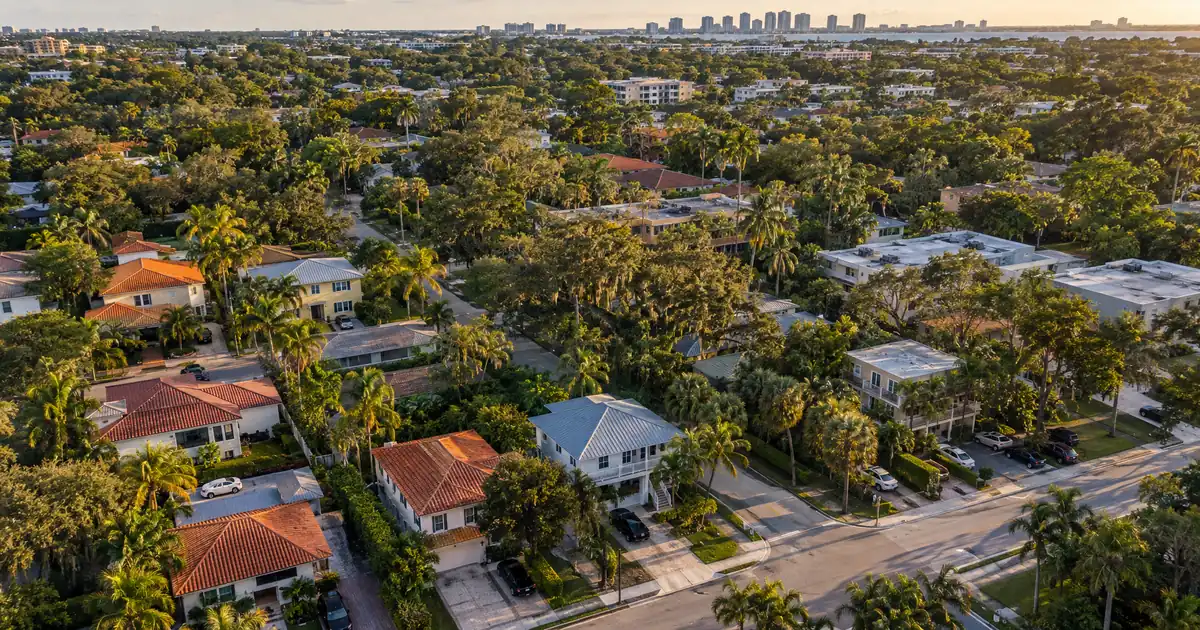
Two owners hold Coral Gables rentals. One owns a Central Gables unit in a neighborhood where Redfin shows a $593K median. The other owns a house in the historic Coral Gables Section, where Redfin puts the median at $1,499,276. On paper the second owner has more equity. On a DSCR cash-out, the first owner usually has more options. Rent does not scale with price here, and coverage is what the refinance is built on.
Lendmire, a DSCR-focused mortgage broker (NMLS# 2371349) arranging investor loans across 40 states plus Washington, D.C., sees this split constantly in high-priced markets. The equity is real. Whether it can be pulled out depends on the rent roll.
DSCR Cash-Out Calculator
Run the cash-out numbers in Coral Gables, FL
Rate source: Freddie Mac 30-yr average via FRED® — Federal Reserve Bank of St. Louis · effective Sep 24, 2026
Prefilled with starting assumptions — enter your property’s value, balance, taxes, and insurance for a more accurate picture.
Program parameters update from Lendmire’s centralized guideline source. Taxes and insurance are editable estimates.
As of Sep 24, 2026 · General Freddie Mac market benchmark, not a Lendmire loan offer. Property value, balance, taxes, and insurance are editable estimates. Maximum loan-to-value varies by lender, program, property type, and seasoning. Not a Loan Estimate, approval, or commitment to lend. Program availability and eligibility are subject to lender guidelines, credit approval, property review, and underwriting.
TL;DR: A cash-out refinance on a Coral Gables, Florida investment property suits owners of small multifamily or condo assets near the University of Miami, because the loan is underwritten primarily on the property’s rental income measured against its full monthly obligation, and the $1.7M citywide median makes most single-family houses a poor fit.
- Homes take 99 days to sell, so underwrite equity at flat value.
- Sixty-four percent of University of Miami students live off campus, feeding near-campus rentals.
- Cash-out tops out at 75 percent LTV, with about six months of seasoning.
- Luxury enclaves like Cocoplum do not cover their debt on rent.
Equity Is Not the Problem. Coverage Is.
Coral Gables owners are not short on equity, but the growth is slow. Redfin shows the citywide median sale price up 2.2 percent year over year, while Zillow has average home value up 3.2 percent. Both are modest. Redfin’s price per square foot, at $859, is up much more, but that number mixes in shifts in what actually sells.
The market is also slow. Homes sit about 99 days, and Zillow has them going pending in around 72. Redfin scores the market 12 out of 100 for competitiveness. That means negotiating room for buyers and no cushion for anyone hoping a refinance appraisal will pick up a hot-market bump.
Then there’s the skew. Homes.com shows a March median of $1,485,000 against an average sale price of $2,146,153. Luxury closings drag the average up. A mid-priced rental does not get to borrow against those comps. The practical rule is to model cash-out proceeds at today’s value and treat any appreciation as a bonus.
Here is the coverage problem. Take a house at the $1.7M median and pair it with RentCafe’s $4,076 average apartment rent. That’s a gross yield near 2.9 percent, and the comparison is an illustration, since it sets apartment rent against a house price. Modeled at 75 percent LTV including taxes and insurance, coverage lands well under 0.5x. The standard benchmark is 1.00x. Nowhere near it.
Where the Cash-Out Math Holds
Small multifamily near the University of Miami is the only product type in Coral Gables that consistently approaches a 1.00 coverage ratio. Stacked unit rents against a single price are the whole game, and the Douglas Road Metrorail corridor is where those buildings cluster.
The Douglas and Ponce corridor
This is the best cash-flow candidate in the city, though the evidence is anecdotal. One duplex listing near campus shows two 4-bedroom units rented through an academic year for $12K a month combined, per Subdivisions.com. The listing carries no price, so it is not a yield benchmark. Still, assume a duplex value in the high six figures, and modeled coverage with full taxes and insurance lands comfortably above 1.5x. Treat that as a modeled assumption, not a market fact.
Academic-year leases cut both ways. Renewals follow the calendar and turnover clusters in summer. An owner refinancing in spring, with leases in place through the following year, presents a cleaner file than one refinancing in July with vacant units.
An owner who bought a campus-adjacent duplex more than six months ago and has held it through a lease cycle is the textbook cash-out candidate here. The unit rents are high enough to carry a 75 percent LTV loan, and the recorded seasoning is already behind them.
Central Gables
Central Gables is the entry point, and Redfin’s March median of $593K is down 8.8 percent year over year. Redfin does not break out property mix, so expect condo-heavy sales. The math works better than elsewhere in the city, but HOA dues sit inside the debt-service calculation and can flip a borderline file. Run a 2-bedroom at RentCafe’s $4,464 average and coverage hovers near 1.0 once dues enter. That is a file that needs a lender’s eye, not a guaranteed pass.
The price decline complicates a refinance. An owner who bought at the peak may find the appraisal short. Skip the cash-out if the 75 percent cap leaves nothing after the payoff.
West Coral Gables
The western edge, on the Westchester side, is the lowest-priced house area in the research. Redfin’s median sits near $1.0M, up 12.4 percent over the three months to October, though that data point is dated. Workforce and family renters make the tenant base plausible. Rent evidence for houses is missing, though, so this one needs a lease in hand before it pencils. It’s a maybe, not a recommendation.
Where the math fails
The Coral Gables Section is beautiful and up 12.1 percent, but it is an owner-occupier and high-end rental neighborhood, and coverage is thin. Downtown has new Class A product but no reliable price data. And the estate enclaves are a hard no for DSCR. Zillow puts Cocoplum’s average value at $6,878,787. No rent covers that. Balances at those values also run past the standard $3,000,000 loan guide.
Do Multifamily Asking Prices Rescue the Math?
Only partly. Small multifamily is the right product, but Coral Gables sellers price it as if it were something else, so each building needs its own coverage test.
Redfin shows 19 multifamily homes for sale at a $1.89M median listing price, above the citywide sale median. Homes.com shows 13 listings spanning $898,350 to $4,295,000, averaging 94 days on market. Inventory is thin, and the sub-$1M duplex is the exception.
Broker-stated cap rates on Showcase tell the same story:
- A Ponce de Leon Boulevard portfolio at $4,295,000 carries a 2.46 percent cap rate
- A $2,395,000 building sits at 5 percent
- A $12,750,000 asset is listed at 4 percent
A 2.5 percent cap cannot reach 1.00x at typical leverage. The 4 to 5 percent listings come closer, and only with substantial equity. These are asking-side figures, so match them against actual leases.
Working DSCR brokers see a recurring pattern in expensive, slow-moving markets like this one: the owner’s equity number and the lender’s coverage number tell different stories. The refinance that clears is usually smaller than the owner expected. Owners who model proceeds from the rent side first, then check LTV, tend to avoid surprises on the appraisal side.
(Owners who bought at a low basis, well before the current median, are the ones sitting on real headroom. Their loan is small relative to value, so the coverage test bites less.)
This one is a genuine toss-up for owners of mid-priced condos: the LTV cap leaves room, but the coverage test may not. Running the full-payment math before ordering an appraisal is the cheaper way to find out.
What the University and Baptist Health Do for the Rent Roll
Coral Gables has an unusual demand base for a city of its size. Anchor institutions do most of the work, and they are not tied to tourism or a single industry.
The City of Coral Gables names the University of Miami its largest employer. It also lists banking, investment, health care and professional services, and notes that Bacardi and Del Monte Fresh Produce have their international headquarters here. Baptist Health South Florida is headquartered in the city as well, with Doctors Hospital near campus.
A regional college reports 20,104 students enrolled, 13,241 of them undergraduates, and 64 percent living off campus. That is a direct rental-demand signal for units within a short walk or Metrorail ride. Data USA shows a median household income of $130,803. Renters are a minority, though: RentCafe reports 36 percent of households rent.
Two cautions. Population slipped from 49,696 to 49,243 between 2022 and 2023, so this is not a growth story. And new supply is coming: Florida YIMBY reports approval for an 8-story, 120-unit Class A building on Douglas Road downtown. New luxury units could cap rent growth at the top of the market, which is already flat. RentCafe shows 1.32 percent and Apartments.com 0.4 percent.
Structuring the Pull
The program mechanics for a Coral Gables cash-out are straightforward. Typical guidelines cap cash-out at 75 percent LTV, well below the purchase ceiling, and expect roughly six months of ownership measured from title recording. Minimum coverage is generally 1.00x, comparing rent used for lender review to full PITIA. Credit tiers step up from a 620 floor. Reserves run about six months of PITIA, stepping to about nine months on balances above $1,500,000. Standard programs reach $3,000,000, with smaller balances routed through select lenders. All of this is subject to lender guidelines, credit approval and property review. Proceeds depend on rent, PITIA, reserves and the 75 percent cap. They are not a guaranteed figure.
Reserves matter more in Coral Gables than in most markets because the loans are large. Prices push many files past the $1.5 million line, and that adds three months of reserves to the ask.
Owners who want the mechanics can read the guide “The Refi Options” or compare the investment property refinance options. The basics of what DSCR qualification actually looks like are worth a read before running numbers, and the comparison with conventional financing explains why rental income, not traditional personal-income documentation, carries the file. Florida-specific programs are covered under DSCR loans in Florida. Title-held LLC borrowers are reviewed depending on program guidelines.
DSCR vs. conventional financing
Two common ways to finance an investment property in Coral Gables, FL. They qualify you differently — here’s how investors weigh them.
Why investors choose it
- Qualifies on the property’s rental income — no personal tax returns, W-2s, or pay stubs needed to document income.
- No personal debt-to-income ceiling to clear, so existing mortgages and obligations don’t cap your borrowing the same way.
- Can be closed in an LLC, keeping the property inside a business entity.
- Built for scaling — not held to the limit on number of financed properties that conventional financing applies.
- Underwriting centers on the deal: generally qualifies when the rent covers the payment, a 1.00x coverage ratio being a common baseline (confirmed in underwriting).
- Designed specifically for investment property, including long-term and, where the program allows, short-term rentals.
Where it’s strong
- Often the lowest ongoing financing cost for a buyer who fully qualifies on personal income — a fit for a first property or a cost-first purchase.
Trade-offs for investors
- Requires full personal income documentation and must fit within a debt-to-income limit — salary, existing debts, and other mortgages all count.
- Typically held in your personal name rather than a business entity.
- Caps how many financed properties you can carry, which can become a ceiling as a portfolio grows.
- Evaluates you as a borrower as much as the property, which usually means more paperwork.
How investors usually choose: a first or single property often optimizes for the lowest financing cost; portfolio builders often optimize for leverage, vesting in an LLC, and scaling past conventional caps. The right answer depends on your goals, the property, and current guidelines — both paths run through select lenders in Lendmire’s wholesale network, with eligibility and terms confirmed in underwriting.
A file below 1.00x is not automatically dead. Some lenders review sub-1.00 scenarios, but expect reduced leverage, stronger credit and more scrutiny. For a Coral Gables single-family rental at the median, those trade-offs usually leave little cash on the table.
Where proceeds go matters, too. The sensible redeployment is another small multifamily near campus, paid for with equity from an asset that cannot cover its own debt at higher leverage. Owners can reach Lendmire at 828-256-2183 or talk to Lendmire to sketch a structure. Verify current local rental rules, taxes and insurance with qualified local professionals before committing.
Frequently Asked Questions
Can a Coral Gables single-family rental support a DSCR cash-out?
Rarely at the median. A house near the $1.7M citywide median, paired with typical apartment-scale rents, models well under 1.00x including taxes and insurance. Lower-priced houses on the western edge come closer, but house rents are thinly documented. Duplexes and small multifamily are the better fit.
How much equity can a Coral Gables owner pull out?
Cash-out is capped at 75 percent LTV, and proceeds are whatever remains after the payoff, reserves and coverage test. In a flat market, the appraisal is the main variable. Homes.com shows a March median of $1,485,000 against a $2,146,153 average, so luxury sales do not lift mid-priced comps.
Does the University of Miami make near-campus rentals easier to refinance?
It helps the rent side. With 20,104 students and 64 percent living off campus, per a regional college, demand near the Douglas Road Metrorail station is steady. Academic-year leases do mean seasonal turnover, so timing a refinance around signed leases presents a cleaner file.
Are Cocoplum and the waterfront enclaves eligible for cash-out?
Eligibility is a lender question, but coverage is the obstacle. With Cocoplum’s average value near $6.9 million, no realistic rent covers the debt, and balances run past the standard loan guide. These are not DSCR-friendly properties.
How long must an owner hold before a cash-out?
Typical guidelines look for about six months of ownership, measured from title recording. Details vary by lender and program.
Where the Asymmetry Sits
The mispriced corner of Coral Gables is the campus-adjacent duplex. It rents like a house twice its price, and it sits near an institution with more than 20,000 students and the city’s largest payroll. Sellers ask a lot for these, and few come to market. For owners already holding one, that is where 75 percent of a flat-value appraisal becomes usable capital. Everywhere else in the city, the equity is real and the rent isn’t there to release it.
For current guidelines and terms, see Lendmire’s DSCR loan programs page.
About Lendmire
As a DSCR and non-QM mortgage broker, Lendmire (NMLS# 2371349) works with wholesale lending channels across 41 markets, including Washington, D.C. Lender review centers on the property’s rental income rather than the borrower’s traditional personal-income documentation, which suits self-employed operators and portfolios past four financed properties. Lendmire was named a top-ranked workplace in 2026 and a 2025 Scotsman Guide Top Workplace.
Get Started
Ready to find the right loan for you?
In about 30 seconds you can review financing options available for your investment property. No commitment required.
Informational only. Not a Loan Estimate, approval, or commitment to lend. Program availability and eligibility are subject to lender guidelines, credit approval, property review, and underwriting.
References
1. Redfin
2. Redfin
3. Redfin, Coral Gables housing market
4. Zillow, Coral Gables home values
6. RentCafe, Coral Gables rent trends
7. Zillow
8. Redfin
9. City of Coral Gables, A Dynamic Destination
11. Baptist Health South Florida
13. Florida YIMBY, Douglas Road multifamily approval
14. Scotsman Guide — Top Workplaces 2026
15. a 2025 Scotsman Guide Top Workplace
This article is part of Lendmire’s investment property cash-out refinance program — full qualification details, guidelines, and scenarios live on the program page.
Related reading: DSCR Cash Out Refinance Coral Gables Florida: Access Equity Without Income Docs · DSCR Cash Out Refinance Coral Springs Florida · Luxury Rental DSCR Loans In Coral Gables: Seasonality And Coverage
Guides: Investment Property Cash-Out Refinance in Florida
Brandon Miller
Founder & CEO, Mortgage Loan Originator, Lendmire LLC
- Mortgage Loan Originator · NMLS# 1129696 · Verify on NMLS Consumer Access
- North Carolina Real Estate Broker · License# 343312 · Verify on NCREC
- North Carolina Insurance Producer · License# 19053198 · Property, Casualty, Life, Health · Verify on NAIC SBS
- Lendmire LLC · Firm NMLS# 2371349 · Verify firm licensure
Compliance and disclosures. Lendmire (NMLS# 2371349) is a licensed mortgage broker and is not a direct lender, depository institution, financial advisor, or tax professional. Content in this article is general market analysis and educational information — not financial, legal, or tax advice for any specific situation. Lendmire does not guarantee loan approval; every transaction is subject to underwriting by the funding lender. Mortgage pricing and loan program guidelines are subject to change at any time without notice and vary by borrower characteristics, property type, and state regulations. Lendmire complies with Equal Housing Opportunity. Licensure verification: NMLS Consumer Access.