
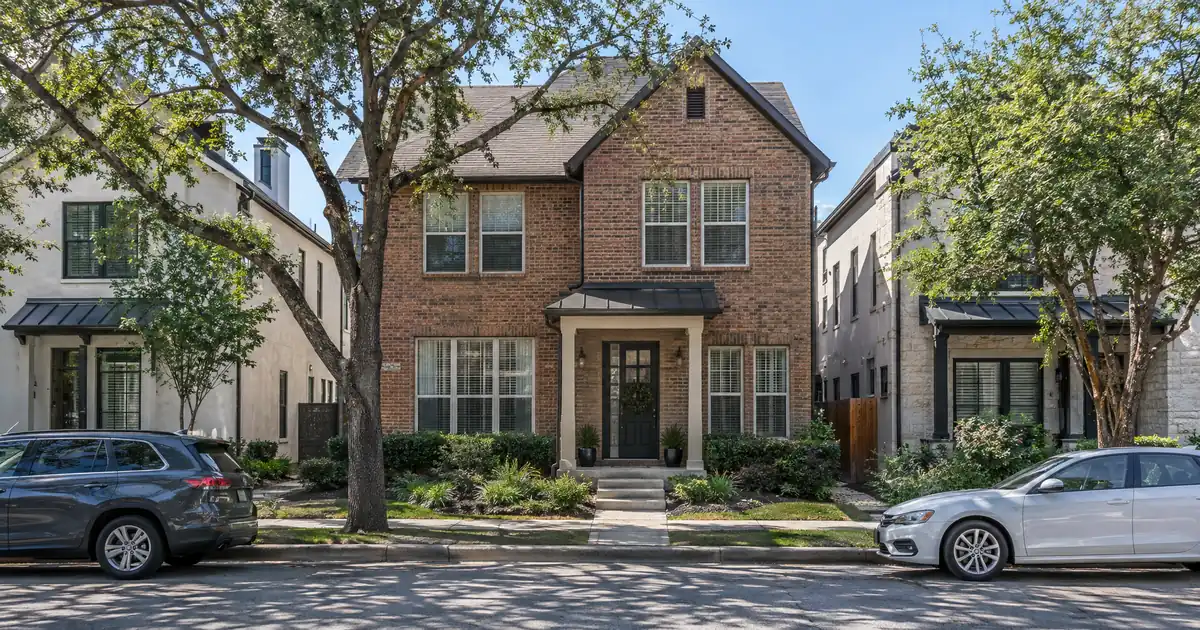
You own the rental, and you’ve held it long enough to want the equity working somewhere else. Then the friction shows up. The appraiser is working from a short list of comparable sales, the online price estimates for the town disagree by well over $100,000, and the rent you collect has to cover the full monthly obligation on a bigger balance. A cash out refinance investment property loan in Stephenville, Texas runs into that friction more than most places, because the town is small and its student-driven rental demand doesn’t show up cleanly in citywide averages.
DSCR Cash-Out Calculator
Run the cash-out numbers in Stephenville, TX
Rate source: Freddie Mac 30-yr average via FRED® — Federal Reserve Bank of St. Louis · effective Sep 24, 2026
Prefilled with starting assumptions — enter your property’s value, balance, taxes, and insurance for a more accurate picture.
Program parameters update from Lendmire’s centralized guideline source. Taxes and insurance are editable estimates.
As of Sep 24, 2026 · General Freddie Mac market benchmark, not a Lendmire loan offer. Property value, balance, taxes, and insurance are editable estimates. Maximum loan-to-value varies by lender, program, property type, and seasoning. Not a Loan Estimate, approval, or commitment to lend. Program availability and eligibility are subject to lender guidelines, credit approval, property review, and underwriting.
The Short Version:
A DSCR cash-out refinance in Stephenville, Texas fits the investor who already owns near-campus duplexes or small unit buildings and wants to recycle equity. The loan is underwritten primarily on the property’s rental income measured against its full monthly obligation, and proceeds are capped by a 75 percent LTV ceiling.
- Tarleton enrollment grew 48.58 percent versus 6.36 percent statewide, per Tarleton State News.
- Zillow puts citywide value near $324,964, down 0.6 percent, per Zillow.
- Typical single-family rents hover near 1.0x coverage; duplexes carry more cushion.
- About six months of seasoning and the 75 percent cap govern how much you can pull.
- Comparable sales are thin, so underwrite a conservative appraised value.
Why Stephenville Equity Is Harder to Price Than It Looks
The honest answer is that nobody agrees on what a Stephenville house is worth. Zillow’s index shows an average home value of $324,964, down 0.6 percent year over year. Redfin showed a median sale price of $296K, down 13 percent, but on only 18 sales, which is a volatile sample. Movoto’s median list price sits above $420K, though list prices aren’t what lenders lend against.
Read together, the picture is flat to slightly soft, with longer time on market. That matters for cash-out because proceeds come from the appraised value, not from whichever estimate looks best. If you bought a few years ago and assume appreciation did the heavy lifting, run a conservative number first. Equity in a flat market comes mostly from your original basis and any paydown, not from a hot tape.
The tradeoff runs both ways. In a market where values are drifting sideways, a cash-out pencils best for someone who bought well below current value, or who improved the property. Pulling cash on a purchase made near the peak of local pricing can leave you with less room than you expect once the 75 percent cap meets a cautious appraisal. If that describes you, waiting or improving first may beat refinancing now.
The Tarleton Demand Engine
Stephenville has about 21,700 residents, per Census Reporter’s ACS profile, with a median age of 25.1. That age figure is the student base showing through. The City of Stephenville reports more than 13,000 students at Tarleton State University, part of the Texas A&M University System. The town is the Erath County seat, about 70 miles southwest of Fort Worth.
Tarleton’s growth is the sourced demand story. Its own releases say preliminary enrollment across all its campuses and online programs tops 27,000, the seventh straight record year, with 3,400 first-time students, up 12 percent, per Tarleton State News. Here’s the catch: that figure is system-wide. It spans Stephenville, Fort Worth, Waco, RELLIS, and online, and the Stephenville-campus share isn’t broken out. Tarleton’s own pages also give inconsistent totals. So lean on the growth percentage, not a single headcount, when you size demand.
Students aren’t the whole base. Texas Health Stephenville is a 98-bed, full-service hospital that has served Erath County since 1926 and is a Level IV Trauma Center. Per Data USA, the top resident employment sectors are educational services (1,582), retail trade (1,581), and accommodation and food services (1,214). On the industrial side, SEDA reports more than $300 million across nearly 60 completed projects, including a $50 million, 300,000-square-foot Schreiber Foods expansion. Agriculture sits underneath all of it, and Erath County ranks among the top dairy counties in Texas.
Why does this matter for a cash-out? A state-system university plus a hospital plus manufacturing makes for steadier tenant demand than most towns this size can claim. Steadier demand supports the lease income a lender will count. It doesn’t make the appraisal any easier.
Where the Equity Sits: Four Pockets
No neighborhood-level price or rent medians exist in the research, so treat these as character descriptions, not data points. The descriptions come from brokerage sources, so use them qualitatively.
Tarleton campus edge. The streets around Lillian and Sloan are where brick ranch homes, duplexes, and student rentals sit blocks from campus. Demand comes from students plus faculty and staff. Many listings show two- and three-bedroom duplex units, and per-room leasing is visible. One listing example is a three-bed, three-bath duplex unit with a private bath per bedroom, asking $2,250 a month, or $750 per room, per Homes.com. That’s a single asking rent, not a market median. Still, per-room leasing is the main lever that moves coverage in this town.
The Washington Street, Vanderbilt, and McCart corridor. Listings here show duplexes and small unit buildings close to campus, again with per-room leasing. Think of it as the same tenant story as the campus edge, a few blocks out.
Historic Square and downtown. Character homes sit about three minutes from campus, near the courthouse, the hospital, and event traffic. Appraisals here can be harder because older character homes make for uneven comps.
Harbin Drive, FM 8, and the City Park area. Newer cul-de-sacs with sidewalks leading toward City Park make this workforce single-family territory. These work for hospital, manufacturing, and school-district employees, but the rent-to-value ratio is thinner, as the next section shows.
Two pockets to skip for this purpose. Newer construction on larger lots on the south and west sides commands higher prices and suits owner-occupants better than DSCR cash flow. And rural acreage out toward Lingleville Highway, Selden Highway, and Morgan Mill isn’t a long-term-rental target. If those parcels involve manufactured homes, log homes, or barndominiums, those property types fall outside the DSCR programs in this network entirely. That’s worth knowing before you count that equity.
Run the Numbers: Duplex vs. Single-Family
Duplexes near Tarleton generally carry more coverage than single-family houses in Stephenville. A single-family rental near $2,200 against a roughly $325,000 citywide value is only about 0.68 percent of value. A duplex with both sides leased can reach roughly 1.4 percent of value on listing-based arithmetic.
Run the numbers on a modeled single-family case first. Say a three-bedroom house is listed near $2,200, per Zillow rentals, and appraises near the citywide figure. At the 75 percent LTV ceiling, coverage including taxes and insurance lands at or slightly under 1.0x. The standard benchmark for most DSCR programs is 1.00x, because that’s where rent covers the full monthly obligation. A file at or just below it may still be reviewable through a sub-1.00 program, an interest-only structure, or lower leverage, but those paths come with tradeoffs and are subject to lender guidelines, credit approval, and property review. While DSCR lenders in this market use tighter sub-1.00 guidelines, Lendmire works across a broader set of wholesale programs, so some files get more than one structure to compare.
Now picture a duplex. These are modeled assumptions, not sourced facts. Assume an appraisal near $400,000, and assume each side leases for about $1,900, deliberately below the listing example. At the same 75 percent ceiling, coverage including taxes and insurance runs roughly 1.3x to 1.4x. Rounded down, that’s a file with real cushion. The same duplex at the full $2,250 per side would look better still, but modeling at the listing ask is how investors get surprised.
DSCR files in markets like this one typically look like a thin appraisal, a rent roll that’s partly per-room, and a coverage ratio that hinges on whether the lender counts actual leases or a market-rent opinion. The strongest files tend to arrive with signed leases, a recent rent history, and a property manager’s note on current lease-up. The weaker ones depend on a single asking rent from a listing, and those tend to get haircut.
DSCR vs. conventional financing
There are two common ways to finance an investment property in Stephenville, TX, and they qualify you differently — here’s how investors weigh them.
Why investors choose it
- Qualifies on the property’s rental income — no personal tax returns, W-2s, or pay stubs needed to document income.
- No personal debt-to-income ceiling to clear, so existing mortgages and obligations don’t cap your borrowing the same way.
- Can be closed in an LLC, keeping the property inside a business entity.
- Built for scaling — not held to the limit on number of financed properties that conventional financing applies.
- Underwriting centers on the deal: generally qualifies when the rent covers the payment, a 1.00x coverage ratio being a common baseline (confirmed in underwriting).
- Designed specifically for investment property, including long-term and, where the program allows, short-term rentals.
Where it’s strong
- Often the lowest ongoing financing cost for a buyer who fully qualifies on personal income — a fit for a first property or a cost-first purchase.
Trade-offs for investors
- Requires full personal income documentation and must fit within a debt-to-income limit — salary, existing debts, and other mortgages all count.
- Typically held in your personal name rather than a business entity.
- Caps how many financed properties you can carry, which can become a ceiling as a portfolio grows.
- Evaluates you as a borrower as much as the property, which usually means more paperwork.
How investors usually choose: a first or single property often optimizes for the lowest financing cost; portfolio builders often optimize for leverage, vesting in an LLC, and scaling past conventional caps. The right answer depends on your goals, the property, and current guidelines — both paths run through select lenders in Lendmire’s wholesale network, with eligibility and terms confirmed in underwriting.
One sourced wrinkle deserves attention. RentHop’s data shows one- and two-bedroom rents rising strongly while three-bedroom rents softened. The sample is small and includes all active and rented listings, so verify it with a local property manager. If it holds, it favors stacking one- and two-bedroom units over large student houses. A genuine toss-up, honestly: per-room leasing of a big house can outperform on paper, but smaller units may hold up better if the larger-house market keeps softening.
For the mechanics of how coverage gets computed, see the guide “What Is a DSCR Loan”.
What’s the Catch With Appraisals Here?
Comparable sales are the catch. In a town of about 21,700 people, a duplex near campus may have only a handful of true comps, and they may be old or oddly configured. The sources disagree ($296K, $325K, and a list price above $420K), and small-city sales are volatile. That gap is the risk. An appraiser who can’t find close comps will often come in conservative.
This is where an investor’s choices matter. A duplex built recently with both sides leased, or a well-kept older brick unit with documented rents, is easier to appraise than a one-off. If you’re weighing two properties for a cash-out, the one with cleaner comps may produce more usable proceeds even if its headline value is lower. Price in the appraisal risk before you decide how much you plan to deploy elsewhere.
Seasoning, LTV, and Reserves: The Guardrails
The 75 percent LTV ceiling is a hard cap for cash-out refinances. Don’t borrow the 80 percent figure you may have seen on purchase loans. Seasoning is about six months of ownership, measured from title recording, so an investor who just closed isn’t eligible yet. Reserves run about six months of PITIA on most files, and about nine months on balances above $1,500,000. Credit tiers run from a 620 floor up through 660, 680, and 700, with better tiers generally supporting better terms. Standard programs go up to $3,000,000, and smaller balances route through select lenders in the network. Everything here is guidance, not a promise, and qualification stays subject to lender guidelines and property review.
Equity available is not a fixed number. It depends on rent used for lender review, PITIA, reserves, and that 75 percent ceiling working together. On a flat-value property, appraisal is usually the binding constraint. On a high-value, thin-rent property, coverage often binds first. Knowing which one limits you tells you whether to chase a better appraisal or better rent documentation. For the structural comparison, see the guide “Where DSCR and Conventional Diverge”.
If you’re a W-2 borrower with one rental and clean traditional personal-income documentation, conventional cash-out may carry a lower cost and fewer non-QM hurdles. DSCR starts to win when the property is in an LLC (subject to lender program eligibility), when you’re self-employed, or when your financed property count is climbing and the conventional lane is running out. Where that flip happens depends on your file, not the town.
Where the Proceeds Go
Cash-out proceeds are capital for the next deal, and the question is where it earns its keep. Recycling equity into another near-campus duplex, where the coverage math is strongest, makes the thesis straightforward. Deploying it into a market where properties don’t pencil at current pricing is a different decision, and one to stress-test first.
Appreciation versus cash flow is the tension to watch. Stephenville’s values look flat, so the case for pulling equity here rests on rent growth and enrollment-driven demand, not on a price run. If Tarleton’s growth continues, near-campus rental demand likely stays supported. If it stalls, a heavily leveraged duplex portfolio concentrated within a few blocks of one campus carries concentration risk. A sensible investor sizes the next purchase for that.
The equity recycle pathway walks through the loan structure. Investors who want to see how a Stephenville file fits within the state’s lending options can start at Lendmire’s Texas DSCR platform, or call 828-256-2183.
Verify current local rental rules, taxes, and insurance with qualified local professionals before you underwrite.
Frequently Asked Questions
How do you qualify for a DSCR cash-out refinance in Stephenville?
Qualification centers on the property’s rent used for lender review measured against its full monthly obligation (principal, interest, taxes, insurance, and any HOA dues). Most programs are built around a 1.00x benchmark, and lenders also review credit, reserves, and the appraisal. Near-campus duplexes with documented leases tend to present more cleanly than single-family rentals with thin coverage. Exact eligibility depends on lender guidelines and property review.
What are the requirements for an investment property loan in Stephenville, Texas?
For a cash-out refinance, expect about six months of seasoning from title recording, a 75 percent LTV ceiling, and about six months of PITIA in reserves. Pricing and available terms vary by lender, borrower profile, property type, and full underwriting review. Manufactured homes, log homes, and barndominiums are not eligible, which matters in the rural parts of Erath County. These are typical guidelines, not guarantees.
Should Tarleton’s 27,000 enrollment figure drive my underwriting?
No. That number is system-wide across several campuses and online, and the Stephenville-campus share isn’t published in what the research found. Tarleton’s pages also give inconsistent totals. The more useful sourced fact is growth: a 48.58 percent increase versus 6.36 percent statewide. Underwrite off leases and local rent comps, and treat enrollment as supporting context.
What should I do before ordering an appraisal on a Stephenville rental?
Pull recent sold comps for duplexes and small unit buildings near campus, then gather signed leases and a rent history for your own property. Ask a local property manager how per-room and per-unit rents are actually leasing right now. That tells you whether your assumed coverage and appraised value hold up before the file goes anywhere. Comps and leases are the diligence worth doing whether or not you refinance.
For current guidelines and terms, see Lendmire’s DSCR loan programs page.
Get Started
Ready to find the right loan for you?
In about 30 seconds you can review financing options available for your investment property. No commitment required.
Informational only. Not a Loan Estimate, approval, or commitment to lend. Program availability and eligibility are subject to lender guidelines, credit approval, property review, and underwriting.
About Lendmire
As a non-QM mortgage broker (NMLS# 2371349), Lendmire facilitates DSCR investor loans across 41 markets, including Washington, D.C. DSCR eligibility is generally reviewed around property-level rental income instead of personal income documentation, subject to lender guidelines, serving LLC-structured portfolios and self-employed borrowers who don’t fit conventional boxes. Lendmire is a two-time Scotsman Guide Top Mortgage Workplace, named a 2026 Scotsman Guide Top Mortgage Workplace and a 2025 Scotsman Guide Top Workplace.
This article is part of Lendmire’s investment property cash-out refinance program — full qualification details, guidelines, and scenarios live on the program page.
Related reading: DSCR Cash Out Refinance in Stephenville, Texas: How Rent Math Clears at 75% LTV Near Tarleton · DSCR Cash Out Refinance in Texas City, Texas: Refinery Tenants and a 75 Percent Ceiling · DSCR Cash Out Refinance in Duncanville, Texas: Can Your Rent Cover the New Loan Payment?
Guides: Investment Property Cash-Out Refinance in Texas
References
1. Freddie Mac 30-yr average via FRED® — Federal Reserve Bank of St. Louis
3. Zillow
4. Redfin
5. Census Reporter’s ACS profile
9. Data USA
10. SEDA
11. Homes.com
12. Zillow rentals
Brandon Miller
Founder & CEO, Mortgage Loan Originator, Lendmire LLC
- Mortgage Loan Originator · NMLS# 1129696 · Verify on NMLS Consumer Access
- North Carolina Real Estate Broker · License# 343312 · Verify on NCREC
- North Carolina Insurance Producer · License# 19053198 · Property, Casualty, Life, Health · Verify on NAIC SBS
- Lendmire LLC · Firm NMLS# 2371349 · Verify firm licensure
Disclosures. The information presented in this article is general market commentary, not financial, legal, or tax advice. Lendmire is a mortgage brokerage (NMLS# 2371349) — not a direct lender or depository institution — and loan placement is subject to lender underwriting. Nothing in this content represents a commitment to lend. Loan terms, pricing, and program availability vary based on borrower qualifications, property characteristics, and state of subject property, and are subject to change at any time. Lendmire complies with Equal Housing Opportunity requirements. Consumer access: nmlsconsumeraccess.org.