
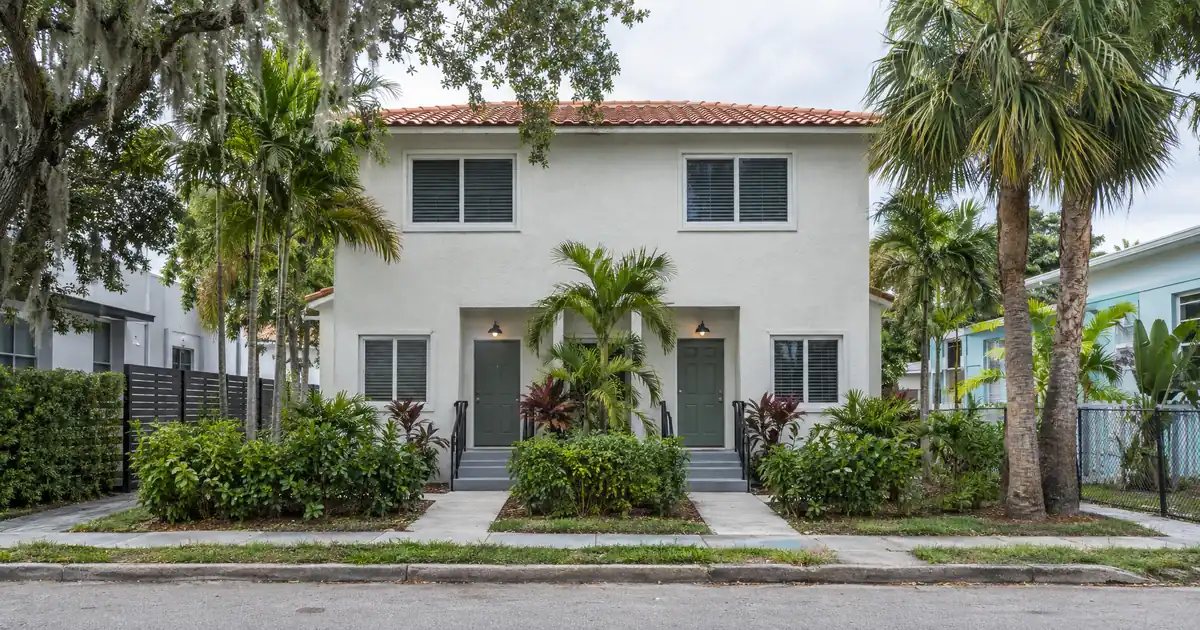
The biggest hesitation with a Wynwood cash-out is simple: prices and rents are both drifting lower, so why pull equity now? The answer is that the file has to be built on rent coverage and entry-basis discipline, not on appreciation bailing it out. That is exactly how a DSCR cash-out gets evaluated, and it is where small multiunit buildings separate themselves from luxury-condo stock. Lendmire, a DSCR-focused mortgage broker, arranges these files, and the sections below show where the coverage math holds and where it slips.
TL;DR: A Wynwood, Florida cash-out refinance is underwritten primarily on the property’s rental income measured against its full monthly obligation, so the building’s rent roll, not the owner’s paycheck, carries the file.
DSCR Cash-Out Calculator
Run the cash-out numbers in Wynwood, FL
Rate source: Freddie Mac 30-yr average via FRED® — Federal Reserve Bank of St. Louis · effective Sep 24, 2026
Prefilled with starting assumptions — enter your property’s value, balance, taxes, and insurance for a more accurate picture.
Program parameters update from Lendmire’s centralized guideline source. Taxes and insurance are editable estimates.
As of Sep 24, 2026 · General Freddie Mac market benchmark, not a Lendmire loan offer. Property value, balance, taxes, and insurance are editable estimates. Maximum loan-to-value varies by lender, program, property type, and seasoning. Not a Loan Estimate, approval, or commitment to lend. Program availability and eligibility are subject to lender guidelines, credit approval, property review, and underwriting.
- Median home price sits near $533,000, down 2.8 percent year over year, per Prop:Metrics.
- Average rent runs $3,120, down 6.0 percent.
- Small multiunit buildings show stronger rent-to-value than condos and single-family stock.
- Typical program guidance: 75 percent LTV ceiling, roughly six months of seasoning, 1.00 DSCR minimum. These specifics are subject to lender guidelines and a full review of property, leverage, and credit.
Wynwood Market Snapshot
A quick read on the Wynwood investor landscape — figures come from the cited sources below. Confirm current property-level numbers before underwriting.
| Metric | Detail |
|---|---|
| Home prices | Median home price $783,536 (NeighborhoodScout) |
| Typical rents | Average rent $3,565 (NeighborhoodScout) |
| Population | Population 6,169 (2024) (Wikipedia) |
| Employment | 5,000 new jobs (Biscayne Bay Tribune) |
| Vacancy | rate 24.3% (NeighborhoodScout) |
What Equity Is Actually There?
Equity in Wynwood depends heavily on which data source an appraiser leans on, and the sources disagree. The canonical figure here is the Prop:Metrics ZIP-level median of $533,000, down 2.8 percent year over year. Zillow puts the combined Wynwood-Edgewater average value at $598,283, down 4.7 percent. That is a different geography and method, so the gap is expected. Both point the same direction: a flat-to-softer price trend.
Redfin’s Wynwood tracker adds a wrinkle. Price per square foot is up 12.8 percent while the median sale price fell sharply. That split usually means a thin, mixed sample of recent closings. For a cash-out, it means appraisal variance is real. Two appraisers pulling different handfuls of comps can land on meaningfully different values. Investors who bought below the recent peak, or who improved the asset, tend to have the cleaner equity story. Anyone counting on a neighborhood-wide price run to create equity will be disappointed.
The program mechanics are straightforward, subject to lender guidelines. Cash-out on an investment property typically tops out at 75 percent LTV, with about six months of ownership measured from title recording before the lender will treat the value as seasoned. Equity available is not a fixed cash figure. It depends on the appraised value, the rent used for lender review, the full monthly obligation, and reserves. For the broader mechanics, see the guide “The Refi Options”.
The Rent Side: Where Coverage Holds and Where It Doesn’t
Coverage is where a Wynwood cash-out is won or lost. Rent divided by the full monthly obligation (principal, interest, taxes, insurance, and any HOA dues) must clear the standard 1.00 benchmark on most programs. Some lenders review lower-ratio files with stronger compensating factors, lower leverage, or different pricing, but that is the exception.
Rents here are uneven by bedroom count. Prop:Metrics, drawing on Rentcast data, shows median rents of $2,100 for studios, $2,370 for one-bedrooms, $2,750 for two-bedrooms, $3,960 for three-bedrooms, and $4,930 for four-bedrooms. RentCafe reports a higher neighborhood average of $3,486 against a citywide $2,770. Small-neighborhood samples swing by hundreds of dollars between providers, so underwrite off actual leases, not any of these averages.
Run the numbers on two modeled cases. These are assumptions, not sourced market facts, and both include taxes and insurance at Florida averages.
Case one, single-family or condo near the median. Assume a $533,000 value at 75 percent LTV, with rent at the $3,120 neighborhood average. Coverage lands around 0.9x, below the baseline. Some lenders may review a sub-1.00 program, an interest-only structure, or a lower-leverage request, but qualification stays subject to lender guidelines, credit approval, and property review. A condo with a strong in-place lease at the higher bedroom-count rents behaves differently, but the average unit does not clear on its own.
Case two, small multiunit. Assume a $900,000 value (the low end of the $900,000 to $3.74 million multifamily asking range on Homes.com) at 75 percent LTV. Use in-place rents of $6,700 a month, matching a Norte-area fourplex listed on Homes.com. Coverage sits in low-1.1 territory. Same neighborhood, same leverage cap, and the ratio moves from roughly 0.9x to comfortably above the baseline.
That gap is the whole thesis. Multiunit rent per dollar of value beats single-family stock here.
Wynwood Norte: The Cash-Flow Submarket (With a Catch)
Wynwood Norte, north of NW 29th Street, is the more realistic yield submarket. Listings show a duplex renting at $1,360 and $1,700 per unit, and a triplex at roughly $2,450 a month on a 7,150-square-foot lot, per Homes.com. Rents sit well below the core, and so does basis.
Then there is the house-plus-rear-building template. A Redfin listing in Little San Juan pairs a four-bedroom home with a second structure of four leased one-bedrooms, producing $11,400 a month combined. Two rent rolls on one parcel is a replicable DSCR shape, though every file stands or falls on its own leases and property review.
Here’s the catch. Buyers in Norte often underwrite land and redevelopment optionality, not in-place rent. That can lift value on paper, but it also means a cash-out there is best treated as a hold-and-collect bridge, not a long-duration yield asset. Coverage should stand on the rents alone. If the ratio only works when you assume the land value will keep climbing, the file is weaker than it looks.
Core Wynwood and the Condo Problem
Core Wynwood, roughly bounded by North 20th Street, I-195, I-95, and the Florida East Coast Railway, is dominated by small-to-mid-size apartment buildings and newer condo-style stock. It is priced for appreciation and retail-adjacent optionality, not yield. NeighborhoodScout shows a median home value of $783,536 and a vacancy rate of 24.3 percent per its Wynwood profile. That is a proprietary estimate and sits well above the other sources. Read it as an upper bound, not a consensus.
The 24.3 percent vacancy figure looks alarming. It likely reflects new-construction lease-up and turnover as much as weak demand, but investors should not wave it away. On a condo with an in-place tenant on a long lease, the file can still work. On a unit that has to be re-leased in a market where average rent is falling, the coverage number is a moving target.
Thinking out loud here: a core-Wynwood unit with a strong lease and modest leverage request may beat a mid-quality Norte duplex on file cleanliness, even though the Norte building wins on raw rent-to-value. It’s a genuine toss-up. Cleaner documentation against better math.
Who Actually Rents Here?
Demand in Wynwood comes from two directions: salaried office tenants and hospitality-adjacent workers. The neighborhood itself is small, with 6,169 residents and 3,060 households, per Wikipedia’s Wynwood entry. About 76 percent of households rent, so nearly all residential stock is renter-occupied. The broader market matters more than the neighborhood count: Miami-Dade’s population is 2,701,767 per the U.S. Census Bureau.
The Wynwood BID recertification coverage reports visitors rising from 240,000 to 15 million a year over a decade, with 5,000 new jobs and more than 20 percent of the City of Miami’s parking transactions from a 50-block footprint. On the office side, Commercial Property Executive counts 382,000 square feet of built office space and cites 10,000-plus new jobs and $2 billion in local investment. Named tenants include Amazon, Spotify, PwC, and Founders Fund, which supports a pool of professionals wanting walkable housing.
The medical corridor adds a steadier layer. Jackson Memorial Hospital has more than 1,550 licensed beds and staffs over 9,000 employees. It sits next to Wynwood’s southern edge and feeds rental demand across Overtown and Midtown.
Working DSCR brokers see a recurring pattern in dense, mixed-use urban submarkets like this one. Files with clear in-place leases, clean entity documents, current title, and complete property details move through lender review with fewer surprises. Files that lean on “market rent” for a vacant or newly turned unit get pushed to a lower-leverage conversation. The documentation gap, more than the price, usually decides which category a file lands in.
The Ground-Floor Retail Trap (Stress-Test It Separately)
Mixed-use buildings need their own scrutiny. The Real Deal reports average asking retail rents in the high $60s to low $80s per square foot, against low-to-mid $50s citywide, sustained by a landlord-cited 6 million to 9 million visitors a year. The same report notes commercial vacancies are rising and that foot traffic is inconsistent. Landlords on the busiest streets are asking $100 or more per square foot.
For a DSCR cash-out on a building with commercial-plus-residential income, do not blend the two rent rolls into one optimistic ratio. Run the residential coverage on its own, and treat the retail income as upside or as a separate line a lender may treat differently. Ask what happens to the ratio if the ground-floor space sits empty for a stretch. (It’s the question the lender’s reviewer asks anyway.)
Turning Proceeds Into the Next Deal
Cash-out proceeds are capital for the next acquisition, and lenders look at what remains behind. On most files, guidance calls for about six months of reserves against the full monthly obligation, rising to about nine months on balances above $1,500,000. Credit tiers commonly run 620, 660, 680, and 700, with 620 as the floor. Standard programs go up to $3,000,000, with smaller balances routed through select lenders in the network. All of this varies by borrower, property, and loan scenario, and none of it is a commitment to lend.
Investors verifying anything local (rental rules, taxes, insurance) should confirm current requirements with the City of Miami, Miami-Dade County, and a qualified local professional before underwriting.
The Plain Read on Wynwood
Wynwood is a two-speed market. The core is priced for the arts-and-office story and rewards patient equity, while Norte and the older small buildings carry the rent-to-value that debt coverage needs. An owner sitting on a well-leased duplex or fourplex bought below today’s asking prices has real equity to work with, and an owner counting on the next price run to fix a thin ratio does not. Pull proceeds against rent that is already on the lease.
DSCR vs. conventional financing
Two common ways to finance an investment property in Wynwood, FL. They qualify you differently — here’s how investors weigh them.
Why investors choose it
- Qualifies on the property’s rental income — no personal tax returns, W-2s, or pay stubs needed to document income.
- No personal debt-to-income ceiling to clear, so existing mortgages and obligations don’t cap your borrowing the same way.
- Can be closed in an LLC, keeping the property inside a business entity.
- Built for scaling — not held to the limit on number of financed properties that conventional financing applies.
- Underwriting centers on the deal: generally qualifies when the rent covers the payment, a 1.00x coverage ratio being a common baseline (confirmed in underwriting).
- Designed specifically for investment property, including long-term and, where the program allows, short-term rentals.
Where it’s strong
- Often the lowest ongoing financing cost for a buyer who fully qualifies on personal income — a fit for a first property or a cost-first purchase.
Trade-offs for investors
- Requires full personal income documentation and must fit within a debt-to-income limit — salary, existing debts, and other mortgages all count.
- Typically held in your personal name rather than a business entity.
- Caps how many financed properties you can carry, which can become a ceiling as a portfolio grows.
- Evaluates you as a borrower as much as the property, which usually means more paperwork.
How investors usually choose: a first or single property often optimizes for the lowest financing cost; portfolio builders often optimize for leverage, vesting in an LLC, and scaling past conventional caps. The right answer depends on your goals, the property, and current guidelines — both paths run through select lenders in Lendmire’s wholesale network, with eligibility and terms confirmed in underwriting.
Frequently Asked Questions
How do you qualify for a DSCR loan in Wynwood, Florida?
Qualification centers on the property’s rent compared with its full monthly obligation, including taxes and insurance. Most programs use a 1.00 baseline, though some lenders review lower ratios with compensating factors. Credit, reserves, entity documents, and a property review also matter, and final eligibility rests with the lender.
What are the requirements for an investment property loan in Wynwood, Florida?
Typical guidance for a cash-out includes a 75 percent LTV ceiling, about six months of seasoning from title recording, a 620 minimum credit score, and about six months of reserves. Ownership through an LLC is common, subject to program terms. Manufactured homes, log homes, and barndominiums fall outside these programs.
Can I still do a cash-out if Wynwood values are softening?
Yes, but the appraised value drives the proceeds, so softer comps mean less equity available at 75 percent LTV. Prop:Metrics shows a 2.8 percent year-over-year price dip at the ZIP level. Owners who bought below recent peaks or who hold rent-heavy multiunit assets tend to have a cleaner file than owners relying on a stale valuation.
Why do Wynwood appraisals vary so much?
The neighborhood is small, so a handful of recent closings can swing the comp set. Redfin shows price per square foot rising while the median sale price fell, which is a classic thin-sample signal. Building in a cushion on value, rather than assuming an automated estimate, keeps the requested leverage realistic.
For current guidelines and terms, see Lendmire’s DSCR loan programs page.
About Lendmire
Lendmire (NMLS# 2371349) is a mortgage brokerage focused on DSCR investor financing, helping arrange programs through wholesale and investor-lending channels in 41 markets, including Washington, D.C. DSCR loans are evaluated by the lender on property cash flow rather than personal income, subject to lender guidelines, supporting LLC closings and accommodating investors with four or more financed properties. Scotsman Guide named Lendmire a Top Mortgage Workplace in both 2025 and 2026.
Get Started
Ready to find the right loan for you?
In about 30 seconds you can review financing options available for your investment property. No commitment required.
Informational only. Not a Loan Estimate, approval, or commitment to lend. Program availability and eligibility are subject to lender guidelines, credit approval, property review, and underwriting.
References
4. Biscayne Bay Tribune, Wynwood BID recertification
5. Zillow, Wynwood-Edgewater home values
6. Redfin, Wynwood housing market
7. RentCafe, Wynwood rent trends
8. Homes.com
9. Homes.com
10. Redfin listing in Little San Juan
11. U.S. Census Bureau, Miami-Dade County
12. Commercial Property Executive, Wynwood office market
14. The Real Deal, Wynwood retail rents
15. 2025
16. 2026
This article is part of Lendmire’s investment property cash-out refinance program — full qualification details, guidelines, and scenarios live on the program page.
Related reading: Cash Out Refinance Investment Property in Wynwood, Florida: Pulling Equity From Wynwood Norte Rentals · DSCR Cash Out Refinance in Sarasota, Florida: What It Takes to Qualify on Sarasota Rents · DSCR Cash Out Refinance in Plantation, Florida: Turning Midtown Equity Into Capital
Guides: Investment Property Cash-Out Refinance in Florida
Brandon Miller
Founder & CEO, Mortgage Loan Originator, Lendmire LLC
- Mortgage Loan Originator · NMLS# 1129696 · Verify on NMLS Consumer Access
- North Carolina Real Estate Broker · License# 343312 · Verify on NCREC
- North Carolina Insurance Producer · License# 19053198 · Property, Casualty, Life, Health · Verify on NAIC SBS
- Lendmire LLC · Firm NMLS# 2371349 · Verify firm licensure
Required disclosures. Lendmire (NMLS# 2371349) operates as a licensed mortgage broker, not a direct lender or depository. The discussion in this article is general in nature and should not be relied upon as financial, legal, or tax advice — every investment scenario is unique and should be reviewed by a qualified professional. Any loan inquiry is subject to lender underwriting, and this article is not a commitment to lend or a guarantee of approval. Mortgage rates, loan terms, and program guidelines vary by borrower, property, and state, and may change without notice. Equal Housing Opportunity. Verify licensure at NMLS Consumer Access.