
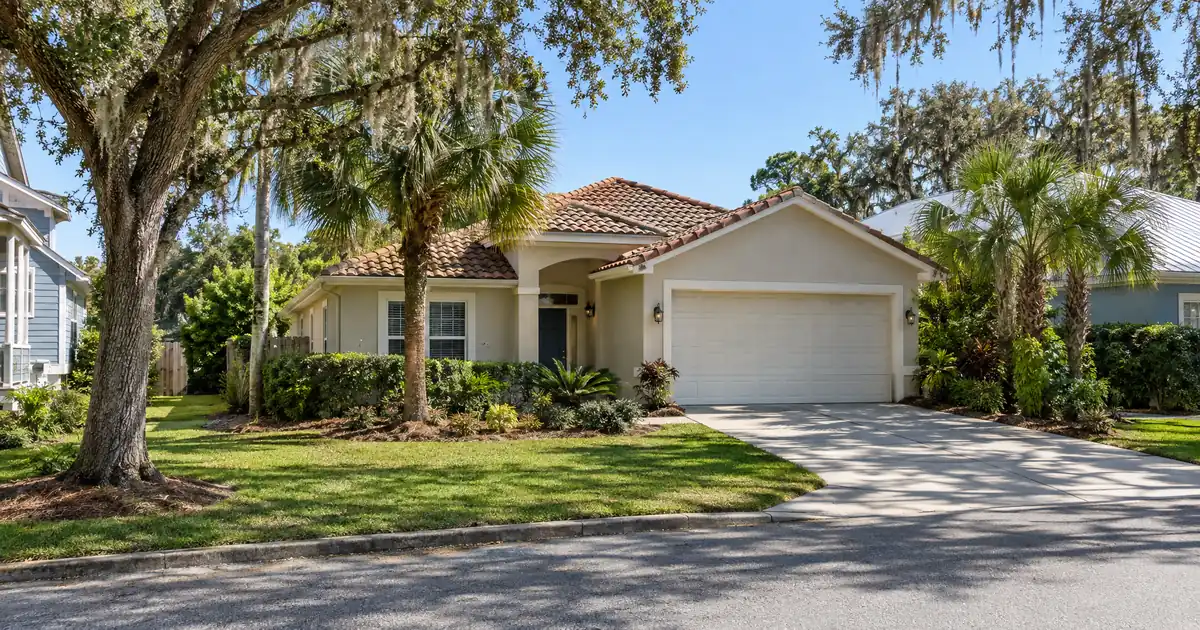
Most investors eyeing a DSCR cash out refinance in Pensacola, Florida look toward the beach. Wrong direction. The cash-out math here is decided inland, on workforce rentals, and by one number most owners never check until the appraiser shows up: value. Zillow puts the city’s typical home value at $264,116, down 3.6 percent over the past year, while Redfin reports a median sale price of $345K, up 3.2 percent. The two sources use different methodologies, but the gap between them is wider than many owners’ cash-out expectations.
DSCR Cash-Out Calculator
Run the cash-out numbers in Pensacola, FL
Rate source: Freddie Mac 30-yr average via FRED® — Federal Reserve Bank of St. Louis · effective Sep 24, 2026
Prefilled with starting assumptions — enter your property’s value, balance, taxes, and insurance for a more accurate picture.
Program parameters update from Lendmire’s centralized guideline source. Taxes and insurance are editable estimates.
As of Sep 24, 2026 · General Freddie Mac market benchmark, not a Lendmire loan offer. Property value, balance, taxes, and insurance are editable estimates. Maximum loan-to-value varies by lender, program, property type, and seasoning. Not a Loan Estimate, approval, or commitment to lend. Program availability and eligibility are subject to lender guidelines, credit approval, property review, and underwriting.
Key Takeaways:
A DSCR cash-out refinance on a Pensacola, Florida rental is underwritten primarily on the property’s rental income measured against its full monthly obligation. Proceeds are then sized by appraised value, a loan-to-value ceiling and roughly six months of ownership seasoning. They depend on rent, reserves and the appraisal, not the purchase price.
- Zillow shows city home values down 3.6 percent year over year, so assume flat appraisals.
- Northeast Pensacola’s median sale price is $278K, up 4.3 percent.
- Cash-out caps at 75 percent LTV, subject to lender guidelines.
- Apartment vacancy sits at 12.3 percent metro-wide, so underwrite vacancy conservatively.
- Duplexes clear 1.0x coverage with more cushion than single-family at current price-to-rent ratios.
For Pensacola, Florida rental property financing, Lendmire (NMLS# 2371349) helps arrange DSCR loans through lenders operating in 41 markets, including Washington, D.C. This report covers the equity-extraction side: what a property you already own can release, which submarkets support the coverage number, and where the risks sit.
Pensacola Market Snapshot
A quick read on the Pensacola investor landscape — figures come from the cited sources below. Confirm current property-level numbers before underwriting.
| Metric | Detail |
|---|---|
| Typical rents | $1,529 (Kirkland Company Pensacola) |
| University enrollment | 15,601 students (UWF Newsroom (enrollment)) |
| Employment | 31,600 jobs (Rick’s Blog) |
| Vacancy | 12.3% (Kirkland Company Pensacola) |
The Appraisal Is the Real Underwriter
Cash-out proceeds in Pensacola are capped by appraised value, not by what the neighborhood sold for in a hotter stretch. Lenders in the network generally cap cash-out at 75 percent LTV, after about six months of ownership measured from title recording. The appraisal sets the base that percentage applies to.
Pricing data in this market conflicts, and that matters for sizing. Redfin’s Escambia County median sits at $325K, up 10.7 percent, while Resideline cites a city median sold price near $280,000. Momentum Realty’s brokerage data shows 156 percent appreciation over 14 years, which is the equity story that makes cash-out attractive. The same page notes about 28 percent of county listings have taken a price cut. Buyers have leverage, and appraisers see it in the comps.
Here’s the thinking. Past gains are real, but pricing power today is weak. The safer approach is to size every cash-out assuming flat value, and treat any appraisal above that as a bonus.
Run the numbers on a modeled case. Say an investor bought a duplex years ago and the appraisal lands at $400,000. At 75 percent LTV the new loan ceiling is 75 percent of that figure, less the payoff on the existing loan. If the appraisal comes in 10 percent lower, the ceiling drops by a tenth, and proceeds shrink by far more than a tenth because the payoff doesn’t move. Same property. Very different check. The point is that cash-out is a leveraged bet on the appraisal.
Where the Rent Covers the Debt
Duplexes and small multifamily clear the coverage test more comfortably than single-family in Pensacola, because rents have stayed nearly flat while prices ran ahead of them. Coverage is calculated as monthly rent divided by the full monthly obligation: principal, interest, taxes, insurance and any HOA dues. The DSCR fundamentals page walks through that formula, and Lendmire’s guide to where DSCR and conventional loans diverge explains why income documents matter less here.
Start with the rent evidence. RentCafe’s data shows an average apartment rent of $1,448, with one-bedrooms at $1,325, two-bedrooms at $1,513 and three-bedrooms at $2,024. That data covers buildings of 50 or more units, so it under-represents houses and duplexes. Apartment List shows a lower median of $1,309, up 1.5 percent year over year. Kirkland Company’s metro report puts the average asking rent at $1,529 with 12-month growth of just 0.6 percent. Taken together, the sources describe rents that are stable rather than surging.
Now the modeled math, using assumptions rather than market quotes. Assume a single-family home appraising near $285,000 and renting for $1,850. Counting principal, interest, taxes and insurance on a 75 percent cash-out loan, coverage lands right around 1.0x. That is borderline, and there is no cushion if rent softens. Now assume a duplex appraising at $400,000 with two units at $1,500 each. Coverage rises to roughly 1.1x including taxes and insurance. The extra door adds rent faster than it adds debt.
If a single-family file prices out below 1.00x, there are paths a lender may review: a sub-1.00 program, an interest-only structure, or a smaller cash-out request that lowers the loan balance. Whether any of them applies depends on lender guidelines, credit approval and property review.
Working DSCR brokers see a recurring pattern in flat-value gulf Coast markets: the files that stall are rarely rent problems. They stall on the appraisal, where the owner expected last cycle’s number, or on seasoning, where the title recording date is later than the owner remembers. Pulling comps and confirming the recording date before ordering anything saves the most friction.
Vacancy deserves an honest haircut. A local property manager, Clover Property Management, reported vacancies around 8 to 9 percent in the fall, with rents down roughly 2 to 3 percent from the prior year. That is one firm’s book, not an official dataset, but it is the closest sourced read on house-and-duplex vacancy in the city. The same manager says leasing surges from March through July as job relocations and military transfers peak, so lease expirations belong in spring and summer.
Four Pockets Worth Running
The strongest cash-out candidates sit inland near the employment centers, where prices are moderate and tenant demand follows paychecks. The weakest coverage sits in the historic core, where owners hold lots of equity but rents don’t scale with values. Neighborhood rent data for two-to-four-bedroom units is thin, so what follows leans on price points and demand drivers rather than invented rent figures.
Northeast Pensacola
The best-sourced workforce submarket. Redfin shows a median sale price of $278K, up 4.3 percent year over year, the only neighborhood in the research with that kind of recent, specific data. Moderate prices mean lower loan balances against rents near the city’s two-to-three-bedroom range. An owner here with a purchase from several years ago has probably built real equity at a price point where coverage still holds.
Ferry Pass, Bellview and Beulah
Local broker guides describe these as the more attainable entry points, and a lender’s blog places Ferry Pass and Bellview in a band of roughly $240K to $360K. That is the lowest entry band in the research, which makes it the most plausible cash-flow-led area. Demand has real anchors: the University of West Florida enrolled 15,601 students, up 5 percent, and Baptist Health Care runs a medical park near Beulah. The catch: a property manager at Realty Masters of Florida says new apartment communities in North Pensacola and Beulah now compete directly with traditional rental homes. Older or dated stock is the most exposed there.
East Pensacola Heights, Warrington and Myrtle Grove
The Navy corridor. Tenant demand follows base employment and training rotations, which gives turnover a planned, predictable rhythm. One local property manager calls East Pensacola the area with the best return on investment, but that is one opinion, so treat it as a lead to confirm with comps. A lender’s blog puts East Pensacola Heights prices at roughly $280K to $480K, a wide band that rewards careful comp selection.
East Hill, Cordova Park and North Hill
These are appreciation-led, not cash-flow-led. Local lender-blog guidance puts price bands in the mid-range for the metro and notes that cash-on-cash returns here are not always the highest. Older homes mean maintenance, and North Hill’s historic framework limits supply. Cordova Park sits near Pensacola State College and both major hospitals, which supports steady tenant demand. These are fine places to hold equity. They are weak places to chase coverage. For a long-time owner here, cash-out may be the point, and the redeployment target probably lies elsewhere.
The Demand Engine Behind the Rents
Pensacola’s rental floor comes from employers that don’t swing with the housing cycle. The city itself is not growing: the Census Bureau’s July 2024 estimate is 53,898, against 54,312 in the 2020 census. Growth is happening around it. A consultant report summarized by Rick’s Blog says Escambia County had an estimated 331,275 residents, about 2.9 percent above 2020, with gains concentrated in suburban and unincorporated areas. The same report says defense activity accounts for nearly 20 percent of the local economy and supports more than 31,600 jobs.
Two anchors stand out. Navy Federal Credit Union says its Pensacola campus employs nearly 10,000 team members on 440 acres, making it the largest private-sector employer in the region. That is year-round, non-seasonal payroll in a metro where most comparable cities depend on tourism. Healthcare is the second pillar. Baptist’s new 10-story, 264-bed hospital is described in Escambia County’s profile of the campus, and it moved the flagship out of the old downtown location, which matters for rental demand around each site. Escambia County’s own data lists unemployment at 3.1 percent and calls the region’s labor force the youngest in Florida.
What’s the Catch on Apartment Supply?
The main risk is apartment competition, and it is easing. Kirkland’s report counts 34,181 apartment units in the metro after more than 6,000 deliveries in five years. Vacancy is 12.3 percent, down 150 basis points year over year, and absorption beat new supply for the first time since 2020, at 907 units absorbed against 667 delivered. About 1,285 units remain under construction, with few new starts expected.
That is a double-edged read. Class A vacancy is still high, so small landlords should underwrite conservatively. But the shrinking pipeline supports rent stabilization for duplexes and houses that compete with apartments. Small multifamily inventory is scarce: Homes.com showed 37 multifamily listings in the city, and Momentum’s permit data counts only 32 multifamily permits against 1,366 single-family. Thin supply limits comps, so an appraiser may reach for older or out-of-area sales. Worth knowing before ordering the appraisal.
Turning Proceeds Into the Next Deal
A cash-out is only worth doing if the next deployment beats the carry on the new loan. Typical program guidance for this product includes about six months of ownership seasoning, a 75 percent LTV ceiling, a minimum 1.00 DSCR on rent used for lender review against full PITIA, and about six months of PITIA in reserves (higher on balances above $1,500,000). Credit tiers run from a 620 floor up through 700. Loan amounts go up to $3,000,000 on standard programs, with smaller balances routing through select lenders. Every figure is guidance, not a promise, and depends on lender review.
The reserve line catches people. Proceeds the investor plans to reinvest may partly need to stay parked as reserves, so net deployable capital is smaller than the headline cash-out. The mechanics are covered in the DSCR cash-out refi guide, and Lendmire’s overview of investment property refinance options compares the broader refinance paths. Investors holding properties in LLCs can often structure the loan in the entity’s name, subject to lender program eligibility. Lendmire’s Florida DSCR platform outlines how those files are organized. Anyone sizing a specific property can talk through the file or call 828-256-2183.
A practical redeployment route: take proceeds from an East Hill or Cordova Park holding and move them into a Northeast Pensacola duplex, where price-to-rent math is friendlier. That trades appreciation exposure for coverage. Whether that trade makes sense depends on how much cash flow the owner needs against how long they can wait.
Local rules, taxes and insurance vary by property. Verify current local rental rules, taxes and insurance with qualified local professionals before committing to a plan.
Frequently Asked Questions
How do you qualify for a DSCR cash-out refinance in Pensacola?
The property’s rent used for lender review must cover its full monthly obligation (principal, interest, taxes, insurance and any HOA dues), generally at 1.00x or better. Beyond that, borrowers typically need about six months of ownership, a credit score at or above 620, and reserves near six months of PITIA. Lender guidelines, credit review and the appraisal determine the outcome.
DSCR vs. conventional financing
There are two common ways to finance an investment property in Pensacola, FL, and they qualify you differently — here’s how investors weigh them.
Why investors choose it
- Qualifies on the property’s rental income — no personal tax returns, W-2s, or pay stubs needed to document income.
- No personal debt-to-income ceiling to clear, so existing mortgages and obligations don’t cap your borrowing the same way.
- Can be closed in an LLC, keeping the property inside a business entity.
- Built for scaling — not held to the limit on number of financed properties that conventional financing applies.
- Underwriting centers on the deal: generally qualifies when the rent covers the payment, a 1.00x coverage ratio being a common baseline (confirmed in underwriting).
- Designed specifically for investment property, including long-term and, where the program allows, short-term rentals.
Where it’s strong
- Often the lowest ongoing financing cost for a buyer who fully qualifies on personal income — a fit for a first property or a cost-first purchase.
Trade-offs for investors
- Requires full personal income documentation and must fit within a debt-to-income limit — salary, existing debts, and other mortgages all count.
- Typically held in your personal name rather than a business entity.
- Caps how many financed properties you can carry, which can become a ceiling as a portfolio grows.
- Evaluates you as a borrower as much as the property, which usually means more paperwork.
How investors usually choose: a first or single property often optimizes for the lowest financing cost; portfolio builders often optimize for leverage, vesting in an LLC, and scaling past conventional caps. The right answer depends on your goals, the property, and current guidelines — both paths run through select lenders in Lendmire’s wholesale network, with eligibility and terms confirmed in underwriting.
What are the requirements for an investment property loan in Pensacola, Florida?
Expect a rent-based coverage test, a credit floor around 620, and a loan-to-value limit of 75 percent on cash-out. Reserves of about six months of PITIA are standard guidance. Eligible property types include single-family homes and small multifamily; manufactured homes, log homes and barndominiums fall outside these programs. Exact terms vary by lender and file.
What can slow down a Pensacola DSCR cash-out refinance?
The usual culprits are an appraisal below the owner’s expectation, a title recording date that falls short of the six-month seasoning window, and coverage that dips under 1.00x once full taxes and insurance are counted.
Does Pensacola’s flat home value hurt cash-out potential?
Yes, for owners who bought recently. Zillow shows values down 3.6 percent over the past year, and Momentum notes roughly 28 percent of county listings have taken price cuts. Owners who bought years ago still hold substantial equity from the longer run-up. Size the request on a flat appraisal rather than on peak-era comps.
Do duplexes work better than single-family homes for DSCR coverage here?
Generally, yes. Rents are growing around 1 percent while prices sit near $300K, so single-family coverage tends to hover near 1.0x. A second unit adds rent faster than it adds debt. Supply is thin, though, so the search takes patience.
What to Track Over the Next Quarter
- Appraisal-to-list behavior. If sale-to-list ratios stay near 96 percent and price-cut shares keep climbing, keep cash-out requests conservative.
- Apartment absorption against the 1,285 units still under construction. Vacancy sliding below 12 percent would support rent assumptions in north-side submarkets.
- Spring leasing season. The March-through-July surge tied to job relocations and military transfers will show whether Pensacola’s flat rents can finally tick up.
About Lendmire
Lendmire, NMLS# 2371349, is a non-QM mortgage broker serving real estate investors in 41 markets, including Washington, D.C., through DSCR investor loan programs. Qualification is generally reviewed around the subject property’s rental income rather than the borrower’s W-2 history, which suits LLC-titled portfolios and self-employed investors. All scenarios remain subject to program review and program guidelines. The firm has earned consecutive recognition as a 2025 Scotsman Guide Top Mortgage Workplace and a 2026 Scotsman Guide Top Mortgage Workplace. See the 2026 Top Workplace recognition announcement for details.
Get Started
Ready to find the right loan for you?
In about 30 seconds you can review financing options available for your investment property. No commitment required.
Informational only. Not a Loan Estimate, approval, or commitment to lend. Program availability and eligibility are subject to lender guidelines, credit approval, property review, and underwriting.
References
1. Zillow Home Values, Pensacola
2. Redfin, Northeast Pensacola
3. Kirkland Company Pensacola Multifamily Report
4. University of West Florida enrollment
5. Rick’s Blog
6. Escambia County median sits at $325K, up 10.7 percent
7. Resideline cites a city median sold price near $280,000
8. movewithmomentum.com — Market Pensacola
9. RentCafe Pensacola rent data
10. Apartment List
11. Clover Property Management
12. the University of West Florida
15. U.S. Census Bureau QuickFacts, Pensacola
17. Escambia County’s profile of the campus
19. a 2025 Scotsman Guide Top Mortgage Workplace
20. a 2026 Scotsman Guide Top Mortgage Workplace
21. the 2026 Top Workplace recognition announcement
This article is part of Lendmire’s investment property cash-out refinance program — full qualification details, guidelines, and scenarios live on the program page.
Related reading: DSCR Loans Pensacola: Investor Financing for Pensacola Beach, NAS Pensacola, Perdido Key, Gulf Breeze & Real Estate Investors · Cash Out Refinance on Investment Property in Pensacola · DSCR Cash Out Refinance in North Miami Beach, Florida: The 2026 DSCR Financing Guide to Uleta
Guides: Investment Property Cash-Out Refinance in Pensacola, FL · Investment Property Cash-Out Refinance in Florida
Brandon Miller
Founder & CEO, Mortgage Loan Originator, Lendmire LLC
- Mortgage Loan Originator · NMLS# 1129696 · Verify on NMLS Consumer Access
- North Carolina Real Estate Broker · License# 343312 · Verify on NCREC
- North Carolina Insurance Producer · License# 19053198 · Property, Casualty, Life, Health · Verify on NAIC SBS
- Lendmire LLC · Firm NMLS# 2371349 · Verify firm licensure
Legal disclosures. Lendmire (NMLS# 2371349) is a state-licensed mortgage brokerage that arranges financing through wholesale lender relationships. Lendmire is not a direct lender, depository institution, or registered financial advisor. The discussion above is general informational content about real estate financing — it is not financial, legal, or tax advice, and readers should consult licensed professionals for guidance on their individual circumstances. Loan inquiries are subject to lender underwriting; this article does not represent a commitment to lend. Loan terms, rates, and qualification standards vary by borrower, property, and state, and are subject to change at any time. Equal Housing Opportunity. NMLS Consumer Access: nmlsconsumeraccess.org.