
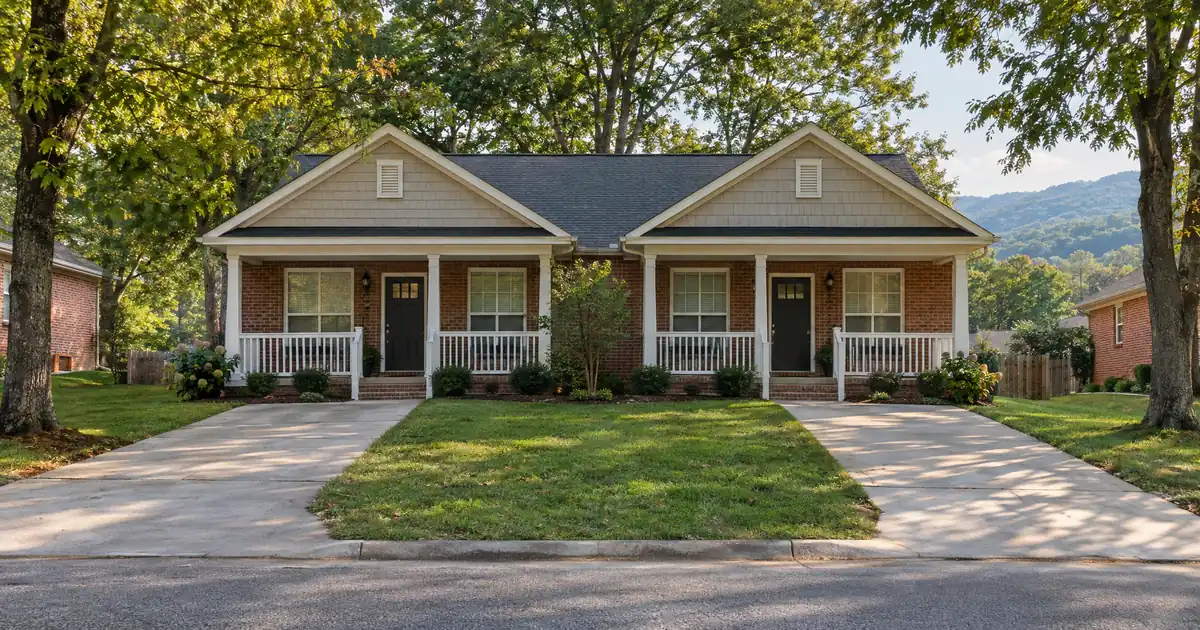
A duplex near the Tennessee Tech campus, owned past the six-month seasoning mark, hits the cash-out math like this: two leases stacked against one loan, valued by an appraiser working in a market where sales are closing at 97.22 percent of asking price. The coverage ratio clears easily if both units are leased at market. The hard part is the appraised value, because 75 percent of a conservative number is a smaller check than most owners expect.
That is the shape of nearly every cash-out file in this town. Cookeville is a college, hospital, and logistics market with 36,088 residents per Census Reporter’s ACS profile. Rental demand is steady. Price growth is slow. Equity comes out of the loan structure and the appraisal, not from a run-up in values.
DSCR Cash-Out Calculator
Run the cash-out numbers in Cookeville, TN
Rate source: Freddie Mac 30-yr average via FRED® — Federal Reserve Bank of St. Louis · effective Sep 24, 2026
Prefilled with starting assumptions — enter your property’s value, balance, taxes, and insurance for a more accurate picture.
Program parameters update from Lendmire’s centralized guideline source. Taxes and insurance are editable estimates.
As of Sep 24, 2026 · General Freddie Mac market benchmark, not a Lendmire loan offer. Property value, balance, taxes, and insurance are editable estimates. Maximum loan-to-value varies by lender, program, property type, and seasoning. Not a Loan Estimate, approval, or commitment to lend. Program availability and eligibility are subject to lender guidelines, credit approval, property review, and underwriting.
The Short Version: A DSCR cash-out refinance on a rental in Cookeville, Tennessee is underwritten primarily on the property’s rental income measured against its full monthly obligation, then sized by an appraisal, a seasoning check, and a reserves review before any proceeds are released.
- Small multi-unit buildings are 18.87 percent of Cookeville’s housing units, which is deep enough for duplex and fourplex refinances.
- Cash-out sizing is capped at 75 percent of appraised value, so the appraisal drives proceeds.
- Seasoning runs about six months from title recording on a recent purchase.
- Active multifamily listings are thin, which means few appraisal comps.
- Enrollment and hospital employment support tenant demand near campus and the medical center.
Cookeville Market Snapshot
A quick read on the Cookeville investor landscape — figures come from the cited sources below. Confirm current property-level numbers before underwriting.
| Metric | Detail |
|---|---|
| University enrollment | 10,773 students (WBBJ (Tennessee Tech enrollment)) |
| Employment | 2,400+ employees (LinkedIn, CRMC) |
Why the Equity Here Comes From Loan Sizing, Not Price Growth
Cookeville’s price data conflicts by vendor, and all of it points to slow appreciation. The owner refinancing today should assume the equity already exists or does not. Nothing in the numbers suggests a spike will create it.
This article uses NeighborhoodScout’s median home value of $361,520 as the working figure. Zillow’s typical home value is lower at $298,970, up 4.3 percent over the past year. That gap comes from methodology. Zillow’s figure is a typical value across all homes, while sale-price medians skew toward what actually trades. Houzeo shows a median sale price of $356,950, up 1.99 percent year over year. The metro-level read from Will It Flow is $328,000, down 4.7 percent. Different geographies and time windows, same message: flat to modest.
This changes how a cash-out should be planned. An investor who bought a duplex a year or two ago and expects the appraisal to come in well above cost is betting on a market that is not moving much. The better plan is to size the refinance off what the rents support and treat any appraisal upside as a bonus. Cash-out proceeds depend on rent used for lender review, the full monthly obligation, reserves, and the 75 percent ceiling. They are never a guaranteed figure.
Where the Stacked Rents Sit
The strongest cash-out candidates are duplexes, triplexes, and fourplexes within reach of Tennessee Tech and Cookeville Regional Medical Center. Workforce single-family homes along the I-40 corridor suit smaller, steadier refinances. There is no reliable neighborhood-level price or rent series for Cookeville, so what follows is qualitative on purpose.
The Tech Corridor
The streets around Dixie Avenue, Maddux Avenue, and West Broad carry older houses and duplexes with campus-driven demand. The demand base is documented. Tennessee Tech reported 10,701 students the prior fall, and the latest fall count reached 10,773, the largest since 2015, with nearly 2,900 new students. The one-year gain is about 70 students. So the story is stability, not a surge.
The mix matters more than the headcount. Engineering is the fastest-growing college, with 3,239 students in a record year, and nursing and business follow. Those programs tend to produce tenants who want twelve-month leases on a duplex, not bed-by-bed arrangements. That is a cleaner lease file for a lender.
Rent-by-the-room student houses are a different animal. On paper, a four-bedroom house leased per bedroom can gross more than a comparable whole-house rent. But a lender may underwrite it on market rent from the appraisal rather than the stacked individual leases. Expect the coverage number to come in lower than the lease total suggests. Plan on the conservative read.
Near the Medical Center
Cookeville Regional Medical Center is the regional referral hospital. Its own profile claims more than 2,400 employees, which is self-reported and should be read as approximate. It is still the largest single workforce anchor in the sources reviewed. Nurses and clinical staff rent near the hospital, and a townhome fourplex near campus and the medical center is the kind of asset the demand supports.
I-40, Highlands Business Park, and the Eastern Side
Manufacturing and logistics pay for this submarket. The Tennessee Department of Economic and Community Development estimates Averitt Express at 1,150 employees at its Cookeville headquarters, Cummins Filtration at 600, and Transtar Industries at 500. Workers at those employers rent single-family homes and small buildings along the commuter routes. Yields here are plainer, but tenant turnover is usually lower and the leases are simpler to document.
Algood Side and West Cookeville
Newer homes here tend to carry lower headline yields but steadier tenancy, per a local property manager’s commentary. That profile suits a lower-loan-to-value cash-out where the owner wants the coverage ratio comfortably above 1.00 and does not need to pull the maximum.
Run the Numbers on a Duplex
Take a modeled duplex at $360,000, close to the citywide median, refinanced at 75 percent of appraised value. These are assumptions, not sourced market facts.
RentCafe reports two-bedroom units at $1,216 and three-bedroom units at $1,465, but only for buildings with 50 or more units. Small older buildings should be modeled lower. Assume two units at $1,200 each, for $2,400 in total monthly rent. Divide that by the full monthly obligation, meaning principal, interest, taxes, and insurance. Including taxes and insurance, coverage lands around 1.1 at a 75 percent loan. That is above the 1.00 benchmark, and some investors would call it thin.
Now run a single-family house at a similar price renting for $1,600. Coverage falls below 1.00 once taxes and insurance are included. A single-family house with a loan that size is a sub-1.00 file. Options a lender might review include a sub-1.00 program, a lower loan-to-value, or an interest-only structure. Any of those depends on lender guidelines, credit, reserves, and property review.
That gap is why the duplex is the better cash-out asset here. Two leases can carry a loan that one lease cannot. A local listing aggregator shows 43 potential multifamily opportunities in the area, but that count includes off-market leads, so it is color only.
DSCR files in markets like this one typically look like a small multi-unit building, a student-adjacent or hospital-adjacent tenant base, and an appraisal that decides the outcome more than the rents do. The rent schedule and leases are usually clean. The friction sits in the valuation and in whether the appraiser can find enough recent sales of similar buildings. Files that assume the valuation will match the purchase price get reworked. Files that model a conservative value from the start rarely do.
For the general mechanics, the guide “What Is a DSCR Loan” covers the ratio in full. The short version is that rent used for lender review divided by the monthly obligation needs to clear the program floor, and 1.00 is the common baseline.
The Appraisal Is the Real Gate (Plan for a Light Number)
Mid-year data points to a cautious appraiser, with softness showing up across several measures. Houzeo reports longer time on market, a larger months’ supply, and sales closing below asking. Its data also shows a growing share of houses with price reductions. Redfin’s data showed days on market well above the level a year earlier. Vendor definitions differ on city versus metro and month versus quarter, so read all of it as directional.
Sales at about 3 percent under asking, with most listings cutting price, tell an appraiser to lean conservative. A cash-out that depends on a stretched value is the main risk to proceeds.
Comps are the second problem. Homes.com counts 9 multifamily homes and duplexes for sale and Realmo counts 8, with 27 off-market leads. Those are point-in-time counts, but the message is that the pool is shallow. A shallow pool means the appraiser may reach for sales in adjacent towns or fall back on the income approach.
The fix is routine. If the value comes in light, an appraisal reconsideration request is a normal step, not an emergency move. A good packet includes recent sales of similar small buildings, documented condition and updates, and the actual lease schedule. It recovers value when the comps support it. It does not when they do not.
Ask the lender about the appraisal product before ordering anything. A rent schedule form should be part of the order on any multi-unit file.
Where Cash-Out Flips to a Bad Idea
This one is a genuine toss-up for some owners. The coverage math favors pulling equity from a duplex, but the soft price signals argue for pulling less. A lower loan-to-value leaves room if the appraisal is light, and it leaves the next refinance easier.
The answer flips in these situations:
- Thin coverage after taxes and insurance. If the stacked rents only just clear 1.00, the cash-out saddles the owner with a thin margin and little room for a vacancy.
- Value that rests on one outlier sale. If the appraiser cannot find a second comp, the number can move a lot between orders.
- A rent-by-the-room house underwritten on the whole-house market rent. The lease total can overstate what the lender counts.
- A recent purchase inside the seasoning window. The roughly six-month clock runs from title recording, and the settlement statement documents it. Files that assume the clock away get kicked back.
Older downtown stock adds another budget line. Plumbing, HVAC, and roof age are real costs on pre-renovation buildings, and student wear adds to them. None of that changes the loan sizing, but it changes how much cash the owner should keep after closing.
The File: Seasoning, Reserves, and Documents
For most borrowers, the program guidelines on a cash-out refinance run like this: a 75 percent loan-to-value ceiling, about six months of seasoning from title recording, a 1.00 minimum coverage ratio, a credit floor of 620 with tiers at 660, 680, and 700, and reserves of about six months of the full monthly obligation. Loan amounts run up to $3,000,000 on standard programs, with smaller balances routed through select lenders in the network. These are guidelines subject to lender review, not commitments.
Most of the friction is paper. A clean cash-out file in Cookeville usually includes:
1. Lease evidence. Signed leases for every unit, or a rent schedule the appraiser can tie to the lease dates. Missing leases on one unit of a duplex are the most common gap.
2. Entity documents. If the property is titled in an LLC, the operating agreement, articles, and proof of ownership have to match the title. Entity-owned loans are available subject to lender program eligibility.
3. Settlement statement. It documents the purchase date and the seasoning clock.
4. Insurance quote. The declarations page or a current binder showing the full premium, not a quote from months ago.
DSCR vs. conventional financing
There are two common ways to finance an investment property in Cookeville, TN, and they qualify you differently — here’s how investors weigh them.
Why investors choose it
- Qualifies on the property’s rental income — no personal tax returns, W-2s, or pay stubs needed to document income.
- No personal debt-to-income ceiling to clear, so existing mortgages and obligations don’t cap your borrowing the same way.
- Can be closed in an LLC, keeping the property inside a business entity.
- Built for scaling — not held to the limit on number of financed properties that conventional financing applies.
- Underwriting centers on the deal: generally qualifies when the rent covers the payment, a 1.00x coverage ratio being a common baseline (confirmed in underwriting).
- Designed specifically for investment property, including long-term and, where the program allows, short-term rentals.
Where it’s strong
- Often the lowest ongoing financing cost for a buyer who fully qualifies on personal income — a fit for a first property or a cost-first purchase.
Trade-offs for investors
- Requires full personal income documentation and must fit within a debt-to-income limit — salary, existing debts, and other mortgages all count.
- Typically held in your personal name rather than a business entity.
- Caps how many financed properties you can carry, which can become a ceiling as a portfolio grows.
- Evaluates you as a borrower as much as the property, which usually means more paperwork.
How investors usually choose: a first or single property often optimizes for the lowest financing cost; portfolio builders often optimize for leverage, vesting in an LLC, and scaling past conventional caps. The right answer depends on your goals, the property, and current guidelines — both paths run through select lenders in Lendmire’s wholesale network, with eligibility and terms confirmed in underwriting.
5. Reserves documentation. Bank or brokerage statements showing the required months of reserves, separate from the cash-out proceeds.
The refinance pathway for investor properties walks through the general sequence. Owners wanting the mechanics of the proceeds can read the guide “The Refi Options”. For those coming from a conventional loan, the comparison lays out the difference in documentation. Ineligible property types matter too. Manufactured homes, log homes, and barndominiums fall outside these programs, so check the structure before ordering an appraisal on a rural-edge property.
Investors reviewing Cookeville files alongside other markets in the state can also check Lendmire’s page on DSCR loans in Tennessee.
What the Proceeds Do Next
Proceeds from a refinance become the down payment on the next deal. In Cookeville the constraint is inventory, not capital. With 8 to 9 active multifamily listings and 27 off-market leads, an owner with cash in hand still needs a seller.
Two patterns work. One is buying another small building near campus or the hospital, which keeps the tenant base and the lease file familiar. The other is moving into workforce single-family on the I-40 side, where the price is lower and the coverage ratio is steadier at a modest loan-to-value. The renter share is 59 percent of households, so the tenant pool is deep either way.
Growth at the county level is cooling. The Cookeville-Putnam County Chamber reports Putnam County ranked 8th-fastest-growing in Tennessee in one year and 32nd the next, while median household income rose from roughly $44,500 to about $62,800. Incomes rising faster than growth is fine for rent support, but it is not a reason to borrow the maximum.
Budget for local rental rules, taxes, and insurance and verify the current versions with qualified local professionals before committing to a refinance or a purchase.
To price a specific Cookeville duplex, call Lendmire at 828-256-2183 or start your quote.
Frequently Asked Questions
How do you qualify for a DSCR cash-out loan in Cookeville?
Qualification rests on the property’s rent against its full monthly obligation, with 1.00 as the common baseline. Lenders also review credit (floor of 620 on this program), about six months of reserves, and seasoning of about six months from title recording. Duplexes and small multifamily usually clear the ratio more easily than single-family homes at Cookeville’s price levels. Final eligibility depends on lender guidelines, credit approval, and property review.
What are the requirements for an investment property refinance in Cookeville, Tennessee?
The typical file needs a 75 percent or lower loan-to-value on cash-out, signed leases, proof of ownership and seasoning, current insurance, and reserves statements. Entity-owned properties add operating documents. The appraisal, including a rent schedule, decides the value, so a shallow comp pool for small multifamily is the item most likely to slow a file.
Does a student rental near Tennessee Tech refinance differently than a regular rental?
Yes, it can. A house leased by the bedroom may be underwritten on the market rent in the appraisal rather than the sum of individual leases. A duplex or fourplex with twelve-month leases is easier to document. The university’s enrollment supports demand either way, but the lease structure changes how the coverage number is counted.
How much equity can an owner actually pull in Cookeville?
It depends on the appraised value, the rent used for program review, reserves, and the 75 percent ceiling, so there is no single number. With price growth near flat and sales closing under asking, owners should model a conservative appraisal and treat any upside as extra. The calculator converts the percentage into dollars for a specific property.
What to Watch Over the Next Quarter
Three indicators will tell an owner whether to pull equity now or wait:
- Sale-to-list and price reductions. If the 97.22 percent sale-to-list figure slips or the 77.14 percent share of reduced listings climbs, appraisals will stay light.
- Multifamily listing count. A rise from the current 8 to 9 active listings means more comps and more acquisition choice for the next deal.
- Fall enrollment at the university. A decline from 10,773 would weaken the student-adjacent rent thesis, while another gain would reinforce it.
For current guidelines and terms, see Lendmire’s DSCR loan programs page.
About Lendmire
A non-QM mortgage broker (NMLS# 2371349), Lendmire arranges DSCR financing for real estate investors in 41 markets, meaning 40 states plus Washington, D.C. Deals are underwritten primarily on property cash flow rather than personal income documentation, which suits self-employed buyers and entity-owned portfolios. Lendmire places loans through wholesale investor lenders and is not a direct lender. The firm was recognized by Scotsman Guide as a 2026 Top Workplace and is also a 2025 Scotsman Guide Top Workplace.
Get Started
Ready to find the right loan for you?
In about 30 seconds you can review financing options available for your investment property. No commitment required.
Informational only. Not a Loan Estimate, approval, or commitment to lend. Program availability and eligibility are subject to lender guidelines, credit approval, property review, and underwriting.
References
1. Houzeo — Tennessee Cookeville
2. NeighborhoodScout, Cookeville real estate
3. wbbjtv.com — Tennessee Tech Climbs Highest Enrollment More Than Decade
5. Zillow’s typical home value
6. Will It Flow
7. Tennessee Tech University, enrollment release
8. Tennessee Tech College of Engineering enrollment
9. Cookeville Regional Medical Center
10. Tennessee Department of Economic and Community Development, Putnam County
11. RentCafe, Cookeville rent trends
12. realmo.com — Sale Cookeville
13. Homes.com — Cookeville TN Multi Family Homes for Sale
14. Cookeville-Putnam County Chamber
15. recognized by Scotsman Guide as a 2026 Top Workplace
16. a 2025 Scotsman Guide Top Workplace
This article is part of Lendmire’s investment property cash-out refinance program — full qualification details, guidelines, and scenarios live on the program page.
Related reading: Cash Out Refinance Investment Property in Cookeville, Tennessee: Campus Corridor Duplex Equity · DSCR Loans In Cookeville, Tennessee · DSCR Cash Out Refinance in La Vergne, Tennessee: Recycling Equity in a Logistics-Anchored Market
Guides: Investment Property Cash-Out Refinance in Tennessee
Brandon Miller
Founder & CEO, Mortgage Loan Originator, Lendmire LLC
- Mortgage Loan Originator · NMLS# 1129696 · Verify on NMLS Consumer Access
- North Carolina Real Estate Broker · License# 343312 · Verify on NCREC
- North Carolina Insurance Producer · License# 19053198 · Property, Casualty, Life, Health · Verify on NAIC SBS
- Lendmire LLC · Firm NMLS# 2371349 · Verify firm licensure
Disclosures. The information presented in this article is general market commentary, not financial, legal, or tax advice. Lendmire is a mortgage brokerage (NMLS# 2371349) — not a direct lender or depository institution — and loan placement is subject to lender underwriting. Nothing in this content represents a commitment to lend. Loan terms, pricing, and program availability vary based on borrower qualifications, property characteristics, and state of subject property, and are subject to change at any time. Lendmire complies with Equal Housing Opportunity requirements. Consumer access: nmlsconsumeraccess.org.