
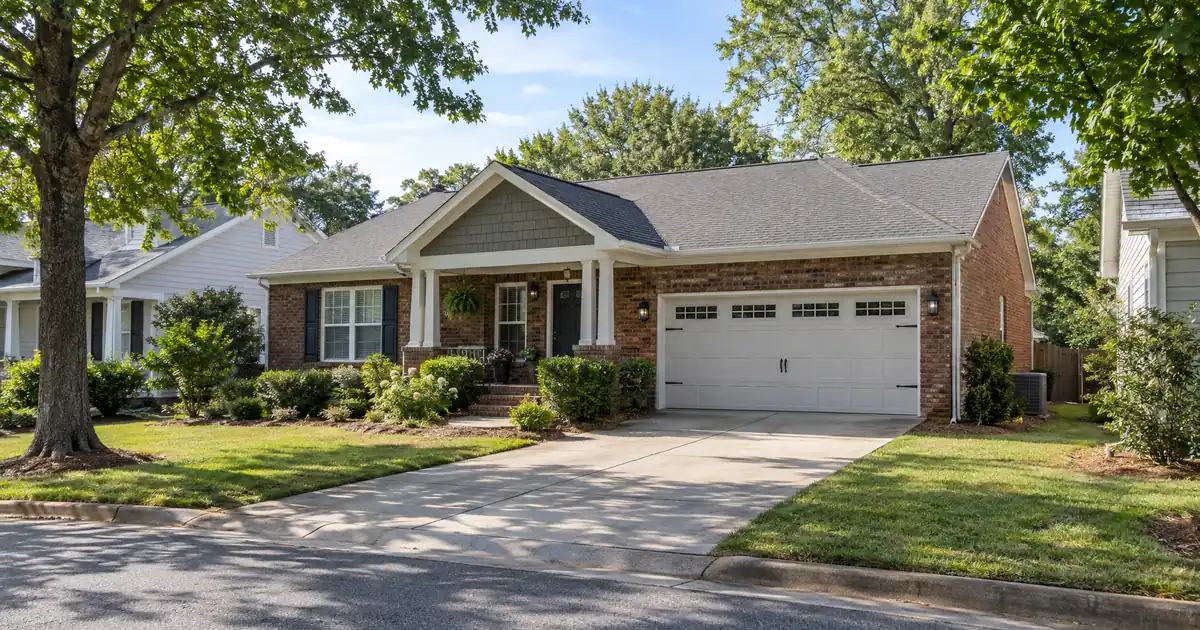
The Beaufort property most investors picture, a restored Front Street cottage with harbor views, is usually the worst candidate for a cash-out refinance. Rent-to-value is thin on that kind of home, and the coverage ratio is the gate you have to clear. The better candidates are quieter: workforce two- and three-bedroom homes and small multifamily on the town’s working side, close to the hospital, the boatyards, and the research labs.
Lendmire (NMLS# 2371349) is a DSCR-focused mortgage broker, and it works with Beaufort, North Carolina investors through a DSCR program footprint spanning 40 states plus Washington, D.C. This article is about the owner who already holds a rental here and wants to know what that equity can fund next.
DSCR Cash-Out Calculator
Run the cash-out numbers in Beaufort, NC
Rate source: Freddie Mac 30-yr average via FRED® — Federal Reserve Bank of St. Louis · effective Sep 24, 2026
Prefilled with starting assumptions — enter your property’s value, balance, taxes, and insurance for a more accurate picture.
Program parameters update from Lendmire’s centralized guideline source. Taxes and insurance are editable estimates.
As of Sep 24, 2026 · General Freddie Mac market benchmark, not a Lendmire loan offer. Property value, balance, taxes, and insurance are editable estimates. Maximum loan-to-value varies by lender, program, property type, and seasoning. Not a Loan Estimate, approval, or commitment to lend. Program availability and eligibility are subject to lender guidelines, credit approval, property review, and underwriting.
At a Glance: A DSCR cash-out refinance on a Beaufort, North Carolina rental is underwritten primarily on the property’s rental income measured against its full monthly obligation, then sized by a leverage ceiling and an appraisal. The steps run in that order: seasoning, coverage test, appraisal, reserves.
- Cash-out leverage typically tops out at 75 percent LTV, subject to lender guidelines.
- Median-priced single-family rentals here often land below 1.00 coverage on average rent.
- Duplexes and small multifamily near the U.S. 70 corridor usually test better than waterfront homes.
- Thin local sales data means appraisers may lean on Morehead City comps.
- Seasoning typically runs about 6 months from title recording.
Beaufort Market Snapshot
A quick read on the Beaufort investor landscape — figures come from the cited sources below. Confirm current property-level numbers before underwriting.
Why Equity Isn’t the Same as Borrowing Power
Equity is one input, and coverage is the other. In a market like Beaufort, coverage is the binding constraint.
Redfin’s market data shows a town median sale price of $436K in a recent snapshot, up 13.2 percent year over year. A later snapshot of the same page showed $487K. Meanwhile Zumper puts average Beaufort rent near $2,200 a month, up 5 percent from a year earlier. That figure covers all listing types and skews toward higher-end units.
Divide that rent by those prices and you get gross monthly rent-to-price of about 0.45 to 0.50 percent. That math has a consequence. Say you own a single-family rental valued near the town median and rent it at the Zumper average. Treat those as modeled inputs, not a deal you’ll find. At 75 percent LTV, coverage that includes taxes and insurance lands somewhere in the mid-0.8s. That is under the 1.00 benchmark most standard DSCR programs are built around.
So a high appraisal doesn’t automatically translate into proceeds. Proceeds are capped by whichever limit hits first, the 75 percent ceiling or the coverage test. In Beaufort, the coverage test often hits first.
If a property tests below 1.00 on long-term rent, there are structures a lender may review. Those include a sub-1.00 program (usually with lower leverage, stronger credit, or more reserves), an interest-only structure, or a smaller cash-out request. None of these is a promise. Eligibility depends on lender guidelines, credit, reserves, and property review.
Where Cash-Out Actually Pencils: The Working Side of Town
Duplexes and small multifamily on the working side of Beaufort carry the strongest coverage in this market. The town’s median value is driven by historic and waterfront stock, and workforce product trades at a very different level.
City-Data shows a directional split: a mean of about $556,000 for detached houses against about $238,000 for 3-to-4-unit structures. The sample is small and the data is estimated, so treat it as a signal, not a comp. Still, a duplex or fourplex that trades at a fraction of single-family value while producing multiple rent streams is the shape of deal a coverage test rewards.
Listing portals give a feel for per-unit income. Zillow shows two-bedroom units in town listed from about $1,600 to $1,900, with three-bedroom townhomes near $2,650. Those are individual asking rents, not verified comps.
Run the numbers on a modeled duplex. Assume a $360,000 value with two units renting at $1,600 and $1,900, and a refinance at 75 percent LTV. Once the full payment, including principal, interest, taxes, and insurance, is stacked against that combined rent, coverage lands roughly between 1.5x and 1.6x across a range of rate scenarios, using a North Carolina property tax load of about 0.82 percent of value per year and insurance of about 0.40 percent per year. In other words, coverage clears 1.0x comfortably across that band, though a duplex is not automatically a strong DSCR candidate; the result depends on the loan terms, the tax and insurance load, and how much leverage is used. A lower LTV or a stronger rent roll can move coverage toward the range lenders look for.
For a buy-and-hold owner, the duplex also hedges the vacancy risk. One empty unit still leaves half the income, which matters when no vacancy figure is published for the town.
Lennoxville Road and the U.S. 70 Corridor
These stretches are centrally located and near everyday services, which is the profile of workforce rental demand. They sit a short drive from Morehead City, where Carteret Health Care is the county’s main hospital and Carteret Community College enrolls approximately 1,900 curriculum students and 4,500 continuing education students, per the college. Nurses, technicians, instructors, and boatyard workers form a steady tenant pool for two- and three-bedroom units.
The commute story helps too. Carteret County describes a roughly ten-minute commute as typical and says the four-lane U.S. 70 is being converted to Interstate 42. Verify the project status before leaning on it in a business plan, but tenants who value short drives are a durable demand base.
The Historic District and Waterfront
The Front Street historic district and the peninsula along Taylors Creek and the North River carry the town’s premium pricing. Crystal Coast tourism materials describe a walkable historic district with preserved homes, many dating to the 1700s. That heritage supports values.
It doesn’t support long-term rent coverage. A high-priced historic or waterfront home usually can’t clear 1.00 on long-term rent at 75 percent LTV. If you own one, a cash-out refinance may be capped well below what the appraisal suggests. Conventional financing might be the better lane for that property, particularly for a high-income W-2 borrower with one or two rentals.
The Marine-Science Tenant Base
A town of roughly 4,700 to 4,900 people hosts a surprisingly dense research cluster. Per WRAL, the county is home to marine sciences satellite campuses of Duke, UNC, and NC State, plus the federal NOAA Beaufort Laboratory. Duke’s Marine Lab sits on Pivers Island in Beaufort itself.
These populations are small and transient: graduate students, visiting researchers, seasonal technicians. They support demand for one- to three-bedroom rentals more than large-volume housing. That is useful for a cash-out thesis in a specific way. A smaller unit with a steady research or health-care tenant base can support the rent assumptions on which a coverage test depends. It won’t carry a large portfolio on its own.
Beaufort is also the fourth-oldest town in North Carolina, established in 1709, and the harbor economy of boatbuilding, fishing, and tourism still shapes the job mix. Diversified local employment is part of why long-term tenant demand holds up even when for-sale activity swings.
What Working Brokers See in Small Coastal Markets
Working DSCR brokers see a recurring pattern in small coastal markets: the sales data is too thin to trust, so the appraisal becomes the real variable. Redfin’s Beaufort snapshots show single-digit monthly sales counts and a median that jumped from $436K to $487K between snapshots. One waterfront sale can move a number like that. Investors who bring their own comps, including nearby Morehead City sales and rentals, and who ask the lender how it handles thin-comp markets tend to avoid surprises. The ones who plan around the headline median often discover the appraisal landed below it.
Seasoning, LTV, and the Math of the Next Deal
Three parameters shape most cash-out files, all subject to lender guidelines:
| Factor | Typical guidance |
|---|---|
| Max cash-out LTV | 75 percent |
| Seasoning | About 6 months from title recording |
| Minimum coverage | 1.00 benchmark |
| Reserves | About 6 months PITIA |
| Credit floor | 620 (tiers at 660, 680, 700) |
Reserves matter more than investors expect. If your last purchase used most of your liquidity, check that you can still show about six months of reserves on the refinanced balance, since that requirement scales up with the loan. Loan amounts on standard programs run up to $3,000,000, and smaller balances route through select lenders in the network.
Equity available is never a fixed cash figure. It comes out of the rent, the full monthly obligation, the reserves, and the 75 percent ceiling working together. The full DSCR explainer walks through how that coverage number is calculated. Pulling equity out goes deeper on proceeds, and Lendmire’s refi programs cover the broader refinance picture.
Where Should the Proceeds Go?
This is the real decision, and it’s a toss-up in Beaufort.
Redeploying proceeds into another small multifamily near Morehead City or the U.S. 70 corridor is the cleanest argument. You’re buying into the same tenant base you already understand. Say you pull equity from a seasoned duplex and use it as the down payment on a second one: you’ve doubled exposure to one demand driver, which is efficient and also concentrated.
Using proceeds to chase a waterfront or historic property is harder to justify on cash flow. That’s an appreciation bet, and a legitimate one for some investors. But it should be sized as an appreciation bet, not a coverage-driven one. The price signal in Beaufort is noisy. Redfin’s price-per-square-foot figures swung down 23.2 percent in one snapshot and up 30.1 percent in another, which says more about small samples than about direction. Underwrite conservatively.
DSCR vs. conventional financing
There are two common ways to finance an investment property in Beaufort, NC, and they qualify you differently — here’s how investors weigh them.
Why investors choose it
- Qualifies on the property’s rental income — no personal tax returns, W-2s, or pay stubs needed to document income.
- No personal debt-to-income ceiling to clear, so existing mortgages and obligations don’t cap your borrowing the same way.
- Can be closed in an LLC, keeping the property inside a business entity.
- Built for scaling — not held to the limit on number of financed properties that conventional financing applies.
- Underwriting centers on the deal: generally qualifies when the rent covers the payment, a 1.00x coverage ratio being a common baseline (confirmed in underwriting).
- Designed specifically for investment property, including long-term and, where the program allows, short-term rentals.
Where it’s strong
- Often the lowest ongoing financing cost for a buyer who fully qualifies on personal income — a fit for a first property or a cost-first purchase.
Trade-offs for investors
- Requires full personal income documentation and must fit within a debt-to-income limit — salary, existing debts, and other mortgages all count.
- Typically held in your personal name rather than a business entity.
- Caps how many financed properties you can carry, which can become a ceiling as a portfolio grows.
- Evaluates you as a borrower as much as the property, which usually means more paperwork.
How investors usually choose: a first or single property often optimizes for the lowest financing cost; portfolio builders often optimize for leverage, vesting in an LLC, and scaling past conventional caps. The right answer depends on your goals, the property, and current guidelines — both paths run through select lenders in Lendmire’s wholesale network, with eligibility and terms confirmed in underwriting.
Using proceeds to fund out-of-state purchases is a different decision again. Stress-test whether those markets pencil at current pricing before you commit.
An LLC-held refinance is workable, subject to lender program eligibility, and many investors in this lane hold properties in entities. If you own only a property or two personally, it is worth comparing DSCR with conventional financing. For an owner whose traditional personal-income documentation cleanly supports rental income, conventional may carry a lower cost. DSCR becomes the practical path once the portfolio grows, the entity structure matters, or personal-income documentation is the weak link.
When you’re ready to test a specific property, see how the DSCR math pencils or call Lendmire at 828-256-2183. Lendmire’s North Carolina DSCR platform covers the statewide program context.
The Blind Spot: Thin Data in a Premium Town
Beaufort’s biggest risk for DSCR-financed investors is its own scarcity of reliable numbers. There is no verified vacancy rate, no bedroom-level rent series, and a sales sample small enough that one transaction rewrites the median. The gap between City-Data’s older median gross rent of $940 and Zumper’s $2,200 average shows how split the market is between legacy renters and new listings.
That means your coverage calculation can be right on paper and wrong in the appraisal, or the reverse. Underwrite to the rent you can document with a lease, not the rent the aggregators suggest, and leave room for a valuation below the headline median. Verify current local rental rules, taxes, and insurance with qualified local professionals before you size any refinance. A town that prices like a postcard and rents like a working harbor rewards the investor who plans for the working harbor.
Frequently Asked Questions
How do you qualify for a DSCR loan in Beaufort, North Carolina?
Qualification centers on the property’s rent measured against its full monthly obligation, which includes principal, interest, taxes, insurance, and any HOA dues. Lenders also review credit, reserves, and property type. Because Beaufort’s median-priced single-family homes often test below 1.00 on average rent, duplexes and small multifamily usually have an easier time. Final eligibility depends on lender guidelines and property review.
What are the requirements for a cash-out refinance on an investment property in Beaufort?
Typical guidance includes about 6 months of ownership measured from title recording, a maximum 75 percent LTV on cash-out, a 1.00 coverage benchmark, and about 6 months of PITIA in reserves. Credit tiers generally start at a 620 floor. Manufactured homes, log homes, and barndominiums fall outside these programs.
What credit score ranges may DSCR lenders review for a Beaufort rental property?
Credit tiers commonly run from a 620 floor up through 660, 680, and 700, with stronger scores generally supporting better leverage and terms. Lendmire arranges DSCR investor loans. Cash-out refinances are generally capped at 75 percent LTV, subject to lender guidelines.
Will appraisers use Beaufort sales or Morehead City comps?
Often both. Beaufort’s sales volume is low enough that a single waterfront or historic sale can move the median, so appraisers may pull from Morehead City and wider county sales to support value. That can pull a workforce property’s valuation toward county norms. Bringing your own comparable sales and rent documentation to the file helps.
Should I refinance a Front Street or waterfront home with a DSCR loan?
Only if the numbers support it. Historic and waterfront homes are priced for appreciation and lifestyle demand, so long-term rent often falls short of the 1.00 benchmark at 75 percent LTV. A sub-1.00 structure or a smaller cash-out amount may be available through select lenders, but the better question is whether the property serves your goals as a cash-flow asset.
For current guidelines and terms, see Lendmire’s DSCR loan programs page.
About Lendmire
Lendmire (NMLS# 2371349) is a mortgage brokerage built around DSCR investor lending, with programs available in 41 markets, including Washington, D.C. DSCR lenders commonly evaluate rental-income coverage instead of personal income paperwork, a practical fit for LLC-owned and multi-property investors. Terms vary by lender, property, leverage, and program. Lendmire is recognized as a 2026 Scotsman Guide Top Mortgage Workplace and a 2025 Scotsman Guide Top Mortgage Workplace.
Get Started
Ready to find the right loan for you?
In about 30 seconds you can review financing options available for your investment property. No commitment required.
Informational only. Not a Loan Estimate, approval, or commitment to lend. Program availability and eligibility are subject to lender guidelines, credit approval, property review, and underwriting.
References
1. Redfin: Beaufort, NC housing market
2. City-Data: Beaufort, North Carolina
3. Zumper: Beaufort, NC rent research
4. Zillow
7. Carteret County Government: Work Here
8. crystalcoastnc.org — Post Beaufort NC Vacation Rentals
9. WRAL: Workers welcome at the Crystal Coast
10. Town of Beaufort
11. a 2026 Scotsman Guide Top Mortgage Workplace
12. a 2025 Scotsman Guide Top Mortgage Workplace
This article is part of Lendmire’s investment property cash-out refinance program — full qualification details, guidelines, and scenarios live on the program page.
Related reading: DSCR Cash Out Refinance in Beaufort, South Carolina: Marine Corps Rent Base and a Flat Equity Curve · Cash Out Refinance Investment Property Beaufort South Carolina · DSCR Loans Beaufort & Port Royal: Investor Financing for MCAS Beaufort, Parris Island, Hunting Island & Real Estate Investors
Guides: Investment Property Cash-Out Refinance in North Carolina
Brandon Miller
Founder & CEO, Mortgage Loan Originator, Lendmire LLC
- Mortgage Loan Originator · NMLS# 1129696 · Verify on NMLS Consumer Access
- North Carolina Real Estate Broker · License# 343312 · Verify on NCREC
- North Carolina Insurance Producer · License# 19053198 · Property, Casualty, Life, Health · Verify on NAIC SBS
- Lendmire LLC · Firm NMLS# 2371349 · Verify firm licensure
Disclosure information. Lendmire is a state-licensed mortgage brokerage under NMLS# 2371349. Lendmire is not a depository institution, direct lender, or financial advisor — all loans referenced are placed through wholesale lender partners and are subject to each lender's underwriting standards. This article is provided for general informational purposes and is not a commitment to lend, nor does it constitute financial, legal, or tax advice. Loan programs, terms, rates, and qualification standards change without notice and depend on borrower profile, property type, and the state in which the subject property is located. Equal Housing Opportunity provider. NMLS Consumer Access: nmlsconsumeraccess.org.