
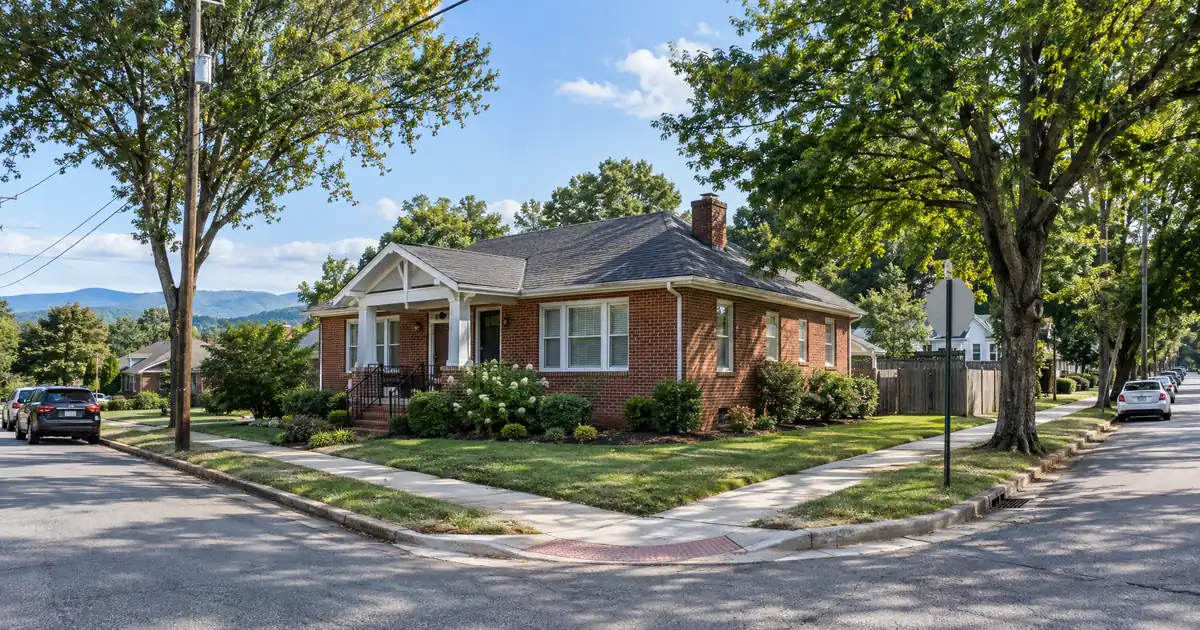
Redfin’s city-level data shows Sanford’s median sale price slipping year over year, with homes taking a fairly long time to sell and a thin number of closed sales in November. That is the reading that matters to anyone planning a DSCR cash-out refinance here. Sanford is a cash-flow market, not an appreciation market. Equity has to come from how the property was bought, improved, and rented, not from a rising tape.
TL;DR: A cash-out refinance on a Sanford, North Carolina rental is underwritten primarily on the property’s rental income measured against its full monthly obligation, so the work is proving rent, seasoning, and appraised value before anything else.
DSCR Cash-Out Calculator
Run the cash-out numbers in Sanford, NC
Rate source: Freddie Mac 30-yr average via FRED® — Federal Reserve Bank of St. Louis · effective Sep 24, 2026
Prefilled with starting assumptions — enter your property’s value, balance, taxes, and insurance for a more accurate picture.
Program parameters update from Lendmire’s centralized guideline source. Taxes and insurance are editable estimates.
As of Sep 24, 2026 · General Freddie Mac market benchmark, not a Lendmire loan offer. Property value, balance, taxes, and insurance are editable estimates. Maximum loan-to-value varies by lender, program, property type, and seasoning. Not a Loan Estimate, approval, or commitment to lend. Program availability and eligibility are subject to lender guidelines, credit approval, property review, and underwriting.
- Zumper puts three-bedroom rents near $1,800, which drives most coverage math here.
- Redfin’s $309,000 median sale price is the benchmark for appraisal stress tests.
- Cash-out programs typically cap at 75 percent LTV after roughly six months of ownership.
- A true duplex is scarce here but lifts coverage noticeably.
- Approved new apartment supply could cap rent growth on older houses.
Jonesboro Heights, Carbonton Heights, and McIver Park: Where the Refinance Math Lives
Sanford’s older, closer-in residential pockets (Jonesboro Heights, Carbonton Heights, and McIver Park) are the likeliest workforce rental stock, and they are where cash-out files should start. No reliable neighborhood-level price or rent series exists for them, so this is a read on tenant profile and product type, not a price list.
Product type drives the analysis. NeighborhoodScout puts single-family detached homes at 62.92 percent of units, with duplexes and small converted buildings at 13.31 percent. Zumper says three-bedrooms make up 47.5 percent of rental listings and four-plus bedrooms another 27.5 percent. The core DSCR product here is the workforce three-bedroom house, and most cash-out files will be exactly that.
The tenant base is industrial. Data USA lists manufacturing as the largest resident employment sector at 2,856 people, ahead of accommodation and food service at 1,424 and health care at 1,421. Census Bureau QuickFacts shows median household income of $57,586 and a median age of 34.7. Workforce-income households rent houses near their shifts. Demand here is proven: NeighborhoodScout puts renter households near half of the city.
Downtown Sanford, with its walkable core and the Temple Theatre, is where older infill and small multifamily might turn up. There are no sourced numbers for it, so treat any downtown duplex as a deal-by-deal underwrite.
Skip the Gated Lake Communities
Carolina Trace, Carolina Lakes, and Westlake Valley are attractive places to own. They are poor places to build a rental portfolio.
Carolina Trace is a gated golf and lake community built from 19 smaller sub-communities around a 315-acre lake, and each sub-community carries its own HOA rules. Rental restrictions can stop a DSCR file before it starts. It is an owner-occupant and executive-rental area, not an income-stacking one. Westlake Valley and Carolina Lakes (larger homes, 1,600 to 3,500 square feet in the former, per Harmony Realty’s neighborhood profile) follow the same logic. Big houses on big lots do not produce the rent-to-value ratio that a cash-out needs. Pull equity from these only if already owned, and check the HOA documents first.
Tenant Demand: Caterpillar, Coty, and a Thin Bench of Everyone Else
Sanford’s rental demand rests on manufacturing, and the concentration is both the strength and the risk.
The Sanford Area Growth Alliance names Caterpillar, Pfizer, Tyson Foods, Moen, Coty, Pilgrim’s Pride, Pentair, and GKN as employers with 300 or more workers locally. Its year-in-review page calls Caterpillar Lee County’s largest private employer, with a 26-year presence and an expansion into the former GKN Driveline building. The Research Triangle Regional Partnership puts Coty’s local workforce above 1,100. Central Carolina Hospital adds health care: roughly 200 providers and 525 team members per its operator. Central Carolina Community College enrolls roughly 5,500 to 5,900 students, mostly part-time, and trains the workforce behind the Caterpillar apprenticeship program. It is a training pipeline, not a student-rental market.
Now the cautionary note. Business North Carolina reported 150 layoffs at Pfizer’s Sanford plant, and the Growth Alliance points to the Parkdale Mills closure as a reminder of why industrial diversity matters. One plant event can move a few hundred household budgets.
The megasite story is the other warning. Sanford supplies water and sewer to the Moncure megasite in neighboring Chatham County, and the VinFast job promise of 7,500 was cut to 1,400. Carolina Journal reports Chatham County voted to terminate its $400 million agreement. Underwrite on today’s employers, not announced ones. That is the whole argument for a rent-based loan: the lease has to cover the debt without a forecast.
The Appreciation Question (Short Answer: Don’t Count on It)
Model the appraisal at or below purchase price. Sources disagree on Sanford’s trajectory, and the disagreement itself is the signal.
Redfin shows the median sale price down 5.2 percent and price per square foot down 9.36 percent. Bankrate’s earlier reading was also negative. Zillow’s home value index, a different methodology built on estimated values rather than closed sales, shows a gain of 9.0 percent. The conflict is real, and lenders order appraisals off closed comps, not indexes. Redfin’s November count was 27 sales, so the comp set behind any single appraisal is thin. Thin comps produce conservative appraisals, and conservative appraisals shrink the 75 percent LTV math fast.
The stronger play might be treating the cash-out as a forced-equity event. That means buying below the stock’s typical value, renovating, re-tenanting at market rent, then refinancing after the roughly six-month seasoning window measured from title recording. Buy-and-wait is the weaker plan in a market where the median price is falling. Anyone who bought in a stronger stretch may have more embedded equity, but the appraisal decides that.
Run the Numbers (Modeled Assumptions, Not Quotes)
At typical leverage, a median-priced Sanford house sits right around 1.0x coverage. A lower-priced house or a duplex does better. The figures below are modeled, using sourced rents and prices as inputs and including taxes and insurance at North Carolina averages, rounded down.
Scenario one, the lower-priced three-bedroom. Run the numbers on a house appraising at $275,000, rented at $1,800 (Zumper’s three-bedroom band). At 75 percent LTV, full PITIA coverage lands around 1.05x. That clears a 1.00 baseline with thin cushion.
Scenario two, the median. Say the appraisal comes back at $309,000 (the Redfin median) with the same $1,800 rent. At 75 percent LTV, coverage slips just under 1.0x. Sub-1.00 files are harder. Options a lender may review include a lower LTV (around 65 percent pushes the ratio back above 1.0x in this model), a sub-1.00 program with stronger credit and more reserves, or an interest-only structure. Qualification stays subject to lender guidelines, credit approval, and property review.
Scenario three, the duplex. Consider a modeled $300,000 duplex with two-bedroom units at $1,200 each. That is $2,400 in gross rent against $1,800 for a single house, about 33 percent more income, and a duplex will not usually cost 33 percent more. At 75 percent LTV the model lands around 1.3x. The catch: no sourced Sanford duplex comps exist, and small multifamily is a thin niche, so verify actual pricing and rents locally.
For the ratio itself, this walkthrough of what DSCR qualification actually looks like covers rent against full monthly obligation. On a typical file, eligibility runs on a credit floor around 620, reserves near six months, and that 1.00 baseline. Exceptions exist but come with trade-offs. Details stay subject to lender overlays and change over time.
The Supply Question Nobody Wants to Answer
Sanford’s pipeline is large, and it could pressure rents on older houses. The city has approved more than 12,000 residential units over five years, per Star 102.5’s local growth report. Tramway Place alone is 300 apartment homes. Ashby Village is planned at 250 single-family homes, 200 townhomes, and 350 apartments, per Business North Carolina. Estates at Oakton adds 173 homes and 300 apartments, according to The Rant.
Approvals are not completions, and no delivery schedule or vacancy rate was found. But Zumper shows average rent at $1,850, down 2.6 percent year over year. RentCafe puts the average apartment at $1,252, which is where new buildings will compete. Stress-test every file against flat or falling rent. A cash-out that only works at today’s rent, on a property competing with new Class A product, is a thin file.
Demand is real: the Star 102.5 report has Lee County growing from just over 62,000 to more than 70,000 residents, about 13 percent. Demand and supply are rising together, which is why the honest call is “stable, not spectacular.”
What the Deal Desk Sees in Markets Like This
In small industrial markets with flat prices, the friction on cash-out files usually comes from the appraisal, not the borrower. Lendmire’s deal desk tends to see cleaner files when the investor arrives with a lease at market rent, rehab documentation tied to the six-month seasoning clock, and the closest same-product comps already pulled. Files that assume value gains since purchase are the ones that get re-traded.
Putting Proceeds to Work
Cash-out proceeds only help if the next deal clears its own coverage test. In Sanford that usually means reinvesting in the same lane: lower-priced three-bedrooms, or the occasional duplex. Pulling equity with a DSCR cash-out is one path, and investor refinance options cover the rate-and-term alternative for files that do not need proceeds. The DSCR-versus-conventional breakdown matters for investors who are already near financed-property limits. For a statewide view, see DSCR loan options for North Carolina investors.
One generic reminder, once: verify current local rental rules, taxes, and insurance with qualified local professionals before underwriting anything.
What Happens Next (A 6-24 Month Read)
Expect a coverage squeeze before an opening. The next 6-24 months of Sanford’s rental market will likely be set by how fast the approved apartment pipeline turns into delivered units against a county adding residents. If rents keep sliding and closed sales stay thin, cash-out proceeds will belong to investors who bought below median and forced equity, not to those waiting on the market. If deliveries slip and Caterpillar’s expansion adds payroll, the older workforce houses near the core are the stock most likely to hold their rents.
DSCR vs. conventional financing
Two common ways to finance an investment property in Sanford, NC. They qualify you differently — here’s how investors weigh them.
Why investors choose it
- Qualifies on the property’s rental income — no personal tax returns, W-2s, or pay stubs needed to document income.
- No personal debt-to-income ceiling to clear, so existing mortgages and obligations don’t cap your borrowing the same way.
- Can be closed in an LLC, keeping the property inside a business entity.
- Built for scaling — not held to the limit on number of financed properties that conventional financing applies.
- Underwriting centers on the deal: generally qualifies when the rent covers the payment, a 1.00x coverage ratio being a common baseline (confirmed in underwriting).
- Designed specifically for investment property, including long-term and, where the program allows, short-term rentals.
Where it’s strong
- Often the lowest ongoing financing cost for a buyer who fully qualifies on personal income — a fit for a first property or a cost-first purchase.
Trade-offs for investors
- Requires full personal income documentation and must fit within a debt-to-income limit — salary, existing debts, and other mortgages all count.
- Typically held in your personal name rather than a business entity.
- Caps how many financed properties you can carry, which can become a ceiling as a portfolio grows.
- Evaluates you as a borrower as much as the property, which usually means more paperwork.
How investors usually choose: a first or single property often optimizes for the lowest financing cost; portfolio builders often optimize for leverage, vesting in an LLC, and scaling past conventional caps. The right answer depends on your goals, the property, and current guidelines — both paths run through select lenders in Lendmire’s wholesale network, with eligibility and terms confirmed in underwriting.
Frequently Asked Questions
How do you qualify for a DSCR cash-out refinance in Sanford, North Carolina?
Qualification centers on the property’s rent against its full monthly obligation, with a typical 1.00 baseline. Most files also need a credit score around 620 or higher, roughly six months of ownership, and reserves near six months. Final eligibility depends on lender guidelines, credit, property review, and appraisal.
What are the requirements for an investment property loan in Sanford, NC?
Expect a rental-income test, a credit minimum, reserves, and an appraisal. Cash-out typically tops out at 75 percent LTV, and loan sizes can reach $3,000,000 on standard programs. Manufactured homes, log homes, and barndominiums fall outside these programs.
Can I count on appreciation for cash-out proceeds in Sanford?
Not on current data. Redfin shows the median sale price down 5.2 percent, and Zillow’s index shows a gain, so sources conflict. Model the appraisal at or below purchase price and treat renovation or a below-market purchase as the main source of equity.
Do Sanford duplexes improve coverage compared with single-family rentals?
Usually, when priced close to a comparable house. Two modeled $1,200 units produce about 33 percent more gross rent than one $1,800 three-bedroom. But small multifamily is a thin slice of the market, so verify actual pricing and rents locally.
For current guidelines and terms, see Lendmire’s DSCR loan programs page.
About Lendmire
Lendmire is a DSCR-focused mortgage brokerage, NMLS# 2371349, placing investor loans across 41 markets, including Washington, D.C. Lenders typically review DSCR eligibility around a property’s rental income rather than personal income documentation, which suits LLC-held rentals (subject to lender program eligibility), self-employed investors, and portfolios growing past conventional financed-property limits. Lendmire was named a top-ranked workplace in 2025 and a top-ranked workplace in 2026 by Scotsman Guide.
Get Started
Ready to find the right loan for you?
In about 30 seconds you can review financing options available for your investment property. No commitment required.
Informational only. Not a Loan Estimate, approval, or commitment to lend. Program availability and eligibility are subject to lender guidelines, credit approval, property review, and underwriting.
References
1. Redfin, Sanford Housing Market
2. Zumper, Sanford Rent Research
3. NeighborhoodScout, Sanford Real Estate
5. Census Reporter, Sanford Profile
6. growsanfordnc.com — Our Year at a Glance
7. Research Triangle Regional Partnership, Lee County
8. jobs.lifepointhealth.net — Central Carolina Hospital
9. Central Carolina Community College
11. spectrumlocalnews.com — Vinfast Cuts Jobs to 1,400 from 7,500 Resumes Construction This Year
12. Carolina Journal, VinFast Agreement
13. Star 102.5’s local growth report
14. Business North Carolina, Ashby Village
15. The Rant
16. RentCafe
17. Scotsman Guide — Top Workplaces 2025
18. Scotsman Guide — Top Workplaces 2026
This article is part of Lendmire’s investment property cash-out refinance program — full qualification details, guidelines, and scenarios live on the program page.
Related reading: Cash Out Refinance Investment Property in Sanford, North Carolina: What It Takes to Refinance a Sanford Rental · DSCR Cash Out Refinance in Sanford, Florida: Pulling Equity From Downtown Duplexes · Cash Out Refinance Investment Property Sanford Florida
Guides: Investment Property Cash-Out Refinance in North Carolina
Brandon Miller
Founder & CEO, Mortgage Loan Originator, Lendmire LLC
- Mortgage Loan Originator · NMLS# 1129696 · Verify on NMLS Consumer Access
- North Carolina Real Estate Broker · License# 343312 · Verify on NCREC
- North Carolina Insurance Producer · License# 19053198 · Property, Casualty, Life, Health · Verify on NAIC SBS
- Lendmire LLC · Firm NMLS# 2371349 · Verify firm licensure
Disclosures. The information presented in this article is general market commentary, not financial, legal, or tax advice. Lendmire is a mortgage brokerage (NMLS# 2371349) — not a direct lender or depository institution — and loan placement is subject to lender underwriting. Nothing in this content represents a commitment to lend. Loan terms, pricing, and program availability vary based on borrower qualifications, property characteristics, and state of subject property, and are subject to change at any time. Lendmire complies with Equal Housing Opportunity requirements. Consumer access: nmlsconsumeraccess.org.