
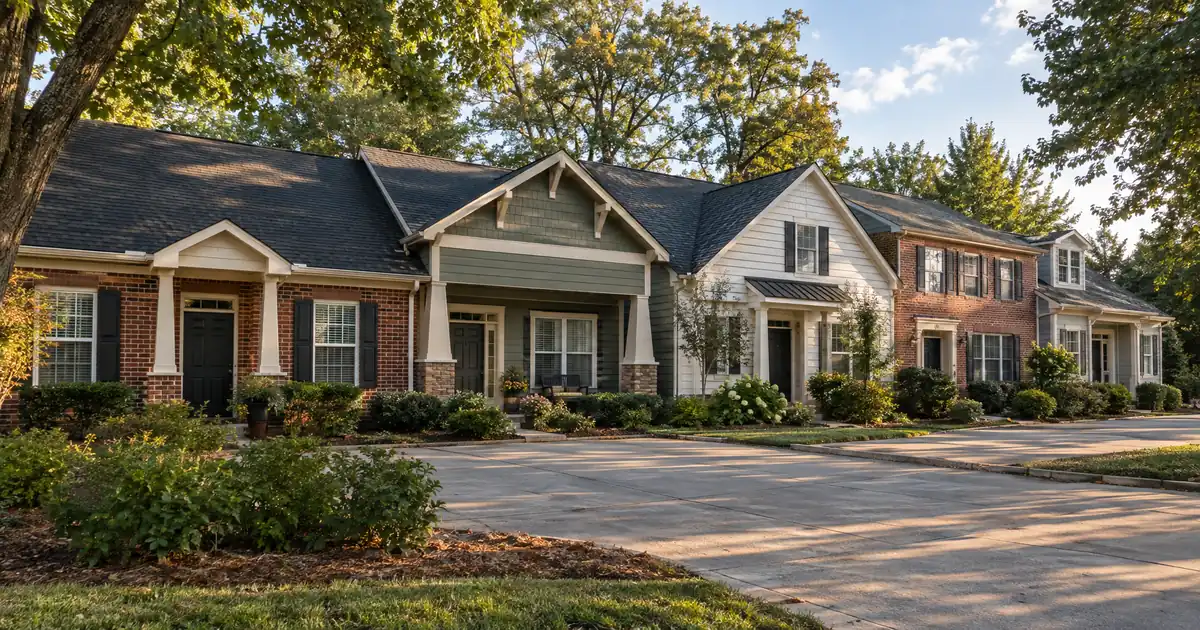
Data USA counts 2,856 Sanford residents working in manufacturing. That is roughly double the 1,424 in accommodation and food service or the 1,421 in health care. It is a factory-town payroll, and it shapes what a cash-out refinance can and can’t do here. Tenants are steady and prices are modest. Appreciation is not something to bank on.
TL;DR: A DSCR cash-out refinance on a Sanford, North Carolina rental is underwritten primarily on the property’s rental income measured against its full monthly obligation. The lender then sizes proceeds off a seasoned, appraised value. Workforce demand is proven, but the equity has to come from the deal, not the market.
DSCR Cash-Out Calculator
Run the cash-out numbers in Sanford, NC
Rate source: Freddie Mac 30-yr average via FRED® — Federal Reserve Bank of St. Louis · effective Sep 24, 2026
Prefilled with starting assumptions — enter your property’s value, balance, taxes, and insurance for a more accurate picture.
Program parameters update from Lendmire’s centralized guideline source. Taxes and insurance are editable estimates.
As of Sep 24, 2026 · General Freddie Mac market benchmark, not a Lendmire loan offer. Property value, balance, taxes, and insurance are editable estimates. Maximum loan-to-value varies by lender, program, property type, and seasoning. Not a Loan Estimate, approval, or commitment to lend. Program availability and eligibility are subject to lender guidelines, credit approval, property review, and underwriting.
- Cash-out tops out at 75 percent LTV, after roughly six months of title-recorded ownership.
- Redfin’s median sale price sits near $309K, down 5.2 percent year over year.
- Zumper’s 3-bedroom rents run around $1,800 across a small listing sample.
- Coverage on median-priced houses lands near 1.0 including taxes and insurance.
Start in the Older Close-In Pockets
The best cash-out candidates in Sanford are the older, closer-in residential areas: Jonesboro Heights, Carbonton Heights, and McIver Park. They are the likeliest workforce rental pockets, per neighborhood lists from Raleigh Realty. Nobody has published reliable neighborhood-level price or rent data, so this is a read on tenant profile, not a comp set.
The logic is simple. Sanford’s tenants are plant workers, hospital staff, and trainees, and they rent three- and four-bedroom houses. Zumper says 47.5 percent of rental listings are 3-bedrooms and 27.5 percent are 4-plus bedrooms. NeighborhoodScout puts single-family detached at 62.92 percent of housing units. The core DSCR product here is a workforce 3-bedroom, and the older streets are where that product trades at the lowest basis.
Basis is the whole story. Coverage on a median-priced house is thin (more on that below), so an investor who bought under the median, or bought a tired house and fixed it, is the one holding equity worth extracting. Renovated older stock in these pockets is the best fit for a cash-out. Buy-and-hold at full retail price is not.
Downtown Sanford, with the Temple Theatre and the Farmers Market, is a possible spot for small multifamily and older infill. Again, no sourced numbers. Treat it as a look-at-it-yourself submarket.
Why Equity Here Comes From Forced Value, Not Appreciation
Sanford is cash-flow-led. Any cash-out plan built on market appreciation since purchase is a plan built on sand.
Start with the conflict in the data. Redfin’s sale-price series shows a median sale price that has slipped year over year, with price per square foot down as well, while Zillow’s city index shows typical value rising. Zillow’s index tracks a different measure than Redfin’s sale prices, and the two disagree on direction, not just level. Bankrate’s earlier read also showed a lower median than the prior period. Underwrite to the sale-price series. The safe framing is a mid-range price band with flat-to-mixed movement, and any appreciation assumption should stay conservative.
So model the appraisal at or below purchase price. Picture an investor who bought a dated 3-bedroom below the median, put in a real renovation, and then refinanced at the 75 percent ceiling on the new value. That equity is forced, and it is real. Now picture an investor who bought at retail and waited for the market. That one is hoping. The DSCR cash-out structure works for the first investor and disappoints the second.
The proceeds are the point. Cash pulled out of a seasoned Sanford rental becomes down payment capital for the next acquisition. Available equity depends on rent used for lender review, full PITIA, reserves, and that 75 percent cap, so it is never a guaranteed figure.
What Does the Coverage Math Look Like?
Modeled coverage on a median-priced Sanford house lands right around 1.0. That is with full taxes and insurance in the debt service and leverage at the 75 percent cash-out ceiling. It is not a comfortable cushion.
Run the numbers on a hypothetical $300,000 3-bedroom renting at $1,800, a modeled assumption based on Zumper’s citywide 3-bedroom band. Coverage sits around 1.0 including taxes and insurance. Most standard DSCR programs are built around a 1.00 benchmark, and this file lives on it. A $275,000 house at the same rent moves into the low-1.1 range. That is why buying below the median matters more here than in most markets.
Now the duplex case, again modeled and not sourced. Two 2-bedroom units at Zumper’s roughly $1,200 each is about $2,400 in gross monthly rent, versus about $1,800 for one 3-bedroom. That is about a third more income, and a duplex will not necessarily cost a third more. On a hypothetical $340,000 duplex, coverage rounds down to about 1.1 including taxes and insurance. Small-multifamily supply is scarce, though. NeighborhoodScout puts duplexes and small converted buildings at just 13.31 percent of units. A true duplex or fourplex is a find, not a strategy.
If a file lands below 1.00 on long-term rent, there are paths a lender may review: a sub-1.00 program, an interest-only structure, or lower leverage with stronger credit and reserves. Each one changes the pricing and the required cash. Eligibility depends on lender guidelines, credit approval, and property review. Here is a rough parameter set for this product: a 620 credit floor with better tiers at 660, 680, and 700, roughly six months of PITIA in reserves, and loan sizes up to $3,000,000 on standard programs. What DSCR qualification actually looks like is laid out separately.
The Employer Base Behind the Rents
Sanford’s rent demand rests on an industrial base wider than any single plant. The Sanford Area Growth Alliance names Caterpillar, Pfizer, Tyson Foods, Moen, Coty, Pilgrim’s Pride, Pentair, and GKN as employers with 300 or more local workers each. Caterpillar is Lee County’s largest private employer, per the Alliance’s year-in-review page, and it is expanding into the former GKN Driveline building. The Research Triangle Regional Partnership reports Coty employs over 1,100 people in Lee County.
Healthcare adds a second leg. Central Carolina Hospital, part of Duke LifePoint, lists nearly 200 providers and 525 team members on its careers page. Central Carolina Community College enrolls roughly 5,500 to 5,900 students depending on the data source, most of them part-time, and runs the Caterpillar apprenticeship program. There is no four-year university here. This is a workforce market, not a student-rental market.
Location helps. Sanford sits 37 miles from Raleigh and 39 from Durham, and under 40 minutes from both the Research Triangle and Fort Bragg, per the Alliance. Median household income is $57,586, which means rents have a ceiling. Nobody here is paying Triangle prices.
Concentration risk is real, and two data points make it concrete. Pfizer laid off 150 workers at its Sanford facility, per Business North Carolina. The Alliance itself says the Parkdale Mills closure showed the importance of a diverse industrial base. Manufacturing towns give tenants and take them away in blocks.
The Supply Pipeline and the Megasite Footnote
New apartment and townhome supply is the biggest threat to the older-house rent thesis. Local media reports the city has approved more than 12,000 residential units over five years, per Star 102.5. Tramway Place alone brings 300 apartment homes, and the planned Ashby Village mixes 250 single-family homes, 200 townhomes, and 350 apartments. Business North Carolina cites more than 700 residential units there.
Approvals are not completions, and there is no sourced delivery schedule or vacancy rate. But the signal is already showing in rents. Zumper puts average rent at $1,850, down 2.6 percent year over year, from a small sample of 77 listings. RentCafe shows average apartment rent at $1,252 with 48 percent of households renting. The gap between the two is mostly houses versus apartments.
Demand is real. Lee County is among the state’s fastest growers, rising from just over 62,000 to more than 70,000 residents, about 13 percent, per The Rant. Builders are chasing that growth, so demand strength and supply risk arrive together. Stress-test any cash-out against flat or falling rents.
Then the megasite. Sanford supplies water and sewer to the Moncure megasite in neighboring Chatham County, backed by a $50M Golden LEAF grant, per Business North Carolina. VinFast’s promised 7,500 jobs were cut to 1,400, per Spectrum News, and Chatham County voted to terminate its $400 million agreement, per the Carolina Journal. Underwrite on the employers that exist today. That is the DSCR argument in one sentence: the rent covers the debt without relying on speculation.
Skip Carolina Trace for This Play
Carolina Trace is a gated golf-and-lake community with 19 smaller communities around a 315-acre lake. It is an owner-occupant and executive-rental area, not an income-stacking one, and each sub-community carries its own HOA rules. Verify rental restrictions before you underwrite anything there. Carolina Lakes and Westlake Valley in West Sanford share the same profile: larger homes on lake or big-lot settings, priced above the workforce stock. For a coverage-driven cash-out, those price points work against you.
Seasoning and Thin Comps
Six months of title-recorded ownership is the seasoning benchmark, but in Sanford comps depth is the tighter constraint. Redfin’s city-level count was 27 sales in a single month, and homes sell in around 76 days. Annual counts conflict across sources, with Property Focus showing 1,665 sales over twelve months.
Thin sales volume can make an appraisal conservative. The cleaner files tend to lean on the closest recent sales of the same product type and plan for a loan-to-value below the product maximum. A 75 percent ceiling is a ceiling, not a target.
In markets like this one, deal desks see the same friction point again and again. The rent schedule and the appraisal tell different stories, and the appraisal wins. Files that arrive with a renovation scope, before-and-after documentation, a lease in place, and reserves already seasoned tend to move through review with fewer surprises. Investors who show up with a plan for a lower appraisal than expected fare better than those who assume a bump. (Lendmire’s team sees this pattern most often on renovation-driven refinances.)
Regardless of the market, verify current local rental rules, taxes, and insurance with qualified local professionals before committing.
What the Next Two Years Probably Look Like
Expect Sanford to stay cash-flow-led through the next 6 to 24 months. The approved pipeline should keep older-house rents flat to soft, and sale prices should stay range-bound in the high-$200Ks to low-$300Ks. Caterpillar’s expansion and steady Lee County population growth are what hold occupancy up.
The investors who pull equity successfully will be the ones who bought under the median or added value, then refinanced at a conservative loan-to-value and put the proceeds toward the next below-median house. The ones who wait for a market bump may be waiting a while. If the new apartment supply lands on schedule, expect the strongest coverage to migrate toward smaller, lower-basis houses and the rare duplex, not toward larger homes in gated communities.
DSCR vs. conventional financing
Two common ways to finance an investment property in Sanford, NC. They qualify you differently — here’s how investors weigh them.
Why investors choose it
- Qualifies on the property’s rental income — no personal tax returns, W-2s, or pay stubs needed to document income.
- No personal debt-to-income ceiling to clear, so existing mortgages and obligations don’t cap your borrowing the same way.
- Can be closed in an LLC, keeping the property inside a business entity.
- Built for scaling — not held to the limit on number of financed properties that conventional financing applies.
- Underwriting centers on the deal: generally qualifies when the rent covers the payment, a 1.00x coverage ratio being a common baseline (confirmed in underwriting).
- Designed specifically for investment property, including long-term and, where the program allows, short-term rentals.
Where it’s strong
- Often the lowest ongoing financing cost for a buyer who fully qualifies on personal income — a fit for a first property or a cost-first purchase.
Trade-offs for investors
- Requires full personal income documentation and must fit within a debt-to-income limit — salary, existing debts, and other mortgages all count.
- Typically held in your personal name rather than a business entity.
- Caps how many financed properties you can carry, which can become a ceiling as a portfolio grows.
- Evaluates you as a borrower as much as the property, which usually means more paperwork.
How investors usually choose: a first or single property often optimizes for the lowest financing cost; portfolio builders often optimize for leverage, vesting in an LLC, and scaling past conventional caps. The right answer depends on your goals, the property, and current guidelines — both paths run through select lenders in Lendmire’s wholesale network, with eligibility and terms confirmed in underwriting.
Frequently Asked Questions
How do you qualify for a DSCR cash-out refinance in Sanford, North Carolina?
Qualification centers on the property’s rent against its full monthly obligation, with 1.00 as the common benchmark. Lenders also look at credit (a 620 floor, with better tiers at 660, 680, and 700), roughly six months of PITIA in reserves, and a cash-out LTV capped at 75 percent. Eligibility is subject to lender guidelines, credit approval, and property review.
What are the requirements for an investment property loan in Sanford, NC?
Typical requirements are a rent used for lender review that covers PITIA, a 620-plus credit score, reserves of about six months, and about six months of ownership measured from title recording before a cash-out. Standard programs go up to $3,000,000, and smaller balances route through select lenders. Manufactured homes, log homes, and barndominiums fall outside these programs, which matters in a county with plenty of rural housing stock.
How much equity can a Sanford rental realistically pull out, given flat prices?
Less than an appreciation story would suggest. With Redfin showing median sale prices down 5.2 percent and monthly sales volume thin, model the appraisal at or below purchase price. The cash-out comes from buying under the median or from a renovation that lifts value. The 75 percent ceiling, rent used for lender review, and reserves then set the actual proceeds, and none of that is guaranteed.
Does the VinFast megasite change the case for Sanford rentals?
No, and it shouldn’t. Sanford supplies water and sewer infrastructure to the site, but the jobs projection was cut from 7,500 to 1,400 and Chatham County voted to terminate its $400 million agreement. Underwrite on Caterpillar, Coty, Pfizer, and hospital payrolls that exist today, and treat megaproject hiring as upside you don’t count.
What down-payment ranges may DSCR lenders review for Sanford investment-property purchases?
For current guidelines and terms, see Lendmire’s DSCR loan programs page.
About Lendmire
Lendmire is a DSCR-focused mortgage brokerage, NMLS# 2371349, placing investor loans across 41 markets, including Washington, D.C. DSCR eligibility is generally reviewed by the lender on a property’s rental income rather than personal income documentation, which fits LLC-held rentals (subject to lender program eligibility), self-employed investors, and portfolios scaling past conventional financed-property limits. Lendmire has been recognized as a top-ranked workplace in 2026 and a top-ranked workplace in 2025 by Scotsman Guide. Investors weighing options can compare DSCR loan options for North Carolina investors, the investor refinance options, and Lendmire’s DSCR-versus-conventional breakdown.
Get Started
Ready to find the right loan for you?
In about 30 seconds you can review financing options available for your investment property. No commitment required.
Informational only. Not a Loan Estimate, approval, or commitment to lend. Program availability and eligibility are subject to lender guidelines, credit approval, property review, and underwriting.
References
2. Redfin: Sanford Housing Market
3. Zumper: Sanford Rent Research
5. growsanfordnc.com — Our Year at a Glance
6. Research Triangle Regional Partnership: Lee County
7. jobs.lifepointhealth.net — Central Carolina Hospital
8. Central Carolina Community College
9. Alliance
10. Business North Carolina: Pfizer layoffs
11. Star 102.5
13. RentCafe
14. The Rant
16. Spectrum News
17. Carolina Journal
18. Scotsman Guide — Top Workplaces 2026
19. Scotsman Guide — Top Workplaces 2025
This article is part of Lendmire’s investment property cash-out refinance program — full qualification details, guidelines, and scenarios live on the program page.
Related reading: DSCR Cash Out Refinance in Sanford, North Carolina: What It Takes to Refinance a Sanford Rental · Cash Out Refinance Investment Property Sanford Florida · DSCR Cash Out Refinance in Waxhaw, North Carolina: Equity Extraction in a Thin-Coverage Town
Guides: Investment Property Cash-Out Refinance in North Carolina
Brandon Miller
Founder & CEO, Mortgage Loan Originator, Lendmire LLC
- Mortgage Loan Originator · NMLS# 1129696 · Verify on NMLS Consumer Access
- North Carolina Real Estate Broker · License# 343312 · Verify on NCREC
- North Carolina Insurance Producer · License# 19053198 · Property, Casualty, Life, Health · Verify on NAIC SBS
- Lendmire LLC · Firm NMLS# 2371349 · Verify firm licensure
Important disclosures. Lendmire (NMLS# 2371349) is a licensed mortgage brokerage. Lendmire is not a direct lender, depository institution, or financial advisor. All loan inquiries are subject to lender underwriting; this article does not constitute a commitment to lend. Rates, terms, and program guidelines are subject to change without notice and vary by borrower profile, property type, and state. Information in this article is general in nature and is not financial, legal, or tax advice. Equal Housing Opportunity. NMLS Consumer Access: nmlsconsumeraccess.org.