
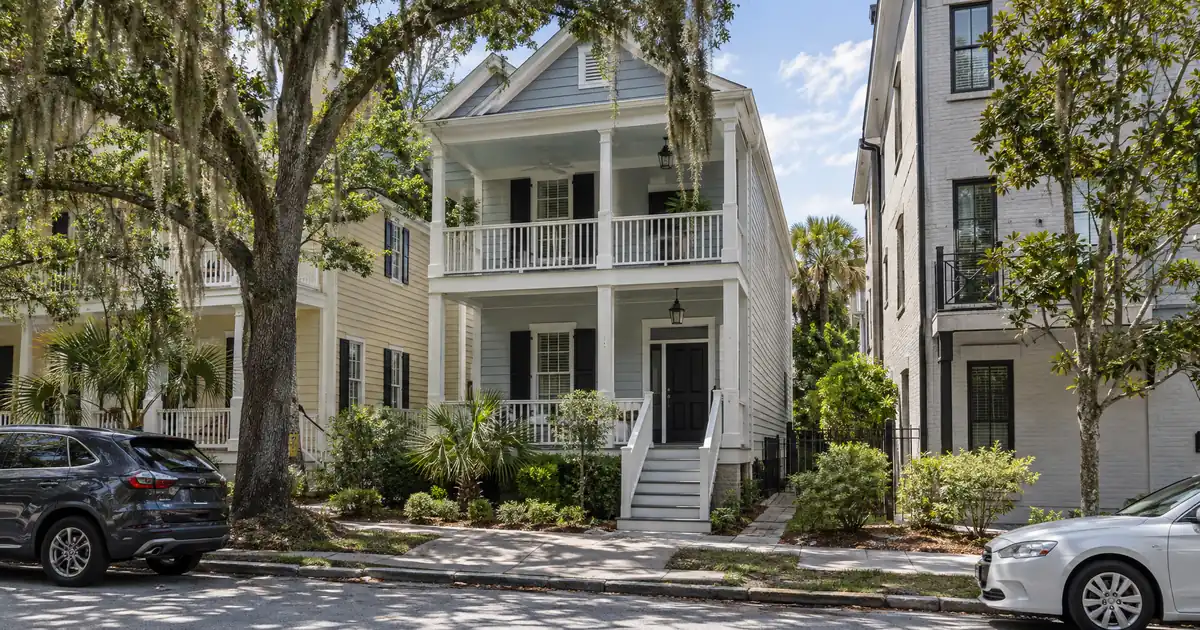
Rents across the Charleston metro are sliding. Doorstead’s metro rental report shows rents down 2.0 percent year over year, while new apartment starts fell 72 percent. That combination, softer rents now and a thinner supply pipeline later, is the backdrop for any North Charleston investor weighing a cash-out refinance over the next 6 to 18 months. Underwrite today’s rents as they are, because growth won’t bail out a thin file. The deals that still work are the ones with several rent streams on one parcel.
DSCR Cash-Out Calculator
Run the cash-out numbers in North Charleston, SC
Rate source: Freddie Mac 30-yr average via FRED® — Federal Reserve Bank of St. Louis · effective Sep 24, 2026
Prefilled with starting assumptions — enter your property’s value, balance, taxes, and insurance for a more accurate picture.
Program parameters update from Lendmire’s centralized guideline source. Taxes and insurance are editable estimates.
As of Sep 24, 2026 · General Freddie Mac market benchmark, not a Lendmire loan offer. Property value, balance, taxes, and insurance are editable estimates. Maximum loan-to-value varies by lender, program, property type, and seasoning. Not a Loan Estimate, approval, or commitment to lend. Program availability and eligibility are subject to lender guidelines, credit approval, property review, and underwriting.
At a Glance:
A DSCR cash-out refinance on a North Charleston, South Carolina investment property is underwritten primarily on the property’s rental income measured against its full monthly obligation, with the borrower’s personal income playing a secondary role. Eligibility and proceeds depend on lender guidelines, appraisal and rent treatment.
- Multi-unit stock around Chicora Place, next to the former Navy Base, is the most plausible path to coverage above 1.00.
- Citywide single-family rent-to-value runs near 0.59 percent per month, which leaves little room at full leverage.
- Cash-out LTV tops out at 75 percent, and about 6 months of ownership is typical for seasoning.
- Values are soft, so proceeds depend on renovation and rent resets rather than market lift.
North Charleston Market Snapshot
A quick read on the North Charleston investor landscape — figures come from the cited sources below. Confirm current property-level numbers before underwriting.
| Metric | Detail |
|---|---|
| Home prices | $302,200 median value (Data USA) |
| University enrollment | 14,025 total (Data USA) |
| Employment | 1,000+ jobs (Charleston Regional Development) |
Chicora Place Is Where the Stacking Happens
Chicora Place (ZIP 29405) is the strongest cash-out candidate in North Charleston because it holds the city’s small-multifamily inventory. Maison’s MLS-syndicated listing page for the area shows a fully occupied quadplex with rents described as under market. It also shows two four-plex buildings of 900-square-foot, 3BR units, a six-unit property, and 14- and 16-unit one-bedroom buildings. These are listings, not closed sales, so they show the property mix and not pricing. The mix matters anyway. A cash-out lives or dies on coverage, and four rent streams behind one loan is a different animal than one.
The area sits next to the former Navy Base, about four minutes from Park Circle. It also includes Opportunity Zone tracts. Cherokee Place and the Accabee area sit in the same corridor.
Listing-agent rent claims in the corridor are useful as a sanity check, though not as comps. An Eleanor-area duplex grosses $3,280 a month from two 2BR/1BA units. Those units land near the $1,577 average two-bedroom apartment rent ApartmentFinder reports. A sensible underwriting band for a 2BR/1BA duplex unit is roughly $1,550 to $1,650. Anything above that needs a lease behind it.
Here’s the interesting part. A Chicora Place duplex listing shows two 3BR/1.5BA units, one vacant and one rented at $1,500 a month, per Southern Real Estate Charleston. Compare that to the $1,880 achieved on the Cherokee 3BR/2BA unit, or the $1,844 average 3BR rent RentCafe reports for 50-plus-unit buildings. Those larger units may be under-rented. A renovation, a rent reset and separate utility meters could support a stronger appraisal rent schedule. Confirm that with local comps before relying on it.
Can a Single-Family House Carry a Cash-Out Here?
Usually not at full leverage. Zillow’s rental data puts average rent across all property types at $1,850, with a listing range of $850 to $6,000. Zillow’s home value index shows $312,277, down 1.7 percent year over year. That works out to monthly gross rent of about 0.59 percent of value. This article uses the Zillow value index as its citywide reference. Redfin reports a higher $373,000 median sale price for a recent three-month window, reflecting transaction mix instead of the full home stock. On that basis the ratio is thinner still.
Run the numbers on a house valued near the Zillow figure and rented at the citywide average. These are modeled assumptions, not a quote. They use a standard 30-year amortization and South Carolina average tax and insurance loads, so coverage includes taxes and insurance. At the full 75 percent LTV, coverage hovers right around 1.00, rounding to a hair under. At the Redfin-style value it falls clearly below.
That doesn’t kill the deal. It tells you the structure has to change. A lower LTV request, a stronger lease or a multi-unit asset all move the number. If a file does land under the 1.00x baseline, some lenders review sub-1.00 programs or interest-only structures. Those typically involve stronger compensating factors, less leverage or different pricing, and every outcome stays subject to lender guidelines and credit approval. For the program basics, the DSCR fundamentals page covers how the ratio gets built.
Seasoning, Leverage and the Equity You Can Actually Reach
Cash-out on an investment property is limited by three things: how long you’ve owned it, how much of the value the lender will lend against, and what the rent can carry. Typical guidance puts seasoning at about six months of ownership, measured from title recording. The LTV ceiling for a cash-out is 75 percent. That is lower than the purchase cap, so don’t plan the refi off a purchase-style 80 percent. The baseline coverage requirement is generally 1.00 on rent used for lender review against full PITIA, though exact eligibility depends on lender guidelines, credit profile, reserves and property review.
Credit tiers generally start at a 620 floor, with better positioning at 660, 680 and 700. Reserves typically run about six months of PITIA (about nine months above $1,500,000). Loan amounts generally go up to $3,000,000 on standard programs, with smaller balances routed through select lenders in the network. Equity available is never a guaranteed figure. It comes out of rent used for lender review, PITIA, reserves and the 75 percent ceiling, working together. The cash-out qualification details walk through that interplay in more depth.
Seasoning is the quiet issue in North Charleston. Local values are flat to slightly down, so a recent buyer may have little market appreciation to refinance against. Movoto shows the median list price near $330,000, down 6 percent year over year, and Redfin shows about 62 days on market. Proceeds here come from value you create, not value the market hands you.
Running the Multi-Unit Math
Picture an investor who owns a duplex in the Chicora Place corridor. The modeled inputs are a $325,000 value, the low end of Homes.com’s multifamily price range, and $3,190 in gross monthly rent, the figure on one listed fully occupied duplex. This pairs a price floor with one listing’s rent, so it is a best-case bound and not a comp. At 75 percent LTV and including taxes and insurance, coverage lands comfortably above 1.4. That is rounded down from the raw result.
Swap in the more conservative case: two 2BR units at about $1,550 each. Coverage compresses but still clears the 1.00 baseline with room to spare at that value. That cushion is what makes multi-unit the working structure. It absorbs a rent dip, a vacancy gap or a rougher appraisal without sinking the file.
DSCR files in markets like this one typically look the same on paper. The rent roll is modest, the price is mid-range, and coverage rests on how the lender treats vacant units and market-rent schedules. Files with executed leases or a clean rent schedule tend to go smoother than those leaning on a listing-agent projection. Many investors get tripped up by a vacant unit, so the stronger approach is to lease it before the refinance and let the actual rent do the work.
Park Circle (Appreciation Territory, Not Yield)
Park Circle is the city’s most recognizable neighborhood, with a farmers market and neighborhood festivals. It also carries the highest rents in the city and the lowest rent-to-price ratio. Per Coast2Coast’s summary of Redfin data, the median sale price was about $556,000. That pushes coverage well under 1.00 at full leverage, because rents don’t scale with price the way they would need to.
The thesis here is appraised value, not rent coverage. Redevelopment next door supports resale. If you own a stabilized duplex in Park Circle, the refinance leans on the appraisal and on a lower LTV request. Don’t count on it for yield. Olde North Charleston shows a roughly $703,000 median in the same dataset, but that likely reflects a small, high-end sample, so treat it with caution.
ZIP 29406 and the Inland Workforce Streets
The same dataset puts the median sale price in ZIP 29406 near $331,000 and ZIP 29405 near $412,500. That makes 29406 the most affordable entry point, a workforce mix of single-family and duplex stock. The lower-priced inland streets look cash-flow-led, the opposite of Park Circle.
The tradeoff is liquidity versus yield. Workforce single-family has a deep buyer pool but modest rent-to-value. Duplex and triplex stock adds income per parcel. Wescott Plantation, Northwoods and the Ashley Phosphate area form the suburban single-family edge toward the neighboring suburbs. That fits a hold-for-appreciation file better than a high-coverage one.
Demand Anchors: Boeing, the Base and the Port
Tenant demand rests on payrolls that don’t swing with tourism. The Charleston Regional Development Alliance lists Boeing with more than 9,000 employees supporting the 787, backed by an expansion of more than $1 billion. It lists the Medical University of South Carolina at about 17,000 employees and Joint Base Charleston at nearly 25,000 military and civilian jobs. MUSC’s main campus is downtown, not in North Charleston, so call it a nearby health system. Healthcare and military workers are documented renter segments across the Charleston area.
Census Bureau QuickFacts lists a city population of 126,015, and RentCafe reports that 51 percent of households rent. Trident Technical College’s main campus sits here with roughly 14,025 students, per Data USA. Most are part-time commuters, so don’t expect a dorm-adjacent rental cluster. Student demand is modest and workforce-oriented.
Then there’s the former Navy Base itself. It now hosts the $985 million Hugh K. Leatherman Terminal, and the 118-acre Navy Base Intermodal Facility ties the port to inland rail. Chicora Place sits right beside all of it.
The Redevelopment Wildcard
Future supply could cut either way. The City of North Charleston has approved a 50-acre riverfront project with more than 1,400 residential units. Jamestown’s Navy Yard is a 45-acre mixed-use redevelopment of more than 1.2 million square feet next to Park Circle. New product could compete with older stock for tenants. It could also lift surrounding values, which would help a cash-out appraisal.
Honestly, this one’s a toss-up. Investors refinancing now benefit if values catch up to the redevelopment before the units deliver. Investors waiting for delivery risk more rental competition first. The stronger play is probably an older, well-kept unit priced below what the new product will command.
Soft Values Mean Renovation-Led Equity
With market lift off the table, equity extraction comes from the property itself. A renovation, a rent reset after a lease turnover, and separate utility meters can all raise the appraisal rent schedule. The upside is real where rents sit below the neighborhood’s own achieved levels, as with the 3BR/1.5BA units noted above.
Where the Mispricing Sits
The best asymmetry in North Charleston is the older 3BR duplex and small multifamily stock in the Chicora Place and Cherokee corridor. Rents there look low against achieved comps nearby. Entry prices sit well under Park Circle’s, and the area borders a port, a rail yard and a riverfront redevelopment that the broader market hasn’t fully priced in.
Frequently Asked Questions
How do you qualify for a DSCR loan in North Charleston?
Qualification centers on the property’s rent compared with its full monthly obligation (principal, interest, taxes, insurance and any HOA dues). A 1.00 baseline is common, with credit tiers starting at a 620 floor and typically about six months of reserves. Exact eligibility depends on lender guidelines, credit profile and property review.
DSCR vs. conventional financing
There are two common ways to finance an investment property in North Charleston, SC, and they qualify you differently — here’s how investors weigh them.
Why investors choose it
- Qualifies on the property’s rental income — no personal tax returns, W-2s, or pay stubs needed to document income.
- No personal debt-to-income ceiling to clear, so existing mortgages and obligations don’t cap your borrowing the same way.
- Can be closed in an LLC, keeping the property inside a business entity.
- Built for scaling — not held to the limit on number of financed properties that conventional financing applies.
- Underwriting centers on the deal: generally qualifies when the rent covers the payment, a 1.00x coverage ratio being a common baseline (confirmed in underwriting).
- Designed specifically for investment property, including long-term and, where the program allows, short-term rentals.
Where it’s strong
- Often the lowest ongoing financing cost for a buyer who fully qualifies on personal income — a fit for a first property or a cost-first purchase.
Trade-offs for investors
- Requires full personal income documentation and must fit within a debt-to-income limit — salary, existing debts, and other mortgages all count.
- Typically held in your personal name rather than a business entity.
- Caps how many financed properties you can carry, which can become a ceiling as a portfolio grows.
- Evaluates you as a borrower as much as the property, which usually means more paperwork.
How investors usually choose: a first or single property often optimizes for the lowest financing cost; portfolio builders often optimize for leverage, vesting in an LLC, and scaling past conventional caps. The right answer depends on your goals, the property, and current guidelines — both paths run through select lenders in Lendmire’s wholesale network, with eligibility and terms confirmed in underwriting.
What are the requirements for an investment property cash-out refinance in North Charleston, South Carolina?
Expect about six months of ownership from title recording and a 75 percent LTV ceiling. The lender will also review rent, reserves and appraisal. Loan amounts generally go up to $3,000,000 on standard programs. Manufactured homes, log homes and barndominiums fall outside these programs.
What DSCR terms may lenders review for investors in South Carolina?
Lendmire places DSCR investor loans. A key feature is that eligibility is reviewed around the property’s rental income rather than personal income documentation. Lendmire’s South Carolina DSCR loan programs cover the state in more detail.
Does Park Circle or Chicora Place work better for a cash-out?
Chicora Place usually works better for coverage because of its multi-unit stock and lower entry prices. Park Circle’s median near $556,000 against its rents typically leaves coverage under 1.00 at full leverage. A Park Circle refinance leans on appraised value and may need a lower LTV request.
Can I pull cash out if my North Charleston property hasn’t appreciated?
Possibly, but proceeds will come from value you add rather than market gains. Local values are soft, with Zillow’s index down 1.7 percent year over year. Renovation, rent resets and separate meters can raise appraised value. The 75 percent cap and your coverage still set the ceiling.
For current guidelines and terms, see Lendmire’s DSCR loan programs page.
About Lendmire
Lendmire is a DSCR-focused mortgage brokerage, NMLS# 2371349, that places investor loans in 41 markets, Washington, D.C. included. Lenders typically review DSCR eligibility around a property’s rental income instead of personal income documentation. That structure suits LLC-held rentals, self-employed investors and portfolios growing past conventional financed-property limits, subject to program terms. The firm was recognized by Scotsman Guide in 2025 and is a 2026 Scotsman Guide Top Workplace, as covered in the Top Workplace press announcement.
Scotsman Guide’s Top Mortgage Workplace list for 2025 documents Lendmire’s recognition.
Get Started
Ready to find the right loan for you?
In about 30 seconds you can review financing options available for your investment property. No commitment required.
Informational only. Not a Loan Estimate, approval, or commitment to lend. Program availability and eligibility are subject to lender guidelines, credit approval, property review, and underwriting.
References
1. Doorstead’s metro rental report
2. Data USA
3. Data USA
4. Charleston Regional Development Alliance
6. Southern Real Estate Charleston
7. RentCafe
10. Redfin
11. Movoto — North Charleston SC Multi Family
12. Homes.com’s multifamily price range
14. Hugh K. Leatherman Terminal
15. Navy Base Intermodal Facility
17. a 2026 Scotsman Guide Top Workplace
18. the Top Workplace press announcement
19. Scotsman Guide 2025 Top Mortgage Workplace
This article is part of Lendmire’s investment property cash-out refinance program — full qualification details, guidelines, and scenarios live on the program page.
Related reading: DSCR Investment Property Loans in Charleston, SC: What It Takes to Qualify · Cash Out Refinance Investment Property in Goose Creek, South Carolina: Navy Training Pipeline Equity · Cash Out Refinance Investment Property in Hanahan, South Carolina: Thin Rental Pool Equity Math
Guides: Investment Property Cash-Out Refinance in North Charleston, SC · Investment Property Cash-Out Refinance in South Carolina
Brandon Miller
Founder & CEO, Mortgage Loan Originator, Lendmire LLC
- Mortgage Loan Originator · NMLS# 1129696 · Verify on NMLS Consumer Access
- North Carolina Real Estate Broker · License# 343312 · Verify on NCREC
- North Carolina Insurance Producer · License# 19053198 · Property, Casualty, Life, Health · Verify on NAIC SBS
- Lendmire LLC · Firm NMLS# 2371349 · Verify firm licensure
Important disclosures. Lendmire (NMLS# 2371349) is a licensed mortgage brokerage. Lendmire is not a direct lender, depository institution, or financial advisor. All loan inquiries are subject to lender underwriting; this article does not constitute a commitment to lend. Rates, terms, and program guidelines are subject to change without notice and vary by borrower profile, property type, and state. Information in this article is general in nature and is not financial, legal, or tax advice. Equal Housing Opportunity. NMLS Consumer Access: nmlsconsumeraccess.org.