
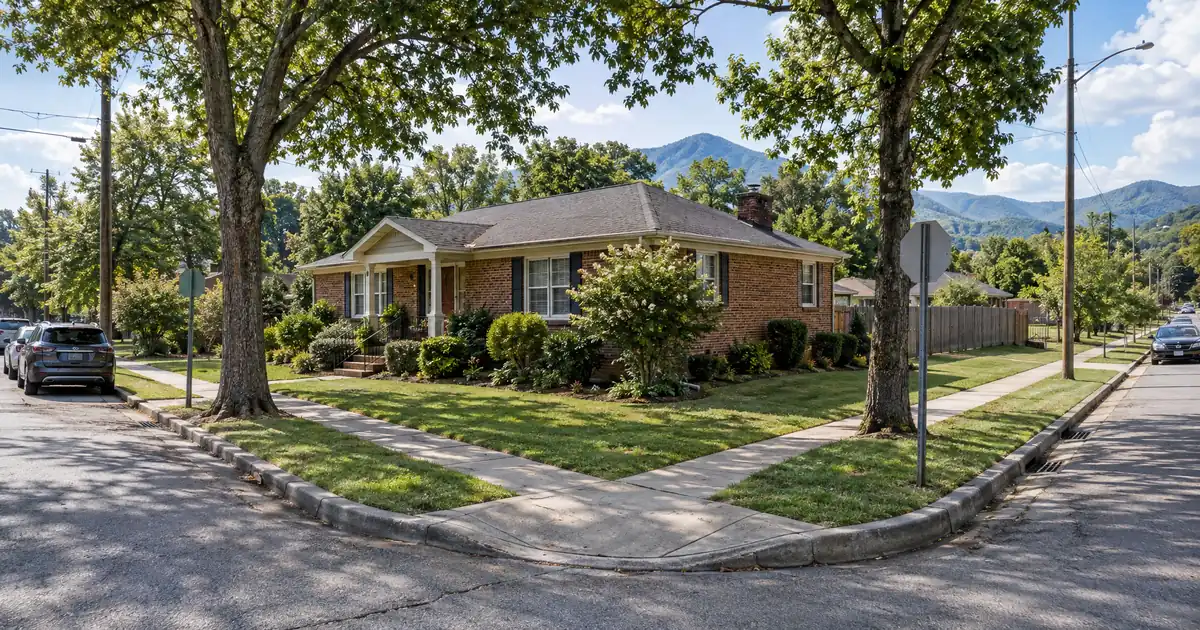
When the Goodyear plant shut down, Obion County lost an estimated 2,000 direct and 4,000 indirect jobs, per Radio NWTN. Titan Tire has since reopened the 2.1 million square foot building. That history explains the market. Union City is a low-price, low-rent micro-metro whose rental demand follows a handful of employers, and a DSCR cash-out refinance here depends on how well those payrolls hold the rent roll together.
At a Glance: A DSCR cash-out refinance in Union City, Tennessee fits owners of small multifamily or workforce rentals who hold a documented rent roll and real equity. The loan is underwritten primarily on the property’s rental income measured against its full monthly obligation, while appraised value and the 75% LTV ceiling decide how much equity can come out. Every figure here varies by lender and program — guidelines, property type, leverage, and credit profile all apply.
DSCR Cash-Out Calculator
Run the cash-out numbers in Union City, TN
Rate source: Freddie Mac 30-yr average via FRED® — Federal Reserve Bank of St. Louis · effective Oct 1, 2026
Prefilled with starting assumptions — enter your property’s value, balance, taxes, and insurance for a more accurate picture.
Program parameters update from Lendmire’s centralized guideline source. Taxes and insurance are editable estimates.
As of Oct 1, 2026 · General Freddie Mac market benchmark, not a Lendmire loan offer. Property value, balance, taxes, and insurance are editable estimates. Maximum loan-to-value varies by lender, program, property type, and seasoning. Not a Loan Estimate, approval, or commitment to lend. Program availability and eligibility are subject to lender guidelines, credit approval, property review, and underwriting.
- Median rent is near $950 per Zumper, though the sample is thin.
- Tyson alone employs 1,720 people, so tenant demand is concentrated.
- Cash-out is capped at 75% LTV, with about six months of seasoning.
- Appraised value, not rent, is often the binding constraint on proceeds.
Union City, Tennessee rental property investors can tap DSCR programs that Lendmire (NMLS# 2371349) arranges, available across 41 markets, including Washington, D.C. This article covers the equity-extraction side: what a Union City rental is likely to appraise and rent for, where the coverage math holds, and where it doesn’t.
What the Rent Roll Can Carry
Union City is small. Census Bureau QuickFacts puts the population at 10,982 using ACS five-year data, and Biggest US Cities describes growth as below average. This is a cash-flow market, not an appreciation story. Obion County’s labor force is 12,328 with unemployment at 3.5%, according to the Obion County JEDC workforce page. Union City is the county seat and the principal city of the surrounding micropolitan area.
Rent data is thin, and the thinness shapes the underwriting. Zumper shows a median rent of $950 across all unit types, and it carries a limited-data caveat. Its 28% year-over-year jump should be read as directional, not as a trend to underwrite. Zillow listing snapshots add color: a 3-bedroom, 1-bath house around $1,450, and 1- and 2-bedroom apartments from $950 and $1,050 at one complex, though other Zillow pages show lower asking prices for the same complex. These are asking rents from a small inventory, not medians.
For a refinance, thin rent data matters because the lender’s review rests on the subject property’s own lease or market-rent opinion. A local median helps with sanity-checking but won’t carry the file.
Two Plants and a Hospital: Who Pays the Rent
Tenant demand in Union City is anchored to employers, and the concentration is the main diligence item. Per the Obion County JEDC existing-industry page, Tyson’s poultry operation employs 1,720 people. Its Williams Sausage subsidiary adds roughly 500, according to the county manufacturer’s directory. That is about 2,200 jobs tied to one parent company. Titan Tire’s reopened plant adds a second industrial base, though no headcount was available in the research.
Healthcare is the steadier counterweight. Baptist Memorial Hospital-Union City is a 137-bed facility serving northwest Tennessee and western Kentucky, and its emergency department sees more than 20,000 patients a year. Hospital staff are a plausible workforce-rental tenant pool near the Bishop Street and Hillcrest corridor. That is an inference, not a sourced tenant count.
Here is the risk in plain terms. A layoff at one plant hits occupancy across the whole micro-market, not one building. The county’s history with the Goodyear closure shows this is not hypothetical. An investor pulling cash out should ask whether the property’s coverage survives a vacancy or two, because in a rental pool this small, one turnover can move the ratio materially.
Where the Equity Sits
No reliable neighborhood-level price or rent series exists for Union City, so submarkets are described by tenant base and risk, not by numbers.
North of downtown, near the plant. A local property manager, Dyad, describes this pocket as the most consistently demanded, with plant employees as the core tenants. It is a marketing page, so treat it as qualitative. The tradeoff is that this pocket carries the most direct exposure to a plant payroll shock.
South of downtown. The same source describes quieter ranch-home corridors attracting longer-term tenants. Longer tenure supports coverage stability, though lease-length data wasn’t available to confirm it.
Hospital district. Properties near Bishop, Hillcrest, and Russell streets sit beside Baptist Memorial. Healthcare employment is a different payroll risk from manufacturing, which is the diversification argument for holding both.
Apartment pockets and the East Reelfoot corridor. Complexes along Stone Street, High School Drive, and Oakshire Road appear in rental listings, and East Reelfoot Avenue is the commercial corridor. Listings there are individual homes, not a neighborhood median. Discovery Park of America, a 100,000 square foot museum on a 50-acre heritage park, adds some institutional visitor and staff traffic but isn’t a rental driver to underwrite.
Skip the temptation to rank these on price per square foot. The data doesn’t exist, and anyone quoting a clean neighborhood median here is filling a gap.
The Math: Appraised Value Sets the Ceiling
In a market where a 2-bed house has listed near $69,000 and a 3-bed foreclosure near $179,900 (per Zillow snapshots), the limiting factor on a cash-out is usually value, not rent. Rent-to-value ratios can look strong on paper. The 75% LTV ceiling and the appraiser’s comp selection then decide how much equity is actually accessible.
The comp problem is real. Homes.com reports homes selling after 86 days on market on average, against a 45-day national figure. Slow turnover means thin, older, or out-of-town comps, which can cap the value used in a cash-out. Online value sources also conflict with each other, so underwriting to the lower estimate is the sound posture.
Two modeled scenarios show how the coverage runs. The inputs are assumptions, not market data, and the ratios include taxes and insurance:
- Newer 2-bed/1.5-bath unit or small stack. Assume $1,200 rent per unit, which is within the $1,200–$1,300 band Redfin rental listings show. Against a $135,000 appraised value at 75% LTV, coverage lands comfortably above 1.4x. A single unit at that level carries a small loan well.
- Older apartment unit. Assume rent near $650–$950, which matches older-unit listings on Zillow. On a comparable balance, coverage runs roughly 1.0x or slightly below, depending on taxes and insurance. That is borderline territory.
- Final terms depend on lender guidelines, property type, leverage, and the borrower’s complete credit picture.
When a file sits near or under 1.00x on long-term rent, the paths a lender may review include a sub-1.00 program, which typically means lower leverage or more cash in, or an interest-only structure. Qualification stays subject to lender guidelines, credit review, and property review. Most standard programs are built around a 1.00x benchmark. Anything lower usually comes with compensating factors and different pricing.
This is why 2–4 unit and small-multifamily assets are the natural candidates. Listings show a multi-unit building near downtown, a duplex on a dead-end street, Villages of Autumnwood, and a 64-unit community called Ware Park. Stacked units let a low-rent market clear 1.0x on a larger balance. No rent-per-unit data exists for the market, so each deal needs its own rent roll.
DSCR files in markets like this one typically look the same on the surface. Rents are modest, balances are small, and coverage looks fine until the appraisal comes back. The files that move smoothly usually carry a current lease or market-rent schedule, and the owner has already priced in a conservative value. Balances near the bottom of the range often route through select lenders in the network, not the standard programs, which affects how the file is structured from the start.
What’s the Catch?
The catch is that everything here is a small sample.
Appreciation is not the thesis. Value indices show some recent gains, but sources conflict and none carries a reliable local median. Underwriting a cash-out that depends on continued appreciation would be a mistake. The market clears on cash flow.
The rental pool is small, so one vacancy can swing the ratio. Employer concentration is the second layer of risk, as covered above. A third is exit liquidity: with homes sitting for 86 days on average, a refinance isn’t the same as having a ready buyer. The investor who pulls equity should do it because the capital has a better use, not because the property is easy to sell.
Honestly, this one is a genuine toss-up for investors who need maximum proceeds. The strongest-coverage properties are often the smallest balances, and small balances limit how much cash comes out. Investors chasing larger proceeds will find the value ceiling binding first. Those with a stack of small units get better coverage but more tenant-turnover exposure. Neither route is wrong. They answer different goals.
Investors should verify current local rental rules, taxes, and insurance with qualified local professionals before committing.
Seasoning, Reserves, and Putting the Proceeds to Work
The program parameters shape the equity timeline. Cash-out refinances typically cap at 75% LTV, a lower ceiling than the 80% purchase figure. Seasoning is generally about six months of ownership, measured from title recording. Typical guidance puts the minimum DSCR at 1.00, credit tiers start around 620 with better terms at higher scores (660, 680, 700), and reserves run about six months of PITIA. Loan amounts go up to $3,000,000 on standard programs, and smaller balances route through select lenders. All of this is subject to lender guidelines and varies by borrower, property, and loan scenario. The guide “The Refi Options” covers the mechanics, and the refinance details page covers the broader product.
Proceeds are not a guaranteed figure. Available equity depends on rent used for lender review, PITIA, reserves, and the 75% ceiling. In Union City, the realistic use of proceeds is a down payment on the next small-multifamily or workforce rental, either locally or in a deeper market where rent-to-value ratios are less dependent on a few employers. For a refresher on how coverage is calculated, Lendmire’s guide to DSCR loans walks through it, and a comparison of DSCR versus conventional loans covers why the property-income route suits investors with more than a few financed properties.
Some DSCR platforms require tax-return review despite the DSCR label, while Lendmire’s programs are structured around property-level rent, though documentation requirements vary by program. Investors can see DSCR loan options for Tennessee investors for the statewide view, or get a rental-income loan quote with a specific property. The team is also reachable at 828-256-2183.
DSCR vs. conventional financing
There are two common ways to finance an investment property in Union City, TN, and they qualify you differently — here’s how investors weigh them.
Why investors choose it
- Qualifies on the property’s rental income — no personal tax returns, W-2s, or pay stubs needed to document income.
- No personal debt-to-income ceiling to clear, so existing mortgages and obligations don’t cap your borrowing the same way.
- Can be closed in an LLC, keeping the property inside a business entity.
- Built for scaling — not held to the limit on number of financed properties that conventional financing applies.
- Underwriting centers on the deal: generally qualifies when the rent covers the payment, a 1.00x coverage ratio being a common baseline (confirmed in underwriting).
- Designed specifically for investment property, including long-term and, where the program allows, short-term rentals.
Where it’s strong
- Often the lowest ongoing financing cost for a buyer who fully qualifies on personal income — a fit for a first property or a cost-first purchase.
Trade-offs for investors
- Requires full personal income documentation and must fit within a debt-to-income limit — salary, existing debts, and other mortgages all count.
- Typically held in your personal name rather than a business entity.
- Caps how many financed properties you can carry, which can become a ceiling as a portfolio grows.
- Evaluates you as a borrower as much as the property, which usually means more paperwork.
How investors usually choose: a first or single property often optimizes for the lowest financing cost; portfolio builders often optimize for leverage, vesting in an LLC, and scaling past conventional caps. The right answer depends on your goals, the property, and current guidelines — both paths run through select lenders in Lendmire’s wholesale network, with eligibility and terms confirmed in underwriting.
Frequently Asked Questions
How do you qualify for a DSCR loan in Union City, Tennessee?
Qualification centers on the property’s rent compared with its full monthly obligation, with a 1.00 coverage baseline common across programs. Credit tiers generally start near 620, and about six months of reserves is typical. Final eligibility depends on lender guidelines, credit, and property review.
What are the requirements for an investment property loan in Union City, TN?
Typical cash-out guidance includes up to 75% LTV, about six months of seasoning from title recording, a minimum 1.00 coverage ratio, and reserves near six months of PITIA. Property type matters, since manufactured homes, log homes, and barndominiums fall outside these programs. Terms vary by borrower and loan scenario. These specifics are subject to lender guidelines and a full review of property, leverage, and credit.
Does Union City’s reliance on Tyson and Titan Tire affect a cash-out refinance?
It affects the risk assessment more than eligibility. Tyson employs 1,720 people locally, and Williams Sausage adds about 500. Lenders review the subject property, not the employer base, but investors should stress-test coverage against a vacancy because tenant demand is concentrated.
Can small balances qualify for a cash-out in a market with sub-$100K homes?
Often yes, but through a narrower set of lenders. Standard programs run up to $3,000,000, and smaller balances route through select lenders in the network. The 75% LTV ceiling and appraised value mean proceeds on low-priced homes are modest.
Can Lendmire help arrange DSCR financing for an investment property in Union City?
Yes. Lendmire arranges DSCR investor loans. Eligibility centers on property rental income, subject to lender guidelines.
For current guidelines and terms, see Lendmire’s DSCR loan programs page.
What to Watch Next Quarter
Three indicators will tell an owner whether to pull equity now or wait:
- Employer headcount at Tyson, Williams Sausage, and Titan Tire. Obion County JEDC updates its directory, and a hiring freeze or layoff notice is the clearest early signal for rental coverage.
- Days on market for Union City homes. If the 86-day average starts to shorten, comps get fresher and appraisals get easier to support.
- New small-multifamily listings near downtown and the hospital district. A deepening supply of 2–4 unit buildings would widen the set of properties where stacked rents carry larger balances.
About Lendmire
Lendmire, NMLS# 2371349, is a DSCR and non-QM mortgage brokerage with investor loan programs in 41 markets, including Washington, D.C. Lenders commonly review DSCR eligibility around property-level rent instead of personal income documentation, subject to lender guidelines, and the brokerage helps arrange financing for LLC-owned portfolios beyond conventional financed-property limits. Lendmire is recognized by Scotsman Guide as a 2025 Scotsman Guide Top Workplace and a top-ranked workplace in 2026.
Get Started
Ready to find the right loan for you?
In about 30 seconds you can review financing options available for your investment property. No commitment required.
Informational only. Not a Loan Estimate, approval, or commitment to lend. Program availability and eligibility are subject to lender guidelines, credit approval, property review, and underwriting.
References
2. Zumper
5. Obion County JEDC workforce page
6. Obion County JEDC existing-industry page
7. obioncounty.org — Images Obion County Manufacturers Directory 2026
8. Baptist Memorial Hospital-Union City
9. baptistonline.org — Union City Services
10. Dyad
11. Zillow
12. Homes.com
13. Redfin
15. a 2025 Scotsman Guide Top Workplace
16. Scotsman Guide — Top Workplaces 2026
This article is part of Lendmire’s investment property cash-out refinance program — full qualification details, guidelines, and scenarios live on the program page.
Related reading: Cash Out Refinance Investment Property in Union City, Tennessee: How Plant-Town Rents Clear 75% LTV · DSCR Cash Out Refinance in Mcminnville, Tennessee: Fourplex Equity on a Factory-Town Payroll · DSCR Cash Out Refinance in Sparta, Tennessee: What It Takes to Refinance a Sparta Rental
Guides: Investment Property Cash-Out Refinance in Tennessee
Brandon Miller
Founder & CEO, Mortgage Loan Originator, Lendmire LLC
- Mortgage Loan Originator · NMLS# 1129696 · Verify on NMLS Consumer Access
- North Carolina Real Estate Broker · License# 343312 · Verify on NCREC
- North Carolina Insurance Producer · License# 19053198 · Property, Casualty, Life, Health · Verify on NAIC SBS
- Lendmire LLC · Firm NMLS# 2371349 · Verify firm licensure
Required disclosures. Lendmire (NMLS# 2371349) operates as a licensed mortgage broker, not a direct lender or depository. The discussion in this article is general in nature and should not be relied upon as financial, legal, or tax advice — every investment scenario is unique and should be reviewed by a qualified professional. Any loan inquiry is subject to lender underwriting, and this article is not a commitment to lend or a guarantee of approval. Mortgage rates, loan terms, and program guidelines vary by borrower, property, and state, and may change without notice. Equal Housing Opportunity. Verify licensure at NMLS Consumer Access.