
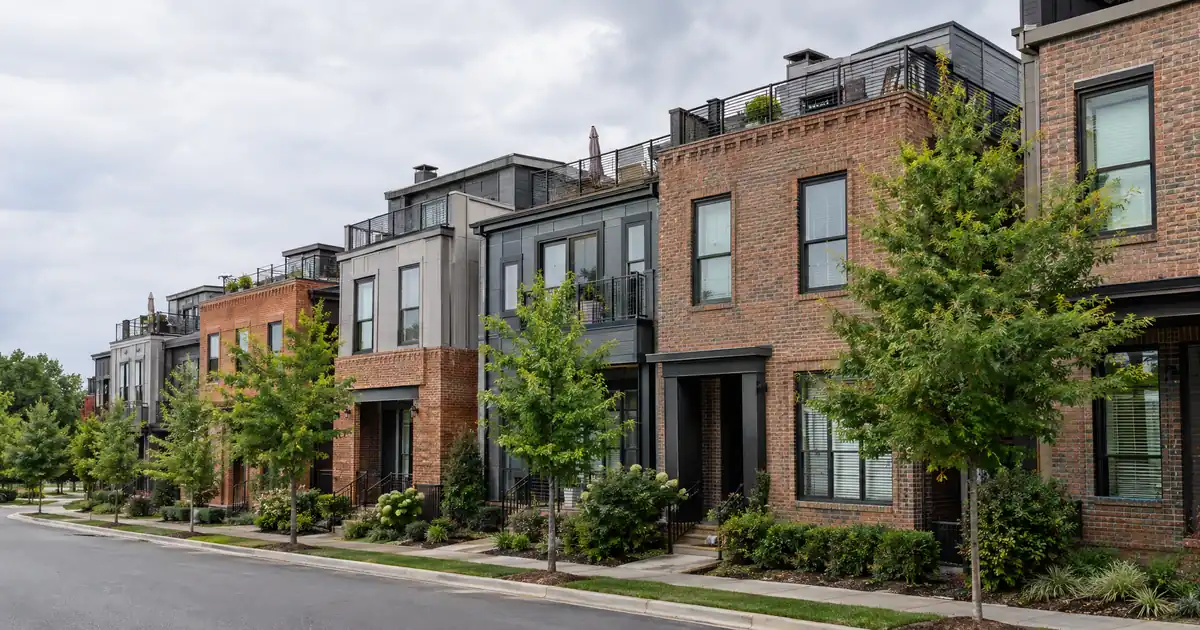
A DSCR cash out refinance in Indian Trail, North Carolina has to clear one gate before equity matters: the rent must cover the full monthly obligation on the new, larger balance. Redfin puts the median sale price at $435K, while Homes.com shows a median house rent of $2,250 a month. That is about 0.52% of value per month, which is thin. Lendmire, a DSCR-focused mortgage broker, sees that gap decide most files in commuter suburbs like this one.
DSCR Cash-Out Calculator
Run the cash-out numbers in Indian Trail, NC
Rate source: Freddie Mac 30-yr average via FRED® — Federal Reserve Bank of St. Louis · effective Sep 24, 2026
Prefilled with starting assumptions — enter your property’s value, balance, taxes, and insurance for a more accurate picture.
Program parameters update from Lendmire’s centralized guideline source. Taxes and insurance are editable estimates.
As of Sep 24, 2026 · General Freddie Mac market benchmark, not a Lendmire loan offer. Property value, balance, taxes, and insurance are editable estimates. Maximum loan-to-value varies by lender, program, property type, and seasoning. Not a Loan Estimate, approval, or commitment to lend. Program availability and eligibility are subject to lender guidelines, credit approval, property review, and underwriting.
Key Takeaways:
A cash-out refinance on an Indian Trail rental is underwritten primarily on the property’s rental income measured against its full monthly obligation on the new balance. The 75% LTV ceiling, about six months of ownership, and reserves then determine how much equity is actually accessible. Exact terms depend on the lender’s guidelines, property type, leverage, and a full review of the borrower’s file.
- Median-priced single-family rentals model below 1.0x at maximum leverage, including taxes and insurance.
- Townhomes listed near $356K (Redfin) are the stronger coverage candidates.
- Small multifamily is not a realistic core strategy here.
- Flat recent pricing means cash-out sizing should assume today’s appraised value.
Indian Trail Market Snapshot
A quick read on the Indian Trail investor landscape — figures come from the cited sources below. Confirm current property-level numbers before underwriting.
| Metric | Detail |
|---|---|
| Home prices | $356K median listing price (Redfin, Indian Trail townhouses) |
| University enrollment | 39,880 students (Union County Public Schools) |
| Employment | About 5,000 staff (Union County Public Schools) |
The Coverage Math on a Median Indian Trail Rental
A median-priced single-family rental in Indian Trail models at roughly 0.85x to 0.90x at 75% LTV, including taxes and insurance. That is below the standard 1.00x benchmark most DSCR programs are built around. Every figure here varies by lender and program — guidelines, property type, leverage, and credit profile all apply.
These are modeled assumptions, not sourced market facts. They use the $2,250 rent against a $435,000 price, with a 30-year amortization, a high-6s assumed note cost, and NC-average tax and insurance loads. Rent divided by full PITIA is the test. Principal and interest alone would flatter the result, and the coverage numbers here do not do that.
The fix is usually lower leverage. Pulling the same file back to roughly 65% LTV lifts modeled coverage to about 1.0x, but it also shrinks proceeds. Some lenders review sub-1.00 files, typically with lower leverage, more reserves, or different pricing. Eligibility depends on lender guidelines, credit profile, and property review.
Plain version: at the median, Indian Trail trades cash-out proceeds against coverage. Both can’t be maximized.
Why Townhomes Change the Equation
Townhomes are where the rent-to-value ratio has the best chance of reaching coverage. Redfin shows 61 townhouses listed at a median price of $356K, and The Longleaf Group markets new-build townhomes from the high $330Ks to the high $370Ks.
The catch: no sourced townhome rent figure turned up in this review, so the ratio can’t be tested directly. Modeled at 75% LTV, a file needs rent near 0.6% of value per month to reach 1.0x with taxes and insurance. The median house rent sits at about 0.52% of the median price. A lower price with a similar rent profile closes that gap, and a lower price with lower rent does not. Final terms depend on lender guidelines, property type, leverage, and the borrower’s complete credit picture.
Silver Star Boulevard is the new-construction pocket. Three-story units are being leased there, with free-month concessions advertised. For a cash-out, appraisers and lenders weight actual lease rent, so asking rents with concessions are not the number to underwrite. Use the signed lease.
The older townhome pockets near I-485 and Poplin Glen, which sits near the Monroe Bypass, have seasoned rent histories. Seasoned stock tends to produce cleaner files than lease-up product. (No neighborhood-level rent or price data surfaced for either, so treat the distinction as structural, not numeric.)
Where Equity Actually Sits
Owners who bought years ago hold the most usable equity. NeighborhoodScout reports roughly 134% appreciation over ten years. Recent momentum has gone the other way. Redfin shows the median price down 0.62% year over year, price per square foot near $194 (down 3.7%), and days on market up to 52 from 46. Zillow places its home value index lower at $416,183, down 2.2%, reflecting a different methodology from Redfin’s sale-price median.
The takeaway is that embedded equity is large but no longer growing. Size the cash-out off today’s appraisal, not a hoped-for bump. Appraisal support looks adequate: Redfin counts 258 sales in a recent month against 169 a year earlier, with homes averaging about three offers. Volume like that gives an appraiser real comps. Softer price per square foot means the top of the comp range may not get credit.
The program mechanics are simple. Cash-out tops out at 75% LTV. Seasoning runs about six months from title recording. Reserves typically run around six months of PITIA. Pricing and available terms vary by lender, borrower profile, property type, and full underwriting review. Properties held through an LLC may be eligible, subject to lender program eligibility. Proceeds depend on rent used for lender review, reserves, and the LTV ceiling, so no cash figure is guaranteed. The guide “What Is a DSCR Loan” covers the coverage test in more detail, and the guide “Where DSCR and Conventional Diverge” matters for owners coming off a conventional note.
What Drives Tenants Here (and What Doesn’t)
Indian Trail is a commuter market, and that shapes the tenant base. Homes.com’s city guide cites Census data showing only about 10% of employees live and work in town, and that figure is dated. The US-74 and Independence Boulevard corridor, the Monroe Bypass, and the CATS 74X express bus tie residents to Charlotte.
The resident job base supports steady workforce demand. Data USA counts 23.4k employed residents, led by health care and social assistance (2,663), retail trade (2,564), and finance and insurance (2,430). Atrium Health Union West, a 40-bed hospital with a 24/7 emergency department, sits just over the line in Stallings. Union County Public Schools employs about 5,000 staff, and Union County Government roughly 1,500.
The county keeps growing. Per Wikipedia, Union County went from 238,267 residents to an estimated 267,674. The same source puts Indian Trail’s own estimate at 44,303 against 39,997 at the last Census count.
The tenant pool is commuters, healthcare and public-sector workers, and Charlotte professionals. It skews toward 3-to-4 bedroom product, which is what the town’s newer stock delivers.
The Stock Problem: Not a Duplex Market
Small-multifamily income stacking is not a practical strategy in Indian Trail. NeighborhoodScout shows single-family detached homes at 89.37% of housing units, large apartment complexes at 4.71%, and attached homes at 2.08%. No meaningful duplex-to-fourplex share appears anywhere in the research.
That matters for a cash-out plan. An investor can’t assume they’ll recycle proceeds into a fourplex down the street, because the inventory probably isn’t there. Apartment List shows 1BR rents from $1,508 and 2BR from $1,852, and those are unit-level floors, not evidence of small-multifamily supply. Institutional landlords also compete for the same tenants, since Homes.com listings show FirstKey Homes and AMH-managed homes. That shapes rent comps in a way a mom-and-pop duplex market wouldn’t.
What the Deal Desk Sees in Markets Like This
In suburban markets dominated by newer single-family and townhome stock, the common friction point is rent documentation, not borrower documentation. The cleaner files tend to have a signed lease near market, consistent rent history, and a fresh insurance quote in hand before submission. Files that lean on asking rents from a lease-up community tend to get re-underwritten down. Investors can request a quote through the refinance pathway for investor properties or call 828-256-2183 to talk through a specific property.
Is Cash-Out the Right Move Now?
It depends on what the proceeds will do. Take a hypothetical investor who owns a townhome bought years ago, now appraised near the median. At 75% LTV the file may pencil on equity, but coverage could sit under 1.0x on the larger balance. Options a lender might review include a lower LTV, a sub-1.00 program, or interest-only structuring, all subject to credit approval and property review. These specifics are subject to lender guidelines and a full review of property, leverage, and credit.
The flip side is that the proceeds must earn more than the coverage they cost. Buying another Indian Trail median single-family with cash-out money means buying another sub-1.0x asset. The stronger play might be redeploying into a lower-priced product elsewhere in the region, though that trades away local familiarity. It’s a genuine toss-up, and it comes down to the next asset’s coverage, not the current one’s. The refi options page walks through the structures, and Lendmire’s North Carolina DSCR loan programs cover state-level details. Verify current local rental rules, taxes, and insurance with qualified local professionals before committing.
The Blind Spot: Softening Comps and New Supply
The biggest risk for DSCR-financed investors here is rent and value comps moving against a fully leveraged file. The most recent Census count showed rental vacancy of 6.3% against 0.9% for owner-occupied homes across 13,712 units (per Wikipedia, citing that Census), and that data is dated. Since then, Apartments.com has shown 22 newly built apartment listings, and new townhome lease-ups are offering concessions. No current vacancy rate turned up.
Underwrite with a vacancy and concession cushion, not asking rents. An investor who pulls maximum proceeds at 75% LTV on a property already near 0.9x has no room if comps soften further. Keep leverage below the ceiling, and keep reserves above the minimum. Terms vary by lender guidelines, property type, leverage, credit profile, and full file review.
DSCR vs. conventional financing
There are two common ways to finance an investment property in Indian Trail, NC, and they qualify you differently — here’s how investors weigh them.
Why investors choose it
- Qualifies on the property’s rental income — no personal tax returns, W-2s, or pay stubs needed to document income.
- No personal debt-to-income ceiling to clear, so existing mortgages and obligations don’t cap your borrowing the same way.
- Can be closed in an LLC, keeping the property inside a business entity.
- Built for scaling — not held to the limit on number of financed properties that conventional financing applies.
- Underwriting centers on the deal: generally qualifies when the rent covers the payment, a 1.00x coverage ratio being a common baseline (confirmed in underwriting).
- Designed specifically for investment property, including long-term and, where the program allows, short-term rentals.
Where it’s strong
- Often the lowest ongoing financing cost for a buyer who fully qualifies on personal income — a fit for a first property or a cost-first purchase.
Trade-offs for investors
- Requires full personal income documentation and must fit within a debt-to-income limit — salary, existing debts, and other mortgages all count.
- Typically held in your personal name rather than a business entity.
- Caps how many financed properties you can carry, which can become a ceiling as a portfolio grows.
- Evaluates you as a borrower as much as the property, which usually means more paperwork.
How investors usually choose: a first or single property often optimizes for the lowest financing cost; portfolio builders often optimize for leverage, vesting in an LLC, and scaling past conventional caps. The right answer depends on your goals, the property, and current guidelines — both paths run through select lenders in Lendmire’s wholesale network, with eligibility and terms confirmed in underwriting.
Frequently Asked Questions
How do you qualify for a DSCR loan in Indian Trail?
The property’s rent must cover its full monthly obligation (principal, interest, taxes, insurance, and any HOA dues), with 1.00x the common benchmark. Final eligibility depends on lender guidelines and property review.
What are the requirements for a cash-out refinance on an investment property in Indian Trail, North Carolina?
Cash-out is capped at 75% LTV, with about six months of ownership measured from title recording. The file also needs rent used for lender review against PITIA and reserves. Loan amounts go up to $3,000,000 on standard programs. Manufactured homes, log homes, and barndominiums fall outside these programs.
Do Indian Trail townhomes cash-flow better than single-family homes for DSCR?
On price alone, yes. Townhomes listed near $356K sit well below the $435K single-family median, which gives them a better chance at coverage. No townhome rent figure was sourced here, so the ratio has to be tested on the actual lease.
Is there enough appraisal support for a cash-out in a flat market?
Sales volume is deep enough for comps, with 258 closings in a recent month. Days on market rose to 52 and price per square foot slipped, so appraisers may not credit the top of the range. Plan on today’s value.
Current guidelines and terms are available from Lendmire’s investment-property HELOC programs.
About Lendmire
Lendmire, NMLS# 2371349, is a mortgage brokerage focused on investor financing, arranging DSCR loans in 40 states plus Washington, D.C. — 41 markets total. Qualification is based on the property’s income rather than personal income documentation, subject to lender guidelines, making it a fit for LLC-held rentals and scaling portfolios. Lendmire is recognized as a 2026 Scotsman Guide Top Workplace and was recognized by Scotsman Guide in 2025.
Get Started
Ready to find the right loan for you?
In about 30 seconds you can review financing options available for your investment property. No commitment required.
Informational only. Not a Loan Estimate, approval, or commitment to lend. Program availability and eligibility are subject to lender guidelines, credit approval, property review, and underwriting.
References
1. Redfin, Indian Trail housing market
2. Homes.com, Indian Trail rentals
3. Redfin, Indian Trail townhouses
4. Union County Public Schools
6. Homes.com — Indian Trail NC Townhouses for Rent
7. NeighborhoodScout, Indian Trail
8. Zillow
11. Atrium Health, Union West opening
13. Wikipedia
14. Apartment List, Indian Trail
15. Wikipedia
16. Apartments.com
17. a 2026 Scotsman Guide Top Workplace
18. recognized by Scotsman Guide in 2025
This article is part of Lendmire’s investment property cash-out refinance program — full qualification details, guidelines, and scenarios live on the program page.
Related reading: Cash Out Refinance Investment Property in Indian Trail, North Carolina: Commuter Rental Equity · Cash Out Refinance Investment Property in Beaufort, North Carolina · DSCR Cash Out Refinance in Wake Forest, North Carolina: A 2026 Guide to Capital Blvd Rentals
Guides: Investment Property Cash-Out Refinance in North Carolina
Brandon Miller
Founder & CEO, Mortgage Loan Originator, Lendmire LLC
- Mortgage Loan Originator · NMLS# 1129696 · Verify on NMLS Consumer Access
- North Carolina Real Estate Broker · License# 343312 · Verify on NCREC
- North Carolina Insurance Producer · License# 19053198 · Property, Casualty, Life, Health · Verify on NAIC SBS
- Lendmire LLC · Firm NMLS# 2371349 · Verify firm licensure
Disclosure information. Lendmire is a state-licensed mortgage brokerage under NMLS# 2371349. Lendmire is not a depository institution, direct lender, or financial advisor — all loans referenced are placed through wholesale lender partners and are subject to each lender's underwriting standards. This article is provided for general informational purposes and is not a commitment to lend, nor does it constitute financial, legal, or tax advice. Loan programs, terms, rates, and qualification standards change without notice and depend on borrower profile, property type, and the state in which the subject property is located. Equal Housing Opportunity provider. NMLS Consumer Access: nmlsconsumeraccess.org.