
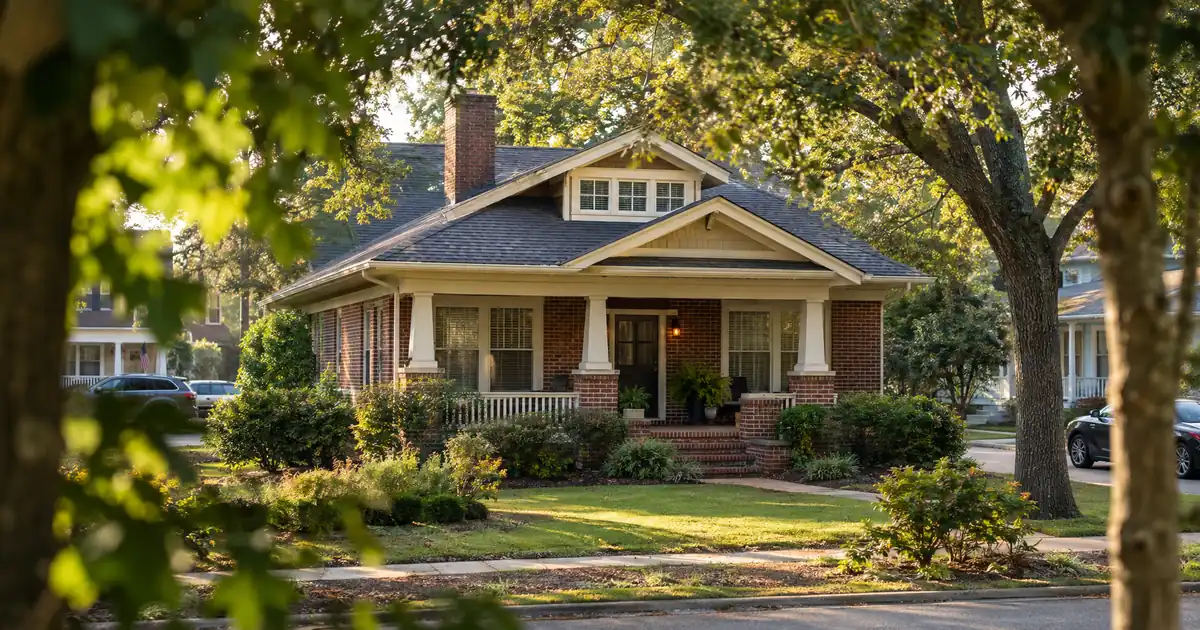
Most investors treat the 75 percent LTV ceiling as a target. In Peachtree City it is a ceiling that rent usually can’t reach. The typical single-family rental here is priced like an appreciation asset and rents like a modest one. The investors who get real cash out are the ones who stop chasing the maximum and size the loan to what the rent supports.
Lendmire (NMLS# 2371349) structures DSCR scenarios for investors targeting Peachtree City, Georgia and places them with wholesale lenders across 41 markets, including D.C. This piece covers the equity-extraction side: what a cash-out looks like when the rent-to-price ratio is thin, and what to watch over the next stretch of months.
DSCR Cash-Out Calculator
Run the cash-out numbers in Peachtree City, GA
Rate source: Freddie Mac 30-yr average via FRED® — Federal Reserve Bank of St. Louis · effective Sep 24, 2026
Prefilled with starting assumptions — enter your property’s value, balance, taxes, and insurance for a more accurate picture.
Program parameters update from Lendmire’s centralized guideline source. Taxes and insurance are editable estimates.
As of Sep 24, 2026 · General Freddie Mac market benchmark, not a Lendmire loan offer. Property value, balance, taxes, and insurance are editable estimates. Maximum loan-to-value varies by lender, program, property type, and seasoning. Not a Loan Estimate, approval, or commitment to lend. Program availability and eligibility are subject to lender guidelines, credit approval, property review, and underwriting.
TL;DR: A DSCR cash-out refinance on a Peachtree City, Georgia rental is underwritten primarily on the property’s rental income measured against its full monthly obligation, with leverage capped at 75 percent of appraised value and roughly six months of ownership typically expected before equity is tapped, subject to lender guidelines.
- Median sale price is about $590,000 per Redfin, so rent rarely covers a max-leverage loan.
- Single-family detached homes are 77.35 percent of housing units per NeighborhoodScout.
- Slower sales and longer days on market mean cautious cash-out appraisals.
- Lower leverage and below-median product are the practical path.
Peachtree City Market Snapshot
A quick read on the Peachtree City investor landscape — figures come from the cited sources below. Confirm current property-level numbers before underwriting.
| Metric | Detail |
|---|---|
| Typical rents | $1,915 (CensusDepth (ACS 2023)) |
| Population | 38,977 population (CensusDepth (ACS 2023)) |
The Math Problem, Stated Up Front
Peachtree City gross rent runs about 0.3 to 0.4 percent of price per month, which leaves a full-PITIA coverage ratio well under 1.00 at 75 percent LTV. Redfin puts the median sale price at $590,000, while Apartment List shows median rent at $1,849. That pairing works out to roughly 0.31 percent. Niche’s lower value basis of $482,500 against $2,086 in rent gets closer to 0.43 percent.
Zillow shows the average home value at $571,489, down 0.4 percent, which is a different methodology from Redfin’s median sale price. The direction is the same, though: flat to soft.
Now run it with taxes and insurance included, which is how a lender counts it. At 75 percent LTV, rent at those ratios lands somewhere in the 0.5x to 0.7x range. Not close. Even at 60 percent LTV, the Niche pairing sits below breakeven.
That doesn’t make the market untouchable. It means the file has to be built differently. Lenders may review sub-1.00 programs, reduced leverage, stronger credit, deeper reserves, or interest-only structures, and each of those reshapes the return. Whether any of them fits depends on lender guidelines, credit approval, and property review. The baseline most standard programs use is a 1.00x minimum because rent covers the obligation at that level. How DSCR coverage is calculated is simple: monthly rent divided by principal, interest, taxes, insurance, and any HOA dues.
What Has to Change for a File to Work?
Three levers move the coverage number here: lower leverage, a lower-priced property, and rent positioned in the band where demand is deepest. Pull all three and the file looks reasonable. Pull none and it doesn’t.
Start with rent positioning. RentCafe reports that 55 percent of Peachtree City rentals fall between $1,501 and $2,000 a month. That is where tenants actually are. Chasing top-of-market rents on a large four-bedroom looks better on paper, but the tenant pool thins out above the core band, and rent per bedroom drops as homes get bigger. Underwrite to the appraiser’s rent schedule, not a peak listing.
Now the modeled scenario. Assume an older, smaller house valued near $380,000 that rents for $1,900. (Those are modeled inputs, not market facts.) At 75 percent LTV including taxes and insurance, coverage lands around 0.8x. Drop leverage to 60 percent and the ratio moves to just under 1.00. The investor pulls less equity than the ceiling allows, but the loan clears the benchmark most programs are built around.
Here’s the thinking-out-loud part. A $590,000 house at 60 percent LTV may release more total equity than a $380,000 house at 75 percent, but it will never cover its own debt. Whether the larger draw is worth carrying a structural coverage gap is a real question, and it depends on how much outside cash flow the investor has to subsidize the property. Lenders weigh that through reserves, roughly six months of PITIA on typical guidelines, and through credit. The credit floor on these programs is 620, with pricing and leverage improving at the 660, 680, and 700 tiers.
Seasoning, Softer Comps, and What the Appraiser Sees
The appraisal is the variable that surprises people. Peachtree City sales are slower: homes averaged 65 days on market against 38 a year earlier, and only 29 sold in the latest monthly reading against 38, per Redfin. The median sale price slipped 4.6 percent year over year, while price per square foot held nearly flat at $229, up 0.4 percent.
The read: thin comps, slower absorption, and a median that has given back some ground. An investor who bought near the peak should expect less cash out than the purchase price implies. Appraisers lean on recent closed sales, and there aren’t many of them.
The long view is kinder. NeighborhoodScout’s data shows 108.65 percent cumulative appreciation over ten years, though that reading is dated. An owner with a long hold and a low basis has meaningful equity even after the recent softening. A recent buyer doesn’t.
On mechanics: cash-out typically requires about six months of ownership measured from title recording, with the 75 percent ceiling applied to appraised value. Equity available depends on rent used for lender review, PITIA, reserves, and that ceiling, so it’s never a guaranteed figure. Lendmire’s DSCR cash-out refinance page walks through the structure, and investor refinance options covers the rate-and-term alternative for owners who don’t need the proceeds.
On files from markets like this one, the common friction point is the gap between the appraiser’s rent schedule and the owner’s in-place lease. Cleaner files tend to have current leases, rents inside the local demand band, and a reserve account documented before the lender asks. Files that pend usually rely on a projected rent increase the comps don’t support.
Where the Rent Actually Holds
The villages that pencil best for DSCR are the ones with the most renter-oriented stock, and no village-level price or rent data exists in the research, so this part stays qualitative. Peachtree City was built around five planned villages: Aberdeen, Braelinn, Glenloch, Kedron, and Wilksmoor, per Homes.com.
Kedron is the most renter-oriented. It sits near the GA-74 corridor, and local guides point to it as the common first choice for apartments and entry-level rentals. Smaller homes and townhomes here line up best with that $1,500 to $2,000 demand band, which is the closest thing to a coverage-friendly profile in the city.
Wilksmoor and Pinewood Forest carry the newest stock. Pinewood Forest is a new-urbanism community on the east side beside Trilith, where Trilith Studios runs 32 soundstages on 700 acres. The Fayette County Development Authority says nearly 60 companies operate there. That is a film-workforce tenant angle, but newer construction means higher basis, so coverage is thinner. Treat it as an appreciation-and-tenant-quality play, not a cash-flow one.
Aberdeen has older, established stock. Glenloch has larger homes along Highway 54. Both skew toward price points that make coverage hard. Skip Glenloch for DSCR cash-out unless the property is a below-median outlier.
Watch the HOA overlay. Many subdivisions layer private associations on top of village associations, so check rental rules before committing to a target property. That is the one local-rules reminder worth making: verify current rental rules, taxes, and insurance with qualified local professionals.
A note on property type. Single-family detached homes make up 77.35 percent of housing units, and no source shows meaningful duplex, triplex, or fourplex supply. Don’t build a small-multifamily income-stacking thesis here; the stock is thin, and each deal needs its own rent comps. There is a structural upside, though. Spyglass Capital Partners, an operator, asserts apartments are just 8 percent of Fayette County’s housing stock, about a quarter of the national average. Treat that as an operator’s claim, not a verified statistic. RentCafe adds that 27 percent of Peachtree City households rent, and rental communities are essentially all low-rise garden-style. Few purpose-built alternatives means small rentals compete against limited supply.
Also, this is Peachtree City in Fayette County, not Peachtree Corners in Gwinnett County. Different market, different comps.
Who Is Renting: The Demand Anchors
Tenant demand rests on employment, not on any single employer. The City of Peachtree City lists World Airways and Cooper Lighting as headquartered locally, along with manufacturers including Panasonic, Avery Dennison, and Hoshizaki, plus federal offices from the FAA and National Weather Service. The city says nearly 1 million people live within a 30-minute drive. The City’s business page reports 1,700-plus business owners and a 2,200-acre industrial park.
Healthcare adds a second anchor next door. Piedmont Fayette Hospital, in adjacent Fayetteville, is building a $275 million tower, per The Citizen. No reliable headcount exists for individual employers, so don’t assume scale from the names alone.
Household income is high. Median household income is $111,421 (ACS via CensusDepth), which supports the tenant pool at the mid-band but doesn’t change the price-to-rent gap. The 100-plus mile cart-path network, which the city calls its hallmark, is a real listing advantage and a tenant draw. It just doesn’t show up in the coverage ratio.
What Could Break the Pattern
Watch four indicators over the next 6 to 24 months, because each one changes the cash-out calculus.
Days on market. If the 65-day average stretches further, appraisal comps thin out and proceeds shrink. If it tightens back toward the prior 38, the cash-out case improves without any change in rent.
Rent direction. The sources disagree. Apartment List shows rents down 1.6 percent year over year, while RentCafe shows them up 3.04 percent, moving average rent from $1,776 to $1,830. A refinance thesis shouldn’t depend on rent growth. Underwrite to in-place lease rents.
DSCR vs. conventional financing
Two common ways to finance an investment property in Peachtree City, GA. They qualify you differently — here’s how investors weigh them.
Why investors choose it
- Qualifies on the property’s rental income — no personal tax returns, W-2s, or pay stubs needed to document income.
- No personal debt-to-income ceiling to clear, so existing mortgages and obligations don’t cap your borrowing the same way.
- Can be closed in an LLC, keeping the property inside a business entity.
- Built for scaling — not held to the limit on number of financed properties that conventional financing applies.
- Underwriting centers on the deal: generally qualifies when the rent covers the payment, a 1.00x coverage ratio being a common baseline (confirmed in underwriting).
- Designed specifically for investment property, including long-term and, where the program allows, short-term rentals.
Where it’s strong
- Often the lowest ongoing financing cost for a buyer who fully qualifies on personal income — a fit for a first property or a cost-first purchase.
Trade-offs for investors
- Requires full personal income documentation and must fit within a debt-to-income limit — salary, existing debts, and other mortgages all count.
- Typically held in your personal name rather than a business entity.
- Caps how many financed properties you can carry, which can become a ceiling as a portfolio grows.
- Evaluates you as a borrower as much as the property, which usually means more paperwork.
How investors usually choose: a first or single property often optimizes for the lowest financing cost; portfolio builders often optimize for leverage, vesting in an LLC, and scaling past conventional caps. The right answer depends on your goals, the property, and current guidelines — both paths run through select lenders in Lendmire’s wholesale network, with eligibility and terms confirmed in underwriting.
Hospital and studio expansion. The Piedmont Fayette tower and the studio market both add jobs. If either stalls, demand softens at the margin. If both deliver, they support tenant depth in the nearest villages.
Price reductions. A large share of listings carrying cuts signals that sellers are still pricing off a higher market. That usually precedes a softer appraisal environment.
Here’s the honest toss-up. The market’s strengths, stable employers, high incomes, and thin apartment supply, argue for holding. The weakness, a price level that rent can’t service at high leverage, argues for trimming debt, not adding it.
The Real Choice
An owner with equity here has two realistic moves, and each carries a tradeoff.
Option one: take a conservative cash-out at lower leverage on a file that clears 1.00 comfortably. The proceeds are smaller, but the property carries itself and the capital redeploys into a higher-yield market.
Option two: push toward the 75 percent ceiling under a sub-1.00 structure. The draw is larger, but the property depends on the owner’s outside cash flow, and softening comps could erode the equity cushion before the next purchase closes.
Frequently Asked Questions
How do you qualify for a DSCR loan in Peachtree City?
The property has to cover its full monthly obligation with rent used for lender review, with 1.00x as the common benchmark, subject to lender guidelines. Credit tiers typically begin at a 620 floor, with leverage and pricing improving as scores climb to 660, 680, and 700. Because Peachtree City rents sit low against price, many files need reduced leverage or a sub-1.00 program review.
What are the requirements for a cash-out refinance on an investment property in Peachtree City, Georgia?
Typical guidelines call for about six months of ownership from title recording, a 75 percent LTV ceiling, about six months of PITIA in reserves, and rent used for lender review against full PITIA. The appraiser’s rent schedule controls, not the listing price. Final eligibility depends on the lender, credit profile, and property review.
How much equity can an owner who bought at the peak expect to pull?
Less than the purchase price implies. The median sale price is down 4.6 percent year over year, and slower sales mean thinner comps. Owners with a long hold and low basis are in a stronger position than recent buyers.
Do Peachtree City rents support a max-leverage cash-out?
Usually not. Rent runs roughly 0.3 to 0.4 percent of price, which puts full-PITIA coverage well below 1.00 at 75 percent LTV. Older, smaller homes renting inside the $1,500 to $2,000 band get closer, typically with reduced leverage.
What DSCR terms may lenders review for investors in Georgia?
Lendmire places DSCR investor loans in Georgia through wholesale lending channels. Cash-out is generally capped at 75 percent LTV, with eligibility reviewed on property cash flow, subject to lender guidelines. For program details, see Lendmire’s Georgia DSCR loan programs or call 828-256-2183.
For a scenario built around a specific Peachtree City property, investors can request a scenario quote. The side-by-side comparison covers how DSCR underwriting differs from conventional.
For current guidelines and terms, see Lendmire’s DSCR loan programs page.
About Lendmire
A DSCR-focused mortgage broker, Lendmire (NMLS# 2371349) places investor financing across 41 markets, 40 states plus Washington, D.C., with DSCR eligibility generally reviewed by the lender on property cash flow rather than traditional personal-income documentation, subject to lender guidelines. Scotsman Guide recognized Lendmire as a 2026 Scotsman Guide Top Workplace and a top-ranked workplace in 2025.
Get Started
Ready to find the right loan for you?
See your offer in seconds. No credit pull, no obligation.
Informational only. Not a Loan Estimate, approval, or commitment to lend. Program availability and eligibility are subject to lender guidelines, credit approval, property review, and underwriting.
References
1. Redfin
5. RentCafe
6. Homes.com
8. Fayette County Development Authority
11. The Citizen
12. a 2026 Scotsman Guide Top Workplace
13. Scotsman Guide — Top Workplaces 2025
This article is part of Lendmire’s investment property cash-out refinance program — full qualification details, guidelines, and scenarios live on the program page.
Related reading: Cash Out Refinance Investment Property in Peachtree Corners, Georgia · DSCR Cash Out Refinance in Peachtree Corners, Georgia: The 2026 DSCR Financing Guide to Technology Park · Cash Out Refinance Investment Property in Milton, Georgia: The 2026 DSCR Guide to Crabapple
Guides: Investment Property Cash-Out Refinance in Georgia
Brandon Miller
Founder & CEO, Mortgage Loan Originator, Lendmire LLC
- Mortgage Loan Originator · NMLS# 1129696 · Verify on NMLS Consumer Access
- North Carolina Real Estate Broker · License# 343312 · Verify on NCREC
- North Carolina Insurance Producer · License# 19053198 · Property, Casualty, Life, Health · Verify on NAIC SBS
- Lendmire LLC · Firm NMLS# 2371349 · Verify firm licensure
Important disclosures. Lendmire (NMLS# 2371349) is a licensed mortgage brokerage. Lendmire is not a direct lender, depository institution, or financial advisor. All loan inquiries are subject to lender underwriting; this article does not constitute a commitment to lend. Rates, terms, and program guidelines are subject to change without notice and vary by borrower profile, property type, and state. Information in this article is general in nature and is not financial, legal, or tax advice. Equal Housing Opportunity. NMLS Consumer Access: nmlsconsumeraccess.org.