
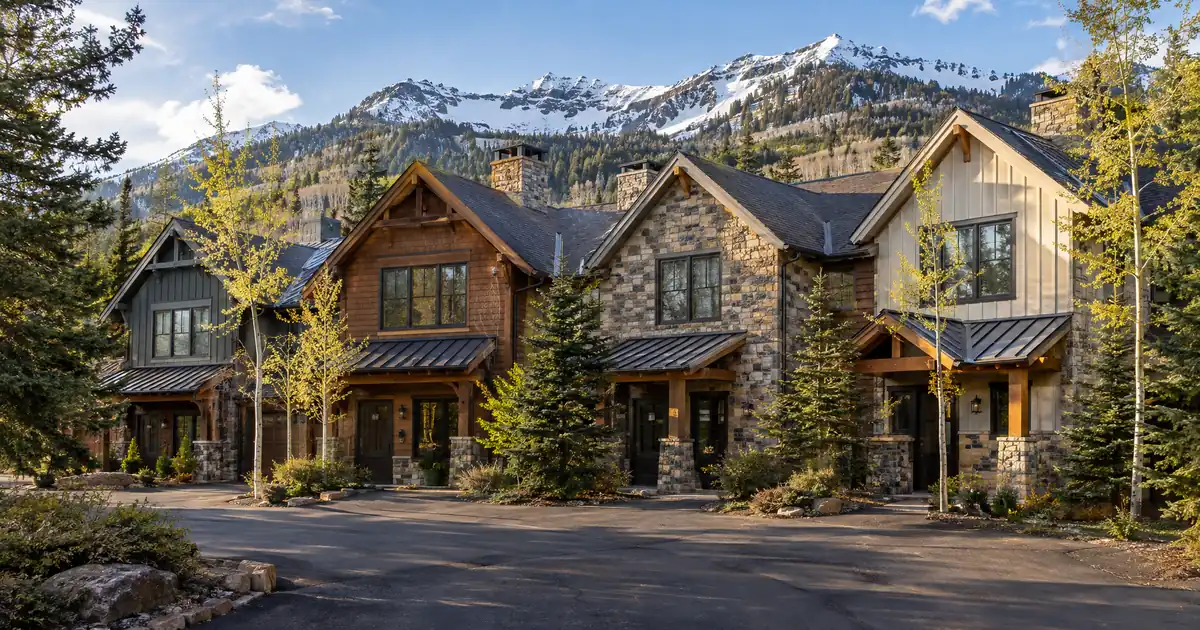
Picture an investor who bought a Chetola condo a few months ago and now sits at the six-month mark on the recorded deed. The appraisal suggests real equity. The plan is to pull it out and put it toward a duplex in Boone. Two questions decide whether that works: does the condo’s rent cover its own debt, and does the appraiser find comps that support the value? In Blowing Rock, both answers are less obvious than the listing prices suggest.
DSCR Cash-Out Calculator
Run the cash-out numbers in Blowing Rock, NC
Rate source: Freddie Mac 30-yr average via FRED® — Federal Reserve Bank of St. Louis · effective Sep 24, 2026
Prefilled with starting assumptions — enter your property’s value, balance, taxes, and insurance for a more accurate picture.
Program parameters update from Lendmire’s centralized guideline source. Taxes and insurance are editable estimates.
As of Sep 24, 2026 · General Freddie Mac market benchmark, not a Lendmire loan offer. Property value, balance, taxes, and insurance are editable estimates. Maximum loan-to-value varies by lender, program, property type, and seasoning. Not a Loan Estimate, approval, or commitment to lend. Program availability and eligibility are subject to lender guidelines, credit approval, property review, and underwriting.
The Quick Read:
A DSCR cash-out refinance on a Blowing Rock, North Carolina investment property is underwritten primarily on the property’s rental income measured against its full monthly obligation, with proceeds limited by a 75 percent loan-to-value ceiling and a seasoning period counted from title recording. Available equity depends on rent, not appraised value alone.
- Price-to-rent sits near 31 per Homes.com, so long-term coverage is thin on most local homes.
- Comps are slow: Movoto shows 156 days on market in its January snapshot.
- Boone, roughly 10 miles away, holds the renter base: 74 percent of households rent, per RentCafe.
- Cash-out typically caps at 75 percent LTV after about six months of ownership.
Blowing Rock Market Snapshot
A quick read on the Blowing Rock investor landscape — figures come from the cited sources below. Confirm current property-level numbers before underwriting.
| Metric | Detail |
|---|---|
| Home prices | 10 sales (Redfin) |
| Typical rents | $1,278 (Niche) |
| University enrollment | 21,798 total (App State Today) |
| Employment | Health care 4,047 jobs (19.0%) (myFutureNC Watauga County) |
Chetola and the Condo Question
Chetola is the most reviewable-looking product in town, and also the one that needs the most document work. The community has about 250 condos, priced from $250,000 into the $750,000 range, according to a local brokerage page. It is gated and maintenance-free, beside Bass Lake and Moses Cone Park. Use that range as listing-based, not as an appraisal anchor.
The tenant is the issue. Chetola is vacation and second-home inventory. Some units are fractional: in one listing, each owner gets 10 weeks of use a year. A fractional share or a resort-managed unit is a poor fit for long-term-rental underwriting. Skip those for a cash-out.
A standard condo unit is a different story, and the file lives or dies on paper. Condo certification and HOA questionnaire completeness come first. The questionnaire needs to be fully answered, and the covenants need to allow the lease the rent figure assumes. Some DSCR programs also exclude condos outright, so confirm the property type against program guidelines before anyone orders an appraisal. The lower end of the Chetola range has the best shot at coverage, simply because less price sits against the same rent.
The Walkable Core, Cottages, and Gorge Estates
The downtown core is one of the few mountain-town Main Streets where you can park the car and reach everything on foot, per Epic Ventures Realty. That drives value. It does not drive long-term rent. Tenants who work the boutiques, galleries, and restaurants mostly live outside town.
Historic cottages on the side streets and condos near Village Green share that profile. No reliable neighborhood-level rent exists for any of them, so don’t expect an appraiser’s rent schedule to lean on one. A rental comparison will likely pull from Boone or regional data, which tends to understate the premium attached to the address.
The gorge and view estates above Johns River Gorge sit at the far end. They are luxury second-home territory, and long-term rent against value is very thin. Two file notes apply. Loan balances above $1,500,000 typically push reserves toward nine months of PITIA instead of six. And log homes, which are common in mountain towns, fall outside the network’s DSCR programs. A log cabin with big equity is not a cash-out candidate here.
Why the Coverage Number Squeezes Cash-Out
Coverage is the binding constraint in Blowing Rock, not equity. Homes.com puts the town’s price-to-rent ratio at 30.8, based on a thin listing sample with a median rent around $2,000. Niche shows a median home value of $705,000 and a median rent of $1,278. The sources disagree, but every version points the same way: rent is small against price.
Run the numbers on a modeled example. Assume a condo valued near $899,000, which is the median list price Movoto shows, and assume $2,000 in monthly rent. The DSCR formula divides rent by the full monthly obligation: principal, interest, taxes, insurance, and any HOA dues. At 75 percent LTV, with North Carolina property tax modeled at 0.82 percent of value per year and insurance at 0.40 percent, full PITIA across a range of current rate environments puts coverage at roughly 0.36x to 0.39x. That is far below a 1.00 baseline, and HOA dues would push it lower. Even at a much lower balance, the ratio stays tight.
That does not end the conversation. It changes the structure. A lender may review options such as a lower LTV, a sub-1.00 program, or an interest-only period. Each trades cash-out proceeds or pricing for coverage. Eligibility stays subject to lender guidelines, credit approval, and property review. The 1.00 baseline is common because rent covers the payment at that level, and lower-ratio scenarios usually require more cash down or stronger compensating factors. Less equity comes out. That’s the honest trade.
Here is the pattern on files like this. DSCR files in markets where price runs far ahead of rent typically look alike: the appraisal clears easily, the coverage ratio does not, and the borrower ends up cashing out a fraction of the headline equity. The stronger files start from the coverage number and work backward to the loan amount, instead of starting from the appraised value and hoping rent catches up. Lendmire (NMLS# 2371349), a non-QM mortgage broker arranging DSCR investor loans across 40 states plus Washington, D.C., structures these files that way. The brokerage compares DSCR options against the coverage first.
An Appraisal Problem Hiding Inside a Price Problem
Blowing Rock value data is noisy. Redfin showed a median sale price of $1,007,500 in a recent month, up 65.2 percent year over year, but on only 10 sales and 85 days on market. Movoto’s median list price sits near $899,000, down 12 percent year over year. One source says the market jumped. Another says it softened. With samples this small, both are partly noise.
For a cash-out, that means comps will be sparse and old. Appraisers reaching back for sales in a luxury-skewed, slow-moving town can come in under the contract-era value. Plan for a conservative number. If the value lands light, an appraisal reconsideration request is a routine step, not a fight. A packet with recent in-town sales, condition adjustments, and view or amenity differences can recover real ground. Files that assume the first number will match the brochure get surprised.
One more local check: verify current local rental rules, taxes, and insurance with qualified local professionals before you underwrite any Blowing Rock property.
The Better Play Might Be Boone
Blowing Rock is the equity, and Boone is where the cash flow sits. That is the pattern worth planning around. Watauga County’s largest employment sectors, per the myFutureNC county profile, are health care and social assistance at 4,047 jobs, accommodation and food services at 3,929, and retail trade at 3,560. Appalachian State University enrolled 21,798 students in its most recent fall count, per App State Today, and a regional college puts 69 percent of students in off-campus housing. UNC Health Appalachian and Samaritan’s Purse add steady non-student employment.
The rent-to-price picture is better there. Boone’s median rent runs about $2,055 per Homes.com, against a median sale price near $380,000 per Redfin. Small multifamily helps more. Homes.com lists Boone multifamily from $549,000 to $1,390,000, and one Watauga County quadplex is advertised at $4,550 a month in rent. Treat that as a listing claim and verify it against leases. The logic holds, though: stacked unit income reaches debt coverage much more easily than a single Blowing Rock house.
There’s a soft spot. The Redfin Boone median is down 8.8 percent year over year. RentCafe’s average Boone apartment rent is $2,198, down 10.71 percent, though its data covers larger buildings only. App State’s growth is focused online or at sites outside Boone, so student-rental upside is limited. Underwrite flat or lower rents, not growth.
This is a genuine toss-up for some investors. A cash-out on a Blowing Rock condo gives access to appreciation-led equity. A Boone duplex gives the coverage. The better sequence may be to cash out only as much as the condo’s coverage supports, then deploy into Boone stock that carries its own debt. How the cash-out works gets clearer once the coverage math is run on both properties.
What Derails These Files
Four things show up repeatedly on cash-out files in a thin resort market.
1. Seasoning counted from the wrong date. The six-month period runs from title recording, not contract date or closing conversation. Pull the settlement statement and confirm the date before pricing anything.
2. Incomplete condo documents. A half-finished HOA questionnaire or a missing certification holds up the file. Request them as soon as the property type is known.
3. Lease evidence that doesn’t match the rent assumption. Boone multi-unit files in particular need signed leases and a clean rent roll, not advertised rents.
4. Reserves documentation. Expect about six months of PITIA on standard balances, and more above $1,500,000. Sourcing and seasoning of those funds should be documented before the file goes in. For LLC-held properties, entity documents should be assembled early, subject to lender program eligibility.
The general mechanics are covered in “What Is a DSCR Loan” and, for conventional comparisons, the guide “Where DSCR and Conventional Diverge”. Investors exploring the state broadly can start with DSCR loans in North Carolina, and refinance details cover the wider refinance category.
Who’s Actually Buying the Demand Story?
Blowing Rock is a high-income town, with a median household income of $120,938 against $51,693 in the Boone micropolitan area. Population is roughly 1,000 to 1,400 year-round residents depending on the source, with a split across Watauga and Caldwell counties. That’s a small, affluent ownership base and a workforce that commutes from elsewhere. Rental demand here is borrowed from the next town over. Underwrite accordingly.
Frequently Asked Questions
How do you qualify for a DSCR cash-out refinance in Blowing Rock, North Carolina?
Qualification centers on the property’s rent against its full obligation, with a 1.00 coverage ratio as the usual baseline. Typical guidance includes a 620 credit floor, about six months of seasoning from title recording, and about six months of PITIA in reserves. LTV is capped at 75 percent. Eligibility is subject to lender guidelines and property review.
DSCR vs. conventional financing
Two common ways to finance an investment property in Blowing Rock, NC. They qualify you differently — here’s how investors weigh them.
Why investors choose it
- Qualifies on the property’s rental income — no personal tax returns, W-2s, or pay stubs needed to document income.
- No personal debt-to-income ceiling to clear, so existing mortgages and obligations don’t cap your borrowing the same way.
- Can be closed in an LLC, keeping the property inside a business entity.
- Built for scaling — not held to the limit on number of financed properties that conventional financing applies.
- Underwriting centers on the deal: generally qualifies when the rent covers the payment, a 1.00x coverage ratio being a common baseline (confirmed in underwriting).
- Designed specifically for investment property, including long-term and, where the program allows, short-term rentals.
Where it’s strong
- Often the lowest ongoing financing cost for a buyer who fully qualifies on personal income — a fit for a first property or a cost-first purchase.
Trade-offs for investors
- Requires full personal income documentation and must fit within a debt-to-income limit — salary, existing debts, and other mortgages all count.
- Typically held in your personal name rather than a business entity.
- Caps how many financed properties you can carry, which can become a ceiling as a portfolio grows.
- Evaluates you as a borrower as much as the property, which usually means more paperwork.
How investors usually choose: a first or single property often optimizes for the lowest financing cost; portfolio builders often optimize for leverage, vesting in an LLC, and scaling past conventional caps. The right answer depends on your goals, the property, and current guidelines — both paths run through select lenders in Lendmire’s wholesale network, with eligibility and terms confirmed in underwriting.
What are the requirements for an investment property loan on a Blowing Rock condo?
The condo needs a completed HOA questionnaire and certification, and the covenants must permit the lease the rent assumes. Some DSCR programs exclude condos, and fractional or resort-managed units are a poor fit. Borrowers should also expect a rental comparison in the appraisal, which can be hard to support with thin local comps.
How long do you have to own a Blowing Rock property before cashing out?
Plan on about six months, measured from the recorded title date. The settlement statement is the document that proves it. Buying on a short timeline and assuming seasoning away is what gets files sent back.
Can equity from a Blowing Rock property fund a Boone rental?
Yes, structurally. Cash-out proceeds are capital and can be deployed elsewhere, subject to the lender’s review of the refinanced property’s coverage. Boone’s 74 percent renter share and small multifamily stock make it the more natural long-term-rental target than another Blowing Rock purchase.
How does rental income affect DSCR refinance eligibility in Blowing Rock?
Rent sets the coverage ratio, which drives how much a lender will allow to come out. Lendmire arranges DSCR investor loans, through wholesale channels. Because Blowing Rock rents run low against price, expect the cash-out amount to be limited by coverage before it is limited by the 75 percent LTV ceiling.
The Watchlist
Three indicators will show whether a Blowing Rock cash-out is getting easier or harder to structure:
- Days on market and sale counts. If the 156-day Movoto figure and the 85-day Redfin figure start compressing on a broader base than 10 sales, appraisals get easier to support.
- Boone rents and concessions. RentCafe’s 10.71 percent average-rent decline is the line to watch. Stabilization supports Boone as the place to deploy proceeds.
- Median list price direction. A median near $899,000 that keeps sliding lowers the equity base before a cash-out ever reaches an appraiser.
For a town this small, the conversation will turn on those three numbers and on whether the rent on the ground ever starts catching up to the price on the sign.
For current guidelines and terms, see Lendmire’s DSCR loan programs page.
About Lendmire
Lendmire is a non-QM mortgage brokerage (NMLS# 2371349) that arranges DSCR investor loans in 41 markets, including Washington, D.C., through wholesale and investor-lending channels. The lender evaluates DSCR loans on rental income instead of personal income, subject to lender guidelines. That structure suits LLC-owned portfolios, self-employed investors, and operators scaling past conventional loan caps. Lendmire is a 2026 Scotsman Guide Top Workplace and was also recognized by Scotsman Guide in 2025. Reach the team at 828-256-2183.
Get Started
Ready to find the right loan for you?
See your offer in seconds. No credit pull, no obligation.
Informational only. Not a Loan Estimate, approval, or commitment to lend. Program availability and eligibility are subject to lender guidelines, credit approval, property review, and underwriting.
References
1. Homes.com
2. Movoto: Blowing Rock market trends
3. RentCafe: Boone average rent and market trends
4. Redfin: Blowing Rock housing market
5. Niche
6. App State Today: enrollment
7. myFutureNC: Watauga County profile
8. Realestateinblowingrock.com — Chetola
10. Movoto
11. Appalachian State University
14. Homes.com
15. Redfin
16. Homes.com lists Boone multifamily
17. a 2026 Scotsman Guide Top Workplace
18. recognized by Scotsman Guide in 2025
This article is part of Lendmire’s investment property cash-out refinance program — full qualification details, guidelines, and scenarios live on the program page.
Related reading: Cash Out Refinance Investment Property Blowing Rock North Carolina · Luxury Rental DSCR Loans In Blowing Rock: Seasonality And Coverage · DSCR Cash Out Refinance in Boone, North Carolina: The 2026 DSCR Financing Guide to King Street
Guides: Investment Property Cash-Out Refinance in Blowing Rock, NC · Investment Property Cash-Out Refinance in North Carolina
Brandon Miller
Founder & CEO, Mortgage Loan Originator, Lendmire LLC
- Mortgage Loan Originator · NMLS# 1129696 · Verify on NMLS Consumer Access
- North Carolina Real Estate Broker · License# 343312 · Verify on NCREC
- North Carolina Insurance Producer · License# 19053198 · Property, Casualty, Life, Health · Verify on NAIC SBS
- Lendmire LLC · Firm NMLS# 2371349 · Verify firm licensure
Required disclosures. Lendmire (NMLS# 2371349) operates as a licensed mortgage broker, not a direct lender or depository. The discussion in this article is general in nature and should not be relied upon as financial, legal, or tax advice — every investment scenario is unique and should be reviewed by a qualified professional. Any loan inquiry is subject to lender underwriting, and this article is not a commitment to lend or a guarantee of approval. Mortgage rates, loan terms, and program guidelines vary by borrower, property, and state, and may change without notice. Equal Housing Opportunity. Verify licensure at NMLS Consumer Access.