
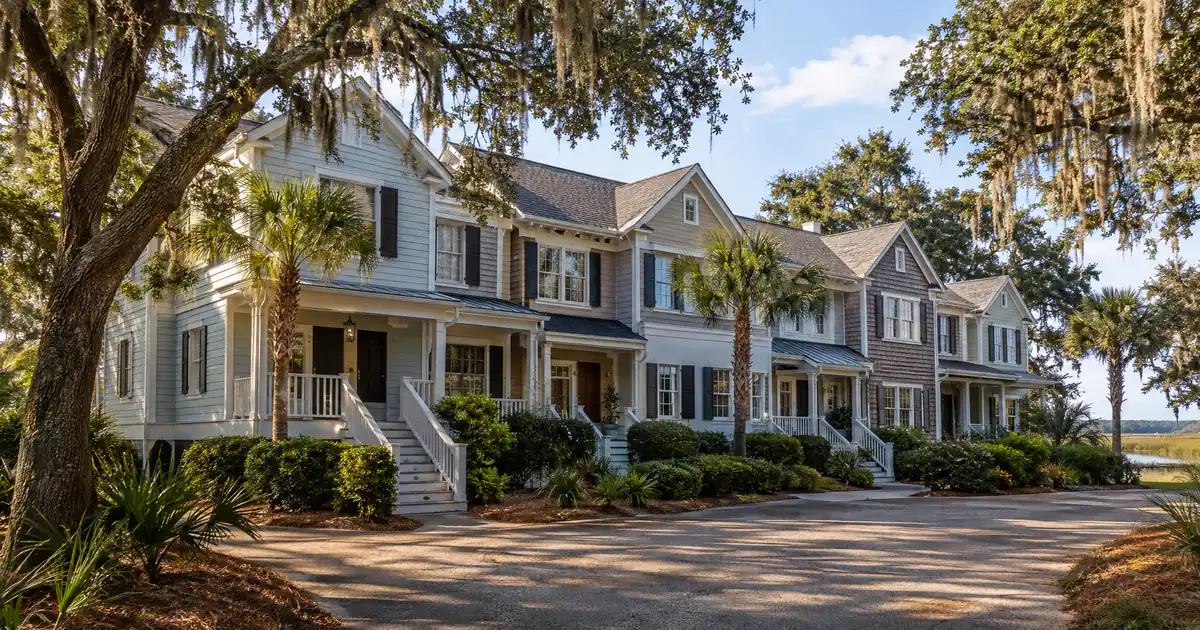
The next 6 to 18 months on Seabrook Island will turn on one thing: whether sale prices settle or keep sliding on very few transactions. Redfin’s latest monthly read shows a median sale price of $780K, down 11.8 percent year over year, with homes averaging 171 days on market against 81 the year before. Only 9 homes sold that month. Zillow’s typical home value runs higher, at $820,536 and up 10.8 percent, which reflects a different methodology. Two sources, opposite signs. That is what a thin market looks like.
Seabrook Island, South Carolina rental property investors can tap DSCR programs that Lendmire arranges, available across 41 markets, including Washington, D.C. Lendmire (NMLS# 2371349) is a DSCR-focused mortgage broker, and the lenders in its wholesale network decide eligibility. This article covers pulling equity out of a property you already own on the island. It does not cover buying one.
DSCR Cash-Out Calculator
Run the cash-out numbers in Seabrook Island, SC
Rate source: Freddie Mac 30-yr average via FRED® — Federal Reserve Bank of St. Louis · effective Sep 24, 2026
Prefilled with starting assumptions — enter your property’s value, balance, taxes, and insurance for a more accurate picture.
Program parameters update from Lendmire’s centralized guideline source. Taxes and insurance are editable estimates.
As of Sep 24, 2026 · General Freddie Mac market benchmark, not a Lendmire loan offer. Property value, balance, taxes, and insurance are editable estimates. Maximum loan-to-value varies by lender, program, property type, and seasoning. Not a Loan Estimate, approval, or commitment to lend. Program availability and eligibility are subject to lender guidelines, credit approval, property review, and underwriting.
The Short Version:
A DSCR cash-out refinance on a Seabrook Island, South Carolina investment property is underwritten primarily on the property’s rental income measured against its full monthly obligation, then sized by a 75 percent LTV ceiling and reserve requirements. Here, price runs far ahead of rent, so the coverage ratio sets the limit before the equity does. Terms vary by lender guidelines, property type, leverage, credit profile, and full file review.
- Redfin shows a $780K median sale price and 9 sales in one month.
- Census-based median gross rent is $3,790, which models below 1.0x at full leverage.
- Renters occupy only 6.3 percent of homes, so the long-term tenant pool is small.
- Proceeds are capped at 75 percent LTV after roughly six months of seasoning.
- Johns Island is the realistic place to redeploy the cash.
Seabrook Island Market Snapshot
A quick read on the Seabrook Island investor landscape — figures come from the cited sources below. Confirm current property-level numbers before underwriting.
| Metric | Detail |
|---|---|
| Home prices | 9 sales (Redfin Seabrook Island) |
| Typical rents | >$3,500 (Niche Seabrook Island Real) |
Two Sources, Two Stories
The island’s pricing data conflicts, and the conflict matters for a cash-out. Zillow says up 10.8 percent. Redfin says down 11.8 percent. Homes.com shows a median sale price of $815,000, down 3 percent, with 114 days on market and 40 sales over twelve months. Forty sales a year is a small sample. One large closing moves the median.
This is a market where any single appreciation number is suspect. Call it volatile and thinly traded. An investor who bought a villa a few years ago and expects the appraisal to confirm the Zillow number is working from the friendliest data point available. The appraiser works from closed sales, and there are few of them.
Some context on the place. Census Reporter puts the population at 2,107 across 5.9 square miles. The Town of Seabrook Island governs alongside a property owners’ association and a private club, so the island is gated and mature. The housing stock skews older, with a median build year of 1998. It is built out. There is no new-construction pipeline to pressure comps, but no fresh supply of comparable sales either.
The Coverage Problem
Coverage on Seabrook Island does not clear 1.0x at full cash-out leverage on typical inventory. The island’s Census-based median gross rent is $3,790 per City-Data, against sale prices near $780K. That is a gross rent-to-price ratio of under half a percent a month.
Run the numbers this way. Assume a $780K villa or townhome and the $3,790 rent. These are modeled inputs, not a market average. Use a 30-year amortization with property taxes and insurance at South Carolina averages, then divide rent by the full monthly obligation. At 75 percent LTV, coverage models at roughly 0.8x including taxes and insurance. At 65 percent LTV it lands just under 1.0x. It takes something near 60 percent LTV to reach about 1.0x. All of that ignores POA dues, which only push the ratio down further.
That is below the 1.00x benchmark most standard DSCR programs are built around. Some lenders review sub-1.00 scenarios. Those files usually involve lower leverage, different pricing, larger reserves, or some mix of the three. Interest-only structures or a sub-1.00 program are paths a lender would review, not assumptions a borrower can make. Eligibility depends on lender guidelines, credit, reserves, and property review.
The owner-reported value runs higher in some sources. Niche shows a median home value of $1,001,400 and median rent above $3,500. That value is almost certainly a Census-style owner estimate, and it makes the ratio worse, not better.
The best on-island fit is a two- or three-bedroom villa or townhome at the lower price tiers, held with a bigger equity cushion. Multi-unit stacking is not a feature of this market. No source documents duplex, triplex, or fourplex stock on the island.
What files like this typically look like
DSCR files in markets like this one typically look the same. The rent is legitimate, the equity is real, and the coverage ratio is the problem. Borrowers arrive with a value in mind from a listing site, then the file gets sized on appraised value and rent used for lender review, whichever constrains first. The files that hold together show a signed lease or a documented rent history, a POA dues statement, current insurance documentation, and reserves that are already seasoned in an account. Files that show up with a lease that is stale or a dues figure that is missing get sent back for exactly that. Lenders can’t size what they can’t see.
Seasoning, Reserves, and the Appraisal
Three mechanical items decide how a cash-out on the island gets sized: seasoning, reserves, and the appraisal.
Seasoning. Programs in the network typically require about six months of ownership before cash-out, measured from title recording. The settlement statement from the original purchase is the evidence. An owner who closed recently and wants to pull equity now is in a waiting period, not a negotiation.
Reserves. Expect roughly six months of PITIA held in reserve for most files, stepping up to about nine months on balances above $1,500,000. On a $780K property, a six-month reserve is meaningful money, and it needs documentation. Account statements, not a verbal assurance. Sourced funds only.
The appraisal. The island’s liquidity is the real risk. Only 9 homes sold in the month Redfin measured, and Movoto shows listings at a median of $760K with 100 days on market. Asking prices sitting below the recent sale median tells an appraiser something. When comps are few, an appraisal tends to get cut before it gets raised. Size the plan on the lower of the expected appraised value and a conservative comp set.
If a value comes in light, an appraisal reconsideration request is a routine step. A good packet includes closed sales in the same section of the island, comparable villa or townhome product, and condition adjustments. It recovers value when the comps support it. It does not recover value the market does not have.
Eligibility parameters that frame the file, subject to lender guidelines and varying by borrower, property, and loan scenario:
| Factor | Typical guideline |
|---|---|
| Cash-out LTV ceiling | 75 percent |
| Seasoning | About 6 months from title recording |
| Minimum DSCR | 1.00 benchmark |
| Credit floor | 620, with tiers at 660, 680, 700 |
| Reserves | About 6 months PITIA (about 9 above $1.5M) |
| Loan size | Up to $3,000,000 on standard programs |
Equity available is not a guaranteed cash figure. It depends on rent used for lender review, PITIA, reserves, and the 75 percent ceiling working together. On this island the rent side usually binds first. For a fuller walk through how these pieces interact, see Lendmire’s DSCR cash-out refinance page and the broader refinancing options overview.
Where the Proceeds Go: Johns Island
The logical move for an owner who extracts equity on Seabrook Island is to put it to work off the island. Johns Island is the nearest mainstream rental submarket. Apartment List shows average rent of $2,027 for a one-bedroom and $2,358 for a two-bedroom. Apartments.com shows an average of $1,862 a month. Those rents are well below the $3,790 Census median on Seabrook. But price points are also lower, so the rent per dollar of price is the better comparison. Johns Island wins it.
Take the next step carefully. Redfin’s Johns Island listings show concessions: two months free at Stono Oaks and six weeks free at Hamlet Maybank, with 25 units available at one complex. Asking rent and effective rent are not the same number there. Underwrite to net effective rent and carry a vacancy allowance. The concessions also compete with small-landlord houses and duplexes. Small multi-unit stock exists but is thin, and no source documents unit rents for it. Treat 2-to-4 unit coverage as something to check on each deal.
The demand behind these rentals is regional. The Charleston Regional Development Alliance lists Boeing South Carolina with more than 9,000 employees, MUSC with about 17,000, and Joint Base Charleston with nearly 25,000 military and civilian jobs. None of those employers sit on the island. They sit in the metro, and the jobs support rental demand on the mainland side, which is where a redeployed cash-out belongs.
So the cleaner structure is a two-step. First, pull equity from the island property at a leverage level the coverage ratio supports. Second, use it as the down payment on a Johns Island or other Charleston-metro rental where rent covers the loan. The second deal is a purchase with its own file. Seabrook Island, South Carolina investors can start from Lendmire’s South Carolina DSCR platform to see how the state fits together.
This is a genuine toss-up for some owners. Holding the island property unencumbered keeps the carry low, and the address may hold value on lifestyle alone. Pulling equity into a higher-coverage asset improves cash flow but adds a second loan and a second vacancy risk. Investors who want cash flow lean toward extraction. Investors who want to hold a resort address lean toward leaving the equity alone.
DSCR or Conventional on This Island?
A conventional cash-out reviews personal income and debt-to-income. DSCR reviews the property. On an island where the rent does not cover the obligation, neither route makes the math disappear. The key differences come down to which constraint binds, and for a high-income owner with a low-coverage villa, a conventional review may fit better. Owners whose income is held in an LLC or who have four or more financed properties often do better on DSCR, subject to program eligibility. For a primer on the structure itself, Lendmire’s DSCR guide covers it.
DSCR vs. conventional financing
Two common ways to finance an investment property in Seabrook Island, SC. They qualify you differently — here’s how investors weigh them.
Why investors choose it
- Qualifies on the property’s rental income — no personal tax returns, W-2s, or pay stubs needed to document income.
- No personal debt-to-income ceiling to clear, so existing mortgages and obligations don’t cap your borrowing the same way.
- Can be closed in an LLC, keeping the property inside a business entity.
- Built for scaling — not held to the limit on number of financed properties that conventional financing applies.
- Underwriting centers on the deal: generally qualifies when the rent covers the payment, a 1.00x coverage ratio being a common baseline (confirmed in underwriting).
- Designed specifically for investment property, including long-term and, where the program allows, short-term rentals.
Where it’s strong
- Often the lowest ongoing financing cost for a buyer who fully qualifies on personal income — a fit for a first property or a cost-first purchase.
Trade-offs for investors
- Requires full personal income documentation and must fit within a debt-to-income limit — salary, existing debts, and other mortgages all count.
- Typically held in your personal name rather than a business entity.
- Caps how many financed properties you can carry, which can become a ceiling as a portfolio grows.
- Evaluates you as a borrower as much as the property, which usually means more paperwork.
How investors usually choose: a first or single property often optimizes for the lowest financing cost; portfolio builders often optimize for leverage, vesting in an LLC, and scaling past conventional caps. The right answer depends on your goals, the property, and current guidelines — both paths run through select lenders in Lendmire’s wholesale network, with eligibility and terms confirmed in underwriting.
Investors should verify current local rental rules, taxes, and insurance with qualified local professionals. Coastal insurance and POA dues both feed PITIA, so they matter to the coverage ratio.
To test a specific property, call 828-256-2183 or see how the math pencils.
Frequently Asked Questions
How do you qualify for a DSCR cash-out refinance on Seabrook Island?
Qualification centers on the property’s rent used for lender review compared with its full PITIA, typically measured against a 1.00 benchmark, plus credit, reserves, and seasoning. Credit tiers start at a 620 floor, and reserves run about six months of PITIA. On the island, rent rarely covers a high-leverage obligation, so the usual adjustment is a lower LTV. Final eligibility is set by the lender.
What are the requirements for an investment property loan in Seabrook Island, South Carolina?
For a cash-out, expect about six months of ownership from title recording, an LTV of no more than 75 percent, a minimum 1.00 DSCR benchmark, and documented reserves of about six months of PITIA. Loan sizes run up to $3,000,000 on standard programs. Manufactured homes, log homes, and barndominiums fall outside these programs. Guidelines vary by lender and borrower.
What can limit DSCR cash-out proceeds in Seabrook Island?
Lendmire arranges DSCR investor loans. On Seabrook Island, proceeds are most often limited by low rent against high price, which pushes coverage under 1.00, and by a cautious appraisal on few comps. The 75 percent LTV ceiling and reserve requirements set the outer bounds. Equity is never a guaranteed cash figure.
Will an appraiser back the value an owner expects on the island?
Not reliably. Redfin reported only 9 sales in a month and Homes.com reported 40 over twelve months, so comps are few. Zillow and Redfin disagree on direction. A well-documented reconsideration packet with same-section sales and condition adjustments can recover value the comps support.
Where does the cash-out money work better than on the island?
Johns Island and other Charleston-metro areas typically offer lower price points relative to rent. Apartment List and Apartments.com show rents below the island median, but purchase prices are lower as well. Concessions at several complexes mean net effective rent should drive the underwriting, not asking rent.
For current guidelines and terms, see Lendmire’s DSCR loan programs page.
About Lendmire
Lendmire (NMLS# 2371349) is a mortgage brokerage focused on DSCR investor financing, helping arrange programs through wholesale and investor-lending channels in 41 markets, including Washington, D.C. The lender evaluates DSCR loans on property cash flow rather than personal income, subject to lender guidelines, which supports LLC closings and accommodates investors with four or more financed properties. Lendmire is a Scotsman Guide Top Mortgage Workplace in both 2025 and 2026.
Get Started
Ready to find the right loan for you?
See your offer in seconds. No credit pull, no obligation.
Informational only. Not a Loan Estimate, approval, or commitment to lend. Program availability and eligibility are subject to lender guidelines, credit approval, property review, and underwriting.
References
1. Redfin, Seabrook Island housing market
2. Zillow, Seabrook Island home values
3. Niche
4. Homes.com
6. City-Data
7. Movoto shows listings at a median of $760K with 100 days on market
8. Apartment List, Johns Island
10. Redfin’s Johns Island listings
11. Charleston Regional Development Alliance, employers
12. 2025
13. 2026
This article is part of Lendmire’s investment property cash-out refinance program — full qualification details, guidelines, and scenarios live on the program page.
Related reading: Cash Out Refinance Investment Property in Seabrook Island, South Carolina: Villa Equity Math · DSCR Cash Out Refinance in Bluffton, South Carolina: The 2026 DSCR Financing Guide to Buckwalter Parkway · DSCR Cash Out Refinance in Kiawah Island, South Carolina: Equity Math on a Resort Barrier Island
Guides: Investment Property Cash-Out Refinance in South Carolina
Brandon Miller
Founder & CEO, Mortgage Loan Originator, Lendmire LLC
- Mortgage Loan Originator · NMLS# 1129696 · Verify on NMLS Consumer Access
- North Carolina Real Estate Broker · License# 343312 · Verify on NCREC
- North Carolina Insurance Producer · License# 19053198 · Property, Casualty, Life, Health · Verify on NAIC SBS
- Lendmire LLC · Firm NMLS# 2371349 · Verify firm licensure
Disclosure information. Lendmire is a state-licensed mortgage brokerage under NMLS# 2371349. Lendmire is not a depository institution, direct lender, or financial advisor — all loans referenced are placed through wholesale lender partners and are subject to each lender's underwriting standards. This article is provided for general informational purposes and is not a commitment to lend, nor does it constitute financial, legal, or tax advice. Loan programs, terms, rates, and qualification standards change without notice and depend on borrower profile, property type, and the state in which the subject property is located. Equal Housing Opportunity provider. NMLS Consumer Access: nmlsconsumeraccess.org.