
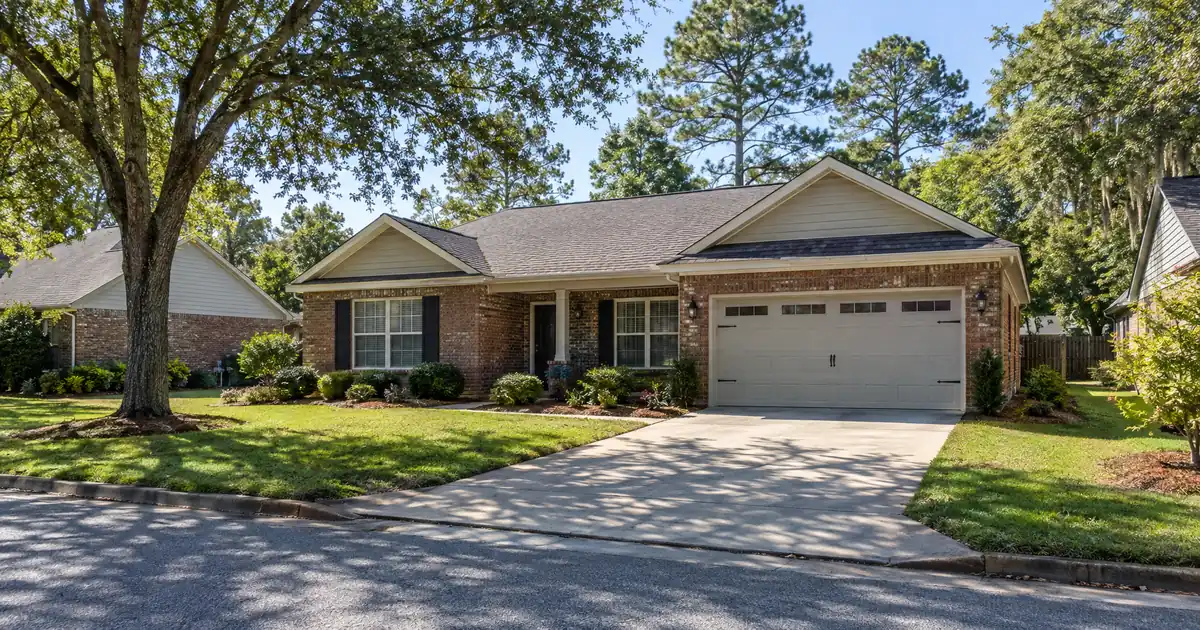
If you own a rental in Perry that would appraise somewhere near the $297K median sale price Redfin reports, here is what most refinance pitches skip: your equity is real, but the rent has to carry the new loan, and in this market the rent is the binding constraint. Appreciation won’t bail you out. A DSCR cash-out here is a coverage-ratio exercise first and an equity exercise second.
The Quick Read: A DSCR cash-out refinance in Perry, Georgia is underwritten primarily on the property’s rental income measured against its full monthly obligation, so the deal works from seasoning check to rent schedule to appraisal to lender review, with proceeds sized by the lower of the LTV cap and the coverage test.
DSCR Cash-Out Calculator
Run the cash-out numbers in Perry, GA
Rate source: Freddie Mac 30-yr average via FRED® — Federal Reserve Bank of St. Louis · effective Sep 24, 2026
Prefilled with starting assumptions — enter your property’s value, balance, taxes, and insurance for a more accurate picture.
Program parameters update from Lendmire’s centralized guideline source. Taxes and insurance are editable estimates.
As of Sep 24, 2026 · General Freddie Mac market benchmark, not a Lendmire loan offer. Property value, balance, taxes, and insurance are editable estimates. Maximum loan-to-value varies by lender, program, property type, and seasoning. Not a Loan Estimate, approval, or commitment to lend. Program availability and eligibility are subject to lender guidelines, credit approval, property review, and underwriting.
- Cash-out LTV tops out at 75%, subject to lender guidelines.
- Ownership seasoning of about six months, measured from title recording, typically comes first. RentCafe’s Perry average of $1,298 sits well below house rents, so leverage choice drives the coverage number.
- Single-family detached homes dominate the stock, per NeighborhoodScout.
- Modeled coverage on a median house at 75% LTV lands near 1.0x including taxes and insurance.
Lendmire (NMLS# 2371349) arranges DSCR cash-out refinances through wholesale investor channels and does not lend directly. This analysis covers how those files tend to behave in Perry specifically: a county-seat city of about 23,000 residents per Census Reporter’s ACS 5-year figure that sits on I-75, straddles the Houston and Peach County line, and hosts the state fairgrounds.
Perry Market Snapshot
A quick read on the Perry investor landscape — figures come from the cited sources below. Confirm current property-level numbers before underwriting.
| Metric | Detail |
|---|---|
| Home prices | ~$306K median list (Movoto) |
| Recent appreciation | 6.44% avg annual (NeighborhoodScout) |
| Employment | 22,000+ employees (City of Perry) |
What the Equity Math Actually Looks Like
The cash-out ceiling is 75% of appraised value, and the cash you receive is whatever remains after the payoff and after the coverage test constrains the loan size. Both limits matter. In Perry, the coverage test is more likely to bite first.
Think in percentages. Say an investor holds a three-bedroom house and owes 55% of its appraised value. The 75% cap leaves roughly 20 points of value available, before costs and reserves. Say a second investor owes 65%. That file has about 10 points to work with, and it may not justify the refinance at all. The calculator converts these percentages to dollars. The analytical point is that the available slice is thin for anyone who bought near current pricing with conventional leverage.
Other program guardrails, all subject to lender guidelines and varying by borrower and property:
- Seasoning: about six months of ownership, measured from title recording.
- Credit: tiers start at a 620 floor and improve at 660, 680, and 700.
- Reserves: about six months of PITIA.
- Coverage: most standard programs are built around a 1.00x benchmark, since rent covers the full obligation at that level. Some lenders review lower or no-ratio files, but those usually need lower leverage, different pricing, or stronger compensating factors.
Proceeds are never a guaranteed figure. They depend on rent used for lender review, the full obligation, reserves, and the appraisal. The guide “What Is a DSCR Loan” covers how the ratio is built, and Lendmire’s DSCR cash-out refinance page covers the product itself. For Georgia-wide context, see DSCR loans in Georgia.
Coverage Math: Where Perry Cash-Outs Clear and Where They Don’t
Perry’s single-family coverage sits at the margin. At full-leverage cash-out, a median-priced house rented at the low end of local data produces a coverage ratio just under 1.0x. At the high end of local data it clears with room to spare. Which end you live at determines everything.
The spread in the rent evidence is wide. Zumper’s median across Perry rentals sits at the lower end of the local data, while house-specific listings tend to skew toward newer, larger homes and read noticeably higher. Against the Redfin median sale price, gross rent-to-value comes out thin across that whole range. Underwrite to the low end and treat the high end as an upper bound.
Run the numbers on a modeled house valued near $297K at 75% LTV. These are modeled assumptions, not sourced market facts, with taxes and insurance at Georgia averages plus a 30-year amortization at a high-6s assumption. Exact terms depend on the lender’s guidelines, property type, leverage, and a full review of the borrower’s file.
| Modeled rent | Coverage at 75% LTV | Read |
|---|---|---|
| $1,725 | Just under 1.0x | Sub-1.00 file |
| $2,074 | Mid-1.1x range | Clears the benchmark |
Those bands include taxes and insurance. Cutting leverage to around 65% pulls the low-rent case up to roughly 1.05x to 1.10x. That is the practical lever: take less cash, qualify more cleanly.
When a file lands under 1.00x on long-term rent, a lender may review other structures. These include a sub-1.00 program with reduced leverage, an interest-only structure, or a lower loan amount. Each is a conditional path, not an entitlement, and eligibility turns on lender guidelines, credit approval, and property review. Refi programs vary on which of these they entertain.
One more constraint on the high-rent case: the Homes.com figure is a portal median, not a lease you hold. Lenders typically work from an appraiser’s rent schedule or an in-place lease, whichever the program favors. An owner whose actual lease sits at $1,850 should model $1,850, not $2,074.
Why Appreciation Can’t Carry This Refinance
Perry’s price trend is mixed, and a cash-out thesis that depends on a higher appraisal is a bet the data doesn’t support. Build the case on the equity you already hold.
The signals conflict:
- Redfin shows the median sale price down 2.0% year over year at $297K, with homes sitting 98 days versus 59 a year earlier. – Zillow’s home value index shows $277,463, up 3.0% year over year. – NeighborhoodScout reports average annual appreciation of 6.44% over the last ten years.
Read these together: strong long-run appreciation, a softer recent stretch, and a market where sellers are negotiating. Redfin’s median is a small-sample figure and noisy. Even so, a slower market means appraisers lean on recent closed comps, not on listing optimism. An owner who bought before the run-up has a cushion. An owner who bought recently may find the appraisal lands flat, and the 75% cap then yields little.
This is a genuine toss-up for recent buyers. If the appraisal comes in close to purchase price, the six-month seasoning clock mostly just tells you when you may apply, not whether the numbers justify it. Owners with renovation-driven value-add have a stronger case than owners waiting on the market.
The Demand Floor: Plants, a Hospital, and a Base 25 Minutes Away
Perry’s tenant base is employer-driven, not student-driven, and the employers are diverse enough to keep long-term occupancy steady even when for-sale activity slows. No four-year university sits in the city.
Perry is not just a bedroom community. Per Data USA, resident employment is led by retail trade (1,303 people), health care and social assistance (1,297), and public administration (1,224). That is a three-way split, not a single-employer dependency. The Houston County Development Authority lists Frito-Lay, Perdue Farms, and Jack Link’s among the county’s manufacturers, and the City of Perry names Interfor as a significant employer. I-75 logistics add to the base.
Robins Air Force Base is the regional anchor. The City’s own materials cite more than 22,000 employees and a $2.7 billion annual economic impact. Perry is a commuter-shed submarket for it, with a drive of roughly 25 to 30 minutes to the gate, not an adjacent address. That distance is the selling point: Perry offers a lower-cost alternative to Warner Robins. The City also cites a cost of living 6% below the Georgia average, which supports the workforce-housing pitch.
Healthcare is the newest institutional change. Houston Healthcare-Perry became Emory Hospital Perry after the Emory integration, and Emory News reports more than 2,500 employees and 350 physicians across the Perry and Warner Robins campuses. The Perry campus is a 45-bed acute care facility. A stable health-system employer under a larger parent is a tenant-quality positive, not a growth story.
The tenure data cuts a different way. RentCafe reports that 33% of households rent, and apartment rents are concentrated: 84% fall between $1,001 and $1,500, with the average up 2.39% year over year. A rented house at $1,725 or more competes against a $1,300 apartment. Modest rent growth means cash-out cases should not assume steep increases.
Four Pockets Worth Underwriting
No source publishes reliable neighborhood-level rents or prices for Perry, because rental inventory is too thin. What follows is qualitative submarket analysis, not a rent comparison. Treat any claim of precise neighborhood rent bands here with suspicion.
Downtown and the historic districts. Perry’s recognized districts include the Downtown, Swift Street, and Washington-Evergreen areas, with older homes mixed in alongside newer construction. Tenants skew toward county and city employees and downtown retail and hospitality staff. This is the likeliest place to find converted or small multi-unit product, though that is unverified. Older stock raises the appraisal-condition question.
The growth corridors: Northside Drive, Perry Parkway, and Langston Road. Newer subdivisions line these corridors. NeighborhoodScout says 54.78% of Perry’s housing was built since 2000, which means plenty of 3- and 4-bedroom detached homes with fewer deferred-maintenance surprises. Demand comes from commuters to Warner Robins and the base. For a cash-out, newer construction is easier to appraise and carries cleaner rent comps.
The I-75 and fairgrounds interchange. The Georgia National Fairgrounds & Agricenter draws almost 1 million visitors a year and sits in the Peach County portion of the city. That produces hospitality, event, and industrial-employee demand. Event traffic is a known factor around fair dates, and for a long-term rental it is a minor consideration. It should not be the basis of an income assumption.
Morningside Drive and the hospital area. The Emory Hospital Perry campus anchors healthcare-staff demand. No verified housing data exists for this pocket, so the thesis is demand proximity, not numbers.
Is the Duplex Math Real?
The multi-unit case looks strong on paper and thin in practice. Single-family detached homes make up 72.49% of Perry’s housing units, and Houston County shows only a handful of active multifamily listings.
One county listing illustrates the upside. A renovated duplex, two-bedroom and one-bath per unit, was listed at $215,000, with its location inside the county unconfirmed. Because two units can carry the debt together, a duplex like this can show stronger rent coverage than a comparable single-family house, though any rent figure for it would be a modeled assumption rather than a confirmed number. Exact coverage depends on actual rents, taxes, insurance, and leverage. Every figure here varies by lender and program, and guidelines, property type, leverage, and credit profile all apply.
But this is one listing. It is illustrative, not a market. Appraisers need duplex comps, and Perry has few. Working DSCR brokers see a recurring pattern in small-town workforce markets like this one: the single-family file closes on thin coverage and modest leverage, while the rare small multifamily file has stronger coverage but struggles with comp support and rent-schedule documentation. Owners of a 2-to-4 unit asset here are sitting on a scarce product, and that scarcity helps the coverage ratio while hurting the appraisal.
The practical advice: if you own a small multi-unit in Perry, a cash-out may support fuller proceeds than a comparable house. If you are hoping to buy one to refinance later, the comp search could consume more time than the financing. Consider a wider Middle Georgia radius for comparables.
How the Proceeds Get Redeployed
Cash-out proceeds are capital for the next deal, and in a market where yields are thin, discipline about what that capital buys matters more than the amount.
Consider a scenario where an investor extracts equity from a house with modest coverage and redeploys it into a second Perry property. The second property’s coverage has to stand on its own, because stacking two thin-coverage assets compounds risk. The cleaner structure is to pull less cash from the first property, hold coverage at or above the benchmark, and use the proceeds toward the lower-priced end of the market, where rent-to-value is stronger.
DSCR vs. conventional financing
There are two common ways to finance an investment property in Perry, GA, and they qualify you differently — here’s how investors weigh them.
Why investors choose it
- Qualifies on the property’s rental income — no personal tax returns, W-2s, or pay stubs needed to document income.
- No personal debt-to-income ceiling to clear, so existing mortgages and obligations don’t cap your borrowing the same way.
- Can be closed in an LLC, keeping the property inside a business entity.
- Built for scaling — not held to the limit on number of financed properties that conventional financing applies.
- Underwriting centers on the deal: generally qualifies when the rent covers the payment, a 1.00x coverage ratio being a common baseline (confirmed in underwriting).
- Designed specifically for investment property, including long-term and, where the program allows, short-term rentals.
Where it’s strong
- Often the lowest ongoing financing cost for a buyer who fully qualifies on personal income — a fit for a first property or a cost-first purchase.
Trade-offs for investors
- Requires full personal income documentation and must fit within a debt-to-income limit — salary, existing debts, and other mortgages all count.
- Typically held in your personal name rather than a business entity.
- Caps how many financed properties you can carry, which can become a ceiling as a portfolio grows.
- Evaluates you as a borrower as much as the property, which usually means more paperwork.
How investors usually choose: a first or single property often optimizes for the lowest financing cost; portfolio builders often optimize for leverage, vesting in an LLC, and scaling past conventional caps. The right answer depends on your goals, the property, and current guidelines — both paths run through select lenders in Lendmire’s wholesale network, with eligibility and terms confirmed in underwriting.
Alternatively, redeploy into a value-add. Because the appreciation data is mixed, a purchase discount or renovation creating forced equity is a firmer foundation than hoping the market lifts. That logic reverses the usual cash-out story: equity extracted today only works if the next asset carries its own weight.
LLC-titled holdings are common among Perry investors with more than one property, and refinances into an LLC are available subject to lender program eligibility. For the broader tradeoffs against bank financing, see the conventional-vs-DSCR tradeoffs. One property type warrants a plain flag: manufactured homes, log homes, and barndominiums fall outside these DSCR programs, so they won’t work as the collateral here regardless of rent.
Investors ready to size a specific property can review my scenario or call Lendmire at 828-256-2183.
What to Watch Over the Next Quarter
Three indicators will tell you whether the window is widening or narrowing for Perry cash-outs:
1. Days on market. Redfin’s jump from 59 to 98 days is the one to track. If it keeps climbing, appraisals tighten and the 75% cap yields less. If it reverses, recent buyers gain cushion.
2. House rents against the apartment band. If house rents hold above $1,725 while apartments stay in the $1,001 to $1,500 range, single-family coverage stays workable. A narrowing gap would hurt the thin-coverage files first.
3. Emory’s operations at the Perry campus and plant hiring along I-75. Staffing and expansion at the hospital and the food and packaging plants are the demand floor under every rental in the city.
Frequently Asked Questions
Can a house in Perry clear a 1.00x coverage ratio on a cash-out refinance?
It depends on the rent you can document and the leverage you choose. At full 75% LTV and rent near the Zumper median, modeled coverage including taxes and insurance runs just under 1.0x. Lowering leverage or documenting rent nearer the Homes.com median moves the file above the benchmark, subject to lender guidelines.
Does the Peach County portion of Perry change anything for a refinance?
Not for the DSCR calculation itself, since coverage is rent against the full obligation. The county line matters for tax and local-jurisdiction details, which should be confirmed with qualified local professionals. Appraisers and lenders will want to know which county the parcel sits in.
How much equity can I realistically pull on a house I bought recently?
Often very little. The 75% cap applies to appraised value, and if you purchased near market with typical financing, the gap between your balance and the cap may be small. Six months of seasoning, measured from title recording, must also pass, and a flat appraisal in a market with rising days on market limits proceeds further.
Is a Perry duplex a better cash-out candidate than a single-family rental?
On coverage math, yes, because two units on a modest price produce a much stronger ratio. In practice, duplex comps are scarce, so appraisal and rent-schedule support are harder to build. Owners of an existing small multi-unit are in a stronger position than buyers hoping to find one.
Will Robins Air Force Base proximity protect my rental’s value?
It supports tenant demand, but Perry is a commuter-shed location about 25 to 30 minutes from the gate, not an adjacent address. The base’s employment scale, over 22,000 per City materials, gives the region a steady employer floor. It does not guarantee appreciation or a particular appraisal.
For current guidelines and terms, see Lendmire’s DSCR loan programs page.
About Lendmire
Lendmire, NMLS# 2371349, is a non-QM mortgage broker serving real estate investors in 41 markets, including Washington, D.C., through DSCR investor loan programs. Qualification is generally reviewed around the subject property’s rental income, not the borrower’s W-2 history, which suits LLC-titled portfolios and self-employed investors. All scenarios remain subject to lender review and program guidelines. The firm has earned back-to-back Scotsman Guide Top Mortgage Workplace recognitions: a 2026 Scotsman Guide Top Workplace designation, following a top-ranked workplace in 2025, as covered in the 2026 industry recognition release.
Get Started
Ready to find the right loan for you?
In about 30 seconds you can review financing options available for your investment property. No commitment required.
Informational only. Not a Loan Estimate, approval, or commitment to lend. Program availability and eligibility are subject to lender guidelines, credit approval, property review, and underwriting.
References
1. Redfin: Perry housing market
2. RentCafe: Perry average rent
3. NeighborhoodScout: Perry real estate
4. 23,000 residents per Census Reporter’s ACS 5-year figure
5. Movoto
6. perry-ga.gov
9. Houston County Development Authority
10. City of Perry: Why Do Business in Perry
11. Emory News: Houston Healthcare integration
12. $215,000
13. a 2026 Scotsman Guide Top Workplace
14. Scotsman Guide — Top Workplaces 2025
15. EIN Presswire — Lendmire Recognized as a 2026 Top Workplace by Scotsman Guide
This article is part of Lendmire’s investment property cash-out refinance program — full qualification details, guidelines, and scenarios live on the program page.
Guides: Investment Property Cash-Out Refinance in Georgia
Brandon Miller
Founder & CEO, Mortgage Loan Originator, Lendmire LLC
- Mortgage Loan Originator · NMLS# 1129696 · Verify on NMLS Consumer Access
- North Carolina Real Estate Broker · License# 343312 · Verify on NCREC
- North Carolina Insurance Producer · License# 19053198 · Property, Casualty, Life, Health · Verify on NAIC SBS
- Lendmire LLC · Firm NMLS# 2371349 · Verify firm licensure
Compliance and disclosures. Lendmire (NMLS# 2371349) is a licensed mortgage broker and is not a direct lender, depository institution, financial advisor, or tax professional. Content in this article is general market analysis and educational information — not financial, legal, or tax advice for any specific situation. Lendmire does not guarantee loan approval; every transaction is subject to underwriting by the funding lender. Mortgage pricing and loan program guidelines are subject to change at any time without notice and vary by borrower characteristics, property type, and state regulations. Lendmire complies with Equal Housing Opportunity. Licensure verification: NMLS Consumer Access.