
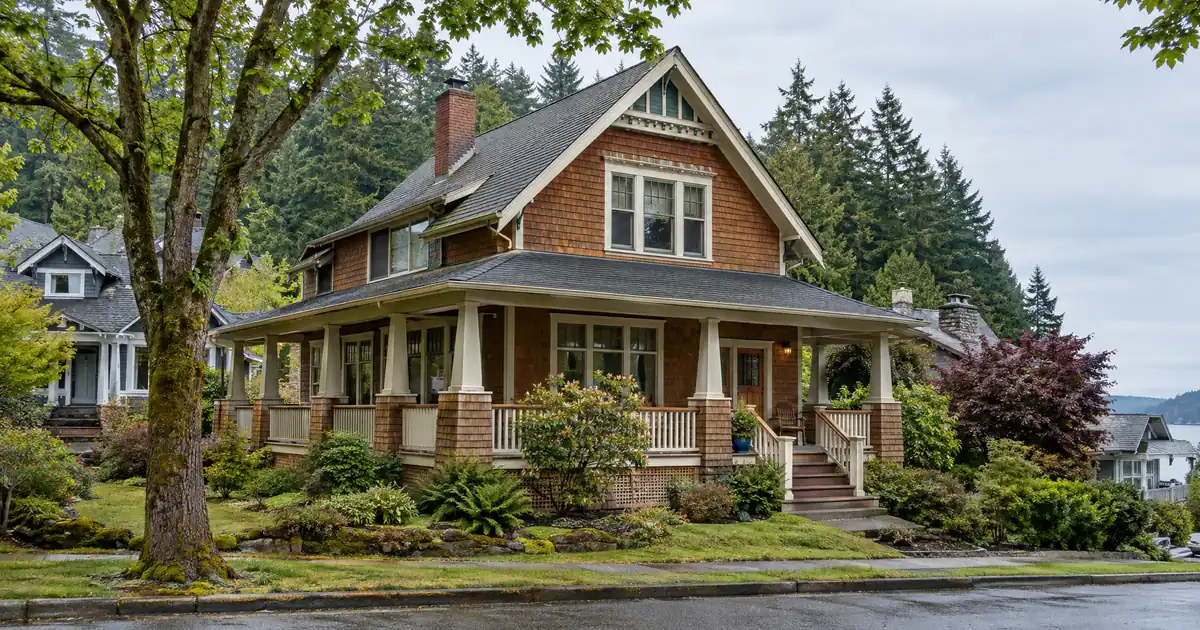
About 37.5 percent of housing units in San Juan County sit vacant, according to the county’s housing element draft, mostly seasonal or occasional-use homes. That oddity explains why a DSCR cash out refinance in Friday Harbor behaves differently from one on the mainland. Long-term rentals are scarce, values are high relative to rent, and the file lives or dies on documentation.
DSCR Cash-Out Calculator
Run the cash-out numbers in Friday Harbor, WA
Rate source: Freddie Mac 30-yr average via FRED® — Federal Reserve Bank of St. Louis · effective Oct 1, 2026
Prefilled with starting assumptions — enter your property’s value, balance, taxes, and insurance for a more accurate picture.
Program parameters update from Lendmire’s centralized guideline source. Taxes and insurance are editable estimates.
As of Oct 1, 2026 · General Freddie Mac market benchmark, not a Lendmire loan offer. Property value, balance, taxes, and insurance are editable estimates. Maximum loan-to-value varies by lender, program, property type, and seasoning. Not a Loan Estimate, approval, or commitment to lend. Program availability and eligibility are subject to lender guidelines, credit approval, property review, and underwriting.
The Quick Read:
A DSCR cash-out refinance in Friday Harbor, Washington State is underwritten primarily on the property’s rental income measured against its full monthly obligation, so the file has to show a documented lease or appraiser rent schedule, enough recorded seasoning, and a balance that fits the lender’s loan-to-value ceiling.
- County housing runs 37.5 percent vacant, so documented year-round leases carry the file.
- Median-rent coverage on a median-priced house models well under 1.0x at the maximum cash-out leverage.
- Condos and townhomes at the low end of the price band offer the best odds of clearing coverage.
- Thin comps and slow sales raise appraisal risk on any refinance here.
- Proceeds come from basis and rent, not appreciation. Values are flat.
- Final terms depend on lender guidelines, property type, leverage, and the borrower’s complete credit picture.
For real estate investors in Friday Harbor, Washington State, Lendmire helps structure and place DSCR financing through wholesale lenders operating in 41 markets, including D.C. Lendmire (NMLS# 2371349) is a DSCR-focused mortgage broker, which means it arranges the loan and the lender reviews and approves it. This article assumes you already own the property. It covers pulling equity out, not buying in.
The Coverage Problem Nobody Softens
Friday Harbor is a low-yield market, and cash-out refinancing here starts with that fact. Rent runs roughly $1,645 to $1,757 depending on the source: ZIP 98250 ACS data shows $1,645, and City-Data shows $1,757. Values run from a Homes.com 12-month median sale price of $683,500 up to a Zillow average of $883,397. The sources disagree, so treat each as a range, not a single answer.
Run the modeled math. Assume a $683,500 house renting at a modeled $1,700 and a cash-out at the 75 percent ceiling. Coverage including taxes and insurance lands around 0.4x. Dropping to 50 percent loan-to-value still leaves it under 0.6x. Not close.
Current listings tell a better story. Apartment Home Living shows rentals from $1,695 to $5,500, averaging $3,585. Use that average against the same price at 75 percent and coverage models near 0.85x, still short of the 1.00x benchmark most standard programs are built around. At about 50 percent loan-to-value it clears 1.0x narrowly. Those listing averages skew toward larger homes, so underwrite off an actual in-place lease or the appraiser’s rent schedule, not a market median.
Sub-1.00 files are not automatically dead. Select lenders in the network may review sub-1.00 programs, lower-leverage structures or interest-only terms, usually with stronger credit, more reserves and tighter overlays. Subject to lender guidelines, credit approval and property review, that is the path for most Friday Harbor single-family rentals. The full breakdown of how coverage is calculated is worth reading first if the ratio is new to you.
Where Does the Equity Come From When Values Are Flat?
Not from appreciation. Zillow’s index is down 0.3 percent over the past year, while Homes.com shows the 12-month median up 1 percent. Those measure different things, but neither describes a market that hands you a refinance windfall. A Rocket Homes report labeled the market a buyer’s market, with a dated median sold price down 6 percent.
So the equity in a cash-out here has to come from one of three places:
- A purchase basis well below current appraised value.
- Renovation or added rentable space.
- A long hold from a lower entry price.
An investor who bought near the low end of the $430,000 to $1.6 million single-family band that Homes.com reports has a very different refinance than one who bought near the top. (The band is wide enough that “I own a Friday Harbor rental” tells a lender almost nothing.)
The program mechanics are simple. Cash-out refinances are capped at 75 percent of appraised value, and about 6 months of ownership, measured from title recording, is the typical seasoning requirement. Credit tiers run from a 620 floor up through 700, and reserves typically run about 6 months of full housing payment, rising to about 9 months above $1,500,000. Standard programs cover balances up to $3,000,000, and smaller balances route through select lenders. All of that is guidance subject to lender overlays, not a commitment. Pulling equity with a DSCR cash-out goes deeper on the structure.
Hold the proceeds loosely. Available equity depends on appraised value, rent used for lender review, reserves and the cap together. It is not a guaranteed figure.
Appraisal Friction on a Thin-Comp Island
Comparable sales are the weak link in any Friday Harbor refinance. Homes.com says homes sell after 93 days on the market versus a 58-day national average. Redfin’s condo data showed only 2 homes sold in a month, with listings sitting 133 days.
With that few sales, an appraiser may reach for stale or distant comparables. The risk isn’t dramatic, but it is real: the appraised value comes in below what you expected, and the cash-out shrinks with it. Plan the loan-to-value conservatively, then treat any extra proceeds as upside.
The island setting adds plumbing to the file. There is no bridge. Access is by boat or plane, and the island covers 55 square miles per Wikipedia. Property inspections, appraiser travel and any contractor work all route through that geography. Appraisers who know the island are few, and that is a lender-side issue to raise early, not a reason to avoid the market.
DSCR files in markets like this one typically look like thin-comp, high-basis, low-yield deals where coverage only clears at reduced leverage. The strongest files arrive with a signed lease, proof of rent receipts, a clean HOA or condo questionnaire where relevant, and conservative expectations on appraised value. The weakest file leans on market-median rent and hopes the appraisal fills the gap.
The In-Town Pockets That Pencil Best
Lower basis wins in this market. Condos and townhomes in the walkable core give the best odds of clearing coverage, because every dollar of price you remove helps the ratio.
Homes.com shows condos from $200,000 to $1.3 million, and Redfin showed 7 condos listed at a median of $395K. Compare that to single-family at $430,000 and up. HOA dues reduce net income in the coverage calculation, and lender condo rules matter, so get the condo questionnaire early. A condo project failing a lender’s review is the most common avoidable surprise.
Downtown and the waterfront core. The area steps up from the ferry landing into shops, restaurants and a working marina. The courthouse, hospital and airport are nearby. Tenants are service, health-care and government workers. It is the most reliable rental pocket, and also the most expensive per square foot. Favor smaller units here.
In-town townhomes near the library and John O. Linde Community Park. This is a plausible workforce-rental pocket: close to services, a short walk to a 30-acre park. No sourced price or rent data exists for it, so don’t assume it outperforms. Treat it as a hunting ground, not a thesis.
Panorama Place. Named alongside Downtown as a main neighborhood in one aggregator, with no sourced price or rent data. It deserves a look, but the numbers have to come from comps you pull yourself.
Skip Roche Harbor for DSCR. It is a former lime-company town turned resort and boater’s haven. Seasonal and resort demand, not year-round leases. Sun Rise I, cited by Friends of the San Juans as an example of higher-density development, may or may not be a rental pocket. Nobody has verified it.
Duplexes and fourplexes are the thinking-out-loud case. A true multi-unit would cover itself better than a house, and the supply argues for a premium on any you hold. Per the Friends of the San Juans summary of the county plan, about 83 percent of units were single-unit dwellings and only 6.7 percent were structures with two or more. A listed duplex is a scarce asset. The catch is thin comps again. The appraiser’s rent schedule, and any second-unit income, will drive the loan amount.
A Modeled Scenario
Consider an investor holding an in-town townhome that appraises at a modeled $450,000, renting at a modeled $2,600 with no HOA. At the 75 percent ceiling, coverage including taxes and insurance models just under 1.0x. At about 65 percent loan-to-value it models near 1.1x. These are illustrative assumptions, not market data.
Run it both ways. At 75 percent the file is a sub-1.00 conversation: reduced leverage, a sub-1.00 program through select lenders, or an interest-only structure, all subject to lender review. At 65 percent the coverage clears the baseline, but the proceeds are smaller. Which one is right depends on what the next deal needs. If the next purchase only needs a modest down payment, the lower-leverage structure often wins because the file is cleaner.
Reserves matter as much as the ratio here. With about 6 months of full housing payment expected, an investor pulling equity from one Friday Harbor property to fund another needs to count reserves on both. That is where otherwise good files stall.
Tenants Who Hold a Lease Through Winter
Demand here is deep but seasonal. Winters are quieter, with some businesses on reduced hours. An older county-cited analysis of employment data showed jobs rising 43 percent between the winter low and summer peak, and leisure and hospitality jobs rising 159 percent (that data is dated, so read it as pattern, not current fact). A county visitor study put the daily peak-season population at 24,810 versus 16,314 off-season, per the county housing element. According to The Journal of the San Juan Islands, local restaurants have limited service hours, which they attribute to a lack of housing.
That supports year-round lease demand, since employers can’t fill jobs without housing. It also creates a winter income gap for hospitality tenants. Favor tenants tied to year-round employers:
- PeaceHealth Peace Island Medical Center, the only hospital in the San Juans.
- University of Washington Friday Harbor Laboratories, a marine field station on a 490-acre preserve that brings seasonal summer demand.
- San Juan County government, since Friday Harbor is the county seat.
- The Port of Friday Harbor and the ferry system.
- The school district.
No sourced headcounts exist for these employers, so the case is qualitative. The town itself had 2,613 residents at the last census, per Wikipedia citing the Census. Small tenant pool, concentrated employers. The lab’s seasonal demand skews to short stays, which is its own file question for a program reviewing a lease.
What the File Needs
Plumbing, not strategy. Expect the lender to review:
- A signed lease and, where available, proof of rent receipts.
- Title and recording date to confirm the 6-month seasoning clock.
- A condo or HOA questionnaire if applicable.
- Insurance and tax documentation, which vary by property and county.
- Reserve statements.
- LLC documents if the property is titled in an entity, subject to lender program eligibility.
Property type matters. Manufactured homes, log homes and barndominiums fall outside these DSCR programs. On an island with unconventional housing stock, check the structure type before spending money on an appraisal.
Verify current local rental rules, taxes and insurance with qualified local professionals. Investors who want the broader refinance picture can look at investor refinance options, and those weighing this against a bank loan can see the guide “Where DSCR and Conventional Diverge”. The DSCR loan options for Washington State investors page covers the state-level picture. To start a scenario, call 828-256-2183 or connect with Lendmire.
Frequently Asked Questions
How do you qualify for a DSCR cash-out refinance in Friday Harbor?
The property’s rent has to cover its full monthly obligation, with 1.00x as the common baseline. You also need about 6 months of ownership from title recording, a credit score at or above the 620 floor, and reserves. On most Friday Harbor houses, coverage only clears at reduced leverage. Qualification is subject to lender guidelines, credit approval and property review.
DSCR vs. conventional financing
There are two common ways to finance an investment property in Friday Harbor, WA, and they qualify you differently — here’s how investors weigh them.
Why investors choose it
- Qualifies on the property’s rental income — no personal tax returns, W-2s, or pay stubs needed to document income.
- No personal debt-to-income ceiling to clear, so existing mortgages and obligations don’t cap your borrowing the same way.
- Can be closed in an LLC, keeping the property inside a business entity.
- Built for scaling — not held to the limit on number of financed properties that conventional financing applies.
- Underwriting centers on the deal: generally qualifies when the rent covers the payment, a 1.00x coverage ratio being a common baseline (confirmed in underwriting).
- Designed specifically for investment property, including long-term and, where the program allows, short-term rentals.
Where it’s strong
- Often the lowest ongoing financing cost for a buyer who fully qualifies on personal income — a fit for a first property or a cost-first purchase.
Trade-offs for investors
- Requires full personal income documentation and must fit within a debt-to-income limit — salary, existing debts, and other mortgages all count.
- Typically held in your personal name rather than a business entity.
- Caps how many financed properties you can carry, which can become a ceiling as a portfolio grows.
- Evaluates you as a borrower as much as the property, which usually means more paperwork.
How investors usually choose: a first or single property often optimizes for the lowest financing cost; portfolio builders often optimize for leverage, vesting in an LLC, and scaling past conventional caps. The right answer depends on your goals, the property, and current guidelines — both paths run through select lenders in Lendmire’s wholesale network, with eligibility and terms confirmed in underwriting.
What are the requirements for an investment property cash-out loan in Friday Harbor, Washington State?
Typical guidance is a 75 percent loan-to-value ceiling on cash-out, about 6 months of reserves, and credit tiers from 620 up through 700. Standard programs reach $3,000,000, with smaller balances through select lenders. Manufactured homes, log homes and barndominiums are ineligible. Exact terms vary by borrower, property and lender. These specifics are subject to lender guidelines and a full review of property, leverage, and credit.
How does DSCR eligibility review differ from a bank’s approach in Friday Harbor?
Lendmire arranges DSCR investor loans. A bank leans on traditional personal-income documentation, while these programs weigh the property’s rental income against its monthly obligation. For self-employed investors and LLC-titled holdings, that can be a more practical fit, subject to program terms.
Does the ferry-only location hurt a cash-out appraisal?
Not by itself, but thin comps do. Few sales and long marketing times mean an appraiser may lean on older or more distant comparables, and the appraised value can land lower than expected. Plan the loan-to-value conservatively and treat extra proceeds as a bonus.
How much equity can a Friday Harbor investor realistically pull out?
Less than the headline price suggests. Proceeds depend on appraised value, rent used for the lender’s review, reserves and the 75 percent cap, and appreciation alone adds little because values are flat. Equity here mostly comes from a low purchase basis or added value. Run coverage at more than one leverage level before assuming a figure.
What to Track Next Quarter
Three indicators decide whether this market is worth moving on:
- Days on market. The 93-day Homes.com average is the baseline. A shorter figure means appraisers will find fresher comps.
- Zillow’s value index. It currently sits at $883,397, down 0.3 percent. A turn upward would improve cash-out math more than any rent change.
- Listed rents. Watch whether the $3,585 listing average holds, since that is the number that pulls coverage toward 1.0x.
Also watch whether the county council’s housing-code priorities produce any new year-round units, because on an island where 37.5 percent of homes sit empty most of the year, supply is the variable that moves everything else.
Using the Proceeds Without Stretching the File
Cash out is only useful if the next move holds up. Before you apply, decide what the money is for.
- A down payment on another rental. Count reserves on both properties. The new loan carries its own coverage test.
- Renovation or added rentable space. This can raise rent and value later. It does not raise the appraisal today.
- Paying down higher-cost debt. This can improve cash flow, subject to the new payment and your credit picture.
- Holding liquidity. Some investors pull equity as a reserve buffer. That has a carrying cost, so weigh it.
Taking the maximum is not always the smart play. A larger balance lowers coverage on the very property you are refinancing. That can limit your options if you want to refinance again.
Ask one plain question. Does the new payment still make sense if the unit sits empty for a winter month? If the answer is no, reduce the loan amount.
Mistakes That Stall Friday Harbor Refinances
Most delays come from a short list of avoidable problems.
- Underwriting off market-median rent. Use the in-place lease or the appraiser’s rent schedule instead.
- Ignoring seasoning. The clock typically runs from title recording, not from your contract date.
- Skipping the condo review. A project that fails a lender’s rules can end the file before it starts.
- Assuming the appraisal will match a listing. Thin comps can pull value lower. Set your expectations first.
- Leaving the structure type unchecked. Some property types fall outside these programs, as noted above.
- Waiting to raise island logistics. Tell your broker early about travel, access and appraiser availability.
None of these is fatal. Each one costs time when it surfaces late.
Refinance Now or Wait?
There is no universal answer, but a few signals help.
Refinance sooner when you have a signed lease, clean title history and reserves in place. Leverage matters too. If coverage clears at a moderate loan-to-value, the file is already workable.
Wait when seasoning is incomplete or the lease is month to month. Wait also if the only way to reach 1.00x is a smaller loan amount than you want. In those cases, a few months of documented rent receipts can strengthen the file. A small renovation that supports a higher rent schedule may help as well.
Compare more than one structure before you decide. A lower-leverage loan, an interest-only option and a sub-1.00 program each trade proceeds for risk differently. Availability depends on lender guidelines, credit approval and property review.
A Friday Harbor cash-out rewards patience and clean paperwork. Start with the lease, the title date and a conservative value, and let those set the loan amount. When you are ready to test a scenario, a DSCR-focused broker can tell you which lenders are likely to fit.
About Lendmire
Lendmire, NMLS# 2371349, is a non-QM mortgage broker serving real estate investors in 41 markets, including Washington, D.C., through DSCR investor loan programs. Qualification is generally reviewed around the subject property’s rental income, not the borrower’s W-2 history, which suits LLC-titled portfolios and self-employed investors. All scenarios remain subject to financing review and program guidelines. Lendmire is a 2026 Scotsman Guide Top Workplace and a 2025 Scotsman Guide Top Mortgage Workplace.
Get Started
Ready to find the right loan for you?
In about 30 seconds you can review financing options available for your investment property. No commitment required.
Informational only. Not a Loan Estimate, approval, or commitment to lend. Program availability and eligibility are subject to lender guidelines, credit approval, property review, and underwriting.
References
2. City-Data
3. Homes.com
4. Zillow
6. Rocket Homes
8. Wikipedia
10. The Journal of the San Juan Islands
11. University of Washington Friday Harbor Laboratories
13. a 2026 Scotsman Guide Top Workplace
14. a 2025 Scotsman Guide Top Mortgage Workplace
This article is part of Lendmire’s investment property cash-out refinance program — full qualification details, guidelines, and scenarios live on the program page.
Related reading: Cash Out Refinance Investment Property in Friday Harbor, Washington · DSCR Cash Out Refinance in Mercer Island, Washington State: The 2026 DSCR Financing Guide to Town Center · Cash Out Refinance Investment Property in Mercer Island, Washington: Light Rail Equity Play
Guides: Investment Property Cash-Out Refinance in Friday Harbor, WA · Investment Property Cash-Out Refinance in Washington
Brandon Miller
Founder & CEO, Mortgage Loan Originator, Lendmire LLC
- Mortgage Loan Originator · NMLS# 1129696 · Verify on NMLS Consumer Access
- North Carolina Real Estate Broker · License# 343312 · Verify on NCREC
- North Carolina Insurance Producer · License# 19053198 · Property, Casualty, Life, Health · Verify on NAIC SBS
- Lendmire LLC · Firm NMLS# 2371349 · Verify firm licensure
Disclosure information. Lendmire is a state-licensed mortgage brokerage under NMLS# 2371349. Lendmire is not a depository institution, direct lender, or financial advisor — all loans referenced are placed through wholesale lender partners and are subject to each lender's underwriting standards. This article is provided for general informational purposes and is not a commitment to lend, nor does it constitute financial, legal, or tax advice. Loan programs, terms, rates, and qualification standards change without notice and depend on borrower profile, property type, and the state in which the subject property is located. Equal Housing Opportunity provider. NMLS Consumer Access: nmlsconsumeraccess.org.