
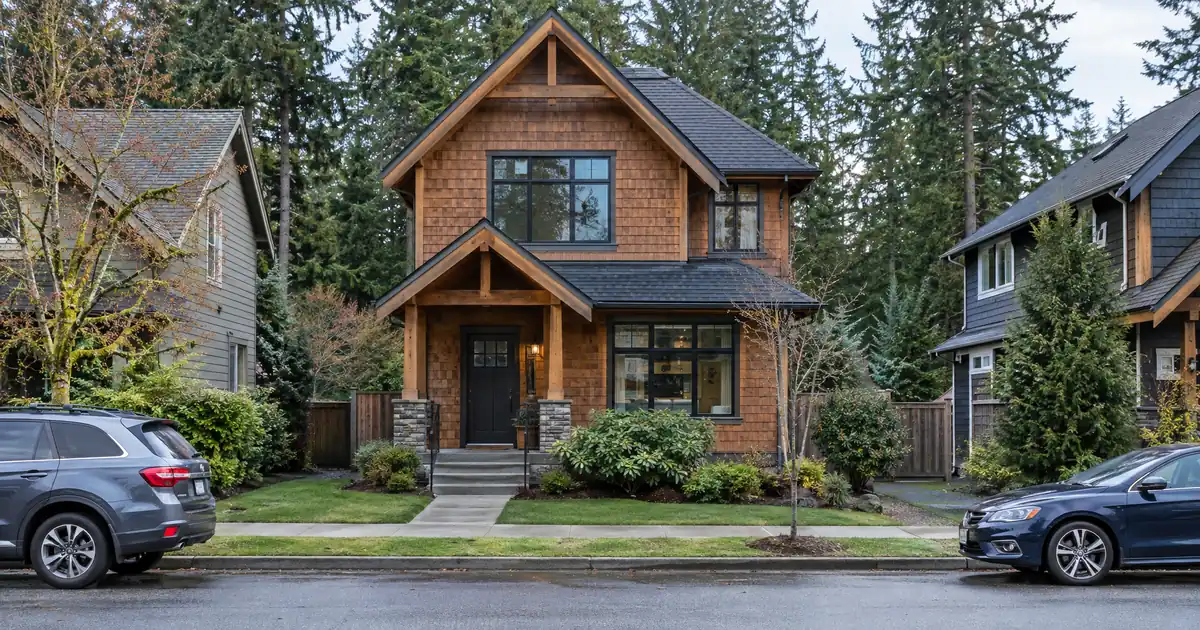
At a $725,000 median closing price, per Resideline’s six-month closing data, a Maple Valley house rarely clears the 1.00 coverage benchmark at the full 75 percent cash-out ceiling once taxes and insurance are counted. That is the mechanical reality here. Rents are healthy for the region, but prices sit high against them, so the size of the refinance, not the availability of equity, decides whether a file works. Lendmire (NMLS# 2371349), a DSCR-focused mortgage broker, helps arrange DSCR financing for Maple Valley, Washington State investors as part of a broader non-QM footprint reaching 41 markets, including D.C.
DSCR Cash-Out Calculator
Run the cash-out numbers in Maple Valley, WA
Rate source: Freddie Mac 30-yr average via FRED® — Federal Reserve Bank of St. Louis · effective Sep 24, 2026
Prefilled with starting assumptions — enter your property’s value, balance, taxes, and insurance for a more accurate picture.
Program parameters update from Lendmire’s centralized guideline source. Taxes and insurance are editable estimates.
As of Sep 24, 2026 · General Freddie Mac market benchmark, not a Lendmire loan offer. Property value, balance, taxes, and insurance are editable estimates. Maximum loan-to-value varies by lender, program, property type, and seasoning. Not a Loan Estimate, approval, or commitment to lend. Program availability and eligibility are subject to lender guidelines, credit approval, property review, and underwriting.
At a Glance:
A DSCR cash-out refinance in Maple Valley, Washington State is a loan against an already-owned rental, underwritten primarily on the property’s rental income measured against its full monthly obligation rather than the borrower’s personal income, and sized on a fresh appraisal.
- Single-family homes dominate: RentCafe shows 84 percent of households own their homes.
- Cash-out is capped at 75 percent LTV, with about six months of seasoning.
- Asking rents near $3,998 for houses still leave 75 percent leverage short of 1.00x.
- Inventory is rising and prices are drifting down, so appraisal risk is the main variable.
Maple Valley Market Snapshot
A quick read on the Maple Valley investor landscape — figures come from the cited sources below. Confirm current property-level numbers before underwriting.
| Metric | Detail |
|---|---|
| Home prices | $748K median (Redfin) |
| University enrollment | 9,286 students (Tahoma School District) |
| Employment | ~1,160 employees (Tahoma School District) |
Single-Family Rentals Around Lake Wilderness
The strongest cash-out candidates in Maple Valley are detached single-family rentals near the city’s park and trail core. This is where the modeled coverage works, provided the investor takes out less than the maximum.
The City of Maple Valley reports more than 300 acres of park space, anchored by the 108-acre Lake Wilderness Park and the regional Green to Cedar River Trail. Amenity-driven demand like this tends to hold occupancy in a suburb with few rentals. Homes.com lists single-family rentals at a median of $3,998, condos at $2,550, and a price-to-rent ratio of 15.6. That sample is only about 10 listings, so treat it as directional. Rentometer puts a three-bedroom at $3,126 and a four-bedroom-plus at $3,537. Against the $725,000 median, that implies a gross yield of roughly 5.2 to 6.6 percent.
Run the numbers on a house valued at the median. These are modeled assumptions, not sourced market facts: 30-year fixed debt, full taxes and insurance included. At 75 percent LTV, rent at the $3,998 listing level covers roughly 0.9x. The Rentometer three-bedroom figure lands closer to 0.7x. Trim the request to 60 percent LTV and the high-rent case moves to around 1.1x, while the lower rent stays in the high-0.8s. At 50 percent LTV, the three-bedroom case sits near 1.00x.
Sub-1.00 results are not a dead end. A lender may review a sub-1.00 program, an interest-only structure, or a smaller cash-out request that raises the ratio. Any of those paths depends on lender guidelines, credit approval, and property review. It does not follow that a file simply works.
Here’s the lever most investors overlook. Because Maple Valley has so few rental comps, appraisers often rely on market-rent estimates, and those can come in below asking rents. Underwrite to the lower figure, not the listing.
Four Corners and the Small-Multifamily Question
Four Corners, the WA-169 and WA-516 intersection, is the only realistic pocket for multi-unit income stacking.
The research turned up no inventory, rent, or price data for duplexes, triplexes, or fourplexes here. Small multifamily looks scarce, and any investor holding such a property should treat it as a rare asset. RentCafe reports an average apartment rent of $2,220, up 3.13 percent year over year, with one-bedrooms at $2,041 and two-bedrooms at $2,234. Its sample covers only buildings with 50 or more units, so it says little about a fourplex. Still, the direction is useful: apartment rents are rising, not sliding.
Multi-unit stacking can beat single-family coverage in high-price markets like this one, since several rents share one price tag. Without local comps, though, the claim stays unproven. Confirm with a local agent before building a refinance thesis on it.
What Does 75 Percent Actually Leave You?
The 75 percent LTV ceiling is a hard cap on cash-out, and it is sized on appraised value, not what you paid. Equity available depends on rent used for lender review, full PITIA, reserves, and that ceiling. It is not a guaranteed cash figure.
Most files run through a few checkpoints:
- Seasoning: about six months of ownership, measured from title recording.
- Coverage: a 1.00 minimum DSCR is the common benchmark, though some lenders review lower ratios with compensating factors such as lower leverage or stronger reserves.
- Credit: tiers at 620, 660, 680, and 700, with a 620 floor.
- Reserves: typically about six months of PITIA, and about nine months above $1,500,000.
- Loan size: up to $3,000,000 on standard programs.
At Maple Valley prices, the credit and loan-size items rarely bind, but coverage often does. If the number doesn’t clear 1.00, the practical adjustment is a smaller draw or a paydown at closing, not chasing a different lender. For a broader read on how the ratio is calculated, see the guide “What Is a DSCR Loan”. For the wider refinance picture, the refinance pathway for investor properties covers the rate-and-term alternatives, and the refi options walk through the cash-out mechanics.
Proceeds are capital for the next deal, so the draw only makes sense if the next property carries its own coverage. Pulling out the maximum on a Maple Valley house just to fund a thin deal elsewhere stacks two weak files.
Prices Are Drifting: The Appraisal Problem
Values in Maple Valley are softening, and a cash-out is only as good as the appraisal. Zillow’s typical home value of $759,950 is down 6.1 percent over the past year. Orchard shows a median sale price of $745,000, down 5.1 percent. The $725,000 figure used here reflects actual closings, while Zillow’s model includes homes that didn’t sell recently, which explains the gap.
Supply is building too. Orchard counts 129 homes for sale, up 53.6 percent year over year, with median days on market at 8 versus 5 a year earlier. Beyond Real Estate reports about 2.3 months of inventory. By national standards that is still tight. But an investor who bought near the peak and planned a seasoning-period refinance may find the equity thinner than expected.
Honestly, this cuts both ways. Rising inventory weakens appraisal upside for anyone taking cash out, and it gives buyers more room to negotiate on their next acquisition. An investor with real equity from an earlier, cheaper purchase is in a stronger position than one who bought recently.
A Commuter Tenant Base, Not a Job-Center One
Maple Valley’s tenants are mostly higher-income Puget Sound commuters, and that shapes rental durability. Data USA counts 13,500 employed residents. The largest industries are health care and social assistance (1,757), retail (1,644), and professional, scientific, and technical services (1,636). Management is the top occupation group at 2,122. World Population Review puts the population at 28,536 and median household income at $152,885.
The local anchor is Tahoma School District, the one verifiable employer in the research. It reports about 1,160 employees, 9,286 students, and a $197 million annual budget. Beyond that, no verified top-employer list or vacancy rate surfaced. Most tenant income comes from regional commuting, and no reliable drive-time source was found.
Working DSCR brokers see a recurring pattern in high-income, owner-heavy suburbs like this: rents look strong on paper, but the coverage ratio is squeezed by purchase price rather than weak demand. The files that work usually come from long-held properties, where the loan balance is low relative to today’s value, not from recent purchases at market-high prices.
RentCafe shows only 1,450 renter households, 16 percent of the total, against 7,850 owner households. Thin rental supply supports occupancy. It also means fewer comparable leases to support a rent figure.
The Summit Place Watch Item
Summit Place, the 123-acre former “Donut Hole,” is a future-supply and future-jobs question, not a current rental submarket. The City of Maple Valley describes it as a new center bringing jobs, services, and connectivity. King County owns it. It sits just south of Four Corners, beside Tahoma High School, and was formerly a road maintenance facility and gravel operation.
Any effect on nearby rents or values is speculative. A cash-out shouldn’t be underwritten on redevelopment upside. If the site delivers jobs, it broadens the tenant base. If it delivers new housing, it competes with existing rentals. Either way, watch it.
Investors should verify current local rental rules, taxes, and insurance with qualified local professionals before refinancing. To discuss a specific file, review my scenario or call 828-256-2183. For the statewide picture, see these DSCR loan options for Washington State investors, and for the trade-offs against bank underwriting, the side-by-side comparison.
DSCR vs. conventional financing
Two common ways to finance an investment property in Maple Valley, WA. They qualify you differently — here’s how investors weigh them.
Why investors choose it
- Qualifies on the property’s rental income — no personal tax returns, W-2s, or pay stubs needed to document income.
- No personal debt-to-income ceiling to clear, so existing mortgages and obligations don’t cap your borrowing the same way.
- Can be closed in an LLC, keeping the property inside a business entity.
- Built for scaling — not held to the limit on number of financed properties that conventional financing applies.
- Underwriting centers on the deal: generally qualifies when the rent covers the payment, a 1.00x coverage ratio being a common baseline (confirmed in underwriting).
- Designed specifically for investment property, including long-term and, where the program allows, short-term rentals.
Where it’s strong
- Often the lowest ongoing financing cost for a buyer who fully qualifies on personal income — a fit for a first property or a cost-first purchase.
Trade-offs for investors
- Requires full personal income documentation and must fit within a debt-to-income limit — salary, existing debts, and other mortgages all count.
- Typically held in your personal name rather than a business entity.
- Caps how many financed properties you can carry, which can become a ceiling as a portfolio grows.
- Evaluates you as a borrower as much as the property, which usually means more paperwork.
How investors usually choose: a first or single property often optimizes for the lowest financing cost; portfolio builders often optimize for leverage, vesting in an LLC, and scaling past conventional caps. The right answer depends on your goals, the property, and current guidelines — both paths run through select lenders in Lendmire’s wholesale network, with eligibility and terms confirmed in underwriting.
For current guidelines and terms, see Lendmire’s DSCR loan programs page.
Frequently Asked Questions
Can a Maple Valley house support a full 75 percent cash-out?
Rarely, based on modeled numbers. At median-priced homes, full taxes and insurance push coverage below 1.00x at 75 percent LTV on typical asking rents. A smaller draw, a lower-priced property, or a structure a lender reviews for sub-1.00 files is the more realistic route, subject to lender guidelines.
How long do I need to own a Maple Valley rental before cashing out?
About six months, measured from title recording. Recent buyers should also check that appraised value has held, since prices in the area have been drifting lower.
Do I need the rent to match the Homes.com asking figure?
No, and you shouldn’t count on it. Lenders typically rely on a market-rent estimate or an actual lease, and Maple Valley’s thin rental base means fewer comps. Conservative underwriting uses the lower figure.
Are duplexes or fourplexes common enough to build a strategy around?
Not from what the research shows. No inventory data surfaced, and multi-unit product looks scarce. Any Four Corners-area opportunity needs local verification.
Can I use an LLC to hold the property?
Often, depending on program guidelines. Entity-titled files are reviewed by the lender for eligibility, so confirm structure before applying.
The Blind Spot: Equity That May Not Appraise
The biggest risk for DSCR-financed investors here is not tenant demand, which looks steady. It is the gap between price and rent, combined with falling values and rising listings. A refinance built on last year’s price and a 75 percent LTV can shrink at appraisal, leaving less cash and a coverage ratio under 1.00x. Maple Valley rewards owners who bought early and borrow modestly, and it punishes anyone counting on appreciation to rescue a thin file.
About Lendmire
As a DSCR and non-QM mortgage broker, Lendmire, NMLS# 2371349, connects investors with wholesale lending channels across 41 markets, including Washington, D.C. Rental income from the property, not the borrower’s traditional personal-income documentation, is central to lender review. That works for self-employed operators and for portfolios beyond four financed properties. Lendmire was named a 2025 Scotsman Guide Top Mortgage Workplace and a top-ranked workplace in 2026.
Get Started
Ready to find the right loan for you?
In about 30 seconds you can review financing options available for your investment property. No commitment required.
Informational only. Not a Loan Estimate, approval, or commitment to lend. Program availability and eligibility are subject to lender guidelines, credit approval, property review, and underwriting.
References
1. Resideline’s six-month closing data
2. Redfin
5. Homes.com — Maple Valley WA Homes for Rent
6. Rentometer
7. RentCafe
8. Zillow — Home Values Maple Valley WA
9. Orchard — Real Estate Market Report Maple Valley
10. Data USA
13. a 2025 Scotsman Guide Top Mortgage Workplace
14. Scotsman Guide — Top Workplaces 2026
This article is part of Lendmire’s investment property cash-out refinance program — full qualification details, guidelines, and scenarios live on the program page.
Related reading: Cash Out Refinance on Maple Valley Investment Property · Cash Out Refinance Investment Property in Mount Vernon WA · Cash Out Refinance Investment Property in Issaquah via DSCR
Guides: Investment Property Cash-Out Refinance in Washington
Brandon Miller
Founder & CEO, Mortgage Loan Originator, Lendmire LLC
- Mortgage Loan Originator · NMLS# 1129696 · Verify on NMLS Consumer Access
- North Carolina Real Estate Broker · License# 343312 · Verify on NCREC
- North Carolina Insurance Producer · License# 19053198 · Property, Casualty, Life, Health · Verify on NAIC SBS
- Lendmire LLC · Firm NMLS# 2371349 · Verify firm licensure
Disclosures. The information presented in this article is general market commentary, not financial, legal, or tax advice. Lendmire is a mortgage brokerage (NMLS# 2371349) — not a direct lender or depository institution — and loan placement is subject to lender underwriting. Nothing in this content represents a commitment to lend. Loan terms, pricing, and program availability vary based on borrower qualifications, property characteristics, and state of subject property, and are subject to change at any time. Lendmire complies with Equal Housing Opportunity requirements. Consumer access: nmlsconsumeraccess.org.