
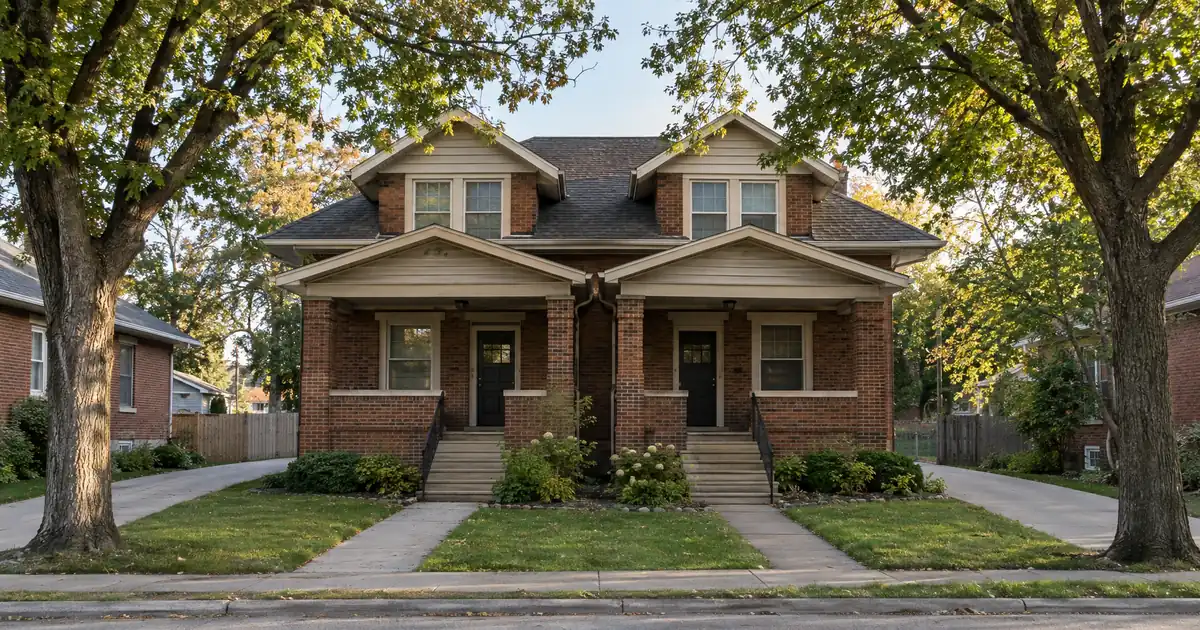
The most common way a Rock Island cash-out refinance on an investment property goes sideways has nothing to do with the borrower’s credit or the rent roll. The appraisal is the usual culprit. An investor buys a dated duplex, puts real money into it, waits out the ownership window, and then finds a thin comp set that won’t support the value the work created. A DSCR cash out refinance in Rock Island, Illinois rewards owners who plan for that problem before they order the appraisal.
TL;DR: A DSCR cash-out refinance on a Rock Island, Illinois rental is underwritten primarily on the property’s rental income measured against its full monthly obligation, with the lender reviewing ownership seasoning, appraised value, reserves and credit before any proceeds are sized.
DSCR Cash-Out Calculator
Run the cash-out numbers in Rock Island, IL
Rate source: Freddie Mac 30-yr average via FRED® — Federal Reserve Bank of St. Louis · effective Sep 24, 2026
Prefilled with starting assumptions — enter your property’s value, balance, taxes, and insurance for a more accurate picture.
Program parameters update from Lendmire’s centralized guideline source. Taxes and insurance are editable estimates.
As of Sep 24, 2026 · General Freddie Mac market benchmark, not a Lendmire loan offer. Property value, balance, taxes, and insurance are editable estimates. Maximum loan-to-value varies by lender, program, property type, and seasoning. Not a Loan Estimate, approval, or commitment to lend. Program availability and eligibility are subject to lender guidelines, credit approval, property review, and underwriting.
- Rock Island’s typical home value is $118,391 per Zillow, so equity comes from basis and improvements.
- Cash-out caps at 75 percent LTV, with about six months of ownership before eligibility.
- Two-unit stacking usually beats single-family coverage at these price points.
- Broadway comps are thin, so appraisal risk is highest in a more affordable submarket.
- County rental vacancy runs above the Illinois average, so underwrite a turnover cushion.
Rock Island Market Snapshot
A quick read on the Rock Island investor landscape — figures come from the cited sources below. Confirm current property-level numbers before underwriting.
| Metric | Detail |
|---|---|
| Home prices | $118,391 typical home value (Zillow Home Values – Rock) |
| Typical rents | $695 average (Apartments.com – Rock Island) |
| University enrollment | 2,570 students (Data USA – Augustana College) |
| Population | 36,151 population (Census Reporter – Rock Island) |
| Employment | 250 military + 6,000 civilian employees (Wikipedia – Rock Island Arsenal) |
Where the Equity Comes From When the Market Barely Moves
Rock Island equity is mostly created, not inherited. The city’s typical home value is $118,391, up just 2.6 percent over the past year per Zillow. Redfin shows a median sale price of $134K, down 0.54 percent year over year. Rock Island County reads stronger, with an average value of $161,018 and 5.2 percent growth per Zillow’s county data.
Nobody should plan a cash-out around market drift here. Flat city-level pricing means the equity you can pull depends on three things: what you paid, what you fixed, and whether the appraiser can find comps that credit the improvement. That’s the appreciation-versus-cash-flow tension in this market. You get strong rent-to-price ratios and very little tailwind from price growth.
The program frame is simple. Cash-out refinances on investment property cap at 75 percent LTV, and the property generally needs about six months of ownership measured from title recording. Proceeds depend on rent used for lender review, the full monthly obligation, reserves and that LTV ceiling. They are never a guaranteed figure, and final terms stay subject to lender guidelines. Lendmire’s primer on DSCR loans covers the mechanics if you need them.
The Arsenal Underneath the Rents
Rock Island’s rental demand rests on employers that don’t move. The Rock Island Arsenal sits on a 946-acre island in the Mississippi and employs roughly 250 military personnel and 6,000 civilians. Its tenants include Army Sustainment Command, First Army, Army Contracting Command and the Army Corps of Engineers Rock Island District. Federal payrolls like that don’t follow the private-sector real estate cycle.
UnityPoint Health – Trinity adds a second anchor, with 555 licensed inpatient beds across its four-hospital system and more than 4,000 employees. Per Data USA, health care and social assistance is the largest resident employment sector at 2,527 people, followed by manufacturing at 2,304. Downtown, the Rock Island Downtown Alliance lists Modern Woodmen of America, Royal Neighbors of America and Illinois Casualty Company as long-standing employers.
Then there’s Augustana College, with 2,570 students. Its residency policy requires most students to live on campus for their first three years. About 34 percent of the 2,522 undergraduates live off campus, a renewing pool of several hundred renters near campus. The pending acquisition of Trinity College’s academic programs by Augustana, announced on the college’s admissions site, could add to health-education housing demand.
For lenders reviewing a cash-out file, that employment mix reads as stable, long-term tenant demand. It does not produce rent growth. Apartments.com shows a year-over-year rent increase of only 1.6 percent.
Run the Numbers Before You Order the Appraisal
Rock Island’s rents are a messy data set. Apartments.com puts a two-bedroom near $789 and a three-bedroom at $1,138. Zumper runs higher on two-bedrooms, and the average across trackers spans roughly $695 to $850. Treat all of it as directional and pull local comps before underwriting anything.
Here is what modeled coverage looks like at 75 percent LTV. Coverage is rent divided by full monthly obligation including principal, interest, taxes and insurance. The rents and values below are modeling assumptions, not quotes.
| Scenario | Modeled value | Modeled rent | Coverage read |
|---|---|---|---|
| Two-bedroom house | $134K | $789 | Mid-0.8s |
| Three-bedroom house | $134K | $1,138 | Around 1.2x |
| Duplex, two units | $146,732 | $1,500 to $1,650 | Around 1.4x to 1.5x |
The duplex rent band comes from actual listings: a Broadway-area duplex with $1,500 in total rents and another at $775 plus $825 per Redfin. The $146,732 value is the city-data mean for two-unit structures. Stacking two modest rents on one parcel is how you clear the 1.00 benchmark with cushion in a sub-$150K market. A single rented house at the same basis often can’t.
The two-bedroom house is the cautionary row. Mid-0.8s is sub-1.00 territory, and it is common with smaller Rock Island houses. A lender may review a sub-1.00 program, a lower leverage request or an interest-only structure, but each one means a harder file: more cash left in the deal, stronger credit and more scrutiny. Whether any of them fits depends on lender guidelines, credit approval and property review.
DSCR files in markets like this one typically look like a cheap basis, modest rents and a spread between in-place and market rent. The strongest files show a lease history or rent comps that hold up independently of the investor’s own renovation narrative. The weakest lean on a projected rent nobody has collected yet, and on an appraisal that has to stretch across thin comps. Investors who bring documented rents and a realistic rent schedule give the lender fewer reasons to reprice or cut leverage.
Where the Coverage Works (and Where It Doesn’t)
Broadway, Longview and College Circle are more affordable submarkets on Apartments.com’s rent tiers, and they carry the best rent-to-basis ratios. Longview is bifurcated. Three-bedroom listings there run from $850 to $2,350 per ApartmentHomeLiving, so legacy units rent near the floor while renovated ones reach the ceiling. A value-add owner can push rent toward the top of that band without leaving the submarket. That is a real post-renovation coverage lever.
The catch is Broadway’s comp depth. Redfin’s vintage-home data for Broadway shows just six active listings at a median of $120K, sitting on market several times longer than the citywide median. Few comps means more appraisal friction. Anyone planning a post-renovation pull here should budget extra time past the six-month mark and assemble their own comp package. A Broadway triplex listing with two vacant units shows another angle: a lease-up property can be underwritten on market rent, but only after the units are occupied and documented.
Uptown, near the hospital corridor, is where the fourplex story sits. One listing advertises a four-unit building steps from the hospitals with tenant-paid electric, covered parking and on-site coin laundry. Four doors on one loan, with tenants carrying their own utilities, give cash-out files more coverage cushion than a single rented house. The city-data mean for three-to-four-unit structures is $198,022, a meaningful step up in basis but still modest. Five-plus unit buildings average $603,176 and move into small-commercial conversations, so that is a different file.
Hilltop deserves a mention for liquidity. Apartments.com lists it among the neighborhoods with the most available apartments, which gives you plenty of rent comps to support a cash-out. The flip side is competition for tenants.
Downtown, Douglas Park and East Central carry the highest rents in the city. Skip them if cash flow drives your decision. Higher rents on a higher basis don’t improve the coverage ratio enough to justify the price, and these submarkets suit appreciation-minded owners better than cash-out recyclers.
One risk applies everywhere. County rental vacancy ran 10.7 percent in the last decennial Census per Wikipedia’s county summary, well above the Illinois average. Underwrite turnover and don’t lean on aggressive rent-growth assumptions to justify a cash-out.
What the Proceeds Are For
Cash out of a Rock Island rental is capital for the next deal, and this market suits that logic better than most. A cheap basis means the same equity pull can fund down payments on multiple small properties. Investors running a recycling strategy should read the equity recycle pathway and Lendmire’s refi programs to see how those structures stack.
Manufactured homes, log homes and barndominiums fall outside these programs. Rock Island’s older housing stock is mostly conventional construction, so this rarely matters, but confirm the property type before you list a deal for a refi.
When the Answer Flips
Rock Island is a cash-out market for patient owners, and it is a weak one for impatient ones. The thinking goes both ways.
If you bought below market and fixed a duplex in a submarket with decent comps, the six-month mark is a real opportunity. If you paid a full price for a turnkey house near the low end of rents, you’re likely in sub-1.00 territory, and pulling cash would leave you with thin coverage and little margin. The stronger play might be waiting for rents to settle or adding a unit. Investors focused on appreciation could argue for holding: Rock Island County’s 5.2 percent growth suggests the city may be lagging. That’s a bet, though, not a reason to refinance.
Lendmire’s DSCR-versus-conventional breakdown helps if you’re weighing this against a conventional option, especially past the financed-property cap. For a file-specific conversation, reach Lendmire at 828-256-2183 or request a quote. Before you underwrite any deal, verify current local rental rules, taxes and insurance with qualified local professionals.
Three Things to Watch Over the Next Quarter
- Broadway and Longview comp activity. More closed sales on renovated properties would ease appraisal risk in the city’s best cash-flow pocket.
- The Augustana and Trinity College transition. Any expansion of health-education enrollment near campus could lift renter demand around the Uptown and College Circle edges.
- County rental vacancy trends. A drop from 10.7 percent toward the Illinois average would support firmer rent assumptions in cash-out files.
Frequently Asked Questions
How do you qualify for a DSCR loan in Rock Island?
Qualification is built around the property’s rent against its full monthly obligation, typically at a 1.00 benchmark, plus credit, reserves and property review. Credit tiers generally start at a 620 floor, and reserves run about six months. Final eligibility depends on lender guidelines and the specific file.
What are the requirements for an investment property loan in Rock Island, Illinois?
Most cash-out refinances need about six months of ownership, a 75 percent LTV ceiling and documented rent on the property. Loan sizes run up to $3,000,000 on standard programs, with smaller balances routed to select lenders. Property type matters, because manufactured homes, log homes and barndominiums are excluded.
DSCR vs. conventional financing
There are two common ways to finance an investment property in Rock Island, IL, and they qualify you differently — here’s how investors weigh them.
Why investors choose it
- Qualifies on the property’s rental income — no personal tax returns, W-2s, or pay stubs needed to document income.
- No personal debt-to-income ceiling to clear, so existing mortgages and obligations don’t cap your borrowing the same way.
- Can be closed in an LLC, keeping the property inside a business entity.
- Built for scaling — not held to the limit on number of financed properties that conventional financing applies.
- Underwriting centers on the deal: generally qualifies when the rent covers the payment, a 1.00x coverage ratio being a common baseline (confirmed in underwriting).
- Designed specifically for investment property, including long-term and, where the program allows, short-term rentals.
Where it’s strong
- Often the lowest ongoing financing cost for a buyer who fully qualifies on personal income — a fit for a first property or a cost-first purchase.
Trade-offs for investors
- Requires full personal income documentation and must fit within a debt-to-income limit — salary, existing debts, and other mortgages all count.
- Typically held in your personal name rather than a business entity.
- Caps how many financed properties you can carry, which can become a ceiling as a portfolio grows.
- Evaluates you as a borrower as much as the property, which usually means more paperwork.
How investors usually choose: a first or single property often optimizes for the lowest financing cost; portfolio builders often optimize for leverage, vesting in an LLC, and scaling past conventional caps. The right answer depends on your goals, the property, and current guidelines — both paths run through select lenders in Lendmire’s wholesale network, with eligibility and terms confirmed in underwriting.
What can limit DSCR cash-out proceeds in Rock Island?
Thin appraisal comps, modest rents against a full monthly obligation and the 75 percent LTV ceiling are the usual limits. Lendmire arranges DSCR investor loans and the main program feature to plan around is the 75 percent cash-out cap. Reserves requirements can reduce usable proceeds further.
Does a duplex really clear coverage better than a single-family rental in Rock Island?
Usually, yes. Modeled duplex rents of $1,500 to $1,650 on a value near the city’s mean two-unit price land around 1.4x to 1.5x with taxes and insurance included, while a three-bedroom house at $1,138 sits closer to 1.2x. Rent data here is noisy, so pull local comps before relying on either number.
Is Broadway a good place to refinance after a renovation?
It can be, but plan for the appraisal. Broadway has a thin comp set and listings that sit longer than the citywide median, so a renovated property may need extra seasoning time and a prepared comp package. The coverage math is strong there, but the valuation step is where files tend to stall.
For current guidelines and terms, see Lendmire’s DSCR loan programs page.
About Lendmire
Lendmire is a DSCR-focused mortgage brokerage, NMLS# 2371349, placing investor loans across 41 markets, including Washington, D.C. Lendmire has been recognized as a top-ranked workplace in 2026 and a top-ranked workplace in 2025 by Scotsman Guide. The lender typically reviews DSCR eligibility against a property’s rental income rather than personal income documentation, which suits LLC-held rentals, self-employed investors and portfolios growing past conventional financed-property limits.
For broader investor-financing rules and property-type coverage across the state, see Illinois DSCR loans.
Get Started
Ready to find the right loan for you?
In about 30 seconds you can review financing options available for your investment property. No commitment required.
Informational only. Not a Loan Estimate, approval, or commitment to lend. Program availability and eligibility are subject to lender guidelines, credit approval, property review, and underwriting.
References
1. Zillow Home Values, Rock Island
2. Apartments.com – Rock Island
3. Data USA, Augustana College
4. Census Reporter – Rock Island
5. Wikipedia – Rock Island Arsenal
6. Redfin Housing Market, Rock Island
7. Zillow Home Values, Rock Island County
8. U.S. Army, Rock Island Arsenal
9. UnityPoint Health – Trinity Rock Island
10. Data USA
11. Rock Island Downtown Alliance
12. augustana.edu — College’s admissions site
13. Apartments.com
14. Redfin
16. Broadway
18. Wikipedia’s county summary
19. Scotsman Guide — Top Workplaces 2026
20. Scotsman Guide — Top Workplaces 2025
This article is part of Lendmire’s investment property cash-out refinance program — full qualification details, guidelines, and scenarios live on the program page.
Related reading: Luxury Rental DSCR Loans In New Jersey · Jersey Shore Vacation Rental Loans: DSCR Financing In Ocean City, Cape May And Long Beach Island · DSCR Cash-out Refinance In New Jersey: Pulling Equity From A Rental
Guides: Investment Property Cash-Out Refinance in Rock Island, IL · Investment Property Cash-Out Refinance in Illinois
Brandon Miller
Founder & CEO, Mortgage Loan Originator, Lendmire LLC
- Mortgage Loan Originator · NMLS# 1129696 · Verify on NMLS Consumer Access
- North Carolina Real Estate Broker · License# 343312 · Verify on NCREC
- North Carolina Insurance Producer · License# 19053198 · Property, Casualty, Life, Health · Verify on NAIC SBS
- Lendmire LLC · Firm NMLS# 2371349 · Verify firm licensure
Important disclosures. Lendmire (NMLS# 2371349) is a licensed mortgage brokerage. Lendmire is not a direct lender, depository institution, or financial advisor. All loan inquiries are subject to lender underwriting; this article does not constitute a commitment to lend. Rates, terms, and program guidelines are subject to change without notice and vary by borrower profile, property type, and state. Information in this article is general in nature and is not financial, legal, or tax advice. Equal Housing Opportunity. NMLS Consumer Access: nmlsconsumeraccess.org.