
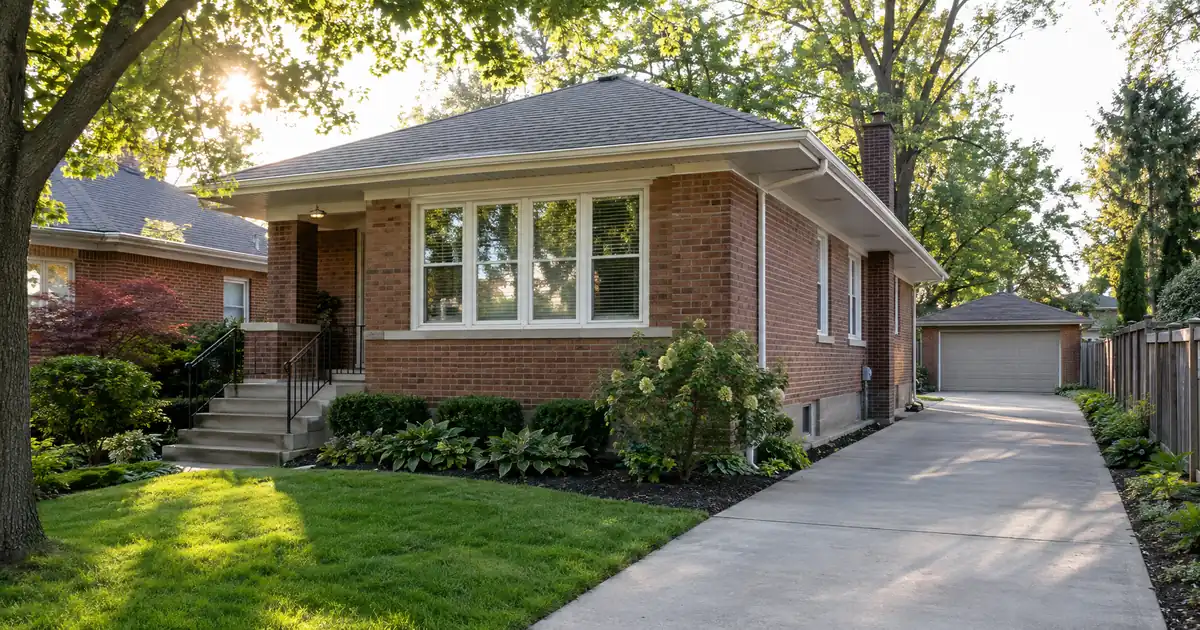
Redfin puts Bartlett’s median sale price at $400,000, up 5.3 percent year over year, with homes drawing an average of four offers. That is good news for anyone sitting on a rental here. Appreciation is how equity gets built, and a DSCR cash out refinance is how it gets pulled back out. The catch is that Bartlett is a moderate-yield suburb, so the cash-out file depends on rent covering the full obligation after the new balance goes on.
TL;DR: A DSCR cash out refinance in Bartlett, Illinois is underwritten primarily on the property’s rental income measured against its full monthly obligation, with leverage capped below the purchase ceiling and ownership seasoned before proceeds are released.
DSCR Cash-Out Calculator
Run the cash-out numbers in Bartlett, IL
Rate source: Freddie Mac 30-yr average via FRED® — Federal Reserve Bank of St. Louis · effective Oct 1, 2026
Prefilled with starting assumptions — enter your property’s value, balance, taxes, and insurance for a more accurate picture.
Program parameters update from Lendmire’s centralized guideline source. Taxes and insurance are editable estimates.
As of Oct 1, 2026 · General Freddie Mac market benchmark, not a Lendmire loan offer. Property value, balance, taxes, and insurance are editable estimates. Maximum loan-to-value varies by lender, program, property type, and seasoning. Not a Loan Estimate, approval, or commitment to lend. Program availability and eligibility are subject to lender guidelines, credit approval, property review, and underwriting.
- The cash-out LTV ceiling is 75 percent, below the 80 percent purchase cap.
- Seasoning is about six months from title recording.
- Woodland Heights sells near $320,500, the likeliest pocket to clear 1.00.
- Citywide median pricing leaves coverage near or just under 1.0 including taxes and insurance.
- Equity is not a cash figure until appraisal, payoff and reserves are on paper.
Bartlett Market Snapshot
A quick read on the Bartlett investor landscape — figures come from the cited sources below. Confirm current property-level numbers before underwriting.
| Metric | Detail |
|---|---|
| Typical rents | $1,845 average (Apartments.com Streamwood) |
| Recent appreciation | +5.3% yoy (Redfin Bartlett Housing Market) |
| Employment | 1,000+ food-cluster jobs (Village of Bartlett: Brewster) |
| Vacancy | Rental 4.1% (Wikipedia: Bartlett, Illinois) |
Woodland Heights and the Lower-Priced Pockets
The cheaper pockets are where Bartlett cash-out files work best. Redfin’s city guide lists median sale prices of $320,500 in Woodland Heights and $324,900 in East Streamwood, against $390,000 in the Golden Corridor and $599,900 in Woodland Hills. Rent does not scale with price the way a lender would like, so the low end of that list carries the best rent-to-value relationship.
Run the numbers on a three-bedroom. RentHop puts the Bartlett three-bedroom at $2,800. Against the $320,500 pocket, that is roughly 0.87 percent of value per month. Against the $400,000 citywide median, it is about 0.70 percent. Both ratios are arithmetic on cited figures, not a sourced yield. Still, the gap is the point.
Modeled on a 30-year fixed with taxes and insurance included, a $2,800 rent against a value near $320,000 at 75 percent LTV lands above 1.2x. The same rent against a $400,000 value lands at or slightly under 1.0x. These are modeled assumptions, not quotes. Qualification stays subject to lender guidelines, credit review and appraisal.
No source in the brief breaks out rents by neighborhood, so treat the pocket thesis as an inference from price data. Pull a specific rental comp before building a file around it. One RentHop caution applies: its sample is small and its zip data leans on Schaumburg.
Where the Citywide Median Gets Thin
A $400,000 median produces a file that clears the standard 1.00x benchmark only barely, if at all, once taxes and insurance are in. Most standard DSCR programs are built around that benchmark because rent covers the obligation at that level. Exact eligibility depends on lender guidelines, credit profile, reserves and property review.
Property type matters. The numbers below come from Redfin’s city guide for prices and Homes.com for rents. Homes.com’s rent figures rest on only 23 listings, and the Redfin guide is undated, so read the table as directional.
| Property type | Median price | Median rent |
|---|---|---|
| Single-family | $440,000 | $3,000 |
| Townhouse | $404,990 | $2,600 |
| Condo | $300,000 | $2,050 |
Single-family is the default product. NeighborhoodScout shows single-family detached at 70.65 percent of the village’s 14,140 housing units, and Data USA puts homeownership at 89.2 percent. The rental pool is small, so comps are few. Condos rent at the lowest figure but also price lowest, which helps the ratio. They bring the condo questionnaire and warrantability review into the file.
Working DSCR brokers see a recurring pattern in high-income commuter suburbs like this one: the property appreciates well but rents lag the price, so coverage compresses as the appraised value rises. The owner expects more cash-out room from appreciation and finds the 1.00 floor binding first. Files that model the debt service on the new balance before ordering the appraisal avoid that surprise.
Thinking out loud, the stronger play for many owners may be a modest cash-out amount rather than a full 75 percent draw. A smaller balance keeps coverage clear and leaves room if the appraisal lands light. Owners chasing maximum proceeds could argue the other way, but the 1.00 floor is the arbiter.
Seasoning, LTV and What “Equity” Means on a File
The cash-out ceiling is 75 percent of appraised value, and it is a hard cap. Seasoning typically runs about six months of ownership, measured from title recording and documented by the settlement statement. Files that assume seasoning away get kicked back.
Equity available is not appraised value minus the existing balance. It is 75 percent of appraised value, less the payoff, then tested against the coverage ratio and reserves. Reserves typically run about six months of PITIA (about nine months above $1,500,000). Credit tiers usually step through 620, 660, 680 and 700, with a 620 floor. Those are program guidelines, not commitments, and they vary by lender and scenario. Anyone planning the numbers can start with the cash-out qualification details and Lendmire’s refi programs.
Two things trip Bartlett files. Appraisals on older stock in the $320,000 range can come in light. A reconsideration packet with recent in-neighborhood sales and condition adjustments is a routine step, not an emergency. Reserves documentation is the other. Proceeds from the refinance generally do not count toward reserves, so the statements need to show liquid funds separately. For background, Lendmire’s DSCR walkthrough and the guide “Where DSCR and Conventional Diverge” cover the basics.
Who Rents Here
Bartlett’s tenant base is commuters and industrial and healthcare workers, not students. Data USA shows the leading resident employment sectors as Health Care and Social Assistance at 3,077 people and Manufacturing at 3,032. Retail Trade follows at 2,243.
Inside the village, jobs skew industrial. The Village of Bartlett says the food companies in Brewster Creek Business Park together employ more than 1,000 people. The park was built on a reclaimed gravel quarry. The cluster includes Greco & Sons, Rana Meal Solutions and Cheese Merchants of America, plus German-owned manufacturers like Herrmann Ultrasonics and Wittenstein. A JobsEQ overview from Choose DuPage ranks Wholesale Trade as the largest local sector at 1,529 workers. That data is dated.
Choose DuPage lists US Route 20, IL Route 59, I-90 and the Elgin-O’Hare Expressway as access routes. The village sits within reach of O’Hare, Schaumburg and Elgin job centers. For a lender reading rental durability, that spread is the point. No single employer or campus drives vacancy. Hospital and community college data did not surface, so this article treats both qualitatively.
Where Do the Proceeds Go?
Single-family rents top out near $3,000, and that is the ceiling for coverage per door. Multi-unit stock is the way around it, but it barely exists inside Bartlett. The nearby options are Streamwood, Elgin and Schaumburg.
Apartments.com shows Streamwood apartment rents averaging $1,845. One older five-story community on the Bartlett border starts at $1,640 for units of 488 to 946 square feet, and Redfin’s 60107 listings show two-bedrooms from $1,925. A duplex or fourplex at those per-door rents produces more gross income than a single-family house at $3,000. That is a rent comparison, not a yield claim.
Go west and the per-door figure drops. Redfin’s cheaper Elgin listings show one-bedrooms at $1,141 to $1,295 and two-bedrooms at $1,308 to $1,600. Underwrite an Elgin building at Elgin rents. Skip Bartlett-area comps there.
What Derails Bartlett Files
Three failure modes show up repeatedly.
First, rent evidence. A thin rental pool means few comps, and the appraiser’s rent schedule may land under the owner’s expectation. Lease copies and payment history help. Second, entity documents. Title held in an LLC needs operating agreement, good standing and signer authority in the file, subject to lender program eligibility. Third, the seasoning paper trail. If the property was recently bought, the settlement statement and recorded deed must show the ownership date clearly.
Verify current local rental rules, property taxes and insurance with qualified local professionals before closing the numbers. That applies across the Cook, DuPage and Kane County parcels Bartlett touches.
Where the Asymmetry Sits
The mismatch is in the lower-priced pockets. Woodland Heights and East Streamwood trade near $320,000 while three-bedroom rents sit near $2,800. Value there is lagging rent more than anywhere else in the village, and a modest cash-out against a house in that range is the cleanest coverage case. The multi-unit buildings a short drive west are the matching use of those proceeds.
Frequently Asked Questions
How do you qualify for a DSCR cash out refinance in Bartlett, Illinois?
The property’s rent must cover the full obligation, with 1.00 as the usual baseline. The loan must also stay at or below 75 percent LTV and the title must be seasoned about six months. Credit typically starts at a 620 floor, and reserves of roughly six months of PITIA are standard. Final eligibility depends on lender guidelines, appraisal and credit review.
DSCR vs. conventional financing
There are two common ways to finance an investment property in Bartlett, IL, and they qualify you differently — here’s how investors weigh them.
Why investors choose it
- Qualifies on the property’s rental income — no personal tax returns, W-2s, or pay stubs needed to document income.
- No personal debt-to-income ceiling to clear, so existing mortgages and obligations don’t cap your borrowing the same way.
- Can be closed in an LLC, keeping the property inside a business entity.
- Built for scaling — not held to the limit on number of financed properties that conventional financing applies.
- Underwriting centers on the deal: generally qualifies when the rent covers the payment, a 1.00x coverage ratio being a common baseline (confirmed in underwriting).
- Designed specifically for investment property, including long-term and, where the program allows, short-term rentals.
Where it’s strong
- Often the lowest ongoing financing cost for a buyer who fully qualifies on personal income — a fit for a first property or a cost-first purchase.
Trade-offs for investors
- Requires full personal income documentation and must fit within a debt-to-income limit — salary, existing debts, and other mortgages all count.
- Typically held in your personal name rather than a business entity.
- Caps how many financed properties you can carry, which can become a ceiling as a portfolio grows.
- Evaluates you as a borrower as much as the property, which usually means more paperwork.
How investors usually choose: a first or single property often optimizes for the lowest financing cost; portfolio builders often optimize for leverage, vesting in an LLC, and scaling past conventional caps. The right answer depends on your goals, the property, and current guidelines — both paths run through select lenders in Lendmire’s wholesale network, with eligibility and terms confirmed in underwriting.
What are the requirements for an investment property loan in Bartlett, Illinois?
For cash-out, expect an appraisal with a rent schedule, a lease or market rent evidence, and proof of insurance and reserves. LLC-owned properties also need entity documents, subject to program terms. Eligible property types include single-family, townhouse and condo. Manufactured homes, log homes and barndominiums fall outside these programs.
Does the 75 percent cap mean I can pull out that much of the value?
No. The cap applies to the new total loan balance. The existing payoff comes off first, and the remaining cash is limited by the coverage ratio and reserves. At Bartlett’s median pricing, coverage can bind before the LTV cap does.
Why do Streamwood and Elgin come up in Bartlett refinance planning?
Multi-unit supply is scarce inside the village, where single-family detached makes up 70.65 percent of housing. Investors using cash-out proceeds for a duplex or fourplex usually look in Streamwood or Elgin, where per-door rents differ materially.
Can Lendmire help structure DSCR financing for small multifamily investment properties in Bartlett?
Yes. Lendmire arranges DSCR investor loans through wholesale channels. Eligibility is generally reviewed around the property’s rental income rather than personal income, subject to lender and program guidelines. For questions, call 828-256-2183.
For current guidelines and terms, see Lendmire’s DSCR loan programs page.
About Lendmire
Lendmire is a non-QM mortgage brokerage (NMLS# 2371349) arranging DSCR investor loans in 41 markets, including Washington, D.C. DSCR eligibility is generally reviewed around property-level rental income rather than personal income, subject to lender and program guidelines, making it a fit for self-employed investors and LLC-owned portfolios. Lendmire was recognized as a Scotsman Guide Top Mortgage Workplace in 2025 and 2026, as a 2025 Scotsman Guide Top Workplace and a top-ranked workplace in 2026, with the Top Workplace press announcement on record.
For broader investor-financing rules and property-type coverage across the state, see Illinois DSCR loans.
Get Started
Ready to find the right loan for you?
In about 30 seconds you can review financing options available for your investment property. No commitment required.
Informational only. Not a Loan Estimate, approval, or commitment to lend. Program availability and eligibility are subject to lender guidelines, credit approval, property review, and underwriting.
References
1. Redfin: Bartlett housing market
2. Redfin: Bartlett city guide
4. Village of Bartlett: Brewster Creek Business Park
5. Wikipedia: Bartlett, Illinois
6. RentHop: Bartlett average rent
7. Homes.com: Bartlett rentals
8. NeighborhoodScout: Bartlett real estate
10. JobsEQ overview from Choose DuPage
12. Apartments.com — Bartlett Court Apartments Streamwood IL
14. Redfin’s cheaper Elgin listings
15. a 2025 Scotsman Guide Top Workplace
16. Scotsman Guide — Top Workplaces 2026
17. the Top Workplace press announcement
This article is part of Lendmire’s investment property cash-out refinance program — full qualification details, guidelines, and scenarios live on the program page.
Related reading: Luxury Rental DSCR Loans In New Jersey · Jersey Shore Vacation Rental Loans: DSCR Financing In Ocean City, Cape May And Long Beach Island · DSCR Cash-out Refinance In New Jersey: Pulling Equity From A Rental
Guides: Investment Property Cash-Out Refinance in Illinois
Brandon Miller
Founder & CEO, Mortgage Loan Originator, Lendmire LLC
- Mortgage Loan Originator · NMLS# 1129696 · Verify on NMLS Consumer Access
- North Carolina Real Estate Broker · License# 343312 · Verify on NCREC
- North Carolina Insurance Producer · License# 19053198 · Property, Casualty, Life, Health · Verify on NAIC SBS
- Lendmire LLC · Firm NMLS# 2371349 · Verify firm licensure
Compliance and disclosures. Lendmire (NMLS# 2371349) is a licensed mortgage broker and is not a direct lender, depository institution, financial advisor, or tax professional. Content in this article is general market analysis and educational information — not financial, legal, or tax advice for any specific situation. Lendmire does not guarantee loan approval; every transaction is subject to underwriting by the funding lender. Mortgage pricing and loan program guidelines are subject to change at any time without notice and vary by borrower characteristics, property type, and state regulations. Lendmire complies with Equal Housing Opportunity. Licensure verification: NMLS Consumer Access.