
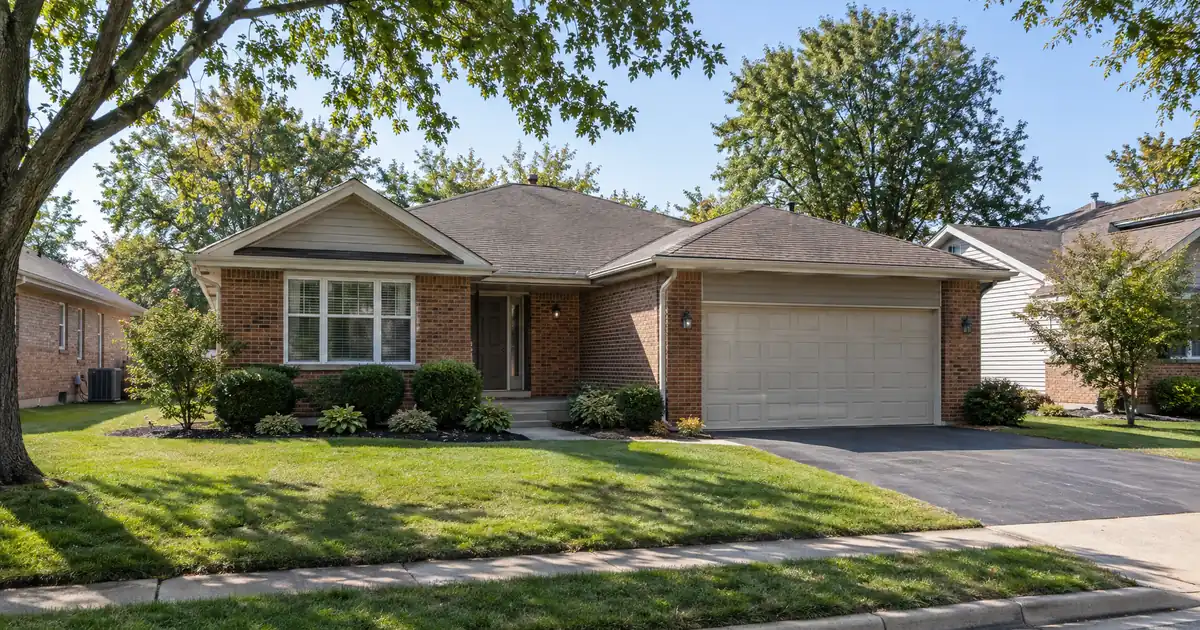
Most Carol Stream owners expect equity to be the hard part of a cash-out refinance. It isn’t. Values here have climbed steadily while rents have drifted sideways, so the appraisal is rarely what stops a file. The coverage ratio is. An owner can have plenty of paper equity and still find the DSCR math caps the proceeds well below what the equity suggests.
The Quick Read: A cash-out refinance on a Carol Stream, Illinois rental is underwritten primarily on the property’s rental income measured against its full monthly obligation, so the binding constraint is coverage, not equity: appreciation builds value while rents trail, and the 75 percent LTV ceiling and seasoning clock decide how much of that value is usable.
DSCR Cash-Out Calculator
Run the cash-out numbers in Carol Stream, IL
Rate source: Freddie Mac 30-yr average via FRED® — Federal Reserve Bank of St. Louis · effective Sep 24, 2026
Prefilled with starting assumptions — enter your property’s value, balance, taxes, and insurance for a more accurate picture.
Program parameters update from Lendmire’s centralized guideline source. Taxes and insurance are editable estimates.
As of Sep 24, 2026 · General Freddie Mac market benchmark, not a Lendmire loan offer. Property value, balance, taxes, and insurance are editable estimates. Maximum loan-to-value varies by lender, program, property type, and seasoning. Not a Loan Estimate, approval, or commitment to lend. Program availability and eligibility are subject to lender guidelines, credit approval, property review, and underwriting.
- Zillow puts the typical Carol Stream home value at $391,628, up 3.6 percent year over year.
- Cash-out LTV tops out at 75 percent, with about 6 months of ownership measured from title recording.
- Small multifamily is 3.81 percent of the housing stock, so most files are townhomes and single-family.
- Three-bedroom comps carry the coverage. City-wide average rent understates them.
- Minimum coverage is 1.00x on rent used for lender review against full PITIA, subject to lender guidelines.
The Equity Is There. The Coverage Is the Gate.
Carol Stream’s appreciation supports a cash-out appraisal. The coverage math is the harder part. Zillow’s index of $391,628 sits against a Zumper average rent of $1,822, a blended rent-to-price ratio near 0.47 percent a month. That is thin for any DSCR loan.
Value sources disagree. Redfin’s housing-market page shows a median sale price of $310K, down 1.9 percent, a different methodology from Zillow’s index. A sale-price median reflects what traded, and the index reflects what’s held. An appraiser will work from neither. He or she works from closed comps near the subject, so the appraisal can land above or below either headline number.
Rent direction is just as muddy. RentCafe shows a 2.09 percent decline, Apartments.com shows a 7 percent increase, and Apartment List shows 0.8 percent. All of them are listing-based. The honest read is roughly flat to modestly higher. Underwrite to in-place lease rents, not asking rents, and don’t assume rent growth will close the gap.
That is the equity-extraction tension in one paragraph. Value goes up, rent stays flat, and coverage is what limits proceeds. Pulling equity with a DSCR cash-out here is a coverage exercise first and a valuation exercise second.
Seasoning and the 75 Percent Ceiling
Cash-out on an investment property tops out at 75 percent LTV. That is a hard cap, separate from the higher purchase-money ceiling. Seasoning is about 6 months of ownership, measured from title recording. The clock starts at the recorded deed, not the contract date or the walkthrough.
Files that assume the seasoning requirement away get kicked back. The usual version is an investor who closed a purchase, did a light rehab and wants to pull proceeds right away. If the recorded date is inside the seasoning window, the file waits. A settlement statement from the original purchase is the document that proves the date.
Other parameters, all subject to lender guidelines and varying by borrower and property:
- Coverage: 1.00x baseline on rent used for lender review versus PITIA. Some programs review lower ratios with stronger compensating factors, lower leverage or different pricing.
- Credit: a 620 floor, with tiers at 660, 680 and 700 that affect leverage and pricing.
- Reserves: about 6 months of PITIA, and about 9 months above $1,500,000.
- Loan size: up to $3,000,000 on standard programs. Smaller balances route through select lenders in the network.
Equity available depends on rent used for lender review, PITIA, reserves and the 75 percent ceiling. It is never a guaranteed cash figure. Anyone comparing structures can start with the investment property refinance options and the guide “What Is a DSCR Loan”.
Townhomes, Three-Bedrooms and the Missing Duplex
Carol Stream’s housing stock is not the stock most DSCR investors prefer. NeighborhoodScout reports 48.07 percent single-family detached, 30.68 percent large apartment complexes, 17.39 percent row houses and attached homes and only 3.81 percent duplexes and small buildings. Redfin’s listings page showed zero multifamily units for sale in the last month. A duplex to fourplex here is a scarce asset, and an owner of one holds a cash-out candidate with better coverage than most of the town.
Most owners hold something else. The better-fitting property types:
- Workforce three-bedroom townhomes. Redfin’s townhouse page shows a median listing price of $335K. Apartments.com puts three-bedroom rents at $2,335 or more, roughly 0.7 percent a month against that price. That is better than the blended city ratio.
- Small single-family homes. Bedroom count lifts rent faster than price, so a three-bedroom with in-place lease evidence covers better than its city-wide average suggests.
- Condos. They carry association dues in PITIA, which pulls coverage down.
Underwrite to three-bedroom comps, not the $1,822 average. A one- or two-bedroom unit dragging in the blended number is the most common way an owner overestimates how much the property can support.
One more hedge about the city-wide figures. The RentCafe averages ($1,638 blended and $2,030 for a three-bedroom) come from buildings with 50 or more units, so they describe large complexes, not the townhome or single-family rental a typical owner here actually holds. Don’t use them as comps for an individual house.
The North Avenue Job Base
Demand here is job-driven, not campus-driven. Data USA shows manufacturing as the largest resident employment sector at 3,436 people, with health care and social assistance at 2,601 and retail trade at 2,219. Resident employment slipped 0.67 percent in the most recent year, so the base is steady rather than growing. Carol Stream also imports workers. City-Data shows a daytime population gain of 7,297, or 18.4 percent, because people commute in to jobs located in town. Redfin cites about 18,216 jobs here.
The North Avenue corridor is where that job base is physically changing. NAI Hiffman describes a corridor connecting Elmhurst and Carol Stream to St. Charles and the Fox River Valley through a four-way I-355 interchange, with older homes and vacant commercial sites giving way to distribution facilities. That is a dated brokerage article, so treat it as direction, not a current count. The Village’s comprehensive plan separately flags North Avenue and County Farm Road as a Key Opportunity Area, alongside Town Center. Logistics and manufacturing tenants tend to hold leases, which supports the long-term rent evidence a lender wants to see.
The rental pool is modest. RentCafe shows 32 percent of households, 4,564, renter-occupied. Apartment buildings average about 52 years old and none have been built since 2000, so competing new supply is thin. A well-priced, well-kept unit tends to hold its tenant.
Named residential pockets include the Armstrong Park, Elk Trail and Lies Road areas. The stock is mostly single-family homes, townhomes and condos built from the 1960s through the 1990s. That older vintage is relevant to appraisers: condition adjustments matter, and a stale kitchen or an aging roof can pull a comp down.
Gary Avenue, Army Trail Road and Geneva Road are retail and services belts with nearby residential, and none of them has sourced neighborhood-level price or rent data. Don’t let anyone quote you a block-by-block rent premium here. Nobody has published a reliable one.
Run the Numbers
These are modeled assumptions, not cited market data. Rent divided by full PITIA, meaning principal, interest, taxes, insurance and any HOA dues, is the coverage ratio.
Run a townhome at $335,000 with a modeled three-bedroom rent of $2,335. At 75 percent LTV, coverage including taxes and insurance lands just under 1.0x. Drop leverage to about 65 percent and it moves to roughly 1.05x. Same property, same rent, and the leverage dial alone decides whether the file clears the baseline.
Now a $390,000 single-family home at the same modeled $2,335 rent. At 75 percent LTV, coverage including taxes and insurance sits in the mid-0.8s. Using the $1,822 blended rent instead, the number falls into the 0.6s. Rounded down, with taxes and insurance in, the point stands: a full-leverage cash-out on a typical single-family rental here usually does not reach 1.00x.
When a scenario lands under 1.00x on long-term rent, there are structures a lender may review. Those include a sub-1.00 program, interest-only payment structures or a lower LTV that trades proceeds for coverage. Eligibility depends on lender guidelines, credit approval and property review, and a lower ratio usually means stronger compensating factors, lower leverage or different pricing.
DSCR files in markets like this one typically look the same on arrival. The property has appreciated, the equity is real, and the owner expects a proceeds number built on value alone. The first lender response is a coverage number that cuts the usable proceeds. The cleaner files arrive with a signed lease, proof of deposit history and a realistic LTV already chosen. That is plumbing, not strategy, and it keeps a file from being rebuilt halfway through review.
What Derails These Files
Four things cause most of the friction on a Carol Stream refinance.
Seasoning evidence. The recorded deed date has to clear the 6-month window. A settlement statement and recorded deed settle it. Without them, the file stalls.
Rent evidence that doesn’t match the property. A lease on a three-bedroom townhome is clear. An owner who submits a market-rent estimate built from the large-complex averages, or a one-bedroom comp for a three-bedroom house, gets pushed back. In-place leases and recent rent history beat asking rents.
HOA and condo documentation. Townhomes and condos make up much of the workable inventory here. The HOA questionnaire has to be complete, dues have to appear in PITIA, and condo certification has to be in hand. Missing pages are an easy way to add review time without adding approval odds.
Entity paperwork. Loans to LLC-titled borrowers are subject to lender program eligibility. Operating agreements, EIN letters and good-standing evidence need to match the name on title. Where title is still in an individual’s name, sort that out before the application.
DSCR vs. conventional financing
There are two common ways to finance an investment property in Carol Stream, IL, and they qualify you differently — here’s how investors weigh them.
Why investors choose it
- Qualifies on the property’s rental income — no personal tax returns, W-2s, or pay stubs needed to document income.
- No personal debt-to-income ceiling to clear, so existing mortgages and obligations don’t cap your borrowing the same way.
- Can be closed in an LLC, keeping the property inside a business entity.
- Built for scaling — not held to the limit on number of financed properties that conventional financing applies.
- Underwriting centers on the deal: generally qualifies when the rent covers the payment, a 1.00x coverage ratio being a common baseline (confirmed in underwriting).
- Designed specifically for investment property, including long-term and, where the program allows, short-term rentals.
Where it’s strong
- Often the lowest ongoing financing cost for a buyer who fully qualifies on personal income — a fit for a first property or a cost-first purchase.
Trade-offs for investors
- Requires full personal income documentation and must fit within a debt-to-income limit — salary, existing debts, and other mortgages all count.
- Typically held in your personal name rather than a business entity.
- Caps how many financed properties you can carry, which can become a ceiling as a portfolio grows.
- Evaluates you as a borrower as much as the property, which usually means more paperwork.
How investors usually choose: a first or single property often optimizes for the lowest financing cost; portfolio builders often optimize for leverage, vesting in an LLC, and scaling past conventional caps. The right answer depends on your goals, the property, and current guidelines — both paths run through select lenders in Lendmire’s wholesale network, with eligibility and terms confirmed in underwriting.
Reserves documentation is the fifth, quieter item. Statements covering about 6 months of PITIA, with the source of any large deposit explained, save a round of conditions. And one generic reminder: investors should verify current local rental rules, taxes and insurance with qualified local professionals before committing to a number.
Where the Proceeds Go
The point of a cash-out is the next deal, so the proceeds plan matters to the underwrite. Given what the research shows, three uses fit this market:
- A second workforce townhome. The Redfin townhouse median and the three-bedroom rent comps suggest that is where coverage is most achievable. Homes by Marco counts 57 subdivisions with listings from $259,999 to $689,000, so the low end is the target.
- A scarce small multifamily. If a duplex, triplex or fourplex surfaces, it is the best coverage play in town. City-Data’s census-based figures put 3-to-4-unit structures at an average value of $235,674, well below the single-family value, though inventory is the limiting factor.
- Paydown or capital work on the existing property. Replacing an aging roof or updating a 1970s kitchen can lift rents and improve the next appraisal.
Whichever the use, an owner should price the new purchase on its own coverage, not assume rent growth. Carol Stream’s own numbers argue against that bet.
The Next Step Before Any Application
Pull three closed three-bedroom townhome or small single-family comps within a mile of the subject, then set them beside the in-place lease. If the lease rent supports roughly 1.0x at 65 to 75 percent LTV, the file is worth building. If it doesn’t, the choice is a lower LTV or a different property. Run that comparison first, because every other piece of the file depends on it.
Frequently Asked Questions
How do you qualify for a DSCR cash-out refinance in Carol Stream, Illinois?
Qualification centers on the property’s rent against its full PITIA, with 1.00x as a common baseline. Lenders also review credit (620 is the floor), about 6 months of reserves and about 6 months of seasoning from title recording. Cash-out is capped at 75 percent LTV. Everything is subject to lender guidelines, credit approval and property review.
What are the requirements for an investment property loan in Carol Stream, Illinois?
Expect a lease or rent evidence, an appraisal, entity documents if the property is LLC-held, reserves documentation and an HOA questionnaire for condos and many townhomes. Manufactured homes, log homes and barndominiums fall outside the network’s DSCR programs. Loan size runs up to $3,000,000 on standard programs, and qualification is subject to program terms.
Why does a Carol Stream refinance often come back with less cash than expected?
Coverage, not value, tends to limit proceeds. Values are near $391,628 on Zillow’s index, while a blended rent near $1,822 gives a thin ratio. At 75 percent LTV the number often sits below 1.00x on a typical single-family home. A lower LTV, a three-bedroom with stronger rent evidence or a sub-1.00 program are the usual adjustments, if the lender’s guidelines allow.
Is a duplex or fourplex easier to refinance here?
Usually yes on coverage, but they are scarce. Only 3.81 percent of the housing stock is small multifamily, and Redfin showed zero multifamily units for sale in a recent month. An owner who already holds one has a better rent-to-value profile than most Carol Stream properties.
Owners with a Carol Stream property ready to model can call 828-256-2183 or get a DSCR quote. More on the state program lives at Lendmire’s Illinois DSCR platform. The side-by-side comparison shows how the two loan types differ.
For current guidelines and terms, see Lendmire’s DSCR loan programs page.
About Lendmire
Lendmire, NMLS# 2371349, is a mortgage brokerage focused on investor financing, arranging DSCR loans in 40 states plus Washington, D.C. — 41 markets total. Qualification is based on the property’s income rather than personal income documentation, subject to lender guidelines, making it a fit for LLC-held rentals and scaling portfolios. The brokerage was recognized as a top-ranked workplace in 2026 and as a 2025 Scotsman Guide Top Workplace.
Get Started
Ready to find the right loan for you?
In about 30 seconds you can review financing options available for your investment property. No commitment required.
Informational only. Not a Loan Estimate, approval, or commitment to lend. Program availability and eligibility are subject to lender guidelines, credit approval, property review, and underwriting.
References
1. Zillow – Carol Stream home values
2. NeighborhoodScout – Carol Stream real estate
3. Zumper average rent of $1,822
4. Redfin’s housing-market page
5. Redfin — Carol Stream 2 Bedroom Condo
6. Redfin — Carol Stream Townhouses
7. Apartments.com puts three-bedroom rents at $2,335 or more
9. City-Data – Carol Stream, Illinois
10. NAI Hiffman – North Avenue corridor
11. Village of Carol Stream – Zoning and Comprehensive Plan
12. RentCafe – Carol Stream rent trends
13. homesbymarco.com — Cities Carol Stream IL
14. Scotsman Guide — Top Workplaces 2026
15. a 2025 Scotsman Guide Top Workplace
This article is part of Lendmire’s investment property cash-out refinance program — full qualification details, guidelines, and scenarios live on the program page.
Related reading: Luxury Rental DSCR Loans In New Jersey · Jersey Shore Vacation Rental Loans: DSCR Financing In Ocean City, Cape May And Long Beach Island · DSCR Cash-out Refinance In New Jersey: Pulling Equity From A Rental
Guides: Investment Property Cash-Out Refinance in Illinois
Brandon Miller
Founder & CEO, Mortgage Loan Originator, Lendmire LLC
- Mortgage Loan Originator · NMLS# 1129696 · Verify on NMLS Consumer Access
- North Carolina Real Estate Broker · License# 343312 · Verify on NCREC
- North Carolina Insurance Producer · License# 19053198 · Property, Casualty, Life, Health · Verify on NAIC SBS
- Lendmire LLC · Firm NMLS# 2371349 · Verify firm licensure
Disclosure information. Lendmire is a state-licensed mortgage brokerage under NMLS# 2371349. Lendmire is not a depository institution, direct lender, or financial advisor — all loans referenced are placed through wholesale lender partners and are subject to each lender's underwriting standards. This article is provided for general informational purposes and is not a commitment to lend, nor does it constitute financial, legal, or tax advice. Loan programs, terms, rates, and qualification standards change without notice and depend on borrower profile, property type, and the state in which the subject property is located. Equal Housing Opportunity provider. NMLS Consumer Access: nmlsconsumeraccess.org.