
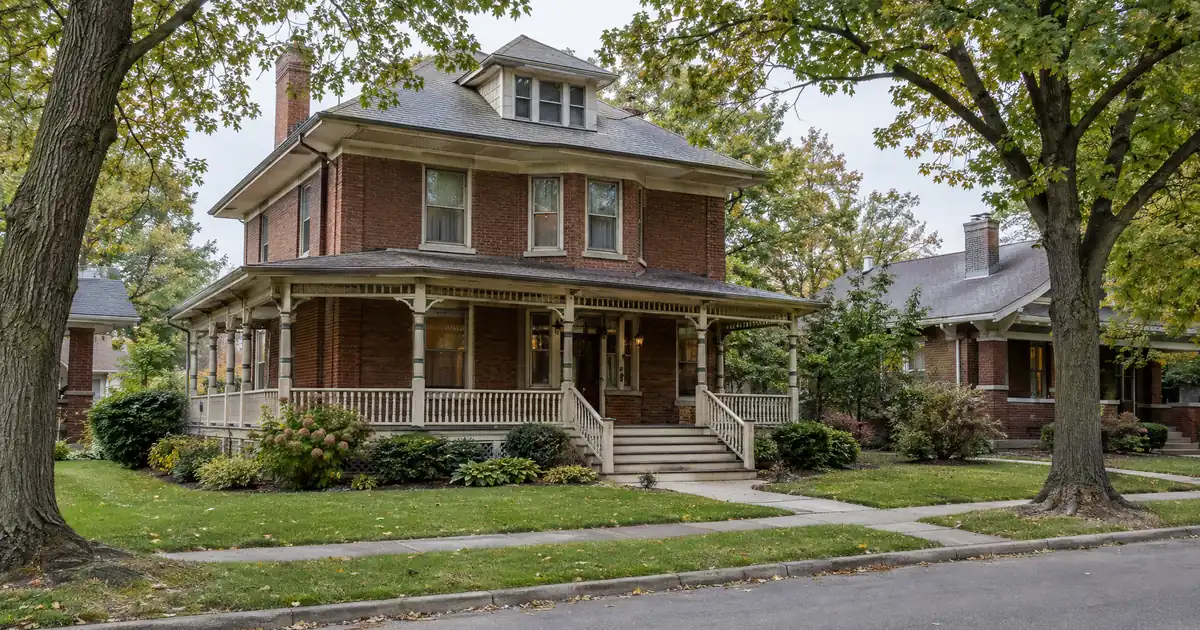
Own a rental in Calumet City that you bought before the run-up and never refinanced? Most brokers will tell you the equity is there. The part they skip is that the appraisal, not your purchase price, sets how much of it can move, and Calumet City values have started to slip.
DSCR Cash-Out Calculator
Run the cash-out numbers in Calumet City, IL
Rate source: Freddie Mac 30-yr average via FRED® — Federal Reserve Bank of St. Louis · effective Sep 24, 2026
Prefilled with starting assumptions — enter your property’s value, balance, taxes, and insurance for a more accurate picture.
Program parameters update from Lendmire’s centralized guideline source. Taxes and insurance are editable estimates.
As of Sep 24, 2026 · General Freddie Mac market benchmark, not a Lendmire loan offer. Property value, balance, taxes, and insurance are editable estimates. Maximum loan-to-value varies by lender, program, property type, and seasoning. Not a Loan Estimate, approval, or commitment to lend. Program availability and eligibility are subject to lender guidelines, credit approval, property review, and underwriting.
The Quick Read:
A DSCR cash-out refinance on a Calumet City, Illinois investment property is underwritten primarily on the property’s rental income measured against its full monthly obligation, with proceeds limited by an LTV ceiling, a seasoning period, and reserves, all subject to lender guidelines.
- Average home value is $156,808, down 2.7% year over year. About 75% of rentals fall between $1,001 and $1,500 a month.
- Redfin shows a $255K median multi-family listing price.
- Cash-out caps at 75% LTV, after roughly six months of ownership from title recording.
- These specifics are subject to lender guidelines and a full review of property, leverage, and credit.
Calumet City Market Snapshot
A quick read on the Calumet City investor landscape — figures come from the cited sources below. Confirm current property-level numbers before underwriting.
| Metric | Detail |
|---|---|
| Typical rents | $1,138 gross (Point2Homes) |
| Employment | 9,217 jobs (Redfin Multi-Family (city)) |
| Vacancy | 8.4% rental (Wikipedia: Calumet City) |
Where the Equity Came From (and Where It Stalled)
Most Calumet City owners are sitting on real equity, but the run-up has stalled. Appraisals are the variable to watch. Underwrite the refinance on rent coverage, not on the assumption that values keep climbing.
The DePaul Institute for Housing Studies tracks Calumet City together with Harvey as one submarket. Single-family prices there are up 85.8% since the start of the pandemic, which the institute lists among the largest gains in Cook County. A separate IHS release shows a 12.7% gain over one recent year. That is the equity story, and it is why cash-out is on the table for so many owners here.
The other side of it. The IHS long-run index shows the Calumet City/Harvey submarket with the smallest gain since the turn of the century: 100.1%, against 125.1% for Cook County overall. And Zillow’s current read is an average value of $156,808, down 2.7% over the past year, with homes reaching pending in about 33 days. A market source puts the median house or condo value lower, at $150,256, reflecting a different methodology. Either way, the range is roughly $150K to $157K for a typical home.
A recent purchase or renovation can appraise flat here. That directly limits how much equity a 75% LTV ceiling releases. Files built on list prices get cut back. Files built on recent closed comps hold. Terms vary by lender guidelines, property type, leverage, credit profile, and full file review.
What a Two-Flat Does That a Bungalow Can’t
A two-flat or three-flat clears coverage more comfortably than a single-family rental in Calumet City, because income doubles while price does not. The 2-4 unit product is the core of the cash-out market here.
RentCafe reports an average rent of $1,176, with about 75% of rentals sitting between $1,001 and $1,500. Its bedroom-level figures are $1,063 for a one-bedroom and $1,260 for a two-bedroom. Apartments.com runs lower: $946 for a one-bedroom, $1,157 for a two-bedroom, and $1,246 and up for a three-bedroom. The band is tight, and a three-bedroom house rents for about what one two-bedroom unit in a duplex does. Model at market rent, not a stretch figure.
Run the numbers on two cases. These are modeled assumptions, not sourced market data. Both use 75% LTV and full PITIA, including Illinois-average taxes and insurance. Exact terms depend on the lender’s guidelines, property type, leverage, and a full review of the borrower’s file.
- Single-family: value near the Zillow average of $156,808, rent at the market source median gross rent of $1,209. Coverage lands around 1.1x.
- Two-flat: value near the Redfin multi-family median of $255K, two-bedroom units totaling $2,300 to $2,500 in modeled rent. Coverage lands roughly between 1.25x and 1.4x.
The duplex wins on the ratio. The single-family case is fine, but thin. Shave 10% off the bungalow rent and coverage slips to right around the 1.00 line. Most standard DSCR programs treat 1.00x as the baseline because rent covers the payment at that level. An owner below it has options a lender may review, including lower leverage, a sub-1.00 program, or an interest-only structure, but eligibility depends on credit, reserves, and property review.
Listing data backs up the multi-family supply. Homes.com showed 24 multi-family listings from $40,000 to $800,000, with listings averaging 50 days on market. Redfin’s 15 multi-family homes sat a typical 83 days. The two snapshots differ, so treat them as a range. One duplex listing notes separate gas and electric meters for each unit. That matters on a DSCR file: it supports a unit-level rent schedule and keeps owner-paid utilities down.
Town Center, Torrence, and the River Oaks Blocks
Neighborhood-level rent and price data for Calumet City is thin, so the submarket read is qualitative. The one hard number is Town Center.
Redfin’s Town Center page showed four multi-family homes at a $188K median listing price, with a typical 178 days on market. Long market times suggest thinner buyer demand. That is an inference, and it could mean negotiating room for the investor buying the next deal with cash-out proceeds. For an owner refinancing, it is a caution: slow-selling stock gives an appraiser fewer recent comps.
The Torrence Avenue and Sibley Boulevard corridors carry the commercial activity, with apartment communities near the major arterials, per Map of Illinois. That is a low-authority source, so use it for orientation only. The River Oaks area is anchored by River Oaks Center, a mall of about 1.29 to 1.38 million square feet with more than 60 stores. Blocks near the Indiana line are marketed as high-demand in listing copy. That is unverified, so confirm it with recent leases before you lean on it. Redfin also lists names like Harrison Park Historic District, Bernice, and Parkview. Some of those come from a map tool, so don’t build a rent schedule on them.
Skip any pitch that ranks these areas by rent-to-value. The data doesn’t support it.
Who Rents Here, and Why It Holds
Demand is workforce and affordability-driven. About 44% of households rent, which keeps the tenant pool deep enough to defend a rent schedule.
RentCafe counts 6,346 renter-occupied households, 44% of the total, against 7,986 owner-occupied. Population sits at roughly 35,000 to 37,000 depending on the source: a market source shows 34,855, while U.S. News shows about 36,626. U.S. News puts median household income at $56,843. A household at that income renting at $1,001 to $1,500 is a real affordability match, which is why the rent band is tight.
Rent direction is mixed. RentCafe shows the average up 5.9% from a year earlier. Zumper shows $1,317, down 4% year over year. Flat to soft is the defensible read. Don’t underwrite growth. Every figure here varies by lender and program — guidelines, property type, leverage, and credit profile all apply.
Employment sits mostly outside the city. UChicago Medicine Ingalls Memorial is in nearby Harvey and runs an outpatient site in Calumet City; the health system employs roughly 13,000 people overall. Older, unverified figures put the hospital itself at about 3,000 employees and 582 beds, so treat that as approximate. Healthcare is a steady tenant pool. Regional listings also show commuter employers across the state line, including Hard Rock Casino Northern Indiana in Gary and Powers Health in Munster. No verified headcounts exist for those, and there is no sourced top-employer list for the city.
The Chicago Southland Chamber lists South Suburban College, Prairie State College, Moraine Valley Community College, and Governors State University as regional workforce partners. This is not a college-rental market, and the schools are not tenant drivers.
Seasoning, Reserves, and the Paperwork That Stalls Files
The mechanics are simple. The friction is documentation. Cash-out is capped at a 75% LTV ceiling, seasoning runs about six months of ownership measured from title recording, and reserves run about six months of PITIA. These are typical program guidelines, not guarantees, and the exact terms vary by lender. Some Illinois overlays run tighter on refinance, near 70%, so model both. Credit tiers generally run from a 620 floor up through 660, 680, and 700, with better tiers usually supporting better leverage. Equity available is never a guaranteed cash figure. It depends on rent used for lender review, PITIA, reserves, and the ceiling. For background on how qualification works, see the guide “What Is a DSCR Loan”.
Here’s where files actually stall in a market like this:
1. Seasoning date. Lenders measure from the recording date on the settlement statement, not the contract date. Files that assume the clock started at contract get kicked back.
2. Lease evidence. A rent schedule that matches leases and deposits moves cleanly. A rent schedule that floats above the tight $1,001 to $1,500 band draws questions.
3. Meter and utility setup. Separate meters need to be documented. Shared meters shift owner-paid utilities into the file.
4. Building age. RentCafe puts the average age of apartment buildings near 41 years, and Point2Homes gives a median construction year of 1968. Deferred repairs can turn into appraisal conditions.
5. Unit count. At five or more units, lenders usually move to commercial or multifamily underwriting. A 12-unit brick building near the state line is a different loan path than a duplex. Check program rules first.
6. Balance size. Loans can run up to $3,000,000 on standard programs, but Calumet City balances are small. Smaller balances route through select lenders in the network, so the lender fit should be settled before the appraisal is ordered.
Lendmire’s deal desk sees a consistent pattern on files from markets like this: older 2-4 unit stock with small balances. The cleaner files tend to arrive with the recording date, current leases, and meter documentation already in hand. The common friction point is an appraisal that comes in below the owner’s mental number, which shrinks proceeds more than any guideline does. Entity paperwork for LLC-titled properties is reviewed subject to lender program eligibility, so have the operating agreement and good-standing documents ready too.
If the appraisal lands short, an appraisal reconsideration request with recent closed in-neighborhood sales is the normal next step. It is routine, not a rescue. Where it does not recover the value, dropping the loan amount to hold the ratio is often cleaner than forcing the file.
Where the Proceeds Go
The refinance is capital for the next deal, and the price gap to the county is the reason it works. Calumet City’s median value runs near $150K, against a Cook County figure reported at roughly $285K, though that comparison is undated, so treat it as directional. Cash released from a 2-flat here can fund a larger down payment on the next 2-4 unit, or a second property in the same stock. Whether it pencils depends on the same coverage math as the first loan. See cash-out refinance details and refinancing options for the mechanics, and compare a DSCR loan with a conventional loan if W-2 documentation is the obstacle on a conventional path.
Verify current local rental rules, taxes, and insurance with qualified local professionals before you commit. Cook County property taxes are a major underwriting variable.
DSCR vs. conventional financing
There are two common ways to finance an investment property in Calumet City, IL, and they qualify you differently — here’s how investors weigh them.
Why investors choose it
- Qualifies on the property’s rental income — no personal tax returns, W-2s, or pay stubs needed to document income.
- No personal debt-to-income ceiling to clear, so existing mortgages and obligations don’t cap your borrowing the same way.
- Can be closed in an LLC, keeping the property inside a business entity.
- Built for scaling — not held to the limit on number of financed properties that conventional financing applies.
- Underwriting centers on the deal: generally qualifies when the rent covers the payment, a 1.00x coverage ratio being a common baseline (confirmed in underwriting).
- Designed specifically for investment property, including long-term and, where the program allows, short-term rentals.
Where it’s strong
- Often the lowest ongoing financing cost for a buyer who fully qualifies on personal income — a fit for a first property or a cost-first purchase.
Trade-offs for investors
- Requires full personal income documentation and must fit within a debt-to-income limit — salary, existing debts, and other mortgages all count.
- Typically held in your personal name rather than a business entity.
- Caps how many financed properties you can carry, which can become a ceiling as a portfolio grows.
- Evaluates you as a borrower as much as the property, which usually means more paperwork.
How investors usually choose: a first or single property often optimizes for the lowest financing cost; portfolio builders often optimize for leverage, vesting in an LLC, and scaling past conventional caps. The right answer depends on your goals, the property, and current guidelines — both paths run through select lenders in Lendmire’s wholesale network, with eligibility and terms confirmed in underwriting.
Frequently Asked Questions
How much equity can a Calumet City two-flat release in a cash-out?
It depends on the appraised value, the 75% LTV ceiling, your current payoff, and whether the rents cover the new payment. With the average home value down 2.7% over the past year, the appraisal is the swing factor. The equity you feel you have and the equity the appraisal shows can differ. Final terms depend on lender guidelines, property type, leverage, and the borrower’s complete credit picture.
Is the six-month seasoning measured from my contract date?
No. Seasoning is generally measured from title recording, documented by the settlement statement. A recent purchase or a property you’re still renovating may need to wait even if the closing felt long ago.
Can a 12-unit building near the state line use the same DSCR cash-out program?
Usually not. At five or more units, lenders typically move the loan to commercial or multifamily underwriting. Standard DSCR programs fit the 1-4 unit stock better. Confirm program rules before ordering anything.
Are Calumet City rents rising or falling?
The sources disagree. RentCafe shows the average up 5.9%, while Zumper shows it down 4%. About 75% of rentals sit between $1,001 and $1,500, so underwrite at current market rent and avoid pricing the schedule on growth. These specifics are subject to lender guidelines and a full review of property, leverage, and credit.
Do small loan balances cause problems?
Yes, they can. Calumet City values in the $150K to $255K range produce small balances, and smaller balances route through select lenders in the network rather than standard programs. Settle the lender fit early so the file doesn’t restart after the appraisal.
The Blind Spot
The biggest risk for DSCR-financed owners here is appraisal risk, not coverage risk. Values are already slipping after a run-up that the long-run IHS data shows has lagged the county over two decades. An owner who sizes a cash-out on last year’s value and then draws an appraisal at this year’s comps loses proceeds without warning, and in a city with a thin 2-4 unit comp set and listings that can sit for months, that miss can be large.
For current guidelines and terms, see Lendmire’s DSCR loan programs page.
About Lendmire
Lendmire, NMLS# 2371349, is a non-QM mortgage broker serving real estate investors in 41 markets, including Washington, D.C., through DSCR investor loan programs. Qualification is generally reviewed around the subject property’s rental income rather than the borrower’s W-2 history, which suits LLC-titled portfolios and self-employed investors. All scenarios remain subject to lender review and program guidelines. Lendmire has been recognized by Scotsman Guide as a 2026 Top Workplace and is also a 2025 Scotsman Guide Top Workplace, two consecutive Top Mortgage Workplace recognitions.
For broader investor-financing rules and property-type coverage across the state, see Illinois DSCR loans.
Get Started
Ready to find the right loan for you?
In about 30 seconds you can review financing options available for your investment property. No commitment required.
Informational only. Not a Loan Estimate, approval, or commitment to lend. Program availability and eligibility are subject to lender guidelines, credit approval, property review, and underwriting.
References
1. Zillow: Calumet City home values
2. RentCafe: Calumet City average rent
3. Redfin: Calumet City multi-family homes
4. Point2Homes
6. DePaul Institute for Housing Studies: Cook County House Price Index
8. housingstudies.org — Cook County House Price Second Quarter 2024
10. Homes.com
12. Map of Illinois
14. Zumper
16. Wikipedia — Ingalls Memorial Hospital
17. Chicago Southland Chamber workforce partners
18. RentCafe
19. recognized by Scotsman Guide as a 2026 Top Workplace
20. a 2025 Scotsman Guide Top Workplace
This article is part of Lendmire’s investment property cash-out refinance program — full qualification details, guidelines, and scenarios live on the program page.
Related reading: Luxury Rental DSCR Loans In New Jersey · Jersey Shore Vacation Rental Loans: DSCR Financing In Ocean City, Cape May And Long Beach Island · DSCR Cash-out Refinance In New Jersey: Pulling Equity From A Rental
Guides: Investment Property Cash-Out Refinance in Illinois
Brandon Miller
Founder & CEO, Mortgage Loan Originator, Lendmire LLC
- Mortgage Loan Originator · NMLS# 1129696 · Verify on NMLS Consumer Access
- North Carolina Real Estate Broker · License# 343312 · Verify on NCREC
- North Carolina Insurance Producer · License# 19053198 · Property, Casualty, Life, Health · Verify on NAIC SBS
- Lendmire LLC · Firm NMLS# 2371349 · Verify firm licensure
Important disclosures. Lendmire (NMLS# 2371349) is a licensed mortgage brokerage. Lendmire is not a direct lender, depository institution, or financial advisor. All loan inquiries are subject to lender underwriting; this article does not constitute a commitment to lend. Rates, terms, and program guidelines are subject to change without notice and vary by borrower profile, property type, and state. Information in this article is general in nature and is not financial, legal, or tax advice. Equal Housing Opportunity. NMLS Consumer Access: nmlsconsumeraccess.org.