
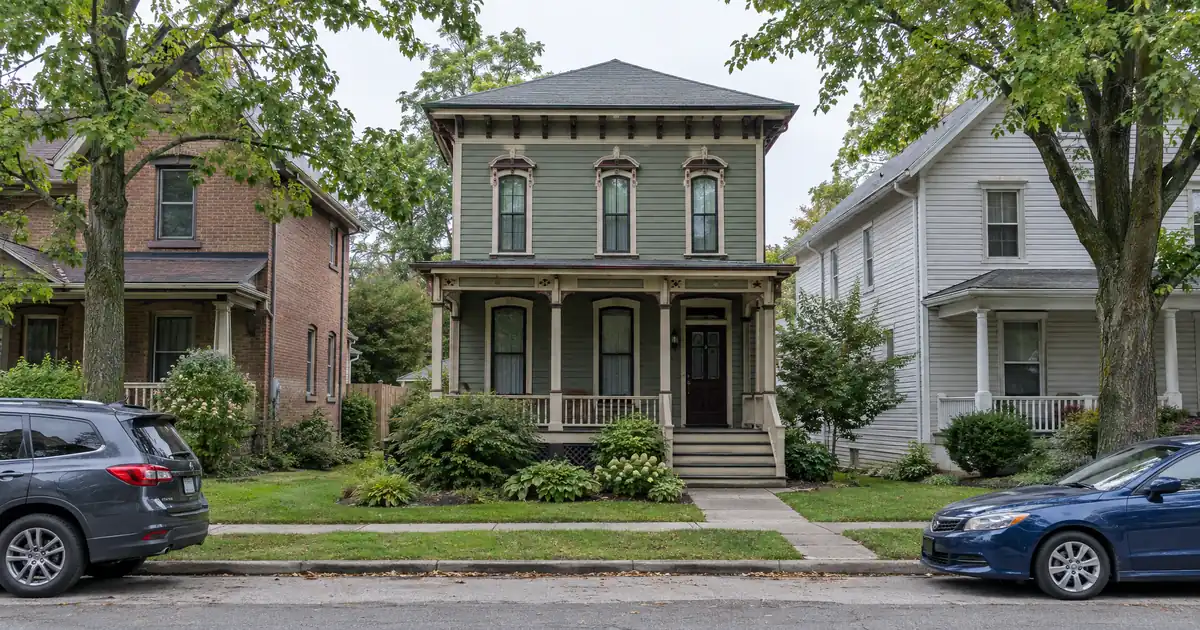
Two things stall a cash-out refinance on a rental more than weak rent: an ownership clock that hasn’t run long enough, and an appraiser with too few comparable sales to defend the value. Bloomington has the second problem built in. Redfin logged only 41 homes sold in a single recent month, which is a thin base for any citywide number. A DSCR cash out refinance in Bloomington, Indiana works when the file is built around submarket comps and rent that holds up through the academic calendar.
DSCR Cash-Out Calculator
Run the cash-out numbers in Bloomington, IN
Rate source: Freddie Mac 30-yr average via FRED® — Federal Reserve Bank of St. Louis · effective Sep 24, 2026
Prefilled with starting assumptions — enter your property’s value, balance, taxes, and insurance for a more accurate picture.
Program parameters update from Lendmire’s centralized guideline source. Taxes and insurance are editable estimates.
As of Sep 24, 2026 · General Freddie Mac market benchmark, not a Lendmire loan offer. Property value, balance, taxes, and insurance are editable estimates. Maximum loan-to-value varies by lender, program, property type, and seasoning. Not a Loan Estimate, approval, or commitment to lend. Program availability and eligibility are subject to lender guidelines, credit approval, property review, and underwriting.
The Quick Read:
A Bloomington, Indiana cash-out refinance on a rental is underwritten primarily on the property’s rental income measured against its full monthly obligation, so the deal works from ownership seasoning to a value review built on submarket comps, then to a coverage test, reserves and the loan-to-value cap the lender applies.
- IU Bloomington enrolled 48,424 students, anchoring near-campus rental demand.
- Near-campus by-the-room rents run $400-$600 per person per IU’s graduate student housing page.
- Cash-out tops out at 75% LTV after about 6 months of title seasoning.
- The 4.18% cap rate points to cash-flow-led returns, not appreciation.
- Citywide medians move on thin sales, so submarket comps decide the value. Exact terms depend on the lender’s guidelines, property type, leverage, and a full review of the borrower’s file.
Bloomington Market Snapshot
A quick read on the Bloomington investor landscape — figures come from the cited sources below. Confirm current property-level numbers before underwriting.
| Metric | Detail |
|---|---|
| Home prices | $338,000 median (Duke Conrad Realty blog) |
| Typical rents | $1,703 average (RentCafe / Yardi Matrix rent) |
| Recent appreciation | 2.6% (CapRateCity) |
| Cap rates | 4.18% cap rate vs 3.98% Indiana average (CapRateCity) |
| University enrollment | 48,424 total enrollment (Indiana University Bulletin) |
| Population | 321,640 Region 8 population (Hoosier Data) |
Near-Campus Multi-Unit Is Where the Refinance Balance Comes From
The strongest cash-out candidates in Bloomington are near-campus duplexes, triplexes, fourplexes and larger 3-4 bedroom houses rented by the room, in and around The Hill, the Elm Heights edges and the 10th and 17th Street corridors. Bedroom-splitting is the lever that moves coverage. Nothing else in the city does it as reliably.
The numbers are simple. Near-campus properties typically rent for $400-$600 per person in a multi-bedroom unit, against $700-$1,000 for a studio or single-occupant unit. A 4-bedroom house at the low end of that range grosses $1,600 a month. At the high end it grosses $2,400. Rented as one lease, the same house is a different animal: ApartmentFinder puts the citywide 4-bedroom average at $2,508, and the citywide 3-bedroom average at $1,677.
Run the numbers on a modeled 4-bedroom near-campus house appraising around the $320,000 citywide median, refinanced at 75% LTV. These are modeled assumptions, not sourced deal data. Coverage is rent divided by full PITIA, including taxes and insurance. On by-the-room rent at the low end, the coverage number lands in the 0.8s. At the midpoint it sits near 1.0. At the high end it reaches roughly 1.2. Rented as a single 4-bedroom lease near the citywide average, it comes out around 1.2 as well. Rents are the swing factor, and a fourplex spreads that risk across four leases instead of one. Every figure here varies by lender and program — guidelines, property type, leverage, and credit profile all apply.
Sub-1.00 files aren’t dead, but they get harder. Some lenders review sub-1.00 programs, and an interest-only structure or a lower LTV can reshape the ratio. Those paths usually come with stronger credit, more reserves or different pricing, and eligibility remains subject to lender guidelines and property review.
One correction to a common assumption: healthcare-driven demand in Bloomington doesn’t cluster on the west side. IU Health first identified a west-side site, then built its $557 million hospital on the northeast side, east of the Ind. 45/46 Bypass and north of East 10th Street, on land next to the flagship campus. The hospital has 364 staffed beds and a Level III trauma designation. Near-campus product therefore captures student renters and hospital workers at the same time. That dual tenant pool is a better argument for value than west-side small multifamily.
Prospect Hill and Downtown: Cheaper Entry, Lower Ceiling
Prospect Hill is the affordable end of the workable submarkets. Per Rent.com, one-bedroom rents there average around $919, well under the roughly $1,413 near IU or the roughly $1,450 in Elm Heights. Lower rent also means lower purchase prices, and that can keep the loan-to-rent relationship reasonable on mixed student and workforce tenants. The trade-off is a lower ceiling on what a rent-driven appraisal can support. Prospect Hill is a fit for a modest, steady cash-out. It won’t produce a large one.
Downtown Bloomington, around Courthouse Square, draws young professionals, grad students and service workers. It’s among the more affordable parts of the city, and the walkable core keeps demand consistent. Treat it as a hold-and-refinance market rather than a value-add one.
Elm Heights is the pricey side. Rents there are high, but so is the basis, and the coverage math tightens once you buy in at prices that reflect the location. Skip Elm Heights if the goal is stretching a cash-out balance. It’s a fine place to hold something you already own.
Old Northeast is also a poor fit for a leverage-driven thesis. RentCafe shows rents around $3,100 for larger units there, but that reflects unit size and finishes more than yield. Workforce tenants and working professionals rent it steadily. The coverage math doesn’t reward it the way multi-unit near campus does.
Crane Changes the Seasonal Math
Summer is the student-rental problem. Leases turn over, some units sit, and a file that assumed twelve months of by-the-room income can look optimistic in July. Bloomington has a partial hedge that most college towns don’t.
NSWC Crane, about 35 miles southwest, has more than 3,300 employees, including over 2,000 scientists, engineers and technicians. The WestGate@Crane Technology Park has four semiconductor companies planning more than $300 million of investment, and Indiana University announced $111 million toward microelectronics and nanotechnology. That’s a technical hiring pipeline that doesn’t follow the academic calendar. Some of that workforce commutes into Bloomington and some relocates there.
The metro’s local anchors add to it. The Bloomington Economic Development Corporation lists Cook Group, IU Bloomington, IU Health Bloomington, Ivy Tech, Kroger, Monroe County, the county school corporation, Novo Nordisk, Simtra BioPharma Solutions and the City among the top employers. Simtra has announced plans to add about 130 staff. Cook is headquartered locally, which makes Bloomington less dependent on the university than West Lafayette or Muncie. The city’s population is projected at 83,307 by STATS Indiana, and roughly 48,000 of IU’s students sit against that base. That makes campus the dominant renter pool, with the non-student employers as a stabilizer.
Appreciation Won’t Build the Equity for You
Bloomington is a cash-flow market. Third-party modeling from CapRateCity shows home values appreciating about 2.6% a year, with a 4.18% cap rate against an Indiana average of 3.98%. Zillow shows a similar picture: an average value of $316,973, up 2.5% year over year.
That shapes how you underwrite a cash-out. An investor who bought a few years ago shouldn’t count on citywide price gains to have created much borrowable equity. The equity comes from the property itself: renovated units, a conversion to more bedrooms, better lease structure and leases that show rent. Value that comes from documented income is value an appraiser can support with comps and a lender can support with coverage.
The price data is noisy, which is why this matters. Rocket Homes puts the median sold price at $320,000, and that’s the figure used here. A local brokerage, Duke Conrad Realty, reports MLS data near $338,000, up about 6%, while Redfin’s most recent median sat near $300,000. That $38,000 gap between two contemporaneous sources is what thin volume looks like. Expect the appraiser to lean on submarket-specific sales, not a citywide median.
Inventory is also loosening. Listing age climbed about 31% year over year, and active listings are up roughly 12%, with new construction in Ellettsville and on the east side easing pressure. That helps buyers. For owners planning a cash-out it’s a mild caution: a softer market makes it harder for comps to keep climbing, and it favors properties whose value rests on income.
Working DSCR brokers see a recurring pattern in college-town markets like this one: the rent on the lease is fine, but the value review runs into a small comp set, and the file gets repriced by the appraisal instead of the coverage number. The stronger files show up with signed by-the-room leases, a rent schedule that matches them and two or three submarket sales in hand before the appraisal is ordered. That preparation shifts the conversation from “what’s it worth” to “here’s what it rents for.”
How Much Can You Actually Pull?
Cash-out on an investment property is capped at 75% LTV. That figure is a hard ceiling for the programs Lendmire works with, and the purchase LTV doesn’t apply here. What you can borrow is the lower of what the 75% cap allows and what the coverage math supports. Higher rents raise the second limit, and a higher appraisal raises the first. Final terms depend on lender guidelines, property type, leverage, and the borrower’s complete credit picture.
Lendmire (NMLS# 2371349) is a DSCR-focused mortgage broker. It works with Bloomington, Indiana investors through a DSCR program footprint spanning 40 states plus Washington, D.C., and arranges these loans through wholesale lending channels. Program guidelines vary by lender, but most files look for the following:
- About 6 months of ownership, measured from title recording, before a cash-out.
- A DSCR of 1.00 or better on rent used for lender review against full PITIA, as the standard baseline.
- Credit scores from a 620 floor upward, with tiers at 660, 680 and 700.
- Reserves of roughly 6 months of PITIA, moving toward 9 months above $1,500,000.
- Loan amounts up to $3,000,000 on standard programs, with smaller balances routed through select lenders in the network. These specifics are subject to lender guidelines and a full review of property, leverage, and credit.
Property type matters here. Manufactured homes, log homes and barndominiums fall outside these programs. Most Bloomington rentals near campus (duplexes, fourplexes and single-family houses) fit. LLC-titled properties are commonly accommodated, subject to lender program eligibility.
Take a modeled fourplex, and treat this as an assumption, not a market claim. Say an owner holds a fourplex worth $359,000 at appraisal and rents all four units on one-year leases. At 75% LTV, the maximum loan is the cap, not necessarily the amount. If coverage on that loan sits comfortably above 1.00 including taxes and insurance, the file has room. If it sits at 1.00 to 1.05, the investor is choosing between a smaller loan for a better ratio or a larger loan and thinner coverage. Equity available depends on rent used for lender review, PITIA, reserves and the LTV ceiling, and none of it is a guaranteed figure. The DSCR math tool translates the percentages into dollars. Terms vary by lender guidelines, property type, leverage, credit profile, and full file review.
Where the proceeds go decides whether this is a good move. The straightforward use is a down payment on the next near-campus property. A seasoned rental that yields a 6-month clock and a rent-supported appraisal becomes the capital for the next fourplex, and the cycle repeats. The cost is higher debt service on the property you already own, which is why the coverage number after the refinance matters more than the cash you take out. The stronger play might be a smaller pull with cushion over a maximum pull with none, though investors buying for scale could argue the other way. It’s a genuine toss-up, and it depends on how much the next deal needs.
For deal structure, Lendmire’s refi programs and the refi options outline how the cash-out and rate-and-term paths differ. For a quick contrast with conventional financing, the program-to-program comparison covers the trade-offs. For the basics, Lendmire’s primer on DSCR loans explains the qualification model. State-level detail sits on Lendmire’s Indiana DSCR loan programs page.
Where Bloomington Cash-Out Files Get Stuck
Three things slow these files, and none of them is the rent.
The first is seasoning. A property bought and renovated within the last 6 months can’t be refinanced against its improved value until title has aged. Plan the clock before you plan the renovation.
The second is comps. With only 41 homes sold in a given month, a lender’s appraiser may reach back or stretch to neighboring areas. Bring your own sales.
The third is documentation of by-the-room income. A lender wants to see the leases that produce the rent you’re claiming. A fourplex with four signed leases is straightforward. A house with four roommates on one lease is a different rent schedule than one with four individual ones. Confirm current local rental rules, taxes and insurance with qualified local professionals before you underwrite.
DSCR vs. conventional financing
Two common ways to finance an investment property in Bloomington, IN. They qualify you differently — here’s how investors weigh them.
Why investors choose it
- Qualifies on the property’s rental income — no personal tax returns, W-2s, or pay stubs needed to document income.
- No personal debt-to-income ceiling to clear, so existing mortgages and obligations don’t cap your borrowing the same way.
- Can be closed in an LLC, keeping the property inside a business entity.
- Built for scaling — not held to the limit on number of financed properties that conventional financing applies.
- Underwriting centers on the deal: generally qualifies when the rent covers the payment, a 1.00x coverage ratio being a common baseline (confirmed in underwriting).
- Designed specifically for investment property, including long-term and, where the program allows, short-term rentals.
Where it’s strong
- Often the lowest ongoing financing cost for a buyer who fully qualifies on personal income — a fit for a first property or a cost-first purchase.
Trade-offs for investors
- Requires full personal income documentation and must fit within a debt-to-income limit — salary, existing debts, and other mortgages all count.
- Typically held in your personal name rather than a business entity.
- Caps how many financed properties you can carry, which can become a ceiling as a portfolio grows.
- Evaluates you as a borrower as much as the property, which usually means more paperwork.
How investors usually choose: a first or single property often optimizes for the lowest financing cost; portfolio builders often optimize for leverage, vesting in an LLC, and scaling past conventional caps. The right answer depends on your goals, the property, and current guidelines — both paths run through select lenders in Lendmire’s wholesale network, with eligibility and terms confirmed in underwriting.
Frequently Asked Questions
How do you qualify for a DSCR loan in Bloomington, Indiana?
Qualification centers on the property’s rent against its full monthly obligation, not personal income. On most files that means a coverage ratio at or above 1.00, credit starting at a 620 floor and roughly 6 months of PITIA in reserves, all subject to lender guidelines. Near-campus multi-unit properties with individual leases tend to present the clearest rent schedule.
What are the requirements for an investment property loan in Bloomington, Indiana?
Typical requirements include a 75% LTV ceiling on a cash-out, about 6 months of ownership from title recording and a credit score at or above the 620 floor. Standard programs go up to $3,000,000, and manufactured homes, log homes and barndominiums are excluded. Final eligibility depends on the lender, the property review and the borrower’s credit profile.
What can slow down a Bloomington DSCR cash-out refinance?
The usual culprits are seasoning that hasn’t run, a thin comp set and rent that isn’t documented lease by lease. Lendmire arranges DSCR investor loans, and a cash-out file moves best with seasoning complete, by-the-room leases in hand and submarket sales ready for the appraiser. Program terms vary by lender.
Does student turnover hurt a cash-out appraisal near IU?
It can hurt the coverage number more than the appraisal. Appraisers value the property on comparable sales, but the lender tests coverage on the rent in place, and a summer vacancy or a thin lease schedule weakens it. Non-student demand from Cook, Crane and the hospital, in the same neighborhoods, helps offset that.
Should a Bloomington investor pull the maximum equity?
Not automatically. The 75% cap is a ceiling, not a target. A smaller cash-out that leaves coverage comfortably above 1.00 protects the file against a soft leasing season, and it keeps refinancing options open later. Investors chasing the next acquisition may accept thinner coverage, which is a trade-off to size before committing.
Your Next Deal
Bloomington’s rentals reward owners who can show the rent, not just describe it, so the question is what your property’s lease schedule proves today. If you pulled cash out of it next month, would the coverage number still hold through a slow July?
For current guidelines and terms, see Lendmire’s DSCR loan programs page.
About Lendmire
Lendmire is a non-QM mortgage brokerage (NMLS# 2371349) arranging DSCR investor loans in 41 markets, including Washington, D.C., through wholesale and investor-lending channels. DSCR loans are evaluated by the lender on rental income rather than personal income, subject to lender guidelines, which suits LLC-owned portfolios, self-employed investors and operators scaling beyond conventional loan caps. Lendmire is recognized as a 2025 Scotsman Guide Top Workplace and a top-ranked workplace in 2026. Investors can reach the team at 828-256-2183.
Get Started
Ready to find the right loan for you?
In about 30 seconds you can review financing options available for your investment property. No commitment required.
Informational only. Not a Loan Estimate, approval, or commitment to lend. Program availability and eligibility are subject to lender guidelines, credit approval, property review, and underwriting.
References
1. Redfin: Bloomington housing market
2. IU News: Enrollment up at IU campuses
3. IU Graduate & Professional Student Government: Housing
4. CapRateCity: Bloomington appreciation forecast
6. RentCafe / Yardi Matrix rent
7. Indiana University Bulletin
8. Hoosier Data
9. ApartmentFinder puts the citywide 4-bedroom average at $2,508
10. Yahoo Finance — Patients Moved Iu Health Bloomington
11. IU School of Medicine: Bloomington hospital page
12. NSWC Crane
13. IBJ: Crane naval base poised for growth as innovation hub
14. Bloomington Economic Development Corporation: Major Employers
15. STATS Indiana (Indiana Business Research Center)
16. Zillow
17. a 2025 Scotsman Guide Top Workplace
18. Scotsman Guide — Top Workplaces 2026
This article is part of Lendmire’s investment property cash-out refinance program — full qualification details, guidelines, and scenarios live on the program page.
Related reading: Luxury Rental DSCR Loans In New Jersey · Jersey Shore Vacation Rental Loans: DSCR Financing In Ocean City, Cape May And Long Beach Island · DSCR Cash-out Refinance In New Jersey: Pulling Equity From A Rental
Guides: Investment Property Cash-Out Refinance in Bloomington, IN · Investment Property Cash-Out Refinance in Indiana
Brandon Miller
Founder & CEO, Mortgage Loan Originator, Lendmire LLC
- Mortgage Loan Originator · NMLS# 1129696 · Verify on NMLS Consumer Access
- North Carolina Real Estate Broker · License# 343312 · Verify on NCREC
- North Carolina Insurance Producer · License# 19053198 · Property, Casualty, Life, Health · Verify on NAIC SBS
- Lendmire LLC · Firm NMLS# 2371349 · Verify firm licensure
Required disclosures. Lendmire (NMLS# 2371349) operates as a licensed mortgage broker, not a direct lender or depository. The discussion in this article is general in nature and should not be relied upon as financial, legal, or tax advice — every investment scenario is unique and should be reviewed by a qualified professional. Any loan inquiry is subject to lender underwriting, and this article is not a commitment to lend or a guarantee of approval. Mortgage rates, loan terms, and program guidelines vary by borrower, property, and state, and may change without notice. Equal Housing Opportunity. Verify licensure at NMLS Consumer Access.