
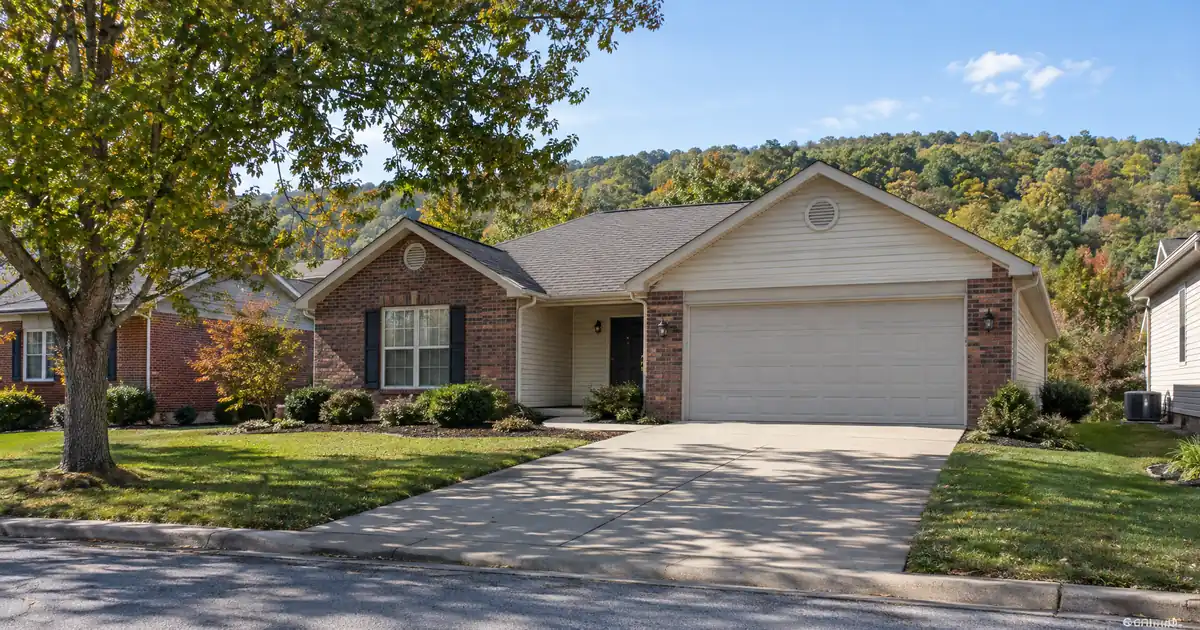
Picture an investor holding a North Branson three-bedroom bought near the $245K median Redfin reports, leased at the $1,675 that Zumper shows for three-bedrooms. Six months after the deed recorded, the plan is a cash-out refinance on the investment property to fund the next purchase. The first question isn’t how much equity has built up. It’s what the appraiser will say and whether the lease covers the full monthly obligation at 75 percent of that value. Lendmire (NMLS# 2371349) sees that gap between the plan and the appraisal most often in flat markets, and Branson is one. Lendmire places DSCR investor financing for Branson, Missouri through non-QM wholesale channels that cover 41 markets, including Washington, D.C.
DSCR Cash-Out Calculator
Run the cash-out numbers in Branson, MO
Rate source: Freddie Mac 30-yr average via FRED® — Federal Reserve Bank of St. Louis · effective Sep 24, 2026
Prefilled with starting assumptions — enter your property’s value, balance, taxes, and insurance for a more accurate picture.
Program parameters update from Lendmire’s centralized guideline source. Taxes and insurance are editable estimates.
As of Sep 24, 2026 · General Freddie Mac market benchmark, not a Lendmire loan offer. Property value, balance, taxes, and insurance are editable estimates. Maximum loan-to-value varies by lender, program, property type, and seasoning. Not a Loan Estimate, approval, or commitment to lend. Program availability and eligibility are subject to lender guidelines, credit approval, property review, and underwriting.
Key Takeaways:
A DSCR cash-out refinance in Branson, Missouri is underwritten primarily on the property’s rental income measured against its full monthly obligation, so the deal works from seasoning and appraisal to lease and reserves, with proceeds capped by the loan-to-value ceiling rather than by the owner’s paper equity.
- Cash-out caps at 75 percent LTV, with about six months of seasoning from title recording.
- Prices are soft: Redfin shows the three-month median down 7.2 percent year over year.
- Three-bedrooms rent near $1,675 per Zumper, and studios and one-bedrooms are falling.
- Low-priced duplexes can out-cover single-family homes at the same price point.
Don’t Underwrite Appreciation That Isn’t Here
Branson has no appreciation tailwind to lean on. Redfin’s three-month median sale price sits near $245K, down 7.2 percent from a year earlier. Zillow’s home value index reads $248,689, down 0.3 percent, with homes going pending in about 53 days. The two measures differ in method (one tracks closed sales, the other an automated index), but both say flat to soft.
For a cash-out, that matters more than any neighborhood story. Proceeds are a function of the appraised value at refinance, the 75 percent cap, and what the rent supports. If the property appraises at or below the purchase price, the equity you “earned” is whatever you negotiated going in. An investor who bought at market and waited for growth will find the loan amount barely moves.
Redfin also shows homes selling after 78 days on market versus 118 the prior year, so the market is moving faster than a year ago. A local broker blog cited roughly 10.4 months of supply and called the market buyer-friendly (promotional source, so read it as color, not data). Both readings agree on one thing: buyers have room to negotiate. Room to negotiate is where forced equity comes from. A property bought meaningfully under list, or one that gets a real scope of work before the refinance, is the one that produces proceeds. Market drift won’t.
Where the Rent Actually Covers the Note
Coverage in Branson runs thin on typical single-family homes and gets better as you move to properly priced three-bedrooms and small multifamily. Branson is not a market where the average listing cash flows at 75 percent leverage.
Start with the rent side. Zumper’s listings put the all-unit average at $1,295. Two-bedrooms run $1,200, three-bedrooms $1,675, and four-plus-bedrooms $2,699. The same page shows studios down 18.8 percent and one-bedrooms down 8.6 percent year over year, while the blended average is up 25 percent. That blended jump is a listing-mix artifact, not a like-for-like rent increase. Don’t put it in a rent schedule.
Now model it. Assume the $1,675 three-bedroom on a $245K value at 75 percent LTV. Run rent against full PITIA, meaning principal, interest, taxes, and insurance at assumed Missouri averages, and coverage lands around 1.1x. That clears the 1.00 baseline with modest room. Swap in the $1,295 citywide average rent on the same value and coverage slips to roughly 0.85x including taxes and insurance. Same house, different unit mix, different answer. (These are modeled inputs, not sourced deal data.)
So underwrite each property to its own rent comps, never the citywide number. A workforce three-bedroom bought below median has to carry the deal. A two-bedroom bought at median won’t.
The Duplex Angle
Small multifamily is the better coverage play here, and the math is simple. Homes.com shows 11 multi-family listings in Branson starting around $239,000. Assume two-bedroom units at Zumper’s $1,200 each and a duplex at that entry price brings in about $2,400 a month. That works out to roughly 1.0 percent of price, against about 0.7 percent for a comparable single-family home. At 75 percent LTV, the modeled coverage on that duplex runs north of 1.4x including taxes and insurance, while a two-bedroom single-family at the same price lands near 0.8x.
Two cautions. First, eleven listings is thin supply, and inventory changes constantly. Second, some Branson duplexes are priced off nightly-rental income rather than lease income, so their sticker price may not be supported by long-term rents. The appraiser’s rent schedule will tell you fast whether the asking price was built on the wrong income.
Which Branson Pockets Are Worth Holding
Focus on North Branson, West Branson, and the commuter belt toward Hollister and Branson West. Those are the areas where year-round tenants live, and year-round tenants are what a DSCR file needs.
North Branson is the growth direction. Homes.com describes it as the newer part of town, and a local Realtor there says development is heading north because the south is already built out. Newer workforce single-family homes and apartments are the product. For a cash-out, newer construction has a practical edge: fewer deferred-maintenance surprises at appraisal, and less risk of a condition issue stalling the file. No neighborhood-level price or rent data exists from a reliable source, so underwrite each address on its comps.
West Branson is the mixed-use pocket: workers who live in town alongside lake homes and investment properties. It sits near the White River, Lake Taneycomo, and Table Rock Lake. The appeal is the tenant base. The catch is appraisal comps, because lake-influenced sales can pull values in directions a workforce rental doesn’t justify. Expect the appraiser to work harder to find clean rental comparables here.
Hollister and Branson West are commuter options. Hollister sits next to College of the Ozarks, and Branson West is tiny, at 484 residents in the last full count. Sourced prices and rents don’t exist for either, so treat them as pockets to price address by address. Small towns mean thin comp sets, and thin comp sets mean appraisal friction.
Downtown and the Landing draw retail and hospitality staff, and the demand is real. Still, the cash-flow case depends on the individual building.
Skip Branson Hills. It’s a gated, custom-upgrade, three-to-six-bedroom area, and the main source is a promotional broker blog. High price points, single-family rents that don’t scale with them, and a narrow tenant pool make it a poor fit for a cash-out that has to clear 1.00. Lakefront and Table Rock-adjacent homes skew toward second-home use and have the same problem. The price reflects the view, not the lease.
The Tenant Base Behind the Coverage
Branson’s year-round renters work in hospitality, healthcare, and education, and each of those anchors has a different durability profile.
The city counts 12,817 residents with a median household income of $51,978, per ACS five-year data. That’s a modest income base, and it explains why rents top out where they do. Two-bedrooms around $1,200 fit what local wages can carry. Pushing rent assumptions well above that is where files go wrong.
Cox Medical Center Branson is the steadiest anchor, with more than 1,000 employees and 165 licensed inpatient beds, a cancer center, and a 24-hour emergency department. Clinical and support staff need year-round housing regardless of the visitor calendar. That’s the tenant profile a lender wants behind a lease.
Tourism is the larger economic engine and a mixed signal. The city’s 2025 tourism tax hit $19,671,572, up 10.1 percent and the highest on record. But Explore Branson’s research reports show city tourism tax down 9.7 percent at the second quarter and projected up only 1.6 percent for the year. Hospitality payrolls follow those numbers. For a long-term lease, that argues for tenants in healthcare, schools, and year-round hospitality roles over seasonal ones.
College of the Ozarks enrolls 1,501 undergraduates and runs a tuition-free work-college model. The campus is residential, so it adds little off-campus rental demand. It is a steady local employer, not a student-rental engine. Don’t underwrite a student-housing thesis here.
What the File Actually Looks Like
A DSCR cash-out file is mostly plumbing. The lender reviews the lease or rent schedule, appraisal, title seasoning, reserves, insurance, and entity documents, and most friction comes from one of those pieces being out of order.
Here are the parameters that drive most Branson files, per select wholesale network guidelines and subject to lender review:
- LTV: Cash-out tops out at 75 percent. The 80 percent figure you see for purchases does not apply.
- Seasoning: Roughly six months of ownership, measured from title recording, not from contract or closing-day paperwork.
- Coverage: The 1.00 benchmark, measured as rent used for lender review against full PITIA.
- Credit: A 620 floor, with tiers at 660, 680, and 700 that can improve terms.
- Reserves: About six months of PITIA, stepping up to about nine months above $1,500,000.
- Loan size: Standard programs go up to $3,000,000. Many Branson balances sit at the low end, and smaller balances route through select lenders in the network rather than standard programs.
For more on “What Is a DSCR Loan”, the pillar page walks through the ratio mechanics. Investors comparing structures can review the key differences against conventional financing.
DSCR files in markets like this one typically look like a stable-but-flat appraisal, a lease at or slightly under market, and a file that turns on the small details. The appraisal’s rent schedule is the most common swing factor, because a market with soft small-unit rents gives appraisers room to haircut. Files where the lease already matches the appraiser’s schedule tend to move cleanly through program review. Files where the lease was set optimistically get re-cut, and the coverage number moves with it.
A few property-specific items deserve attention in the Ozarks. Log homes and barndominiums fall outside these DSCR programs, and so do manufactured homes, single- or double-wide. Given how much rural-style housing sits around Branson, confirm the construction type before the file starts, not after the appraisal is ordered. If the title is held in an LLC, the entity documents need to line up with how the property was acquired, subject to lender program eligibility. A deed transfer into an LLC shortly before the refinance can reset seasoning questions, so sequence that step carefully.
For taxes, insurance, and local rental rules, verify the current requirements with qualified local professionals before building a pro forma. Budget those lines conservatively and keep them out of the rent assumptions.
DSCR vs. conventional financing
Two common ways to finance an investment property in Branson, MO. They qualify you differently — here’s how investors weigh them.
Why investors choose it
- Qualifies on the property’s rental income — no personal tax returns, W-2s, or pay stubs needed to document income.
- No personal debt-to-income ceiling to clear, so existing mortgages and obligations don’t cap your borrowing the same way.
- Can be closed in an LLC, keeping the property inside a business entity.
- Built for scaling — not held to the limit on number of financed properties that conventional financing applies.
- Underwriting centers on the deal: generally qualifies when the rent covers the payment, a 1.00x coverage ratio being a common baseline (confirmed in underwriting).
- Designed specifically for investment property, including long-term and, where the program allows, short-term rentals.
Where it’s strong
- Often the lowest ongoing financing cost for a buyer who fully qualifies on personal income — a fit for a first property or a cost-first purchase.
Trade-offs for investors
- Requires full personal income documentation and must fit within a debt-to-income limit — salary, existing debts, and other mortgages all count.
- Typically held in your personal name rather than a business entity.
- Caps how many financed properties you can carry, which can become a ceiling as a portfolio grows.
- Evaluates you as a borrower as much as the property, which usually means more paperwork.
How investors usually choose: a first or single property often optimizes for the lowest financing cost; portfolio builders often optimize for leverage, vesting in an LLC, and scaling past conventional caps. The right answer depends on your goals, the property, and current guidelines — both paths run through select lenders in Lendmire’s wholesale network, with eligibility and terms confirmed in underwriting.
What’s the Catch on Sub-1.00 Deals?
A sub-1.00 coverage ratio doesn’t end the conversation, but it changes the file. In Branson it comes up most often on two-bedrooms bought at or above median, where modeled coverage sits in the low-to-mid 0.8 range on full PITIA.
Lenders may review a few structures in that range: a sub-1.00 program, interest-only structuring, or lower leverage with stronger credit and more reserves. Each trades something. Lower leverage means smaller cash-out proceeds, which can defeat the reason for refinancing. Stronger credit and deeper reserves mean more cash parked. Whether any of those fits comes down to lender guidelines, credit approval, and property review.
There’s a thinking-out-loud question here: is it better to cash out at lower leverage on a weak-coverage property, or hold it and put the capital toward a duplex? In a flat market, the second answer often wins. The proceeds from a thin-coverage single-family are small by construction, and a duplex that clears the baseline comfortably may do more for the portfolio than squeezing another draw out of a marginal asset.
Recycling the Proceeds
The cash-out only pays off if the capital goes somewhere that performs, and in Branson that usually means higher-coverage product. The equity recycle pathway covers how investors structure that sequence, and the refinance side covers the wider mechanics.
Workforce single-family homes bought well below median, and duplexes priced off leases rather than nightly-rental income, are the two realistic targets. Investors building door count will find bulk duplex packages advertised in the market, though those change constantly and deserve their own diligence. One way to think about it: buy under list in a buyer’s market, let seasoning run, refinance at 75 percent LTV against an appraisal built on real rents, and repeat. That sequence doesn’t rely on appreciation, which matters because Branson isn’t offering any right now.
Investors building a Missouri portfolio beyond Branson can review Missouri DSCR investor loans for the state-level overview, or request a scenario quote once the property’s lease and value are in hand. Direct questions go to 828-256-2183.
Frequently Asked Questions
How do you qualify for a DSCR cash-out refinance on a Branson rental?
Eligibility centers on the property’s rent used for eligibility review against its full PITIA, with 1.00 as the common benchmark. Most files also need about six months of seasoning from title recording, a 620 minimum credit score, and roughly six months of reserves. The resulting loan is capped at 75 percent of appraised value. All of this is subject to lender guidelines and property review.
What are the requirements for an investment property loan in Branson, Missouri?
Expect a lease or appraiser rent schedule, title and entity documents, insurance, reserves, and a property type that falls inside the programs. Manufactured homes, log homes, and barndominiums are not eligible. Smaller Branson balances often route through select lenders in the network. Final terms depend on borrower, property, and the lender’s review.
Will Branson’s flat prices limit how much cash I can pull out?
Yes, more than in a rising market. Proceeds depend on appraised value at refinance, and Zillow’s index shows values down slightly over the past year. Investors who bought below list or added value have the most room. Those who bought at market and waited will see proceeds limited by the 75 percent LTV ceiling applied to an unchanged value.
Which Branson unit types should I avoid for a long-term-rental DSCR file?
Studios and one-bedrooms are the weakest. Zumper shows studio rents down 18.8 percent and one-bedrooms down 8.6 percent year over year. Two- and three-bedrooms are the stronger bets, and small multifamily can carry more coverage than single-family at the same price. Underwrite to the specific unit’s rent comps.
Can Lendmire help structure a DSCR cash-out refinance scenario for a Branson rental property?
Yes. Lendmire arranges DSCR investor loans and places cash-out scenarios with a 75 percent LTV ceiling through wholesale lending channels. Lenders review and approve eligibility.
The Real Choice
Branson hands a cash-out investor a binary. One path is to refinance a thin-coverage single-family now at reduced leverage, accepting smaller proceeds and less cash flow, in exchange for getting capital moving immediately. The other is to hold that property, let seasoning and any forced equity accumulate, and wait for a cleaner appraisal, at the cost of capital sitting idle while a buyer’s market offers duplex entry points with stronger coverage.
For current guidelines and terms, see Lendmire’s DSCR loan programs page.
About Lendmire
As a non-QM mortgage broker (NMLS# 2371349), Lendmire facilitates DSCR investor loans across 41 markets, including Washington, D.C. DSCR eligibility is generally reviewed around property-level rental income instead of personal income documentation, subject to lender guidelines, which serves LLC-structured portfolios and self-employed borrowers who don’t fit conventional boxes. Lendmire is a 2025 Scotsman Guide Top Mortgage Workplace and a top-ranked workplace in 2026.
Get Started
Ready to find the right loan for you?
In about 30 seconds you can review financing options available for your investment property. No commitment required.
Informational only. Not a Loan Estimate, approval, or commitment to lend. Program availability and eligibility are subject to lender guidelines, credit approval, property review, and underwriting.
References
1. Redfin, Branson housing market
2. Zumper, Branson rent research
3. Zillow, Branson home values
4. Homes.com, Branson multi-family listings
5. Homes.com
6. Census Reporter — Branson MO
7. CoxHealth, Cox Medical Center Branson history
8. Branson Tri-Lakes News, tourism tax
9. Explore Branson, research reports
10. a 2025 Scotsman Guide Top Mortgage Workplace
11. Scotsman Guide — Top Workplaces 2026
This article is part of Lendmire’s investment property cash-out refinance program — full qualification details, guidelines, and scenarios live on the program page.
Related reading: Luxury Rental DSCR Loans In New Jersey · Jersey Shore Vacation Rental Loans: DSCR Financing In Ocean City, Cape May And Long Beach Island · DSCR Cash-out Refinance In New Jersey: Pulling Equity From A Rental
Guides: Investment Property Cash-Out Refinance in Branson, MO · Investment Property Cash-Out Refinance in Missouri
Brandon Miller
Founder & CEO, Mortgage Loan Originator, Lendmire LLC
- Mortgage Loan Originator · NMLS# 1129696 · Verify on NMLS Consumer Access
- North Carolina Real Estate Broker · License# 343312 · Verify on NCREC
- North Carolina Insurance Producer · License# 19053198 · Property, Casualty, Life, Health · Verify on NAIC SBS
- Lendmire LLC · Firm NMLS# 2371349 · Verify firm licensure
Disclosure information. Lendmire is a state-licensed mortgage brokerage under NMLS# 2371349. Lendmire is not a depository institution, direct lender, or financial advisor — all loans referenced are placed through wholesale lender partners and are subject to each lender's underwriting standards. This article is provided for general informational purposes and is not a commitment to lend, nor does it constitute financial, legal, or tax advice. Loan programs, terms, rates, and qualification standards change without notice and depend on borrower profile, property type, and the state in which the subject property is located. Equal Housing Opportunity provider. NMLS Consumer Access: nmlsconsumeraccess.org.