
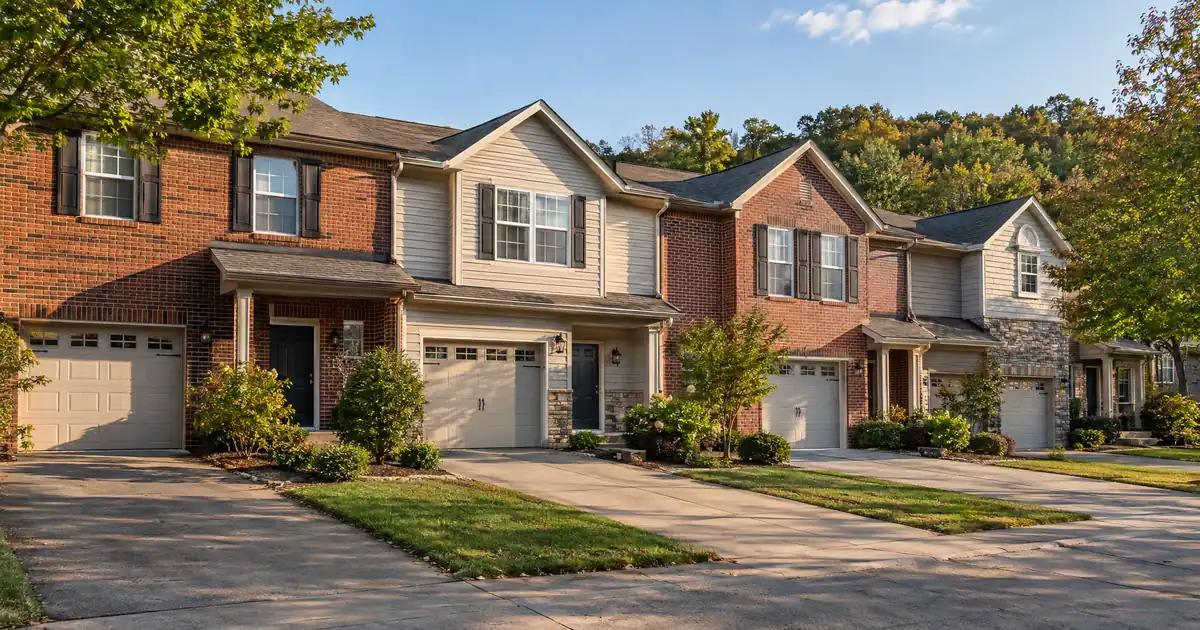
Picture an investor holding a ranch-style house in Original Raymore, bought at $240,000 a few years back. Say it now appraises near $300,000 and rents for $1,900 a month. Both figures are modeled assumptions, not market data. On paper that’s a healthy equity position. In a DSCR cash-out, it’s a file where the rent doesn’t carry the new balance, taxes, and insurance. The investor has equity but can’t reach it.
That tension runs through the whole Raymore cash-out conversation. Equity exists. Rent coverage is what limits access to it.
DSCR Cash-Out Calculator
Run the cash-out numbers in Raymore, MO
Rate source: Freddie Mac 30-yr average via FRED® — Federal Reserve Bank of St. Louis · effective Sep 24, 2026
Prefilled with starting assumptions — enter your property’s value, balance, taxes, and insurance for a more accurate picture.
Program parameters update from Lendmire’s centralized guideline source. Taxes and insurance are editable estimates.
As of Sep 24, 2026 · General Freddie Mac market benchmark, not a Lendmire loan offer. Property value, balance, taxes, and insurance are editable estimates. Maximum loan-to-value varies by lender, program, property type, and seasoning. Not a Loan Estimate, approval, or commitment to lend. Program availability and eligibility are subject to lender guidelines, credit approval, property review, and underwriting.
The Short Version: A cash-out refinance on an investment property in Raymore, Missouri is underwritten primarily on the property’s rental income measured against its full monthly obligation, which makes door count matter more than price: Redfin’s citywide median sale price of $383K is high against local rents, so single-unit files strain coverage while multi-unit files stack income.
- Single-family rent-to-value in Raymore runs near 0.5% a month, which leaves coverage below 1.00.
- Fourplex pricing per door sits far below single-family pricing, and that is what clears coverage.
- Cash-out is capped at 75% LTV, with about six months of title seasoning.
- Creekmoor is an appreciation pocket, not a cash-flow pocket, and its prices are softening.
- Thin multifamily comps are the main appraisal risk on any multi-unit cash-out here. These specifics are subject to lender guidelines and a full review of property, leverage, and credit.
Lendmire (NMLS# 2371349), a DSCR-focused mortgage broker, works with investors buying or refinancing in Raymore, Missouri, helping place DSCR financing across 41 markets, including Washington, D.C. This piece covers only the equity-extraction side. Purchase mechanics are a different conversation.
Raymore Market Snapshot
A quick read on the Raymore investor landscape — figures come from the cited sources below. Confirm current property-level numbers before underwriting.
| Metric | Detail |
|---|---|
| Home prices | $424K median list (Movoto) |
Appreciation Won’t Hand You Equity Here
Raymore’s equity has to come from the purchase discount or from renovation, not from the market. The same Redfin snapshot shows the median sale price up just 0.9% year over year, while price per square foot rose 5.0% to $188. Movoto puts the median list price higher, at $424K, which is a different measure and shouldn’t be read as a contradiction. Homes.com reports an average of 55 days on market.
Flat to modest. That’s the honest read.
Underwrite to today’s appraised value, not a trend line. An investor who bought below market, or who added a bedroom or rehabbed a dated interior, has real equity. An investor counting on the next two years of appreciation has a story.
The demand side is steadier than the price side. Census Reporter’s ACS data shows 24,526 residents, a median household income of $104,447, and a median age of 41.1. Missouri’s statewide median household income is $70,702 in the same table. Raymore is a high-income suburb with a high entry price, which is exactly why rents lag values.
Single-Family: Where the Coverage Math Breaks
Single-family cash-outs in Raymore are constrained by rent coverage, not by the LTV cap. Take Zumper’s average apartment rent of $2,035, up 10% year over year, against a roughly $383K value. That’s about 0.5% a month. ApartmentFinder shows $1,814 for a 3-bedroom, or about 0.47% of the median price. That’s Lendmire Research’s own arithmetic, not a sourced ratio, and both are listing-site asking rents, not verified single-family lease data.
Rent sources here don’t reconcile. City-data.com lists a median asking rent of $2,621 for vacant for-rent units, while Foreclosure.com reports an average of $1,580. Any of these could be right for a given property type. None is authoritative. Treat rent as a range and let the appraiser’s market-rent schedule settle it.
Run the coverage ratio the way a lender would: monthly rent divided by the full obligation, meaning principal, interest, taxes, insurance, and any HOA dues. At 75% LTV on a $383K-type house renting around 0.5% of value, the ratio lands in the 0.8 range including taxes and insurance. That’s below the standard 1.00 benchmark. Terms vary by lender guidelines, property type, leverage, credit profile, and full file review.
Sub-1.00 files aren’t dead, but they get harder. A sub-1.00 program may be available through select lenders, typically with reduced leverage, stronger credit, and more reserves. A lower cash-out percentage can also bring the ratio back toward the benchmark. Each of those cuts the proceeds, which was the point of the refinance. Eligibility stays subject to lender guidelines, credit review, and property review.
Newer single-family is the weakest of all. Homes.com notes that most properties built since 2010 are priced over $350,000. High price, rent that doesn’t scale with it. Skip it for cash-out purposes.
Fourplexes: The Fix (If You Can Find One)
Multi-unit is where Raymore’s cash-out math works, because several rents sit against one price. Lutz Sales & Investments listed a package of three fourplexes in the Sky Vue Drive pocket for $1,350,000. Each of the 12 units is a 2-bedroom with laundry hookups and a one-car garage. That’s roughly $112,500 per door, a fraction of the single-family entry price. The listing said tenants were well under market. It was posted some time ago and may no longer be available, so treat it as a worked example, not a lead.
Now model it. Use ApartmentList’s 2-bedroom average of $1,623, an asking-rent figure. Twelve units produce about $19,500 a month gross, or roughly 1.4% of the price. That’s a modeled illustration. Against the 0.5% on a single-family house, it’s a different universe. At 75% LTV, market rent would clear 1.00 by a wide margin even including taxes and insurance. Exact terms depend on the lender’s guidelines, property type, leverage, and a full review of the borrower’s file.
Here’s the catch. A lender underwrites to appraised market rent or in-place rent, whichever the program uses, and those two numbers are far apart on a below-market building. Buy at a discount, raise rents to market over a lease cycle or two, then refinance. Refinance before the leases turn and the in-place rent can leave the file short of what the appraiser’s schedule suggests. Timing the refi to the rent roll matters as much as the six-month seasoning clock.
Comps are the second problem. A Redfin page for Raymore showed one multi-family listing and three townhouses for sale against 36 homes sold in the prior month. It’s undated, so read it as a rough indicator. The implication is sturdier than the figure: appraisers may reach for older or out-of-town comps on a multi-unit cash-out, and that’s valuation risk. Ask the lender how it handles thin comps before you count on a specific value.
Duplexes and townhome-style product exist in older communities like Remington Village. Duplexes stack income less dramatically than fourplexes but still beat a detached house on rent-to-value.
What Does a Cash-Out Actually Require?
Most standard cash-out programs cap leverage at 75% LTV, require about six months of ownership measured from title recording, and review the property against a 1.00 DSCR benchmark. Credit tiers typically start at a 620 floor, with better terms at 660, 680, and 700. Reserves typically run about six months of PITIA, rising to about nine months above $1,500,000.
Loan amounts run up to $3,000,000 on standard programs, and smaller balances route through select lenders in the network. Manufactured homes, log homes, and barndominiums fall outside these programs. All of this varies by lender, borrower, and property, and is subject to program terms.
The proceeds figure is not a fixed number. It depends on rent used for lender review, PITIA, reserves, and that 75% ceiling. Say a fourplex appraises at $480,000 and carries a payoff at 55% of that value. The investor has roughly 20 points of value available before the cap, and the lesser of that and what rent coverage supports is what’s actually accessible. The cash-out qualification details walk through that sizing. The DSCR qualification mechanics cover the ratio itself, and Lendmire’s refi programs cover the broader refinance menu. Investors can also request a scenario review at 828-256-2183.
For LLC-held properties, eligibility is subject to lender program requirements. Duplex, fourplex, and accessory-unit income should also match zoning, permits, appraisal, and municipal records before it’s relied on. Verify current local rental rules, taxes, and insurance with qualified local professionals. No Raymore-specific ADU source turned up in this review, so don’t assume an accessory unit counts as rentable income.
Where Equity Pencils and Where It Doesn’t
Original Raymore. This is the best single-family pocket for cash-out, and the bar is low. Smaller ranch and cottage homes along Washington Street, some dating to the early 1900s, carry the lowest entry prices in town. Lower price against similar rent helps coverage. No sourced rent-to-value table exists for the area, so the math has to be built property by property. An owner who bought low and improved the house has a real shot at a clean file. An owner who paid a full price for a dated cottage doesn’t.
Highway 58 and Chaffins Corner. This is the commercial hub, with Cedar Tree and Belton Towne Center nearby, and Apartmenthomeliving lists Chaffins Corner at a $1,149 median rent. That’s an aggregator figure, so treat it as directional. The appeal is tenant convenience and proximity to employers. The corridor suits small-unit product, and it’s where duplex and townhome inventory is most likely to surface.
Santa Fe Farms townhomes. The same aggregator lists The Venue Townhomes from $1,900 and Traditions Townhomes from $1,486. This is newer rental product, which usually means higher prices and thinner coverage if you’re buying it, but it sets a useful rent benchmark for what tenants pay here.
Creekmoor. Skip it for cash-out. Redfin’s neighborhood page shows a median sale price of $476K, down 4.2% year over year, with homes taking 147 days to sell against 64 a year earlier. That’s an owner-occupied, appreciation-led pocket where rent won’t cover the price. Softer prices and slower sales also mean thinner comps and a real risk of a lower cash-out appraisal. Nobody should plan a refi around a Creekmoor value that’s moving the wrong way.
The Commerce Center Is the Demand Story (With a Leak)
Employment is the best argument for holding Raymore rentals. The Raymore Commerce Center at I-49 and North Cass Parkway is an industrial node that, per the City of Raymore, is home to four businesses with over 1,000 employees collectively. Brinkmann Constructors says URBN’s Nuuly operation there is expected to create 750 jobs over five years. KSHB later reported an expansion expected to add 1,800 jobs. The figures conflict, so they’re attributed separately. Other tenants include Southern Glazer’s Wine & Spirits, Harmar Mobility, and A4 Apparel, and more industrial space is planned.
The city’s workforce page lists distribution and logistics, advanced manufacturing, eCommerce, and data centers as target industries. For healthcare demand, Belton Regional Medical Center is the closest hospital, an 85-bed facility at Highways 71 and 58. No four-year college sits in Raymore.
DSCR vs. conventional financing
Two common ways to finance an investment property in Raymore, MO. They qualify you differently — here’s how investors weigh them.
Why investors choose it
- Qualifies on the property’s rental income — no personal tax returns, W-2s, or pay stubs needed to document income.
- No personal debt-to-income ceiling to clear, so existing mortgages and obligations don’t cap your borrowing the same way.
- Can be closed in an LLC, keeping the property inside a business entity.
- Built for scaling — not held to the limit on number of financed properties that conventional financing applies.
- Underwriting centers on the deal: generally qualifies when the rent covers the payment, a 1.00x coverage ratio being a common baseline (confirmed in underwriting).
- Designed specifically for investment property, including long-term and, where the program allows, short-term rentals.
Where it’s strong
- Often the lowest ongoing financing cost for a buyer who fully qualifies on personal income — a fit for a first property or a cost-first purchase.
Trade-offs for investors
- Requires full personal income documentation and must fit within a debt-to-income limit — salary, existing debts, and other mortgages all count.
- Typically held in your personal name rather than a business entity.
- Caps how many financed properties you can carry, which can become a ceiling as a portfolio grows.
- Evaluates you as a borrower as much as the property, which usually means more paperwork.
How investors usually choose: a first or single property often optimizes for the lowest financing cost; portfolio builders often optimize for leverage, vesting in an LLC, and scaling past conventional caps. The right answer depends on your goals, the property, and current guidelines — both paths run through select lenders in Lendmire’s wholesale network, with eligibility and terms confirmed in underwriting.
Now the leak. KSHB notes it’s unclear how many Commerce Center jobs will entice workers to live in Raymore. Thousands of jobs, a small and pricey housing base, and plenty of workers who may drive in from elsewhere. That’s demand leakage. It’s also the opening for workforce rentals priced below the $383K median. Nobody should assume a job count converts into tenants one-for-one.
Working DSCR brokers see a recurring pattern in suburban markets like this one: the equity is in single-family, but the coverage is in multi-unit. Owners with detached houses walk in expecting the appraisal to do the work, and the rent schedule ends up setting the ceiling instead. The investors who get the most out of a cash-out usually ran the coverage math before they bought, not after.
Where the Proceeds Go
Extracted equity only matters if it buys something that cash-flows on its own. In Raymore, that mostly means the next multi-unit. The scarcity of small multifamily is the real tradeoff. The city’s economic development page mentions a 48-unit income-targeted affordable apartment development, and broader new apartment supply looks limited. Thin supply keeps competition for each fourplex tight and makes comps harder to find.
There’s an alternative: use proceeds for renovation on an existing Original Raymore property, raising the rent and the appraisal for a second, larger pull later. It’s slower, and each round must still clear the 75% cap and seasoning clock. Anyone running this loop should stress-test coverage on the lower end of the rent range, since local sources disagree so widely.
Investors weighing both approaches should compare how a DSCR structure stacks against conventional for a self-employed or LLC-held portfolio. Statewide context is on the page for DSCR loans in Missouri.
Frequently Asked Questions
How do you qualify for a DSCR cash-out refinance in Raymore?
Qualification centers on the property’s rent against its full obligation, with a 1.00 ratio as the common benchmark. Lenders also review credit (620 typical floor), reserves of about six months, and roughly six months of title seasoning. In Raymore, single-family files usually fall short on rent coverage, so multi-unit or low-basis properties qualify more readily. Final eligibility depends on lender guidelines and property review.
What are the requirements for an investment property loan in Raymore, Missouri?
Expect a cash-out ceiling of 75% LTV, credit in the 620-plus range, and reserves near six months of PITIA. The property should be an eligible type, since manufactured homes, log homes, and barndominiums fall outside these programs. Any duplex or fourplex income should match zoning, permit, and municipal records. Terms vary by lender and scenario.
Is a Raymore single-family house worth a cash-out refinance?
Only if rent covers the new obligation, and that’s a high bar at a roughly $383K median price. Rent-to-value near 0.5% usually lands below 1.00 including taxes and insurance. The better candidates are low-basis houses in Original Raymore or properties bought at a discount. A lower cash-out percentage, stronger credit, or a sub-1.00 program may be reviewed, subject to lender guidelines.
Will a thin multifamily market hurt a Raymore fourplex appraisal?
Yes, it can. Few multifamily sales mean appraisers may rely on older or out-of-area comps, which adds valuation risk. The income approach and the appraiser’s market-rent schedule carry extra weight when comps are scarce. Ask the lender up front how thin-comp files are handled before planning around a specific value.
Bottom Line
Raymore rewards the investor who counts doors, not the one who counts appreciation. If you only take one thing from this piece, it’s this: in a suburb where the median price is high against rents, the equity you can actually pull out is decided by rent per door, and only a multi-unit gets that number over 1.00.
About Lendmire
As a non-QM mortgage broker (NMLS# 2371349), Lendmire facilitates DSCR investor loans across 41 markets, including Washington, D.C. DSCR eligibility is generally reviewed around property-level rental income rather than personal income documentation, subject to lender guidelines, which suits LLC-structured portfolios and self-employed borrowers outside conventional boxes. Lendmire is a two-time Scotsman Guide Top Mortgage Workplace, named a top-ranked workplace in 2025 and a top-ranked workplace in 2026, as covered in the 2026 industry recognition release.
Get Started
Ready to find the right loan for you?
In about 30 seconds you can review financing options available for your investment property. No commitment required.
Informational only. Not a Loan Estimate, approval, or commitment to lend. Program availability and eligibility are subject to lender guidelines, credit approval, property review, and underwriting.
References
1. Redfin: Raymore housing market
2. $424K
4. Census Reporter: Raymore, MO
5. Zumper — Rent Research Raymore MO
6. ApartmentFinder — Missouri Raymore Duplex
7. lutzre.com — Property Sky Vue Fourplexes
9. Redfin: Creekmoor housing market
11. KSHB 41: Commerce Center expansion
12. HCA Midwest: Belton Regional Medical Center
13. Scotsman Guide — Top Workplaces 2025
14. Scotsman Guide — Top Workplaces 2026
15. EIN Presswire — Lendmire Recognized as a 2026 Top Workplace by Scotsman Guide
This article is part of Lendmire’s investment property cash-out refinance program — full qualification details, guidelines, and scenarios live on the program page.
Related reading: Luxury Rental DSCR Loans In New Jersey · Jersey Shore Vacation Rental Loans: DSCR Financing In Ocean City, Cape May And Long Beach Island · DSCR Cash-out Refinance In New Jersey: Pulling Equity From A Rental
Guides: Investment Property Cash-Out Refinance in Missouri
Brandon Miller
Founder & CEO, Mortgage Loan Originator, Lendmire LLC
- Mortgage Loan Originator · NMLS# 1129696 · Verify on NMLS Consumer Access
- North Carolina Real Estate Broker · License# 343312 · Verify on NCREC
- North Carolina Insurance Producer · License# 19053198 · Property, Casualty, Life, Health · Verify on NAIC SBS
- Lendmire LLC · Firm NMLS# 2371349 · Verify firm licensure
Legal disclosures. Lendmire (NMLS# 2371349) is a state-licensed mortgage brokerage that arranges financing through wholesale lender relationships. Lendmire is not a direct lender, depository institution, or registered financial advisor. The discussion above is general informational content about real estate financing — it is not financial, legal, or tax advice, and readers should consult licensed professionals for guidance on their individual circumstances. Loan inquiries are subject to lender underwriting; this article does not represent a commitment to lend. Loan terms, rates, and qualification standards vary by borrower, property, and state, and are subject to change at any time. Equal Housing Opportunity. NMLS Consumer Access: nmlsconsumeraccess.org.