
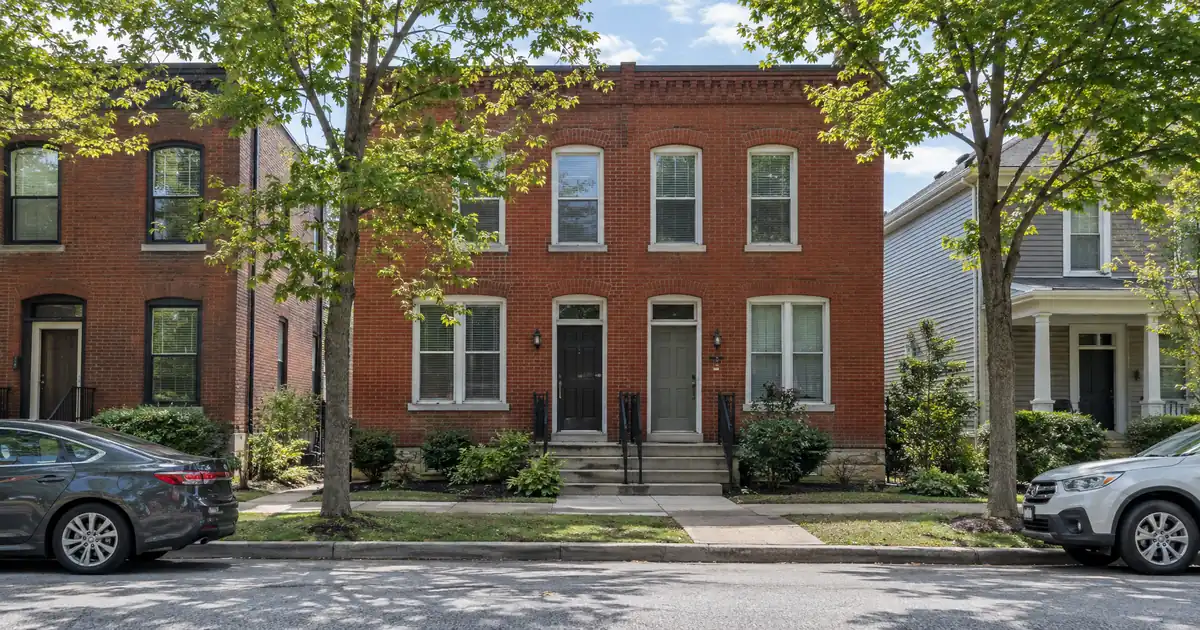
Cash-out proceeds are set by the appraisal, not by whichever website an investor trusts, and Belton’s websites don’t agree. Zillow shows an average home value of $245,176, while Redfin reports a median sale price of $305K. An owner holding a rental bought a year or two ago can’t tell which figure the lender’s appraiser will land near. A DSCR cash out refinance in Belton, Missouri turns on that valuation gap, on the rent the property supports against its full monthly obligation, and on what the pulled equity is meant to buy next.
DSCR Cash-Out Calculator
Run the cash-out numbers in Belton, MO
Rate source: Freddie Mac 30-yr average via FRED® — Federal Reserve Bank of St. Louis · effective Sep 24, 2026
Prefilled with starting assumptions — enter your property’s value, balance, taxes, and insurance for a more accurate picture.
Program parameters update from Lendmire’s centralized guideline source. Taxes and insurance are editable estimates.
As of Sep 24, 2026 · General Freddie Mac market benchmark, not a Lendmire loan offer. Property value, balance, taxes, and insurance are editable estimates. Maximum loan-to-value varies by lender, program, property type, and seasoning. Not a Loan Estimate, approval, or commitment to lend. Program availability and eligibility are subject to lender guidelines, credit approval, property review, and underwriting.
Key Takeaways:
A DSCR cash-out refinance in Belton, Missouri is underwritten primarily on the property’s rental income measured against its full monthly obligation. Equity is sized by appraisal, ownership seasoning and a leverage ceiling, so the file is built around valuation and rent documentation before any application is submitted.
- Prop:Metrics puts the ZIP-level median near $274,000, between the low Zillow and high Redfin readings.
- Modeled coverage on a typical three-bedroom rental lands near 0.90 to 1.05 including taxes and insurance.
- Cash-out is capped at 75 percent LTV with about six months of seasoning.
- Manufactured and mobile homes fall outside these programs, which matters in a stock that includes them.
- Metro apartment supply and Uptown District plans are the main variables to watch.
Belton Market Snapshot
A quick read on the Belton investor landscape — figures come from the cited sources below. Confirm current property-level numbers before underwriting.
| Metric | Detail |
|---|---|
| Home prices | 20 sales (Redfin, Belton housing market) |
| Typical rents | $1,235 median (City-Stats, Belton) |
| Recent appreciation | +15.7% yoy (Redfin, Belton housing market) |
| University enrollment | 4,800+ students (City of Belton EDO, Education) |
| Vacancy | 11.6% rental (2020) (Wikipedia, Belton, Missouri) |
Which Number Does the Appraiser Believe?
Pick the middle of the range and stress it both ways. Prop:Metrics puts the median home price in Belton’s ZIP at $274,000, up 5.2 percent year over year, and that is the figure used throughout this article. Redfin’s $305K comes with a 15.7 percent annual gain, but only 20 homes sold in the month behind it, so it’s a volatile read. Zillow’s reading is lower and slightly negative over the year, reflecting a different methodology.
A fourth view pushes the other way. Homes.com shows a 12-month median sale price of $369,950, which likely reflects new construction and larger homes. Autumn Ridge is still expanding, and new-build pricing can drag the headline median upward. An older, lower-priced rental may not appraise up to it.
Here’s the catch. An investor who assumes the high median will be applying 75 percent to a number the appraiser never uses. The conservative planning method is to anchor on recent comparable sales of similar age and size, then treat any upside as a bonus.
Belton also sits inside a metro that has been appreciating. City-Stats cites a 10.1 percent rise in the Kansas City metro FHFA index over the most recent two-year period. That’s a metro figure, not a Belton one, but it supports the broad thesis that a rental bought a couple of years ago may carry real equity. Whether it carries equity at 75 percent LTV after a conservative appraisal is a separate question that only comps answer.
Seasoning, the 75 Percent Ceiling and Reserves
Three guardrails define how much equity can come out. Most DSCR cash-out programs look for about six months of ownership measured from title recording. The cash-out LTV ceiling is 75 percent, below the 80 percent purchase figure. Reserves typically run about six months of the full monthly obligation (principal, interest, taxes, insurance and any HOA dues). The ratio itself is monthly rent divided by that obligation, and 1.00 is the common benchmark because rent covers the payment at that level. Some lenders review lower or no-ratio files, usually with lower leverage, stronger credit or different pricing.
Pricing and available terms vary by lender, borrower profile, property type, and full underwriting review. All of this is subject to lender guidelines, and the available equity depends on rent used for lender review, the monthly obligation, reserves and the 75 percent ceiling, so it’s never a guaranteed cash figure. Loan sizes run up to $3,000,000 on standard programs, far above anything a typical Belton rental needs. Details on mechanics are in the how the cash-out works page, and the rate-and-term and cash-out refi details page covers the alternative of simply resetting the loan. For readers new to the product, the guide “What Is a DSCR Loan” explains the ratio.
The seasoning clock matters more in Belton than the number suggests. An investor who bought a new-build duplex in Autumn Ridge and wants to recycle equity has to wait out the ownership period and then hope the appraisal supports the original price plus any appreciation. New builds can appraise flat against their purchase price in the first months, so the six-month mark is the earliest date to run the numbers, not a promise of equity.
The Coverage Math on a Typical Belton Rental
Single-family coverage in Belton is tight, and the honest range sits around 0.90 to 1.05 once taxes and insurance are included. A Kansas City property manager, Alpine Property Management, reports three-bedroom rents near $1,700 against a home value near $274,300, which puts gross rent at roughly 0.62 percent of price. That’s a manager-reported citywide figure, not a submarket breakdown.
Run the numbers on a modeled three-bedroom at a modeled $274,000. Prop:Metrics shows three-bedroom rents at $1,760. These are modeled assumptions, not guarantees. Using $1,760 rent, a 75 percent cash-out LTV, a 30-year amortization and full PITIA including taxes and insurance, coverage lands around 1.05. At $1,535 it drops to roughly 0.92. Trim leverage to 70 percent and the same rents move to about 1.10 and 0.97.
Sub-1.00 doesn’t end the conversation, but it changes the question. A lender may review a sub-1.00 program, an interest-only structure or a lower LTV, each with tradeoffs in pricing, reserves and credit, and eligibility is subject to lender guidelines and property review. The better question is whether a lower leverage point still produces enough proceeds to justify the refinance. If the equity pull shrinks to a small number after the cap and the coverage haircut, leaving the existing loan alone may be the smarter move.
The deal desk perspective is fairly consistent in suburban markets like this one. The cleaner files tend to be single-family rentals with a signed lease at or near market, a recent appraisal-ready condition and insurance quotes in hand before submission. The usual friction point is a rent assumption pushed ahead of comparable rents, which tightens coverage once the appraiser’s rent schedule comes back lower.
Rent growth is flat to modest. Prop:Metrics shows average rent at $1,740 with a 0.6 percent decline year over year, and Zumper’s house-rent average of $1,949 reflects a listing mix skewed toward newer, larger homes. City-Data shows a 2024 median gross rent of $1,409 across all unit types, a useful floor for older stock. Underwrite on the lower end.
Where the Rentals Actually Sit
Belton is a commuter suburb. The City of Belton Economic Development office puts the average daily commute at 25 minutes, and the city is about 17.9 miles from Kansas City by City-Data’s measure. The population is 25,008 per Data Commons, and the U.S. Census Bureau remains the official reference for housing data. Renters occupy 35.4 percent of units, a meaningful tenant pool for a city this size.
No reliable neighborhood-level rent and price series exists, so submarkets are best read by corridor and tenant base.
Highway 58 and Y Highway. This is the retail spine. Christie Development describes The Crossroads at Belton as a grocery-anchored project at Highway 58 and State Route Y, and the city lists Academy Sports and Outdoors, Hobby Lobby, Ross and Marshalls at Belton Gateway. Retail and service workers make up a natural tenant pool, and homes near the corridor tend to rent on convenience.
Downtown and Main Street. The city’s core rents on proximity to commuter routes and older, smaller floor plans. These homes usually sit at the lower price end, which can improve rent-to-price math but also raises the appraisal risk described earlier.
South Side. Redfin’s rental page shows a median rent of $1,285 for the South Side. It’s a single data point, so treat it as a directional read of the lower rent tier rather than a benchmark.
North Scott and North Point. Industrial activity here supports warehouse and logistics workers. Belton has a sizable e-commerce fulfillment presence for a city its size, and workers in that sector often prefer a shorter drive to work than a Kansas City commute.
Healthcare. Belton Regional Medical Center, an HCA Midwest Health hospital at Highways 71 and 58, serves southern Jackson and northern Cass counties. Per HCA Healthcare Careers, it completed a $39.2 million renovation and expansion. Nurses, technicians and support staff are steady renters, and the hospital’s own pages disagree on bed count, so the anchor is best described qualitatively.
Duplexes, Townhomes and the Thin Small-Multifamily Shelf
Single-family detached homes make up 62.18 percent of Belton’s housing units, per NeighborhoodScout. Attached homes account for 13.42 percent, mobile homes 10.55 percent and duplexes or small apartment buildings just 7.69 percent. Small multifamily is scarce, so it’s a niche rather than a default.
Manufactured and mobile homes fall outside these DSCR programs. An owner of a single- or double-wide, a log home or a barndominium shouldn’t plan on this product. The 10.55 percent share is a reminder to confirm property type before spending money on an appraisal.
The supply that does exist has a pattern. A listing on Homes.com shows four newly built duplexes, eight units, in Autumn Ridge, each side a 3-bedroom, 2-bath home of 1,180 finished square feet. Identical plans make rent comps and rent schedules straightforward to document. Multifamily listings in the city range from $199,900 to $9,495,000, with eight multifamily properties listed at the time of the snapshot, so the market is thin.
Run the numbers on a modeled $539,000 two-unit building, a Compass listing example. Using the brief’s three-bedroom rents of $1,535 to $1,760 per side, gross rent runs about 0.57 to 0.65 percent of price per month. At 75 percent LTV with full principal, interest, taxes, and insurance in the obligation, coverage computes to roughly 0.85x to 1.05x across a reasonable range of rate scenarios, with Missouri property tax and insurance assumptions included. That sits around the 1.00 floor some select programs allow, so a deal like this would likely need a larger down payment, a lower price, or stronger rents to qualify comfortably. A duplex here spreads vacancy across two units, but it isn’t an automatic coverage boost, and each one needs its own rent schedule.
Attached townhomes are the lower-price entry point. Some attached homes carry HOA dues, which count in the monthly obligation, so confirm them before modeling.
What Could Break the Pattern Over the Next 6 to 24 Months
Supply is the variable that matters. The Uptown District proposal includes 600 new homes on roughly 40 acres near East 163rd Street and North Cedar Street, and KCTV5 describes up to $250 million in private investment with a theater complex and hundreds of apartments and homes. It’s a proposal under city council review, not a completed project, and the two outlets report different venue sizes. The first apartment phase is targeted for a groundbreaking in the near term, with full buildout stretching years beyond that.
This one cuts both ways. A 40-acre entertainment-and-housing district could lift nearby values and anchor demand, which helps the next appraisal. New apartments could also compete for the same renters that older single-family rentals serve. Investors who plan to hold for years can reasonably argue the district is a net positive, while those relying on flat rents in the next couple of years should assume more competition, not less.
The metro adds pressure. Northmarq reports 6,900 multifamily units under construction in Kansas City and expects vacancy to keep trending higher, though only modestly, while rents have continued to climb. That’s an apartment-focused, metro-level view. It mostly touches Class A and B buildings, so Belton’s single-family landlords should underwrite flat-to-modest rent growth and not push rent assumptions ahead of the comps.
Vacancy data is thin. The last decennial Census showed an 11.6 percent rental vacancy rate in Belton, a dated figure to use cautiously. Alpine reports 96 percent occupancy, 98 percent rent collection and a 14-day average vacancy between tenants across its own portfolio. That’s one company’s self-reported data, so it supports a modest turnover assumption, not a market vacancy statistic.
Indicators worth tracking:
- Whether recent comparable sales hold near the $274,000 median or drift toward the new-build figure
- Whether three-bedroom asking rents stay near $1,700 or soften
- Council decisions on the Uptown District and the timing of any apartment phase
- Metro vacancy and the pace of apartment deliveries
Putting the Proceeds to Work
Equity is only useful if the next property clears its own coverage test. Picture an investor who owns a seasoned three-bedroom near the Highway 58 corridor and wants to buy a second rental in the same market. The cash-out argument works when the second property can be underwritten near 1.00 on its own rent, because the pulled equity then builds the portfolio without straining it. The argument weakens if the proceeds go into a market where coverage doesn’t pencil at current pricing. That’s a different decision, and worth stress-testing before committing.
DSCR vs. conventional financing
There are two common ways to finance an investment property in Belton, MO, and they qualify you differently — here’s how investors weigh them.
Why investors choose it
- Qualifies on the property’s rental income — no personal tax returns, W-2s, or pay stubs needed to document income.
- No personal debt-to-income ceiling to clear, so existing mortgages and obligations don’t cap your borrowing the same way.
- Can be closed in an LLC, keeping the property inside a business entity.
- Built for scaling — not held to the limit on number of financed properties that conventional financing applies.
- Underwriting centers on the deal: generally qualifies when the rent covers the payment, a 1.00x coverage ratio being a common baseline (confirmed in underwriting).
- Designed specifically for investment property, including long-term and, where the program allows, short-term rentals.
Where it’s strong
- Often the lowest ongoing financing cost for a buyer who fully qualifies on personal income — a fit for a first property or a cost-first purchase.
Trade-offs for investors
- Requires full personal income documentation and must fit within a debt-to-income limit — salary, existing debts, and other mortgages all count.
- Typically held in your personal name rather than a business entity.
- Caps how many financed properties you can carry, which can become a ceiling as a portfolio grows.
- Evaluates you as a borrower as much as the property, which usually means more paperwork.
How investors usually choose: a first or single property often optimizes for the lowest financing cost; portfolio builders often optimize for leverage, vesting in an LLC, and scaling past conventional caps. The right answer depends on your goals, the property, and current guidelines — both paths run through select lenders in Lendmire’s wholesale network, with eligibility and terms confirmed in underwriting.
DSCR is typically the better fit for the self-employed investor, the LLC holder or anyone with several financed properties, because the property’s income does the underwriting and there’s no need to document personal income. For LLC-titled properties, eligibility is subject to lender program requirements. Conventional financing can cost less for a W-2 borrower with one or two rentals and clean traditional personal-income documentation, so the guide “Where DSCR and Conventional Diverge” is worth reading before choosing. Missouri owners can also review DSCR loan options for Missouri investors for statewide context.
Investors who want to see how a specific property might pencil can request a scenario quote. Program details are subject to lender overlays and change over time, so treat all figures here as modeled guidance. Local rental rules, taxes and insurance should be verified with qualified local professionals.
Belton Against the Core
For a hold-and-refinance investor with seasoned equity, the math leans toward Belton over core Kansas City right now. The metro apartment pipeline is concentrated in the urban core, while Belton’s stock is mostly single-family with thin new small-multifamily supply, which should shield existing landlords from the worst of it. Coverage is still tight at 0.90 to 1.05 and not a bargain, so Belton wins on supply dynamics, not on yield.
Frequently Asked Questions
How do you qualify for a DSCR loan in Belton, Missouri?
Qualification rests mainly on the property’s rent compared with its full monthly obligation, typically measured against a 1.00 benchmark. Lenders also review credit (a 620 floor), reserves of about six months, property type and ownership seasoning for cash-out. Personal income documentation is generally not the focus, but all eligibility is subject to lender guidelines and property review.
What are the requirements for an investment property loan in Belton, Missouri?
Expect a rent schedule for lender review, an appraisal, reserves, a minimum credit score and an eligible property type. Cash-out refinances cap at 75 percent LTV with about six months of ownership. Manufactured homes, log homes and barndominiums are not eligible, and Belton’s stock includes a meaningful share of mobile homes.
How long should a Belton investor wait to pull equity from a new-build rental?
The earliest practical date is about six months after title recording, but that’s a minimum, not a recommendation. New-build duplexes in a subdivision like Autumn Ridge can appraise near purchase price early on, so a longer hold or a rising comp set often produces more usable equity. Running a pre-appraisal comp check first is the safer approach.
Will the Uptown District hurt or help a Belton rental’s refinance appraisal?
It could do either. The plan is still a proposal under council review, so it shouldn’t be counted as support in a valuation. If it moves ahead, nearby values may benefit, while new apartments could compete for tenants. The conservative approach is to underwrite on today’s comps and treat the district as a possible upside.
For current guidelines and terms, see Lendmire’s DSCR loan programs page.
About Lendmire
Lendmire (NMLS# 2371349) is a DSCR and non-QM mortgage brokerage with investor loan programs across 41 markets, Washington, D.C. included. Lenders commonly review DSCR eligibility around the property’s rental income instead of personal income documentation, subject to lender guidelines, and the brokerage helps arrange financing for LLC-owned portfolios that have outgrown conventional financed-property limits. Lendmire was recognized by Scotsman Guide as a 2026 Top Workplace and was a top-ranked workplace in 2025. Readers can find recent Lendmire news and press releases in its newsroom.
Get Started
Ready to find the right loan for you?
In about 30 seconds you can review financing options available for your investment property. No commitment required.
Informational only. Not a Loan Estimate, approval, or commitment to lend. Program availability and eligibility are subject to lender guidelines, credit approval, property review, and underwriting.
References
1. Zillow
2. Redfin
3. City-Stats
4. City of Belton EDO, Education
5. Wikipedia, Belton, Missouri
6. Prop:Metrics
7. Homes.com
9. City-Data
10. City of Belton Economic Development, Workforce
11. Data Commons
12. U.S. Census Bureau QuickFacts, Belton
15. HCA Healthcare Careers, Belton Regional Medical Center
17. Compass
18. KSHB 41, Uptown District announcement
19. KCTV5, Uptown District proposal
20. Northmarq, Kansas City multifamily outlook
21. recognized by Scotsman Guide as a 2026 Top Workplace
22. Scotsman Guide — Top Workplaces 2025
This article is part of Lendmire’s investment property cash-out refinance program — full qualification details, guidelines, and scenarios live on the program page.
Related reading: Cash Out Refinance Investment Property in Belton, Missouri: Uptown District Equity Timing · Cash Out Refinance Investment Property via DSCR in Springfield MO · Cash Out Refinance Investment Property in Nixa, Missouri: The 2026 DSCR Guide to Highway 14
Guides: Investment Property Cash-Out Refinance in Missouri
Brandon Miller
Founder & CEO, Mortgage Loan Originator, Lendmire LLC
- Mortgage Loan Originator · NMLS# 1129696 · Verify on NMLS Consumer Access
- North Carolina Real Estate Broker · License# 343312 · Verify on NCREC
- North Carolina Insurance Producer · License# 19053198 · Property, Casualty, Life, Health · Verify on NAIC SBS
- Lendmire LLC · Firm NMLS# 2371349 · Verify firm licensure
Required disclosures. Lendmire (NMLS# 2371349) operates as a licensed mortgage broker, not a direct lender or depository. The discussion in this article is general in nature and should not be relied upon as financial, legal, or tax advice — every investment scenario is unique and should be reviewed by a qualified professional. Any loan inquiry is subject to lender underwriting, and this article is not a commitment to lend or a guarantee of approval. Mortgage rates, loan terms, and program guidelines vary by borrower, property, and state, and may change without notice. Equal Housing Opportunity. Verify licensure at NMLS Consumer Access.