
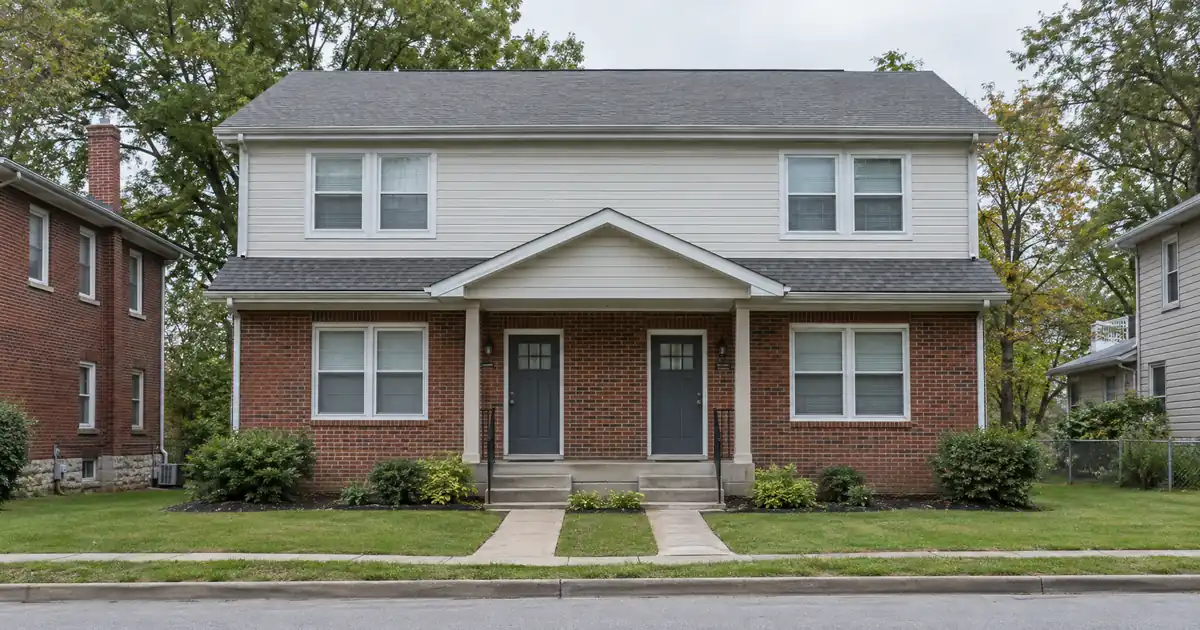
Most cash-out files go sideways in one of two places. The appraisal lands below the number the owner had in mind, or the rent covers the new obligation on paper but not once taxes and insurance are counted. Both problems are cheaper to find before an application than after.
For anyone weighing a cash out refinance investment property move in Belton, Missouri, those two friction points are the whole game. Belton is a commuter suburb of Kansas City with a population of 25,008 per Data Commons, and its price data is unusually inconsistent. The U.S. Census Bureau’s QuickFacts page is the official baseline, but the aggregators that fill in prices and rents disagree with each other by tens of thousands of dollars. That disagreement is where equity-extraction plans succeed or stall.
DSCR Cash-Out Calculator
Run the cash-out numbers in Belton, MO
Rate source: Freddie Mac 30-yr average via FRED® — Federal Reserve Bank of St. Louis · effective Sep 24, 2026
Prefilled with starting assumptions — enter your property’s value, balance, taxes, and insurance for a more accurate picture.
Program parameters update from Lendmire’s centralized guideline source. Taxes and insurance are editable estimates.
As of Sep 24, 2026 · General Freddie Mac market benchmark, not a Lendmire loan offer. Property value, balance, taxes, and insurance are editable estimates. Maximum loan-to-value varies by lender, program, property type, and seasoning. Not a Loan Estimate, approval, or commitment to lend. Program availability and eligibility are subject to lender guidelines, credit approval, property review, and underwriting.
Key Takeaways:
A DSCR cash-out refinance on a Belton, Missouri rental moves from a seasoning check to an appraisal to a coverage test. The lender reviews the property’s rental income against its full monthly obligation, sizes the loan under a 75 percent value ceiling, and confirms reserves, all subject to lender guidelines and property review.
- Price sources disagree widely, so the appraised value is the swing factor in proceeds. Gross rent near 0.62 percent of price leaves full-leverage coverage close to 1.00.
- Cash-out seasoning runs about six months from title recording, with a 75 percent LTV ceiling.
- Autumn Ridge’s identical 3/2 duplexes simplify rent schedules for small-building owners.
- Metro apartment supply and the Uptown District decision are the 6-to-24-month watch items.
Belton Market Snapshot
A quick read on the Belton investor landscape — figures come from the cited sources below. Confirm current property-level numbers before underwriting.
| Metric | Detail |
|---|---|
| Home prices | 20 sales (Redfin, Belton housing market) |
| Typical rents | $1,235 median (City-Stats, Belton) |
| Recent appreciation | +15.7% yoy (Redfin, Belton housing market) |
| University enrollment | 4,800+ students (City of Belton EDO, Education) |
| Vacancy | 11.6% rental (2020) (Wikipedia, Belton, Missouri) |
The Appraisal Gap Is the Real Risk
Belton’s appraised value is the least predictable input in a cash-out file, and it moves proceeds more than rent does. The published medians run from the mid-$240Ks to well above $300K depending on who is counting. An owner planning around the high end can lose most of the cash-out on a lower appraisal.
This article uses Prop:Metrics’ ZIP 64012 figure as its working median: $274,000, up 5.2 percent year over year. Treat everything else as a range check. Redfin’s Belton page shows a $305K median and 15.7 percent growth, but that rests on only 20 sales in the month measured, so it swings easily. Zillow’s home value index sits lower at $245,176, down 1.5 percent over the past year, which reflects a different methodology weighted toward the broader housing stock.
Homes.com goes the other direction. It shows a 12-month median sale price of $369,950, likely pulled upward by new construction and larger homes. An older, lower-priced rental may never appraise to that figure. That’s the risk.
The metro backdrop is supportive. City-Stats reports the Kansas City metro FHFA index up 10.1 percent over the most recent two-year period. That’s a metro number, not a Belton one, and it says little about a specific street.
Here’s the honest read. An owner who bought with 20 to 25 percent down and has held through a modest run-up probably has room under a 75 percent ceiling. An owner who bought at 80 percent leverage and sees flat value has none, because the ceiling sits below the existing balance. That owner would be bringing cash to the table, not taking it out. This is a genuine toss-up for recent buyers: the appreciation story may be real, but nobody should build a plan on the Redfin number.
What the Rent Actually Covers
At full leverage, a typical Belton three-bedroom covers its obligation with almost no cushion, so proceeds depend on trimming leverage below the ceiling or picking better-fitting property types. Coverage here clusters around 1.00, not comfortably above it.
The inputs are modest. Prop:Metrics, citing RentCast, puts three-bedroom rents at $1,760 and four-bedrooms at $2,220, with average rent down 0.6 percent year over year. A Kansas City property manager, Alpine, reports three-bedroom rents near $1,700 against a home value index near $274,300, a gross rent-to-price ratio near 0.62 percent. That is the manager’s figure, not an official statistic.
Run the numbers on a modeled basis. These are assumptions, not sourced market facts: a 75 percent LTV, a standard 30-year amortization, and taxes and insurance at typical Missouri averages, so every coverage figure below includes taxes and insurance.
| Modeled scenario | Value | Rent | Coverage |
|---|---|---|---|
| Older 3BR house | $250,000 | $1,700 | about 1.10 |
| 3BR at working median | $274,000 | $1,760 | about 1.05 |
| 3BR at Redfin median | $305,000 | $1,760 | low 0.9s |
| Two-unit building | $539,000 | $3,000–$3,500 | about 0.9 to 1.05 |
The pattern is clear. At the working median, coverage lands around the 1.00 benchmark that most standard DSCR programs are built around, because rent covers the obligation at that level. Some lenders may review lower ratios, but that usually means lower leverage, stronger credit or more cash reserves, and exact eligibility depends on guidelines and property review. At a $305K appraisal with the same rent, the file falls into the low 0.9s.
If a file lands below 1.00 on long-term rent, the paths a lender might review include a sub-1.00 program, an interest-only structure or a lower LTV. Each carries tradeoffs in pricing, reserves or proceeds, and none of it is assured. The more useful question is whether the property belongs in the plan at all. If the only way a deal clears is a sub-1.00 exception, the submarket selection deserves a second look before the loan type does.
For a broader look at how the ratio is calculated, the guide “What Is a DSCR Loan” covers the mechanics. In short, monthly rent is divided by the full monthly obligation, including principal, interest, taxes, insurance and any HOA dues.
Six Months on the Clock
The seasoning requirement is about six months of ownership, measured from title recording. It’s a floor, not a target. Refinancing at month six only makes sense if the value has clearly moved.
Skip the early refi if the rehab hasn’t shown up in comps yet. Appraisers in a thin market like Belton lean on recent closed sales, and a renovated rental that hasn’t been reflected in any nearby sale is hard to support. Waiting a few extra months for a comparable to close can be worth more than the months of carrying cost.
The other program guideposts are worth naming, each subject to lender guidelines. Credit tiers run through 620, 660, 680 and 700, with 620 as the floor. Reserves typically run about six months of the full monthly obligation, and higher above $1,500,000. Loan amounts go up to $3,000,000 on standard programs, and smaller balances route through select lenders in the network. Manufactured homes, log homes and barndominiums fall outside these programs, which matters in a city where mobile homes are 10.55 percent of the housing stock.
For the mechanics of the proceeds side, the guide “The Refi Options” and the rate-and-term and cash-out refi details walk through the structure.
Lendmire’s deal desk sees a consistent pattern on files from commuter-suburb markets like this one. The cleaner files from a documentation standpoint tend to arrive with a current lease, a rent comparison set that matches the appraiser’s likely comps, and reserves already sitting in an account under the borrower’s or the LLC’s name. The common friction point is a rent figure pushed a step above the comps, which the appraisal’s rent schedule then quietly undoes.
Where the Proceeds Go (and Where They Shouldn’t)
Proceeds work best when they go into another property in the same market where coverage still clears, and worst when they chase a different market’s numbers without checking the math. In Belton, the stock is single-family heavy, so the redeploy options are narrower than in a denser suburb.
NeighborhoodScout puts single-family detached homes at 62.18 percent of units, attached homes at 13.42 percent and duplexes or small apartment buildings at just 7.69 percent. Small multifamily is a niche here. The listing snapshot bears that out: Homes.com showed just 8 multifamily homes for sale, ranging from $199,900 to $9,495,000, which is too wide to mean much. The same page lists four newly built duplexes in the Autumn Ridge community, eight units total, each side a 3-bed/2-bath of 1,180 finished square feet.
That identical-plan setup is genuinely useful. Rent comps are simple to document, and a lender or appraiser can review one rent schedule instead of eight. A Compass listing for a two-unit building near $539,000 gives a sense of the larger end. If three-bedroom rents apply per side, gross rent lands near 0.57 to 0.65 percent of price, which is the same range as single-family. (Multi-unit here spreads vacancy across doors. It doesn’t automatically lift coverage.)
Honestly, the smaller, cheaper single-family rental often works better for a second acquisition than a duplex priced near $539,000. Exit liquidity is thinner on small multifamily, but the cash-on-cash can be stronger if the entry price is lower. Investors who want the duplex for diversification should underwrite it against its actual rent schedule.
There’s a flip point worth naming. For an owner with one or two financed properties and strong traditional employment income, the comparison may favor the conventional route on cost. DSCR becomes the practical path once the portfolio grows past the conventional limits, once the borrower is self-employed, or once rental income is the cleaner underwriting story. LLC-titled borrowers may also fit, depending on program guidelines.
Investors can also review DSCR loan options for Missouri investors for the statewide picture. For a specific Belton file, request a scenario quote or call 828-256-2183.
Uptown District Is a Proposal, Not a Comp
The Uptown District plan calls for up to $250 million in private investment on about 40 acres near East 163rd Street and North Cedar Street, according to KCTV5. The mayor’s announcement, covered by KSHB, described 600 new homes plus an entertainment district. The structure involves city-owned land under a long-term lease-back, and the city council was still reviewing it at the time of those reports.
An appraiser doesn’t give credit for a project that hasn’t been built. A cash-out appraised today sits on today’s comps. The district could lift surrounding values in time, but a rental owner shouldn’t refinance on the assumption that it will.
The bigger investor question is competing supply. The plan includes new apartments, phased over several years. New units near the district could soften rents for older rentals nearby, or they could pull demand toward the area and lift everything around it. Nobody knows yet, and that uncertainty argues for conservative rent assumptions.
Commuters, Distribution Workers and a Hospital
Tenant demand in Belton runs on employment ties to the Kansas City metro and to local distribution, healthcare and retail. The tenant base is best described through jobs and rent levels, and the research supports a fairly clear picture.
The City of Belton’s economic development office puts the average daily commute at 25 minutes, and City-Data places Belton 17.9 miles from Kansas City. Median household income sits at $69,226 per Missouri-Demographics, and BiggestUSCities reports renters occupy 35.4 percent of housing units. A meaningful renter pool, then, with a household income base that supports mid-range rents.
The employment mix is distinctive for a city of about 25,000. Distribution and e-commerce anchor it, and secondary sources point to a large Chewy fulfillment center among the top employers. Belton Regional Medical Center, an HCA Midwest facility, adds healthcare demand. HCA’s careers page notes it serves southern Jackson and northern Cass counties, and the facility went through a $39.2 million renovation and expansion. Its own site and the careers page list different bed counts, so it’s best described qualitatively as a steady employer of nurses, techs and support staff.
The retail corridors matter mostly as employment nodes. The Crossroads at Belton, a grocery-anchored project at Highway 58 and State Route Y, and the Belton Gateway center listed on the city’s commercial sites page, with Academy Sports and Outdoors, Hobby Lobby, Ross and Marshalls, employ a lot of hourly workers. Interstate 49 ties it all to the metro.
Submarket-level rent data is thin. Redfin’s rental page shows a South Side median of $1,285, a single undated data point. City-Data shows a newer median gross rent of $1,409 citywide. Downtown near Main Street, the Highway 58 and Y corridor, and the North Scott and North Point area are all plausible rental pockets, but nothing sourced separates their rents. Anyone selling neighborhood-level rent precision in Belton is guessing. That’s worth remembering when a lender orders an appraisal with a rent schedule.
What Could Break the Pattern
The risks over the next 6 to 24 months are mostly about supply and comps, not demand. The base case is flat-to-modest rent growth, and anything pushing rents higher than that should be treated as upside, not a plan.
Northmarq’s Kansas City report shows 6,900 multifamily units under construction and expects vacancy to keep drifting up modestly, though rents have continued to climb. That’s a metro apartment view, not a Belton reading. It matters less for single-family and small-building landlords, who compete on a different tenant profile. It still argues against assuming rents will run ahead of the comps in a cash-out appraisal.
DSCR vs. conventional financing
Two common ways to finance an investment property in Belton, MO. They qualify you differently — here’s how investors weigh them.
Why investors choose it
- Qualifies on the property’s rental income — no personal tax returns, W-2s, or pay stubs needed to document income.
- No personal debt-to-income ceiling to clear, so existing mortgages and obligations don’t cap your borrowing the same way.
- Can be closed in an LLC, keeping the property inside a business entity.
- Built for scaling — not held to the limit on number of financed properties that conventional financing applies.
- Underwriting centers on the deal: generally qualifies when the rent covers the payment, a 1.00x coverage ratio being a common baseline (confirmed in underwriting).
- Designed specifically for investment property, including long-term and, where the program allows, short-term rentals.
Where it’s strong
- Often the lowest ongoing financing cost for a buyer who fully qualifies on personal income — a fit for a first property or a cost-first purchase.
Trade-offs for investors
- Requires full personal income documentation and must fit within a debt-to-income limit — salary, existing debts, and other mortgages all count.
- Typically held in your personal name rather than a business entity.
- Caps how many financed properties you can carry, which can become a ceiling as a portfolio grows.
- Evaluates you as a borrower as much as the property, which usually means more paperwork.
How investors usually choose: a first or single property often optimizes for the lowest financing cost; portfolio builders often optimize for leverage, vesting in an LLC, and scaling past conventional caps. The right answer depends on your goals, the property, and current guidelines — both paths run through select lenders in Lendmire’s wholesale network, with eligibility and terms confirmed in underwriting.
Alpine’s self-reported portfolio figures give a useful turnover assumption: 96 percent occupancy, 98 percent rent collection and a 14-day average vacancy between tenants. It’s one company’s portfolio, not Belton’s market vacancy. Use it as a sanity check on a two-week turnover assumption and nothing more.
The indicators worth tracking:
- Closed-sale comps for older three-bedrooms, not new-build medians
- Days on market, which Redfin put near 23 on a thin sample
- The council’s decision on the Uptown District and any apartment phasing
- Metro apartment deliveries and whether vacancy drift reaches single-family rents
- Whether local rents hold flat or slip further from the -0.6 percent RentCast reading
The numbers work in Belton, but barely, at full leverage. “Barely” in a market where a lender’s appraisal can land tens of thousands below an aggregator median is a risk worth sizing. Dropping to 65 or 70 percent LTV gives up some proceeds and buys a buffer against both the appraisal and the coverage number. Investors should also verify current local rental rules, taxes and insurance with qualified local professionals before committing.
Frequently Asked Questions
How do you qualify for a DSCR cash-out refinance in Belton, Missouri?
Qualification centers on the property, not personal income. The lender reviews rent against the full monthly obligation, typically looking for coverage at or near 1.00, and confirms roughly six months of reserves and a credit score of at least 620. Ownership generally needs about six months of seasoning from title recording, and the loan is capped at 75 percent of appraised value, all subject to lender guidelines.
What are the requirements for an investment property cash-out refinance in Belton, Missouri?
Expect a seasoning check, an appraisal with a rent schedule, reserves and a credit review. In Belton, the appraisal is where files tend to move, because published medians range widely and lenders rely on closed comps. Eligible property types include single-family homes, townhomes and small multifamily. Manufactured homes, log homes and barndominiums fall outside the network’s DSCR programs.
Will an older Belton rental appraise high enough to support a cash-out?
It depends on comps, not aggregator medians. Sources put the citywide median anywhere from the mid-$240Ks to about $305K, and a new-build-driven figure near $370K appears on one listing site, so an older, lower-priced home may not follow it. Owners who bought at high leverage and saw flat value often find the 75 percent ceiling leaves little or no cash-out. A pre-application look at recent closed sales gives a better read than any median.
Does a duplex in Autumn Ridge cover better than a single-family rental?
Not automatically. Three-bedroom rents applied per side put gross rent near 0.57 to 0.65 percent of price, similar to single-family. The advantage is operational: identical 3/2 plans make rent comps easy to document, and vacancy is spread across two doors. Coverage still needs to be run against the actual rent schedule.
Can Lendmire help structure a DSCR cash-out refinance scenario for a Belton rental property?
Belton Against the Kansas City Core
As a DSCR-focused mortgage broker, the brokerage arranges these loans through wholesale channels, and lenders make the eligibility decisions.
Against Kansas City proper, where the metro’s 6,900 apartment units under construction are concentrated, Belton’s single-family and small-building stock is less exposed to that pressure. The math favors Belton for a cash-out right now, but only if the owner accepts a lower leverage point than the 75 percent ceiling allows.
About Lendmire
Lendmire, NMLS# 2371349, is a DSCR and non-QM mortgage brokerage with investor loan programs in 41 markets, including Washington, D.C. Lenders commonly review DSCR eligibility around property-level rent rather than personal income documentation, subject to lender guidelines. The brokerage helps arrange financing for LLC-owned portfolios beyond conventional financed-property limits, subject to lender program eligibility. It was recognized by Scotsman Guide as a 2026 Top Workplace and was a top-ranked workplace in 2025. Readers can follow recent Lendmire news and press releases.
Get Started
Ready to find the right loan for you?
In about 30 seconds you can review financing options available for your investment property. No commitment required.
Informational only. Not a Loan Estimate, approval, or commitment to lend. Program availability and eligibility are subject to lender guidelines, credit approval, property review, and underwriting.
References
2. U.S. Census Bureau QuickFacts, Belton
3. Gross rent near 0.62 percent of price
4. Homes.com — Belton MO Multi Family Homes for Sale
5. Redfin, Belton housing market
6. City-Stats
7. City of Belton EDO, Education
8. Wikipedia, Belton, Missouri
11. NeighborhoodScout — Belton Real Estate
12. Compass listing
13. KCTV5, Uptown District proposal
14. KSHB
15. City of Belton Economic Development, Workforce
16. $69,226 per Missouri-Demographics
17. HCA Healthcare Careers, Belton Regional Medical Center
19. City of Belton Economic Development, Commercial Development Sites
21. Northmarq, Kansas City multifamily report
22. recognized by Scotsman Guide as a 2026 Top Workplace
23. Scotsman Guide — Top Workplaces 2025
This article is part of Lendmire’s investment property cash-out refinance program — full qualification details, guidelines, and scenarios live on the program page.
Related reading: Luxury Rental DSCR Loans In New Jersey · Jersey Shore Vacation Rental Loans: DSCR Financing In Ocean City, Cape May And Long Beach Island · DSCR Cash-out Refinance In New Jersey: Pulling Equity From A Rental
Guides: Investment Property Cash-Out Refinance in Missouri
Brandon Miller
Founder & CEO, Mortgage Loan Originator, Lendmire LLC
- Mortgage Loan Originator · NMLS# 1129696 · Verify on NMLS Consumer Access
- North Carolina Real Estate Broker · License# 343312 · Verify on NCREC
- North Carolina Insurance Producer · License# 19053198 · Property, Casualty, Life, Health · Verify on NAIC SBS
- Lendmire LLC · Firm NMLS# 2371349 · Verify firm licensure
Compliance and disclosures. Lendmire (NMLS# 2371349) is a licensed mortgage broker and is not a direct lender, depository institution, financial advisor, or tax professional. Content in this article is general market analysis and educational information — not financial, legal, or tax advice for any specific situation. Lendmire does not guarantee loan approval; every transaction is subject to underwriting by the funding lender. Mortgage pricing and loan program guidelines are subject to change at any time without notice and vary by borrower characteristics, property type, and state regulations. Lendmire complies with Equal Housing Opportunity. Licensure verification: NMLS Consumer Access.