
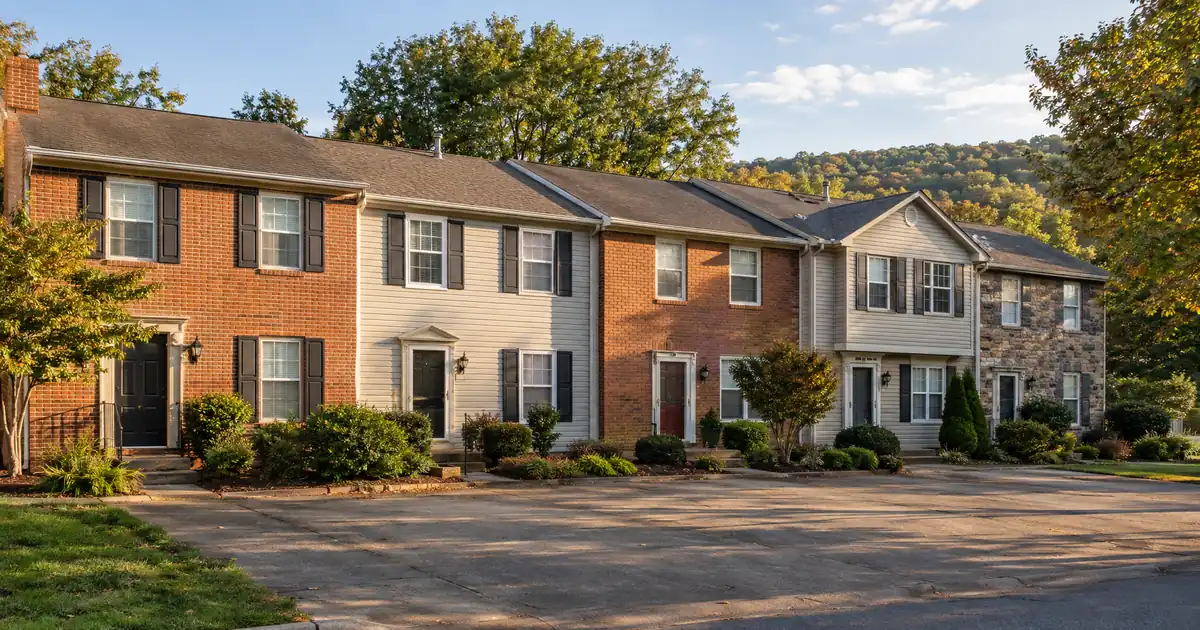
Nucor’s rebar micro-mill northeast of town employs more than 225 people, and the company’s original announcement projected an average salary near $65,000. Median contract rent in Sedalia was $663. That gap is the whole story of this market: decent paychecks, cheap housing, and rents that barely register against what an investor-loan payment looks like on a typical balance.
For an investor who already owns property here, the question is not whether Sedalia is cheap. It is whether the rent, the appraisal and the 75 percent LTV ceiling combine into usable cash-out proceeds. Sometimes they do. Often they don’t. Lendmire, a DSCR-focused mortgage broker, sees that split in small Missouri markets, and this piece walks through where it falls.
DSCR Cash-Out Calculator
Run the cash-out numbers in Sedalia, MO
Rate source: Freddie Mac 30-yr average via FRED® — Federal Reserve Bank of St. Louis · effective Sep 24, 2026
Prefilled with starting assumptions — enter your property’s value, balance, taxes, and insurance for a more accurate picture.
Program parameters update from Lendmire’s centralized guideline source. Taxes and insurance are editable estimates.
As of Sep 24, 2026 · General Freddie Mac market benchmark, not a Lendmire loan offer. Property value, balance, taxes, and insurance are editable estimates. Maximum loan-to-value varies by lender, program, property type, and seasoning. Not a Loan Estimate, approval, or commitment to lend. Program availability and eligibility are subject to lender guidelines, credit approval, property review, and underwriting.
TL;DR: A cash-out refinance on a Sedalia, Missouri rental is underwritten primarily on the property’s rental income measured against its full monthly obligation, after roughly six months of ownership, with proceeds sized by appraised value, a 75 percent LTV ceiling and reserves, all subject to lender guidelines.
- Average home value sits near $184,515, so balances are small and lender fit matters.
- An average-priced house at a typical three-bedroom rent lands near or just under 1.00 including taxes and insurance.
- Three- and four-unit buildings stack income against one obligation, but almost none are listed.
- Appraisal and rent evidence carry more weight here than in deeper markets.
Sedalia Market Snapshot
A quick read on the Sedalia investor landscape — figures come from the cited sources below. Confirm current property-level numbers before underwriting.
| Metric | Detail |
|---|---|
| Recent appreciation | +1.7% 1-yr (Zillow Home Values, Sedalia) |
| University enrollment | 4,242 students (Community College Review, SFCC) |
| Employment | 250 jobs (KRCG News, Nucor) |
| Vacancy | 8% (Affordable Housing Online) |
Start With the Ratio, Not the Skyline
Sedalia’s rent-to-value ratio runs roughly 0.5 to 0.75 percent per month, which is thin for a DSCR cash-out. That figure is this article’s own arithmetic on sourced inputs: Zillow puts the average home value at $184,515, up 1.7 percent over the past year, and the rent sources in the next section span a wide range. It is not a published statistic.
Compare that to investor markets where rent lands at 1 percent of value and coverage clears easily. Here, coverage is earned property by property. A low purchase price helps the equity picture (an investor who bought below market or rehabbed has room to work with), but it does not help the rent side. Debt service includes taxes and insurance, and those scale with value, not with how cheap the town feels.
Sedalia is also a thin-data city. No reliable neighborhood-level price or rent series exists, and no vacancy source beyond a third-party summary. Anyone telling you a specific street is the hot one is guessing. What follows leans on property type and demand anchors, which the data can actually support.
Which Rent Number Is Real?
None of them, exactly, so underwrite the low end. The published sources disagree on both level and direction.
Apartments.com shows averages of roughly $817 for a one-bedroom, $937 for a two-bedroom and $1,079 or more for a three-bedroom, with rents up 1.6 percent over the past year. Zumper puts average rent at $850 and says it has fallen 5 percent year over year. City-Data’s census-derived figures show the lower and upper quartiles of contract rent at $521 and $830, with asking rent on vacant units near $1,000. Different methods, different vintages, different answers.
Vacancy adds a second caution. A third-party summary from Affordable Housing Online reports a rental vacancy rate of 8 percent, which it calls higher than average, and 1.09 rental units per renter household. The page is undated and secondary, so treat it as indicative. But it points the same way as Zumper’s decline: Sedalia rents do not get the benefit of the doubt. Where stock is plentiful, condition and bedroom count separate the units that lease from the units that sit.
For a DSCR file, the lender reviews a rent survey or lease, not the marketing pages. Expect the conservative number to win.
Six Months, 75 Percent, and What’s Left
The mechanics are simple, and Sedalia’s low values make them unforgiving. Cash-out on a DSCR loan typically requires about six months of ownership measured from title recording, tops out at 75 percent LTV, and is sized by whichever limit binds first: the LTV ceiling or the coverage ratio. Standard programs commonly look for a 1.00 DSCR baseline, credit tiers starting at a 620 floor with better positioning at 660, 680 and 700, and reserves around six months of the full obligation. All of that is subject to lender guidelines, credit, property review and overlays. Lendmire’s role is placing the file with a lender whose guidelines fit, not approving it.
The numbers that matter in Sedalia:
- Appreciation is slow. At 1.7 percent over the past year, time alone will not hand an investor much equity. Cash-out proceeds here come mostly from a below-market purchase, a real renovation or a long hold, not from market lift.
- Balances are small. Standard DSCR programs go up to $3,000,000, but at Sedalia values the balances run at the other end. Smaller loans route through select lenders in the network, and their terms differ. Loan-size minimums are a real screening question in this market.
- Listings move. Zillow shows homes going pending in around 13 days, which suggests the for-sale side is liquid even if the rental side is soft. That helps an appraiser’s comp set a little.
Comparing the payoff balance against the 75 percent LTV limit determines whether there is anything to extract. The guide “The Refi Options” covers the structure in general, and the quote tool converts percentages into dollars once a property is in hand.
Property Types That Clear (and One That Doesn’t)
The average single-family house sits on the line. Here is the math, with inputs labeled as modeled assumptions and coverage measured on full obligation including taxes and insurance, rounded down. Stacking units does not guarantee a pass on its own, so each property type is tested against its own rent and price inputs.
Single-family, three-bedroom. Model a house appraising near the Zillow average of $184,515 at 75 percent LTV. Using the Apartments.com three-bedroom floor of about $1,079 as rent, coverage lands just under 1.00. Using a single premium asking example, a three-bedroom, two-bath unit listed at $1,670 on Rent.com, coverage reaches roughly 1.4x. That listing is an asking rent on one unit, likely newer product, not market rent. The honest read: a typical workforce house is borderline, and only the better units clear comfortably.
When a file lands below 1.00 on long-term rent, there are paths to ask about: lower leverage, a sub-1.00 program through select lenders, or an interest-only structure. Each requires stronger credit, reserves or compensating factors, and each is decided by the lender.
Fourplex and small multifamily. Model a four-unit building appraising at a hypothetical value, an assumption rather than a sourced price, with each unit renting near the three-bedroom floor. At 75 percent LTV, full payment including taxes and insurance would likely land well below 1.00 coverage across a range of current rate environments, even with four rents behind it. Missouri’s property-tax and insurance load takes a real bite out of rents at this price point, so stacking four units does not by itself clear the bar. Four rents against one obligation still beats a single-unit file, but a file like this would likely need lower leverage, stronger compensating factors, or a sub-1.00 program from a select lender, and the lender decides. Live listings show three-bedroom, two-bath units in a four-unit building (that page mixes in a neighboring town, so check that any specific unit is in Sedalia). The catch is supply. Homes.com showed only two multifamily homes for sale when checked. If you already own one, you hold something scarce.
Duplex and triplex. Same logic, less cushion. No dedicated duplex rent data exists, and listings are sparse. Two modest units against one obligation beats one modest house, but not by the fourplex margin.
Older stock needs a reserve conversation. City-Data puts the median year built at 1957 for houses and condos and 1979 for apartments. Appraisers and lenders notice condition, and a deferred-maintenance house will appraise and rent like one. Manufactured homes, log homes and barndominiums fall outside these DSCR programs entirely, worth noting in a town with rural-edge housing.
Inside Sedalia: What the Data Can and Can’t Say
No reliable neighborhood-level price or rent source exists for Sedalia, so the following is inference from geography and anchors, not ranking. Skip anyone who hands you a precise block-by-block rent table here.
The southwest side near the fairgrounds and State Fair Community College. This is the most defensible demand pocket. The fairgrounds sit on the southwest side of the city, and State Fair Community College reports headcount of 4,242, with a 13 percent enrollment increase in its release. Student and staff demand points toward one- and two-bedroom units. On-campus housing absorbs part of that, so treat student demand as a supplement, not the thesis.
Historic downtown and the older residential core. Older mixed-use buildings and large historic homes, several on the National Register of Historic Places, are plausible candidates for small multi-unit holdings or conversions. It is qualitative only. Older buildings carry older-building costs, and the appraisal will reflect condition.
North Highway 65 and the Nucor corridor. The mill is northeast of Sedalia, just outside city limits, in the rail industrial park. Here is the catch: a KRCG report said Nucor draws labor from a 45 to 60 mile radius. Plenty of those paychecks are spent in other towns. The mill supports the local economy, but do not underwrite rental demand on the assumption that every employee lives within five minutes of it.
The Demand Anchors, Stated Plainly
Sedalia’s renter base is large for its size, and its employment is industrial, not speculative. City-Data shows 10,074 housing units, 9,184 occupied and 3,897 renter-occupied, roughly 42 percent renters. Data USA lists manufacturing as the largest industry at 2,245 workers, followed by health care and social assistance at 1,478 and retail trade at 1,403, from a base of about 10,400 employed residents. Population was 21,725 at the last census, with Pettis County at 42,980 (see Census QuickFacts for current figures).
The City of Sedalia describes Sedalia and Pettis County as the hub of a 13-county West Central Region, with retail, farming, construction, food service and federal and military employment among the top industries. Whiteman Air Force Base sits twenty miles west. Bothwell Regional Health Center is a named anchor, reported at about 900 employees on a self-reported company profile.
Manufacturing plus health care is a stable base for a lender to see behind a rent roll. It is not a growth story, and the 1.43 percent employment growth Data USA reports is modest.
A pattern from the brokerage side: working DSCR brokers see a recurring pattern in small industrial-hub markets like this one. Appraised value and rent evidence, not borrower strength, end up deciding the file. Comp sets are thin, rent surveys come in under asking, and the investor who brought a clean lease history and a rehab invoice file usually fares better than the one who brought a listing printout. Bring documentation before it is asked for.
Where the Proceeds Go
Equity pulled from a Sedalia property usually does one of two things: buys another unit at Sedalia prices, or moves outside Sedalia to a market with better rent-to-value. Either is defensible. The first keeps the capital local and the scarcity premium on small multifamily is real. The second diversifies away from a market whose rent data is conflicting.
DSCR vs. conventional financing
There are two common ways to finance an investment property in Sedalia, MO, and they qualify you differently — here’s how investors weigh them.
Why investors choose it
- Qualifies on the property’s rental income — no personal tax returns, W-2s, or pay stubs needed to document income.
- No personal debt-to-income ceiling to clear, so existing mortgages and obligations don’t cap your borrowing the same way.
- Can be closed in an LLC, keeping the property inside a business entity.
- Built for scaling — not held to the limit on number of financed properties that conventional financing applies.
- Underwriting centers on the deal: generally qualifies when the rent covers the payment, a 1.00x coverage ratio being a common baseline (confirmed in underwriting).
- Designed specifically for investment property, including long-term and, where the program allows, short-term rentals.
Where it’s strong
- Often the lowest ongoing financing cost for a buyer who fully qualifies on personal income — a fit for a first property or a cost-first purchase.
Trade-offs for investors
- Requires full personal income documentation and must fit within a debt-to-income limit — salary, existing debts, and other mortgages all count.
- Typically held in your personal name rather than a business entity.
- Caps how many financed properties you can carry, which can become a ceiling as a portfolio grows.
- Evaluates you as a borrower as much as the property, which usually means more paperwork.
How investors usually choose: a first or single property often optimizes for the lowest financing cost; portfolio builders often optimize for leverage, vesting in an LLC, and scaling past conventional caps. The right answer depends on your goals, the property, and current guidelines — both paths run through select lenders in Lendmire’s wholesale network, with eligibility and terms confirmed in underwriting.
If the goal is paying off a bridge or rehab loan on a finished rental, the refinance pathway for investor properties is the relevant route, and DSCR versus conventional matters for borrowers whose personal income documents are awkward but whose lease is clean. Lendmire is a non-QM DSCR mortgage broker, and its model places files across multiple wholesale channels. Because some non-QM platforms add state-specific overlays that can shrink usable LTV, the useful question is which lender’s guidelines fit the file. Lendmire’s Missouri DSCR loan programs outline the statewide picture, and you can see what the numbers look like for a specific property. Program terms vary by lender, property and borrower.
Investors should verify current local rental rules, taxes and insurance with qualified local professionals before committing to any refinance.
The Blind Spot: A Thin Comp Set
The biggest risk for a DSCR-financed Sedalia investor is that every number in the file is soft at the same time. Values come from a small comp set in a town of about 22,000, so one mismatched sale can swing an appraisal. Rent sources disagree on level and on direction, with one showing a 5 percent decline. The vacancy figure comes from an undated third-party summary. And the 75 percent LTV ceiling is a ceiling, not a target: if the appraisal lands light and the rent survey lands lighter, proceeds shrink and the coverage ratio can slip under 1.00 at once.
Underwrite Sedalia on the low rent, the conservative appraisal and a real vacancy allowance. If the deal still works, it works.
Frequently Asked Questions
How do you qualify for a DSCR cash-out refinance in Sedalia, Missouri?
Qualification centers on the property’s rent against its full monthly obligation, with a 1.00 baseline common on standard programs. Borrowers typically need about six months of ownership, a credit score at or above a 620 floor, and roughly six months of reserves. Final eligibility depends on the lender’s guidelines, credit, property review and overlays.
What are the requirements for an investment property loan in Sedalia, Missouri?
Most files need a documented lease or rent survey, an appraisal supporting value, reserves and a qualifying credit score. Cash-out refinances cap at 75 percent LTV. Because Sedalia balances are small, loan-size minimums matter, and smaller loans route through select lenders in the network. Manufactured homes, log homes and barndominiums are not eligible.
Does an average-priced Sedalia rental clear the coverage ratio on a cash-out?
Often not by a comfortable margin. A house valued near the local average and renting near the three-bedroom floor lands close to or just under 1.00 once taxes and insurance are counted at 75 percent LTV. Adding units does not guarantee a better result: several rents may stack against one obligation, but a larger building also carries a larger loan, higher taxes and higher insurance, so a three- or four-unit property can still fall short of 1.00 depending on its rents and expenses. Sub-1.00 files may be reviewed through lower leverage or specialty programs, subject to lender approval.
Does the Nucor mill drive rental demand in town?
Only partly. The mill supports local wages, but a KRCG report says it draws workers from a 45 to 60 mile radius, so many employees live elsewhere. Manufacturing, health care and State Fair Community College together give a steadier demand picture than any single employer.
About Lendmire
Lendmire, NMLS# 2371349, is a mortgage brokerage specializing in DSCR investor loans, helping arrange financing across 41 markets, including Washington, D.C., through wholesale and investor-lending channels. The model centers on property-level rental income reviewed by the lender rather than W-2 documentation, subject to lender guidelines, which suits entity-owned and multi-property investors. Lendmire is recognized as a 2026 Scotsman Guide Top Mortgage Workplace and a top-ranked workplace in 2025. Questions can go to 828-256-2183.
Get Started
Ready to find the right loan for you?
In about 30 seconds you can review financing options available for your investment property. No commitment required.
Informational only. Not a Loan Estimate, approval, or commitment to lend. Program availability and eligibility are subject to lender guidelines, credit approval, property review, and underwriting.
References
1. Missouri Partnership, Nucor retrospective
2. PR Newswire — Nucor to Build Rebar Micro Mill in Missouri
3. Zillow Home Values, Sedalia
4. Community College Review, SFCC
7. Apartments.com Rent Trends, Sedalia
8. Zumper Rent Research, Sedalia
9. Rent.com — Missouri Sedalia Apartments
10. Redfin — Sedalia Apartments for Rent
13. City of Sedalia, Community Development
14. sedalia.com — Community Partners
15. a 2026 Scotsman Guide Top Mortgage Workplace
16. Scotsman Guide — Top Workplaces 2025
This article is part of Lendmire’s investment property cash-out refinance program — full qualification details, guidelines, and scenarios live on the program page.
Related reading: Cash Out Refinance Investment Property in Sedalia, Missouri: 2026 DSCR Guide to Downtown Sedalia · Cash Out Refinance Investment Property in Clayton, Missouri: How the Rent Math Clears at 75% LTV · DSCR Cash Out Refinance in Ozark, Missouri: The 2026 DSCR Financing Guide to Hwy 65 Corridor
Guides: Investment Property Cash-Out Refinance in Missouri
Brandon Miller
Founder & CEO, Mortgage Loan Originator, Lendmire LLC
- Mortgage Loan Originator · NMLS# 1129696 · Verify on NMLS Consumer Access
- North Carolina Real Estate Broker · License# 343312 · Verify on NCREC
- North Carolina Insurance Producer · License# 19053198 · Property, Casualty, Life, Health · Verify on NAIC SBS
- Lendmire LLC · Firm NMLS# 2371349 · Verify firm licensure
Important disclosures. Lendmire (NMLS# 2371349) is a licensed mortgage brokerage. Lendmire is not a direct lender, depository institution, or financial advisor. All loan inquiries are subject to lender underwriting; this article does not constitute a commitment to lend. Rates, terms, and program guidelines are subject to change without notice and vary by borrower profile, property type, and state. Information in this article is general in nature and is not financial, legal, or tax advice. Equal Housing Opportunity. NMLS Consumer Access: nmlsconsumeraccess.org.