
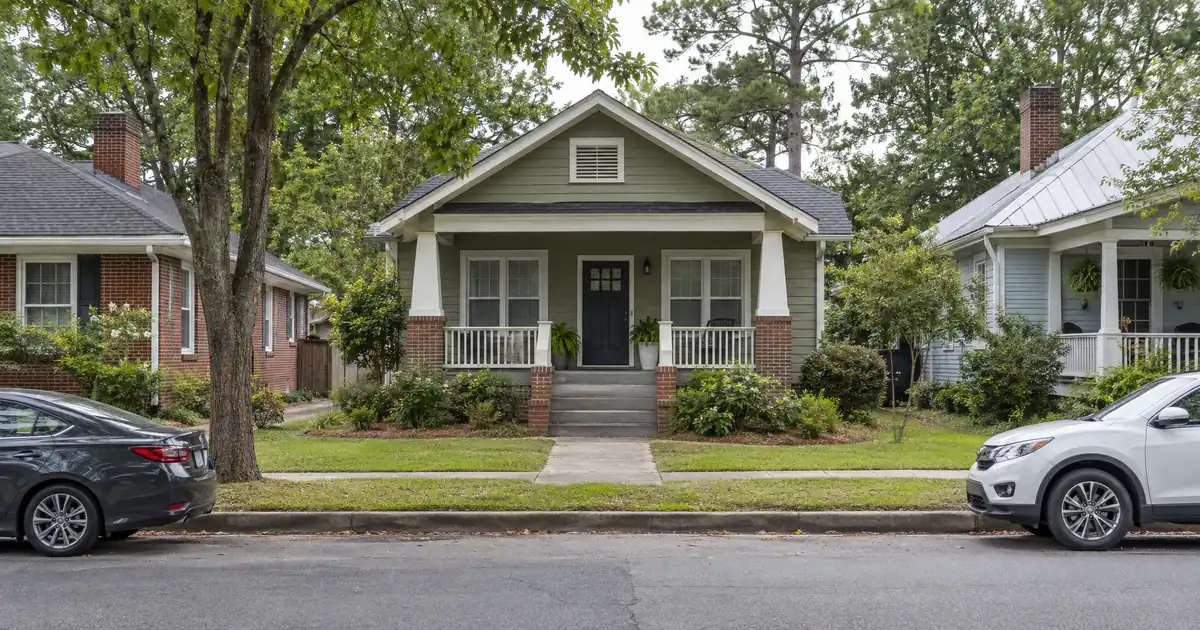
The City of Huntsville describes Redstone Arsenal as a major economic driver for Alabama, supporting a large workforce across the Tennessee Valley. Madison sits in the middle of that payroll base, which is why a DSCR cash out refinance in Madison, Alabama is worth modeling even though the local price chart has gone flat. Tenant demand is deep and durable. The equity, though, has to come from how the investor bought and improved the house, because the market is no longer handing it out.
That distinction drives everything below. This piece is for the investor who already owns a Madison rental and wants to turn seasoned equity into capital for the next deal. It covers where the coverage math holds, where it breaks, and when a different financing path makes more sense.
DSCR Cash-Out Calculator
Run the cash-out numbers in Madison, AL
Rate source: Freddie Mac 30-yr average via FRED® — Federal Reserve Bank of St. Louis · effective Sep 24, 2026
Prefilled with starting assumptions — enter your property’s value, balance, taxes, and insurance for a more accurate picture.
Program parameters update from Lendmire’s centralized guideline source. Taxes and insurance are editable estimates.
As of Sep 24, 2026 · General Freddie Mac market benchmark, not a Lendmire loan offer. Property value, balance, taxes, and insurance are editable estimates. Maximum loan-to-value varies by lender, program, property type, and seasoning. Not a Loan Estimate, approval, or commitment to lend. Program availability and eligibility are subject to lender guidelines, credit approval, property review, and underwriting.
The Quick Read:
A cash-out refinance on a Madison, Alabama rental is underwritten primarily on the property’s rental income measured against its full monthly obligation, so the file works when seasoned equity, a capped loan-to-value, and a coverage ratio that clears the lender’s benchmark all line up, subject to lender guidelines and appraisal.
- Single-family rents run near $1,850 per Zillow Rental Manager, well above apartment averages.
- Values are nearly flat, up 0.9% per Zillow, so equity depends on purchase basis.
- At maximum leverage on a median-priced house, modeled coverage lands below 1.00x; lower-basis homes clear it.
- Redstone’s workforce of about 45,500 anchors long-term renter demand, per the City of Huntsville.
Madison Market Snapshot
A quick read on the Madison investor landscape — figures come from the cited sources below. Confirm current property-level numbers before underwriting.
| Metric | Detail |
|---|---|
| Home prices | 78 sales (Redfin) |
| Recent appreciation | +0.9% (Zillow Home Values) |
| Employment | 143,156 jobs (City of Huntsville Blog) |
Equity Here Comes From Basis, Not Appreciation
Madison is a mature, high-priced suburb, and the headline price data shows a market that has stopped running. Zillow puts the average Madison home value at $378,797, up 0.9% year over year. That is the canonical figure used throughout this article. Other sources land elsewhere: Homes.com reports an average price of $434,938 with prices down 2% over twelve months. Redfin showed a $486,000 median in one recent month, but that was built on only 78 sales and reflects new-construction mix, not appreciation. Exact terms depend on the lender’s guidelines, property type, leverage, and a full review of the borrower’s file.
Three sources, three different medians. That spread is the point. Appraisers will not underwrite a headline number. They’ll pull close, similar sales in the specific subdivision.
For an equity-extraction play, this changes the thesis in three ways:
- Proceeds track the original basis. An investor who bought before the flattening, or who bought below market and added value, holds real equity. An investor who bought near the top of a recent run holds less than the old playbook assumed.
- Seasoning is the gate, not the prize. Most DSCR cash-out programs look for roughly six months of ownership measured from title recording. After that, the question is the appraisal, not the calendar.
- The ceiling is 75% loan-to-value. Cash-out is capped lower than a purchase, and what’s actually available depends on rent used for lender review, full PITIA, reserves (typically around six months), and that ceiling. It’s not a guaranteed cash figure.
The upside is that deeper sales activity helps. A local agent blog citing HAAR and Valley MLS data reports 824 closed sales across Huntsville and Madison County in June, up 29.8% from the same month a year earlier. More closings mean more comparables, and comparables are what make an appraisal defensible. It’s a secondary source, so treat it as directional.
The Coverage Math at 75% LTV (and Where It Breaks)
Every figure here varies by lender and program — guidelines, property type, leverage, and credit profile all apply.
The honest read: at maximum leverage on a median-priced Madison house, the debt coverage number falls short of 1.00x. The price-to-rent ratio on Homes.com is 15.1, which is modest rent relative to price, and a 75% loan on a roughly $378,000 home carries a full obligation that single-family rents don’t fully cover.
Here is the modeled math. These are assumptions, not market quotes. Coverage is rent divided by full PITIA, meaning principal, interest, taxes, and insurance, calculated at Alabama-average tax and insurance loads.
| Scenario (modeled) | Value | LTV | Modeled coverage |
|---|---|---|---|
| Median-value house, $1,850 rent | $378,000 | 75% | Mid-0.8x |
| Same house, $1,995 rent | $378,000 | 75% | Around 0.9x |
| Same house, $1,850 rent | $378,000 | 60% | Right around 1.0x |
| Older ranch, $1,700 rent | $200,000 | 75% | Roughly 1.4x |
Every figure in the table includes taxes and insurance. The rents come from Zillow Rental Manager ($1,850 average) and Homes.com ($1,995 median for a home). The $1,700 rent is a modeled assumption near the 3-bedroom figure on RentCafe ($1,684, which is an apartment-building number, so a house may differ).
The pattern is clear. Basis matters more than anything else. A lower-priced older home on the outskirts, which Homes.com places in the $200,000 range, carries far less debt against a similar rent, so coverage clears easily. (Quick eligibility note: manufactured homes, log homes, and barndominiums fall outside the network’s DSCR programs, and some rural-edge stock falls into those categories.) The median-priced newer house needs lower leverage or a different structure.
Standard DSCR programs are built around a 1.00x benchmark because rent covers the obligation at that level. When a Madison file lands below it, a few paths exist that a lender would review:
- Reduced leverage. Taking a smaller cash-out, which lifts coverage. The 60% row above shows how quickly the number moves.
- A sub-1.00 program. Select lenders review these, typically with stronger credit, more reserves, or lower leverage as compensating factors.
- Interest-only structuring. This changes the qualifying obligation, though it trades away amortization.
Qualification on any of these depends on lender guidelines, credit approval, and property review. And a real question sits underneath them: is sub-1.00 a deliberate choice or a workaround? If the investor holds a low-basis house with a clear appreciation or rent-growth story, a thinner coverage number is defensible. If it’s the only way the refinance pencils on a property bought near the peak, that’s a signal to re-examine the hold, not the loan.
For how the ratio is built, see the guide “What Is a DSCR Loan”. For the mechanics specific to equity pulls, cash-out refinance details covers seasoning and leverage caps.
Which Madison Submarkets Support a Cash-Out?
No source in the research provided neighborhood-level sale prices, so the submarket view below is qualitative, backed by the few rent figures that exist. The strongest cash-out candidates are lower-basis houses and townhomes in established areas, not the newest premium subdivisions.
Town Madison, Clift Farm, and the newer subdivisions. This is the core single-family rental product. Homes.com reports new traditional houses in modern subdivisions typically listing between $300,000 and $550,000, with larger new builds running from $600,000 up toward $1 million. Listings here highlight access to Redstone Arsenal gates, Huntsville International Airport, and Toyota Field. The demand story is strong (defense and tech payrolls nearby), but the coverage math at high basis is tight. These are the properties where a cash-out at full leverage usually needs structure.
Rainbow Mountain Heights. Rocket City Times describes an established area with large lots, mature trees, and mountain views near the Rainbow Mountain Nature Preserve, priced below the newer master-planned communities. No price figure is published. For an owner who bought here at a discount to new construction, the basis-to-rent relationship is likely better than in Town Madison, though that needs checking against actual comps.
Palmer Park, Colinwood Estates, and Liberty Manor. This is the lower-rent tier. RentCafe lists Palmer Park at $1,199 a month against a citywide average of $1,363, and Rocket City Times, citing RentCafe, puts Colinwood Estates, Liberty Manor, and Palmer Park at roughly $1,134 to $1,167. These are apartment-oriented figures. They matter here because they show the floor: workforce renters are price-sensitive, and an investor underwriting a house in this tier shouldn’t assume the top of the single-family range.
Edgewater and the Toyota Field corridor. Apartments.com called Edgewater the most affordable madison neighborhood in a late-2024 snapshot. Toyota Field, a 7,500-seat ballpark south of I-565, anchors the area. Affordability cuts both ways: lower entry basis helps coverage, but it also means lower rent ceilings.
Downtown and Old Madison. RentCafe lists Downtown Madison at $1,680 a month, among the higher-rent areas, but that’s a building-level figure from larger apartment properties, not a house or duplex. Don’t apply it to a single-family refinance.
The Huntsville edge. Redfin’s rental page lists Southwest Huntsville median rent at $1,625, with a caveat that the page mixes data vintages. Treat it as approximate.
Homes.com also names Burgreen Gin, Monrovia, Greenbrier, Edgewater, and Capshaw as popular rental areas, without per-neighborhood rents. One honest toss-up: the lower-basis Rainbow Mountain and Palmer Park tiers likely cash-out cleaner on coverage, while Town Madison offers the stronger long-run rent base. Which wins depends on the investor’s original basis, and the research doesn’t settle it.
Tenant Demand Rests on Federal, Defense, and Hospital Payrolls
The renter pool here is employment-driven and unusually stable. The City of Madison describes itself as adjacent to Huntsville, Huntsville International Airport, Redstone Arsenal, and Cummings Research Park, and reports a ranking as the number-one zip code in Alabama to live in across several consecutive years. Wikipedia notes Huntsville surrounds Madison on all sides, and that many residents work in the Research Park or at the Arsenal.
The anchors, with their published figures:
- Redstone Arsenal: a workforce of about 45,500, expected to climb toward 50,000, per the City of Huntsville. The same source cites an $8 billion Alabama economic impact and more than 35,000 jobs tied to NASA.
- Cummings Research Park: per the Encyclopedia of Alabama, it is home to 300 companies and a combined workforce above 26,000.
- Huntsville Hospital Health System: 20,000 employees, with Madison Hospital operating just off Highway 72. Nurses and allied health staff are a natural tenant pool for mid-priced houses and townhomes.
- Defense contractors: the Madison Industrial Development Board names Boeing, Northrop Grumman, Lockheed Martin, SAIC, Tyonek, and Griffon Aerospace among major regional employers, but publishes no headcounts.
- Manufacturing: the Mazda Toyota plant is listed at roughly 2,500 to 4,000 employees depending on the source, so quote it as a range.
Federal and defense employment is less cyclical than most sectors, and that supports tenant retention over a long hold. It’s a real comfort factor for a lender reviewing a thirty-year hold. One caution on catalysts: a U.S. Space Command relocation has been reported as adding around 1,400 positions, but its status was not verified against an official source. Treat it as pending upside, not a base-case assumption.
Student housing is not a factor. The University of Alabama in Huntsville, which reported 1,220 new freshmen in its most recent fall census, feeds the research park as a talent pipeline rather than a Madison rental market.
The Oversupply Drag on Rents
Demand is strong, but supply has outrun it in the apartment sector, and that caps single-family rents. WAFF quotes a local broker saying nearly 5,000 apartment units were built in Madison County in the most recent year, with rents averaging $1,100 to $1,300 and some complexes offering free rent or monthly discounts. About 524 single-family homes were listed for rent at the time.
The metro picture is similar. One local agent blog reports Huntsville-area apartment vacancy of 17.7% at year-end, and another says completions in a single recent year exceeded the prior twelve years combined. Both are secondary sources and should be read that way. Zillow labels the Madison rental market “cool,” and RentCafe shows its average down 0.58% year over year. For context on vacancy, the roughly 6% vacant-home figure on Valley MLS covers all housing, not rentals, so it isn’t a rental vacancy rate.
The practical takeaway: underwrite on in-place rent, not asking rent. Stress-test coverage with rents 5% to 10% below current asking, because appraisers’ rent schedules may reflect the soft apartment market.
Working DSCR brokers see a recurring pattern in suburbs with heavy apartment deliveries next to owner-occupied family housing: the single-family rent schedule comes in lower than the owner’s listing expectation, while the appraised value holds. That gap, more than anything in the credit file, is what pushes cash-out files below the target coverage number. The files that go smoothly tend to bring a signed lease at market rent and a conservative proceeds request from the start.
DSCR vs. conventional financing
There are two common ways to finance an investment property in Madison, AL, and they qualify you differently — here’s how investors weigh them.
Why investors choose it
- Qualifies on the property’s rental income — no personal tax returns, W-2s, or pay stubs needed to document income.
- No personal debt-to-income ceiling to clear, so existing mortgages and obligations don’t cap your borrowing the same way.
- Can be closed in an LLC, keeping the property inside a business entity.
- Built for scaling — not held to the limit on number of financed properties that conventional financing applies.
- Underwriting centers on the deal: generally qualifies when the rent covers the payment, a 1.00x coverage ratio being a common baseline (confirmed in underwriting).
- Designed specifically for investment property, including long-term and, where the program allows, short-term rentals.
Where it’s strong
- Often the lowest ongoing financing cost for a buyer who fully qualifies on personal income — a fit for a first property or a cost-first purchase.
Trade-offs for investors
- Requires full personal income documentation and must fit within a debt-to-income limit — salary, existing debts, and other mortgages all count.
- Typically held in your personal name rather than a business entity.
- Caps how many financed properties you can carry, which can become a ceiling as a portfolio grows.
- Evaluates you as a borrower as much as the property, which usually means more paperwork.
How investors usually choose: a first or single property often optimizes for the lowest financing cost; portfolio builders often optimize for leverage, vesting in an LLC, and scaling past conventional caps. The right answer depends on your goals, the property, and current guidelines — both paths run through select lenders in Lendmire’s wholesale network, with eligibility and terms confirmed in underwriting.
Should the Proceeds Stay in Madison?
For most investors, probably not all of them. Madison is a good place to hold and a hard place to add.
Multi-unit stock is thin. Redfin’s multifamily page showed one multi-family home for sale, a 4-unit at a $450,000 median listing price. City-data.com’s census-style figures put 3-to-4-unit structures at a mean of $215,722, against $491,750 for detached houses, but that’s a derived dataset and only directional. Duplexes and fourplexes more often surface in nearby Huntsville or Harvest than in Madison proper. So cash-out proceeds aimed at small multifamily usually travel, and the next property needs its own coverage test rather than borrowing Madison’s.
Here are three ways the proceeds get used, and how each changes the decision:
- Down payment on a lower-basis rental in the same metro. This is the cleanest use. The next property can be chosen for coverage, and the refinance funds the leverage the original cannot.
- Renovation of a held property. Value-add is how basis turns into equity in a flat market. The catch is timing: the work has to show in the appraisal.
- Reserves and debt restructuring. Defensible, but it doesn’t create growth.
Now the flip point. An investor with one or two rentals, strong traditional employment income, and a property that clears conventional debt-to-income limits may find conventional financing cheaper, with no non-QM friction. Lendmire’s DSCR-versus-conventional breakdown lays out where that tips. The tip usually comes with a growing portfolio, LLC ownership, or self-employment income that doesn’t show cleanly on returns. LLC-titled loans are available subject to lender program eligibility.
That is where a DSCR-focused mortgage broker earns its place. Lendmire works across Lendmire’s Alabama DSCR platform to match a file with the right wholesale program, and investors can reach the team at 828-256-2183 to walk through a specific property. For refinance structure beyond cash-out, the team can also explain how rate-and-term and cash-out refinances differ.
One more honest note: with flat values, cash-out is a one-way door on thin-coverage properties. Pulling maximum proceeds from a house that barely covers its obligation leaves no cushion if rents soften further. Sizing the pull to a coverage number the investor would be comfortable holding through a cool rental market is the safer structure. Run a stress test before committing.
Frequently Asked Questions
How do you qualify for a DSCR cash out refinance in Madison, Alabama?
Lenders look at the property’s rent used for lender review against its full PITIA, and most standard programs use a 1.00x benchmark. Typical guidelines also call for roughly six months of ownership from title recording, a credit score floor of about 620, and around six months of reserves. Leverage on cash-out is capped at 75%. Madison’s single-family rents support this best on lower-basis homes, per the coverage table above. Exact eligibility varies by borrower, property, and lender.
What are the requirements for an investment property loan in Madison, Alabama on a cash-out?
The property needs to be an eligible type, such as a single-family house, townhome, or small multifamily. Manufactured homes, log homes, and barndominiums fall outside the network’s DSCR programs. Loan amounts generally run up to $3,000,000 on standard programs, with smaller balances routed through select lenders. Qualification is subject to lender guidelines, credit approval, and appraisal.
Can a Madison rental with coverage below 1.00x still get a cash-out refinance?
Sometimes, but the structure changes. A lender may review reduced leverage, a sub-1.00 program, or interest-only structuring, usually with stronger credit or more reserves as compensating factors. At median Madison values, full-leverage cash-out often lands below the benchmark, so this question comes up more here than in lower-priced alabama markets. Approval is never assured and depends on program review.
Does flat appreciation in Madison hurt a cash-out refinance?
It limits how much equity the investor can pull, because the appraisal, not market momentum, sets the value. Zillow shows roughly 0.9% growth year over year, so proceeds depend mostly on purchase basis and improvements. Investors who bought below market or renovated tend to have more to extract. It doesn’t block a refinance, but it removes the cushion that rising prices used to provide.
What a Local Appraiser Would Tell You
Madison houses hold their value and rent steadily, but they don’t appreciate fast enough to bail out a thin purchase. The owners who pull clean cash-out proceeds here are the ones who bought at a discount to the newest subdivisions, kept the lease at real market rent, and asked for less than the ceiling. Verify current local rules, taxes, and insurance with qualified local professionals before sizing the pull.
For current guidelines and terms, see Lendmire’s DSCR loan programs page.
About Lendmire
Lendmire (NMLS# 2371349) is a mortgage brokerage focused on DSCR investor financing, arranging programs through wholesale and investor-lending channels in 41 markets, including Washington, D.C. Lenders evaluate DSCR loans on property cash flow rather than personal income, subject to lender guidelines, which supports LLC closings and investors with four or more financed properties. Scotsman Guide named Lendmire a Top Mortgage Workplace in both 2025 and 2026.
Get Started
Ready to find the right loan for you?
See your offer in seconds. No credit pull, no obligation.
Informational only. Not a Loan Estimate, approval, or commitment to lend. Program availability and eligibility are subject to lender guidelines, credit approval, property review, and underwriting.
References
1. City of Huntsville: Redstone Arsenal economic impact
3. Zillow
4. Redfin
5. Homes.com
6. RentCafe: Madison average rent
7. Homes.com
8. City of Madison: Economic Development
9. Encyclopedia of Alabama: Cummings Research Park
10. Huntsville Hospital Health System
11. Madison Industrial Development Board
12. University of Alabama in Huntsville
13. WAFF: Madison County apartment supply
15. 2025
16. 2026
This article is part of Lendmire’s investment property cash-out refinance program — full qualification details, guidelines, and scenarios live on the program page.
Related reading: DSCR Cash Out Refinance in Madison, Wisconsin: Vilas Fourplex Equity and Unit-Count Math · Cash Out Refinance Investment Property: DSCR in Madison · DSCR Cash Out Refinance in Opelika, Alabama: Manufacturing Payroll Meets the 75 Percent Cap
Guides: Investment Property Cash-Out Refinance in Madison, AL · Investment Property Cash-Out Refinance in Alabama
Brandon Miller
Founder & CEO, Mortgage Loan Originator, Lendmire LLC
- Mortgage Loan Originator · NMLS# 1129696 · Verify on NMLS Consumer Access
- North Carolina Real Estate Broker · License# 343312 · Verify on NCREC
- North Carolina Insurance Producer · License# 19053198 · Property, Casualty, Life, Health · Verify on NAIC SBS
- Lendmire LLC · Firm NMLS# 2371349 · Verify firm licensure
Required disclosures. Lendmire (NMLS# 2371349) operates as a licensed mortgage broker, not a direct lender or depository. The discussion in this article is general in nature and should not be relied upon as financial, legal, or tax advice — every investment scenario is unique and should be reviewed by a qualified professional. Any loan inquiry is subject to lender underwriting, and this article is not a commitment to lend or a guarantee of approval. Mortgage rates, loan terms, and program guidelines vary by borrower, property, and state, and may change without notice. Equal Housing Opportunity. Verify licensure at NMLS Consumer Access.