
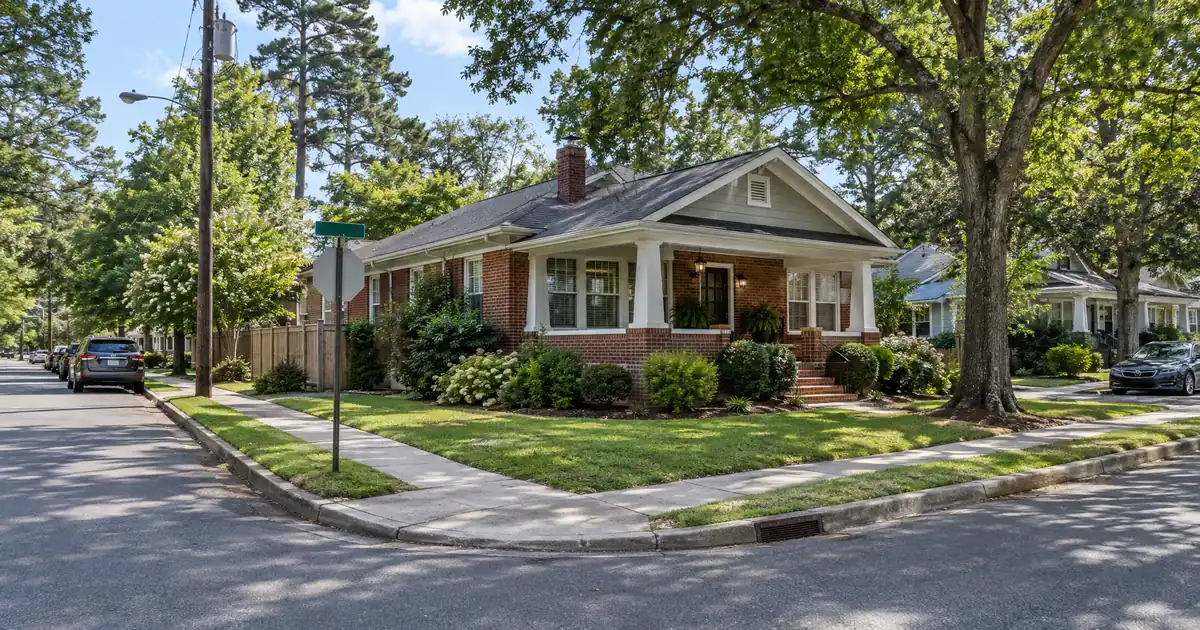
An out-of-state investor scrolling Birmingham-area listings usually lands on Vestavia Hills for the wrong reason. The city sits on Shades Mountain, has about 39,000 residents, and looks like a safe place to park a rental. Then the cash-out refinance investment property math shows up, and the picture changes. The median sale price is near $600,000 per Redfin, while median gross rent is only about $1,515. A DSCR cash out refinance in Vestavia Hills, Alabama is possible, but it works as an equity play on the right property, not as a yield play on the median one.
DSCR Cash-Out Calculator
Run the cash-out numbers in Vestavia Hills, AL
Rate source: Freddie Mac 30-yr average via FRED® — Federal Reserve Bank of St. Louis · effective Sep 24, 2026
Prefilled with starting assumptions — enter your property’s value, balance, taxes, and insurance for a more accurate picture.
Program parameters update from Lendmire’s centralized guideline source. Taxes and insurance are editable estimates.
As of Sep 24, 2026 · General Freddie Mac market benchmark, not a Lendmire loan offer. Property value, balance, taxes, and insurance are editable estimates. Maximum loan-to-value varies by lender, program, property type, and seasoning. Not a Loan Estimate, approval, or commitment to lend. Program availability and eligibility are subject to lender guidelines, credit approval, property review, and underwriting.
Key Takeaways:
A DSCR cash-out refinance in Vestavia Hills, Alabama fits the investor who already owns a lower-basis home or small building here and wants to redeploy equity, because the loan is underwritten primarily on the property’s rental income measured against its full monthly obligation, which is the hurdle most median-priced houses here struggle to clear.
- Median sale price sits well above what local rents can support, per Redfin, while median rent stays modest by comparison, per Point2Homes.
- Cash-out tops out at 75 percent LTV, and it is available after about six months of ownership.
- Single-family detached homes make up most of the housing stock, per NeighborhoodScout, so duplex comps are scarce.
- Modeled coverage on a median house, using full PITIA (principal, interest, taxes and insurance), comes in at less than half of 1.00 at full leverage. Alabama’s low property-tax and insurance burden helps, but it does not close that gap.
- Appreciation, not rent growth, carries the refinance thesis.
Vestavia Hills Market Snapshot
A quick read on the Vestavia Hills investor landscape — figures come from the cited sources below. Confirm current property-level numbers before underwriting.
| Metric | Detail |
|---|---|
| Typical rents | $1,255 avg asking (Kirkland Company) |
| University enrollment | 21,500+ students (Business Alabama) |
| Population | 1.19m MSA population (Kirkland Company) |
| Employment | 28,000 employees (Business Alabama) |
| Vacancy | 6.1% projection (REBusinessOnline) |
What the Out-of-State Investor Misses
Vestavia Hills is an owner-occupant-style suburb with a thin rental tier. Per Wikipedia’s compilation of Census and ACS data, the city has 13,840 households and a median household income of $134,369, and 65.3 percent of residents hold a bachelor’s degree or higher. The recent population estimate of 38,306 is slightly below the last census count of 39,102. That is a stable, affluent base, not a growth story.
Affluence cuts both ways. It supports high resale values and deep buyer demand. It also pushes prices far above what a typical Birmingham-area rent can service. Regional employment helps the tenant pool: UAB is one of the largest employers in Alabama, and Regions Financial is headquartered in the metro. Those anchors sit in Birmingham, not in the city itself. They feed demand for professionals who want to live over the mountain.
So the question isn’t whether tenants exist. It’s whether the rent on a given house can carry the debt a 75 percent cash-out would put on it.
Step by Step: How the Proceeds Get Sized
Cash-out proceeds are the smaller of two limits, and the lower one wins. Walking through them in order:
1. Seasoning. Programs typically look for about six months of ownership, measured from title recording, before a cash-out is on the table.
2. The LTV ceiling. Cash-out is capped at 75 percent of appraised value. The 80 percent figure you see on purchase loans does not carry over. If the existing payoff is 40 percent of the appraised value, the ceiling leaves 35 points of value available, before anything else trims it.
3. The coverage test. Monthly rent divided by the full monthly obligation (principal, interest, taxes, insurance, and any HOA dues). Most standard DSCR programs are built around a 1.00 benchmark, the level at which rent just covers the obligation. Some lenders will look below it with lower leverage, stronger credit, or more reserves, subject to lender guidelines.
4. Reserves and credit. Reserves of about six months are typical, rising to about nine months on balances above $1,500,000. Credit tiers generally start at a 620 floor, and pricing and leverage improve at higher tiers.
Here’s the catch in Vestavia Hills: step three usually binds before step two does. The LTV cap may allow a large draw while the coverage ratio says the property can’t carry it. Proceeds are never a guaranteed figure. For the mechanics in more depth, see the guide “The Refi Options” and the refinance side. If the DSCR concept itself is new, the guide “What Is a DSCR Loan” covers it.
Run the Numbers on Three Files
The inputs below are modeled assumptions, not market quotes. Each uses rent divided by full PITIA, including taxes and insurance, on a 30-year term. Rent for the first two rows is the Census-derived median. The third row assumes a rent for a lower-basis home, since no neighborhood-level rent source exists.
| File | Price | LTV | Rent used | Modeled coverage |
|---|---|---|---|---|
| Median house, full draw | $600,000 | 75 percent | $1,515 | Under 0.50x |
| Median house, light draw | $600,000 | 50 percent | $1,515 | About 0.6x |
| Entry-priced house | $350,000 | 75 percent | $2,000 (assumed) | Around 1.0x |
The median house fails at any leverage. Gross rent runs about a quarter of one percent of price, and cutting leverage from 75 percent to 50 percent still leaves coverage around 0.6x. A $2,000 rent on a $350,000 basis is the kind of file that can reach the 1.00 benchmark, and that basis is where The Williams Group says entry pricing begins in Cahaba Heights and the older areas.
When a file lands below 1.00, a lender may review other structures: a sub-1.00 program, interest-only restructuring, or lower leverage with heavier reserves. Whether any of them is available depends on lender guidelines, credit approval, and property review. But ask the prior question first. If the only way the numbers work is a structure built for sub-1.00 coverage, the signal may be that this property isn’t the right one to pull equity from. The alternative is to use the equity elsewhere, where coverage is healthier.
The other side of the tradeoff matters too. For an owner-occupant or a W-2 borrower with one rental, the guide “Where DSCR and Conventional Diverge” is worth a look. Conventional underwriting doesn’t test the property’s own rent, so a thin-yield Vestavia house may suit it better. DSCR earns its place when the rental is held in an entity (subject to lender program eligibility), when traditional personal-income documentation doesn’t support the income, or when the portfolio has outgrown conventional caps.
Where Equity Extraction Actually Pencils
Cahaba Heights is the most plausible DSCR candidate in the city. It was annexed in 2002, has a village feel, and per the Vestavia Hills Chamber of Commerce is known for antique shopping and a small-town atmosphere. Listings show older one-level ranches and some homes with finished basements. Entry prices near $350,000 per the brokerage guide make this the lowest-basis pocket for single-family. No source provides rents here, so treat any neighborhood rent figure with suspicion, including ones in marketing copy.
Supply matters in this pocket. Lument reports that the 274-unit Inkwell on Grandview opened in Cahaba Heights. A house renting beside a new apartment community with concessions will be compared to it, so the rent comps behind a refinance appraisal need scrutiny.
The US-31 corridor along the crest of Shades Mountain is the mid-century core. It includes the municipal complex and City Center. Stock is older and basis is lower than in the newer districts, but no reliable price or rent figures exist for it. Townhomes and condos also show up in local subdivision lists and may carry smaller bases. So do any 2 to 4 unit buildings, though those are scarce. NeighborhoodScout puts small buildings at just 5.9 percent of housing units, against 20.1 percent in large apartment complexes. That scarcity is a differentiator, not proof of strong rent-to-value. A fourplex here would have few comps, which can cut either way at appraisal.
Liberty Park is a different animal. Prices reach $2 million or more in the gated Old Overton sector. Rent-to-value is almost certainly too thin for coverage, so skip it as a DSCR target. Owners there who want equity are better served by other structures.
Is Oversupply a Problem?
For a house, the bigger risk is the apartment tier next door, not the house down the street. The Kirkland Company’s latest Birmingham report puts metro apartment vacancy at 13.7 percent, the highest in more than 25 years. It names Hoover and Vestavia Hills as submarkets where persistent new supply has prevented meaningful tightening. Asking rents were down 0.8 percent year over year, with concessions common on new luxury units.
Other sources disagree. A Marcus & Millichap outlook reported by REBusinessOnline calls Homewood, Vestavia Hills, and Hoover among the metro’s steadier suburbs, citing limited new construction and projecting vacancy near 6.1 percent. Different datasets, different definitions. A fair reading is that the pressure sits in new lease-up product, not in older stabilized rentals.
Working DSCR brokers see a recurring pattern in affluent, high-basis suburbs like this one: the coverage ratio on the application looks fine and the appraiser’s rent schedule is what moves it. Files that include older, stabilized comparables, and skip lease-up communities offering concessions, tend to hold their numbers. Files built on optimistic asking rents tend to get re-cut. Underwrite rent conservatively before the file goes in.
Appreciation Is the Engine (and the Catch)
Vestavia’s equity case is price, not rent. Redfin shows median sale price up 2.2 percent year over year and median price per square foot at $224, up 6.7 percent. Homes sell in about 35 days on average, and 199 sales posted in the latest monthly count against 185 a year earlier. That is enough volume to give appraisers real comps. Zillow reports a lower value and a slower growth rate, reflecting a different methodology, so the range of appreciation across sources runs from low single digits up to about 7 percent.
Picture an investor who bought an older Cahaba Heights ranch, held it past the seasoning window, and sees appraised value come in meaningfully above purchase. The ceiling is 75 percent LTV of that higher value. If rent still covers the full obligation on the new, larger balance at roughly the 1.00 benchmark, the cash-out works. If it doesn’t, the same appreciation may support a smaller draw.
DSCR vs. conventional financing
Two common ways to finance an investment property in Vestavia Hills, AL. They qualify you differently — here’s how investors weigh them.
Why investors choose it
- Qualifies on the property’s rental income — no personal tax returns, W-2s, or pay stubs needed to document income.
- No personal debt-to-income ceiling to clear, so existing mortgages and obligations don’t cap your borrowing the same way.
- Can be closed in an LLC, keeping the property inside a business entity.
- Built for scaling — not held to the limit on number of financed properties that conventional financing applies.
- Underwriting centers on the deal: generally qualifies when the rent covers the payment, a 1.00x coverage ratio being a common baseline (confirmed in underwriting).
- Designed specifically for investment property, including long-term and, where the program allows, short-term rentals.
Where it’s strong
- Often the lowest ongoing financing cost for a buyer who fully qualifies on personal income — a fit for a first property or a cost-first purchase.
Trade-offs for investors
- Requires full personal income documentation and must fit within a debt-to-income limit — salary, existing debts, and other mortgages all count.
- Typically held in your personal name rather than a business entity.
- Caps how many financed properties you can carry, which can become a ceiling as a portfolio grows.
- Evaluates you as a borrower as much as the property, which usually means more paperwork.
How investors usually choose: a first or single property often optimizes for the lowest financing cost; portfolio builders often optimize for leverage, vesting in an LLC, and scaling past conventional caps. The right answer depends on your goals, the property, and current guidelines — both paths run through select lenders in Lendmire’s wholesale network, with eligibility and terms confirmed in underwriting.
Here’s where it gets genuinely debatable. The investor who expects Vestavia values to keep climbing might accept a thin-coverage, low-leverage hold and treat the cash-out as a later event. The investor who needs the proceeds to fund a second property in a stronger-yield market has a cleaner path: extract only what the coverage test supports, then deploy into the lower-priced birmingham metro where rent-to-price is healthier. Neither is wrong. It depends on whether the goal is holding Vestavia or moving capital.
One local reality check: the city spans parts of both Jefferson and Shelby Counties. Verify current local rental rules, taxes, and insurance with qualified local professionals before you model a refinance.
Frequently Asked Questions
How do you qualify for a DSCR cash-out refinance in Vestavia Hills?
The property’s rent has to cover its full monthly obligation, generally at or near a 1.00 coverage ratio, and the loan must fit within 75 percent of appraised value. Credit, reserves, and about six months of ownership are reviewed too. In Vestavia Hills, the coverage test is the piece most files stumble on, given how high prices run against rents.
What are the requirements for an investment property loan in Vestavia Hills, Alabama?
Typical guidance includes a credit floor around 620, reserves of about six months, and a loan amount up to $3,000,000 on standard programs. Smaller balances route through select lenders. Every figure is a guideline that varies by borrower, property, and loan scenario, and none is a commitment to lend. Terms vary by lender guidelines, property type, leverage, credit profile, and full file review.
Does a median-priced Vestavia Hills house clear 1.00 coverage?
Not on modeled math. Against a price near $600,000 and median rent near $1,515, coverage falls well below 1.00 even with taxes and insurance treated conservatively. Lower-basis homes in Cahaba Heights or the older US-31 areas are better candidates.
Do new apartments near Cahaba Heights affect DSCR rent comps?
Yes, particularly for rent schedules and appraisals. New communities such as Inkwell on Grandview compete for the same renters, and concessions can pull down comparable rents. Stabilized, older comparables give a more reliable picture.
What a Local Appraiser Would Say
Vestavia Hills values hold because buyers keep showing up, not because rents climb. A house here appraises on what similar houses sold for, so the equity is real, but the rent will rarely pay for much of it. Pull what the coverage ratio supports, leave the rest in the house, and expect Cahaba Heights and the older mountaintop streets to carry the deals that work.
For current guidelines and terms, see Lendmire’s DSCR loan programs page.
About Lendmire
Lendmire is a non-QM mortgage brokerage (NMLS# 2371349) arranging DSCR investor loans in 41 markets, including Washington, D.C., through wholesale and investor-lending channels. DSCR loans are evaluated by the lender primarily on rental income rather than personal income, subject to lender guidelines, which suits LLC-owned portfolios, self-employed investors, and operators scaling past conventional loan caps. Lendmire was recognized as a 2026 Scotsman Guide Top Mortgage Workplace and a top-ranked workplace in 2025.
For broader investor-financing rules and property-type coverage across the state, see Alabama DSCR loans.
Get Started
Ready to find the right loan for you?
In about 30 seconds you can review financing options available for your investment property. No commitment required.
Informational only. Not a Loan Estimate, approval, or commitment to lend. Program availability and eligibility are subject to lender guidelines, credit approval, property review, and underwriting.
References
1. Redfin: Vestavia Hills Housing Market
2. Point2Homes
3. NeighborhoodScout: Vestavia Hills
4. The Kirkland Company: Birmingham Multifamily Report
6. Marcus & Millichap outlook reported by REBusinessOnline
8. Vestavia Hills Chamber of Commerce: Districts
9. Lument: Birmingham Multifamily
10. Zillow
11. a 2026 Scotsman Guide Top Mortgage Workplace
12. Scotsman Guide — Top Workplaces 2025
This article is part of Lendmire’s investment property cash-out refinance program — full qualification details, guidelines, and scenarios live on the program page.
Related reading: Luxury Rental DSCR Loans In New Jersey · Jersey Shore Vacation Rental Loans: DSCR Financing In Ocean City, Cape May And Long Beach Island · DSCR Cash-out Refinance In New Jersey: Pulling Equity From A Rental
Guides: Investment Property Cash-Out Refinance in Alabama
Brandon Miller
Founder & CEO, Mortgage Loan Originator, Lendmire LLC
- Mortgage Loan Originator · NMLS# 1129696 · Verify on NMLS Consumer Access
- North Carolina Real Estate Broker · License# 343312 · Verify on NCREC
- North Carolina Insurance Producer · License# 19053198 · Property, Casualty, Life, Health · Verify on NAIC SBS
- Lendmire LLC · Firm NMLS# 2371349 · Verify firm licensure
Important disclosures. Lendmire (NMLS# 2371349) is a licensed mortgage brokerage. Lendmire is not a direct lender, depository institution, or financial advisor. All loan inquiries are subject to lender underwriting; this article does not constitute a commitment to lend. Rates, terms, and program guidelines are subject to change without notice and vary by borrower profile, property type, and state. Information in this article is general in nature and is not financial, legal, or tax advice. Equal Housing Opportunity. NMLS Consumer Access: nmlsconsumeraccess.org.