
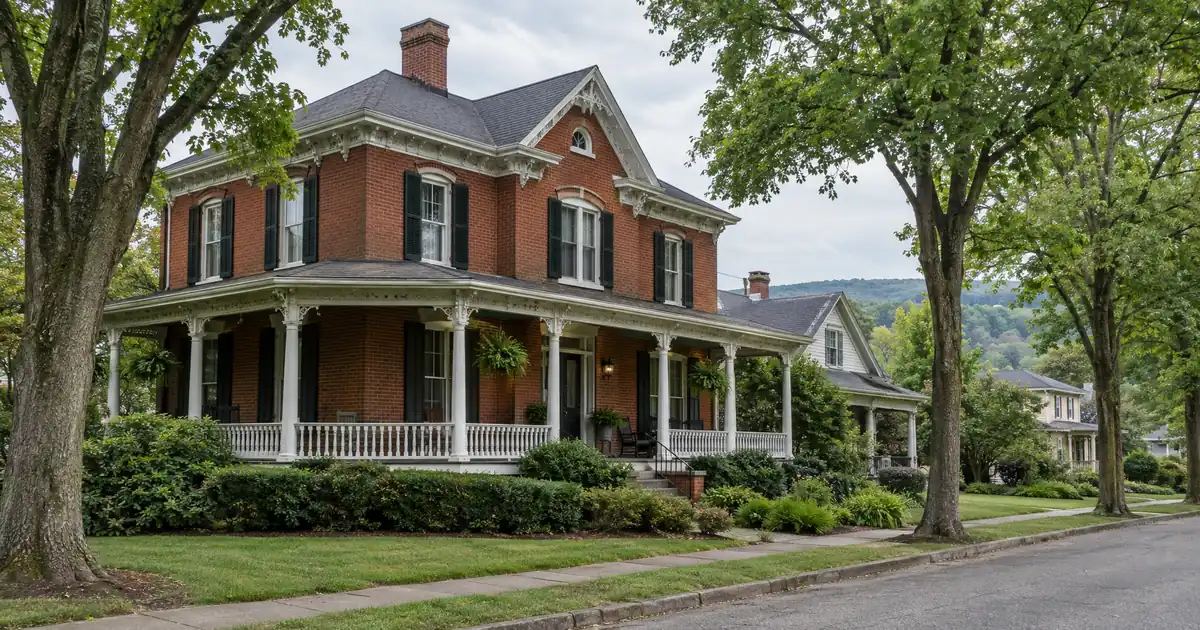
Can you pull cash out of a Henderson rental when the median sale price sits near $201,035? Often, yes, but the answer depends less on the price than on whether the rent covers the new, larger loan. Redfin puts that median up 5.8% year over year, while Zillow shows a lower typical home value of $178,628, reflecting a different methodology. Either way, Henderson is a low-basis market where coverage ratios decide the outcome. DSCR financing for Henderson, Kentucky investors runs through wholesale lenders that Lendmire works with across 41 markets, including D.C. Lendmire is a DSCR-focused mortgage broker (NMLS# 2371349), and it arranges these files rather than lending on them.
DSCR Cash-Out Calculator
Run the cash-out numbers in Henderson, KY
Rate source: Freddie Mac 30-yr average via FRED® — Federal Reserve Bank of St. Louis · effective Sep 24, 2026
Prefilled with starting assumptions — enter your property’s value, balance, taxes, and insurance for a more accurate picture.
Program parameters update from Lendmire’s centralized guideline source. Taxes and insurance are editable estimates.
As of Sep 24, 2026 · General Freddie Mac market benchmark, not a Lendmire loan offer. Property value, balance, taxes, and insurance are editable estimates. Maximum loan-to-value varies by lender, program, property type, and seasoning. Not a Loan Estimate, approval, or commitment to lend. Program availability and eligibility are subject to lender guidelines, credit approval, property review, and underwriting.
The Quick Read:
A DSCR cash-out refinance on a Henderson, Kentucky rental is underwritten primarily on the property’s rental income measured against its full monthly obligation, with leverage capped at 75% of value, about six months of ownership behind the property, and reserves in the bank, all subject to lender guidelines.
- Multifamily is scarce: Homes.com showed three listings priced from $135,000 to $279,000.
- Appreciation is slow, so equity here usually comes from value-add rather than the market.
- Portal rents swing hard, so underwrite to signed leases and property-manager rent rolls.
- Manufacturing plants and Deaconess Henderson Hospital anchor long-term tenant demand.
- Low-basis South Side and East End homes give coverage its best shot.
Henderson Market Snapshot
A quick read on the Henderson investor landscape — figures come from the cited sources below. Confirm current property-level numbers before underwriting.
| Metric | Detail |
|---|---|
| Home prices | $201,035 median sale price (Redfin) |
| Typical rents | $990/mo average (RentCafe) |
| University enrollment | ~2,000 students (Wikipedia) |
| Population | 27,852 population (Census Reporter) |
| Employment | 1,100+ employees (Lane Report) |
Equity in Henderson Comes From Work, Not Waiting
Henderson is a cash-flow market, not an appreciation market, and a cash-out thesis here should be built on that fact. NeighborhoodScout reports a ten-year average appreciation pace of 5.43%, but only 1.67% over the most recent twelve months. Investors counting on the market to hand them equity may be disappointed.
The price data disagrees with itself, too. Redfin’s November read was a $221K median sale price, down 2.8% from the prior year. Zillow’s index showed gains over a similar window. Sales volume is tiny: Redfin counted just 24 homes sold in that November, with an average of 31 days on market, per its housing market page. Small samples produce noisy medians.
What does that mean for someone already holding a rental? Equity built through a renovation, a rent bump, or a good purchase basis is the equity a lender will actually recognize. Equity you assume the market created may not survive an appraisal. Pulling fresh, source-matched comps at the moment you refinance beats any trailing-twelve-month narrative from a single portal.
There’s a flip point. An investor who bought a dated house well below market and has since renovated it may be sitting on plenty of equity, and a cash-out fits that story cleanly. An investor who bought at the top of the local range and has done nothing since probably won’t find much to pull. The loan type doesn’t change that arithmetic.
Which Henderson Pockets Hold Equity Worth Pulling?
The South Side and East End offer the strongest rent-to-value setups for a cash-out. The North End and Audubon hold steadier, higher-basis stock where equity is real but coverage is tighter. Henderson is compact (about 16.9 square miles), so these are informal districts rather than master-planned zones.
South Side. The older grid near downtown and the Ohio River is the classic workforce-rental pocket: small two- and three-bedroom frame homes, some listed near $150K. Low basis is the whole point. A lower purchase price means a smaller loan at 75% of value, which helps coverage. The catch is condition. Legacy small-footprint homes can carry deferred maintenance, and appraisers weigh that.
East End. Listing agents describe it as burgeoning, with active new-construction activity, and Redfin’s neighborhood page places its median near $189,200. Picture an investor who bought a dated East End house, renovated it, and now holds a property whose appraised value has moved past the purchase price. That’s the textbook forced-appreciation case, and it’s where a cash-out makes the most sense. New construction nearby also adds comp support, though it can add competing rental supply as well. (It’s worth watching, because this pocket is still forming.)
North End. Brick ranches on a well-kept grid, typically three bedrooms and two baths, with a stable owner-and-renter mix. Basis runs higher than on the South Side, so coverage is tighter, but turnover risk tends to be lower.
Audubon. Anchored by John James Audubon State Park, this area holds more established, higher-end single-family stock. Demand skews toward longer-tenure renters. It’s the pocket where equity is largest in dollars, but where the rent-to-value ratio is usually least generous.
Downtown and the N. Adams corridor. Character homes with original hardwood and small multi-unit conversions sit close to shops and restaurants. Zumper lists Downtown as the most affordable tracked area, at $799 a month. That’s a low rent floor against low basis, which can be efficient, but it demands a close look at unit size and condition.
The county fringe. Robards, Corydon, Sebree, Waverly, and Spottsville sit outside the city proper but feed the same tenant pool. Century Aluminum’s Sebree plant employs roughly 625 people and has run since 1973, supporting shift-worker rental demand at lower price points. Smaller balances here may route through select lenders in the network rather than standard programs.
Running the Coverage Math
On a typical Henderson single-family rental, coverage clears 1.00 only when rent is near the top of the local range or leverage comes down. The numbers below are modeled assumptions, not sourced market data. Each ratio is rent divided by full PITIA (principal, interest, taxes, insurance, and any HOA dues), so taxes and insurance are included.
| Scenario | Modeled rent | Leverage | Coverage (taxes and insurance included) |
|---|---|---|---|
| South Side 3BR, $180,000 value | $1,193 | 75% | About 1.1x |
| Same house, house-average rent | $895 | 75% | About 0.8x |
| Same house, reduced leverage | $1,193 | 65% | About 1.2x |
| Duplex, $210,000 value | $900 per door | 75% | About 1.4x |
The first row uses the Apartment Finder average of $1,193 for a three-bedroom. The second uses Zumper’s $895 house-average figure. The gap between them is the whole story: same house, same loan, and the result swings from comfortably above 1.00 to clearly below it.
When a result lands below 1.00, the structure matters. A lender may review a lower-leverage cash-out, a sub-1.00 program, or an interest-only structure, subject to credit approval, property review, and lender guidelines. Before reaching for one, ask whether the house is the right house. If the only way a property clears is a sub-1.00 exception, that’s a signal to re-examine the submarket or the rent assumption, not to shop for a looser loan. A sub-1.00 structure can be defensible when you have a documented renovation plan and expect rents to move. It’s a weaker choice when you’re simply hoping.
The duplex row shows why small multifamily is the better fit on paper. Per-door rents of $900 to $1,400 against a low basis produce a healthier ratio than one house can. But the stock is thin, and I’d treat that as a real constraint rather than a footnote. An appraiser may struggle to find comparable multi-family sales for the valuation, which can pull the appraised value below what you expected.
DSCR files in markets like this one typically look like this: coverage is close to the 1.00 line on long-term rent, and the file turns on how well the rent is documented. Lenders tend to lean on a signed lease or an appraiser’s rent schedule rather than a portal average. The stronger files bring a current lease, a fresh insurance quote, and a plain-language renovation history, so the appraiser has a reason for the value. Reserves and a mid-range credit score then decide what pricing and leverage tier the file lands in.
What the Lender Actually Checks
Three gates matter on a cash-out refinance: ownership seasoning, the loan-to-value ceiling, and the coverage ratio. Typically that means about six months of ownership measured from title recording, leverage capped at 75% of value on a cash-out, and a 1.00 baseline coverage number. Every figure is subject to lender guidelines, and the network reviews each file individually.
Most standard programs use a 1.00x benchmark because rent covers the payment at that level. Some lenders may review lower or no-ratio scenarios, but those usually mean lower leverage, different pricing, or more cash in reserve. Credit tiers commonly step through 620, 660, 680, and 700, with 620 as the floor, and better scores generally open better terms. Reserves typically run about six months of PITIA, and larger loans can require more. Loan amounts can reach up to $3,000,000 on standard programs, though a Henderson file will sit far below that. Smaller balances route through select lenders in the network.
Equity available is never a guaranteed cash figure. It’s the output of rent used for lender review, PITIA, reserves, and the 75% ceiling, worked together. Investors who want the mechanics can start with Lendmire’s DSCR guide, and the guide “Where DSCR and Conventional Diverge” is worth a read for anyone weighing a conventional refinance. For a single personally held rental with strong traditional employment income, conventional may carry a lower cost. DSCR tends to fit entity-owned portfolios, self-employed borrowers, or files where the property’s income is the cleaner story.
A Kentucky-specific note: Lendmire’s Kentucky DSCR loan programs cover the state broadly, and the same six-month, 75%, 1.00-baseline framework applies. Program details can change, so confirm current guidelines before you plan around them.
The Demand Base Behind the Rents
Henderson’s tenant demand rests on manufacturing and health care, not on a university. Data USA counts 1,943 residents working in manufacturing, 1,804 in health care and social assistance, and 1,653 in retail. The city’s population is 27,852 per Census Bureau QuickFacts, and 46% of housing is renter-occupied according to RentCafe.
The employer list is concrete. Henderson Economic Development reports 906 employees at Gibbs Die Casting, 332 at Audubon Metals, and 187 at Accuride. The Kentucky Cabinet for Economic Development announced a $500 million Pratt Industries paper mill creating over 320 jobs across two facilities. That kind of investment is unusual for a city of this size.
Deaconess Henderson Hospital is a 143-bed acute care hospital, now part of a larger regional system, which spreads single-anchor risk. That matters for the North End and downtown rentals that house health-care shift workers.
What about students? Henderson Community College enrolls roughly 2,000 students. That’s a steady demand driver but too small to support a student-rental submarket. Model tenant demand around employers.
One caution: these anchors support demand, and none of them guarantees a particular rent. Manufacturing employment can move with the cycle, and a lender will underwrite the rent on your lease, not on a plant’s headcount.
What Do You Do With the Proceeds?
The cash-out only makes sense if the next deal’s coverage works at its own price. Pulling equity to buy another low-basis South Side or East End house, where the numbers already pencil, is straightforward. Pulling equity to chase a market where the math doesn’t work is a different decision, and it deserves a stress test before you commit.
Consider an investor with two paid-down South Side rentals who wants a duplex. The cash-out on one house funds the down payment on the duplex, and the duplex’s per-door rents lift the portfolio’s overall coverage. That’s a sound sequence, provided the duplex can be found. With only a handful of multi-family listings on the market at any given time, patience is part of the plan.
The alternative is using proceeds on the existing house: a kitchen, a roof, a rent-ready refresh. This is where forced appreciation lives, and honestly it often beats buying another property. Whether it does depends on whether the renovation lifts rent enough to move the coverage number. If it doesn’t, you’ve spent equity for nothing.
Refinancing has its own tradeoffs. A cash-out resets the loan, and it makes sense only if the new structure improves the portfolio. Investment property refinance options include rate-and-term, cash-out, and other paths. Cash-out isn’t always the right call. If you don’t have a specific use for the proceeds, leaving the equity alone is a legitimate choice.
Where Investors Get Henderson Wrong
Portal rent data is the most common trap. Zumper’s trend data showed average rent down 3.81% month over month but up 26.03% year over year on the Zumper apartments page. A swing like that says the sample is thin, not that the market is moving. The average rents also vary by source: RentCafe shows $990, while Zumper’s apartment average is $950 and its house average $895.
Any single figure can mislead. Anchor your underwriting to signed leases and local property-manager rent rolls, and treat the portal average as a rough sanity check.
The second mistake is assuming the citywide median applies to your pocket. The $201,035 figure blends the East End, the North End, Audubon, and downtown. A South Side house near $150K and an Audubon house well above the median produce very different coverage numbers. Underwrite the house, not the city.
DSCR vs. conventional financing
Two common ways to finance an investment property in Henderson, KY. They qualify you differently — here’s how investors weigh them.
Why investors choose it
- Qualifies on the property’s rental income — no personal tax returns, W-2s, or pay stubs needed to document income.
- No personal debt-to-income ceiling to clear, so existing mortgages and obligations don’t cap your borrowing the same way.
- Can be closed in an LLC, keeping the property inside a business entity.
- Built for scaling — not held to the limit on number of financed properties that conventional financing applies.
- Underwriting centers on the deal: generally qualifies when the rent covers the payment, a 1.00x coverage ratio being a common baseline (confirmed in underwriting).
- Designed specifically for investment property, including long-term and, where the program allows, short-term rentals.
Where it’s strong
- Often the lowest ongoing financing cost for a buyer who fully qualifies on personal income — a fit for a first property or a cost-first purchase.
Trade-offs for investors
- Requires full personal income documentation and must fit within a debt-to-income limit — salary, existing debts, and other mortgages all count.
- Typically held in your personal name rather than a business entity.
- Caps how many financed properties you can carry, which can become a ceiling as a portfolio grows.
- Evaluates you as a borrower as much as the property, which usually means more paperwork.
How investors usually choose: a first or single property often optimizes for the lowest financing cost; portfolio builders often optimize for leverage, vesting in an LLC, and scaling past conventional caps. The right answer depends on your goals, the property, and current guidelines — both paths run through select lenders in Lendmire’s wholesale network, with eligibility and terms confirmed in underwriting.
Here’s the catch on the timing: because sales volume is thin, an appraiser may have few recent comps. That can cut in either direction. It’s another reason to line up documentation on renovations and rents before the appraisal, rather than after.
Verify current local rental rules, taxes, and insurance with qualified local professionals before you underwrite. Those costs are part of PITIA and directly move your coverage ratio.
The Next Step: Pull the Comps
Before you talk to any lender, do one thing: pull recent sold comps within a few blocks of your specific Henderson property, from more than one source, and pair them with your signed lease. That single exercise tells you whether the appraised value and the rent will support a 75% cash-out. If it does, talk to Lendmire or call 828-256-2183 to have the file reviewed. If it doesn’t, you’ll know which piece to fix first: the value, the rent, or the leverage. Every figure here varies by lender and program — guidelines, property type, leverage, and credit profile all apply.
Frequently Asked Questions
How do you qualify for a DSCR loan in Henderson, Kentucky?
Qualification centers on the property, not the borrower’s traditional personal-income documentation. The lender compares the property’s rent used for lender review to its full monthly obligation, including taxes and insurance, and generally looks for a 1.00 baseline. Credit score, reserves, and property review also matter, and all of it is subject to lender guidelines. On a Henderson house, the rent assumption is usually the deciding variable.
What are the requirements for an investment property cash-out refinance in Henderson, Kentucky?
Typically the property needs about six months of ownership from title recording, and the new loan is capped at 75% of appraised value. Pricing and available terms vary by lender, borrower profile, property type, and full underwriting review. Manufactured homes, log homes, and barndominiums fall outside these programs.
How do DSCR lenders review rental income instead of traditional tax-return income in Kentucky?
The brokerage arranges DSCR investor loans, through wholesale lenders. Those lenders review eligibility on the property’s cash flow, typically rent measured against PITIA, rather than traditional personal-income documentation, subject to lender guidelines. The file still requires credit, reserves, and an appraisal.
Can a Henderson duplex support a cash-out when so few multifamily sales exist?
It can, but the scarcity affects the appraisal. With around three multi-family listings on the market, an appraiser may have few direct comps. Strong per-door rents help the coverage ratio, while documented renovations and lease history help the value. Some investors widen the comp search to nearby small towns to support the valuation.
Should I rely on Zumper or Zillow numbers for my Henderson rent figure?
Use them as a rough sanity check, never as your underwriting basis. Henderson’s rental data is thin, and portal averages range from $716 for a one-bedroom on Apartment Finder to $1,193 for a three-bedroom. A signed lease or a local property manager’s rent roll is more defensible with a lender.
For current guidelines and terms, see Lendmire’s DSCR loan programs page.
About Lendmire
A DSCR-focused mortgage broker, Lendmire (NMLS# 2371349) places investor financing across 41 markets, covering 40 states plus Washington, D.C. DSCR eligibility is generally reviewed by the lender on property cash flow instead of traditional personal-income documentation, subject to lender guidelines. Scotsman Guide named Lendmire a Top Mortgage Workplace in 2025 and 2026, and the firm was recognized by Scotsman Guide as a 2026 Top Workplace and as a 2025 Scotsman Guide Top Mortgage Workplace.
For how equity extraction works on an investment property, see cash-out refinance on an investment property.
Get Started
Ready to find the right loan for you?
In about 30 seconds you can review financing options available for your investment property. No commitment required.
Informational only. Not a Loan Estimate, approval, or commitment to lend. Program availability and eligibility are subject to lender guidelines, credit approval, property review, and underwriting.
References
2. Zillow: Henderson, KY Home Values
3. Homes.com
4. RentCafe
5. Henderson Community College
7. Lane Report
8. NeighborhoodScout: Henderson Real Estate
9. Redfin — Henderson Housing Market
10. Zumper: Henderson Rent Research
11. Century Aluminum’s Sebree plant
12. Apartment Finder
13. Data USA
14. Census Reporter: Henderson city profile
15. RentCafe
16. Henderson Economic Development: Existing Industry
17. Kentucky Cabinet for Economic Development: Pratt Industries
18. Deaconess Henderson Hospital
20. recognized by Scotsman Guide as a 2026 Top Workplace
21. a 2025 Scotsman Guide Top Mortgage Workplace
This article is part of Lendmire’s investment property cash-out refinance program — full qualification details, guidelines, and scenarios live on the program page.
Related reading: Luxury Rental DSCR Loans In New Jersey · Jersey Shore Vacation Rental Loans: DSCR Financing In Ocean City, Cape May And Long Beach Island · DSCR Cash-out Refinance In New Jersey: Pulling Equity From A Rental
Guides: Investment Property Cash-Out Refinance in Kentucky
Brandon Miller
Founder & CEO, Mortgage Loan Originator, Lendmire LLC
- Mortgage Loan Originator · NMLS# 1129696 · Verify on NMLS Consumer Access
- North Carolina Real Estate Broker · License# 343312 · Verify on NCREC
- North Carolina Insurance Producer · License# 19053198 · Property, Casualty, Life, Health · Verify on NAIC SBS
- Lendmire LLC · Firm NMLS# 2371349 · Verify firm licensure
Disclosures. The information presented in this article is general market commentary, not financial, legal, or tax advice. Lendmire is a mortgage brokerage (NMLS# 2371349) — not a direct lender or depository institution — and loan placement is subject to lender underwriting. Nothing in this content represents a commitment to lend. Loan terms, pricing, and program availability vary based on borrower qualifications, property characteristics, and state of subject property, and are subject to change at any time. Lendmire complies with Equal Housing Opportunity requirements. Consumer access: nmlsconsumeraccess.org.