
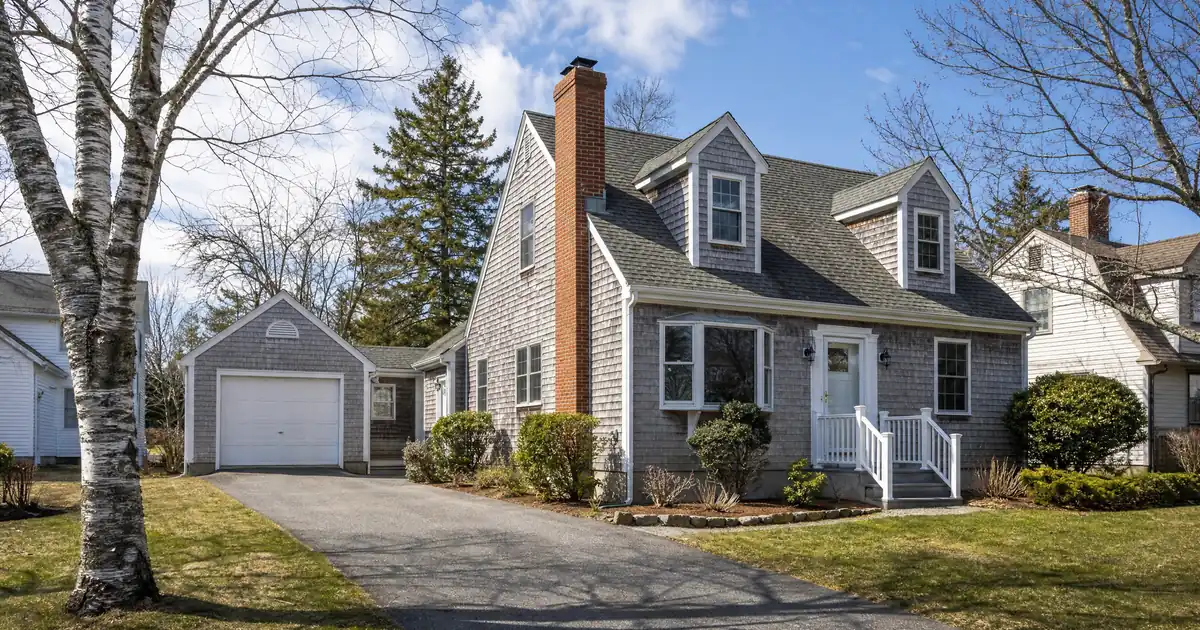
Most people looking at Bar Harbor as an investment market start with Acadia National Park and assume the whole thesis is short-term rental arbitrage, but DSCR investment property loans in Bar Harbor reveal a stronger tenant-demand story. That’s the wrong lens, and it’s costing investors the better deal. The single strongest tenant-demand story in this town has nothing to do with cruise ship season — it’s a genetics research institution paying research-scientist salaries that literally cannot house its own hires.
DSCR Calculator
Run the numbers in your market
Rate source: Freddie Mac 30-yr average via FRED® — Federal Reserve Bank of St. Louis · effective Jul 30, 2026
Prefilled with starting assumptions — enter your own rent or nightly figures, taxes, insurance, and HOA for a more accurate picture.
Program parameters update from Lendmire’s centralized guideline source. Taxes and insurance are editable estimates.
As of Jul 30, 2026 · General Freddie Mac market benchmark, not a Lendmire loan offer. Rent, nightly rate, occupancy, taxes, and insurance are editable estimates. Short-term rental figures are estimates only and vary significantly by season, property type, management approach, and local short-term-rental rules — confirm local regulations before relying on them. Qualifying income for short-term rentals varies by program — some use appraisal market rent, others use documented STR history or projections — and is confirmed in underwriting. Not a Loan Estimate, approval, or commitment to lend. Program availability and eligibility are subject to lender guidelines, credit approval, property review, and underwriting.
The Quick Read: Investment property loans in Bar Harbor are underwritten primarily on a property’s rental income measured against its full monthly carrying cost, which fits investors targeting the JAX commuter gap — 1,423 employees at the Bar Harbor campus, only 313 of whom live in town — more than buyers chasing seasonal tourist premiums.
- JAX’s own Hemlock Lane complex offers a rare, verifiable local rent comp for its 2BR units
- Hancock County’s median rent has climbed noticeably over the past decade
- Bar Harbor’s median sale price and its typical home value diverge sharply, reflecting the town’s thin, high-end sales mix
- Trenton studios and one-bedrooms rent well below what Bar Harbor’s purchase basis would require
- Bar Harbor issued zero permits for buildings over two units in the most recent year on record
Bar Harbor Market Snapshot
A quick read on the Bar Harbor investor landscape — figures come from the cited sources below. Confirm current property-level numbers before underwriting.
| Metric | Detail |
|---|---|
| Home prices | $925K median sale price (Redfin) |
| Typical rents | $1,061 median rent (+34% 2014-2024) (Bar Harbor Story (Substack)) |
| Population | 5,244 population (Census Reporter, Bar Harbor ME) |
| Employment | 1,423 employees (Mainebiz) |
| Vacancy | 6.7% (Bar Harbor Story (Substack)) |
The Housing Gap Bar Harbor’s Economy Actually Runs On
Skip the tourism narrative for a minute. The more durable rental demand in this town is a commuter gap measured in the thousands, and it’s non-seasonal.
The Jackson Laboratory, or JAX, sits on a 43-acre campus a mile from downtown and is Downeast Maine’s largest employer, with more than 1,300 staff on the Bar Harbor campus including over 200 PhDs, physicians, and veterinarians. A separate tally puts the local headcount at 1,423 employees, of whom only 313 actually live in Bar Harbor. That’s over a thousand employees commuting in from somewhere else — Trenton, Ellsworth, Town Hill, wherever they can find a lease. This isn’t a soft demand signal. JAX has said the housing shortage cost it candidates directly: of 369 jobs offered in a recent year, the lab lost 72 potential hires, with housing cited as the primary deterrent, according to reporting from the MDI Islander. When an institution with that kind of budget can’t solve its own housing problem, private landlords with legal, year-round units aren’t fighting for tenants — the tenants are fighting for units.
Mount Desert Island Hospital adds a second, distinct tenant pool. It employs more than 500 people and is the second-largest employer on the island, running a 25-bed critical access hospital that’s operated since 1897. Nurses, techs, and support staff on shift schedules are classic long-lease tenants, and they diversify a rent roll that would otherwise lean entirely on JAX’s research and postdoc demographic.
Then there’s College of the Atlantic, a small human-ecology college with an undergraduate enrollment of 353. It’s easy to write off as too small to matter, but the math says otherwise: the school’s enrollment cap runs at 350 full-time students against on-campus housing built for roughly 168, per Bangor Daily News reporting on a subsequent dorm expansion — even after that expansion closed some of the gap, well over 100 students per academic year still need private off-campus housing. That’s a renewing, academic-year tenant pool that peaks in the shoulder and winter months, exactly when tourism-driven demand is weakest.
Per Census Bureau QuickFacts‘s ACS profile, Bar Harbor’s population is 5,244, median household income runs $77,180, and the town has been essentially flat since a 2019 peak of 5,573 residents. This is not a household-formation growth story. The investment case rests on rent scarcity layered under a mature, high-value resort economy — not on population expansion.
Why the Median Price Everyone Quotes Is Misleading
A common mistake an out-of-state investor can make in this market is trusting one median-price headline. Bar Harbor’s listing sites disagree with each other by hundreds of thousands of dollars, and the reason matters for underwriting.
Zillow puts typical home values well below what the other two sources show, with only a modest uptick over the past year. Redfin reports a median sale price that sits far above Zillow’s figure, describing a startling jump over the same period. Homes.com lands in between the two, showing a slight pullback year over year. Three sources, three different stories, in the same town, in the same window of time.
Here’s the tell: Redfin’s own data shows median sale price up 36.2% while median price per square foot is down 22.0% over the same period. That’s not appreciation — that’s mix-shift. A handful of unusually large or unusually small transactions moved the median without moving the underlying value of a typical square foot. Low transaction volume plus luxury-sale influence equals a noisy headline number.
The practical takeaway for an investor building a purchase case: lean on price-per-square-foot and multiple comparable sales, not one trailing-month median, and expect appraisers unfamiliar with this specific market to need extra rent-comp support. Statewide context helps frame the premium — Maine’s median home price runs $428,478 as of the most recent statewide reporting, meaning Bar Harbor trades at roughly 1.4 to 2.2 times the state median depending on which local figure gets used.
There’s also a submarket split worth naming honestly, even though it sits just outside town lines. A regional housing report found the median home in neighboring Mount Desert running $749,500, against Bar Harbor’s $555,000, per Bar Harbor Story. Mount Desert’s villages (Northeast Harbor, Seal Harbor) are the appreciation-led, equity-store submarket. Bar Harbor proper and the mainland gateway toward Trenton are where rent coverage is easier to clear on a lower purchase basis. An investor chasing appreciation should look toward Mount Desert; an investor chasing coverage should stay in Bar Harbor or push toward Trenton.
Where the Housing Gap Actually Shows Up on a Map
Downtown, Cottage Street, and the Eden Street Corridor
This is where the legacy building stock does the heaviest lifting. Downtown and the Eden Street corridor carry a mix of small legacy multi-family buildings and converted Victorian-era houses — the kind of stock that already exists as a duplex or triplex, rather than requiring new construction. That matters, because new construction of anything larger than a two-unit building is essentially absent from the current permit pipeline: Bar Harbor issued 27 building permits in a recent year, including five ADUs, 19 single-family residences, and three two-unit buildings, with none for anything larger, according to Bar Harbor Story. If a triplex or fourplex DSCR play is the goal, an existing converted building is the realistic path — not ground-up multifamily.
Eden Street also sits closest to JAX’s main campus, which cuts both ways. The proximity supports rent demand from lab staff who’d rather not commute from Trenton. But it’s also the corridor most exposed to JAX’s own housing ambitions — the lab has proposed 44 new housing units on a 37-acre tract across from its campus, with a long-term plan for 80 to 100 units, according to BioMaine. That’s on top of the 24-unit Hemlock Lane complex JAX already opened for around $10 million, per Mainebiz. Private landlords targeting JAX employees specifically should expect some of that captive tenant pool to migrate into employer-controlled housing over time, even while the town-wide shortage remains severe. It’s a real risk to size, not a reason to avoid the corridor.
Hemlock Lane’s own rent schedule is one of the few verifiable, employer-set rent comps in this town: a one-bedroom runs $1,100 per month, a two-bedroom $1,500, and a three-bedroom $1,950, per the MDI Islander. That’s a benchmark worth anchoring underwriting to, rather than guessing from short-term-rental-skewed listing sites.
Trenton — the Commuter Overflow Play
Trenton, just off the island on the mainland side, is repeatedly cited as the primary overflow submarket for workforce tenants priced out of Bar Harbor itself, and current listings back that up: studios and one-bedrooms along the Bar Harbor Road corridor rent in the $1,145 to $1,395 range, according to Rent.com — while purchase prices run meaningfully below Bar Harbor’s. Lower basis plus a real, sourced rent floor is the combination that most plausibly clears DSCR coverage on a straightforward single-family or small multi-unit purchase.
Run the numbers on a hypothetical single-family purchase here, structured as a primary unit plus an accessory dwelling unit — a strategy Maine now requires municipalities to permit on any single-family-zoned lot under 30-A M.R.S. § 4364-B. Model a purchase price of $340,000 at a standard 75% loan-to-value, with the main unit renting near the upper end of Trenton’s sourced range at $1,395 and the ADU renting near the lower end at $1,145 — a combined $2,540 in monthly rent. Modeling the full monthly obligation (principal, interest, property tax near Maine’s typical rate, and insurance) against that combined rent produces coverage in the 0.52x–0.57x range including taxes and insurance — below the 1.00x baseline most standard DSCR programs are built around, since rent needs to cover the payment at that level. That’s a modeled illustration, not a market quote, and actual coverage depends on the specific rate, tax rate, and insurance quote a lender pulls for the file.
Town Hill and the Salisbury Cove / Hulls Cove Corridor
Town Hill sits inland, with larger lots and lower per-acre land costs than downtown or the waterfront — it’s the corridor best positioned for ADU additions on existing single-family homes, appealing to the same workforce-and-family tenant base as Trenton but closer to town. Salisbury Cove and Hulls Cove run along the northern coastline with a mix of year-round and vacation homes; both are zoned to permit multifamily dwellings under current town code, and Salisbury Cove sits near one of JAX’s campus expansions, giving it some of the same commuter-tenant logic as Eden Street without quite the same overbuild exposure.
None of these corridors have neighborhood-specific price data reliable enough to state as fact — the town-wide figures above are the best available anchor, and any specific-neighborhood price range beyond that should be treated as directional at best.
The Legacy-Building Play, Not the New-Construction Play
Here’s the thing most out-of-state investors get backward in Bar Harbor: they show up looking for a fourplex to build, when the realistic opportunity is a triplex that already exists.
Run the numbers on a hypothetical triplex conversion downtown or along Eden Street — a converted Victorian-era building, modeled at a $650,000 purchase price with 25% down. Using Hemlock Lane’s rent schedule as a comp basis, model one two-bedroom unit at $1,500, one-bedroom at $1,100, and one three-bedroom at $1,950 — a combined $4,550 in monthly rent. Weighed against a full monthly carrying cost that includes principal, interest, Maine-typical property tax, and insurance, that combination models to coverage in the 0.47x–0.50x range including taxes and insurance. That’s tighter than the Trenton ADU scenario, and it’s the honest read: legacy multi-family stacking doesn’t clear the 1.00x coverage line in this market, especially once an appraiser unfamiliar with the neighborhood’s rent comps gets involved.
DSCR files in single-employer, resort-adjacent markets like Bar Harbor tend to arrive with a specific friction point: the rent roll looks thin against national averages until the JAX or hospital commuter-tenant story gets attached, and the stronger files are the ones that come in with a documented local rent comp — like Hemlock Lane’s schedule — rather than a national rent-estimator tool. That’s the difference between a file that sails through underwriting and one that gets kicked back for more support.
That’s a modeled scenario for illustration, not a market quote — actual coverage depends on the lender’s rate, the specific tax rate on the parcel, and the insurance quote pulled for that property, all of which vary by borrower and file. A property’s ability to qualify is always subject to lender guidelines, credit approval, and property review; nothing here is a guarantee of eligibility.
For an investor deciding between the two: the Trenton ADU deal models to stronger coverage on a lower purchase basis, though still below the 1.00x threshold, while the downtown triplex offers a larger, more diversified rent roll but tighter margin and more appraisal risk. Neither is obviously “better” — it depends on whether the investor is optimizing for cushion or for scale.
Lendmire’s DSCR walkthrough covers how rental income measured against carrying cost drives qualification in more detail, and for investors weighing whether this structure beats a conventional loan on a given file, the guide “Where DSCR and Conventional Diverge” against income-based underwriting is worth a look before committing to a submarket.
What Doesn’t Work Here
Not every strategy that works in a typical Maine coastal town works in Bar Harbor, and naming the exceptions matters more than another list of upsides.
Short-term-rental-dependent underwriting is a weaker foundation than it looks. The town has flagged that it will need an estimated 616 new year-round dwelling units by 2033 to offset housing stock converted to short-term rental — a number nearly identical to the 637 STRs already registered, per Mainebiz. That tension is exactly why long-term workforce rent, not vacation-rental income, is the more defensible underwriting basis for a DSCR file in this specific town — local rental rules and registration requirements shift, and investors should verify current STR ordinances directly with the town’s planning office rather than assume the current framework holds.
Chasing appreciation without cash flow is another trap. Much of Bar Harbor’s price growth — from roughly $300,030 in 2013 to $672,125 by a recent measure — came during a two-year pandemic-era spike, and appreciation has since slowed. A cash-out or purchase thesis built on extrapolating that doubling-since-2013 trend forward is riding a spike that’s already normalized, not an ongoing trend.
And assuming national rent-estimator tools apply here is probably the single most common underwriting mistake. This is a thin, low-transaction-volume, appraisal-variance market. Local rent comps — Hemlock Lane’s schedule, Trenton’s live listings — beat any national aggregator every time.
Lendmire arranges DSCR investor loans on standard purchase leverage typically running 75% to 80% loan-to-value, with select stronger files reaching up to 85%, a minimum coverage ratio generally set around 1.00x, and reserve requirements around six months of the full monthly obligation — all subject to lender guidelines, credit approval, and property review, and none of it a guarantee of qualification for a specific file. Investors weighing a specific Bar Harbor property can request a scenario review or reach Lendmire at 828-256-2183 to walk through how a particular rent roll models against current program parameters.
Frequently Asked Questions
How do you qualify for a DSCR loan in Bar Harbor, Maine?
Qualification is generally reviewed around the property’s rental income measured against its full monthly obligation, rather than the borrower’s personal income documents. In Bar Harbor’s case, that means the file leans on a documented rent comp — JAX’s Hemlock Lane schedule or a current Trenton listing, for example — since national rent-estimator tools tend to understate what a legal, year-round unit here can actually command.
DSCR vs. conventional financing
Two common ways to finance an investment property in Bar Harbor, ME. They qualify you differently — here’s how investors weigh them.
Why investors choose it
- Qualifies on the property’s rental income — no personal tax returns, W-2s, or pay stubs needed to document income.
- No personal debt-to-income ceiling to clear, so existing mortgages and obligations don’t cap your borrowing the same way.
- Can be closed in an LLC, keeping the property inside a business entity.
- Built for scaling — not held to the limit on number of financed properties that conventional financing applies.
- Underwriting centers on the deal: generally qualifies when the rent covers the payment, a 1.00x coverage ratio being a common baseline (confirmed in underwriting).
- Designed specifically for investment property, including long-term and, where the program allows, short-term rentals.
Where it’s strong
- Often the lowest ongoing financing cost for a buyer who fully qualifies on personal income — a fit for a first property or a cost-first purchase.
Trade-offs for investors
- Requires full personal income documentation and must fit within a debt-to-income limit — salary, existing debts, and other mortgages all count.
- Typically held in your personal name rather than a business entity.
- Caps how many financed properties you can carry, which can become a ceiling as a portfolio grows.
- Evaluates you as a borrower as much as the property, which usually means more paperwork.
How investors usually choose: a first or single property often optimizes for the lowest financing cost; portfolio builders often optimize for leverage, vesting in an LLC, and scaling past conventional caps. The right answer depends on your goals, the property, and current guidelines — both paths run through select lenders in Lendmire’s wholesale network, with eligibility and terms confirmed in underwriting.
What are the requirements for an investment property loan in Bar Harbor, Maine?
Most standard purchase programs run 75% to 80% loan-to-value, with stronger files sometimes reaching higher leverage, a coverage ratio generally set around 1.00x as a baseline, and roughly six months of reserves for the monthly carry. Credit tiers, exact leverage, and reserve requirements vary by borrower profile, property type, and lender overlay, and none of these figures are guarantees for a specific file.
Why is Bar Harbor’s median home price so inconsistent across listing sites?
Because the market is thin and low-volume enough that a handful of unusually large or small sales can swing the reported median without moving the underlying value of a typical property. Redfin’s own data shows median sale price up over 36% year over year in a recent month while price per square foot fell 22% in the same window — a textbook mix-shift signal, not real appreciation. Investors should lean on price-per-square-foot and multiple comps rather than trust a single median headline.
Does Bar Harbor’s tourist season affect long-term rental demand?
Tourism drives the town’s seasonal population swing, but the strongest year-round rental demand comes from a different source: JAX’s commuter gap and MDI Hospital’s staffing base, both of which need housing twelve months a year, not just in the summer. College of the Atlantic’s enrollment adds a counter-cyclical academic-year tenant pool that peaks when tourism demand is lowest.
Can an ADU addition help a Bar Harbor property qualify for DSCR financing?
An added ADU can strengthen a file by adding a second rent stream to the coverage calculation, subject to lender guidelines, appraisal support, and local permitting. Maine’s ADU statute requires municipalities to permit at least one ADU on most single-family-zoned lots, and Bar Harbor’s own permit activity shows ADUs and duplex conversions, not larger multifamily builds, are the realistic near-term stacking option in this specific town.
What property types work best for DSCR loans in Bar Harbor?
ADU-added single-family homes tend to model the strongest coverage, given the town’s permit patterns and rent-comp data. As a non-QM broker holding NMLS# 2371349, Lendmire arranges DSCR programs with property qualification reviewed primarily on rental income rather than traditional personal-income documentation, subject to lender guidelines and program eligibility.
Investors evaluating this state more broadly can review Lendmire’s Maine DSCR platform alongside Lendmire’s DSCR programs for how program parameters apply across other Maine coastal markets.
As a non-QM mortgage broker holding NMLS# 2371349, Lendmire facilitates DSCR investor loans. Eligibility is generally reviewed around a property’s rental income rather than personal income documentation, subject to lender guidelines, which tends to serve LLC-structured portfolios and self-employed borrowers whose traditional personal-income documentation doesn’t cleanly reflect rental cash flow — a common profile for a town like this one, where legacy multi-family stock and JAX-adjacent workforce rentals draw investors who don’t fit a conventional lending box. The firm was named a top-ranked workplace in 2026 by Scotsman Guide, following similar recognition in 2025.
Before wiring an offer on anything in this market, the single most useful step an investor can take is pulling current, property-specific rent comps directly from a local property manager or the MLS — not a national aggregator — since Bar Harbor’s thin transaction volume and Redfin’s own median-versus-price-per-square-foot divergence make national rent and price tools genuinely unreliable here, and no DSCR file will underwrite cleanly on a guess.
About Lendmire
As a non-QM mortgage broker (NMLS# 2371349), Lendmire facilitates DSCR investor loans across 41 markets, including Washington, D.C. DSCR eligibility is generally reviewed around property-level rental income instead of personal income documentation, subject to lender guidelines, serving LLC-structured portfolios and self-employed borrowers who don’t fit conventional boxes. Lendmire is a two-time Scotsman Guide Top Mortgage Workplace (2025, 2026).
Get Started
Ready to find the right loan for you?
In about 30 seconds you can review financing options available for your investment property. No commitment required.
Informational only. Not a Loan Estimate, approval, or commitment to lend. Program availability and eligibility are subject to lender guidelines, credit approval, property review, and underwriting.
References
1. Mainebiz — On MDI, New Jackson Lab Workforce Housing Set for September Occupancy
2. Redfin — Bar Harbor Housing Market
3. Bar Harbor Story — MDI Towns Housing Data
4. Census Reporter, Bar Harbor ME
5. Jackson Laboratory — Contractor Information (Maine)
6. MDI Islander — JAX Cuts Ribbon on New Employee Housing
8. Bangor Daily News — COA to Build Dorm
9. Census Reporter — Bar Harbor, ME Profile
10. Zillow — Bar Harbor Home Values
11. Homes.com — Bar Harbor Real Estate
12. Redfin — Maine Statewide Housing Market
13. Bar Harbor Story — As Housing Pressures Increase
14. BioMaine — JAX Proposes Employee Housing Development
15. Mainebiz — Bar Harbor Will Need an Estimated 600 Housing Units
16. Rent.com — Trenton, ME Apartments
17. Maine Legislature — Title 30-A § 4364-B
18. Scotsman Guide 2025 Top Mortgage Workplace
19. Scotsman Guide 2026 Top Mortgage Workplace
This article is part of Lendmire’s DSCR loan program — full qualification details, guidelines, and scenarios live on the program page.
Related reading: Luxury Rental DSCR Loans In Bar Harbor: Seasonality And Coverage · DSCR Loans in Bar Harbor / Acadia, Maine: Investor Financing for Mount Desert Island, Southwest Harbor, Ellsworth & Real Estate Investors · What Is Airbnb Arbitrage?
Guides: DSCR Loans in Bar Harbor, ME · DSCR Loans in Maine
Brandon Miller
Founder & CEO, Mortgage Loan Originator, Lendmire LLC
- Mortgage Loan Originator · NMLS# 1129696 · Verify on NMLS Consumer Access
- North Carolina Real Estate Broker · License# 343312 · Verify on NCREC
- North Carolina Insurance Producer · License# 19053198 · Property, Casualty, Life, Health · Verify on NAIC SBS
- Lendmire LLC · Firm NMLS# 2371349 · Verify firm licensure
Disclosures. The information presented in this article is general market commentary, not financial, legal, or tax advice. Lendmire is a mortgage brokerage (NMLS# 2371349) — not a direct lender or depository institution — and loan placement is subject to lender underwriting. Nothing in this content represents a commitment to lend. Loan terms, pricing, and program availability vary based on borrower qualifications, property characteristics, and state of subject property, and are subject to change at any time. Lendmire complies with Equal Housing Opportunity requirements. Consumer access: nmlsconsumeraccess.org.